THE VICTORIAN PERIOD
1830-1901
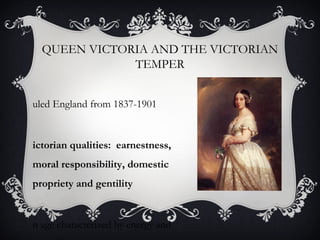
QUEEN VICTORIA AND THE VICTORIAN
TEMPER
uled England from 1837-1901
ictorian qualities: earnestness,
moral responsibility, domestic
propriety and gentility
n age characterized by energy and
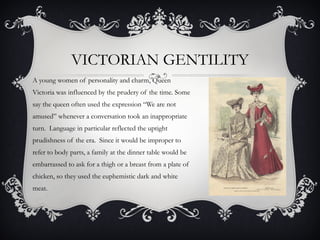
A young women of personality and charm, Queen
Victoria was influenced by the prudery of the time. Some
say the queen often used the expression “We are not
amused” whenever a conversation took an inappropriate
turn. Language in particular reflected the uptight
prudishness of the era. Since it would be improper to
refer to body parts, a family at the dinner table would be
embarrassed to ask for a thigh or a breast from a plate of
chicken, so they used the euphemistic dark and white
meat.
VICTORIAN GENTILITY
1. The word that best describes the typical behavior of many
Victorians is
a. immoral
b. genteel
c. defiant
d. lethargic
VICTORIAN WOMEN AND THE HOME
ictorian society was preoccupied with
the very nature of women.
rotected and enshrined within the
home, her role was to create a place of
peace where man could take refuge
from the difficulties of modern life.
A TIME OF CHANGE
ondon becomes most important city in Europe and its
population tripled during this time.
ritain became the world’s foremost imperial power.
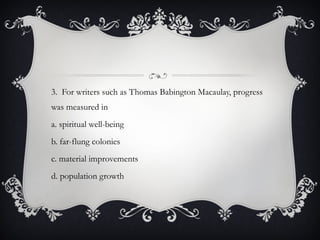
ccording to authors like Thomas Babington
Macaulay, progress was measured by material
improvements.
time of peace and prosperity in England.
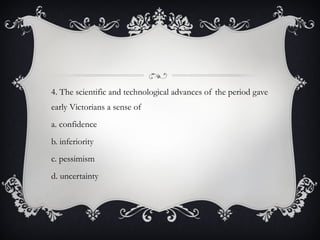
he scientific and technological advances of the
period gave the British a sense of confidence.
2. The Victorian era was characterized by
a. prolonged wars
b. economic recession
c. peace and prosperity
d. revolution
3. For writers such as Thomas Babington Macaulay, progress
was measured in
a. spiritual well-being
b. far-flung colonies
c. material improvements
d. population growth
4. The scientific and technological advances of the period gave
early Victorians a sense of
a. confidence
b. inferiority
c. pessimism
d. uncertainty
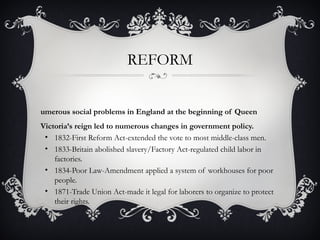
REFORM
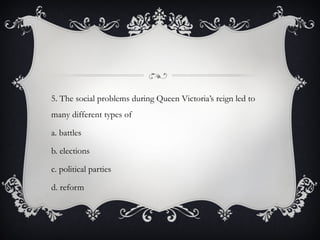
umerous social problems in England at the beginning of Queen
Victoria’s reign led to numerous changes in government policy.
• 1832-First Reform Act-extended the vote to most middle-class men.
• 1833-Britain abolished slavery/Factory Act-regulated child labor in
factories.
• 1834-Poor Law-Amendment applied a system of workhouses for poor
people.
• 1871-Trade Union Act-made it legal for laborers to organize to protect
their rights.
5. The social problems during Queen Victoria’s reign led to
many different types of
a. battles
b. elections
c. political parties
d. reform
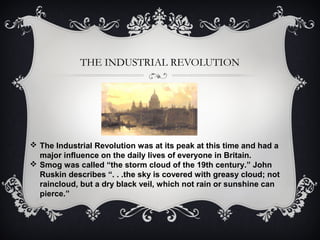
THE INDUSTRIAL REVOLUTION
 The Industrial Revolution was at its peak at this time and had a
major influence on the daily lives of everyone in Britain.
 Smog was called “the storm cloud of the 19th century.” John
Ruskin describes “. . .the sky is covered with greasy cloud; not
raincloud, but a dry black veil, which not rain or sunshine can
pierce.”
6. An important influence on the Victorian era was the
a. Industrial Revolution
b. Age of Reason
c. Restoration of the Crown
d. High Renaissance
7. John Ruskin used the term “plague wind” to refer to what
we now call
a. hurricanes
b. smog
c. epidemics
d. economic depressions
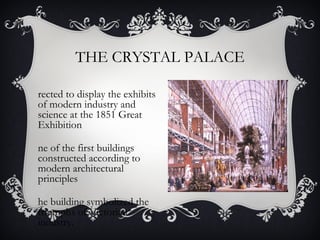
THE CRYSTAL PALACE
rected to display the exhibits
of modern industry and
science at the 1851 Great
Exhibition
ne of the first buildings
constructed according to
modern architectural
principles
he building symbolized the
triumphs of Victorian
industry.
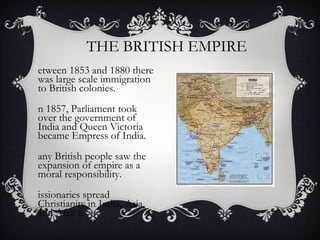
THE BRITISH EMPIRE
etween 1853 and 1880 there
was large scale immigration
to British colonies.
n 1857, Parliament took
over the government of
India and Queen Victoria
became Empress of India.
any British people saw the
expansion of empire as a
moral responsibility.
issionaries spread
Christianity in India, Asia,
and Africa.
LITERACY, PUBLICATION, AND READING
y the end of the century, literacy was almost universal.
hildren now required to attend school until the age of 10.
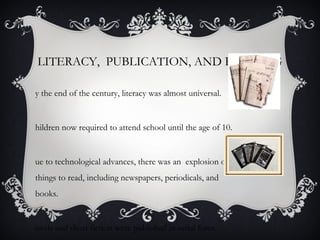
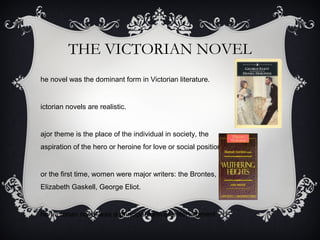
ue to technological advances, there was an explosion of
things to read, including newspapers, periodicals, and
books.
ovels and short fiction were published in serial form.
THE VICTORIAN NOVEL
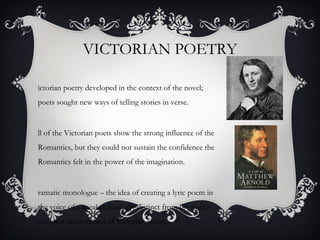
he novel was the dominant form in Victorian literature.
ictorian novels are realistic.
ajor theme is the place of the individual in society, the
aspiration of the hero or heroine for love or social position.
or the first time, women were major writers: the Brontes,
Elizabeth Gaskell, George Eliot.
he Victorian novel was a principal form of entertainment.
VICTORIAN POETRY
ictorian poetry developed in the context of the novel;
poets sought new ways of telling stories in verse.
ll of the Victorian poets show the strong influence of the
Romantics, but they could not sustain the confidence the
Romantics felt in the power of the imagination.
ramatic monologue – the idea of creating a lyric poem in
the voice of a speaker ironically distinct from the poet is
the great achievement of Victorian poetry.
SOCIAL CONSCIOUSNESS
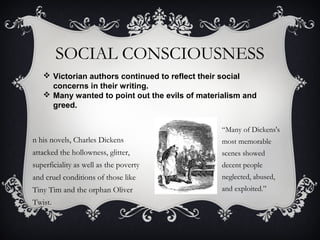
n his novels, Charles Dickens
attacked the hollowness, glitter,
superficiality as well as the poverty
and cruel conditions of those like
Tiny Tim and the orphan Oliver
Twist.
“Many of Dickens's
most memorable
scenes showed
decent people
neglected, abused,
and exploited.”
 Victorian authors continued to reflect their social
concerns in their writing.
 Many wanted to point out the evils of materialism and
greed.
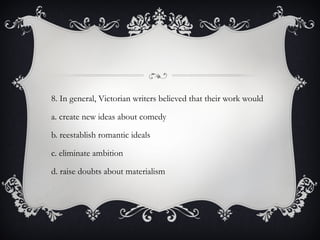
8. In general, Victorian writers believed that their work would
a. create new ideas about comedy
b. reestablish romantic ideals
c. eliminate ambition
d. raise doubts about materialism
ecay of Victorian values
eligious doubts, especially among writers and artists
iterature focused on human troubles in an indifferent world.
ermany and the United States became possible rivals of England.
conomic depression led to mass immigration.
The LaTe VicTorian period
1870-1901
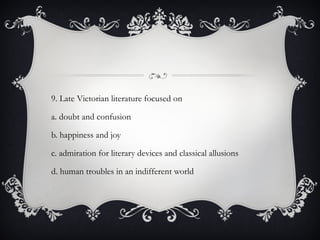
9. Late Victorian literature focused on
a. doubt and confusion
b. happiness and joy
c. admiration for literary devices and classical allusions
d. human troubles in an indifferent world
10. By the end of the nineteenth century, many writers,
finding it difficult to believe in an infinite power, became
a. optimistic
b. patriotic
c. skeptical
d. trusting
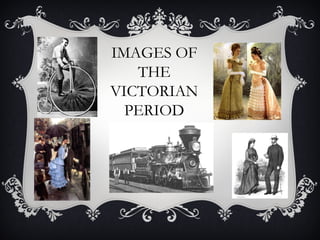
IMAGES OF
THE
VICTORIAN
PERIOD

The Victorian Period Introduction

  • 1.
  • 2.
    QUEEN VICTORIA ANDTHE VICTORIAN TEMPER uled England from 1837-1901 ictorian qualities: earnestness, moral responsibility, domestic propriety and gentility n age characterized by energy and
  • 3.
    A young womenof personality and charm, Queen Victoria was influenced by the prudery of the time. Some say the queen often used the expression “We are not amused” whenever a conversation took an inappropriate turn. Language in particular reflected the uptight prudishness of the era. Since it would be improper to refer to body parts, a family at the dinner table would be embarrassed to ask for a thigh or a breast from a plate of chicken, so they used the euphemistic dark and white meat. VICTORIAN GENTILITY
  • 4.
    1. The wordthat best describes the typical behavior of many Victorians is a. immoral b. genteel c. defiant d. lethargic
  • 5.
    VICTORIAN WOMEN ANDTHE HOME ictorian society was preoccupied with the very nature of women. rotected and enshrined within the home, her role was to create a place of peace where man could take refuge from the difficulties of modern life.
  • 6.
    A TIME OFCHANGE ondon becomes most important city in Europe and its population tripled during this time. ritain became the world’s foremost imperial power. ccording to authors like Thomas Babington Macaulay, progress was measured by material improvements. time of peace and prosperity in England. he scientific and technological advances of the period gave the British a sense of confidence.
  • 7.
    2. The Victorianera was characterized by a. prolonged wars b. economic recession c. peace and prosperity d. revolution
  • 8.
    3. For writerssuch as Thomas Babington Macaulay, progress was measured in a. spiritual well-being b. far-flung colonies c. material improvements d. population growth
  • 9.
    4. The scientificand technological advances of the period gave early Victorians a sense of a. confidence b. inferiority c. pessimism d. uncertainty
  • 10.
    REFORM umerous social problemsin England at the beginning of Queen Victoria’s reign led to numerous changes in government policy. • 1832-First Reform Act-extended the vote to most middle-class men. • 1833-Britain abolished slavery/Factory Act-regulated child labor in factories. • 1834-Poor Law-Amendment applied a system of workhouses for poor people. • 1871-Trade Union Act-made it legal for laborers to organize to protect their rights.
  • 11.
    5. The socialproblems during Queen Victoria’s reign led to many different types of a. battles b. elections c. political parties d. reform
  • 12.
    THE INDUSTRIAL REVOLUTION The Industrial Revolution was at its peak at this time and had a major influence on the daily lives of everyone in Britain.  Smog was called “the storm cloud of the 19th century.” John Ruskin describes “. . .the sky is covered with greasy cloud; not raincloud, but a dry black veil, which not rain or sunshine can pierce.”
  • 13.
    6. An importantinfluence on the Victorian era was the a. Industrial Revolution b. Age of Reason c. Restoration of the Crown d. High Renaissance
  • 14.
    7. John Ruskinused the term “plague wind” to refer to what we now call a. hurricanes b. smog c. epidemics d. economic depressions
  • 15.
    THE CRYSTAL PALACE rectedto display the exhibits of modern industry and science at the 1851 Great Exhibition ne of the first buildings constructed according to modern architectural principles he building symbolized the triumphs of Victorian industry.
  • 16.
    THE BRITISH EMPIRE etween1853 and 1880 there was large scale immigration to British colonies. n 1857, Parliament took over the government of India and Queen Victoria became Empress of India. any British people saw the expansion of empire as a moral responsibility. issionaries spread Christianity in India, Asia, and Africa.
  • 17.
    LITERACY, PUBLICATION, ANDREADING y the end of the century, literacy was almost universal. hildren now required to attend school until the age of 10. ue to technological advances, there was an explosion of things to read, including newspapers, periodicals, and books. ovels and short fiction were published in serial form.
  • 18.
    THE VICTORIAN NOVEL henovel was the dominant form in Victorian literature. ictorian novels are realistic. ajor theme is the place of the individual in society, the aspiration of the hero or heroine for love or social position. or the first time, women were major writers: the Brontes, Elizabeth Gaskell, George Eliot. he Victorian novel was a principal form of entertainment.
  • 19.
    VICTORIAN POETRY ictorian poetrydeveloped in the context of the novel; poets sought new ways of telling stories in verse. ll of the Victorian poets show the strong influence of the Romantics, but they could not sustain the confidence the Romantics felt in the power of the imagination. ramatic monologue – the idea of creating a lyric poem in the voice of a speaker ironically distinct from the poet is the great achievement of Victorian poetry.
  • 20.
    SOCIAL CONSCIOUSNESS n hisnovels, Charles Dickens attacked the hollowness, glitter, superficiality as well as the poverty and cruel conditions of those like Tiny Tim and the orphan Oliver Twist. “Many of Dickens's most memorable scenes showed decent people neglected, abused, and exploited.”  Victorian authors continued to reflect their social concerns in their writing.  Many wanted to point out the evils of materialism and greed.
  • 21.
    8. In general,Victorian writers believed that their work would a. create new ideas about comedy b. reestablish romantic ideals c. eliminate ambition d. raise doubts about materialism
  • 22.
    ecay of Victorianvalues eligious doubts, especially among writers and artists iterature focused on human troubles in an indifferent world. ermany and the United States became possible rivals of England. conomic depression led to mass immigration. The LaTe VicTorian period 1870-1901
  • 23.
    9. Late Victorianliterature focused on a. doubt and confusion b. happiness and joy c. admiration for literary devices and classical allusions d. human troubles in an indifferent world
  • 24.
    10. By theend of the nineteenth century, many writers, finding it difficult to believe in an infinite power, became a. optimistic b. patriotic c. skeptical d. trusting
  • 25.