Blulmer & Katz (1974)
Basic Idea
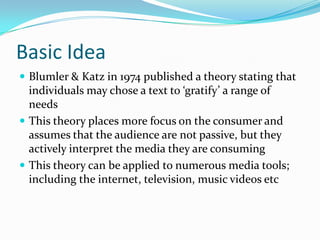
 Blumler & Katz in 1974 published a theory stating that
  individuals may chose a text to ‘gratify’ a range of
  needs
 This theory places more focus on the consumer and
  assumes that the audience are not passive, but they
  actively interpret the media they are consuming
 This theory can be applied to numerous media tools;
  including the internet, television, music videos etc
4 Main Principles
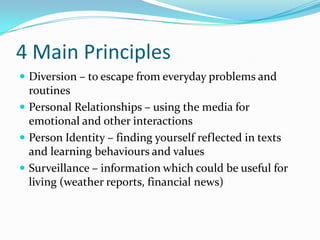
 Diversion – to escape from everyday problems and
  routines
 Personal Relationships – using the media for
  emotional and other interactions
 Person Identity – finding yourself reflected in texts
  and learning behaviours and values
 Surveillance – information which could be useful for
  living (weather reports, financial news)
In Terms of Music
 Diversion – viewers of programmes such as MTV, use
  the music to relax and escape from boredom
 Personal Relationships – music videos enable people
  to relate to families and friends through the lyrical
  themes
 Personal Identity – often the young viewers feel like
  they can relate to the characters within the video and
  the lyrics of the songs
 Surveillance – through the videos they can learn about
  other cultures etc
Type of Music
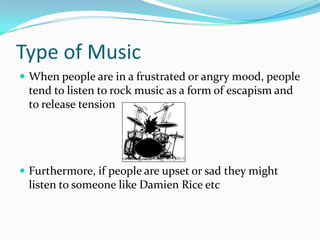
 When people are in a frustrated or angry mood, people
 tend to listen to rock music as a form of escapism and
 to release tension


 Furthermore, if people are upset or sad they might
 listen to someone like Damien Rice etc
Criticisms
 The media dependency theory states that the more
  dependent an individual is on the media to fulfil their
  needs, the more significant the media becomes to that
  person
 Some have criticised this theory as they believe that
  consumers have no power over the media and what
  they produce
 Mainly audience-centred which isn’t always accurate

Uses and Gratifications Theory

  • 1.
  • 2.
    Basic Idea  Blumler& Katz in 1974 published a theory stating that individuals may chose a text to ‘gratify’ a range of needs  This theory places more focus on the consumer and assumes that the audience are not passive, but they actively interpret the media they are consuming  This theory can be applied to numerous media tools; including the internet, television, music videos etc
  • 3.
    4 Main Principles Diversion – to escape from everyday problems and routines  Personal Relationships – using the media for emotional and other interactions  Person Identity – finding yourself reflected in texts and learning behaviours and values  Surveillance – information which could be useful for living (weather reports, financial news)
  • 4.
    In Terms ofMusic  Diversion – viewers of programmes such as MTV, use the music to relax and escape from boredom  Personal Relationships – music videos enable people to relate to families and friends through the lyrical themes  Personal Identity – often the young viewers feel like they can relate to the characters within the video and the lyrics of the songs  Surveillance – through the videos they can learn about other cultures etc
  • 5.
    Type of Music When people are in a frustrated or angry mood, people tend to listen to rock music as a form of escapism and to release tension  Furthermore, if people are upset or sad they might listen to someone like Damien Rice etc
  • 6.
    Criticisms  The mediadependency theory states that the more dependent an individual is on the media to fulfil their needs, the more significant the media becomes to that person  Some have criticised this theory as they believe that consumers have no power over the media and what they produce  Mainly audience-centred which isn’t always accurate