The State of
Digital Education
Report from the conference
Anthony F. Camilleri
Openness and Equity in Digital
Education
open
Lesson 1
3
access
pedagogy
licenses
content
practices
open
Lesson 1
4
education is increasingly a reality
for more people
digital multiplies opportunities
Lesson 2
5
which the well-off are best positioned to take
advantage of
Lesson 2
6
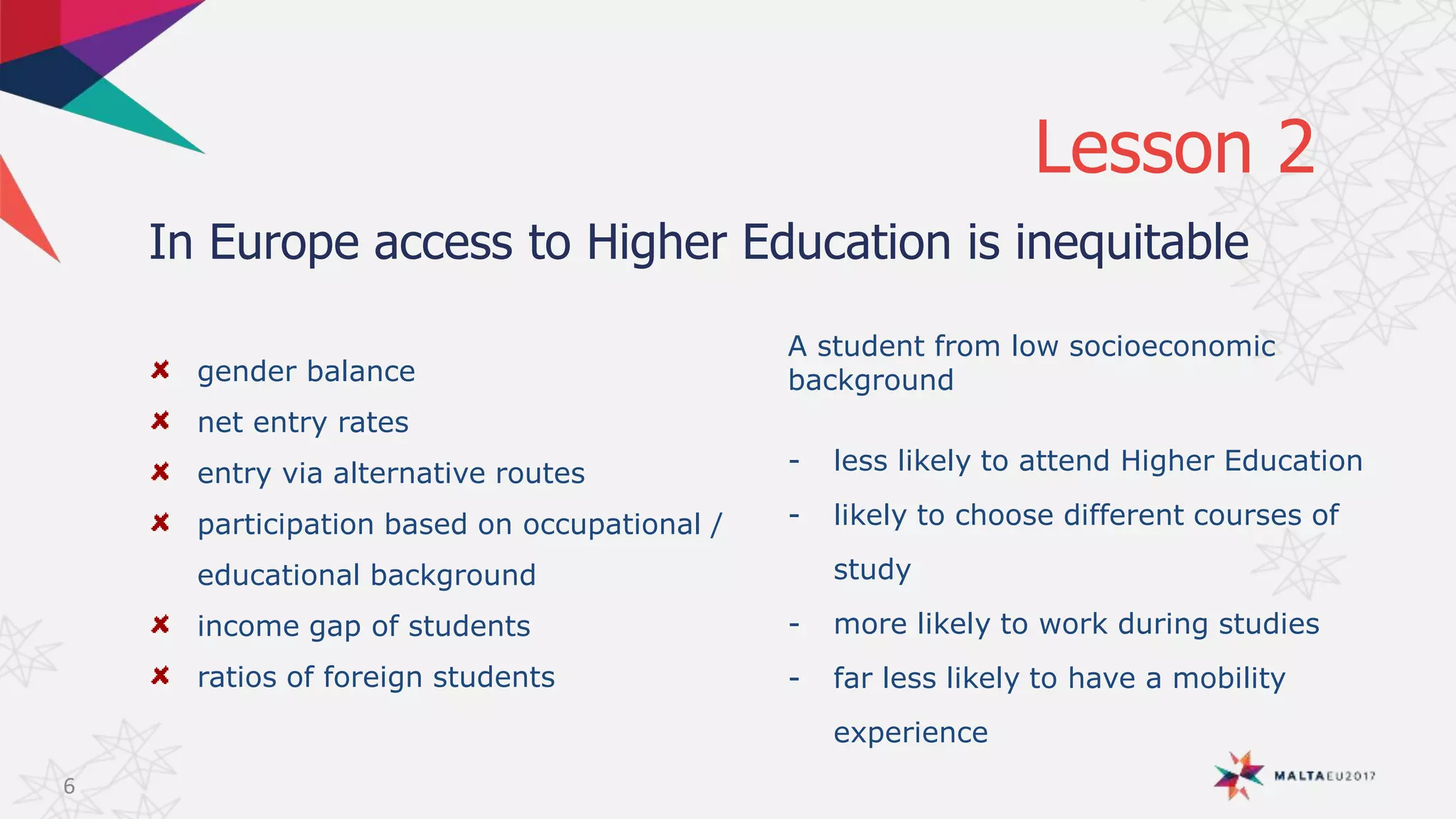
In Europe access to Higher Education is inequitable
gender balance
net entry rates
entry via alternative routes
participation based on occupational /
educational background
income gap of students
ratios of foreign students
A student from low socioeconomic
background
- less likely to attend Higher Education
- likely to choose different courses of
study
- more likely to work during studies
- far less likely to have a mobility
experience
Lesson 2
7
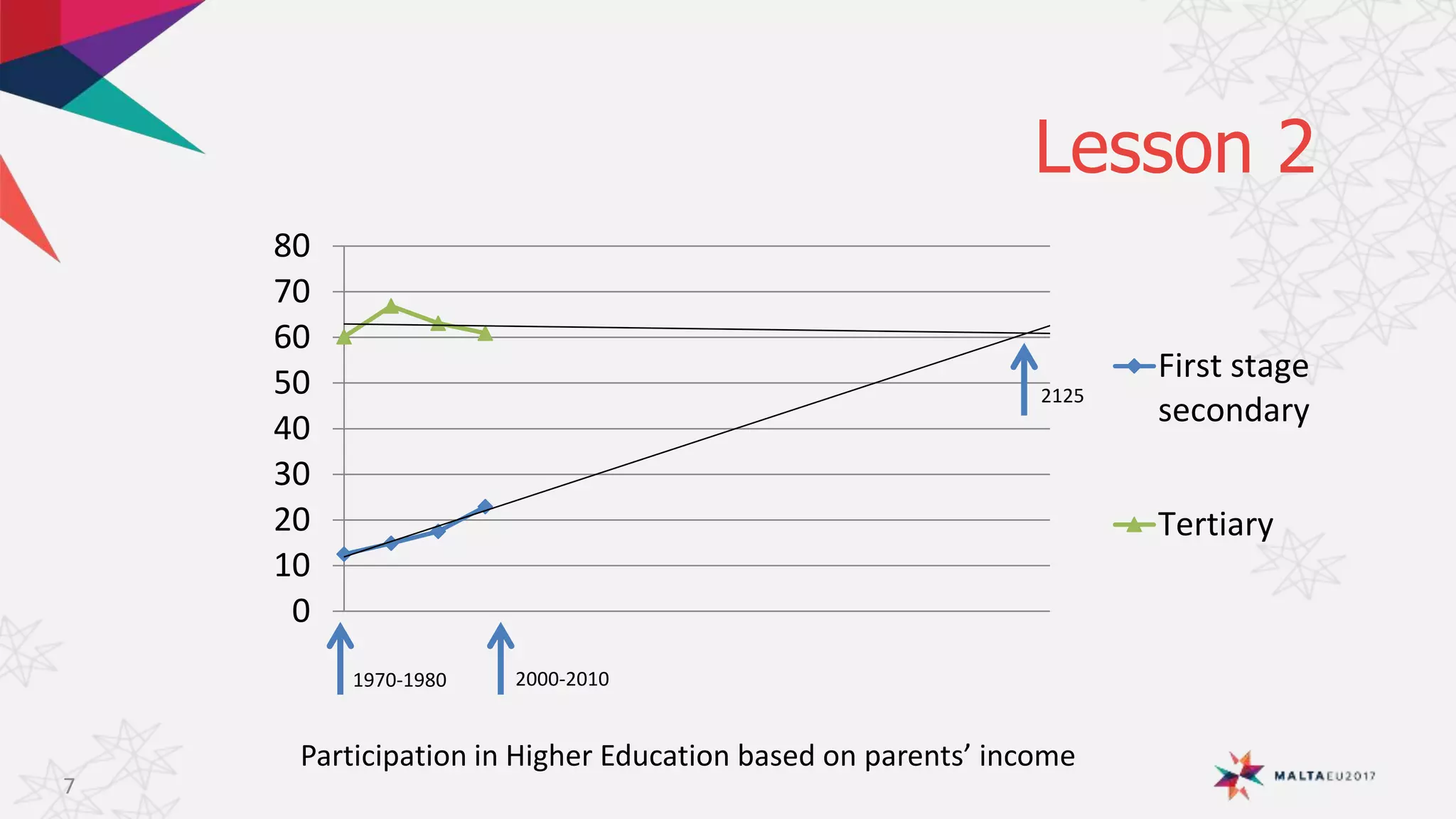
0
10
20
30
40
50
60
70
80
First stage
secondary
Tertiary
1970-1980 2000-2010
2125
Participation in Higher Education based on parents’ income
Lesson 2
for digital to increase equity
8
we need better ideas
9
Systems for Accreditation & Quality
Assurance of Online Learning
Conclusion 3
10
Trust is about
Perception
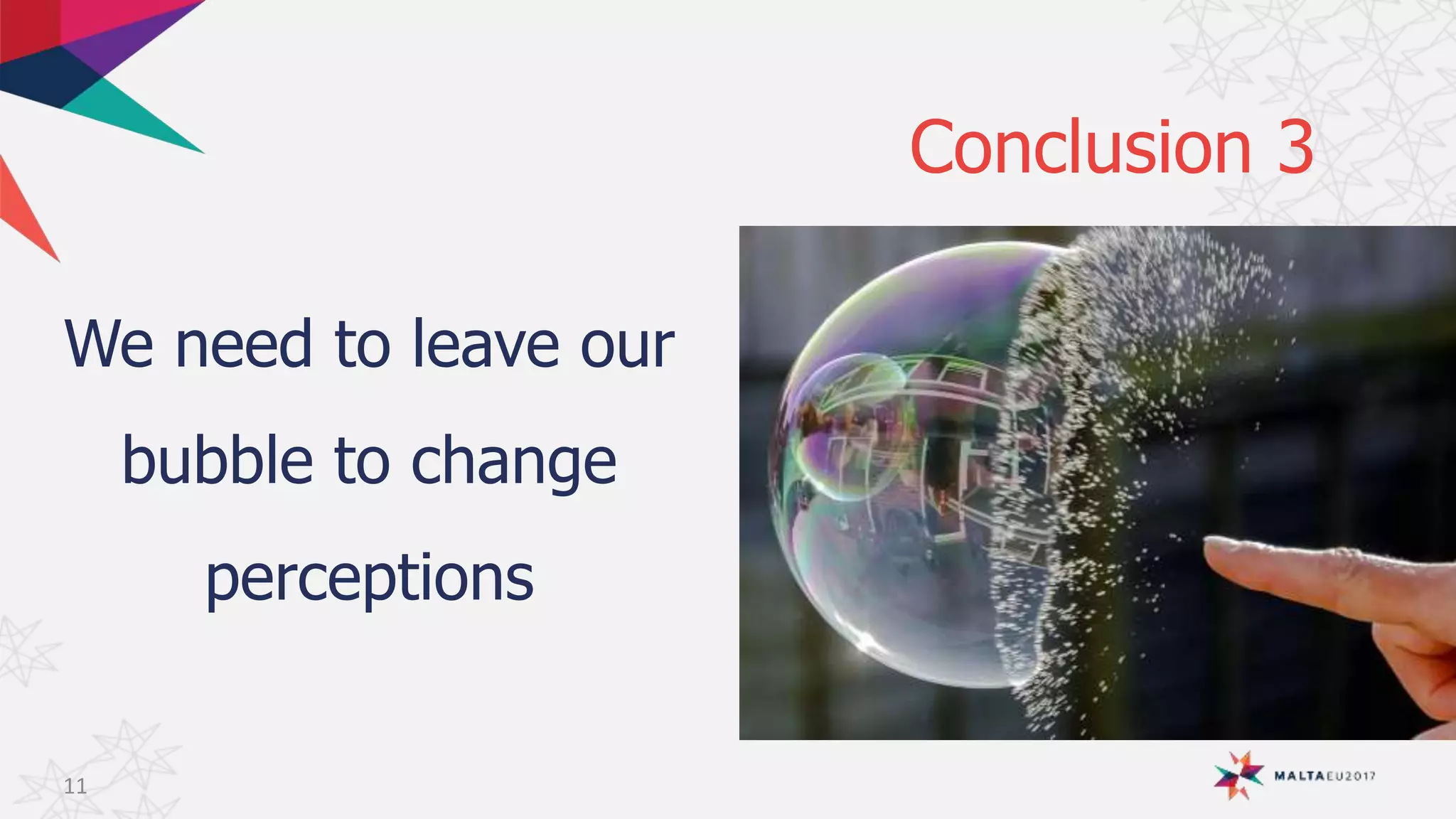
Conclusion 3
11
We need to leave our
bubble to change
perceptions
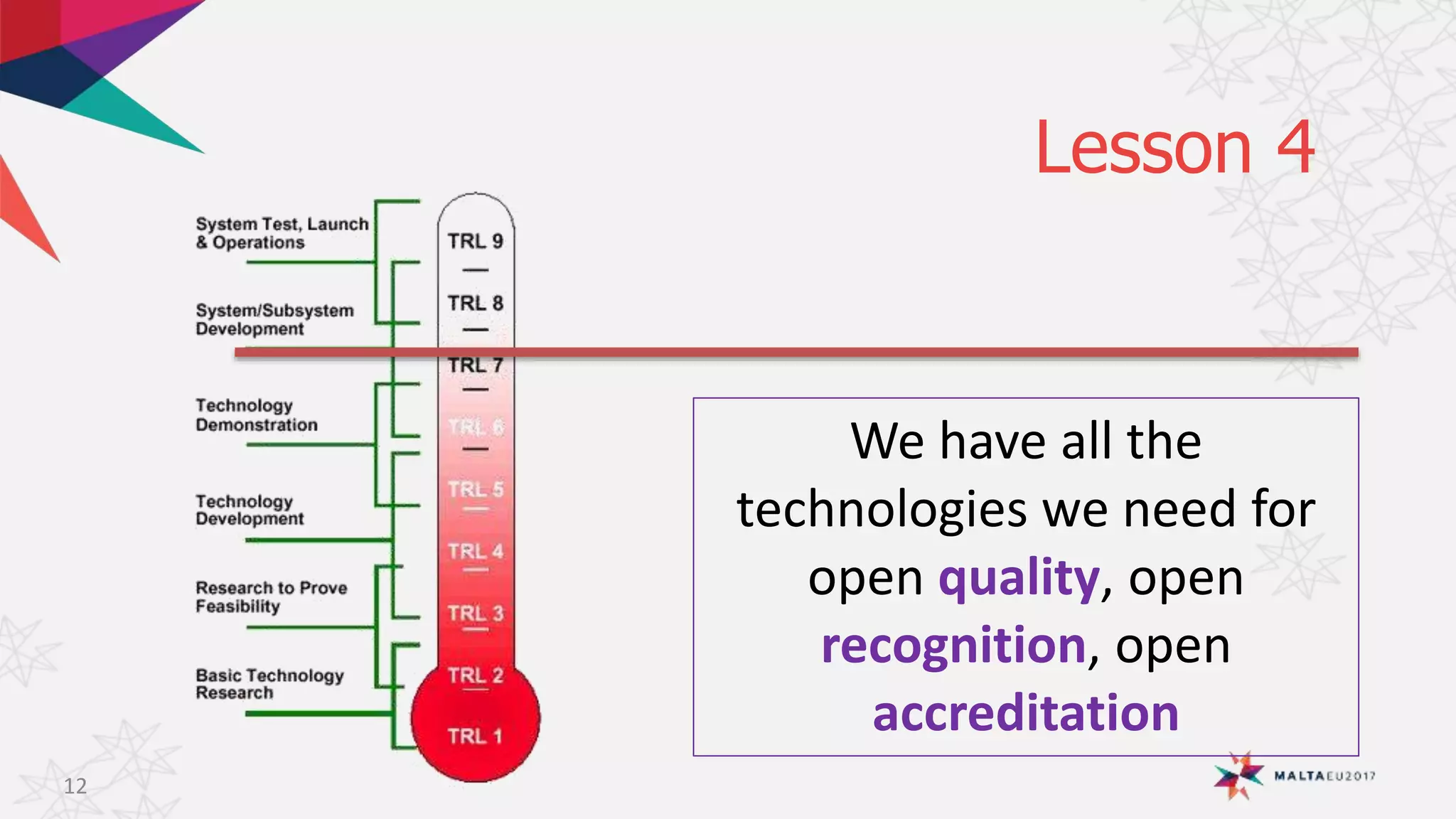
Lesson 4
12
We have all the
technologies we need for
open quality, open
recognition, open
accreditation
Lesson 4
13
Accreditation & QA
of digital learning
are a scale-up problem
Innovation & Digital Pedagogies
Lesson 5
European Publicly Funded HE
is the real use case
for (original)
MOOCs
15
Lesson 6
Unbundling is
unstoppable
16
who will lead the
micro-credentials
revolution?
Lesson 7
(Digital) Pedagogies
are still immature
17
18
Teachers, learners
and digital education
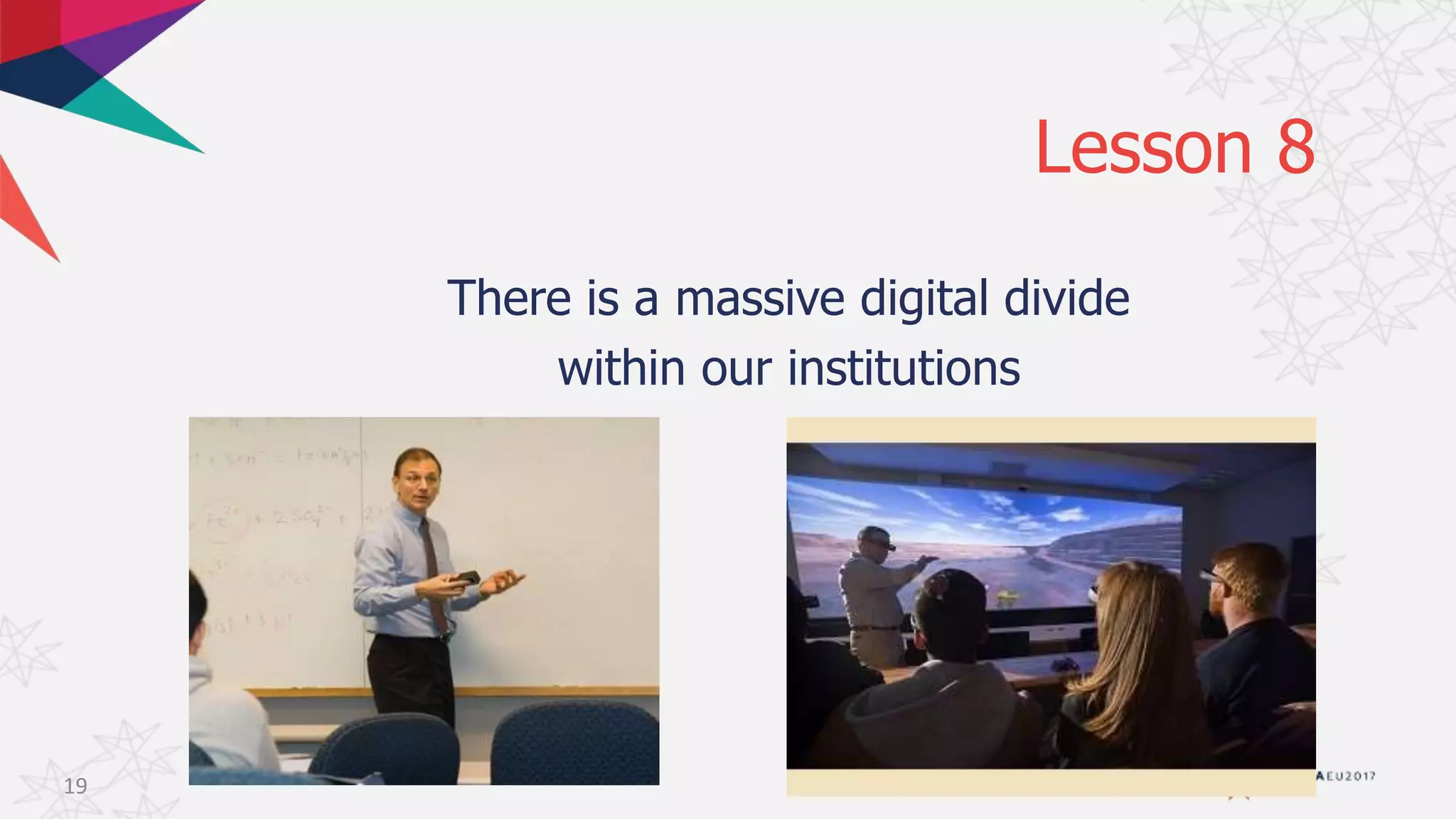
There is a massive digital divide
within our institutions
Lesson 8
19
Lesson 9
Technology has already created
a global faculty and student body
20
Future trends in digital
education
21
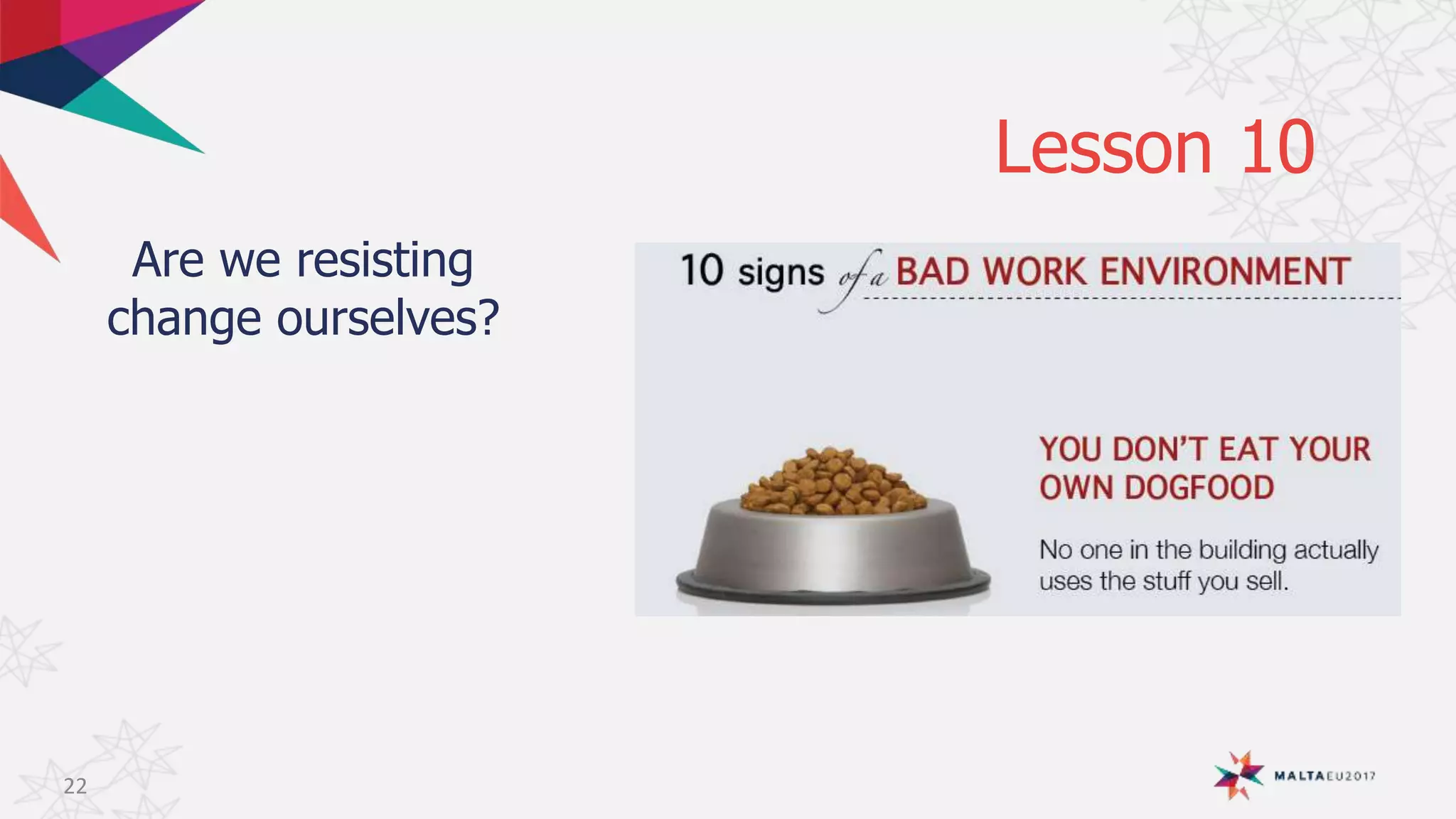
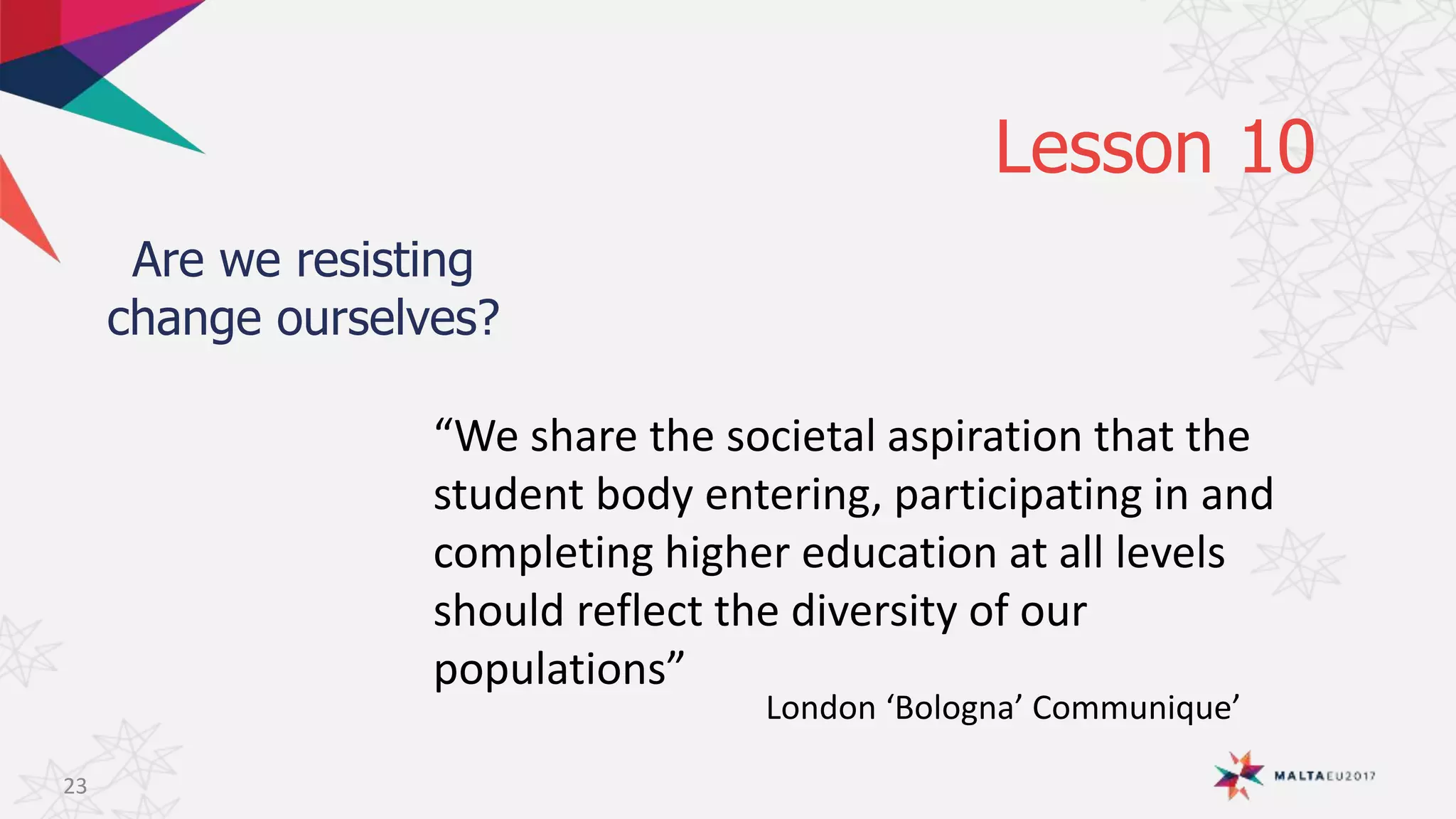
Lesson 10
Are we resisting
change ourselves?
22
Lesson 10
Are we resisting
change ourselves?
23
“We share the societal aspiration that the
student body entering, participating in and
completing higher education at all levels
should reflect the diversity of our
populations”
London ‘Bologna’ Communique’
The dominant paradigm in
looking at the future is
CHANGE
Lesson 11
24
The dominant paradigm in
looking at the future is
DISRUPTION
Lesson 11
25
The dominant paradigm in
looking at the future is
FEAR
Lesson 11
26
Best Practices in Policy Design
for Digital Education
27
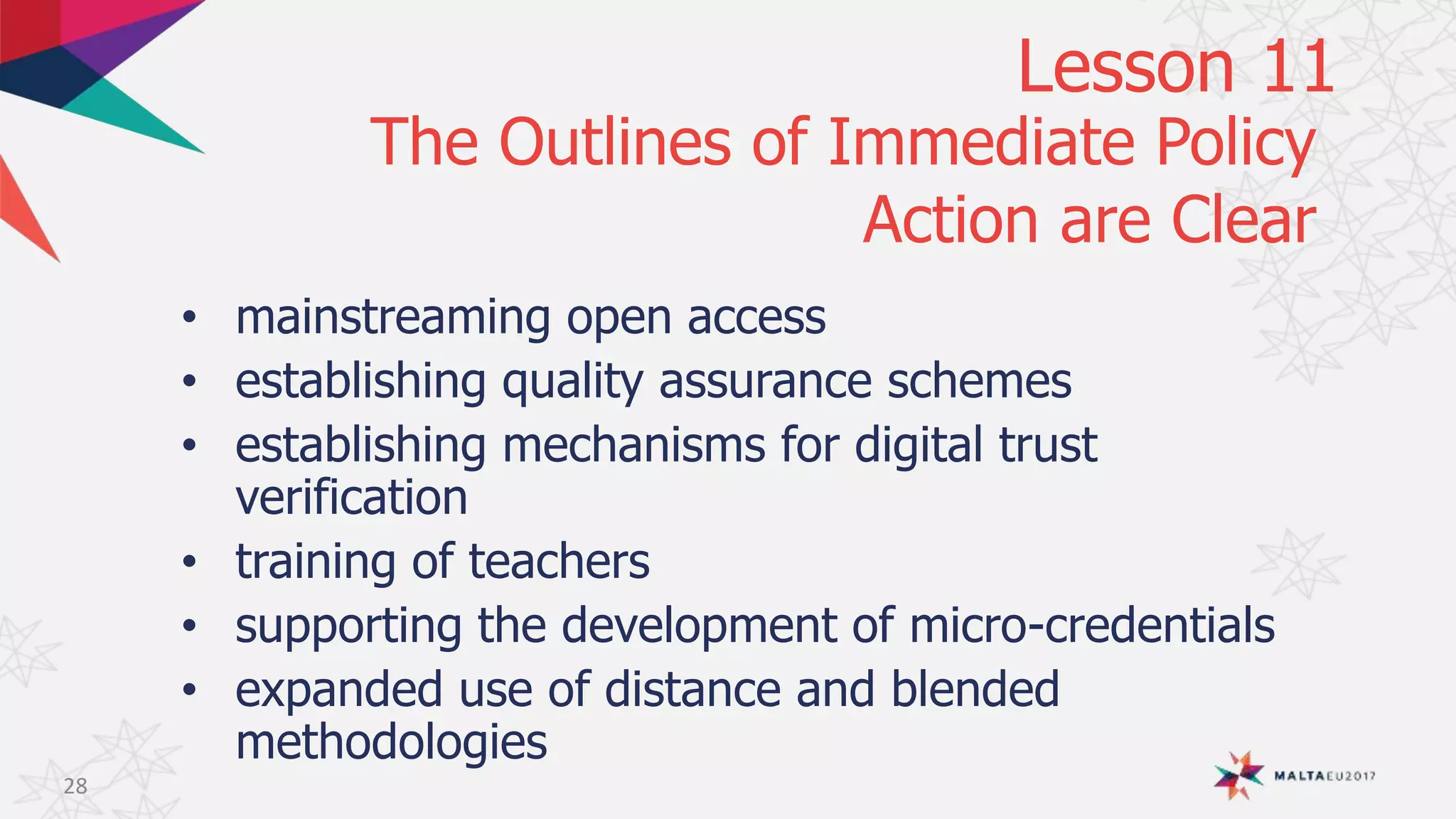
• mainstreaming open access
• establishing quality assurance schemes
• establishing mechanisms for digital trust
verification
• training of teachers
• supporting the development of micro-credentials
• expanded use of distance and blended
methodologies
The Outlines of Immediate Policy
Action are Clear
28
Lesson 11
Lesson 12
What are the desirable
future scenarios for our
society?
What is digital
education’s role in
accelerating it?
29
•Learning to know
•Learning to do
•Learning to be
•Learning to live together
Lesson 13
The State of Digital Education Today is
reactive
30
Stop Reacting
T h e r o l e o f E d u c a t i o n i s t o L e a d
Lesson 13
31
Lesson 13
“There has never been a time
when people from across the
globe have to come together
to learn at this scale”
Jeff Haywood
32
What did you learn today?
anthony@knowledgeinnovation.eu
https://www.slideshare.net/anthonycamilleri/

The State of Digital Education: What I learned