Power of Clarifying :  A Comparative Analysis of Strategies That Strengthen Comprehension Presenter: Andrew Liaw Instructor: Dr. Pi-Ying Hsu Dec. 10, 200 9
Citation Lubliner, S. (2002).  The power of clarifying:  A comparative analysis of strategies that strengthen comprehension.  Paper presented at the annual meeting of the American Education Research Association, New Orleans, LA.
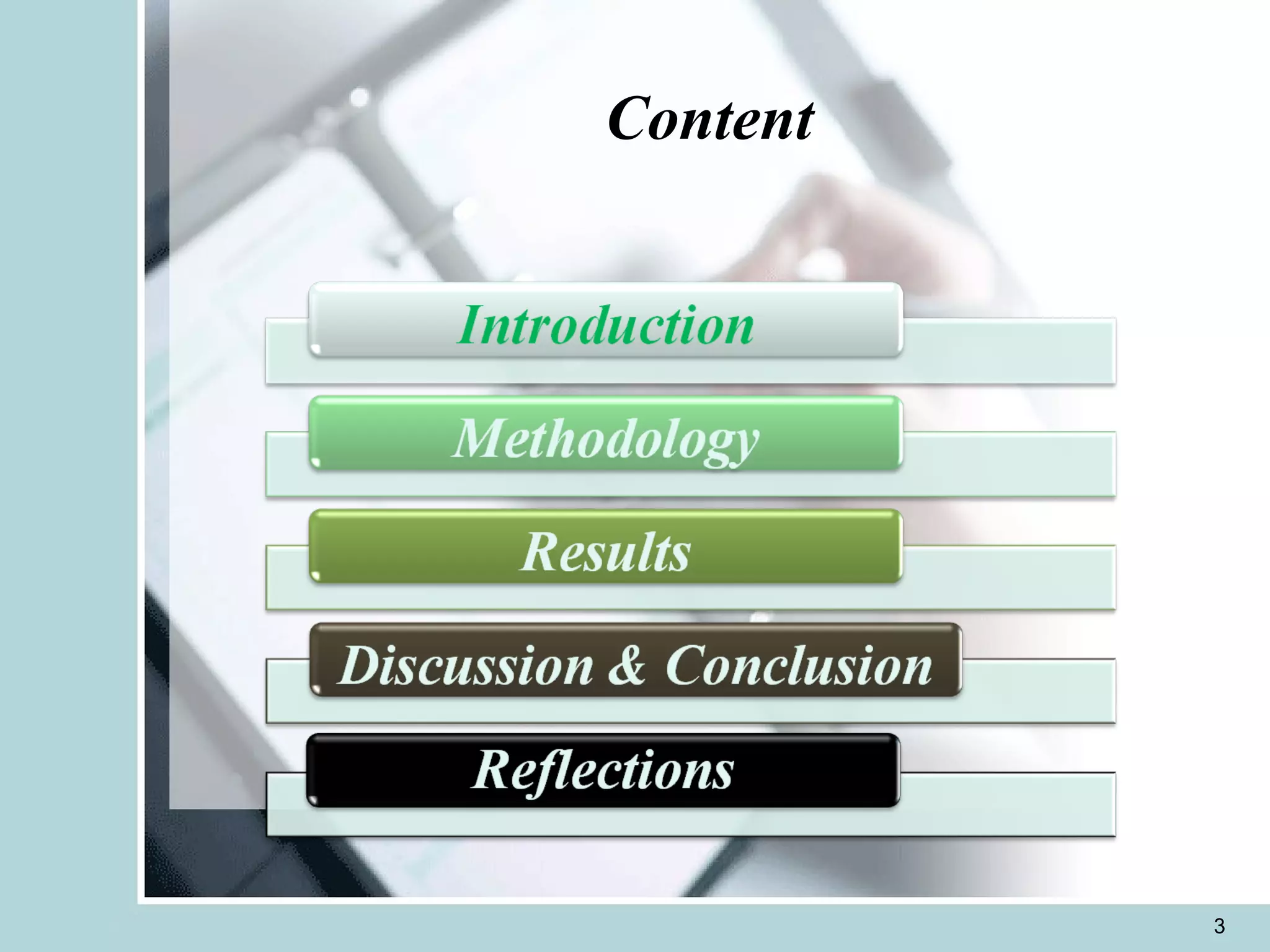
Content
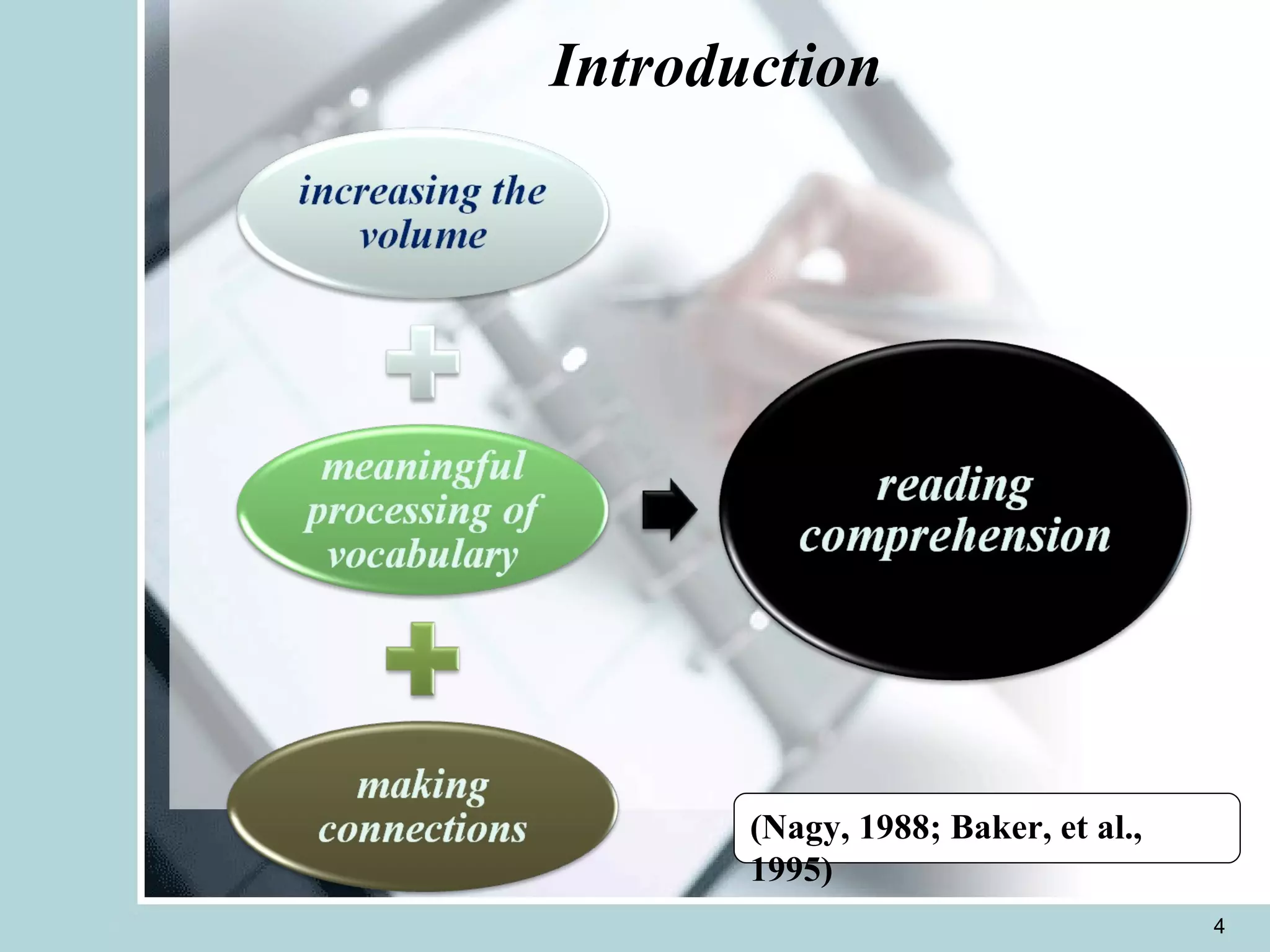
Introduction (Nagy, 1988; Baker, et al., 1995)
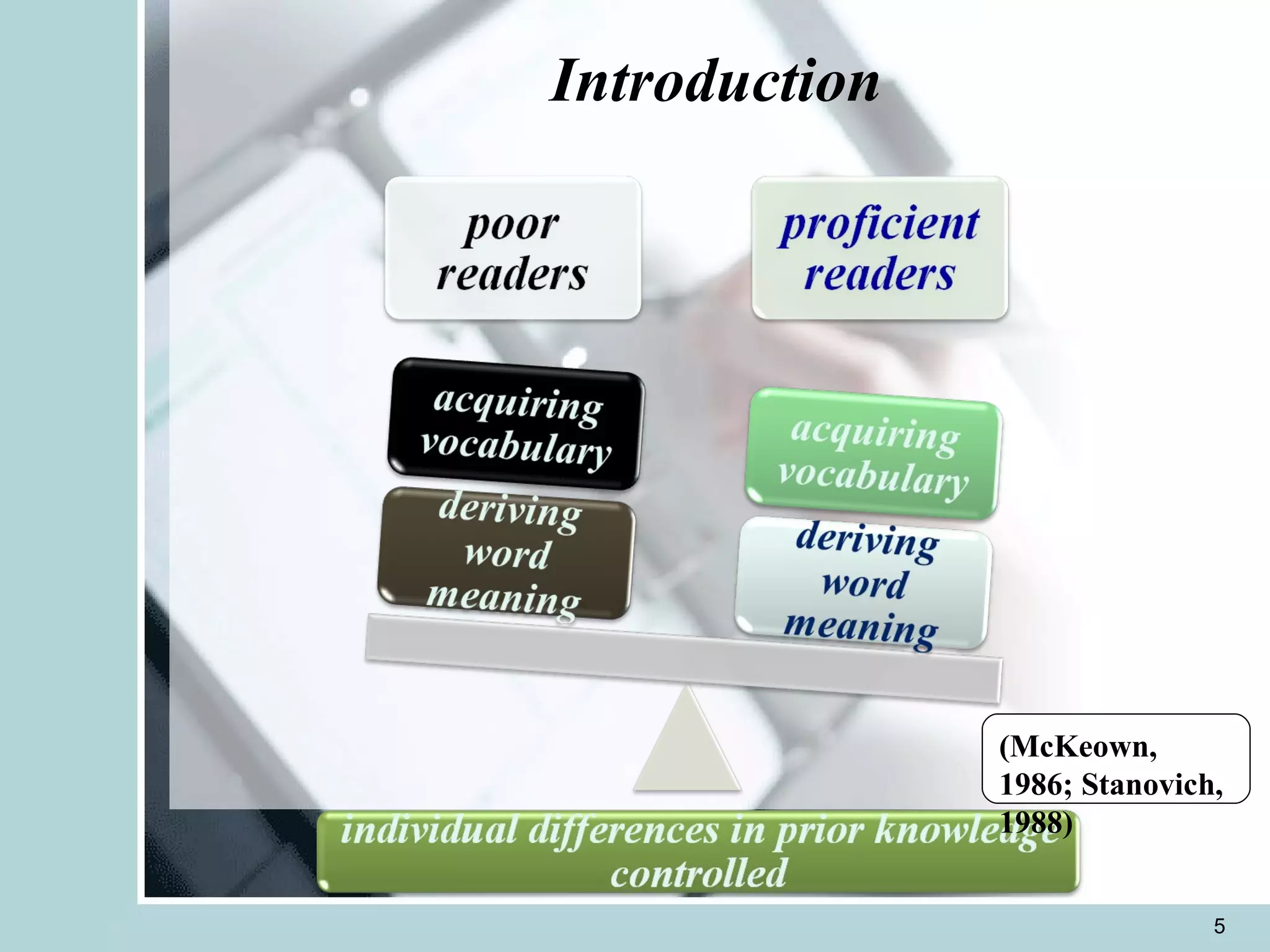
Introduction (McKeown, 1986; Stanovich, 1988)
Rationale Cognitive strategy : Questioning It is clearly conceptualized in the cognitive strategy literature, and methods of questioning instruction are explicitly defined.   (Dunkin, 1978)
Rationale Cognitive strategy :  Clarifying  It is possible that  inadequate teacher understanding  of the clarifying strategy resulted in ineffective instruction and limited implementation by students     (Rosenshine & Meister, 1994)
Purpose  to compare the relative effectiveness  of        a) questioning, b) clarifying, and c) combination, on students’ reading comprehension and word comprehension  encountered during reading
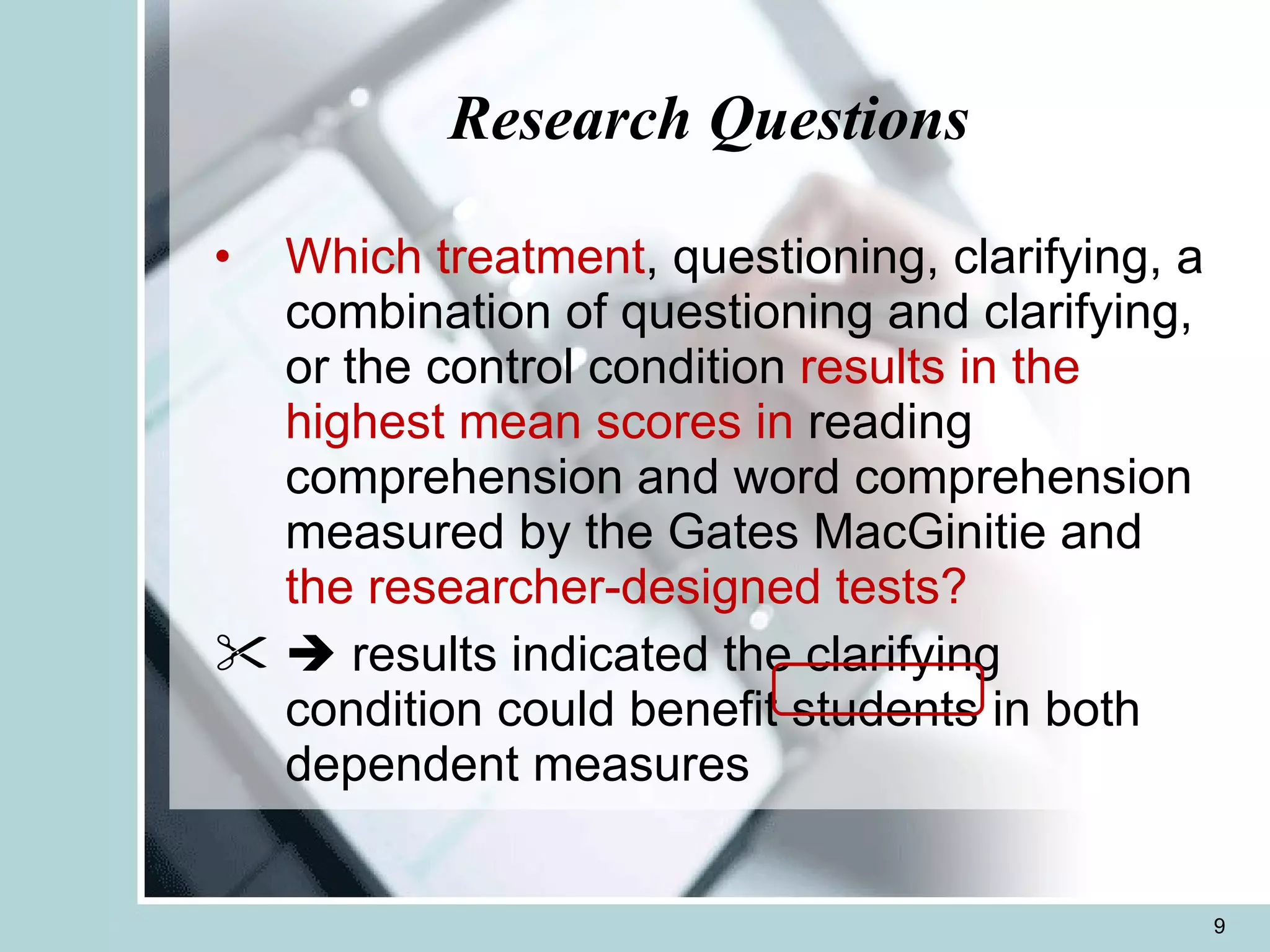
Research Questions Which treatment , questioning, clarifying, a combination of questioning and clarifying, or the control condition  results in the highest mean scores in  reading comprehension and word comprehension measured by the Gates MacGinitie and  the researcher-designed tests?    results indicated the clarifying condition could benefit students in both dependent measures
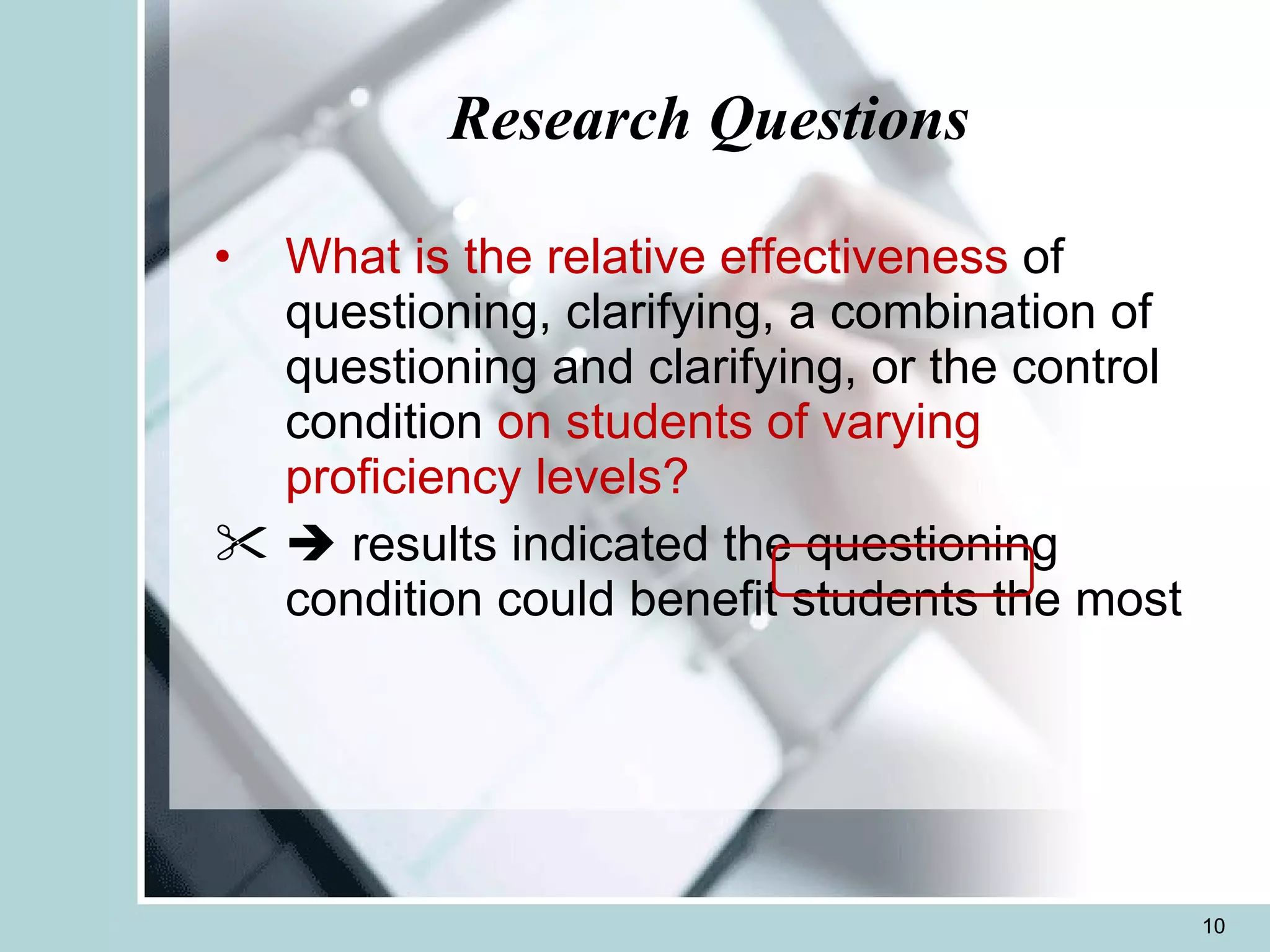
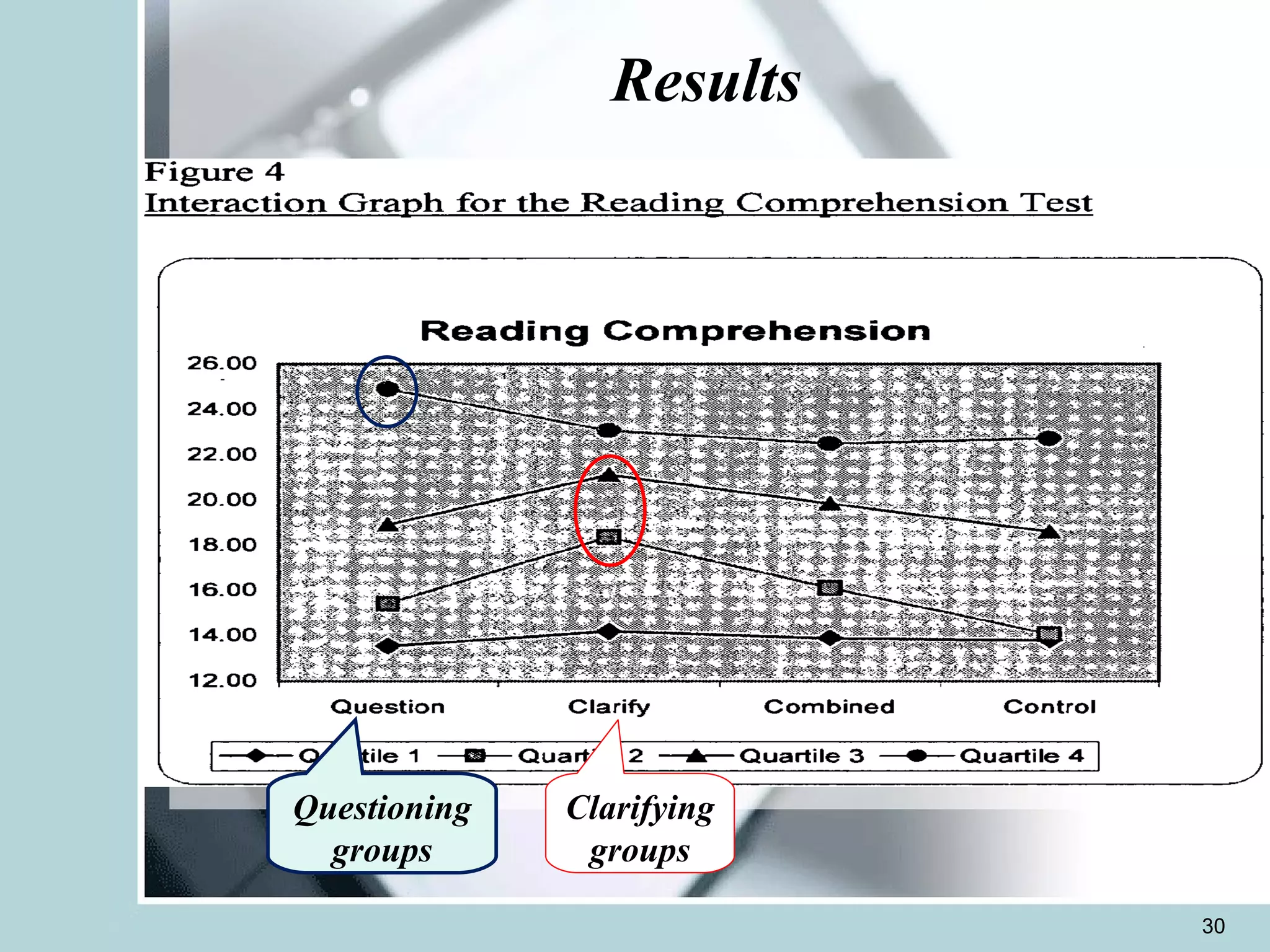
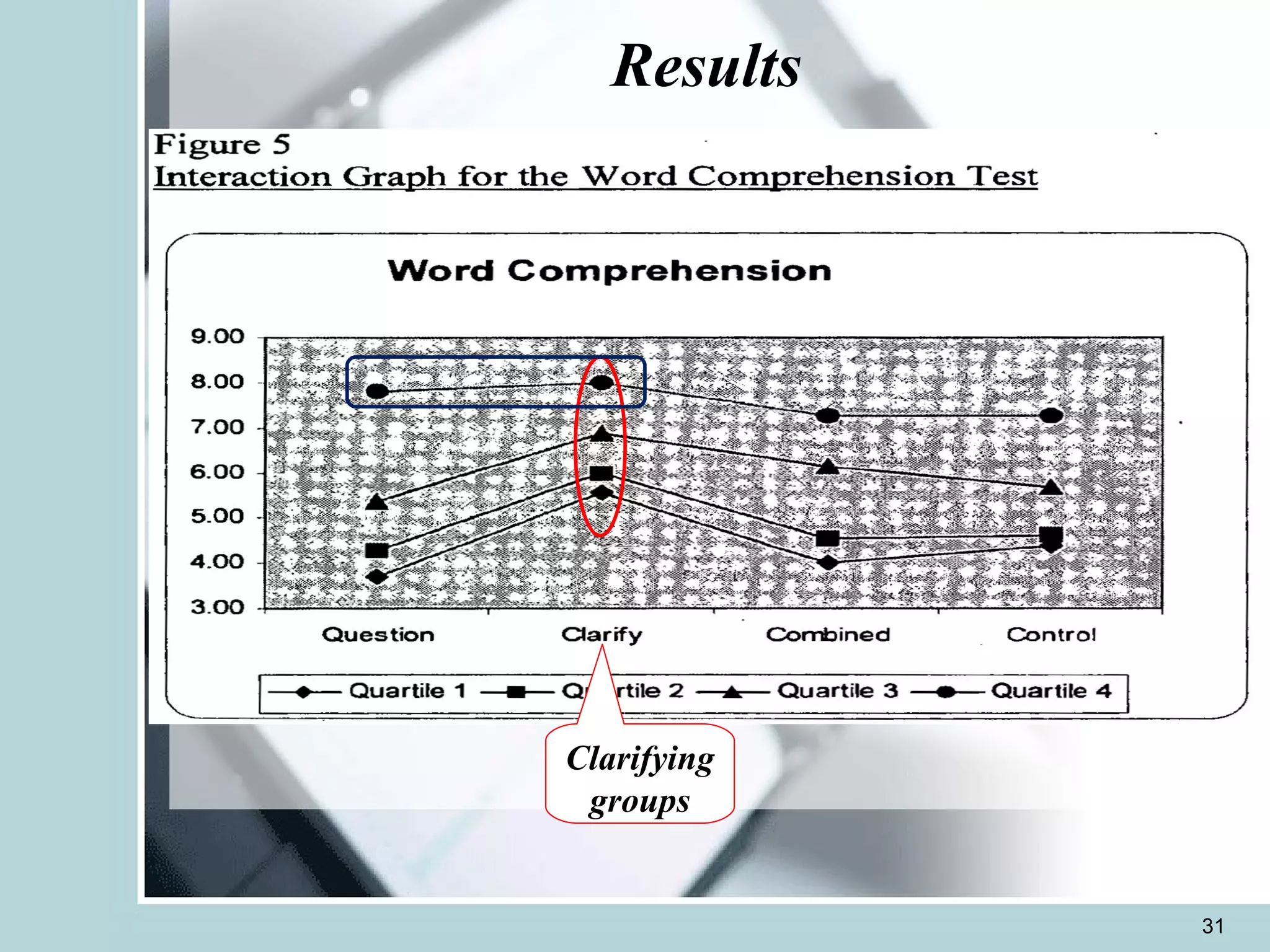
Research Questions What is the relative effectiveness  of questioning, clarifying, a combination of questioning and clarifying, or the control condition  on students of varying proficiency levels?    results indicated the questioning condition could benefit students the most
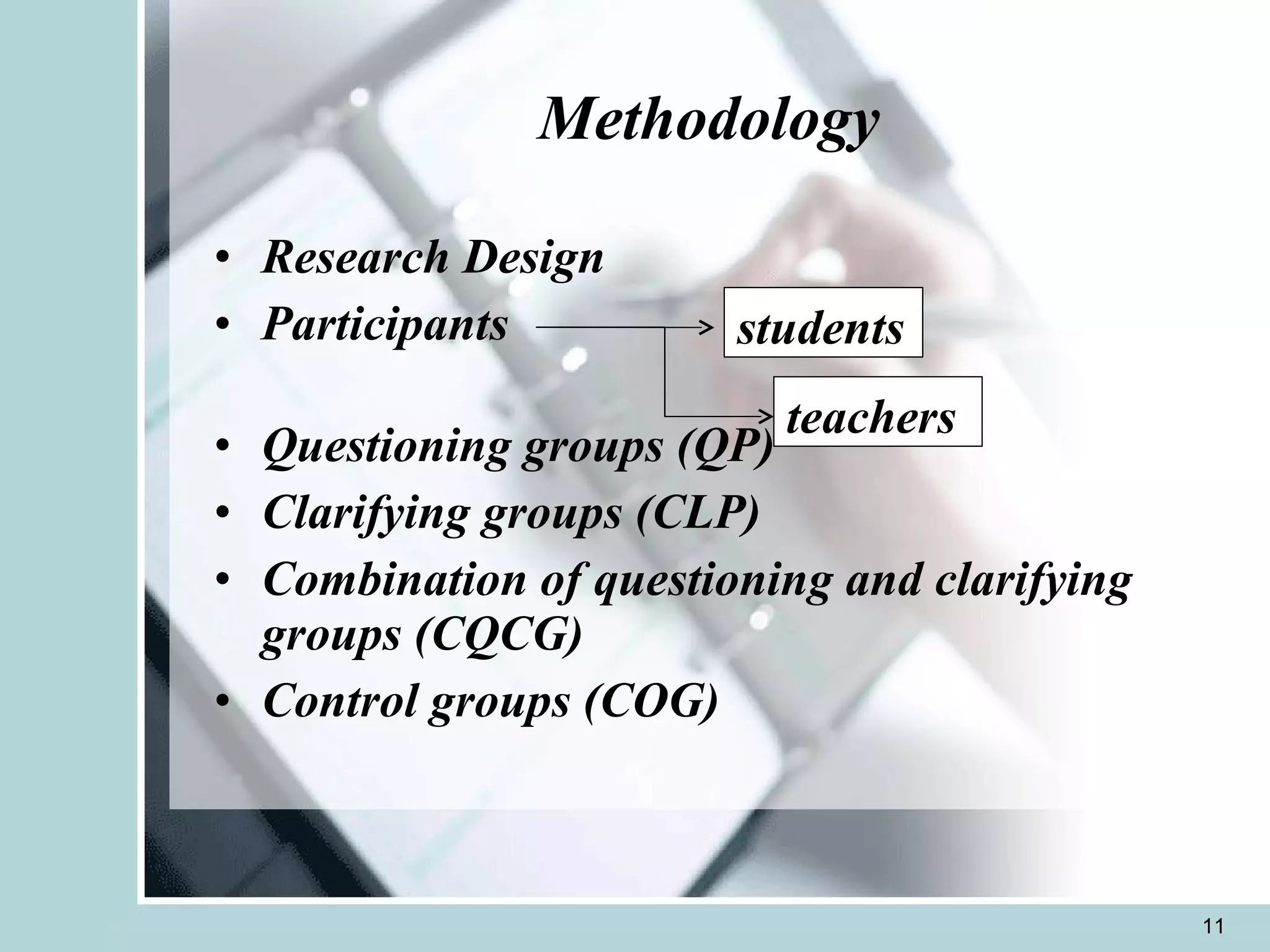
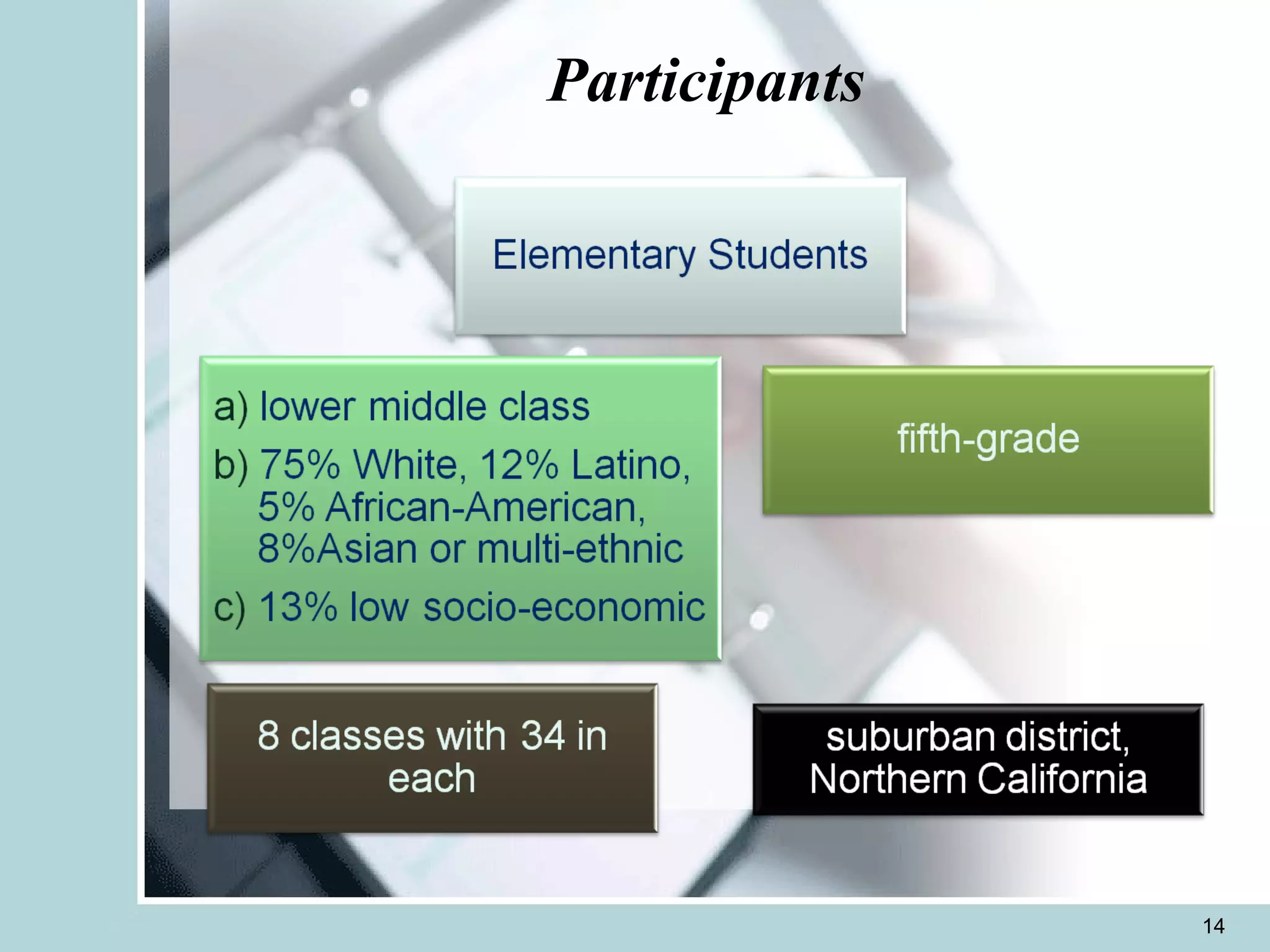
Methodology Research Design Participants Questioning groups (QP) Clarifying groups (CLP) Combination of questioning and clarifying groups (CQCG) Control groups (COG) students teachers
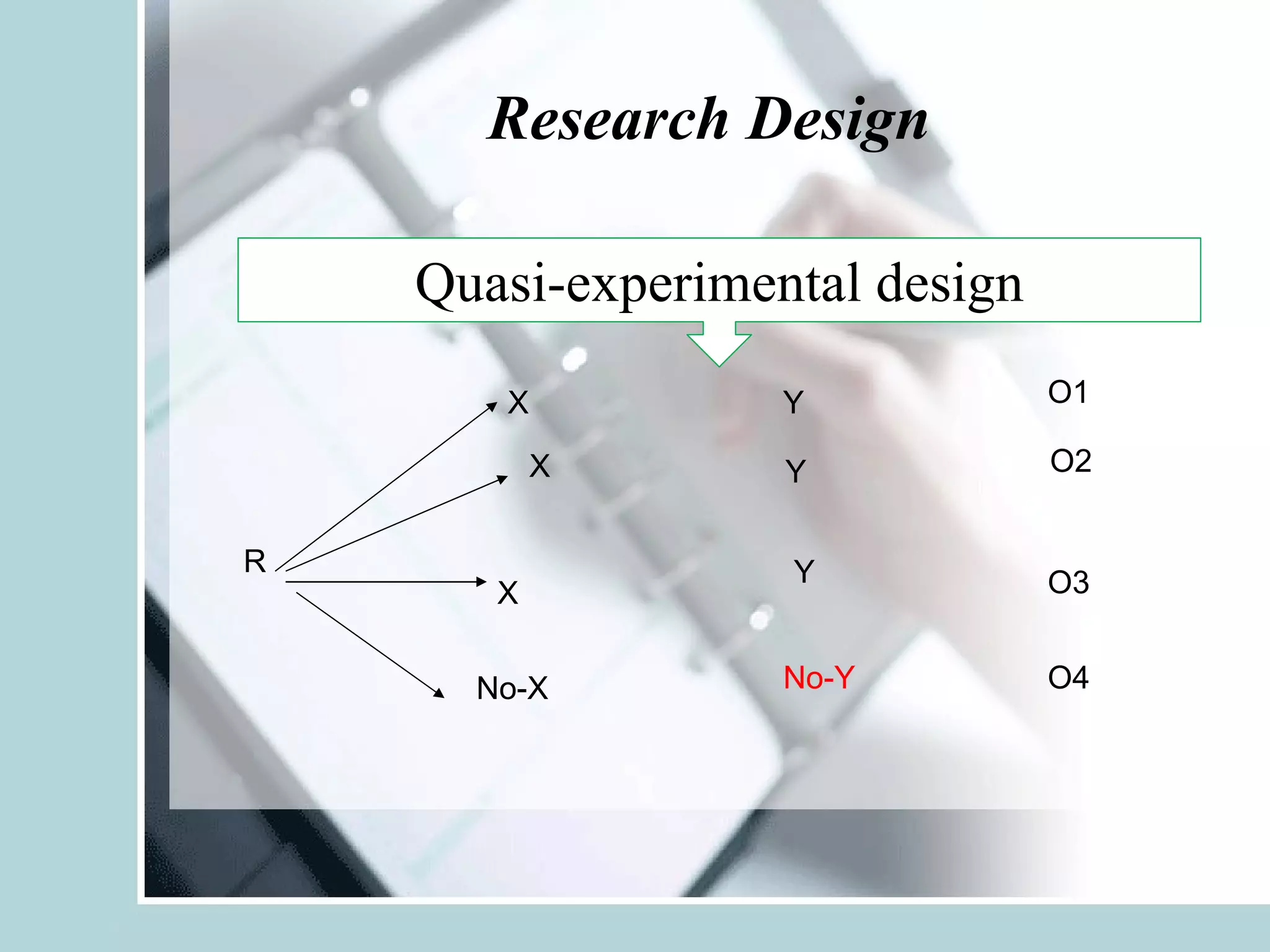
Research Design R X X X No-X Y Y Y No-Y O1 O2 O3 O4 Quasi-experimental design
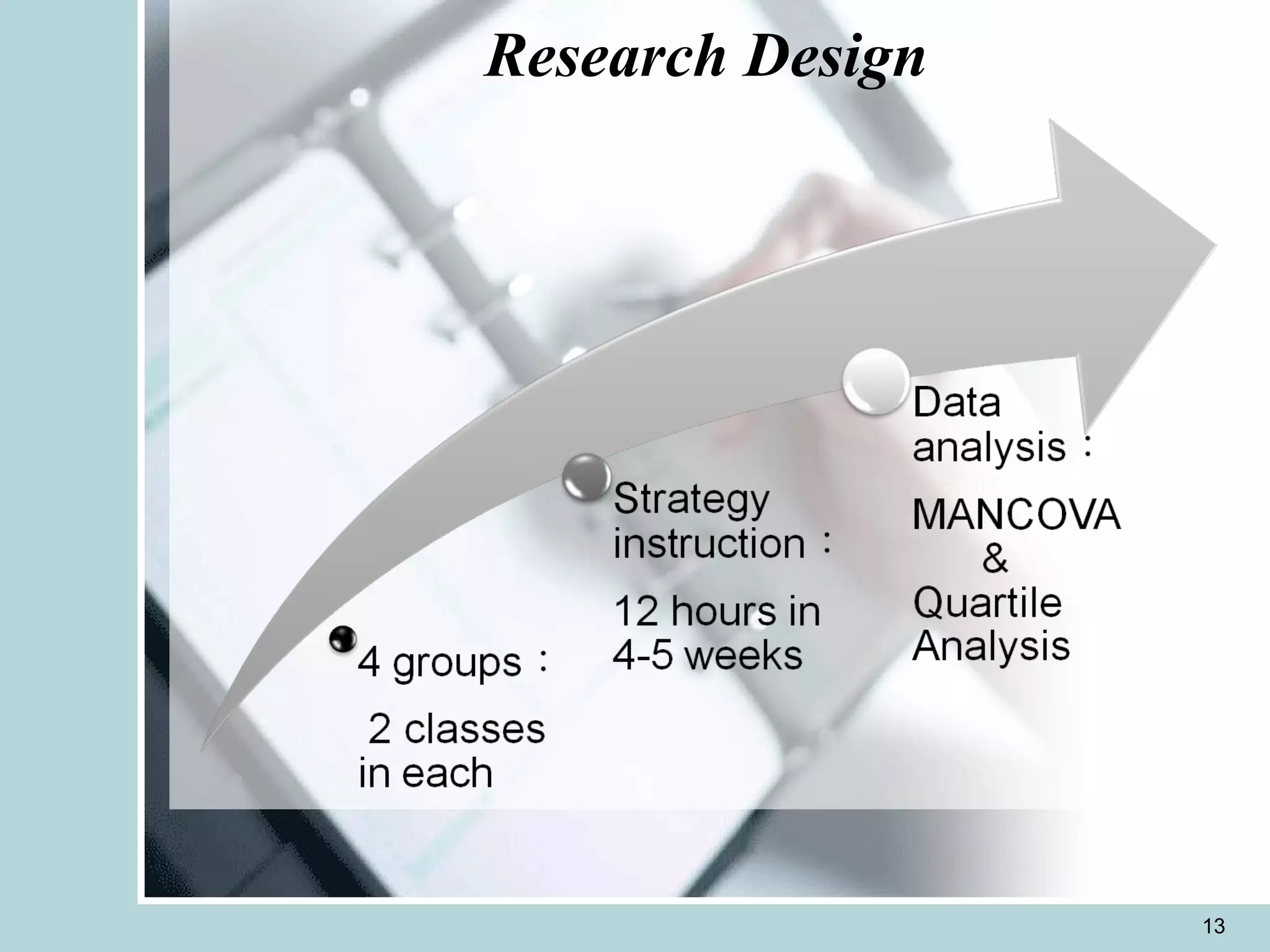
Research Design
Participants
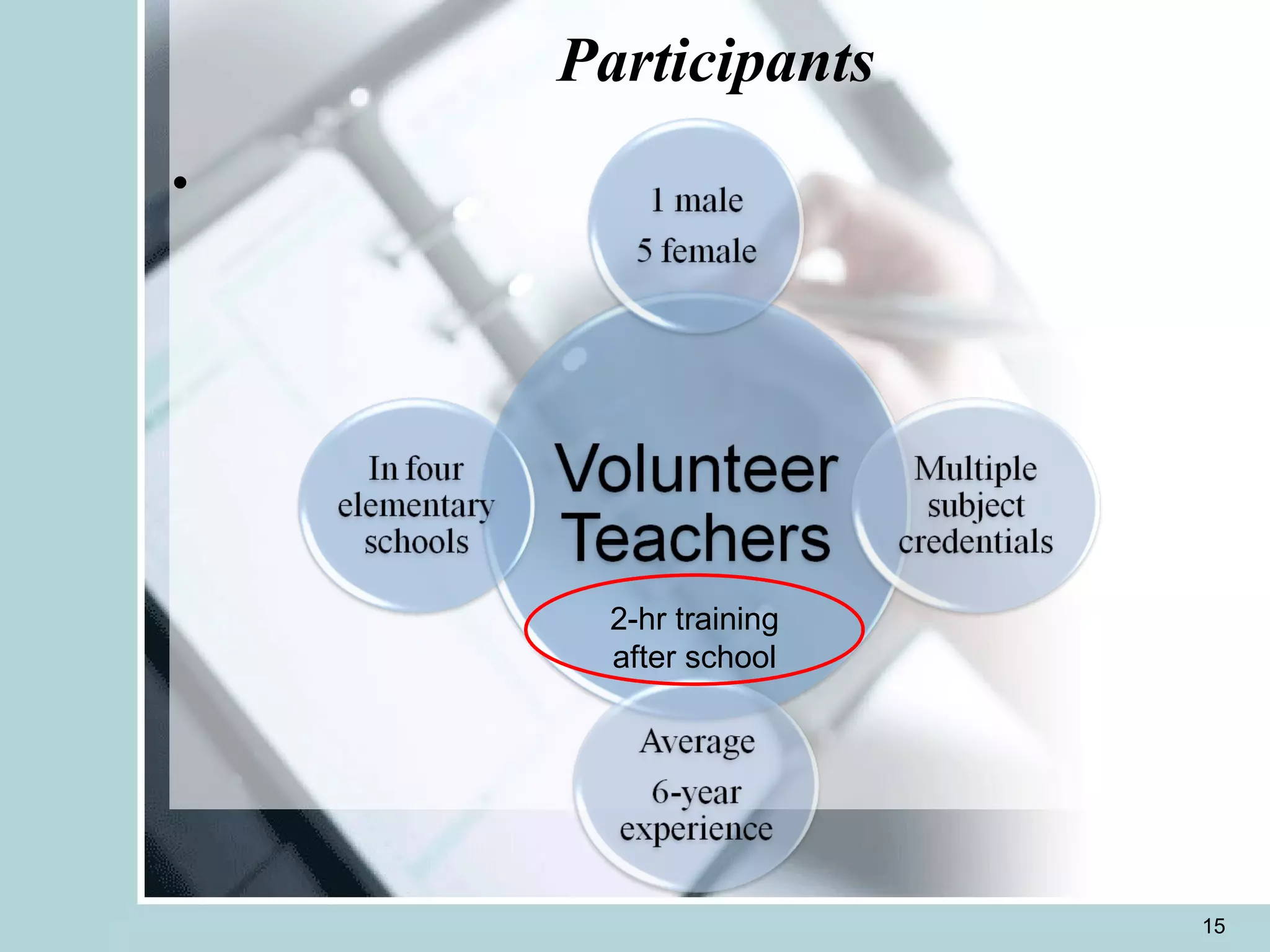
Participants 2-hr training after school
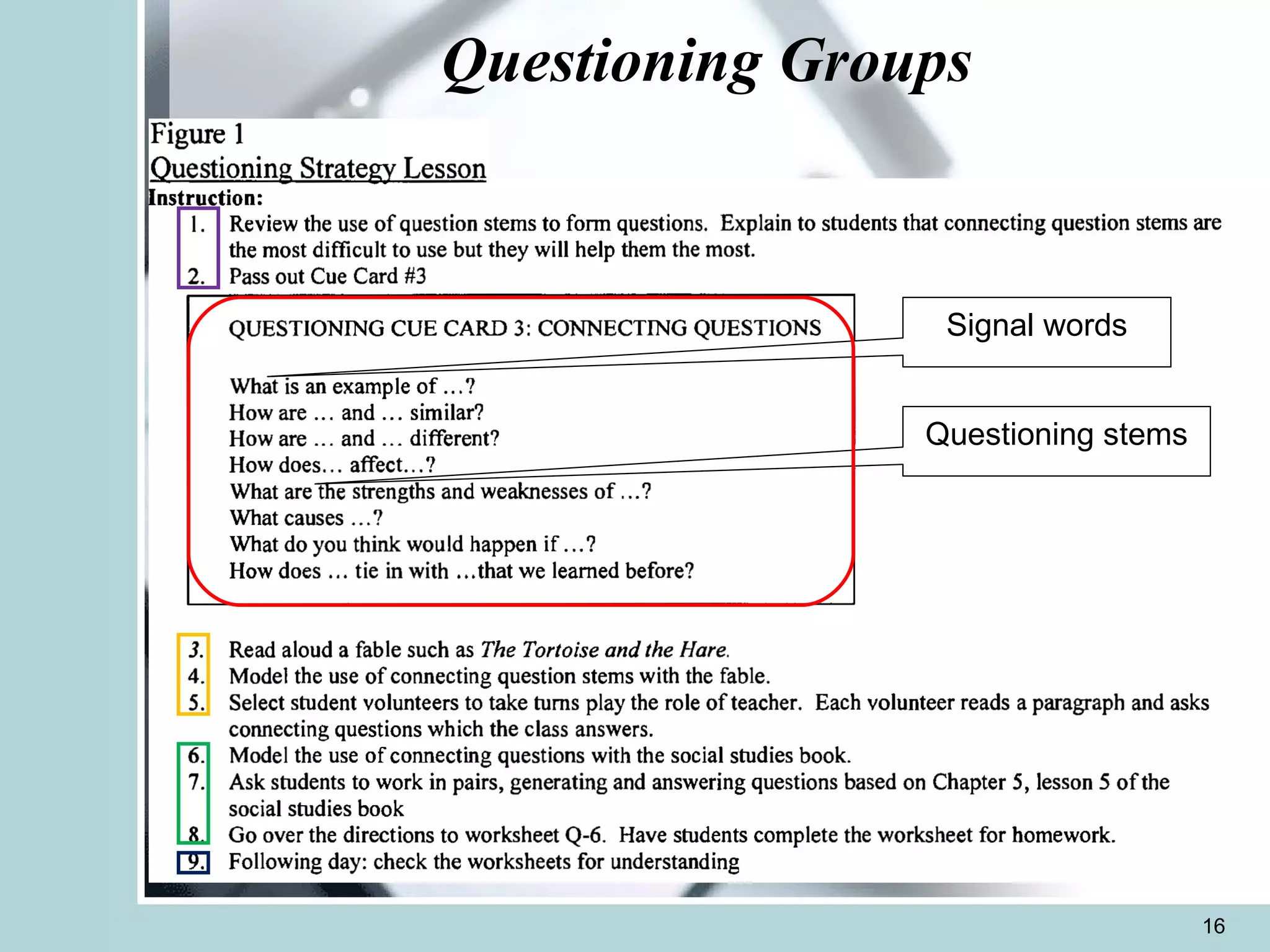
Questioning Groups Signal words Questioning stems
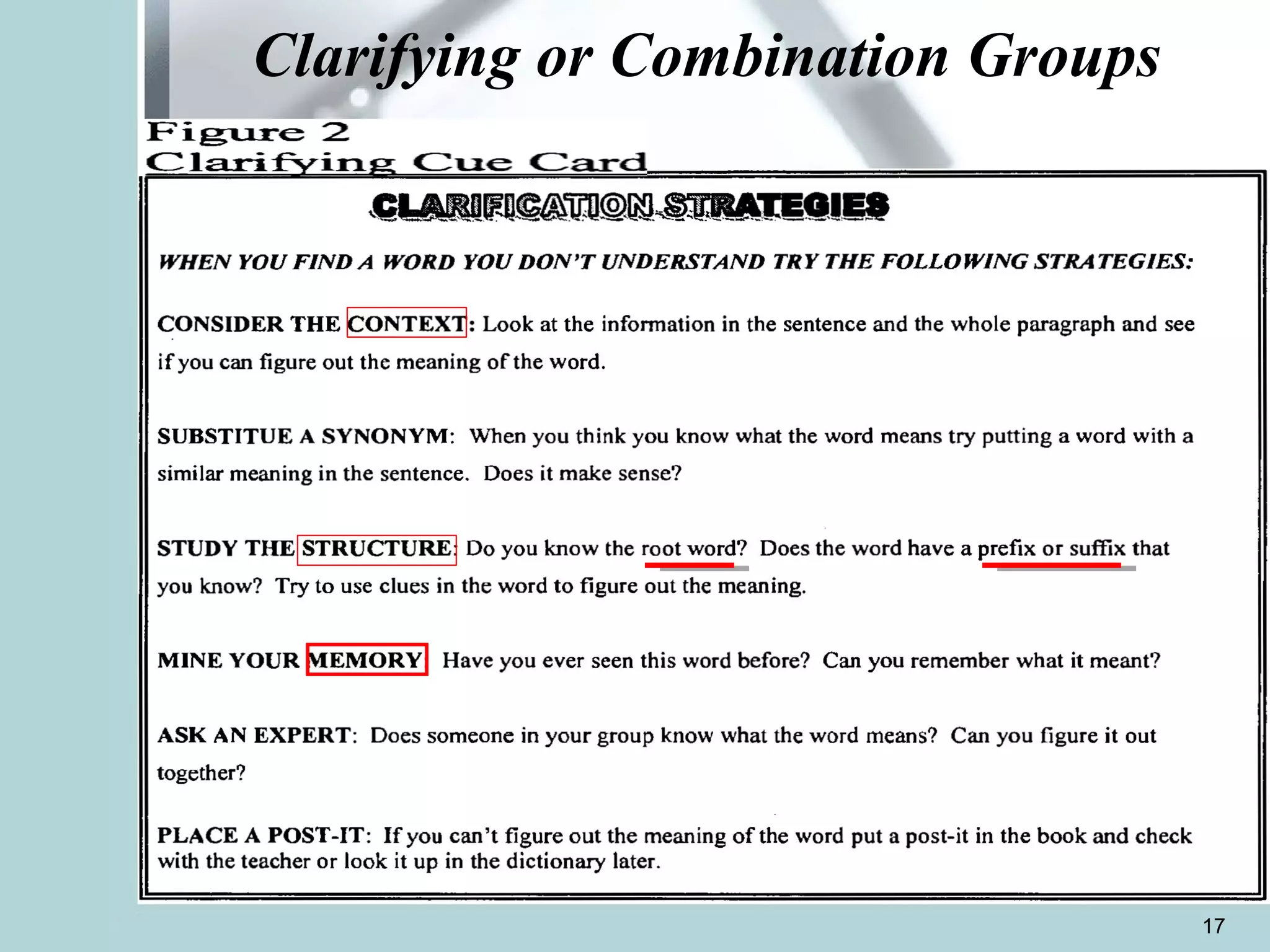
Clarifying or Combination Groups
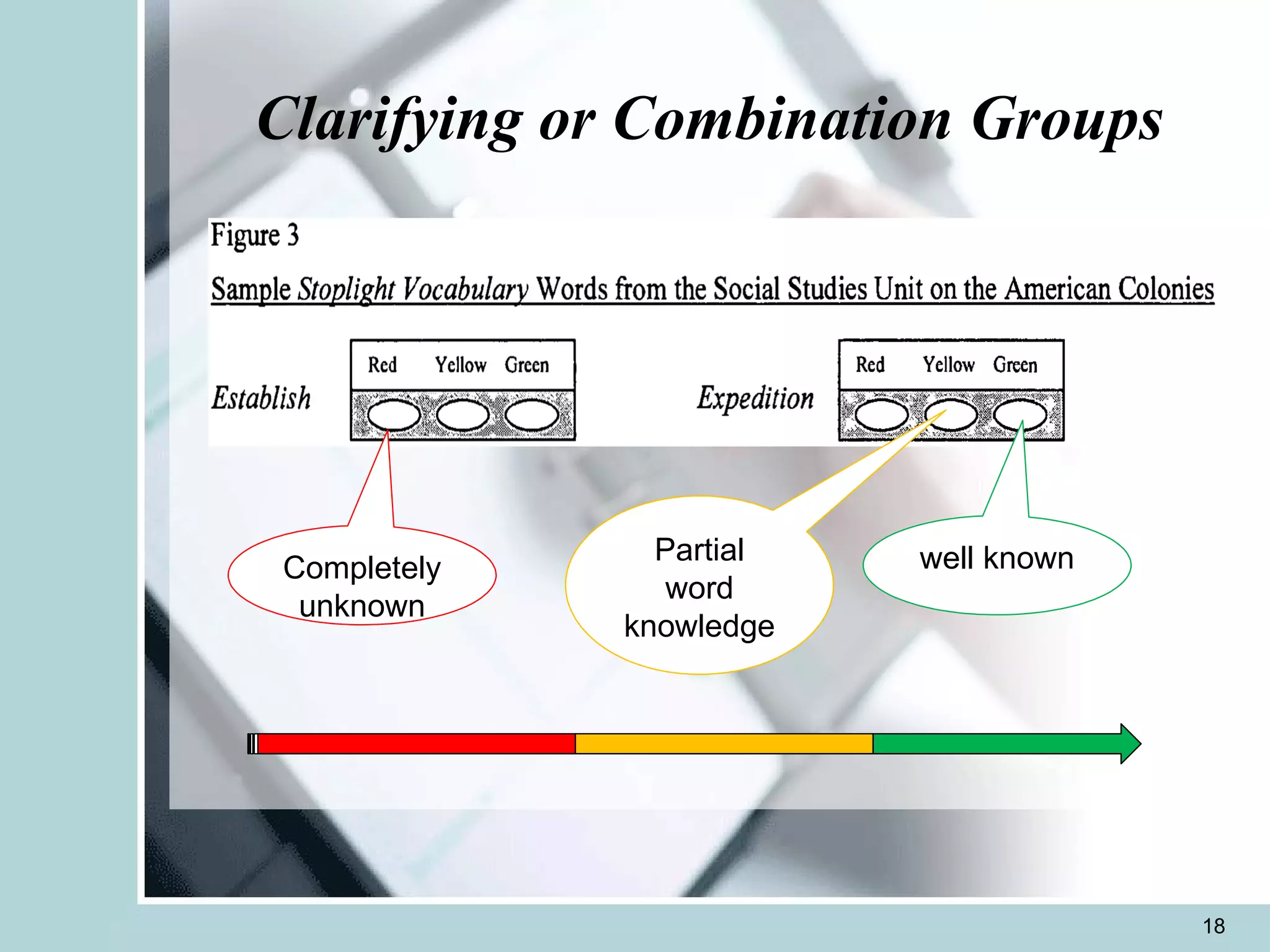
Clarifying or Combination Groups Completely unknown Partial word knowledge well known
Questioning and Clarifying Groups
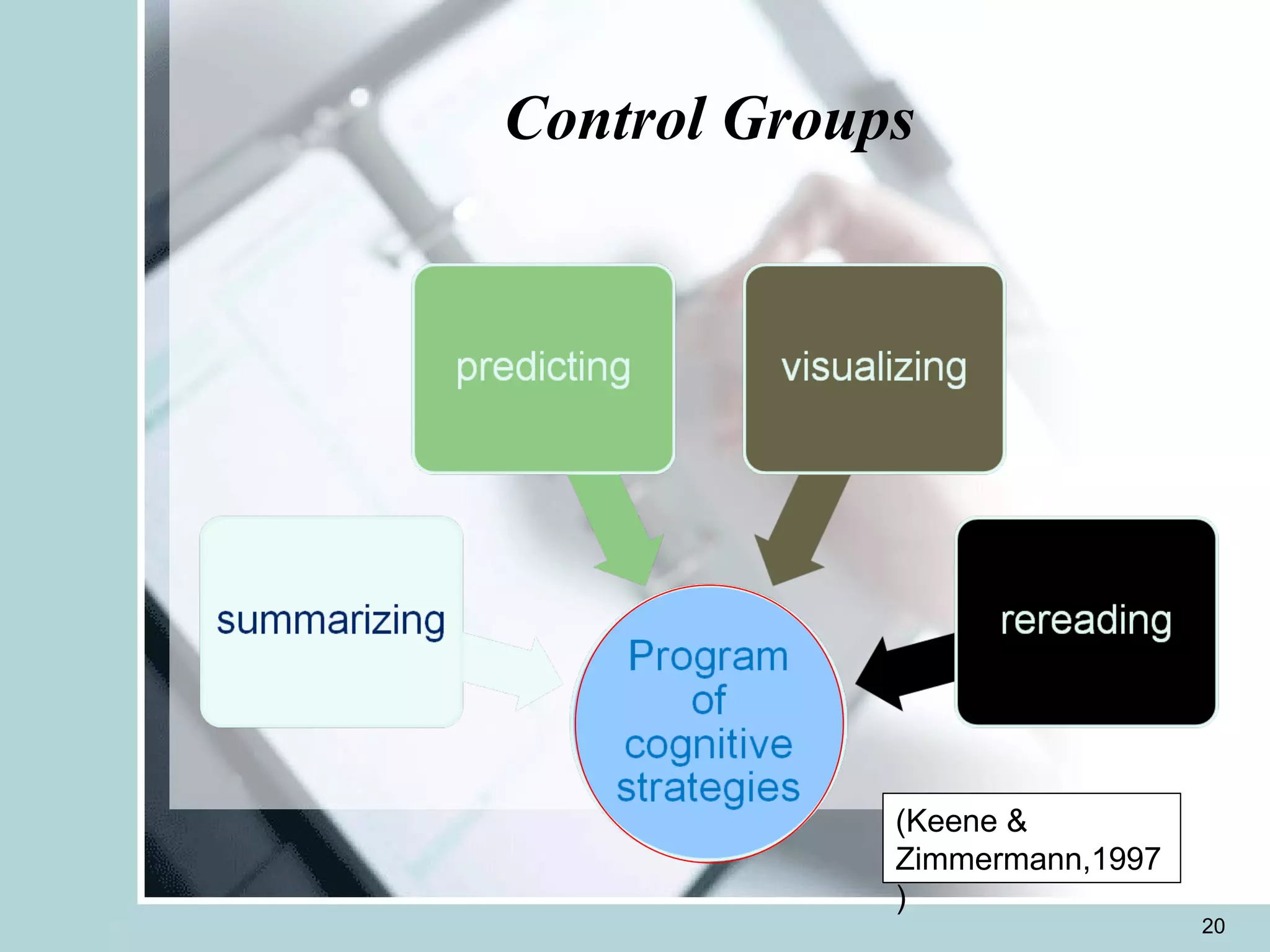
Control Groups (Keene & Zimmermann,1997)
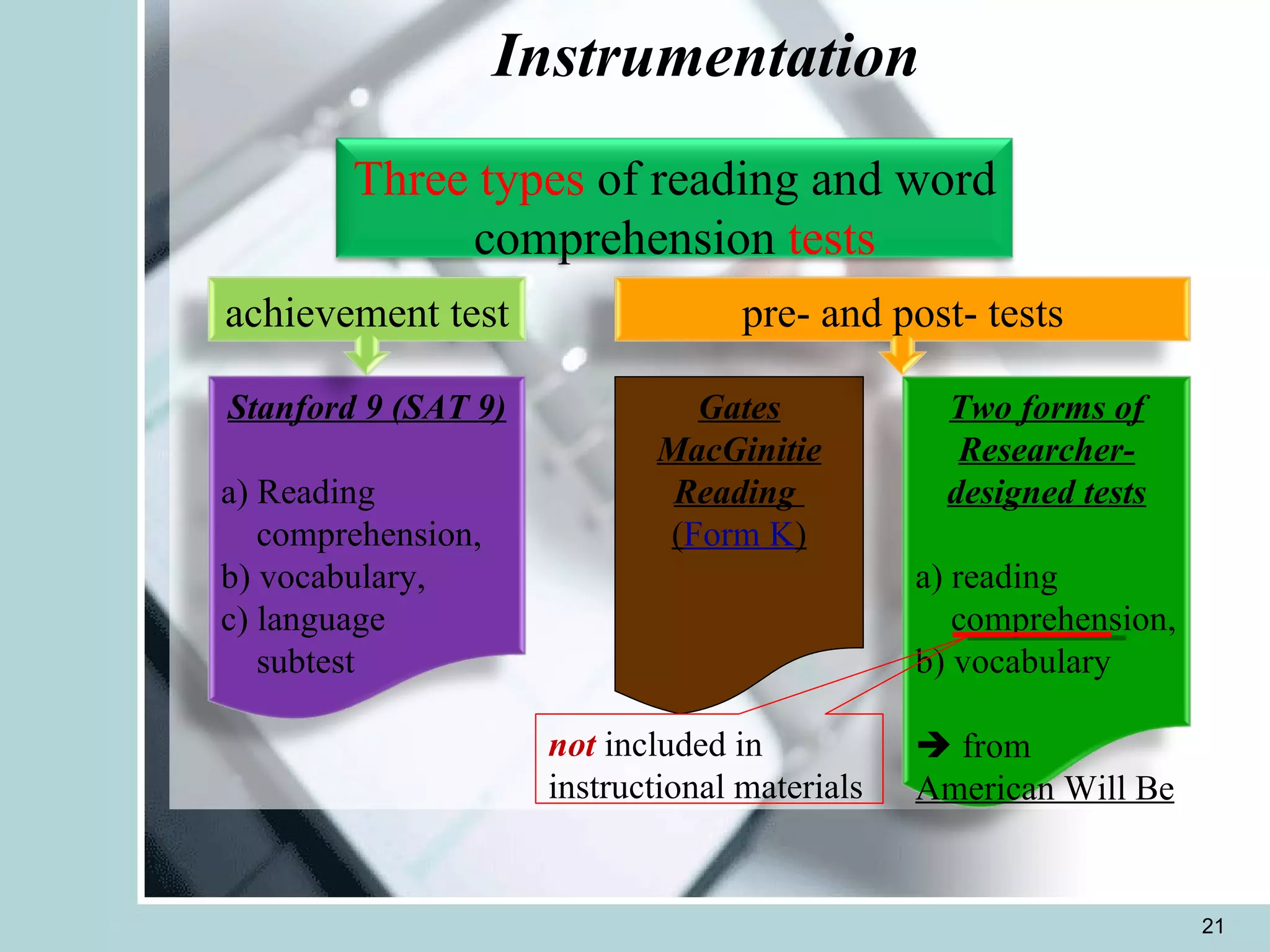
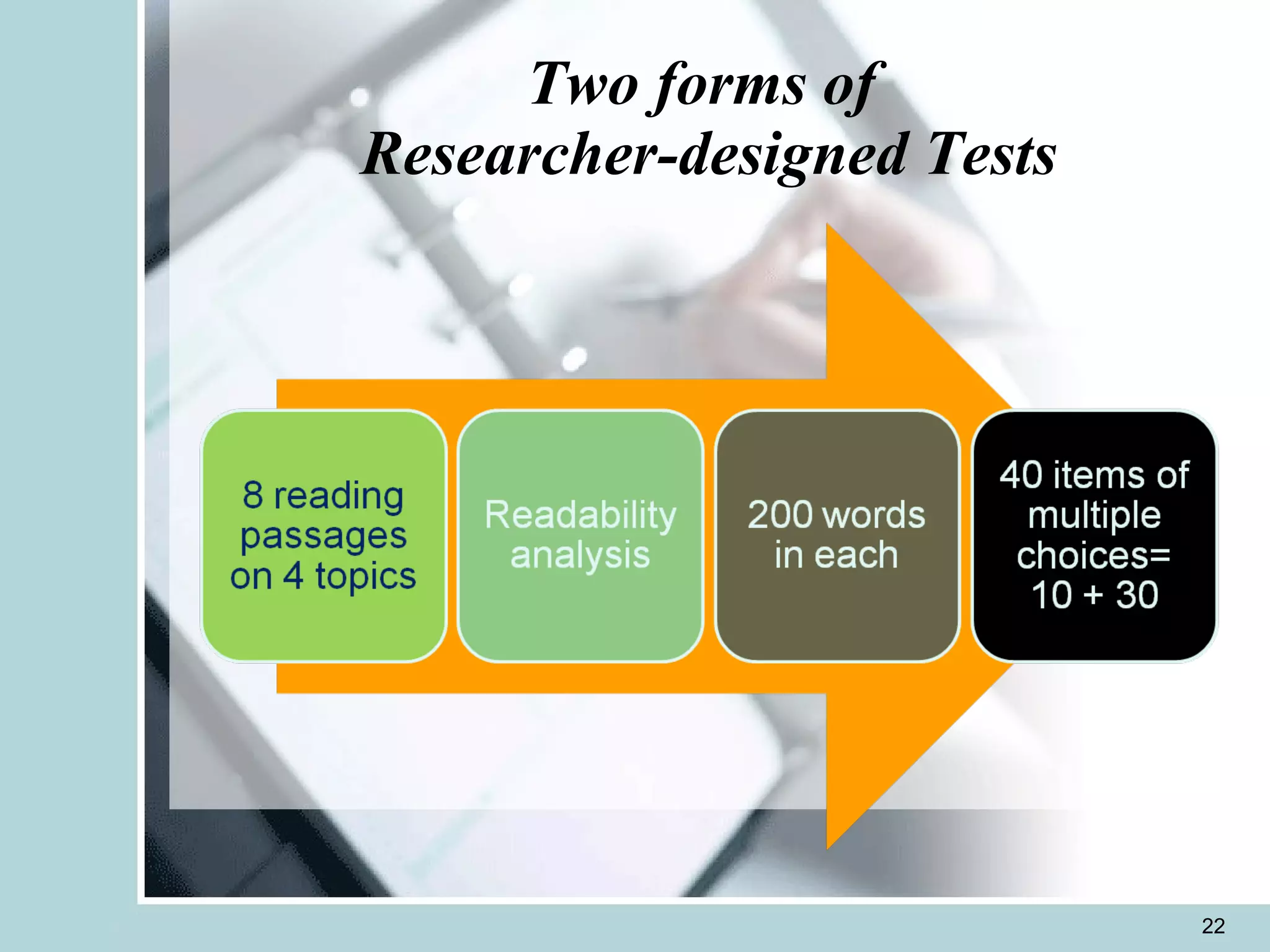
Instrumentation Gates MacGinitie Reading  ( Form K ) not  included in instructional materials Stanford 9 (SAT 9) a) Reading    comprehension, b) vocabulary,  c) language    subtest Two forms of Researcher-designed tests a) reading    comprehension, b) vocabulary     from  American Will Be achievement test pre- and post- tests Three types  of reading and word comprehension  tests
Two forms of  Researcher-designed Tests
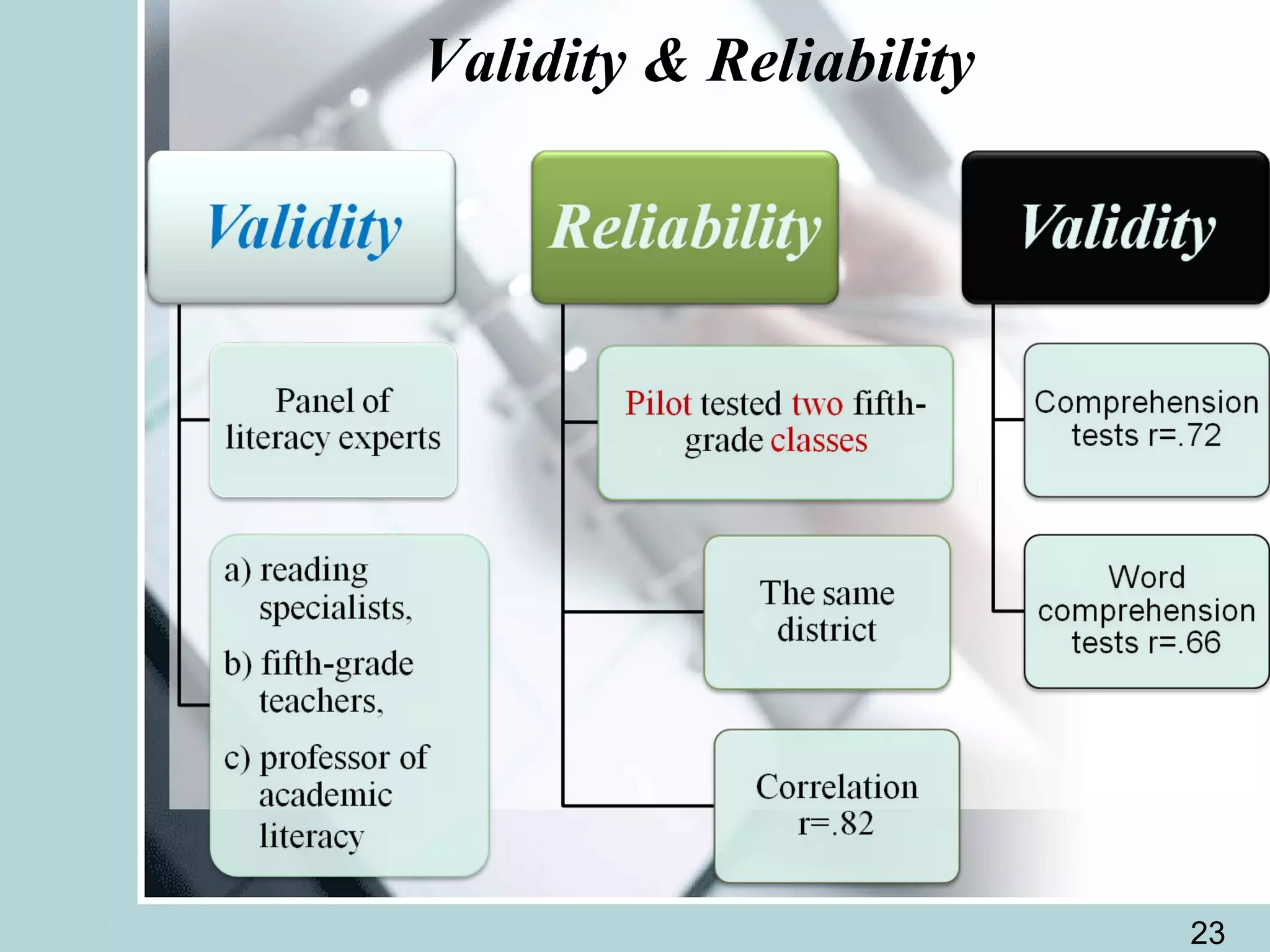
Validity & Reliability
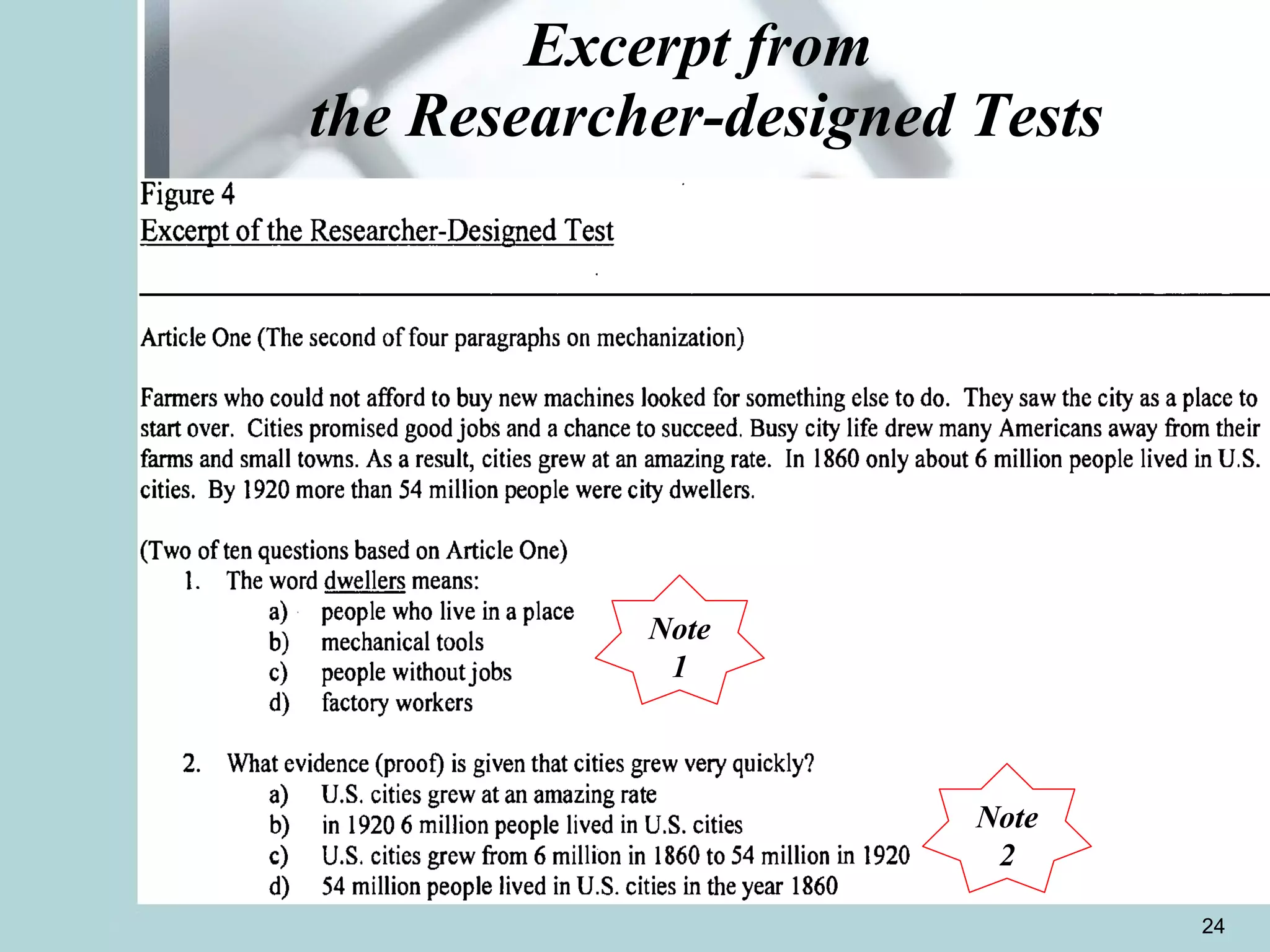
Excerpt from  the Researcher-designed Tests Note 1 Note 2
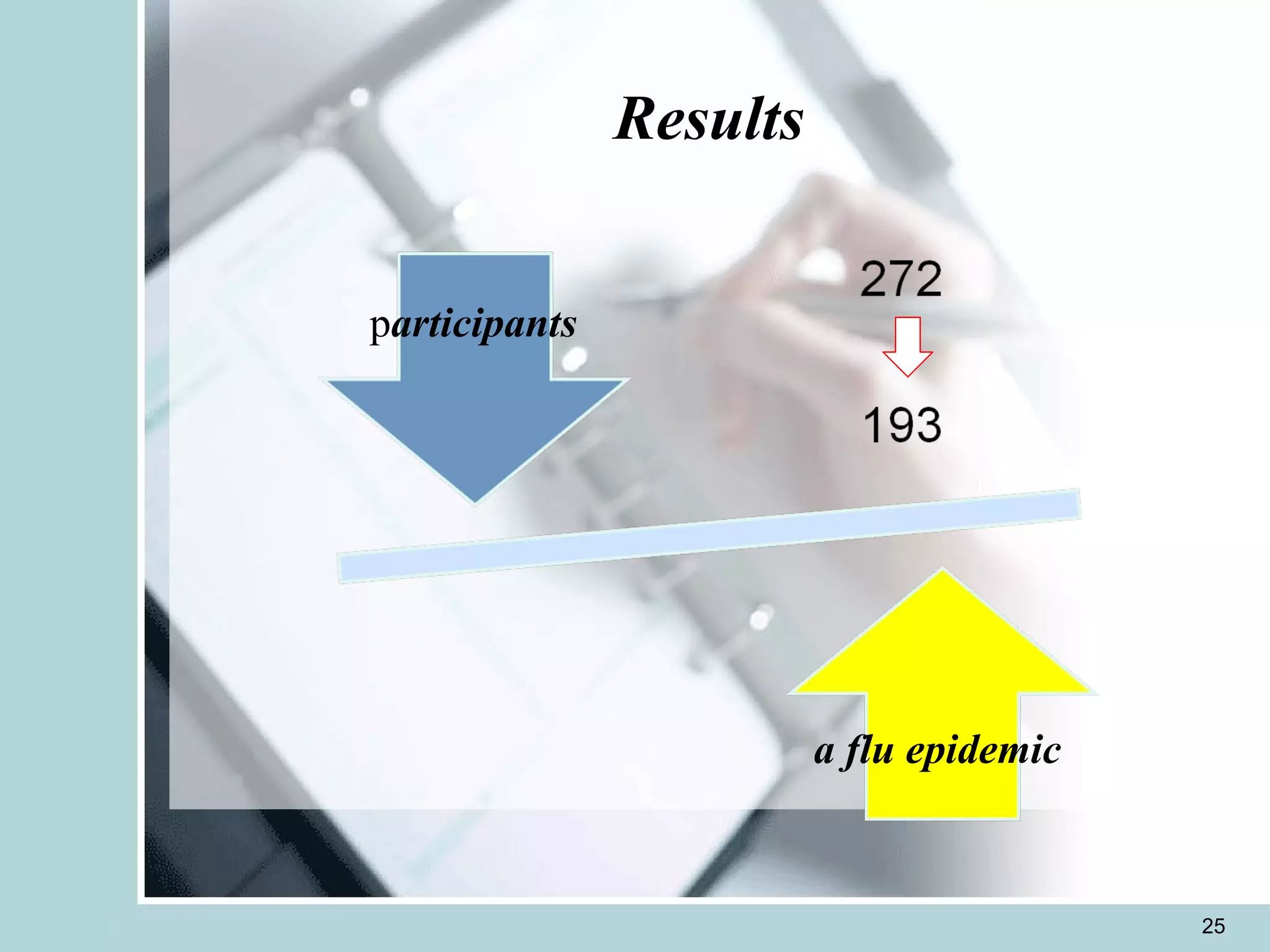
Results p articipants a flu epidemic
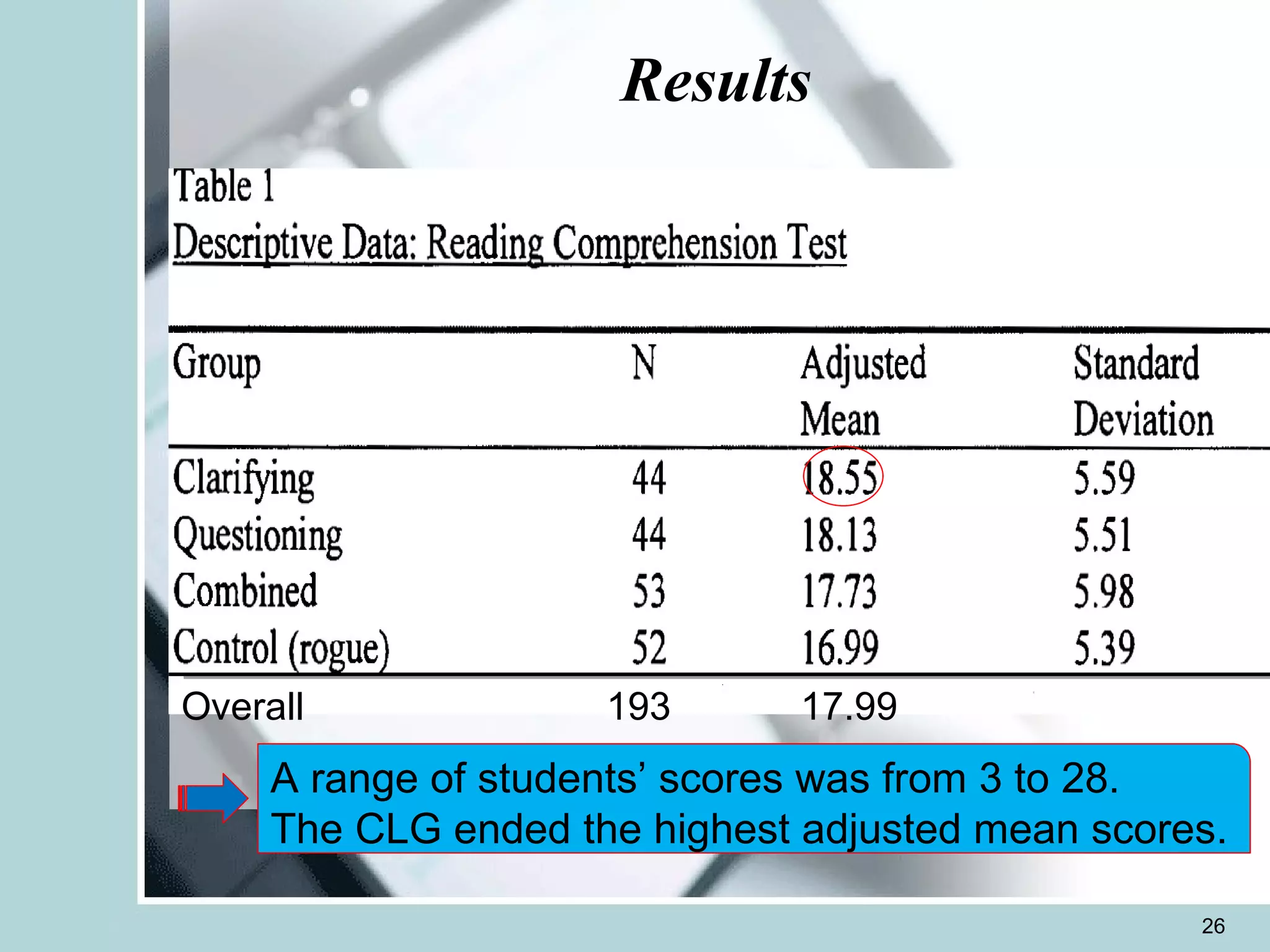
Results A range of students’ scores was from 3 to 28. The CLG ended the highest adjusted mean scores. Overall  193  17.99
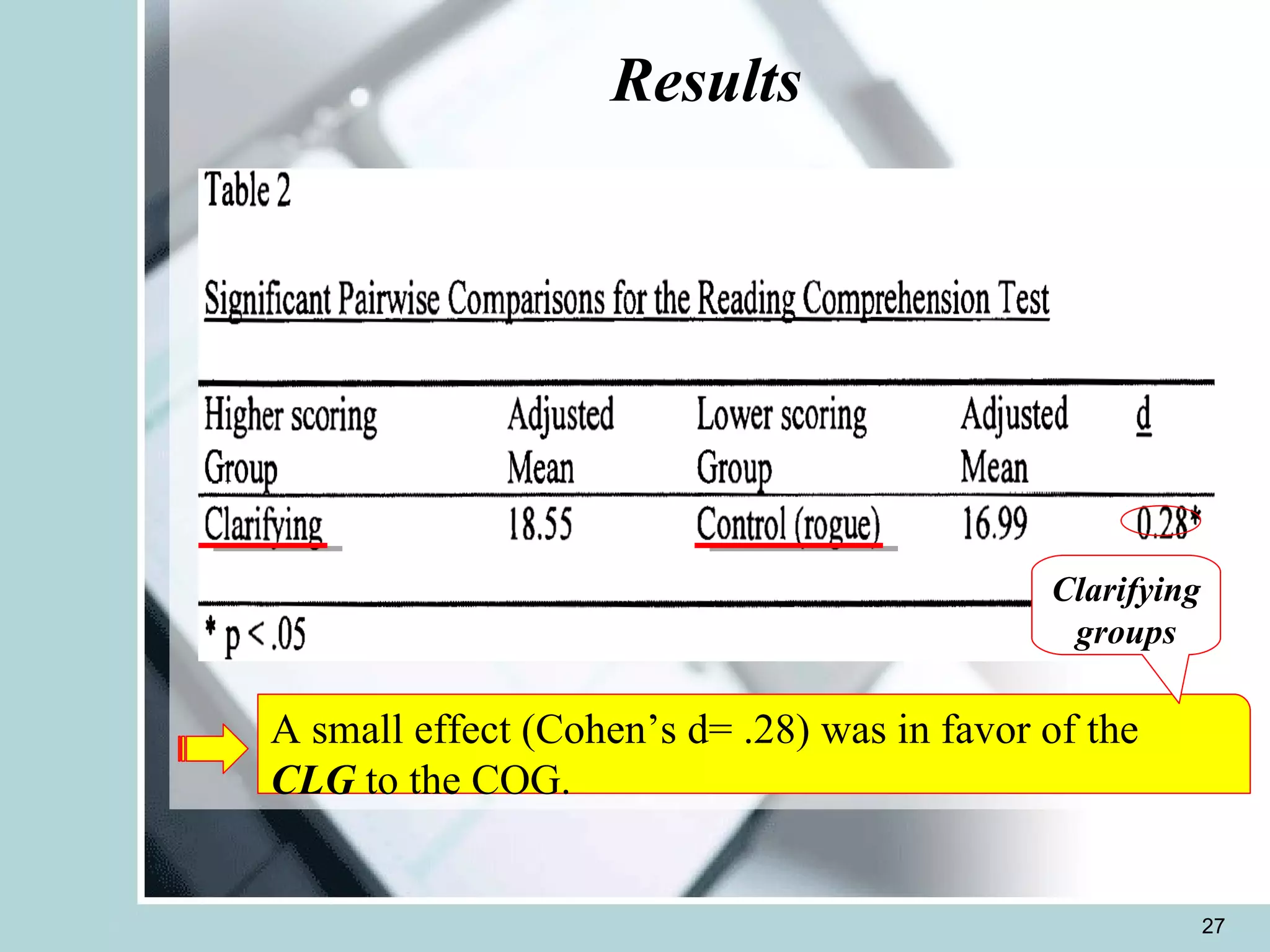
Results A small effect (Cohen’s d= .28) was in favor of the  CLG  to the COG. Clarifying groups
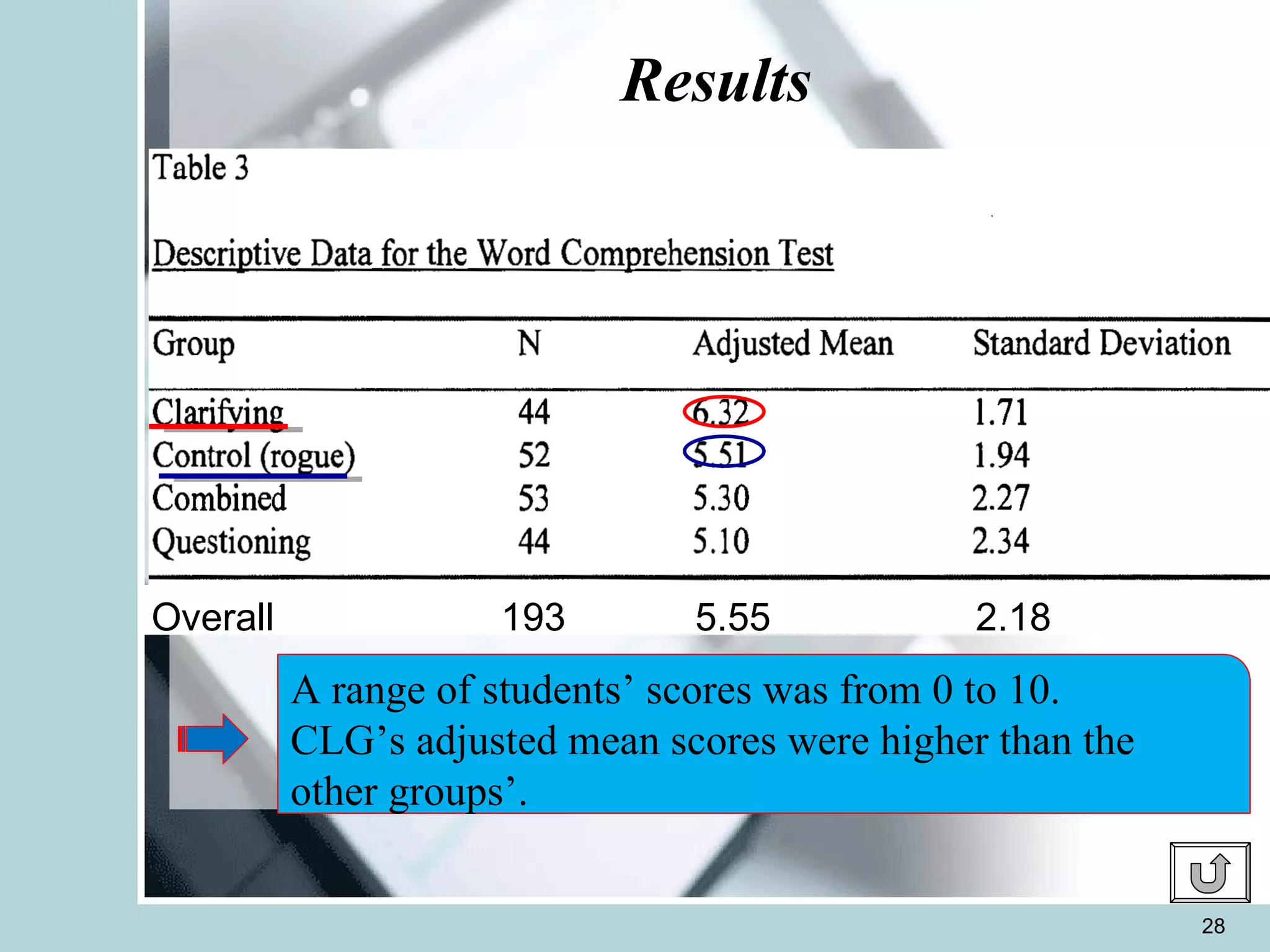
Results A range of students’ scores was from 0 to 10. CLG’s adjusted mean scores were higher than the other groups’. Overall  193  5.55  2.18
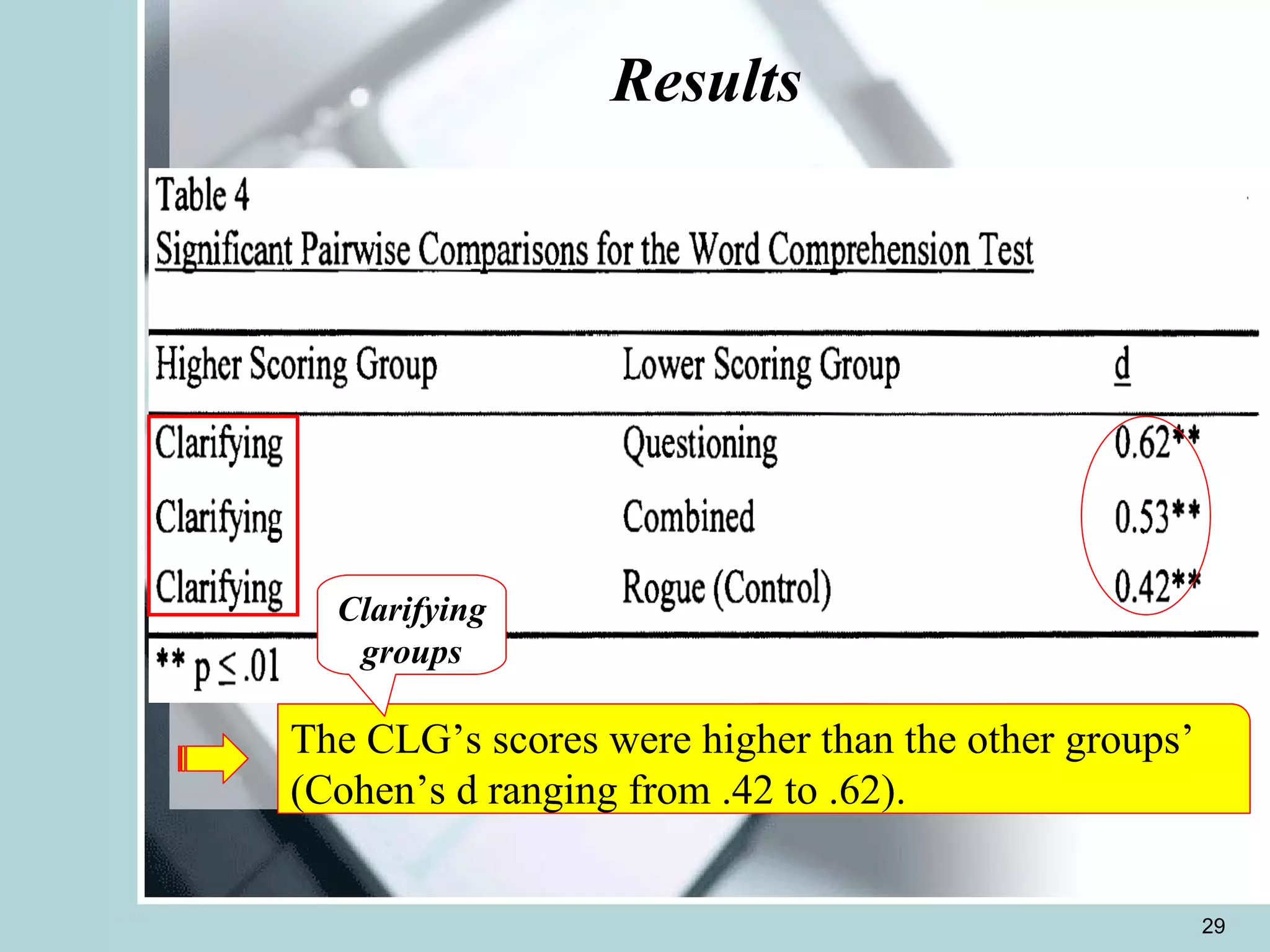
Results The CLG’s scores were higher than the other groups’ (Cohen’s d ranging from .42 to .62). Clarifying groups
Results Questioning groups Clarifying groups
Results Clarifying groups
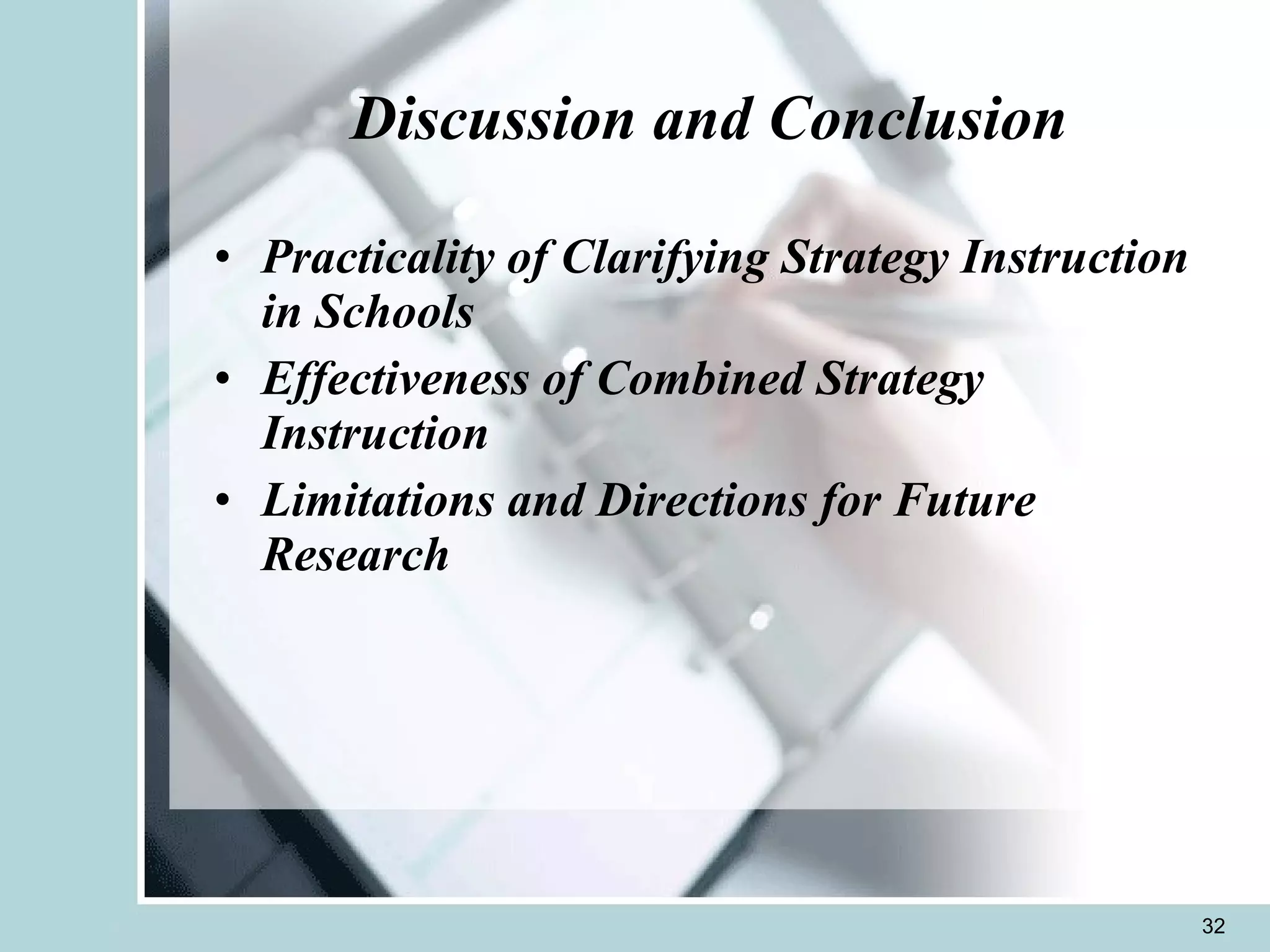
Discussion and Conclusion Practicality of Clarifying Strategy Instruction in Schools Effectiveness of Combined Strategy Instruction Limitations and Directions for Future Research
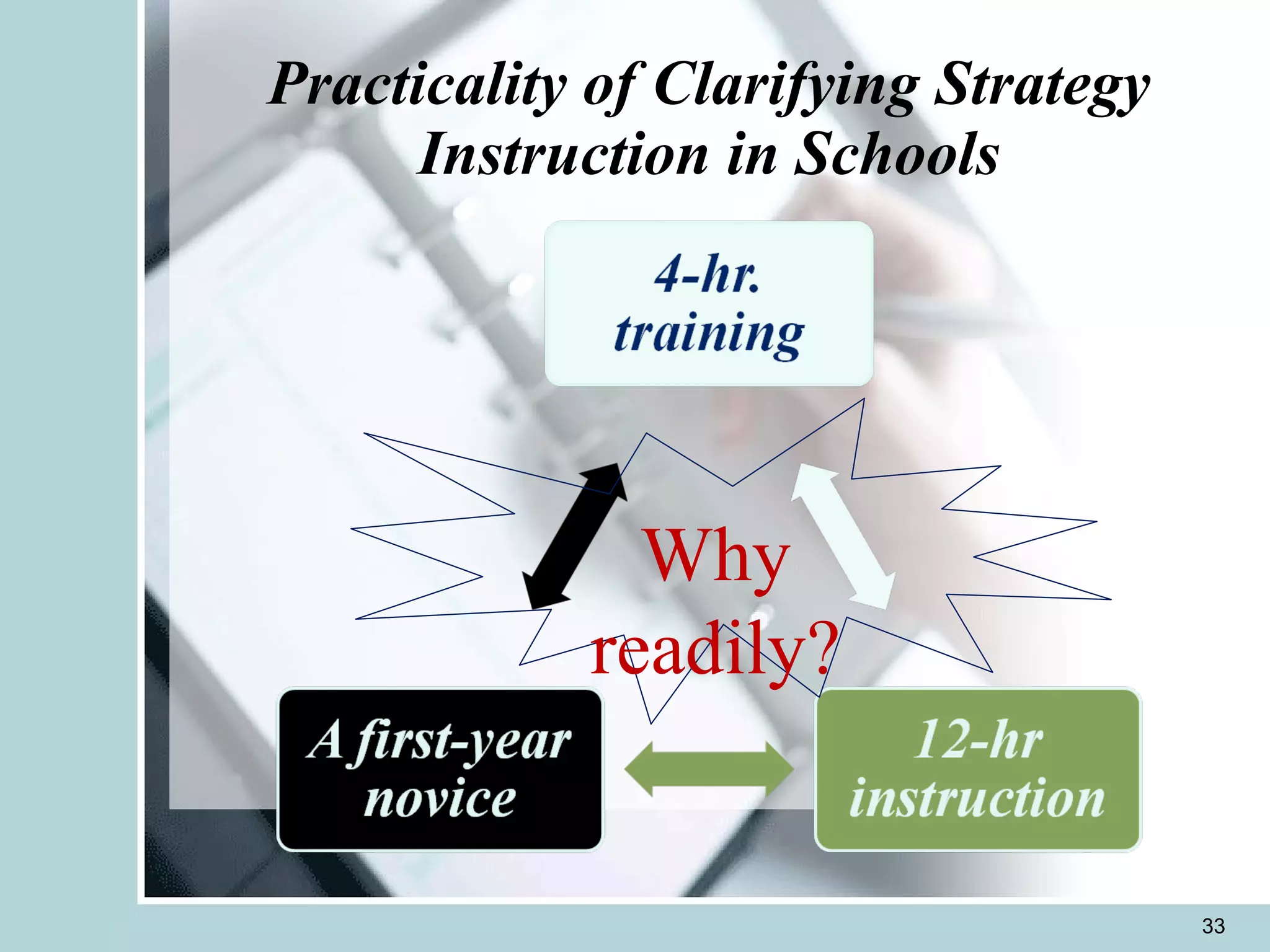
Practicality of Clarifying Strategy Instruction in Schools Why readily?
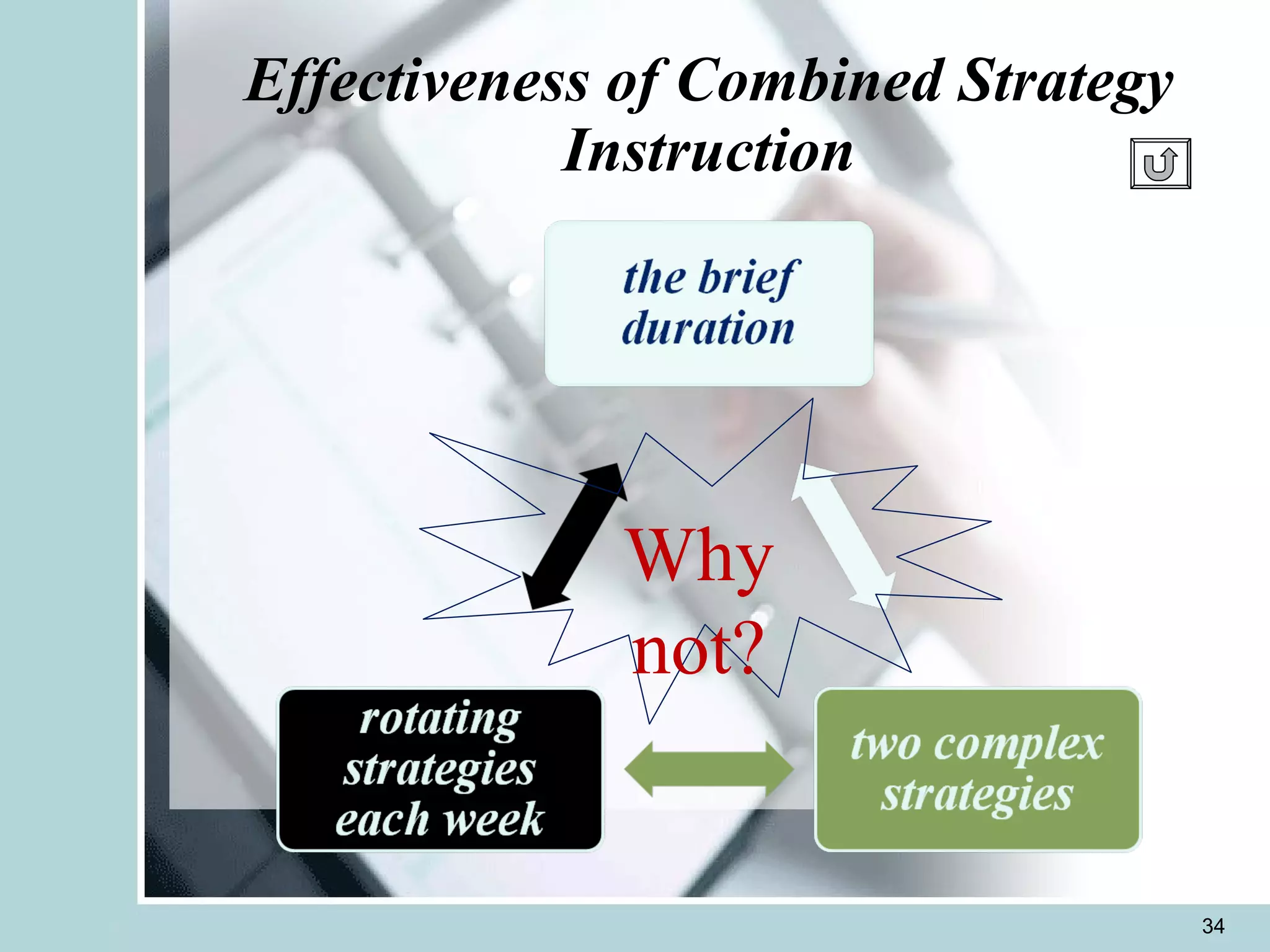
Effectiveness of Combined Strategy Instruction Why not?
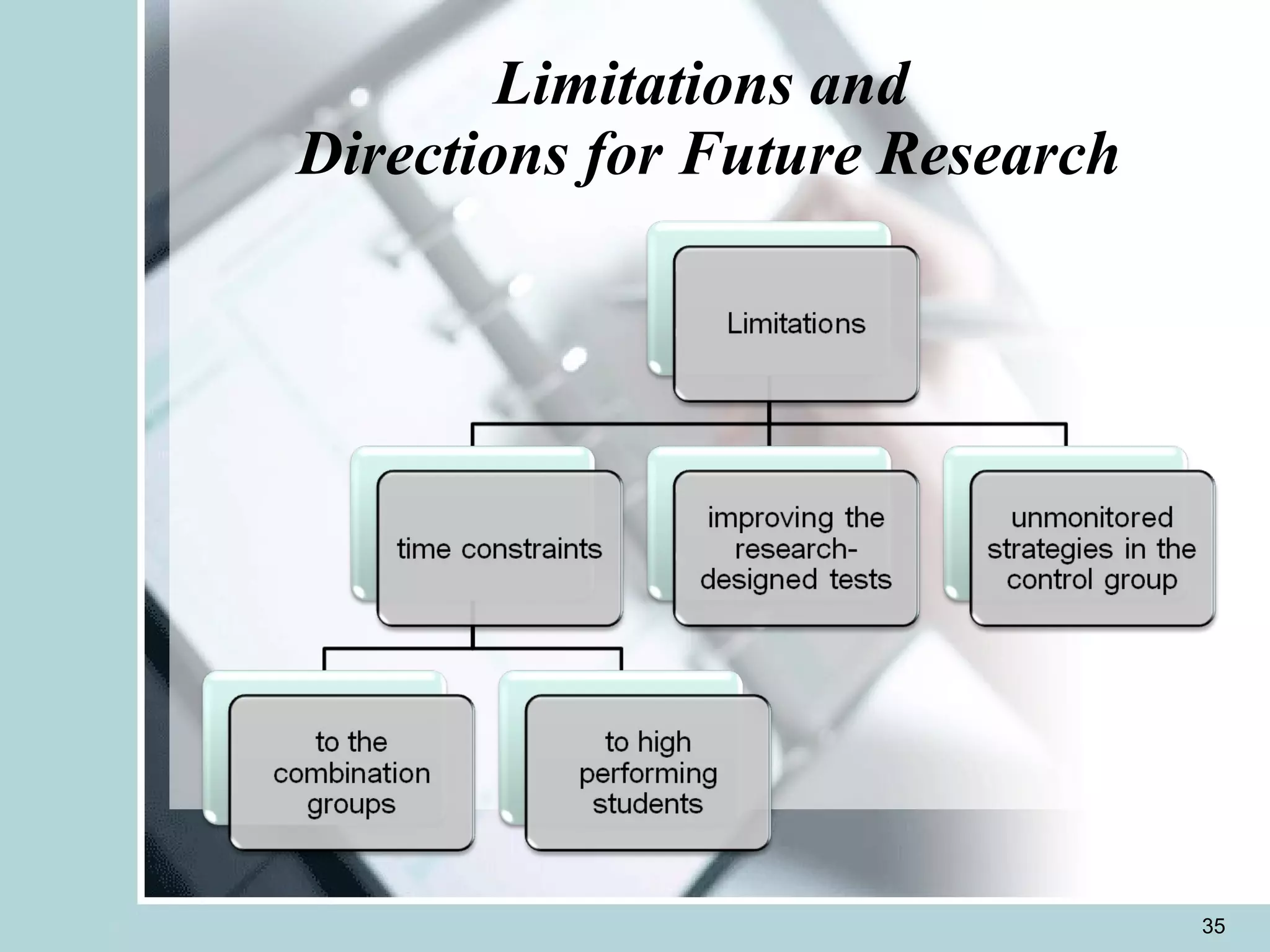
Limitations and  Directions for Future Research
Reflections the level of the context of the reading missing the overall statistic values ? X
Reflections wrong description on p 20 The intact classes might confuse the analysis . X X
Reflections The Stoplight activity can be utilized in a vocabulary acquisition course. readily implemented in my research √ √
The Power Of Clarifying 03

The Power Of Clarifying 03

  • 1.
    Power of Clarifying: A Comparative Analysis of Strategies That Strengthen Comprehension Presenter: Andrew Liaw Instructor: Dr. Pi-Ying Hsu Dec. 10, 200 9
  • 2.
    Citation Lubliner, S.(2002). The power of clarifying: A comparative analysis of strategies that strengthen comprehension. Paper presented at the annual meeting of the American Education Research Association, New Orleans, LA.

  • 3.
  • 4.
    Introduction (Nagy, 1988;Baker, et al., 1995)
  • 5.
  • 6.
    Rationale Cognitive strategy: Questioning It is clearly conceptualized in the cognitive strategy literature, and methods of questioning instruction are explicitly defined. (Dunkin, 1978)
  • 7.
    Rationale Cognitive strategy: Clarifying It is possible that inadequate teacher understanding of the clarifying strategy resulted in ineffective instruction and limited implementation by students (Rosenshine & Meister, 1994)
  • 8.
    Purpose tocompare the relative effectiveness of a) questioning, b) clarifying, and c) combination, on students’ reading comprehension and word comprehension encountered during reading
  • 9.
    Research Questions Whichtreatment , questioning, clarifying, a combination of questioning and clarifying, or the control condition results in the highest mean scores in reading comprehension and word comprehension measured by the Gates MacGinitie and the researcher-designed tests?  results indicated the clarifying condition could benefit students in both dependent measures
  • 10.
    Research Questions Whatis the relative effectiveness of questioning, clarifying, a combination of questioning and clarifying, or the control condition on students of varying proficiency levels?  results indicated the questioning condition could benefit students the most
  • 11.
    Methodology Research DesignParticipants Questioning groups (QP) Clarifying groups (CLP) Combination of questioning and clarifying groups (CQCG) Control groups (COG) students teachers
  • 12.
    Research Design RX X X No-X Y Y Y No-Y O1 O2 O3 O4 Quasi-experimental design
  • 13.
  • 14.
  • 15.
  • 16.
    Questioning Groups Signalwords Questioning stems
  • 17.
  • 18.
    Clarifying or CombinationGroups Completely unknown Partial word knowledge well known
  • 19.
  • 20.
    Control Groups (Keene& Zimmermann,1997)
  • 21.
    Instrumentation Gates MacGinitieReading ( Form K ) not included in instructional materials Stanford 9 (SAT 9) a) Reading comprehension, b) vocabulary, c) language subtest Two forms of Researcher-designed tests a) reading comprehension, b) vocabulary  from American Will Be achievement test pre- and post- tests Three types of reading and word comprehension tests
  • 22.
    Two forms of Researcher-designed Tests
  • 23.
  • 24.
    Excerpt from the Researcher-designed Tests Note 1 Note 2
  • 25.
    Results p articipantsa flu epidemic
  • 26.
    Results A rangeof students’ scores was from 3 to 28. The CLG ended the highest adjusted mean scores. Overall 193 17.99
  • 27.
    Results A smalleffect (Cohen’s d= .28) was in favor of the CLG to the COG. Clarifying groups
  • 28.
    Results A rangeof students’ scores was from 0 to 10. CLG’s adjusted mean scores were higher than the other groups’. Overall 193 5.55 2.18
  • 29.
    Results The CLG’sscores were higher than the other groups’ (Cohen’s d ranging from .42 to .62). Clarifying groups
  • 30.
    Results Questioning groupsClarifying groups
  • 31.
  • 32.
    Discussion and ConclusionPracticality of Clarifying Strategy Instruction in Schools Effectiveness of Combined Strategy Instruction Limitations and Directions for Future Research
  • 33.
    Practicality of ClarifyingStrategy Instruction in Schools Why readily?
  • 34.
    Effectiveness of CombinedStrategy Instruction Why not?
  • 35.
    Limitations and Directions for Future Research
  • 36.
    Reflections the levelof the context of the reading missing the overall statistic values ? X
  • 37.
    Reflections wrong descriptionon p 20 The intact classes might confuse the analysis . X X
  • 38.
    Reflections The Stoplightactivity can be utilized in a vocabulary acquisition course. readily implemented in my research √ √