Defining Comprehension Strategies and
Instructional Strategies
READ 6707: Reading and Literacy Growth
Megan Diamond
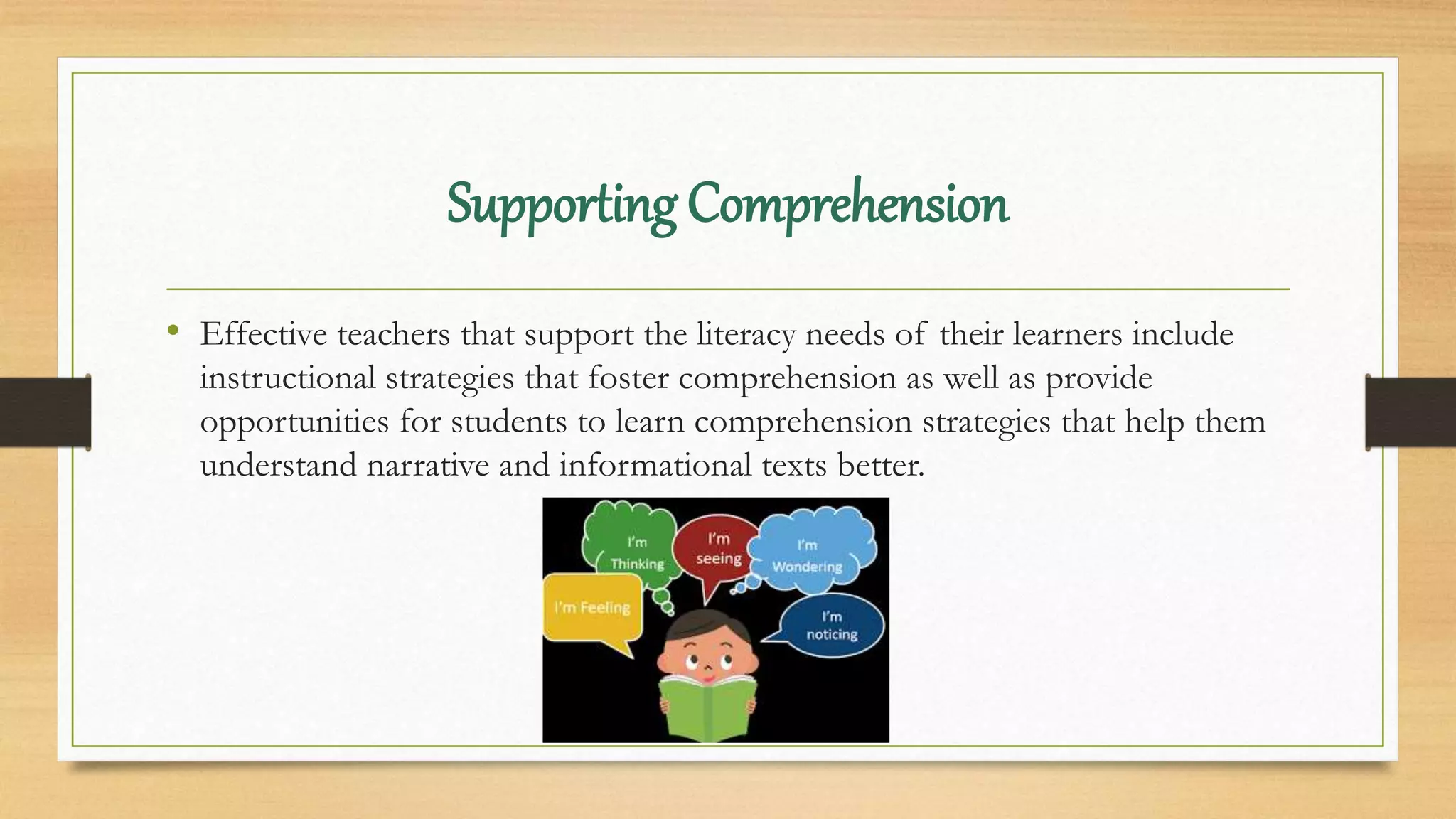
Supporting Comprehension
• Effective teachers that support the literacy needs of their learners include
instructional strategies that foster comprehension as well as provide
opportunities for students to learn comprehension strategies that help them
understand narrative and informational texts better.
What is the difference?
Comprehension
• Used by students
• Used to understand a text
• Used as monitoring tools for
regulating, checking, and repairing
• Used to develop metacognition
Instructional
• Used by teachers for teaching and
learning
• Used to create supportive,
collaborative, an cooperative
conditions
• Used to teach the individual, specific
comprehension strategies
(Laureate Education, 2014g)
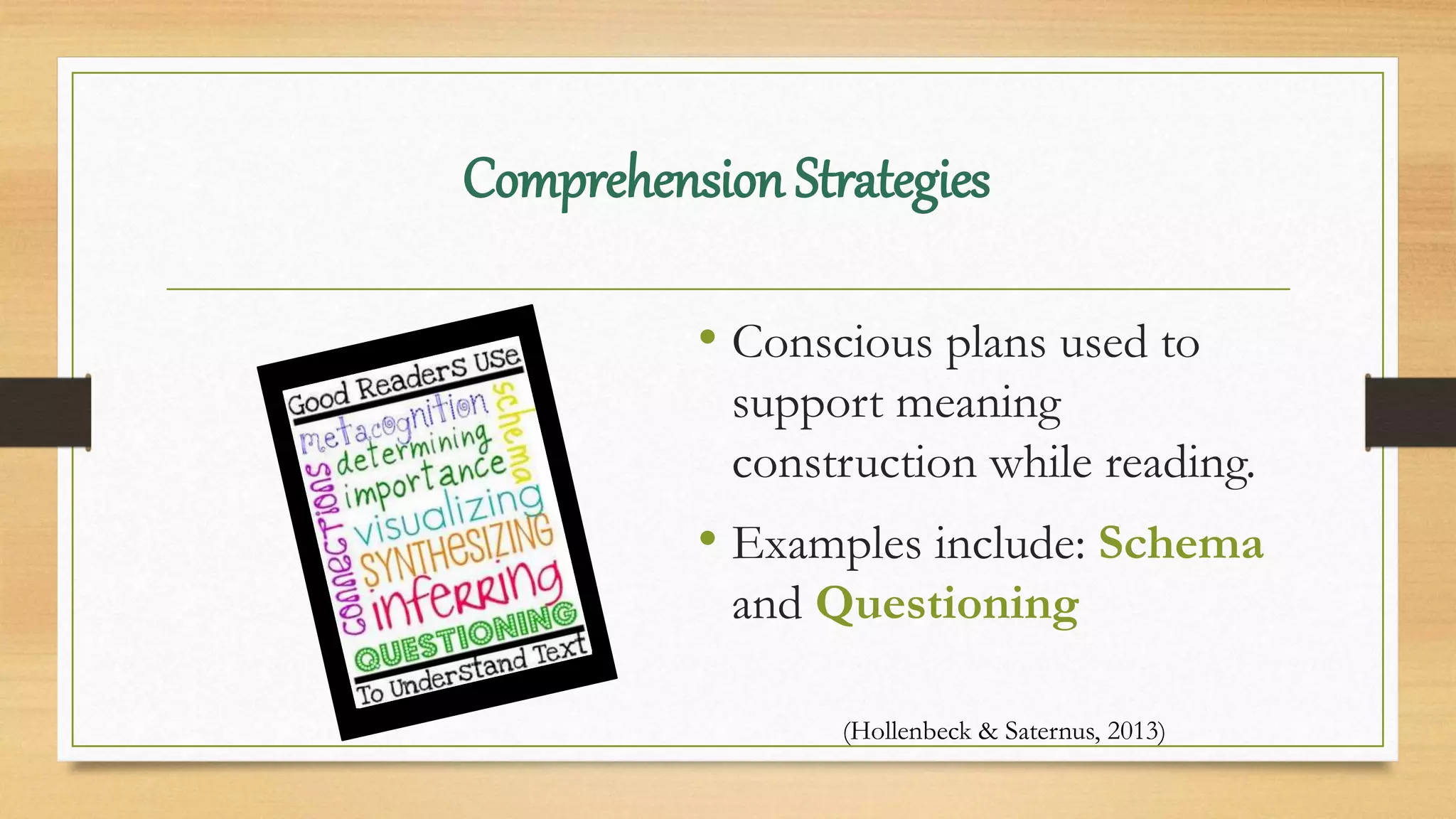
Comprehension Strategies
• Conscious plans used to
support meaning
construction while reading.
• Examples include: Schema
and Questioning
(Hollenbeck & Saternus, 2013)
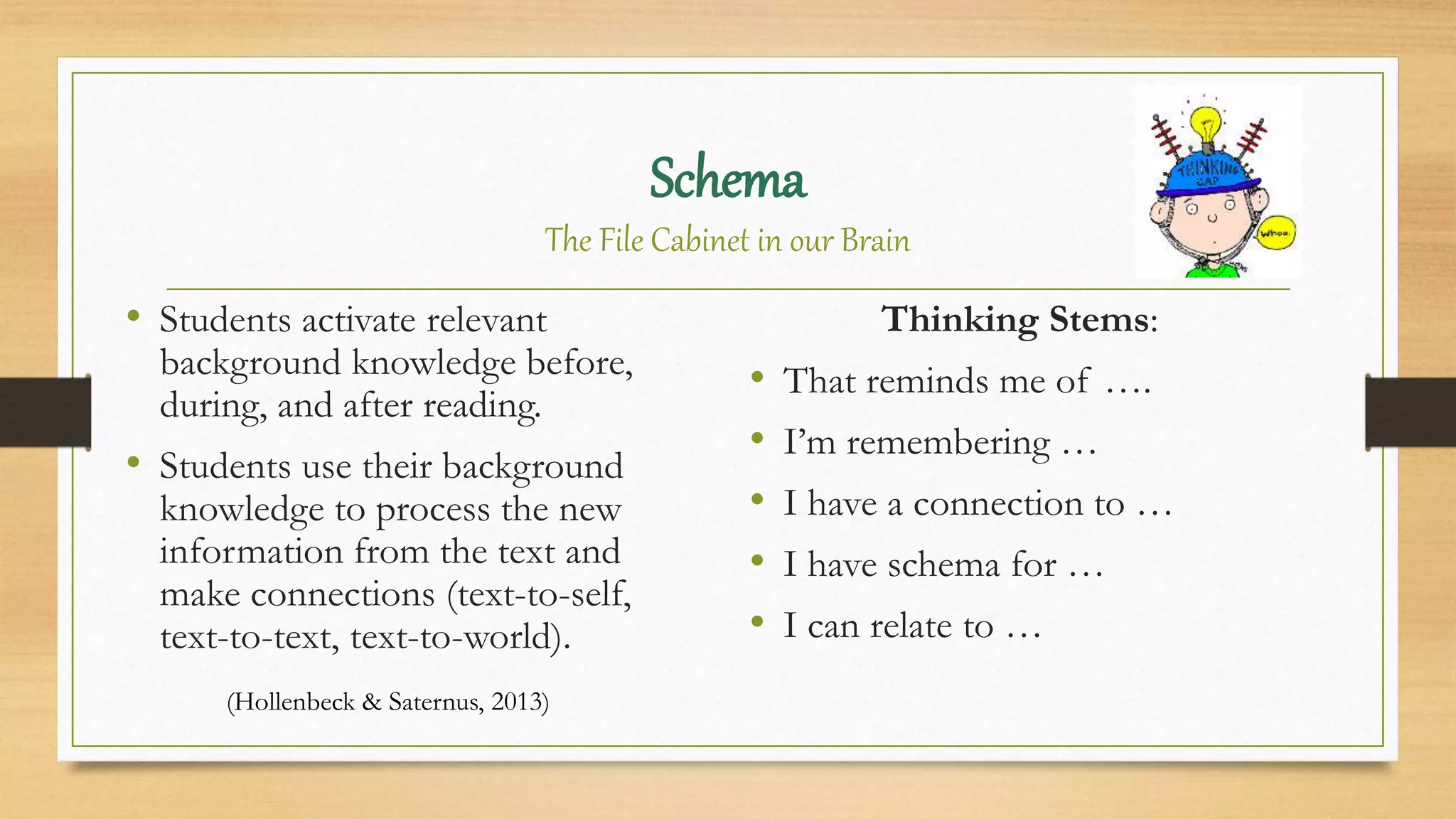
Schema
The File Cabinet in our Brain
• Students activate relevant
background knowledge before,
during, and after reading.
• Students use their background
knowledge to process the new
information from the text and
make connections (text-to-self,
text-to-text, text-to-world).
Thinking Stems:
• That reminds me of ….
• I’m remembering …
• I have a connection to …
• I have schema for …
• I can relate to …
(Hollenbeck & Saternus, 2013)
Questioning
The Question-Answer Relationship (QAR)
• Students decipher what types of
questions they are being asked by teachers
and textbooks and where to find the
answers to them (in the text or in their
heads).
• Not only does this strategy improve
question-answering behavior but also
comprehension.
• Encourages students to write their own
questions for each of the categories.
Four types of questions:
• Right There- Answers found in the text.
• Think and Search- Readers needs to put
together different parts of the text to find the
answer.
• Author and You- Readers need to think about
how the text and their prior knowledge fit
together.
• On Your Own- Readers need to use their
schema to answer the question.
(Reutzel & Cooter, 2016)
Instructional Strategies
“It is essential to move beyond teaching comprehension strategies in isolation and instead model strategy use as a flexible way of problem
solving while reading” (Hollenbeck & Saternus, 2013, p. 560)
• Selected to support the development of
students’ comprehension strategies.
• Examples include: Think-Pair-Share and
Picture Walk
(Hollenbeck & Saternus, 2013).
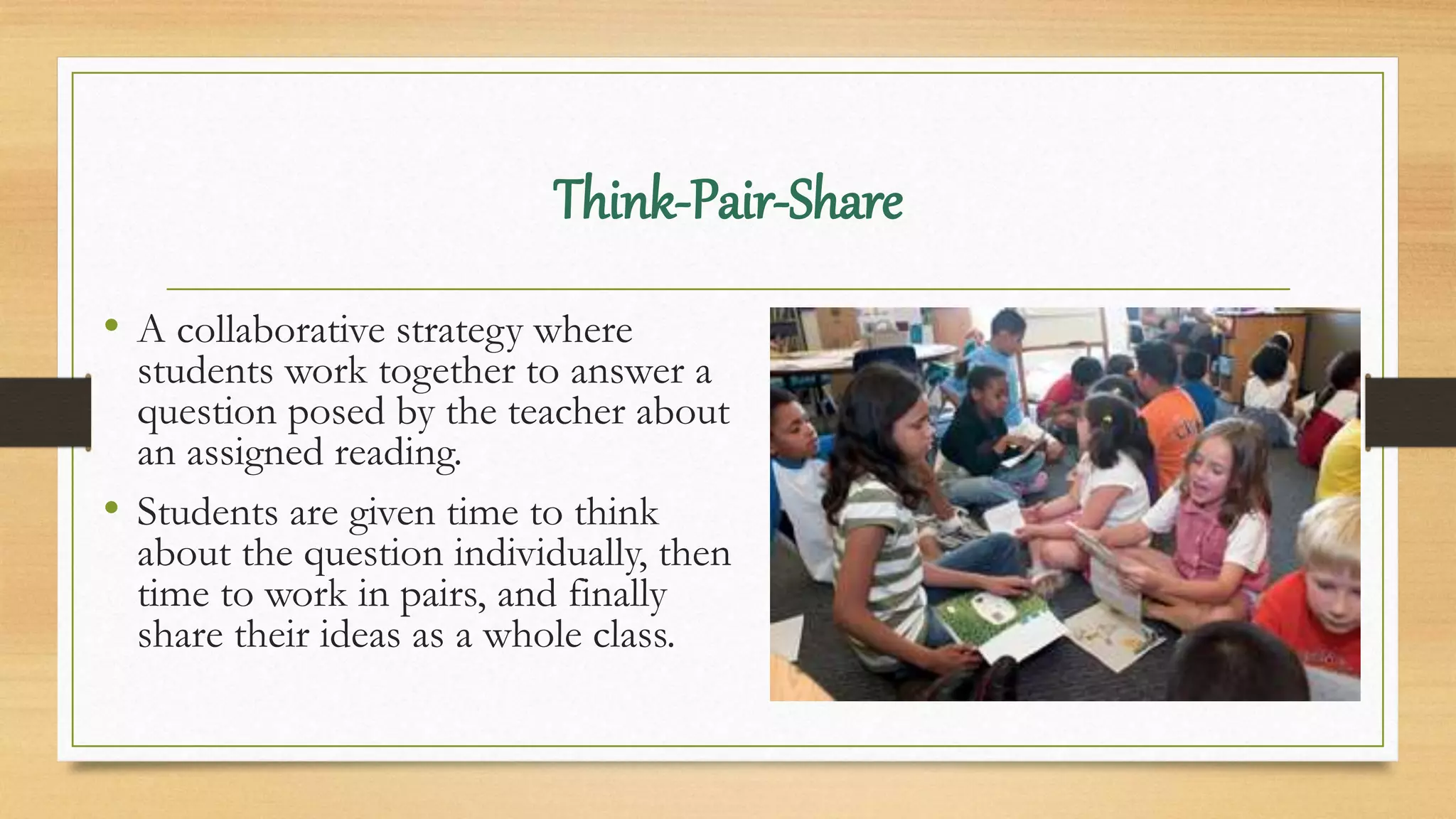
Think-Pair-Share
• A collaborative strategy where
students work together to answer a
question posed by the teacher about
an assigned reading.
• Students are given time to think
about the question individually, then
time to work in pairs, and finally
share their ideas as a whole class.
Picture Walk
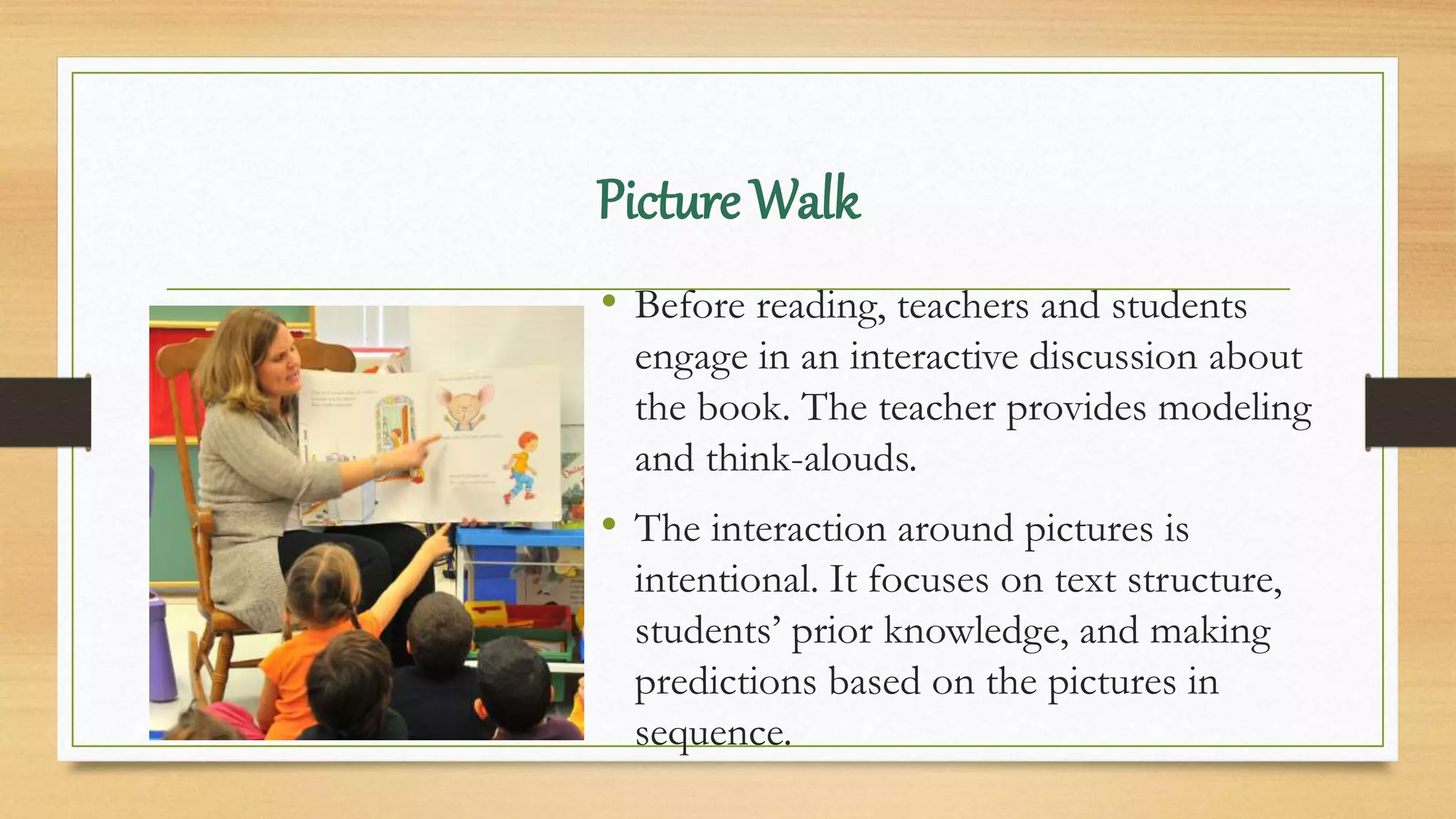
• Before reading, teachers and students
engage in an interactive discussion about
the book. The teacher provides modeling
and think-alouds.
• The interaction around pictures is
intentional. It focuses on text structure,
students’ prior knowledge, and making
predictions based on the pictures in
sequence.
• According to Hollenbeck and Saternus (2013), “Comprehension strategy
instruction should provide students the awareness of when strategy
application is necessary, as well as the knowledge to independently apply
strategies to make sense of complex texts” (p. 561).
• Therefore, these research-based strategies are appropriate and effective in
supporting transitional, intermediate, and advanced learners. The
comprehension and instructional strategies are engaging, relevant, and
meaningful to readers to comprehend any text. Additionally, they provide
opportunities for collaboration and differentiation based on student need.
Effective Strategies
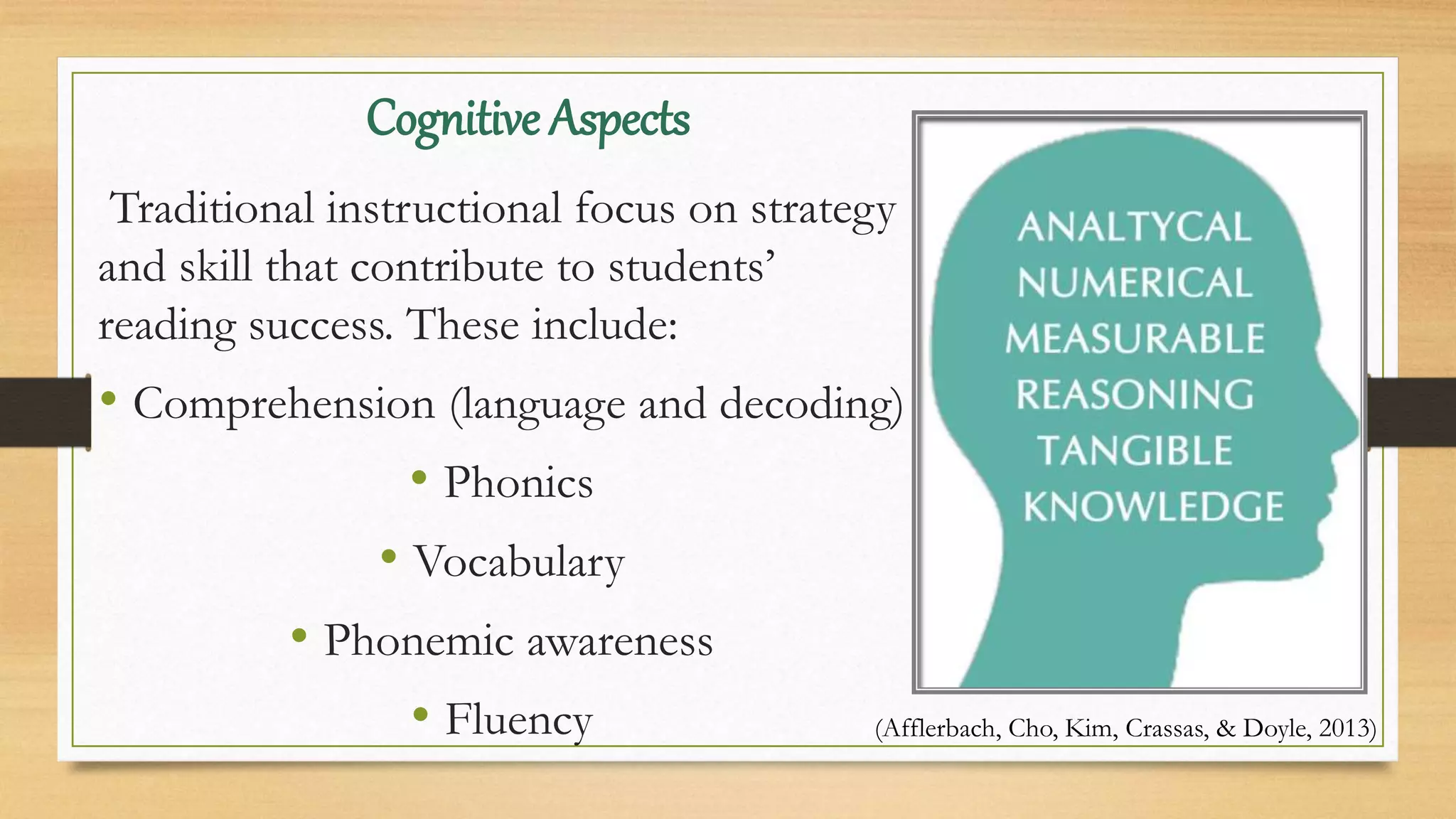
Cognitive Aspects
Traditional instructional focus on strategy
and skill that contribute to students’
reading success. These include:
• Comprehension (language and decoding)
• Phonics
• Vocabulary
• Phonemic awareness
• Fluency (Afflerbach, Cho, Kim, Crassas, & Doyle, 2013)
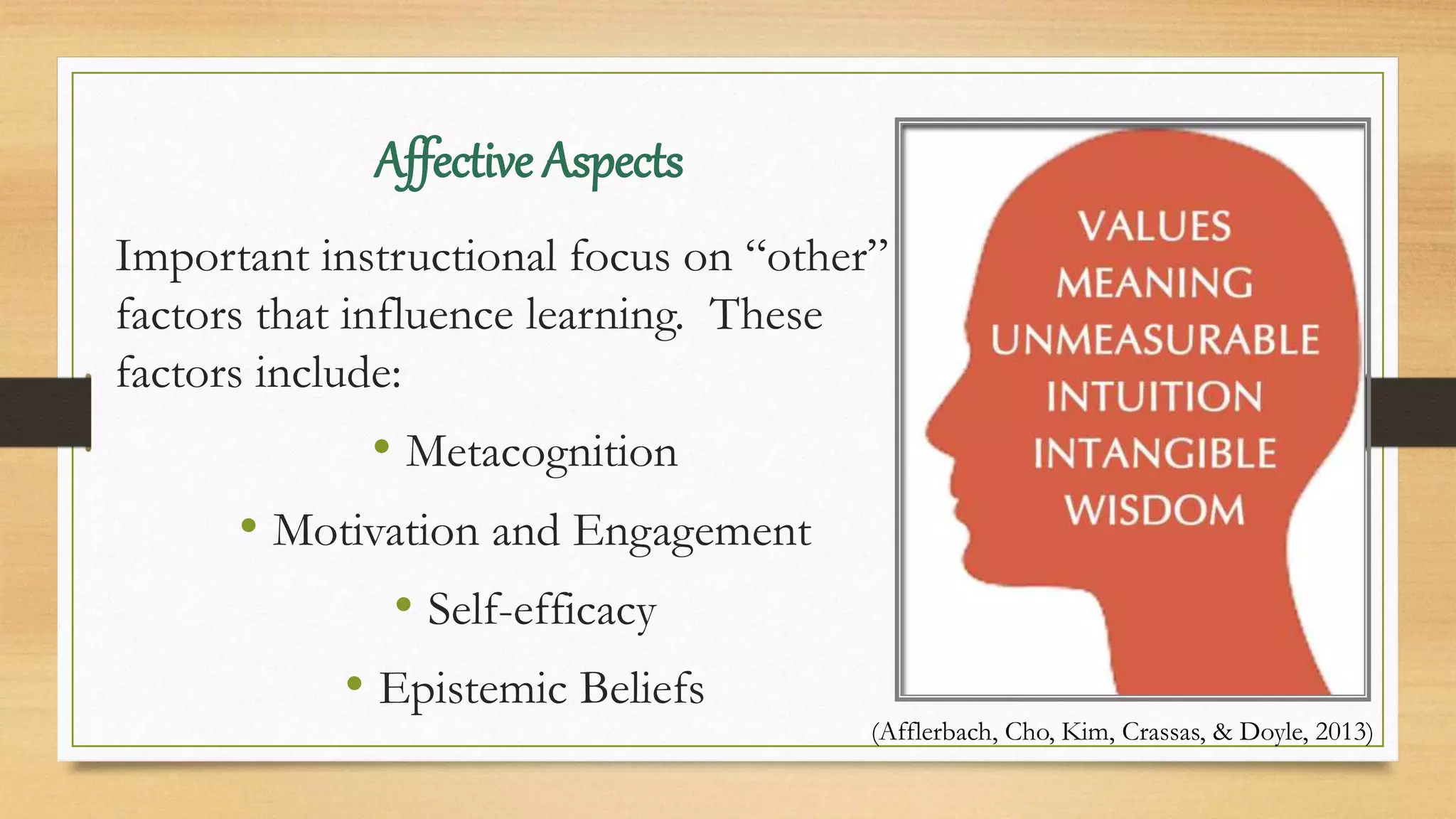
Affective Aspects
Important instructional focus on “other”
factors that influence learning. These
factors include:
• Metacognition
• Motivation and Engagement
• Self-efficacy
• Epistemic Beliefs
(Afflerbach, Cho, Kim, Crassas, & Doyle, 2013)
Cognitive andAffective Aspects
that InformInstruction
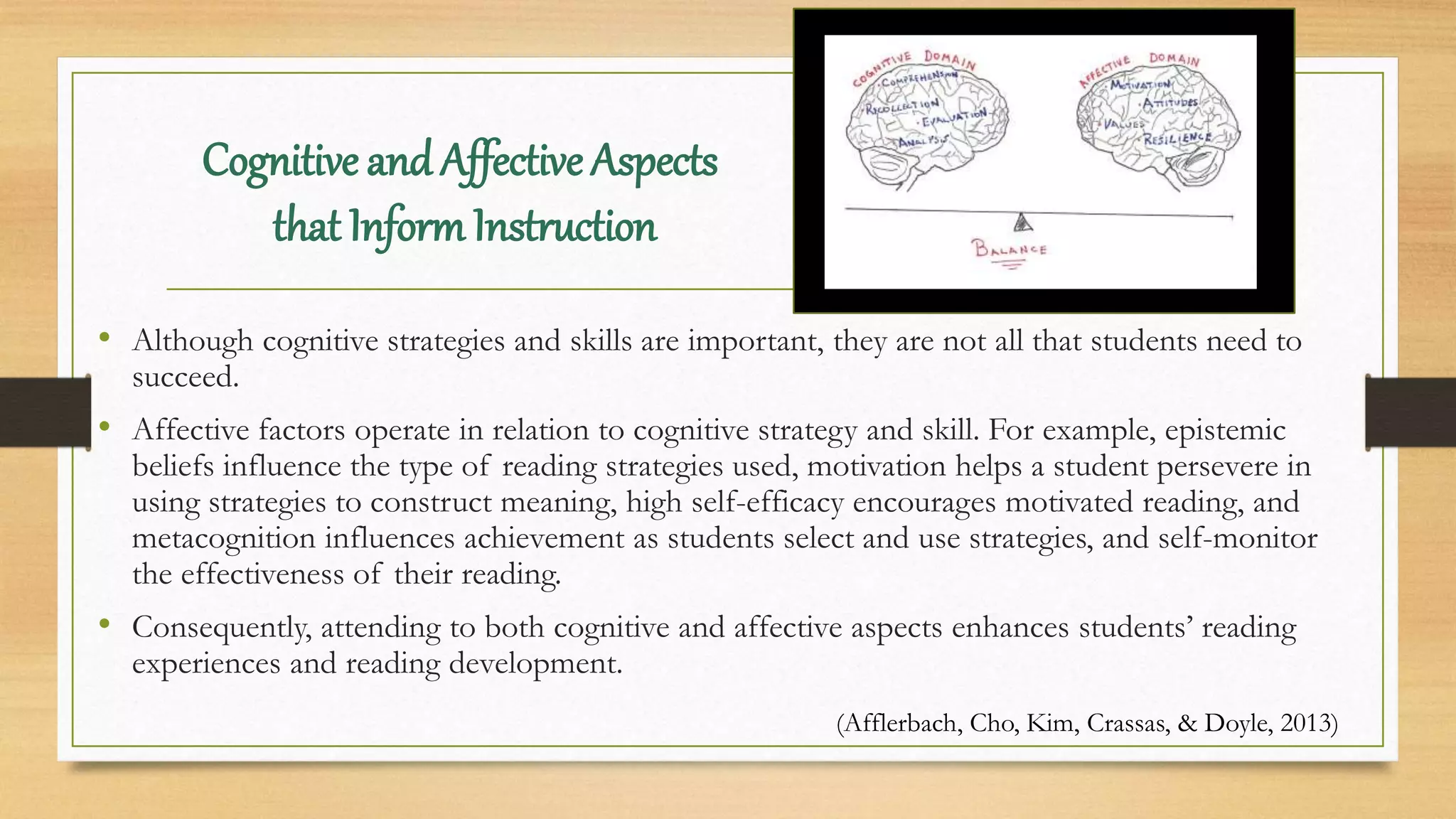
• Although cognitive strategies and skills are important, they are not all that students need to
succeed.
• Affective factors operate in relation to cognitive strategy and skill. For example, epistemic
beliefs influence the type of reading strategies used, motivation helps a student persevere in
using strategies to construct meaning, high self-efficacy encourages motivated reading, and
metacognition influences achievement as students select and use strategies, and self-monitor
the effectiveness of their reading.
• Consequently, attending to both cognitive and affective aspects enhances students’ reading
experiences and reading development.
(Afflerbach, Cho, Kim, Crassas, & Doyle, 2013)
References
• Afflerbach, P., Cho, B.-Y., Kin, J.-Y., Crassas, M.E., & Doyle, B. (2013). Reading: What else matters
besides strategies and skills? The Reading Teacher, 66(6), 440-448.
• Hollenbeck, A.F., & Saternus, K. (2013). Mind the comprehension iceberg: Avoiding titanic mistakes
with the ccss. The Reading Teacher, 66(7), 558-568.
• Laureate Education, Inc. (Producer). (2014g). Conversations with Ray Reutzel: Supporting comprehension
[Audio file]. Baltimore, MD: Author.
• Reading Rockets. (n.d.) Think-pair-share. Retrieved from
http://www.readingrockets.org/strategies/think-pair-share
• Reutzel, D.R., & Cooter, R.B., Jr. (2016). Strategies for reading assessment and instruction in an era of common
core standards: Helping every child succeed (5th ed.). Boston, MA: Pearson.

Comprehension strategies and instructional strategies

  • 1.
    Defining Comprehension Strategiesand Instructional Strategies READ 6707: Reading and Literacy Growth Megan Diamond
  • 2.
    Supporting Comprehension • Effectiveteachers that support the literacy needs of their learners include instructional strategies that foster comprehension as well as provide opportunities for students to learn comprehension strategies that help them understand narrative and informational texts better.
  • 3.
    What is thedifference? Comprehension • Used by students • Used to understand a text • Used as monitoring tools for regulating, checking, and repairing • Used to develop metacognition Instructional • Used by teachers for teaching and learning • Used to create supportive, collaborative, an cooperative conditions • Used to teach the individual, specific comprehension strategies (Laureate Education, 2014g)
  • 4.
    Comprehension Strategies • Consciousplans used to support meaning construction while reading. • Examples include: Schema and Questioning (Hollenbeck & Saternus, 2013)
  • 5.
    Schema The File Cabinetin our Brain • Students activate relevant background knowledge before, during, and after reading. • Students use their background knowledge to process the new information from the text and make connections (text-to-self, text-to-text, text-to-world). Thinking Stems: • That reminds me of …. • I’m remembering … • I have a connection to … • I have schema for … • I can relate to … (Hollenbeck & Saternus, 2013)
  • 6.
    Questioning The Question-Answer Relationship(QAR) • Students decipher what types of questions they are being asked by teachers and textbooks and where to find the answers to them (in the text or in their heads). • Not only does this strategy improve question-answering behavior but also comprehension. • Encourages students to write their own questions for each of the categories. Four types of questions: • Right There- Answers found in the text. • Think and Search- Readers needs to put together different parts of the text to find the answer. • Author and You- Readers need to think about how the text and their prior knowledge fit together. • On Your Own- Readers need to use their schema to answer the question. (Reutzel & Cooter, 2016)
  • 7.
    Instructional Strategies “It isessential to move beyond teaching comprehension strategies in isolation and instead model strategy use as a flexible way of problem solving while reading” (Hollenbeck & Saternus, 2013, p. 560) • Selected to support the development of students’ comprehension strategies. • Examples include: Think-Pair-Share and Picture Walk (Hollenbeck & Saternus, 2013).
  • 8.
    Think-Pair-Share • A collaborativestrategy where students work together to answer a question posed by the teacher about an assigned reading. • Students are given time to think about the question individually, then time to work in pairs, and finally share their ideas as a whole class.
  • 9.
    Picture Walk • Beforereading, teachers and students engage in an interactive discussion about the book. The teacher provides modeling and think-alouds. • The interaction around pictures is intentional. It focuses on text structure, students’ prior knowledge, and making predictions based on the pictures in sequence.
  • 10.
    • According toHollenbeck and Saternus (2013), “Comprehension strategy instruction should provide students the awareness of when strategy application is necessary, as well as the knowledge to independently apply strategies to make sense of complex texts” (p. 561). • Therefore, these research-based strategies are appropriate and effective in supporting transitional, intermediate, and advanced learners. The comprehension and instructional strategies are engaging, relevant, and meaningful to readers to comprehend any text. Additionally, they provide opportunities for collaboration and differentiation based on student need. Effective Strategies
  • 11.
    Cognitive Aspects Traditional instructionalfocus on strategy and skill that contribute to students’ reading success. These include: • Comprehension (language and decoding) • Phonics • Vocabulary • Phonemic awareness • Fluency (Afflerbach, Cho, Kim, Crassas, & Doyle, 2013)
  • 12.
    Affective Aspects Important instructionalfocus on “other” factors that influence learning. These factors include: • Metacognition • Motivation and Engagement • Self-efficacy • Epistemic Beliefs (Afflerbach, Cho, Kim, Crassas, & Doyle, 2013)
  • 13.
    Cognitive andAffective Aspects thatInformInstruction • Although cognitive strategies and skills are important, they are not all that students need to succeed. • Affective factors operate in relation to cognitive strategy and skill. For example, epistemic beliefs influence the type of reading strategies used, motivation helps a student persevere in using strategies to construct meaning, high self-efficacy encourages motivated reading, and metacognition influences achievement as students select and use strategies, and self-monitor the effectiveness of their reading. • Consequently, attending to both cognitive and affective aspects enhances students’ reading experiences and reading development. (Afflerbach, Cho, Kim, Crassas, & Doyle, 2013)
  • 14.
    References • Afflerbach, P.,Cho, B.-Y., Kin, J.-Y., Crassas, M.E., & Doyle, B. (2013). Reading: What else matters besides strategies and skills? The Reading Teacher, 66(6), 440-448. • Hollenbeck, A.F., & Saternus, K. (2013). Mind the comprehension iceberg: Avoiding titanic mistakes with the ccss. The Reading Teacher, 66(7), 558-568. • Laureate Education, Inc. (Producer). (2014g). Conversations with Ray Reutzel: Supporting comprehension [Audio file]. Baltimore, MD: Author. • Reading Rockets. (n.d.) Think-pair-share. Retrieved from http://www.readingrockets.org/strategies/think-pair-share • Reutzel, D.R., & Cooter, R.B., Jr. (2016). Strategies for reading assessment and instruction in an era of common core standards: Helping every child succeed (5th ed.). Boston, MA: Pearson.