The effect of cooperative learning techniques on college students’ reading comprehension Presenter: York Chi  Instructor: Dr. Pi-Ying Hsu Date: May 5, 2010
Jalilifar, A. (2010). The effect of cooperative learning techniques on college students’ reading comprehension.  System, 38,  96-108.
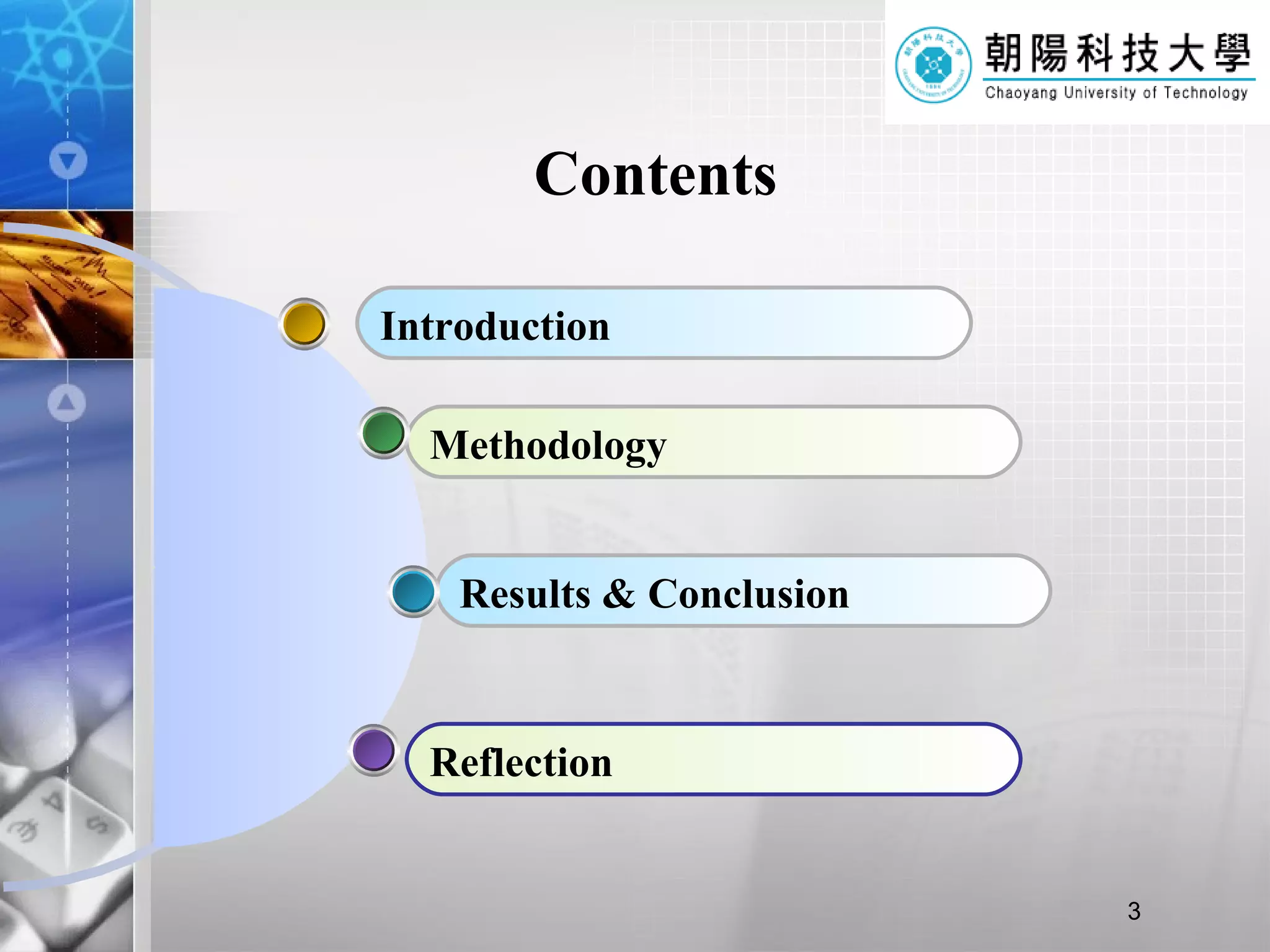
Contents Reflection Results & Conclusion  Methodology  Introduction
Introduction One of the main problems confronting English as a Foreign Language (EFL) learners is how to improve their  reading comprehension  achievement.  (Jalilifar, 2010)
Introduction Researchers have been interested  in investigating  strategies  that help students have better understanding when they read. (Al Haidari, 2006; Hollingsworth et al., 2007)
Introduction Different approaches such as  Cooperative learning  (CL) and  Conventional Instruction  (CI) have been generally used in classroom. (Jalilifar, 2010)
Introduction There is still doubt that  CL techniques  such as  Student Team-Achievement Divisions  ( STAD) and  Group Investigation  (GI) can promote reading comprehension.
Purpose of the study -to investigate the effectiveness of  STAD  and  GI  in improving college students’ reading comprehension achievement
Research Questions  1 2 If so, which one is more effective? Are there any differences in terms of reading comprehension quality between EFL learners who are instructed according to the  CI  and those with whom the techniques  CL  are utilized?
Research Questions 3 Would the use of  STAD  or  GI  yield any differences in students’ gains in reading comprehension?
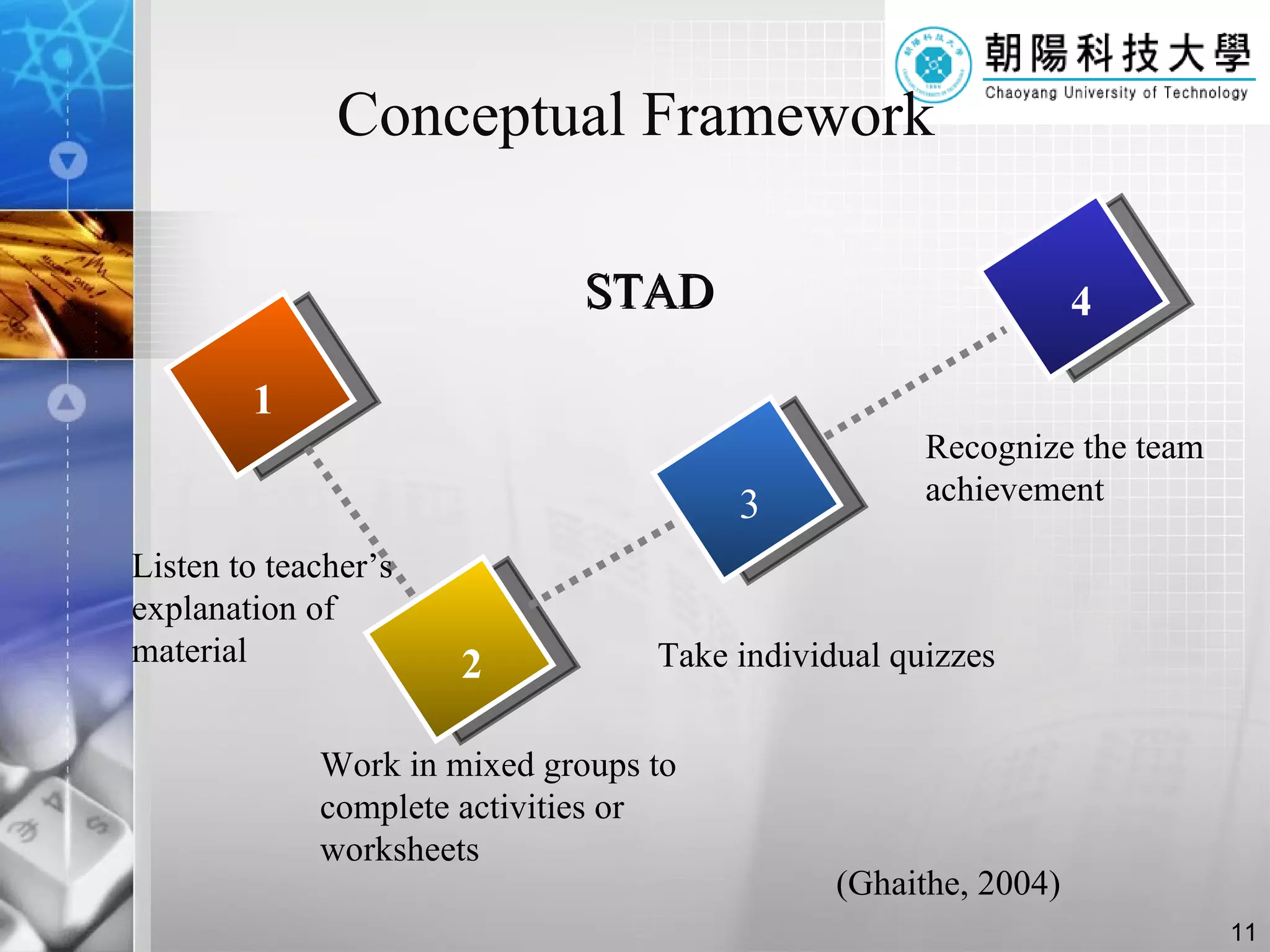
Conceptual Framework 1 2 3 4 STAD Listen to teacher’s explanation of material Work in mixed groups to complete activities or worksheets Take individual quizzes Recognize the team achievement (Ghaithe, 2004)
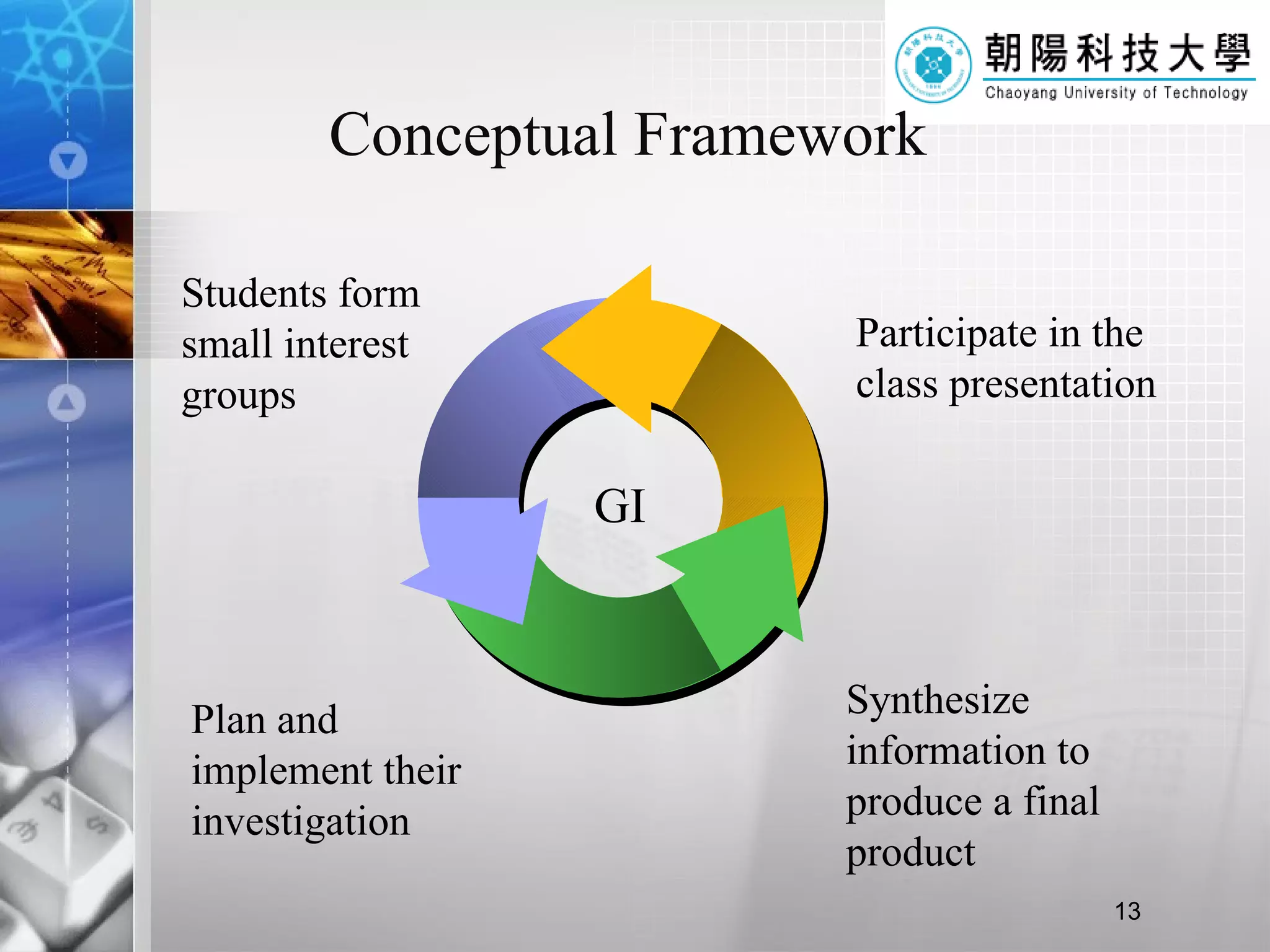
Conceptual Framework Group Investigation enables students to work  actively  and  collaboratively  in small groups and allows them to take and  active role  in determining their own learning goals and processes. (Huhtala, 1994)
Conceptual Framework  Students form small interest groups Plan and implement their investigation  Synthesize information to produce a final product  Participate in the class presentation  GI
Methodology Subjects Instruments Procedure
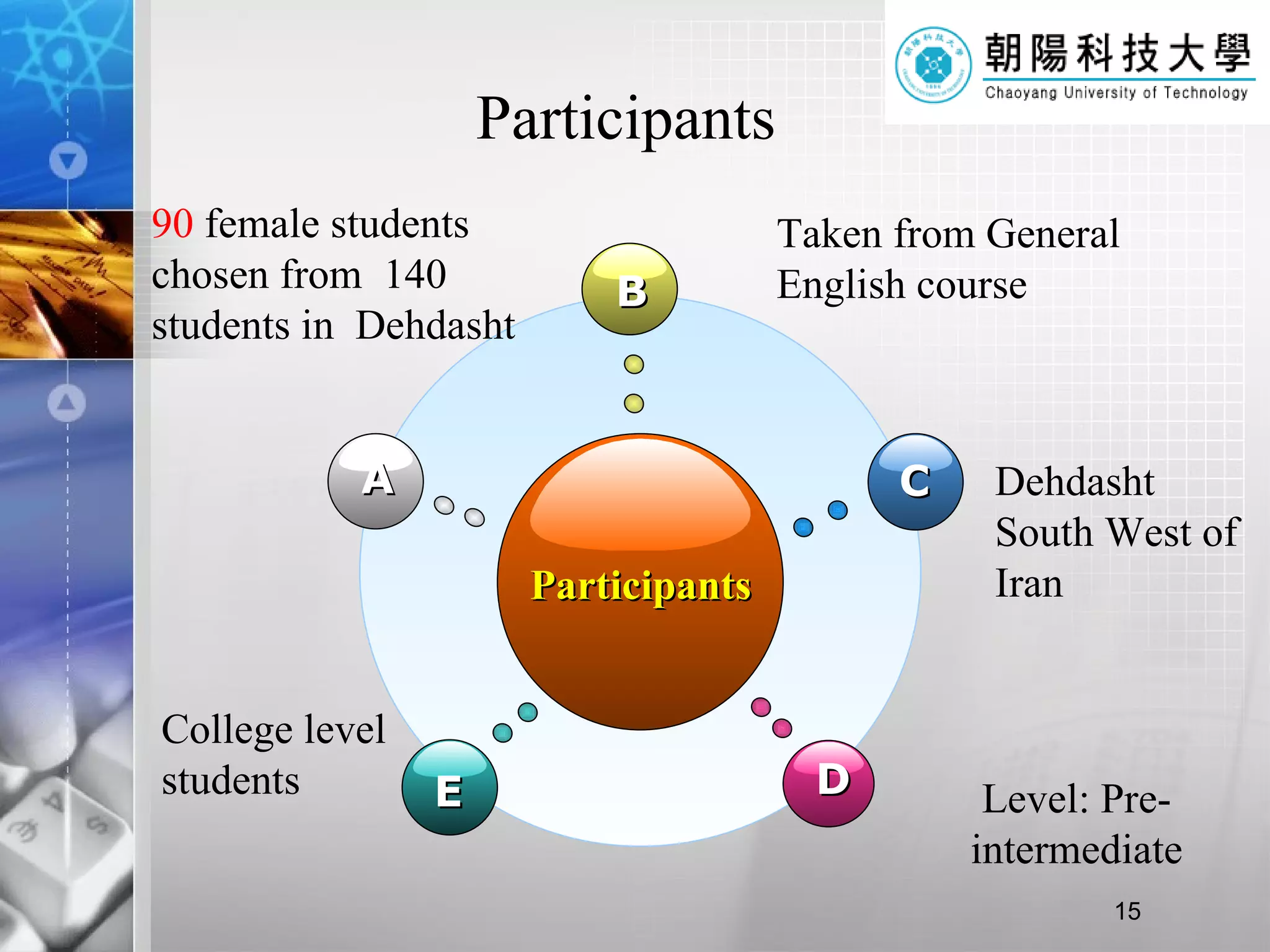
Participants Participants  90  female students chosen from  140 students in  Dehdasht Taken from General English course  Dehdasht South West of Iran College level students  Level: Pre-intermediate B E C D A
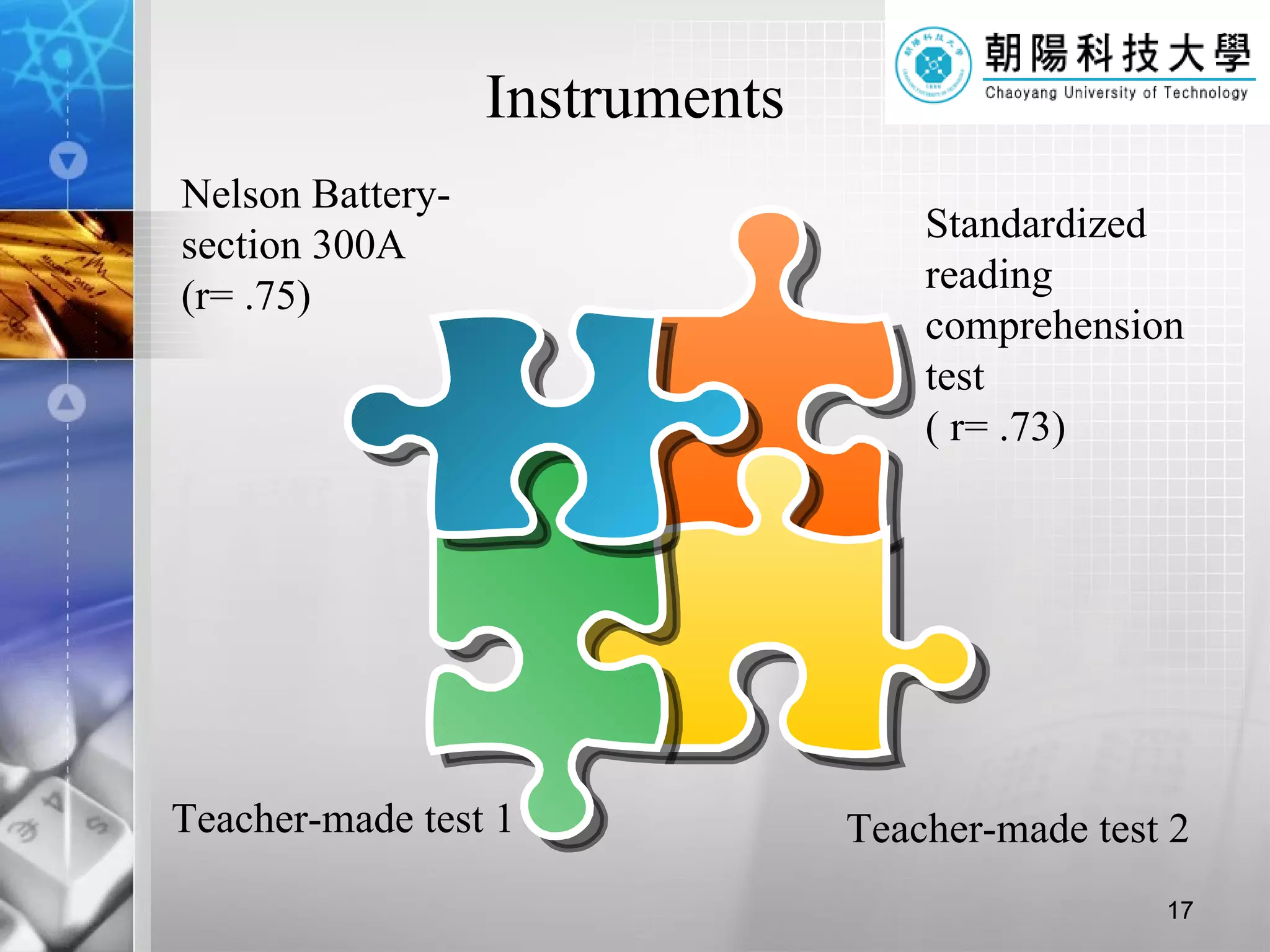
Instruments Nelson Battery-section 300A (r= .75) Standardized reading comprehension test ( r= .73) Teacher-made test 1  Teacher-made test 2
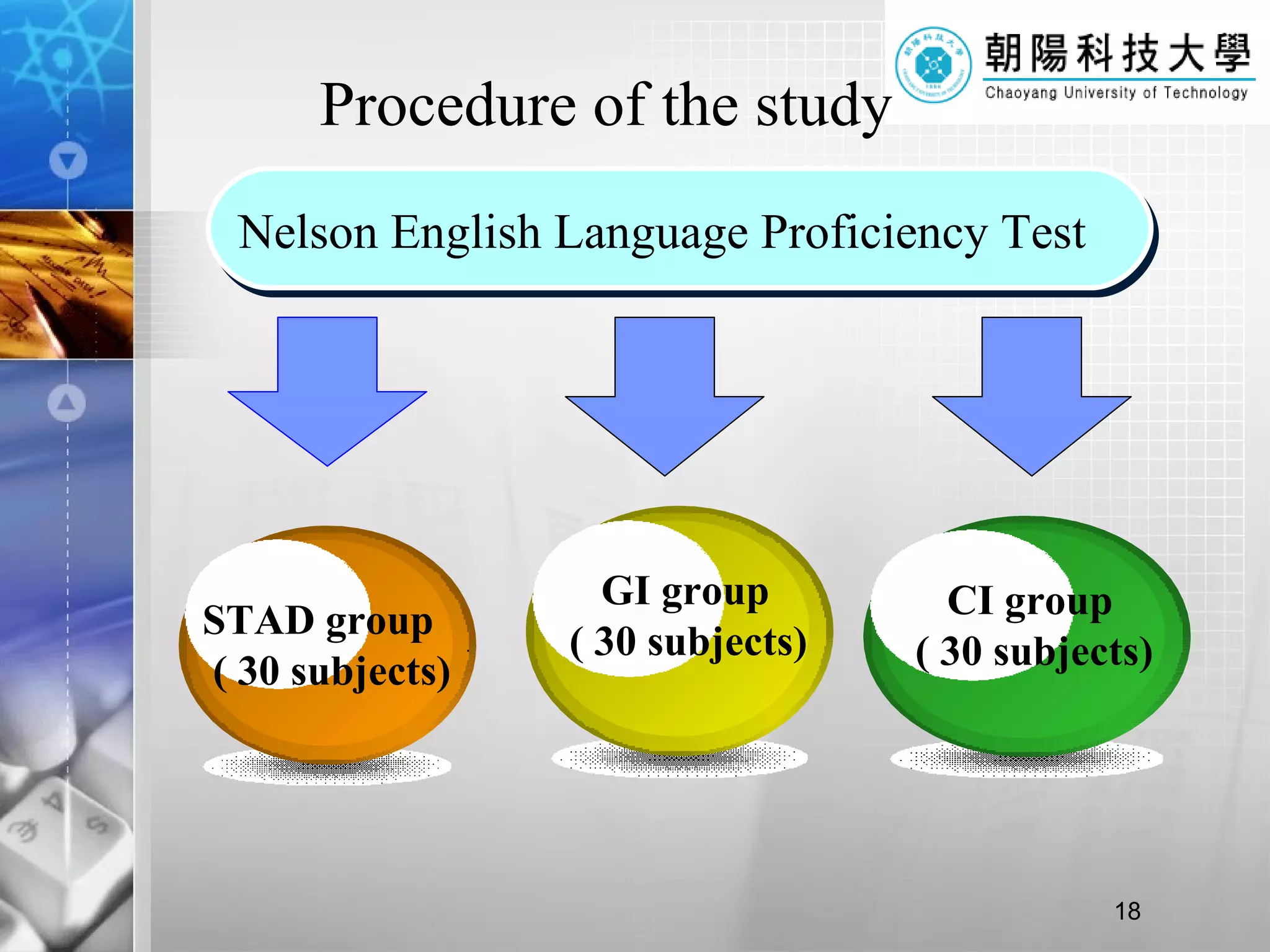
Procedure of the study Nelson English Language Proficiency Test STAD group ( 30 subjects) GI group ( 30 subjects)  CI group ( 30 subjects)
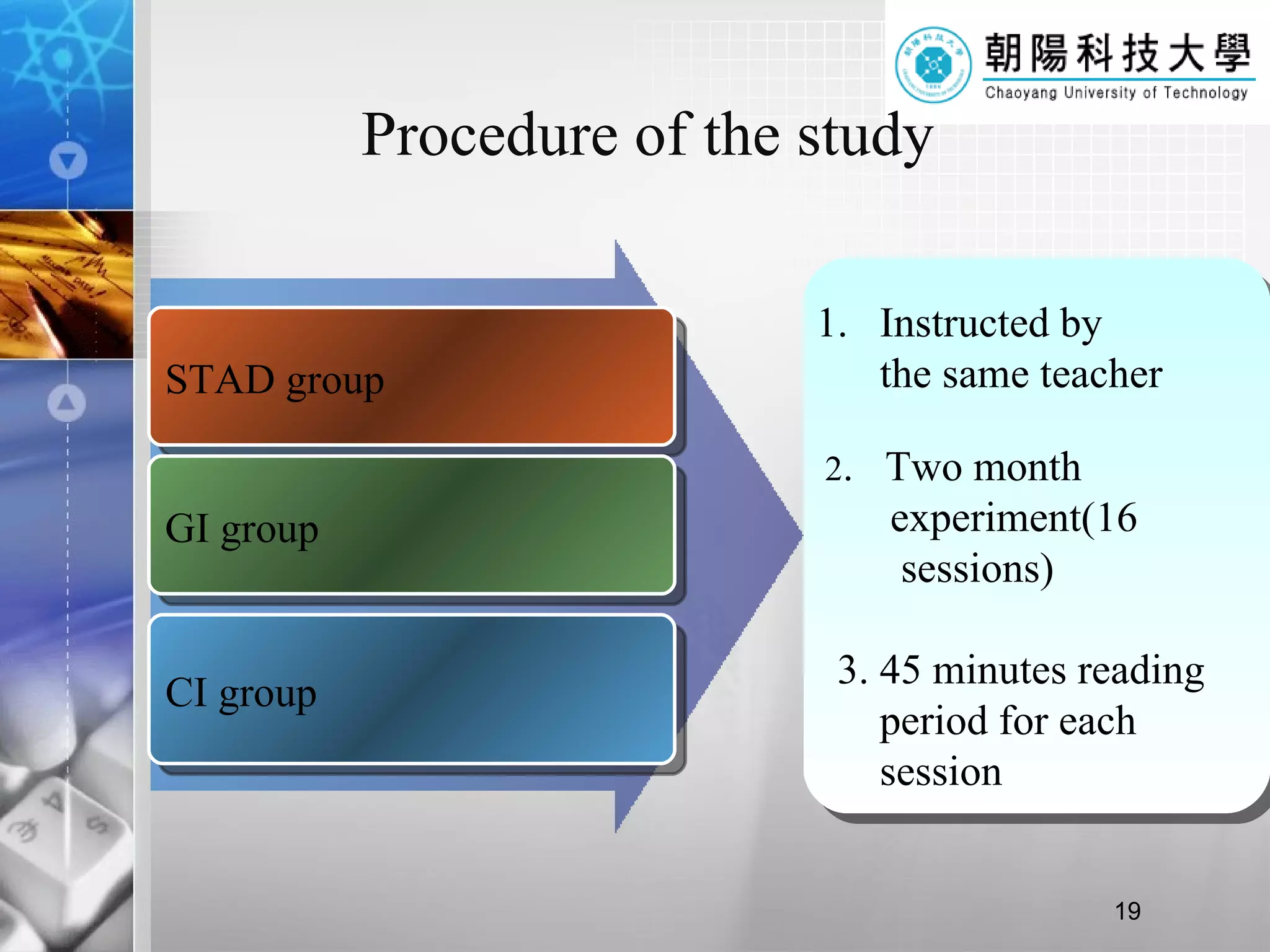
Procedure of the study  STAD   group   GI group  CI group Instructed by  the same teacher 2 .  Two month  experiment(16  sessions) 3. 45 minutes reading  period for each  session
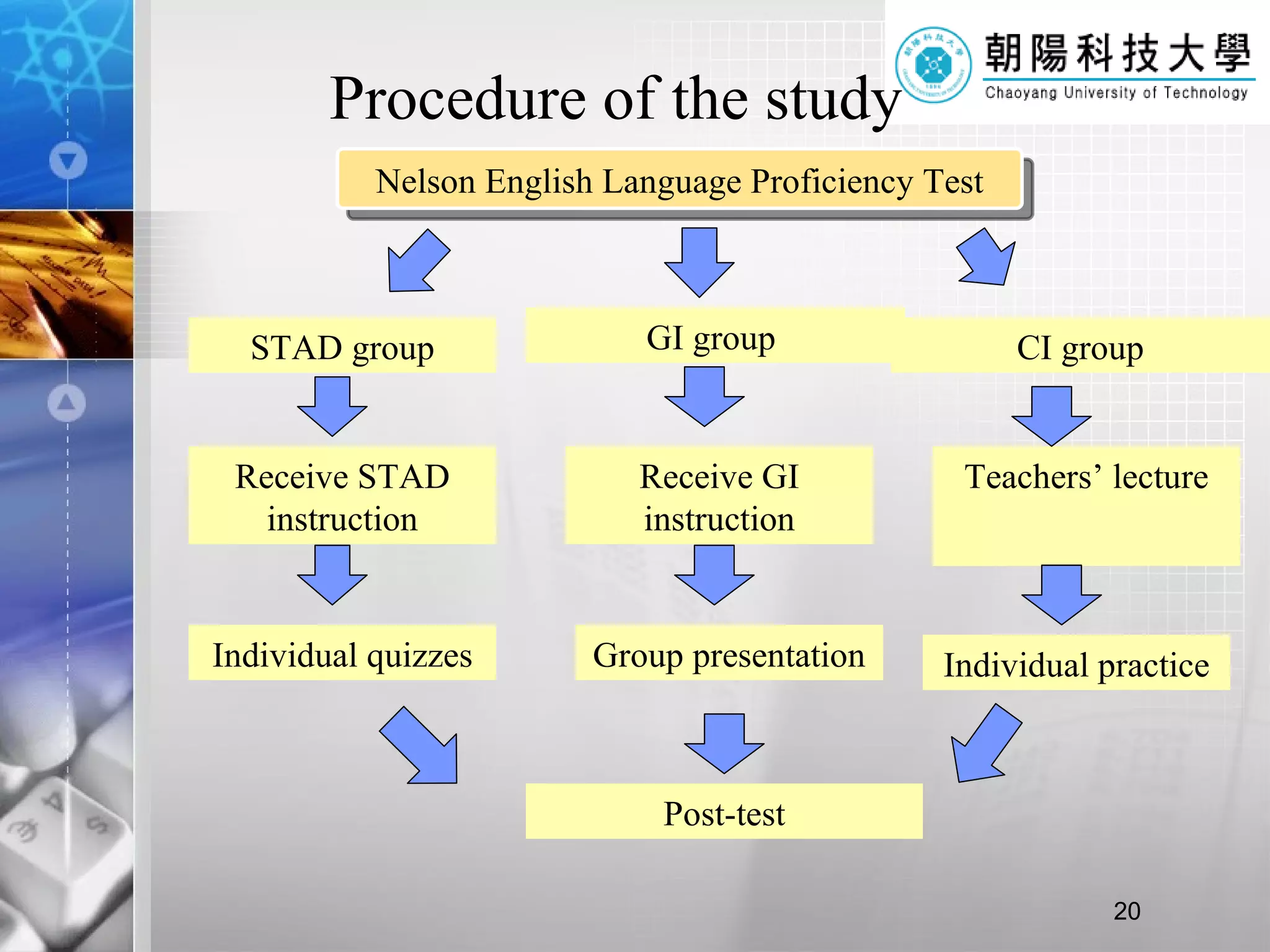
Procedure of the study STAD group GI group  CI group Receive STAD instruction Receive GI instruction Teachers’ lecture Individual quizzes Individual practice Post-test Nelson English Language Proficiency Test Group presentation
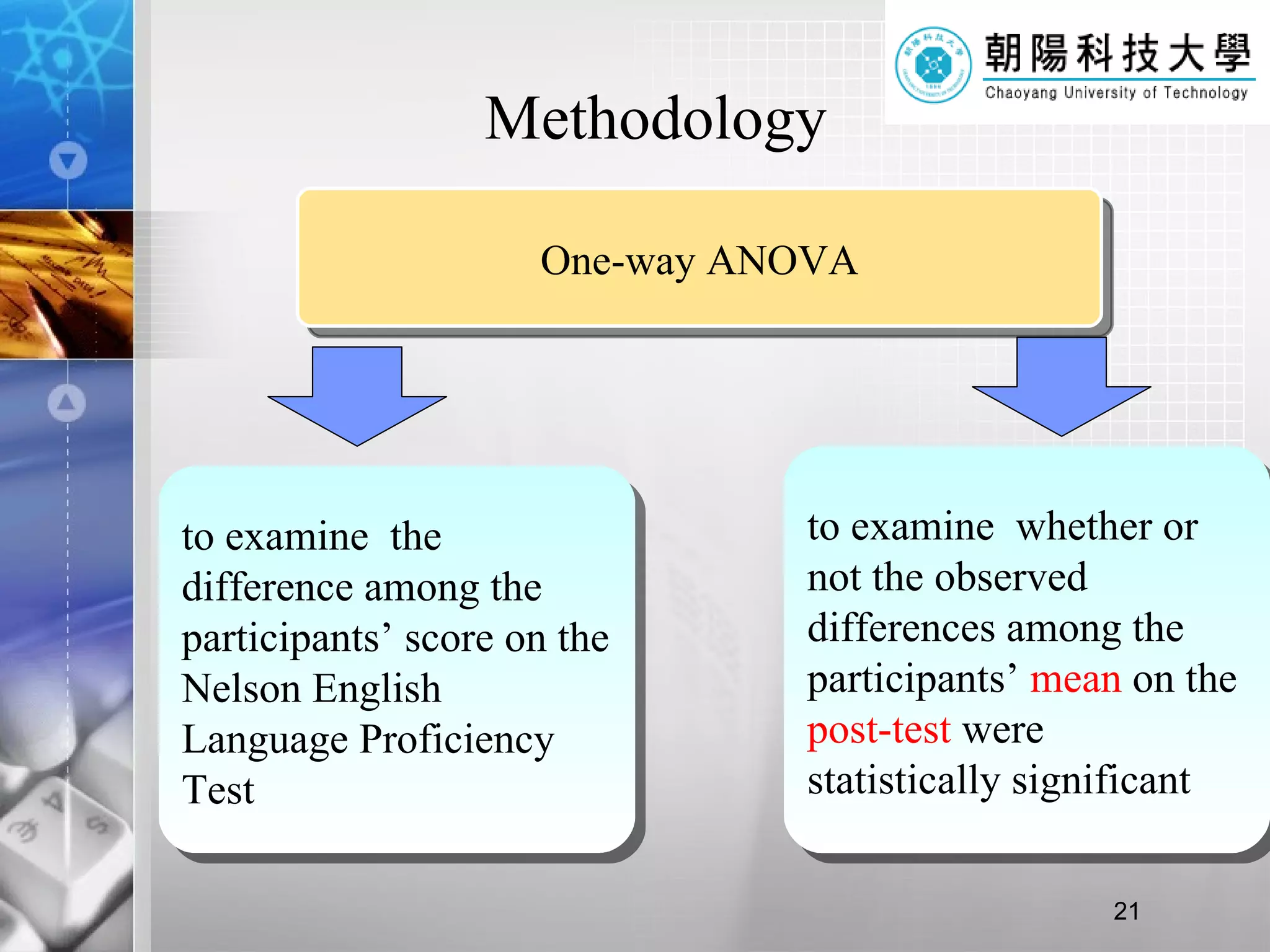
Methodology One-way ANOVA to examine  the difference among the participants’ score on the Nelson English Language Proficiency Test to examine  whether or not the observed differences among the participants’  mean  on the  post-test  were statistically significant
Methodology Post hoc Scheffe test  to determine where precisely the significance lay
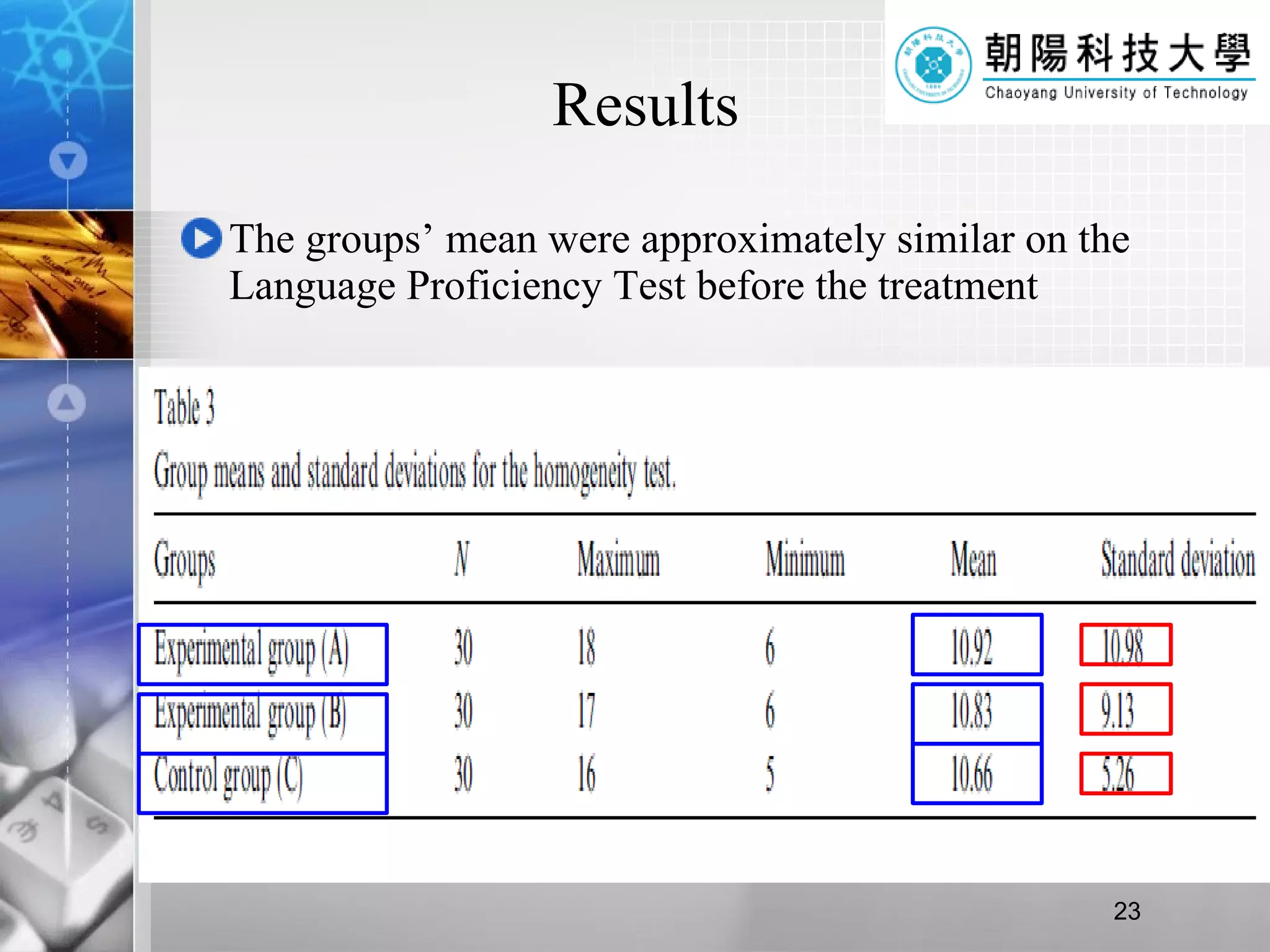
Results The groups’ mean were approximately similar on the Language Proficiency Test before the treatment
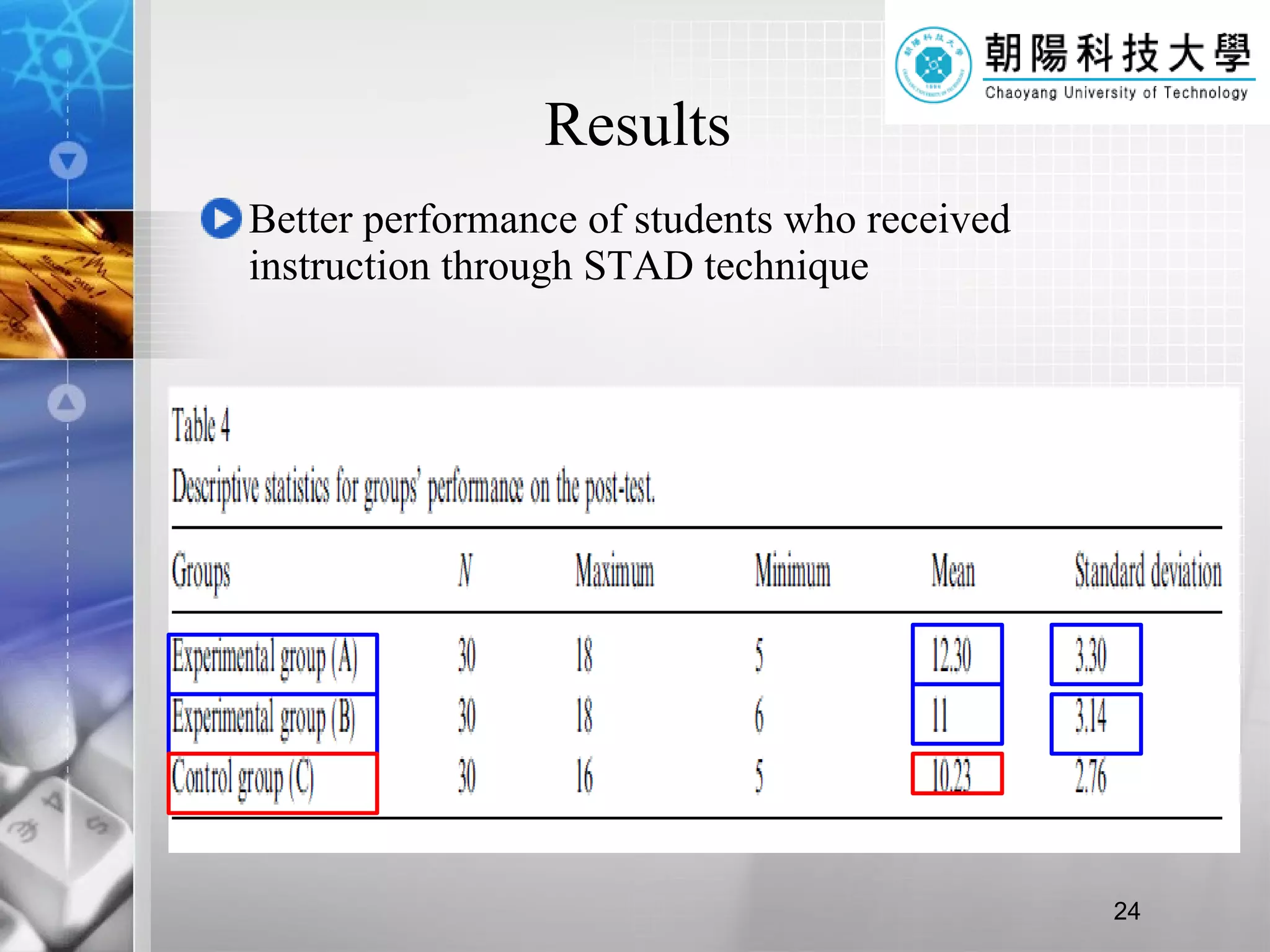
Results  Better performance of students who received instruction through STAD technique
Results  The differences among the participants’ means on the post test were statistically significant
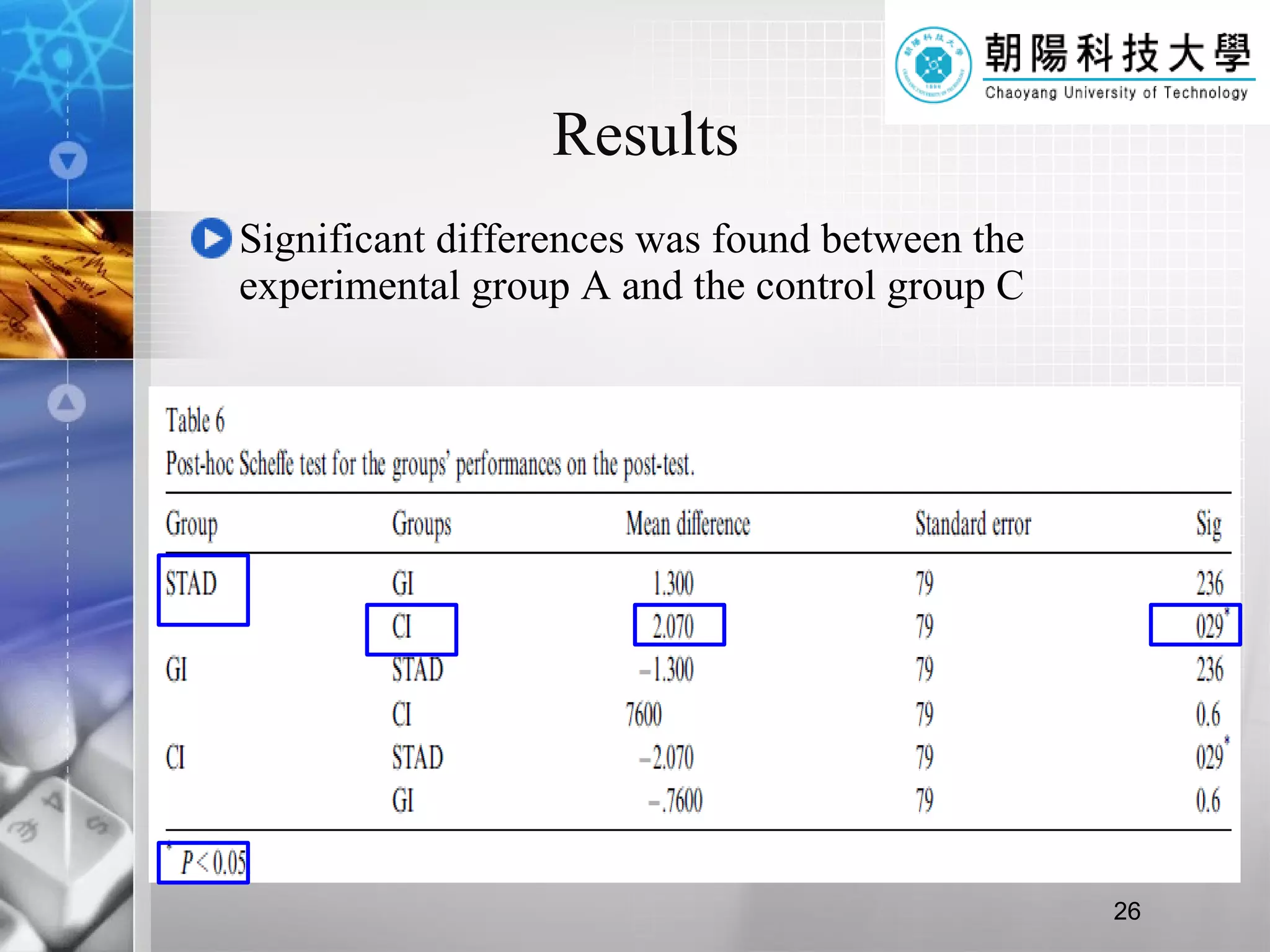
Results Significant differences was found between the experimental group A and the control group C
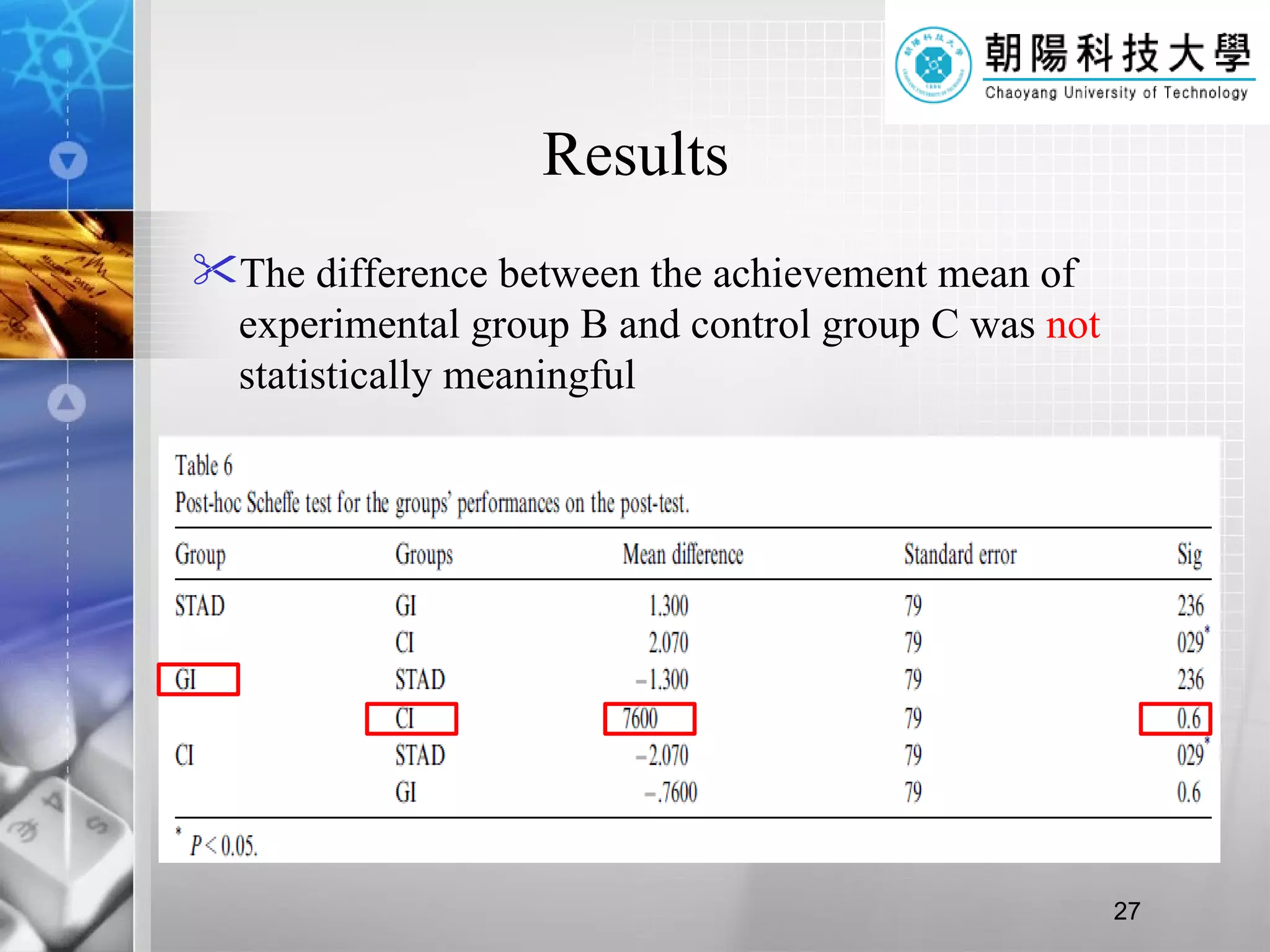
Results The difference between the achievement mean of experimental group B and control group C was  not  statistically meaningful
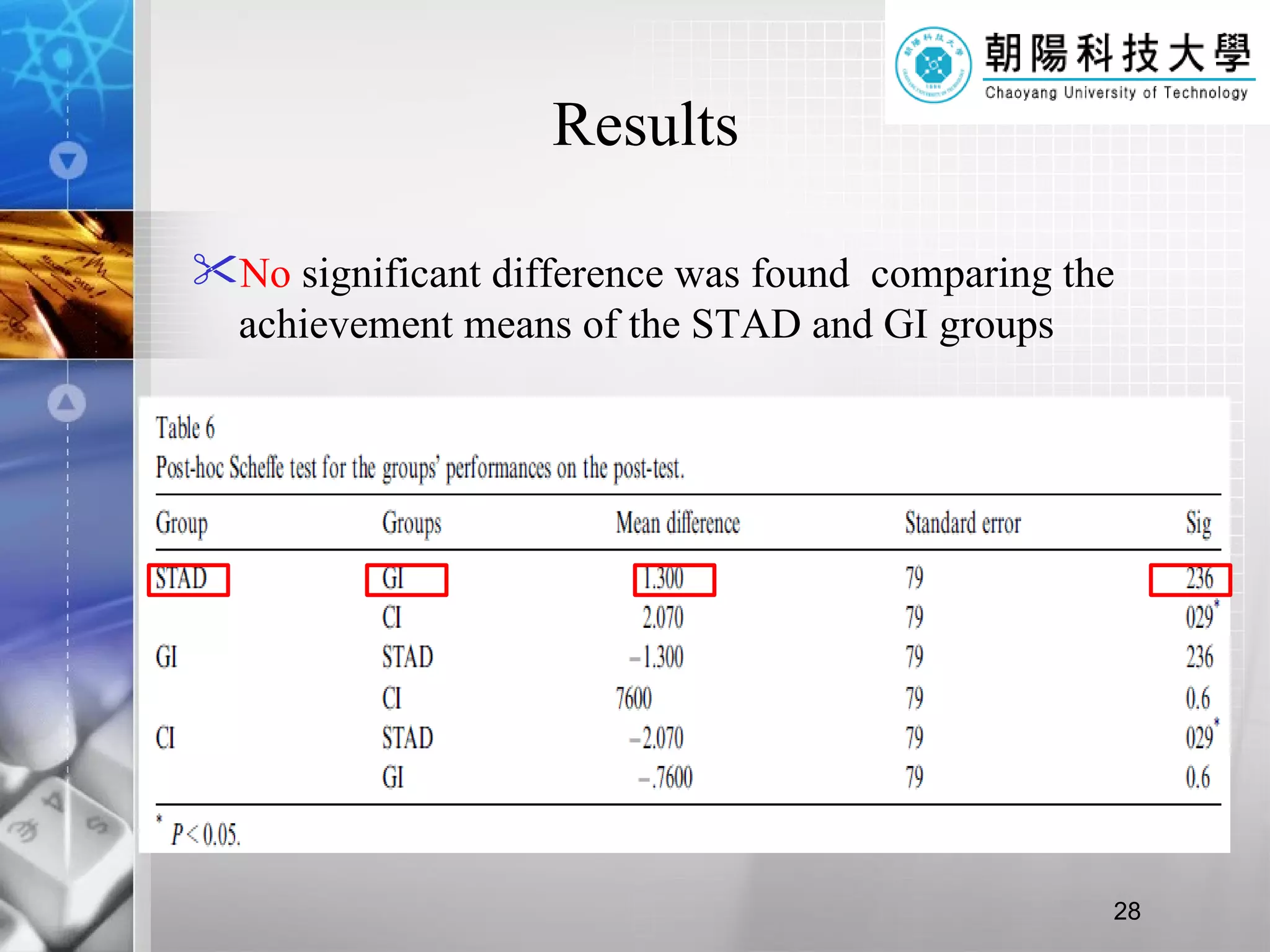
Results No  significant difference was found  comparing the achievement means of the STAD and GI groups
Conclusion  It is important for students to receive explicit instruction in specific reading comprehension strategies such as  summaries, headings ,  identifying main ideas , and  self regulation skills .
Conclusion Simply putting students in groups does not guarantee positive results.
Reflection The researcher provides  sample items about the teacher- made quizzes and worksheets.  The researcher  did not provide detail information about the reading materials.
Reflection The Nelson English Proficiency Test seems to be old  (Fowler and Coe, 1976) The researcher did not provide sample item about the Nelson English Proficiency Test.
Reflection The researcher only recruited 90 female students as participants in this study. Why?
Thank You !

2010 teresa's report2003

  • 1.
    The effect ofcooperative learning techniques on college students’ reading comprehension Presenter: York Chi Instructor: Dr. Pi-Ying Hsu Date: May 5, 2010
  • 2.
    Jalilifar, A. (2010).The effect of cooperative learning techniques on college students’ reading comprehension. System, 38, 96-108.
  • 3.
    Contents Reflection Results& Conclusion Methodology Introduction
  • 4.
    Introduction One ofthe main problems confronting English as a Foreign Language (EFL) learners is how to improve their reading comprehension achievement. (Jalilifar, 2010)
  • 5.
    Introduction Researchers havebeen interested in investigating strategies that help students have better understanding when they read. (Al Haidari, 2006; Hollingsworth et al., 2007)
  • 6.
    Introduction Different approachessuch as Cooperative learning (CL) and Conventional Instruction (CI) have been generally used in classroom. (Jalilifar, 2010)
  • 7.
    Introduction There isstill doubt that CL techniques such as Student Team-Achievement Divisions ( STAD) and Group Investigation (GI) can promote reading comprehension.
  • 8.
    Purpose of thestudy -to investigate the effectiveness of STAD and GI in improving college students’ reading comprehension achievement
  • 9.
    Research Questions 1 2 If so, which one is more effective? Are there any differences in terms of reading comprehension quality between EFL learners who are instructed according to the CI and those with whom the techniques CL are utilized?
  • 10.
    Research Questions 3Would the use of STAD or GI yield any differences in students’ gains in reading comprehension?
  • 11.
    Conceptual Framework 12 3 4 STAD Listen to teacher’s explanation of material Work in mixed groups to complete activities or worksheets Take individual quizzes Recognize the team achievement (Ghaithe, 2004)
  • 12.
    Conceptual Framework GroupInvestigation enables students to work actively and collaboratively in small groups and allows them to take and active role in determining their own learning goals and processes. (Huhtala, 1994)
  • 13.
    Conceptual Framework Students form small interest groups Plan and implement their investigation Synthesize information to produce a final product Participate in the class presentation GI
  • 14.
  • 15.
    Participants Participants 90 female students chosen from 140 students in Dehdasht Taken from General English course Dehdasht South West of Iran College level students Level: Pre-intermediate B E C D A
  • 17.
    Instruments Nelson Battery-section300A (r= .75) Standardized reading comprehension test ( r= .73) Teacher-made test 1 Teacher-made test 2
  • 18.
    Procedure of thestudy Nelson English Language Proficiency Test STAD group ( 30 subjects) GI group ( 30 subjects) CI group ( 30 subjects)
  • 19.
    Procedure of thestudy STAD group GI group CI group Instructed by the same teacher 2 . Two month experiment(16 sessions) 3. 45 minutes reading period for each session
  • 20.
    Procedure of thestudy STAD group GI group CI group Receive STAD instruction Receive GI instruction Teachers’ lecture Individual quizzes Individual practice Post-test Nelson English Language Proficiency Test Group presentation
  • 21.
    Methodology One-way ANOVAto examine the difference among the participants’ score on the Nelson English Language Proficiency Test to examine whether or not the observed differences among the participants’ mean on the post-test were statistically significant
  • 22.
    Methodology Post hocScheffe test to determine where precisely the significance lay
  • 23.
    Results The groups’mean were approximately similar on the Language Proficiency Test before the treatment
  • 24.
    Results Betterperformance of students who received instruction through STAD technique
  • 25.
    Results Thedifferences among the participants’ means on the post test were statistically significant
  • 26.
    Results Significant differenceswas found between the experimental group A and the control group C
  • 27.
    Results The differencebetween the achievement mean of experimental group B and control group C was not statistically meaningful
  • 28.
    Results No significant difference was found comparing the achievement means of the STAD and GI groups
  • 29.
    Conclusion Itis important for students to receive explicit instruction in specific reading comprehension strategies such as summaries, headings , identifying main ideas , and self regulation skills .
  • 30.
    Conclusion Simply puttingstudents in groups does not guarantee positive results.
  • 31.
    Reflection The researcherprovides sample items about the teacher- made quizzes and worksheets. The researcher did not provide detail information about the reading materials.
  • 32.
    Reflection The NelsonEnglish Proficiency Test seems to be old (Fowler and Coe, 1976) The researcher did not provide sample item about the Nelson English Proficiency Test.
  • 33.
    Reflection The researcheronly recruited 90 female students as participants in this study. Why?
  • 34.