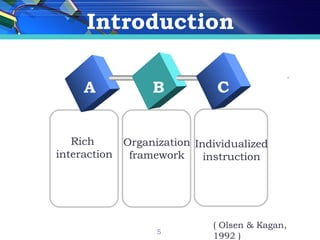
This study examined the effects of cooperative learning versus individualistic instruction on the acquisition of English grammar rules and mechanics by 318 junior high school students in the Middle East. Students were divided into experimental and control groups. The experimental groups used cooperative learning techniques while control groups used individual instruction. Pre- and post-tests were administered and teachers observed students. Results showed no difference in outcomes between high- and low-achieving students. Cooperative learning was at least as effective as individual instruction and benefited low-achieving students more without negatively impacting high-achievers.