Lean-Agile Thinking ApS
Mads Troels Hansen
Agile Transformation Coach, Professional Scrum Trainer
Unused Potential and Principles in Scrum & Agile
January 2015
mth@lean-agile.dk
@MadsTH
www.lean-agile.dk
www.Teamdriven.dk
dk.linkedin.com/in/MadsTroelsHansen
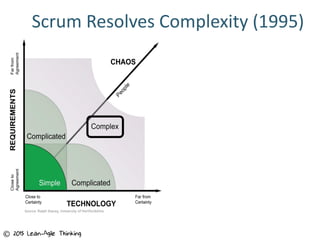
Scrum Resolves Complexity (1995)
Source: Ralph Stacey, University of Hertfordshire
© 2015 Lean-Agile Thinking
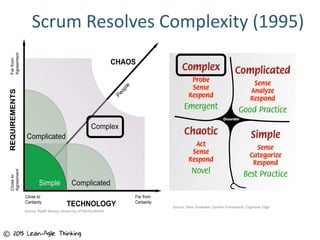
Scrum Resolves Complexity (1995)
Source: Ralph Stacey, University of Hertfordshire
Source: Dave Snowden, Cynefin Framework, Cognitive Edge
© 2015 Lean-Agile Thinking
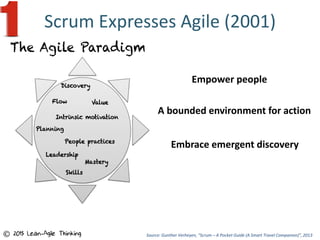
Scrum Expresses Agile (2001)
© 2015 Lean-Agile Thinking Source: Gunther Verheyen, “Scrum – A Pocket Guide (A Smart Travel Companion)”, 2013
Empower people
A bounded environment for action
Embrace emergent discovery
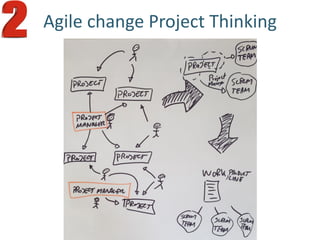
Agile change Project Thinking
© 2015 Lean-Agile Thinking
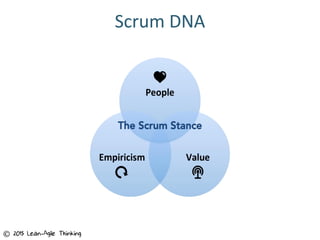
Scrum DNA
© 2015 Lean-Agile Thinking
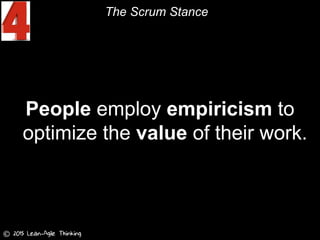
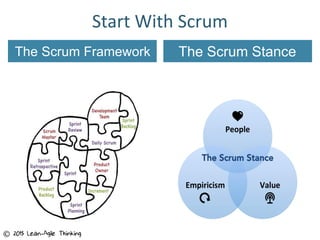
People employ empiricism to
optimize the value of their work.
The Scrum Stance
© 2015 Lean-Agile Thinking
Fundamentals: Simplicity and Bottom-up
“Scrum promotes bottom-up thinking
with top-down support to discover and
emerge what works best for you, your
organization and your context.”
Source: Gunther Verheyen, “Scrum – A Pocket Guide (A Smart Travel Companion)”, 2013© 2015 Lean-Agile Thinking
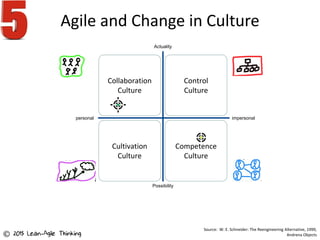
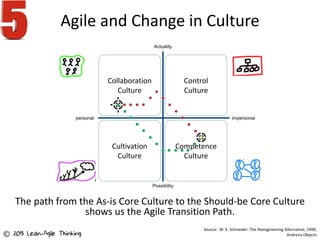
Agile and Change in Culture
30.01.2015
Scaled Professional Scrum Framework | Agile Transition | Central role of Core Culture
11
Collaboration
Culture
Cultivation
Culture
Control
Culture
Competence
Culture
Actuality
Possibility
personal impersonal
Source: W. E. Schneider: The Reengineering Alternative, 1999,
Andrena Objects© 2015 Lean-Agile Thinking
Agile and Change in Culture
30.01.2015
Scaled Professional Scrum Framework | Agile Transition | Central role of Core Culture
12
Collaboration
Culture
Cultivation
Culture
Control
Culture
Competence
Culture
Actuality
Possibility
personal impersonal
Source: W. E. Schneider: The Reengineering Alternative, 1999,
Andrena Objects© 2015 Lean-Agile Thinking
The path from the As-is Core Culture to the Should-be Core Culture
shows us the Agile Transition Path.
Start With Scrum
The Scrum Framework The Scrum Stance
© 2015 Lean-Agile Thinking
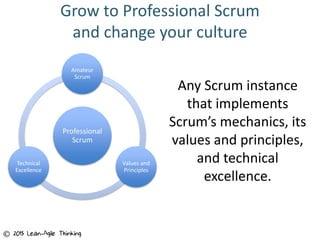
Grow to Professional Scrum
and change your culture
Any Scrum instance
that implements
Scrum’s mechanics, its
values and principles,
and technical
excellence.
Professional
Scrum
Amateur
Scrum
Values and
Principles
Technical
Excellence
© 2015 Lean-Agile Thinking
mth@lean-agile.dk
@MadsTH
www.lean-agile.dk
www.Teamdriven.dk
dk.linkedin.com/in/MadsTroelsHansen
Test your basic knowledge about Scrum (free):
https://www.scrum.org/Assessments/Open-Assessments

Top 5, Unused potential and Principles in Scrum & Agile - Professional Scrum

  • 1.
    Lean-Agile Thinking ApS MadsTroels Hansen Agile Transformation Coach, Professional Scrum Trainer Unused Potential and Principles in Scrum & Agile January 2015 mth@lean-agile.dk @MadsTH www.lean-agile.dk www.Teamdriven.dk dk.linkedin.com/in/MadsTroelsHansen
  • 2.
    Scrum Resolves Complexity(1995) Source: Ralph Stacey, University of Hertfordshire © 2015 Lean-Agile Thinking
  • 3.
    Scrum Resolves Complexity(1995) Source: Ralph Stacey, University of Hertfordshire Source: Dave Snowden, Cynefin Framework, Cognitive Edge © 2015 Lean-Agile Thinking
  • 4.
    Scrum Expresses Agile(2001) © 2015 Lean-Agile Thinking Source: Gunther Verheyen, “Scrum – A Pocket Guide (A Smart Travel Companion)”, 2013 Empower people A bounded environment for action Embrace emergent discovery
  • 5.
  • 6.
  • 7.
  • 8.
    Scrum DNA © 2015Lean-Agile Thinking
  • 9.
    People employ empiricismto optimize the value of their work. The Scrum Stance © 2015 Lean-Agile Thinking
  • 10.
    Fundamentals: Simplicity andBottom-up “Scrum promotes bottom-up thinking with top-down support to discover and emerge what works best for you, your organization and your context.” Source: Gunther Verheyen, “Scrum – A Pocket Guide (A Smart Travel Companion)”, 2013© 2015 Lean-Agile Thinking
  • 11.
    Agile and Changein Culture 30.01.2015 Scaled Professional Scrum Framework | Agile Transition | Central role of Core Culture 11 Collaboration Culture Cultivation Culture Control Culture Competence Culture Actuality Possibility personal impersonal Source: W. E. Schneider: The Reengineering Alternative, 1999, Andrena Objects© 2015 Lean-Agile Thinking
  • 12.
    Agile and Changein Culture 30.01.2015 Scaled Professional Scrum Framework | Agile Transition | Central role of Core Culture 12 Collaboration Culture Cultivation Culture Control Culture Competence Culture Actuality Possibility personal impersonal Source: W. E. Schneider: The Reengineering Alternative, 1999, Andrena Objects© 2015 Lean-Agile Thinking The path from the As-is Core Culture to the Should-be Core Culture shows us the Agile Transition Path.
  • 13.
    Start With Scrum TheScrum Framework The Scrum Stance © 2015 Lean-Agile Thinking
  • 14.
    Grow to ProfessionalScrum and change your culture Any Scrum instance that implements Scrum’s mechanics, its values and principles, and technical excellence. Professional Scrum Amateur Scrum Values and Principles Technical Excellence © 2015 Lean-Agile Thinking
  • 15.
    mth@lean-agile.dk @MadsTH www.lean-agile.dk www.Teamdriven.dk dk.linkedin.com/in/MadsTroelsHansen Test your basicknowledge about Scrum (free): https://www.scrum.org/Assessments/Open-Assessments