
A presentation by:
Vineet Patni
@patnivin
SCALED AGILE AND LEAN
vineet@ScaleUpConsultants.com
These thoughts were originally presented as the
talk “Scaled Agile and Lean” at the ISEC (India
Scrum Enthusiasts Community) Mumbai Meetup
on November 27, 2015.
2
https://in.linkedin.com/in/patnivineet
@patnivin
ScaleUp
www.ScaleUpConsultants.com
Vineet Patni
Facilitator-Coach-Speaker-Writer
• Scaling Agile
• Lean and Agile – An Introduction
• Frameworks to scale agile
• Principles over frameworks
• You can’t scale "Agile" without "Lean"
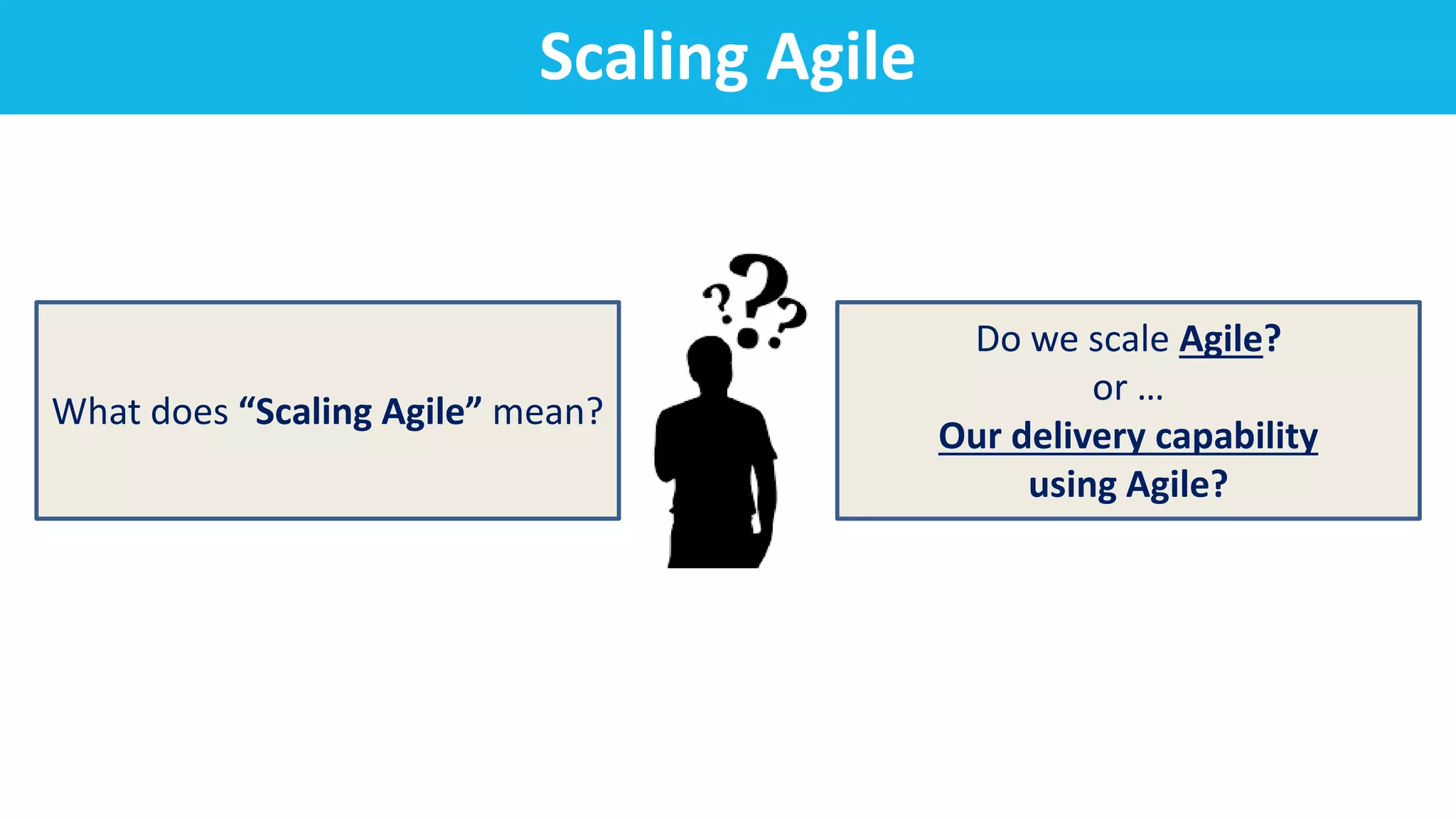
What does “Scaling Agile” mean?
Do we scale Agile?
or …
Our delivery capability
using Agile?
Scaling Agile
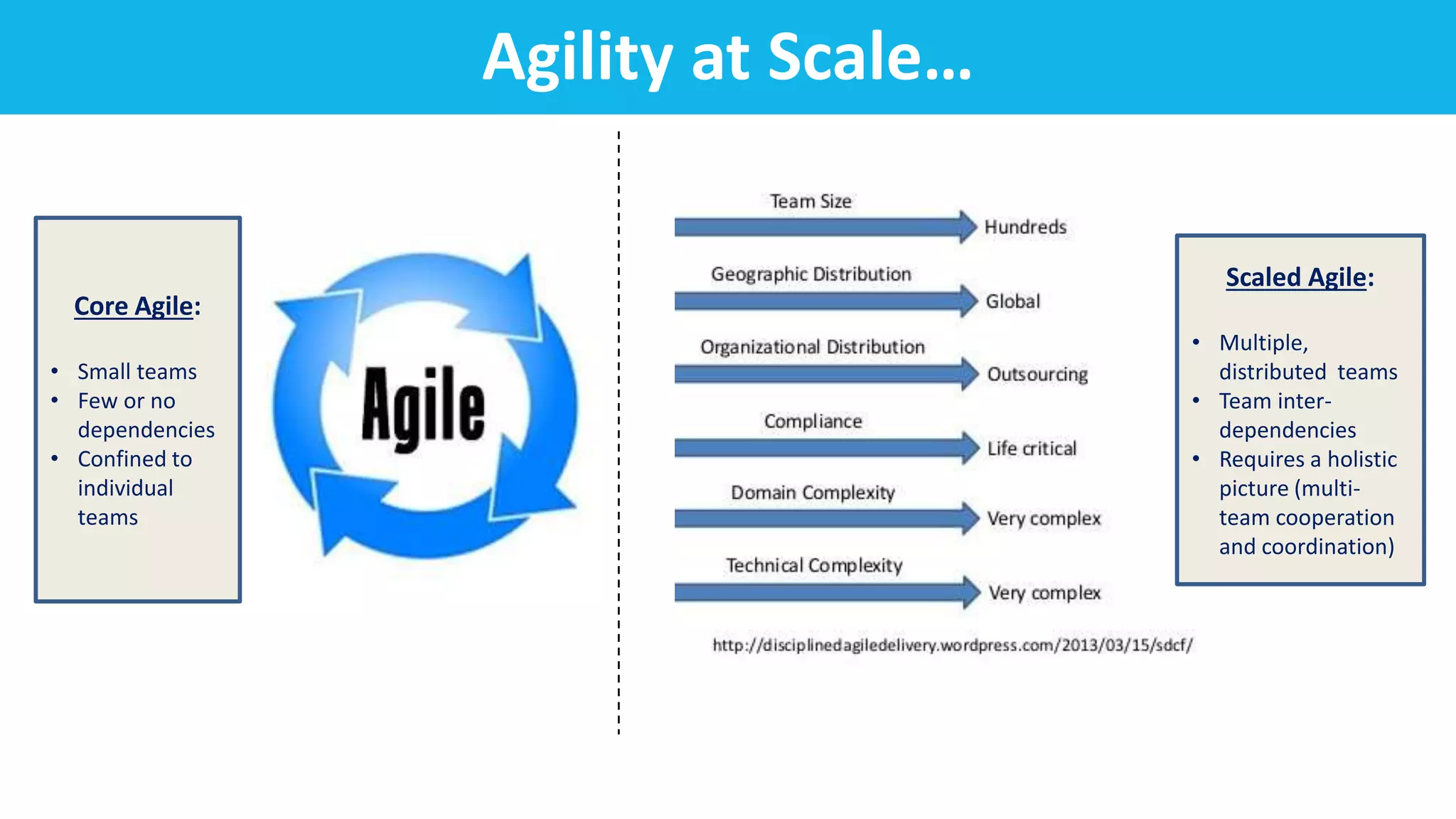
Agility at Scale…
Core Agile:
• Small teams
(<10)
• Few or no
dependencies
• Confined to
individual
teams
Scaled Agile:
• Multiple,
distributed teams
• Team inter-
dependencies
• Requires a holistic
picture (multi-
team cooperation
and coordination)
• Scaling Agile
• Lean and Agile – An Introduction
• Frameworks to scale agile
• Principles over frameworks
• You can’t scale "Agile" without "Lean"
principles
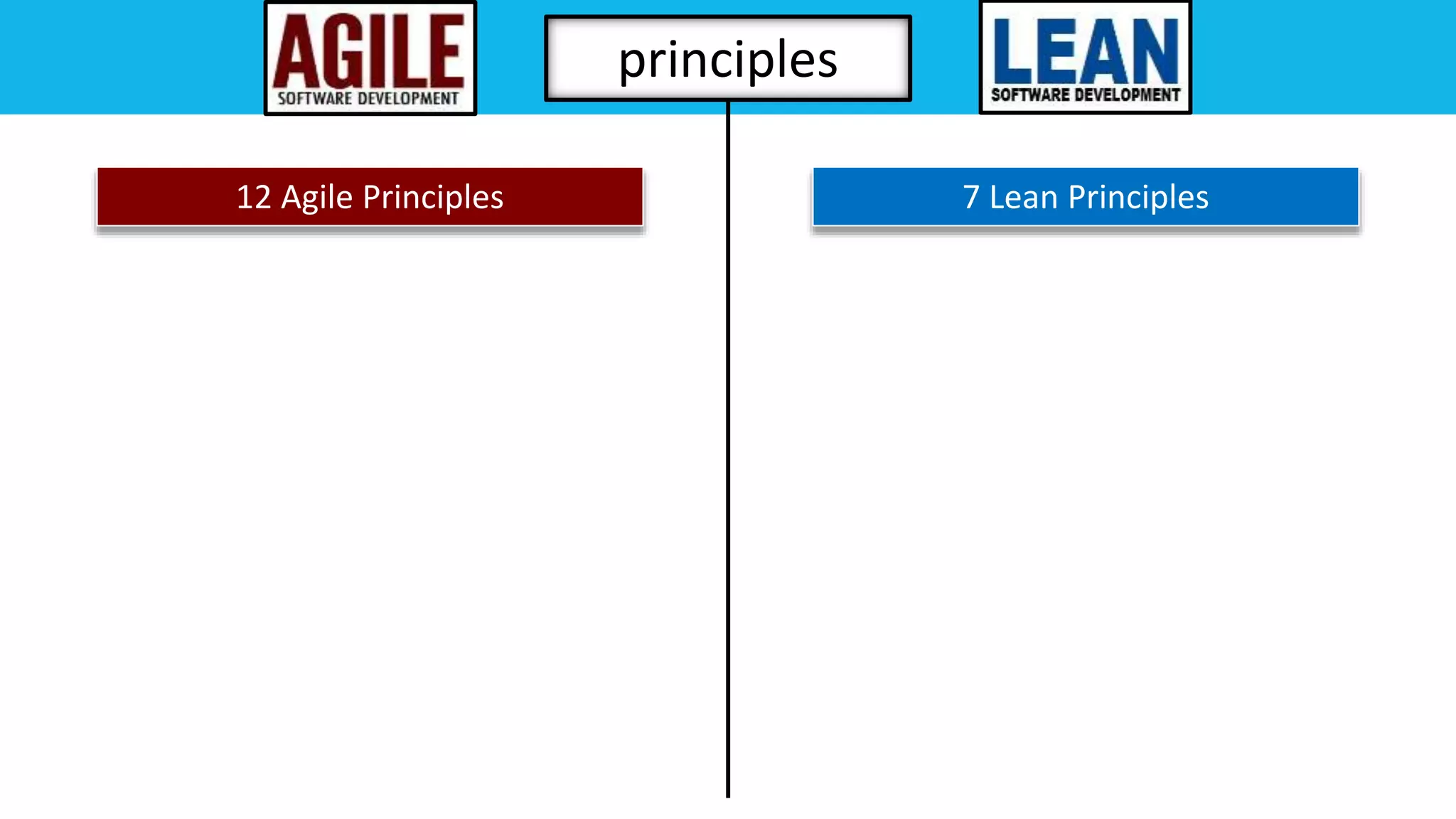
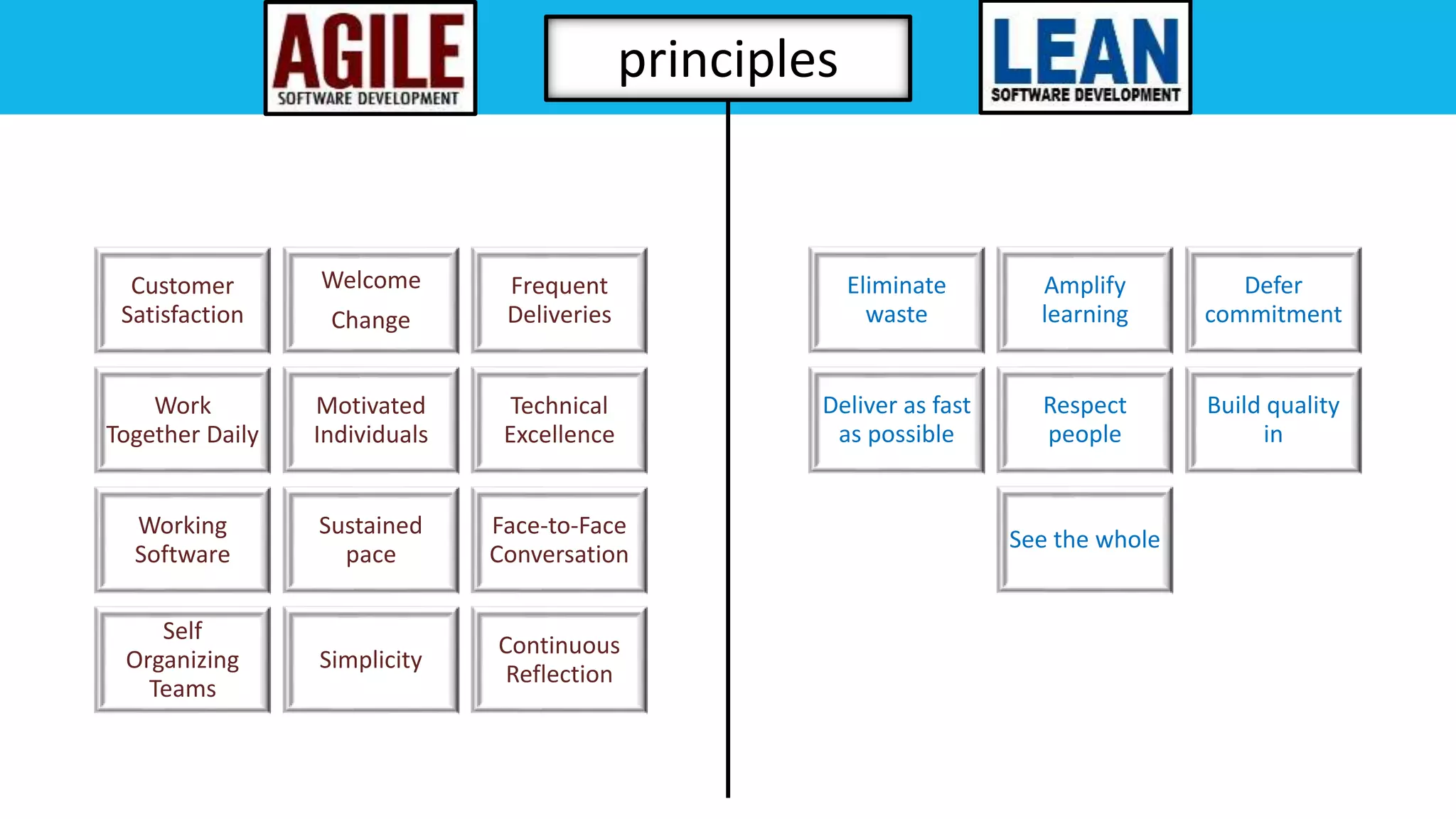
12 Agile Principles 7 Lean Principles
Customer
Satisfaction
Welcome
Change
Frequent
Deliveries
Work
Together Daily
Motivated
Individuals
Technical
Excellence
Working
Software
Sustained
pace
Face-to-Face
Conversation
Self
Organizing
Teams
Simplicity
Continuous
Reflection
Eliminate
waste
Amplify
learning
Defer
commitment
Deliver as fast
as possible
Respect
people
Build quality
in
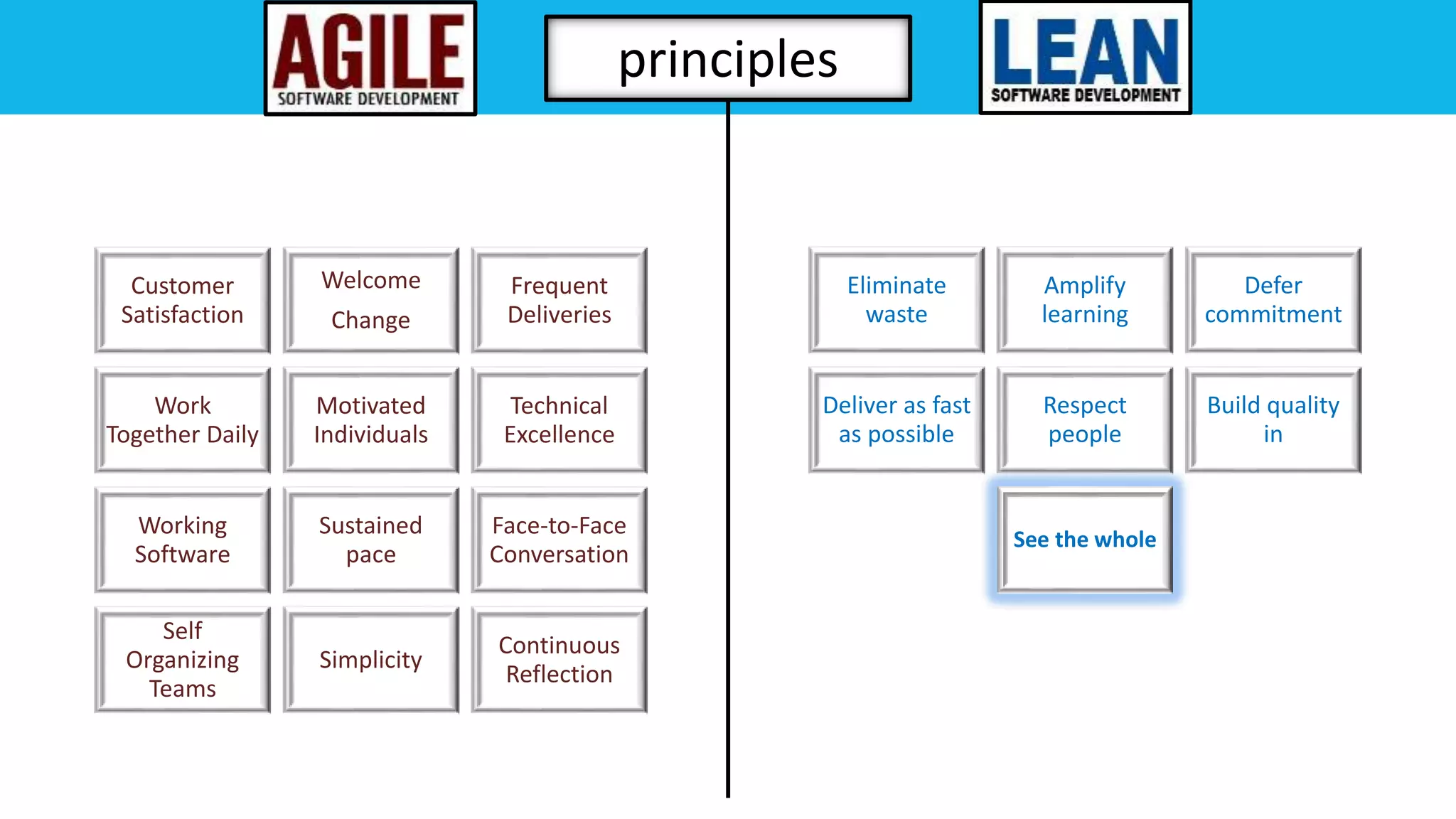
See the whole
principles
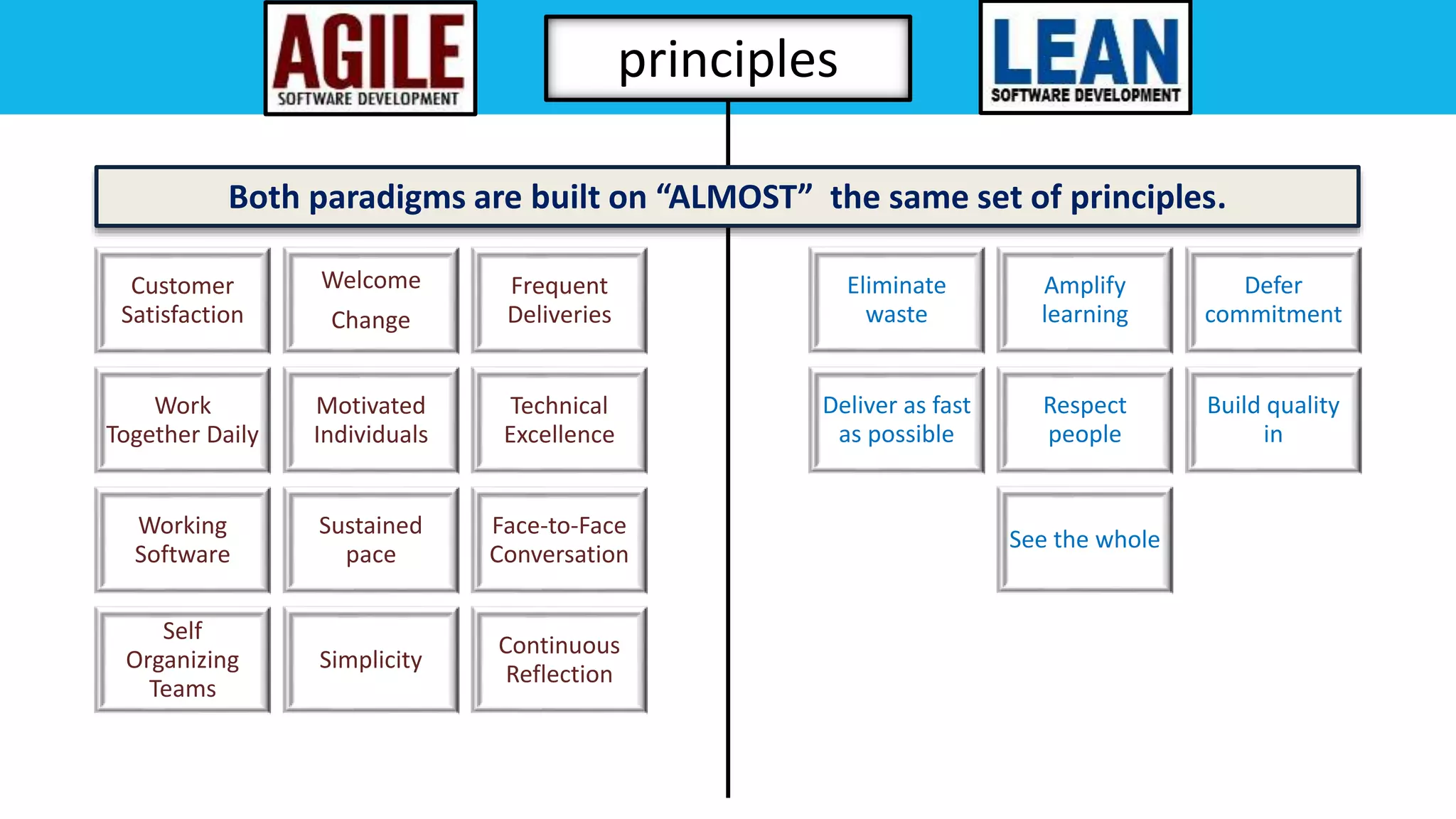
Both paradigms are built on “ALMOST” the same set of principles.
• Scaling Agile
• Lean and Agile – An Introduction
• Frameworks to scale agile
• Principles over frameworks
• You can’t scale "Agile" without "Lean"
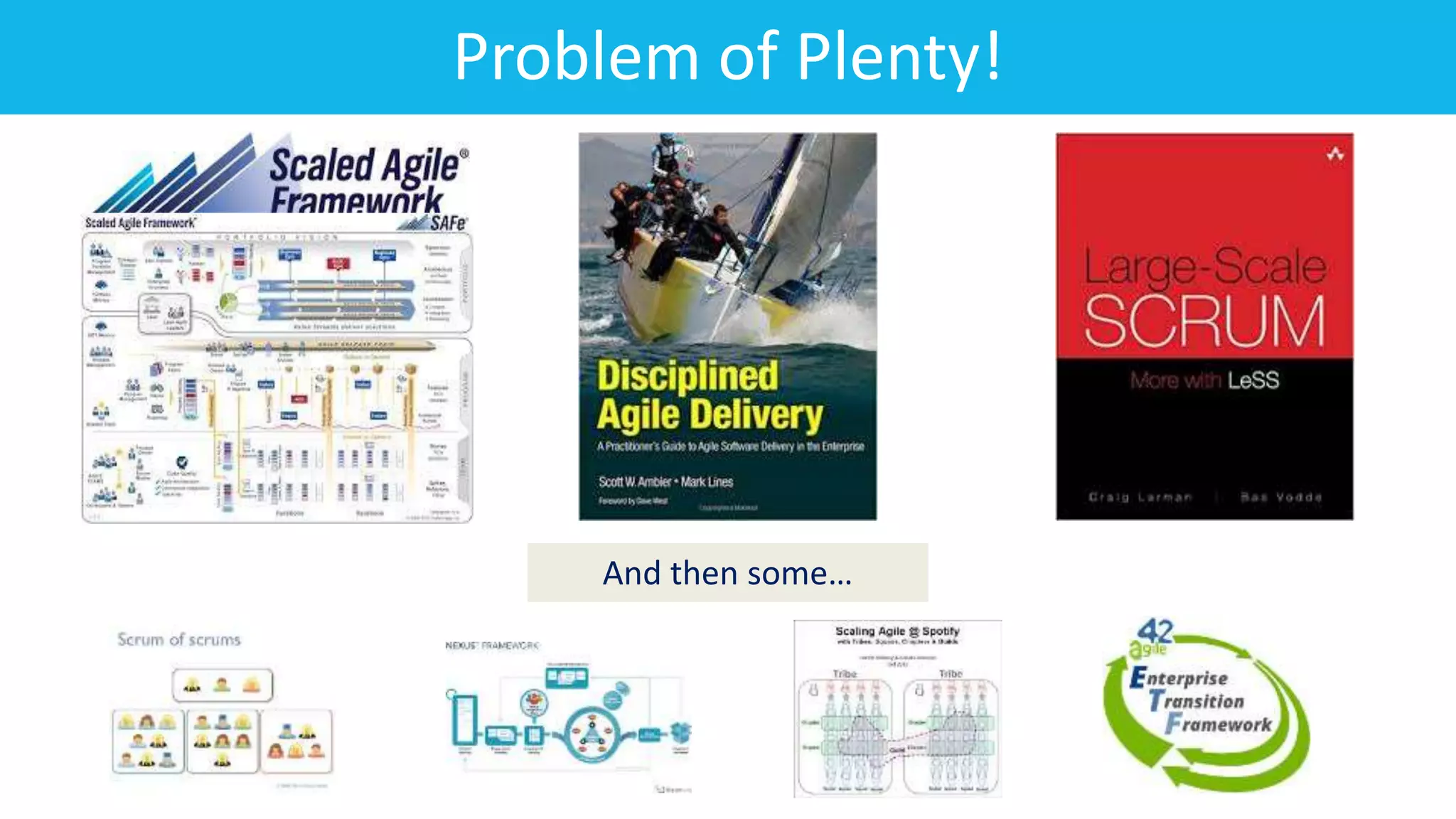
Problem of Plenty!
And then some…
• Scaling Agile
• Lean and Agile – An Introduction
• Frameworks to scale agile
• Principles over frameworks
• You can’t scale "Agile" without "Lean"
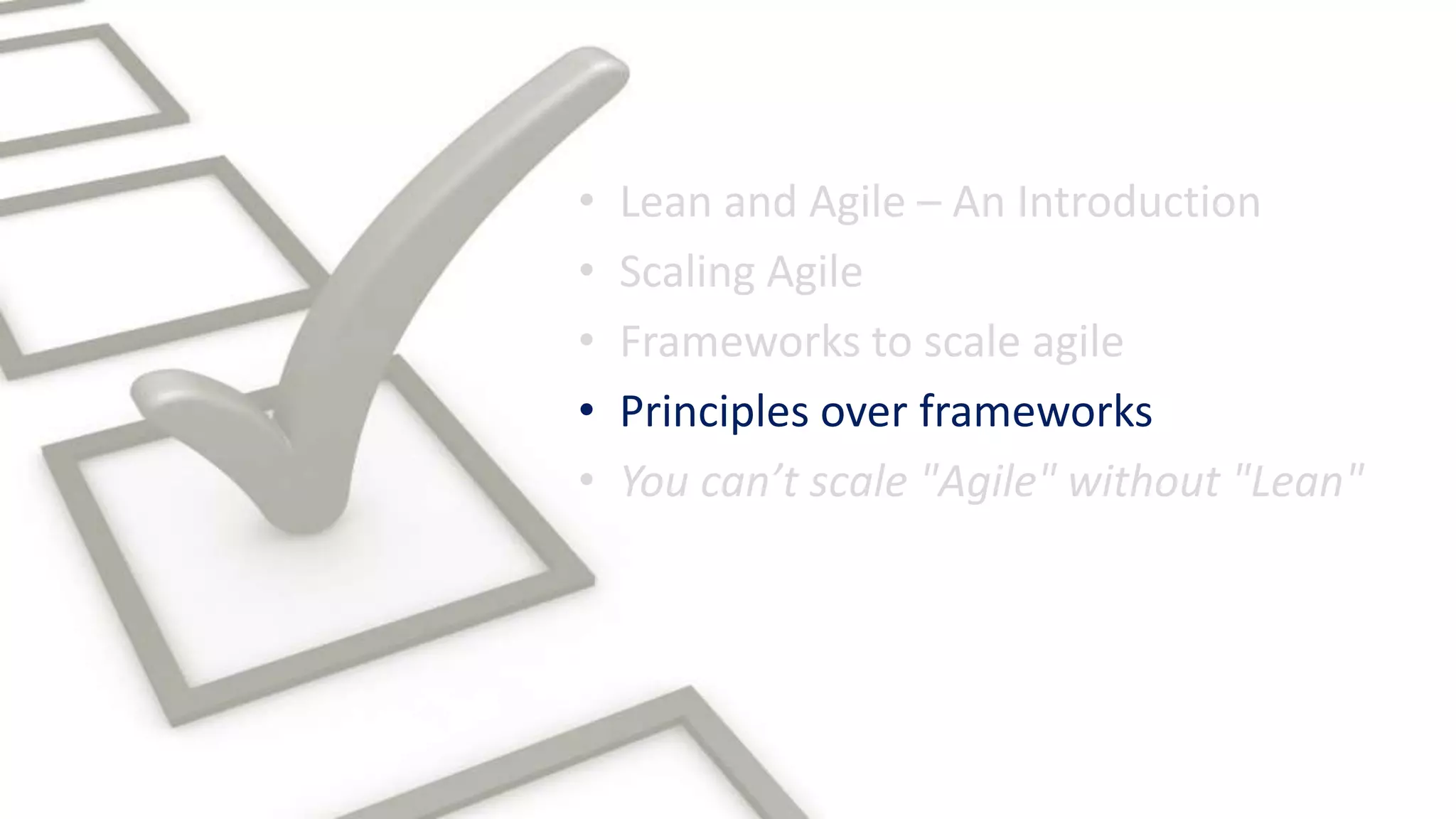
Principles over Frameworks!
It’s all about Principles!
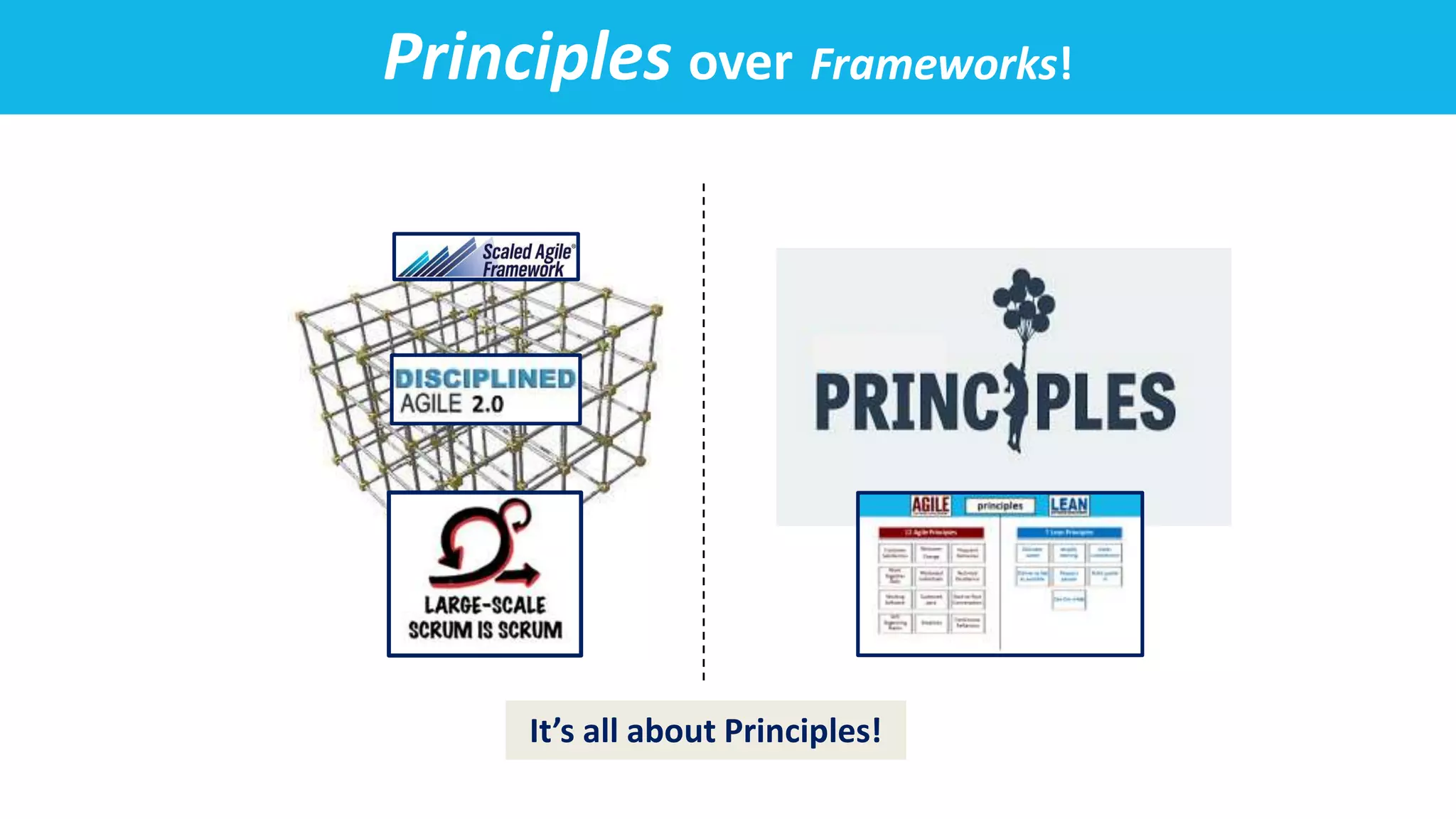
Principles for Scaling Agile
Excited
Customers!
Supportive Leadership – -
Decentralize control
- Only Leaders can change the
system
Continuous Improvement –
People, Product, Process
Global Optimization - See the
whole, optimize entire Value
Stream
Respect People – Empowered
cross-functional teams, happy
employees
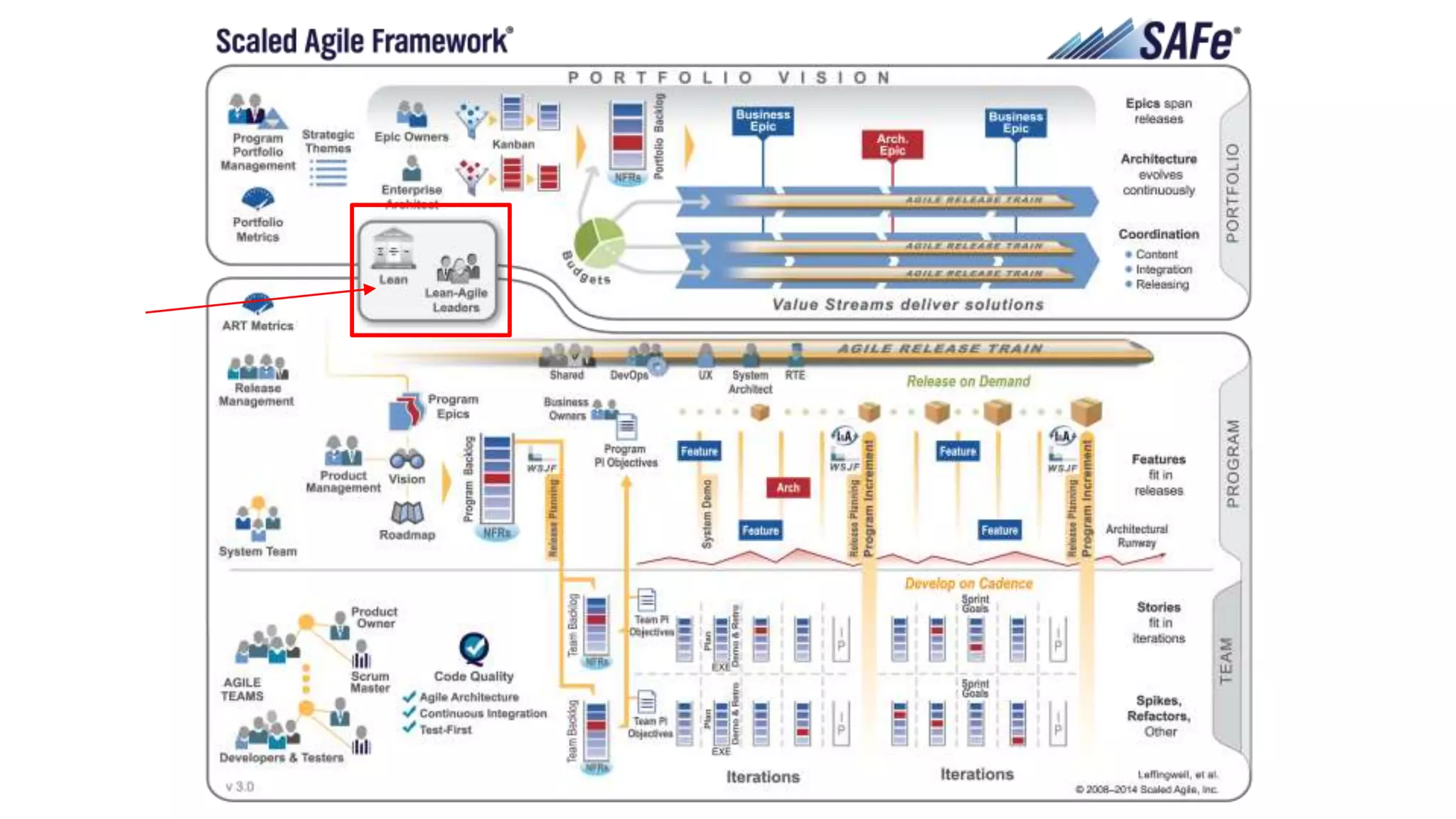
Scaled Agile Framework™ Big Picture
WHY?
• Lean and Agile – An Introduction
• Scaling Agile
• Frameworks to scale agile
• Principles over frameworks
• You can’t scale "Agile" without "Lean"
principles
Customer
Satisfaction
Welcome
Change
Frequent
Deliveries
Work
Together Daily
Motivated
Individuals
Technical
Excellence
Working
Software
Sustained
pace
Face-to-Face
Conversation
Self
Organizing
Teams
Simplicity
Continuous
Reflection
Eliminate
waste
Amplify
learning
Defer
commitment
Deliver as fast
as possible
Respect
people
Build quality
in
See the whole
Customer
Satisfaction
Welcome
Change
Frequent
Deliveries
Work
Together Daily
Motivated
Individuals
Technical
Excellence
Working
Software
Sustained
pace
Face-to-Face
Conversation
Self
Organizing
Teams
Simplicity
Continuous
Reflection
Eliminate
waste
Amplify
learning
Defer
commitment
Deliver as fast
as possible
Respect
people
Build quality
in
See the whole
principles
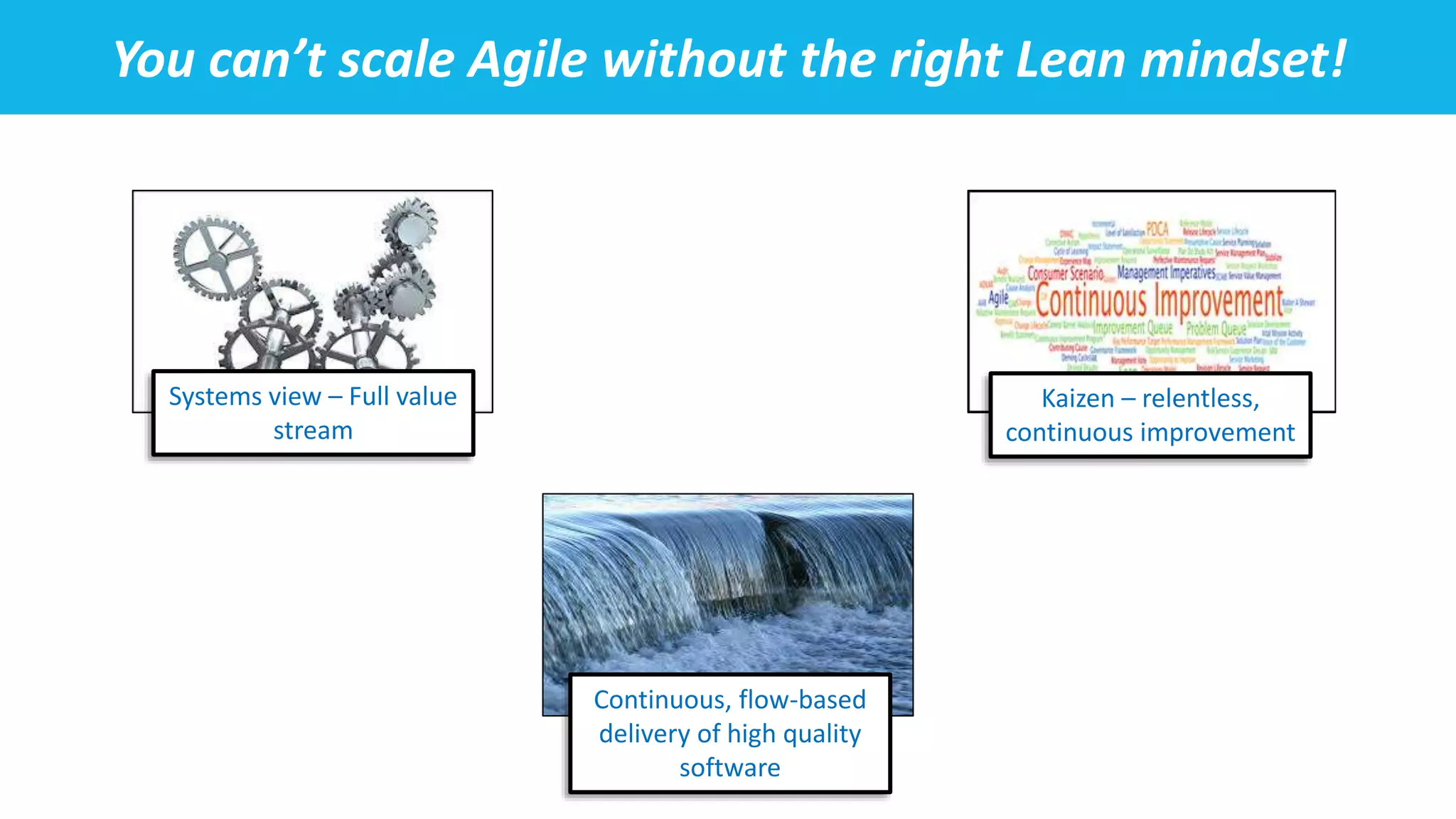
You can’t scale Agile without the right Lean mindset!
Systems view – Full value
stream
Kaizen – relentless,
continuous improvement
Continuous, flow-based
delivery of high quality
software
 Inspiration: my earlier talk “Lean-Agile: The Eternal Siblings”
 www.agilemanifesto.org
 www.scaledagileframework.com
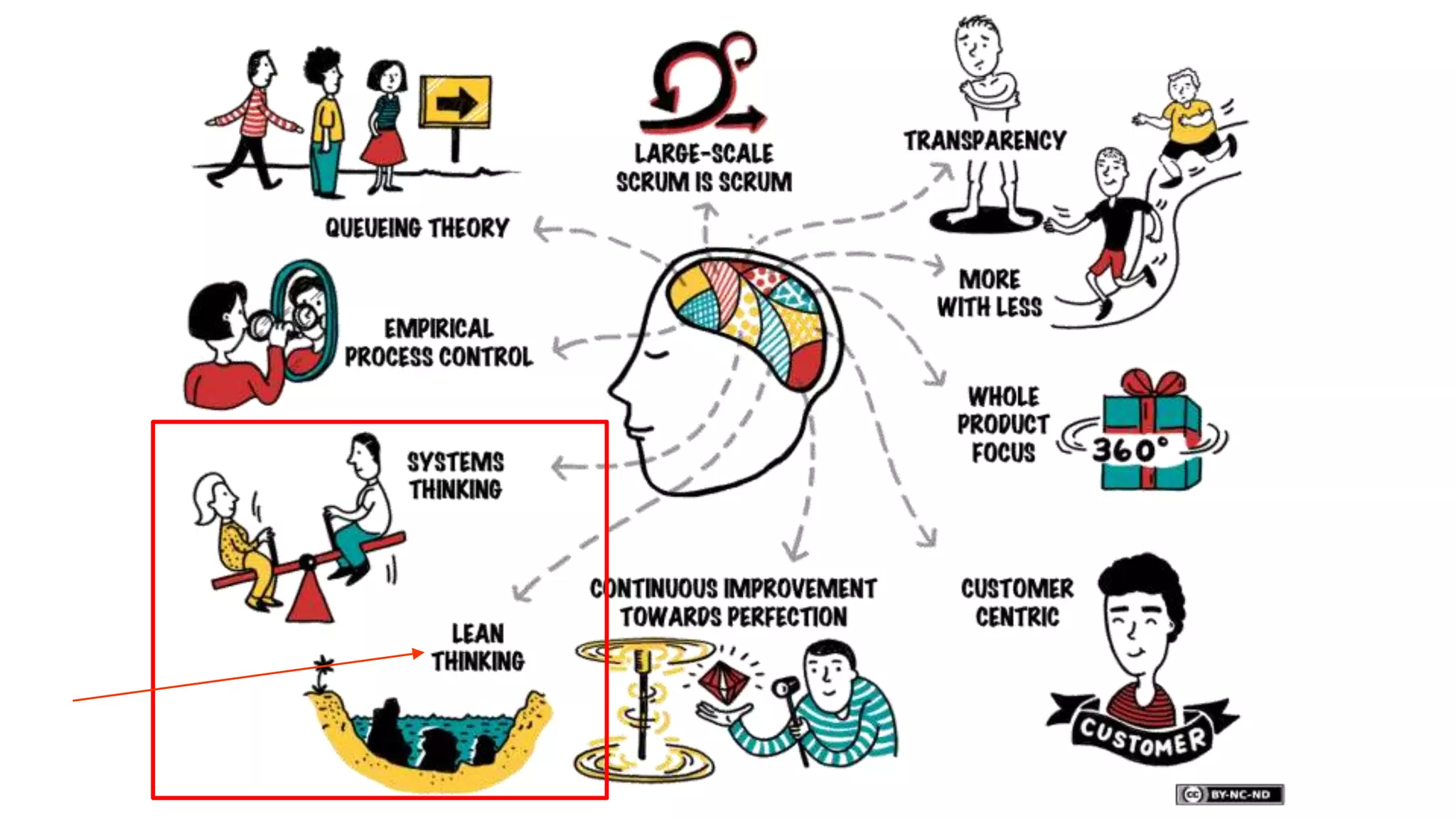
 http://less.works/less/principles/index.html
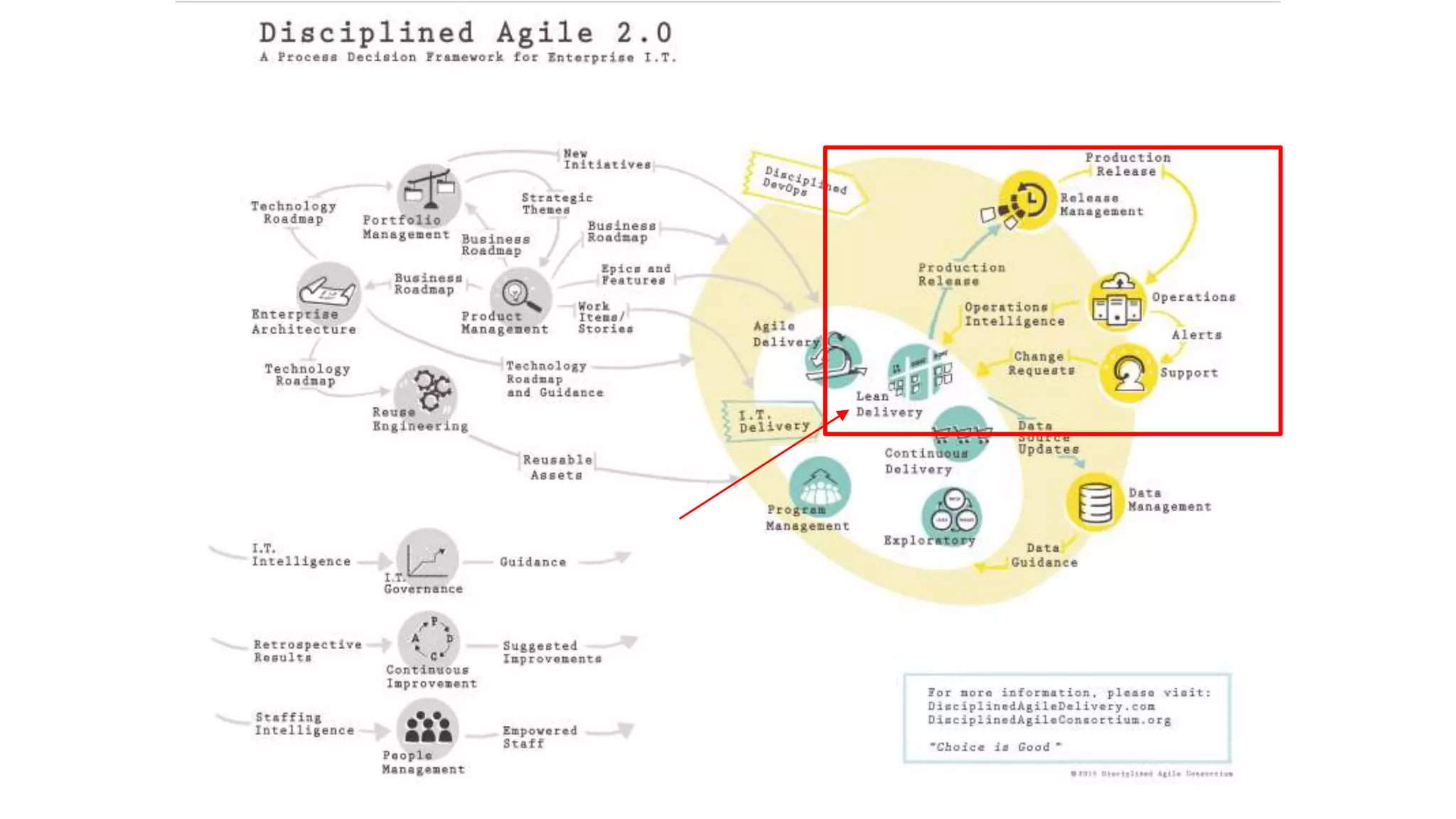
 http://www.disciplinedagiledelivery.com/
 http://www.slideshare.net/BerndSchiffer/comparing-ways-to-scale-agile-at-agile-
product-and-project-manager-meetup
 http://notafactoryanymore.com/category/agile-2/
 http://scaledprinciples.org/
References and Credits
Thank You
Please share your viewpoints and feedback at
Vineet@ScaleUpConsultants.com

Scaled Agile and Lean

Editor's Notes

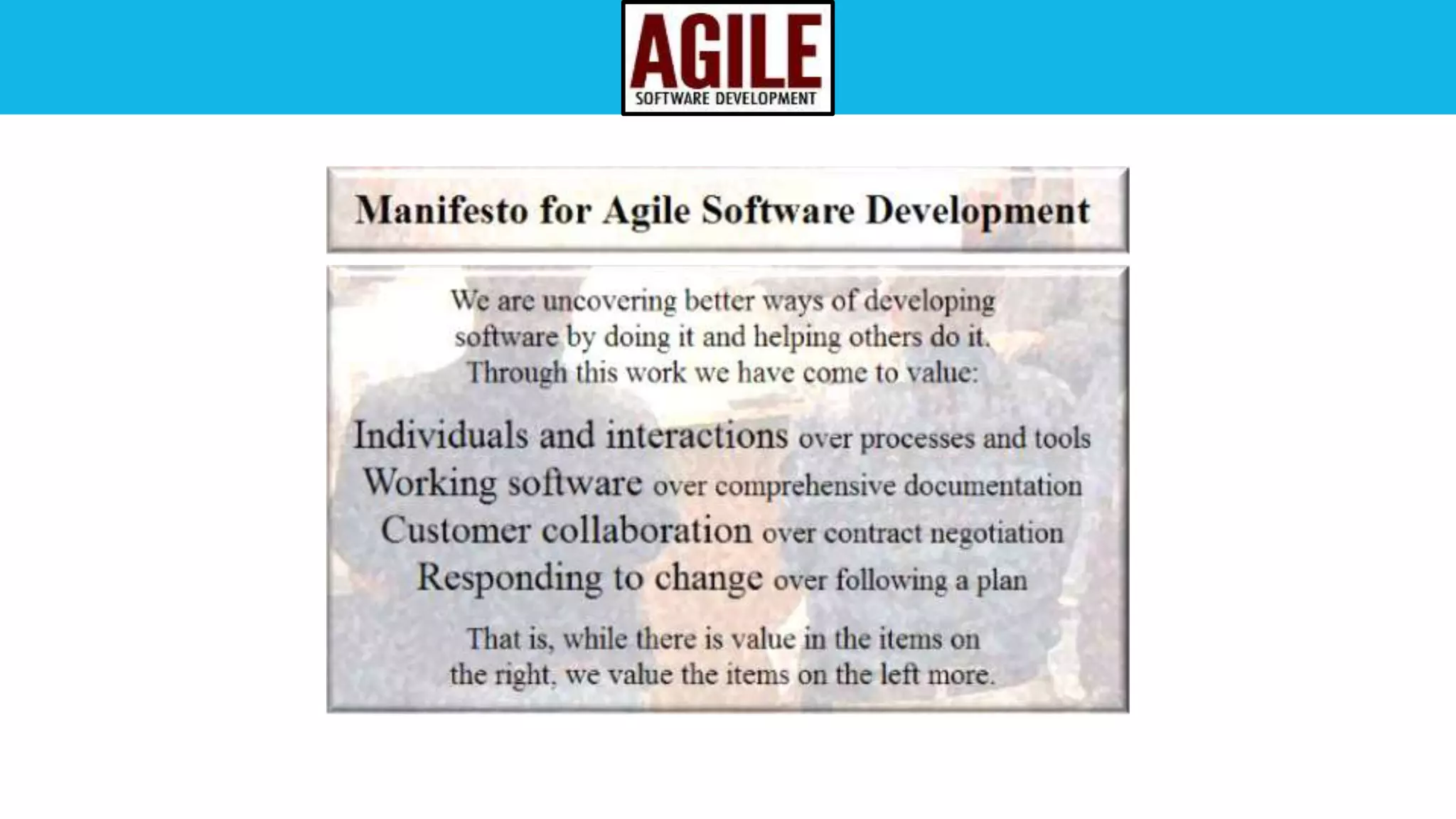
  • #9 Agile software development is an umbrella term for several software development methods (including Extreme Programming and Scrum) that were developed in the 1990s. These methods share a common philosophy which was described as values and principles in the Manifesto for Agile Software Development.
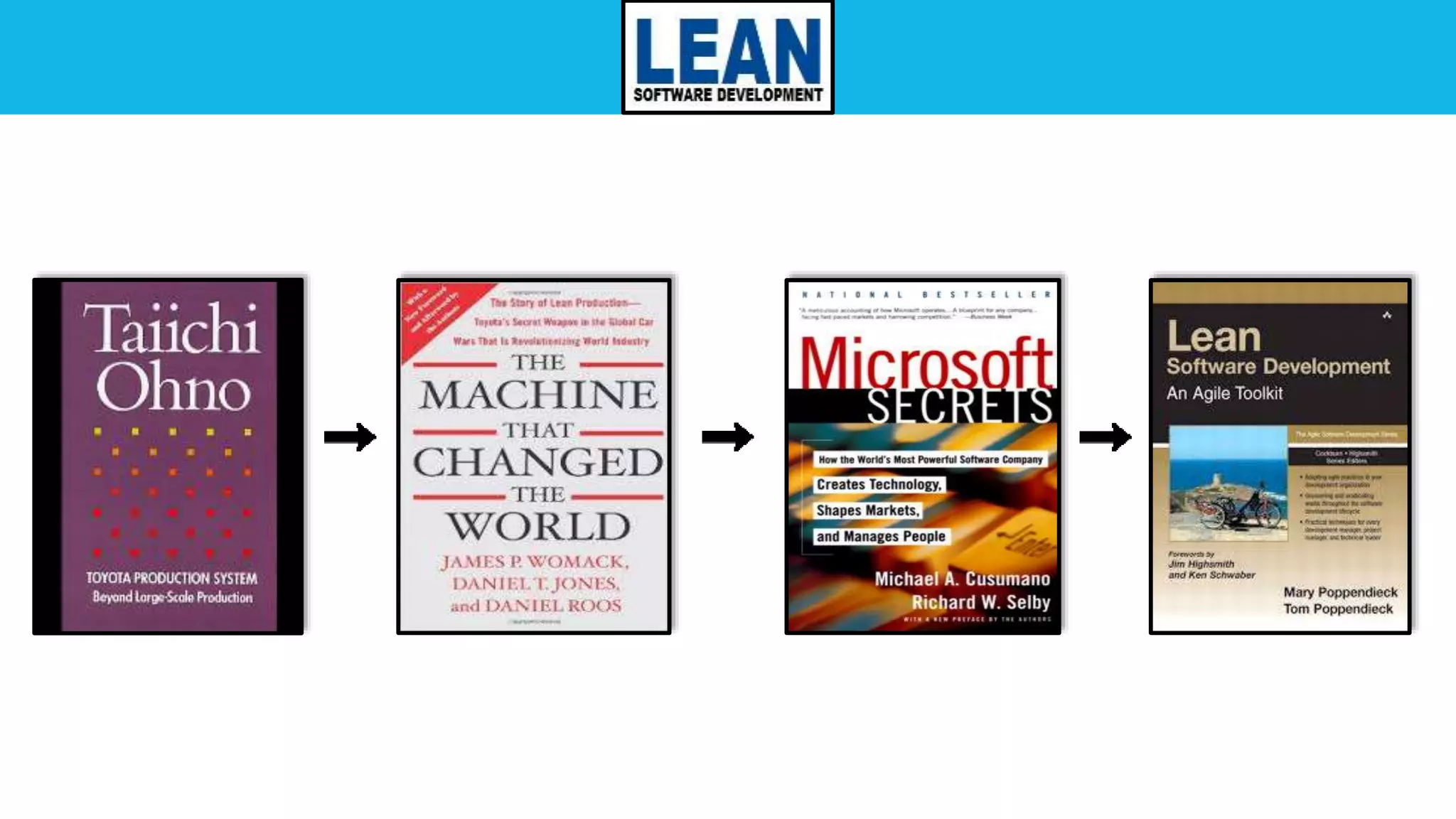
  • #10 "Lean" fundamentally refers to an approach in the manufacturing world that was originally developed by Toyota in the 1950's. This approach, often called the “Toyota Production System” is mostly credited to Taiichi Ohno, although he was particularly influenced by Deming. The Toyota Production System became well known in the rest of the world in the 1990's when westerners started writing books on the success stories of the Japanese manufacturing industries. Origin of the term “LEAN”: The term “Lean Manufacturnig” was conceptualized by James Womack and Daniel Jones in their books - namely The Machine That Changed the World, Lean Thinking  and Lean Solutions. Through these books, a structured approach to becoming Lean came up. The book ‘The machine that changed the World’ that has become one of the most widely cited references in operations management and manufacturing. Some similarities between “Lean Manufacturing” and software development were becoming apparent by the mid-1990s. For example, in the publication Microsoft Secrets, the authors Michael and Richard noted a similarity in the philosophy behind Microsoft’s daily builds, where engineers had to stop and fix bugs on a daily basis, and Toyota’s JIT (Just-in-Time) production philosophy, where workers stopped assembly lines whenever they detected problems to fix them immediately. Although this book did not use the term “lean” for software development. There was a connection between lean manufacturing and agile software from the beginning in that many of the developers of the various agile methods were influenced by the ideas of lean manufacturing. This connection was made more explicit by Mary and Tom Poppendieck in the book, Lean Software Development. When we talk about Lean Software Development, we usually refer to the ideas in these books, although others have been making similar links.
  • #11 These are the core principles of Agile and Lean. The Agile Manifesto principles share a lot of “common-ness” or overlap with those of the Lean Software Development.
  • #12 So we can say that the both these paradigms are based on .. Well, ALMOST the same set of guiding principles. Lean is more unique from systems view perspective. This is the uniqueness in Lean.
  • #23 These are the core principles of Agile and Lean. The Agile Manifesto principles share a lot of “common-ness” or overlap with those of the Lean Software Development. Let’s go one-by-one and look at how Agile principles resemble the principles of Lean.
  • #24 Lean is more unique from systems view perspective. This is the uniqueness in Lean. SO we can say that the both these paradigms are based on .. Well, ALMOST the same set of guiding principles.
  • #25 I thought of them as more close to each other. Hence I called them the ETERNAL SIBLINGS. 1. Development practices (Appendix ‘A’) earlier popularized in either of the two development paradigms, are used interchangeably in both – the very reason being that the practices are based on similar principles. 2. Both Agile and Lean have a focus on continuous improvement (Inspect and Adapt, Kaizen) and visual management (Kanban). 3. Lean isn't agile, agile implementations often aren't lean, and neither is sufficient to warrant success. Hence the saying, "There is no silver bullet" when it comes to agility. Same applies to Lean as well. ----------------------------- They have synergy but are not identical. It’s best to leverage both these paradigms and be “Lean-Agile”. Consider both as a source of great ideas from which to select appropriately for your specific context. Lean provides techniques for identifying waste. “Value stream mapping” Lean principles provide a philosophical foundation for scaling agile approaches. Agile implementation can’t be scaled without heavy reliance on the lean principles and practices. In such scenario, the Lean principle “See the whole” comes in handy. It is this uniqueness in Lean that makes it highly relevant and being applied in scaling agile context more. E.g. Both SAFe and LeSS frameworks are based on Lean principles.