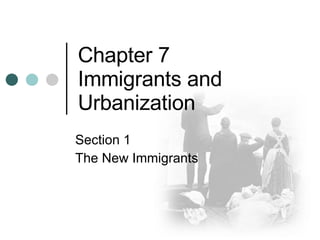
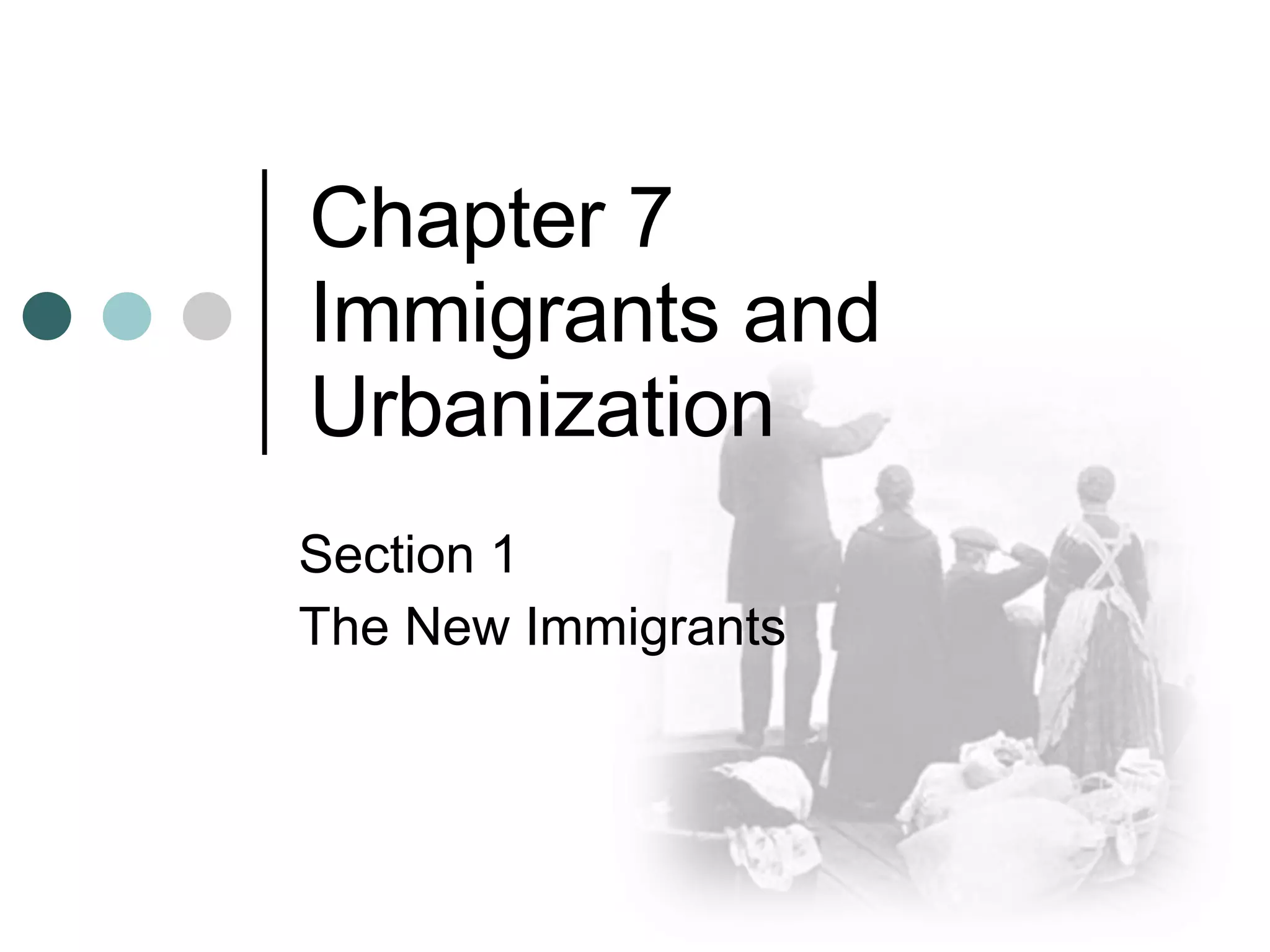

Chapter 7 Immigrants and Urbanization Section 1 The New Immigrants
If you learn anything today… learn about… Why people immigrated to the U.S. during this time. The biggest problems facing these new immigrants. The different reactions from Americans to the new immigrants.
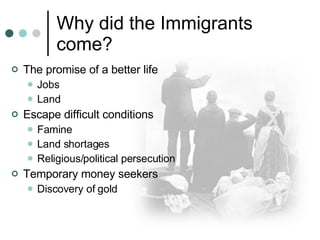
Why did the Immigrants come? The promise of a better life Jobs Land Escape difficult conditions Famine Land shortages Religious/political persecution Temporary money seekers Discovery of gold
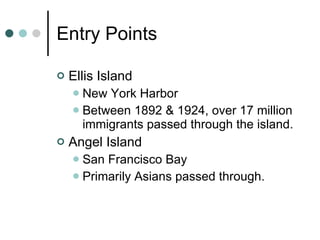
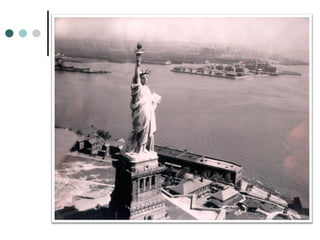
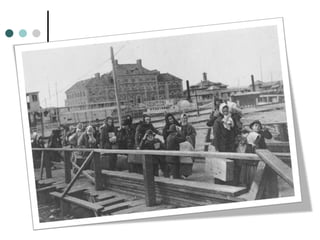
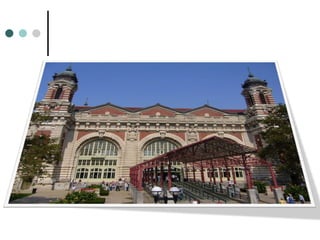
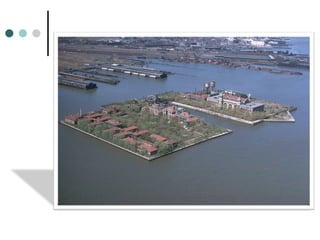
Entry Points Ellis Island New York Harbor Between 1892 & 1924, over 17 million immigrants passed through the island. Angel Island San Francisco Bay Primarily Asians passed through.


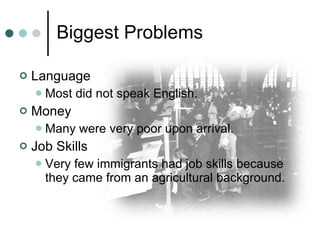
Biggest Problems Language  Most did not speak English. Money Many were very poor upon arrival. Job Skills Very few immigrants had job skills because they came from an agricultural background.
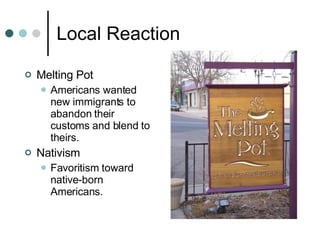
Local Reaction Melting Pot Americans wanted new immigrants to abandon their customs and blend to theirs. Nativism Favoritism toward native-born Americans.
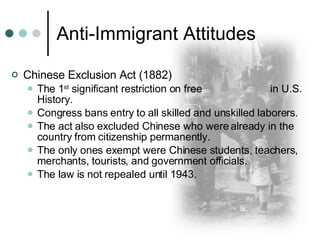
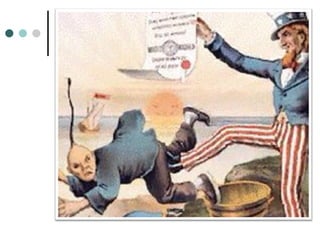
Anti-Immigrant Attitudes Chinese Exclusion Act (1882) The 1 st  significant restriction on free   in U.S. History. Congress bans entry to all skilled and unskilled laborers. The act also excluded Chinese who were already in the country from citizenship permanently.  The only ones exempt were Chinese students, teachers, merchants, tourists, and government officials. The law is not repealed until 1943.
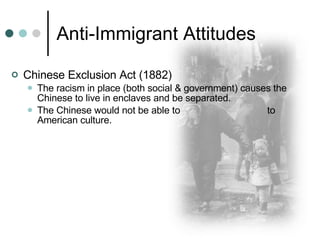
Anti-Immigrant Attitudes Chinese Exclusion Act (1882) The racism in place (both social & government) causes the Chinese to live in enclaves and be separated. The Chinese would not be able to  to American culture.
 
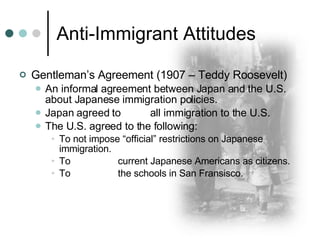
Anti-Immigrant Attitudes Gentleman’s Agreement (1907 – Teddy Roosevelt) An informal agreement between Japan and the U.S. about Japanese immigration policies. Japan agreed to   all immigration to the U.S. The U.S. agreed to the following: To not impose “official” restrictions on Japanese immigration. To   current Japanese Americans as citizens. To   the schools in San Fransisco.
Discussion Question In light of immigration history, are many Americans out of line when wanting to exclude current illegal aliens?
Discussion Question Why do you think our country has been historically (and presently to an extent) opposed to immigrants?
Discussion Question What should be the qualifications for becoming a US citizen?
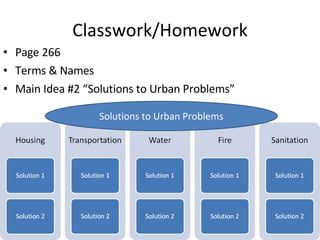
Classwork/Homework Page 266 Terms & Names Main Idea #2 “Solutions to Urban Problems” Solutions to Urban Problems
 

Chapter 7 Section 1

  • 1.
    Chapter 7 Immigrantsand Urbanization Section 1 The New Immigrants
  • 2.
    If you learnanything today… learn about… Why people immigrated to the U.S. during this time. The biggest problems facing these new immigrants. The different reactions from Americans to the new immigrants.
  • 3.
    Why did theImmigrants come? The promise of a better life Jobs Land Escape difficult conditions Famine Land shortages Religious/political persecution Temporary money seekers Discovery of gold
  • 4.
    Entry Points EllisIsland New York Harbor Between 1892 & 1924, over 17 million immigrants passed through the island. Angel Island San Francisco Bay Primarily Asians passed through.
  • 5.
  • 6.
  • 7.
  • 8.
  • 9.
    Biggest Problems Language Most did not speak English. Money Many were very poor upon arrival. Job Skills Very few immigrants had job skills because they came from an agricultural background.
  • 10.
    Local Reaction MeltingPot Americans wanted new immigrants to abandon their customs and blend to theirs. Nativism Favoritism toward native-born Americans.
  • 11.
    Anti-Immigrant Attitudes ChineseExclusion Act (1882) The 1 st significant restriction on free in U.S. History. Congress bans entry to all skilled and unskilled laborers. The act also excluded Chinese who were already in the country from citizenship permanently. The only ones exempt were Chinese students, teachers, merchants, tourists, and government officials. The law is not repealed until 1943.
  • 12.
    Anti-Immigrant Attitudes ChineseExclusion Act (1882) The racism in place (both social & government) causes the Chinese to live in enclaves and be separated. The Chinese would not be able to to American culture.
  • 13.
  • 14.
    Anti-Immigrant Attitudes Gentleman’sAgreement (1907 – Teddy Roosevelt) An informal agreement between Japan and the U.S. about Japanese immigration policies. Japan agreed to all immigration to the U.S. The U.S. agreed to the following: To not impose “official” restrictions on Japanese immigration. To current Japanese Americans as citizens. To the schools in San Fransisco.
  • 15.
    Discussion Question Inlight of immigration history, are many Americans out of line when wanting to exclude current illegal aliens?
  • 16.
    Discussion Question Whydo you think our country has been historically (and presently to an extent) opposed to immigrants?
  • 17.
    Discussion Question Whatshould be the qualifications for becoming a US citizen?
  • 18.
    Classwork/Homework Page 266Terms & Names Main Idea #2 “Solutions to Urban Problems” Solutions to Urban Problems
  • 19.