THE IMPACT OF
OPEN
COLLECTIONS
(...AND WHAT’S NEXT)
EFFIE KAPSALIS
SMITHSONIAN INSTITUTION ARCHIVES
@digitaleffie
@digitaleffie
@digitaleffie
@digitaleffie
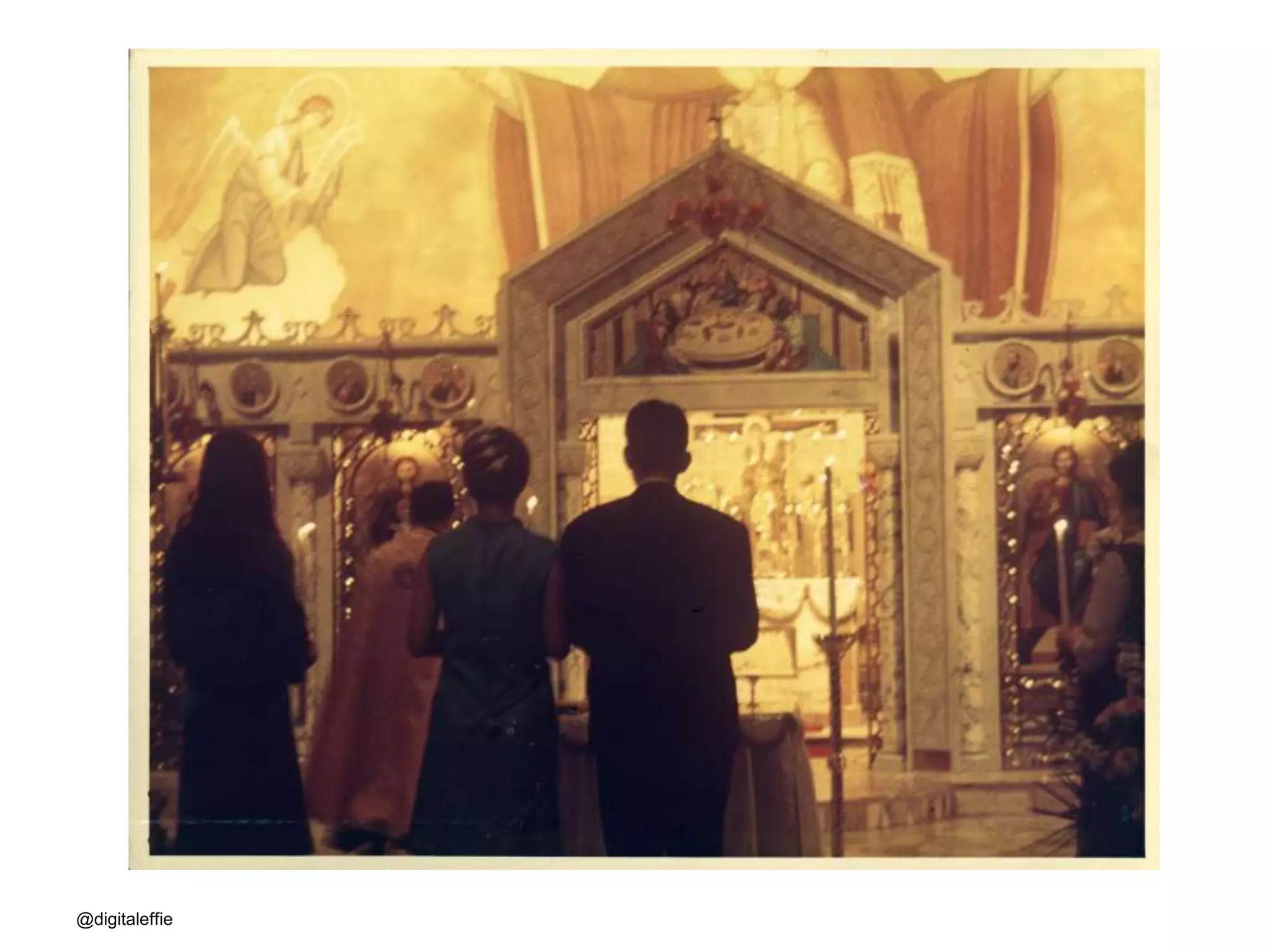
Anthony Quinn and Alan Bates, Zorba the Greek, 1964
@digitaleffie
"IT IS ONLY BY EXCHANGE AND MUTUAL ASSISTANCE THAT
NATURALLISTS [SIC] CAN POSSIBLY EVER SUCCEED IN ASSEMBLING
TOGETHER A COLLECTION OF SUBJECTS OF THEIR STUDY, WHICH
NATURE HAS MADE SO NUMEROUS, AND DISSEMINATED IN SUCH
VARIOUS AND DISTANT PARTS OF THE WORLD,”
JAMES SMITHSON
@digitaleffie
@digitaleffie
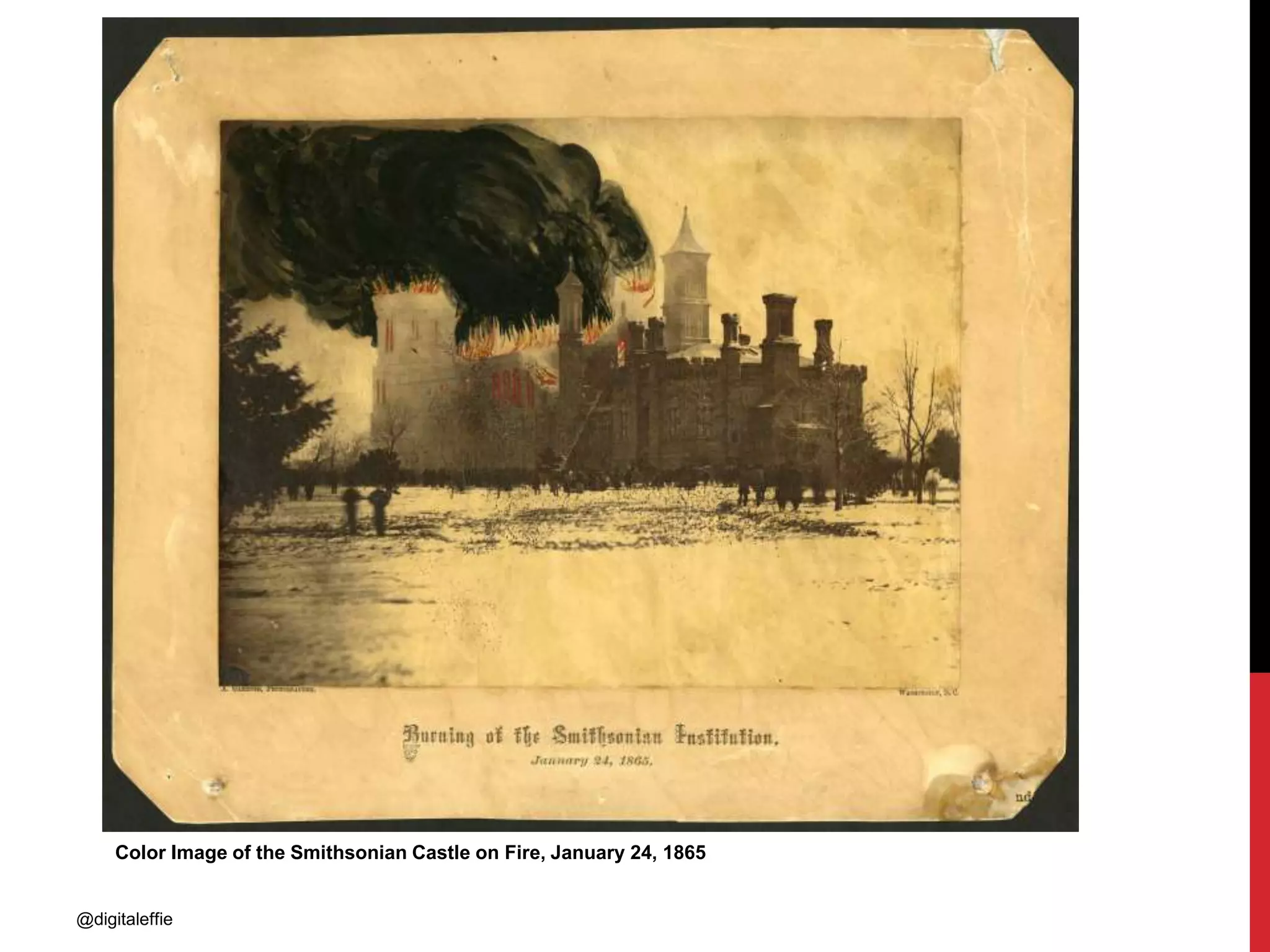
Color Image of the Smithsonian Castle on Fire, January 24, 1865
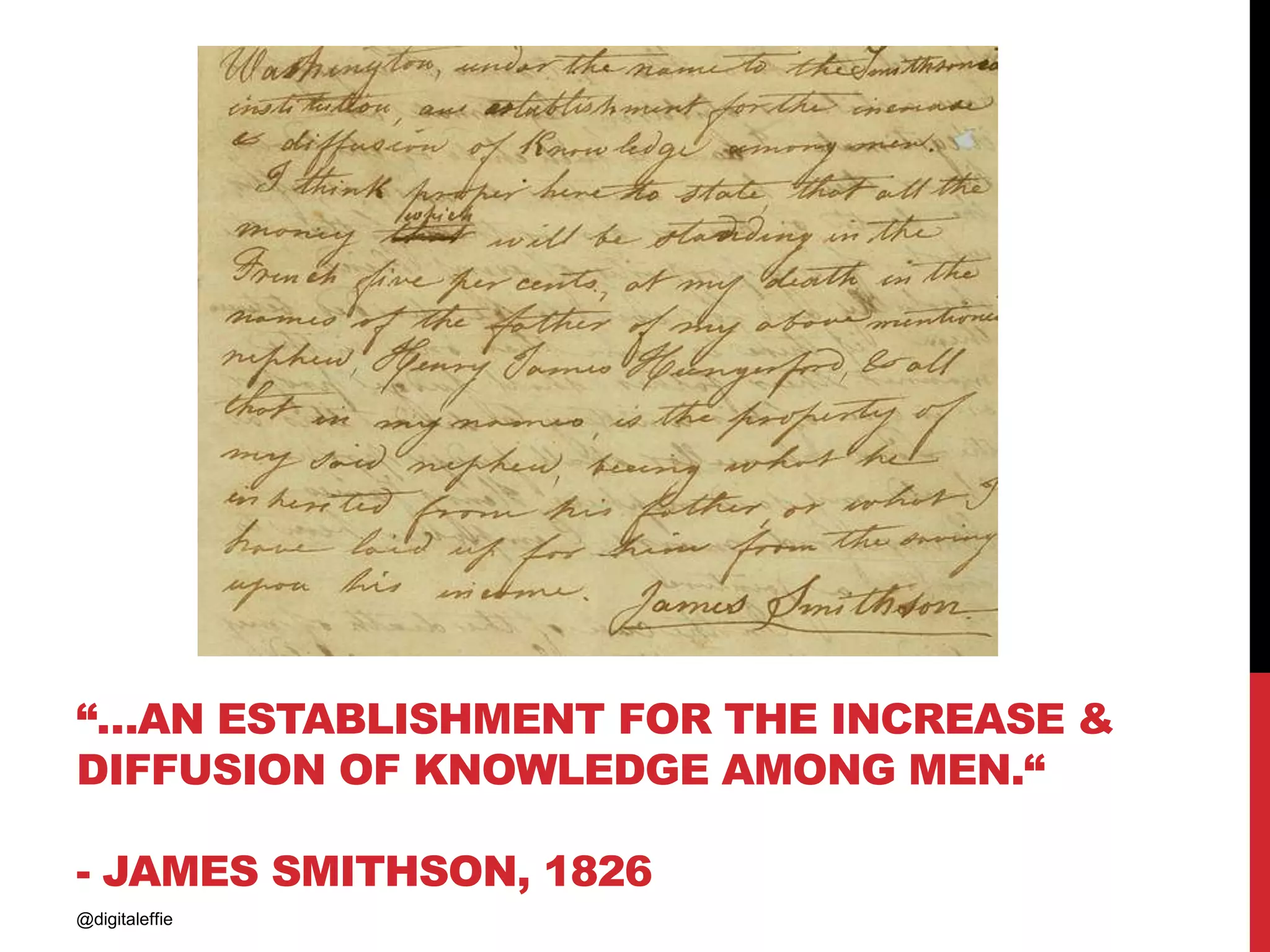
“…AN ESTABLISHMENT FOR THE INCREASE &
DIFFUSION OF KNOWLEDGE AMONG MEN.“
- JAMES SMITHSON, 1826
@digitaleffie
#ALLEZCULTURE
@digitaleffie
21ST CENTURY INCREASE
& DIFFUSION
@digitaleffie
“An old tradition and a new technology
have converged to make possible an
unprecedented public good. The old tradition
is the willingness of scientists and scholars to
publish the fruits of their research in scholarly
journals without payment, for the sake of
inquiry and knowledge. The new technology is
the internet.”
- Budapest Open Access Initiative, 2001
WE, THE WEB KIDS
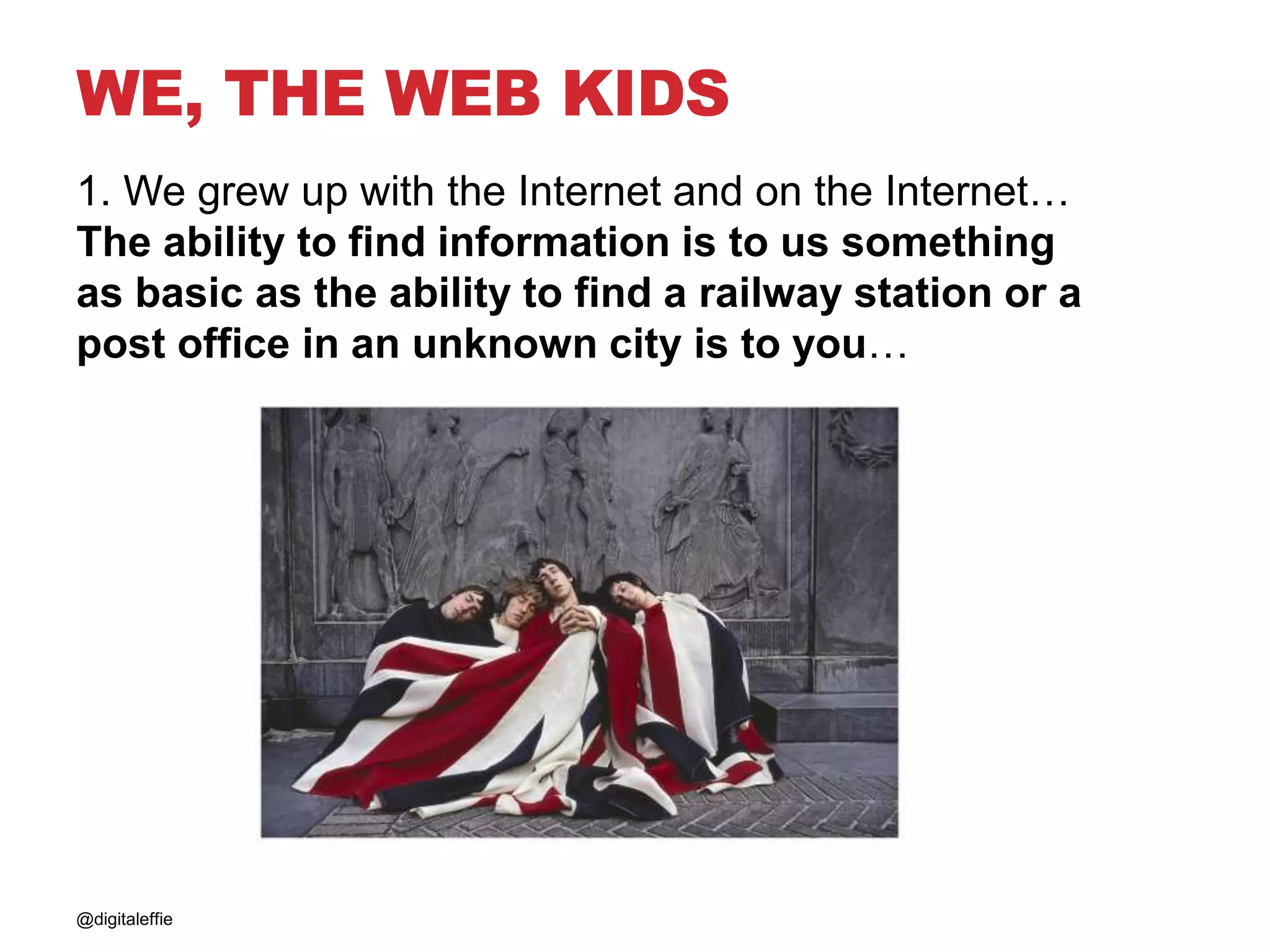
1. We grew up with the Internet and on the Internet…
The ability to find information is to us something
as basic as the ability to find a railway station or a
post office in an unknown city is to you…
@digitaleffie
WE, THE WEB KIDS
2. People who will share their expertise with us not for
profit, but because of our shared belief that information
exists in motion, that it wants to be free, that we all
benefit from the exchange of information…
@digitaleffie
WE, THE WEB KIDS
3. What we value the most is freedom: freedom of
speech, freedom of access to information and to
culture. We feel that it is thanks to freedom that the
Web is what it is, and that it is our duty to protect
that freedom. We owe that to next generations, just as
much as we owe to protect the environment.
@digitaleffie
WE, THE WEB KIDS
One more thing: we do not want to pay
for our memories.
@digitaleffie
OPEN ACCESS
“…free availability on the public internet, permitting any
users to read, download, copy, distribute, print, search,
or link to the full texts of these articles, crawl them for
indexing, pass them as data to software, or use them
for any other lawful purpose, without financial, legal, or
technical barriers other than those inseparable from
gaining access to the internet itself.”
- Budapest Open Access Initiative, 2001
@digitaleffie
#OPENGLAM STUDY
Trailer - http://s.si.edu/2cQ6PU1
Research - http://s.si.edu/2d8MNQS
@digitaleffie
#OPENGLAM RESULTS
• New fundraising and brand licensing opportunities.
• More efficient image management and digitization processes.
• A realignment of staff with more mission-critical activities
• Furthering of research, educational and creative activities.
• Increases in use and awareness of an institution’s collections.
• Creation of a strengthened and more relevant brand.
• Increased goodwill leading to increased public engagement.
@digitaleffie
#OPENGLAM – MISSION
“Making the biodiversity heritage
literature online has accelerated the pace
of taxonomic science across the world.”
- Martin Kalfatovic, Smithsonian Libraries
@digitaleffie
#OPENGLAM – MISSION
“Open access increased the institution’s
appetite for risk-taking, and enabled
innovative research and experimentation
with the library’s collections.”
- Nora McGregor, British Libraries
@digitaleffie
#OPENGLAM – EMPLOYEE
SATISFACTION
Since releasing the museum’s collections
online without restrictions, staff members
have been spared from approving 14,000
image requests — and writing at least
28,000 emails.
- “Reusing Te Papa’s collections images, by the numbers,” Adrian Kingston, digital
collections analyst, Te Papa Museum of New Zealand
@digitaleffie
#OPENGLAM – INCREASED
FUNDING LANDSCAPE
“We lost all our income on direct sales of
images, but we gained a lot of new
friends, sponsors, and new funding
streams…more than we lost in revenue.”
- Lizzy Jongma, formerly Rijksmuseum, Netwerk Oorlogsbronnen
@digitaleffie
#OPENGLAM – IMPROVED BRAND
Six months after launch, NYPL had received over 100
press mentions and was approached by a major New
York retailer asking about brand licensing
opportunities.
@digitaleffie
RISKS TO OPEN
ACCESS
• Increased demand on technical infrastructure.
• Potential increase in staff workload if media delivery is not self-
service.
• Loss of rights and reproduction income….however doesn’t
actually cover costs of doing that business.
• Staff worries over loss of intellectual control and potential for
abuse of collections; however, studies show that nothing of
negative consequence results.
@digitaleffie
RISKS TO CLOSED
• Decreased funding opportunities as funders move to requiring
open access.
• Reduced opportunities for collaboration with other knowledge
organizations, open government initiatives, cultural heritage
aggregators, Wikipedia, and digital humanities projects.
• Reduced mission-impact.
• Reduced marketing opportunities/irrelevant brand.
• Potential reduction in activity from digital volunteers due to
perception that their work is not supporting an open effort.
• Large amounts of staff time spent on non-mission-critical tasks.
@digitaleffie
CHALLENGES
• Not-so-nimble organizational structures
• Resources needed for copyright research, digitization,
dissemination activities.
@digitaleffie
@digitaleffie
How do we make it as useful as
possible to many users, for many
uses?
@digitaleffie
@digitaleffie
@digitaleffie
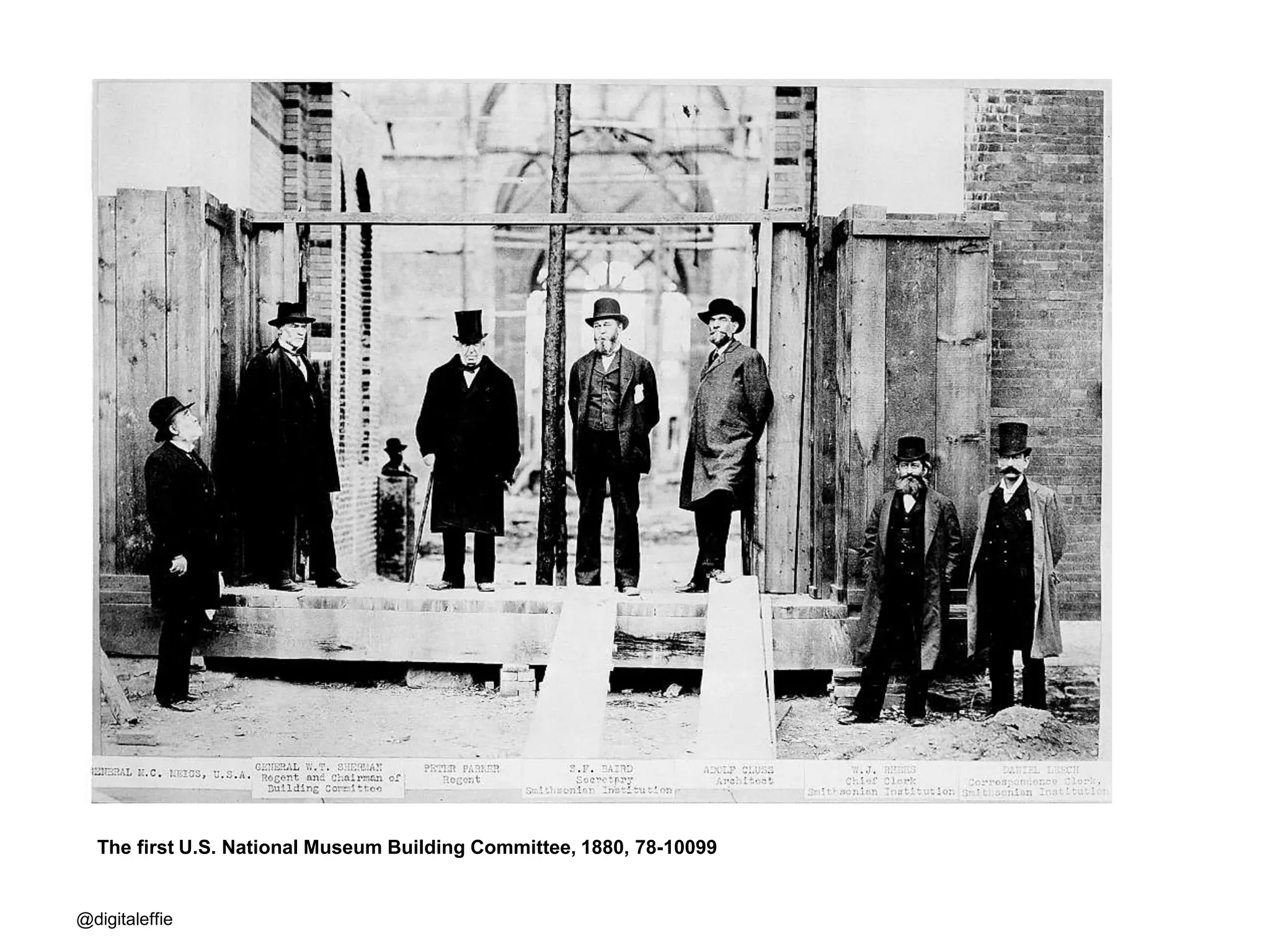
The first U.S. National Museum Building Committee, 1880, 78-10099
“…when you’re invisible people assume
you’ve done nothing.”
- Edith P. Mayo, Curator Emeritus, Smithsonian National Museum of American
History
@digitaleffie
@digitaleffie
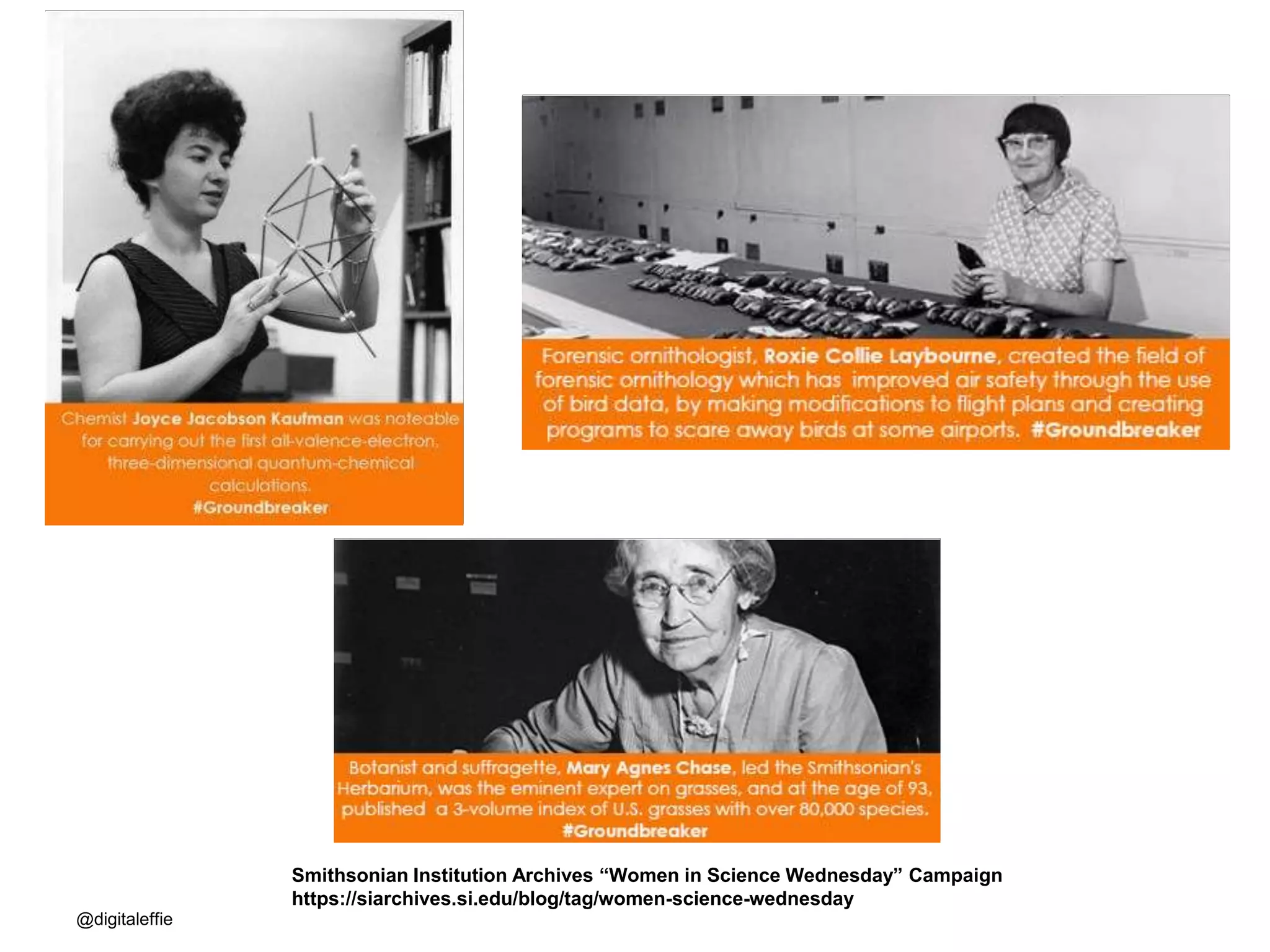
Smithsonian Institution Archives “Women in Science Wednesday” Campaign
https://siarchives.si.edu/blog/tag/women-science-wednesday
@digitaleffie
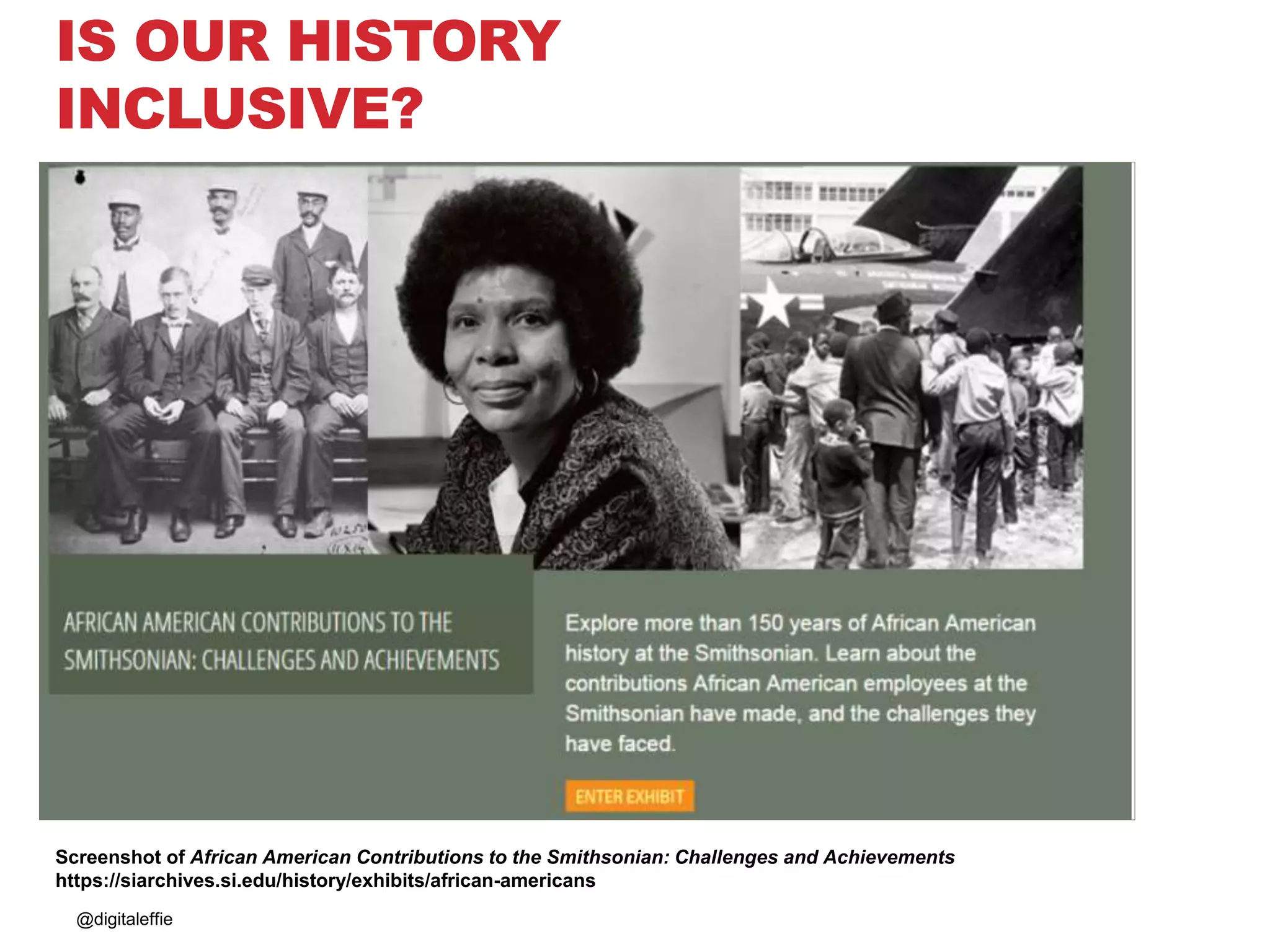
Screenshot of African American Contributions to the Smithsonian: Challenges and Achievements
https://siarchives.si.edu/history/exhibits/african-americans
IS OUR HISTORY
INCLUSIVE?
@digitaleffie
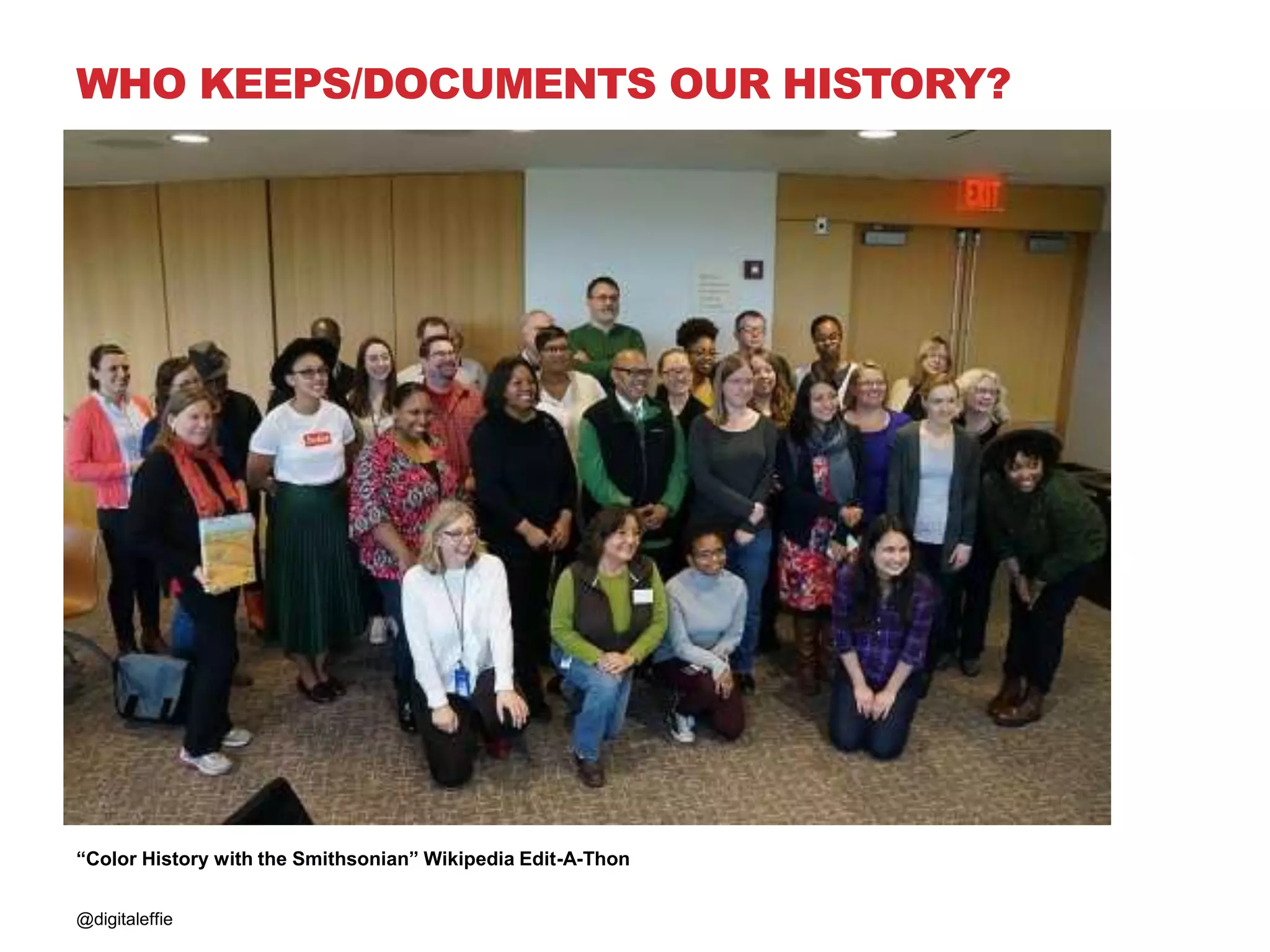
“Color History with the Smithsonian” Wikipedia Edit-A-Thon
WHO KEEPS/DOCUMENTS OUR HISTORY?
@digitaleffie
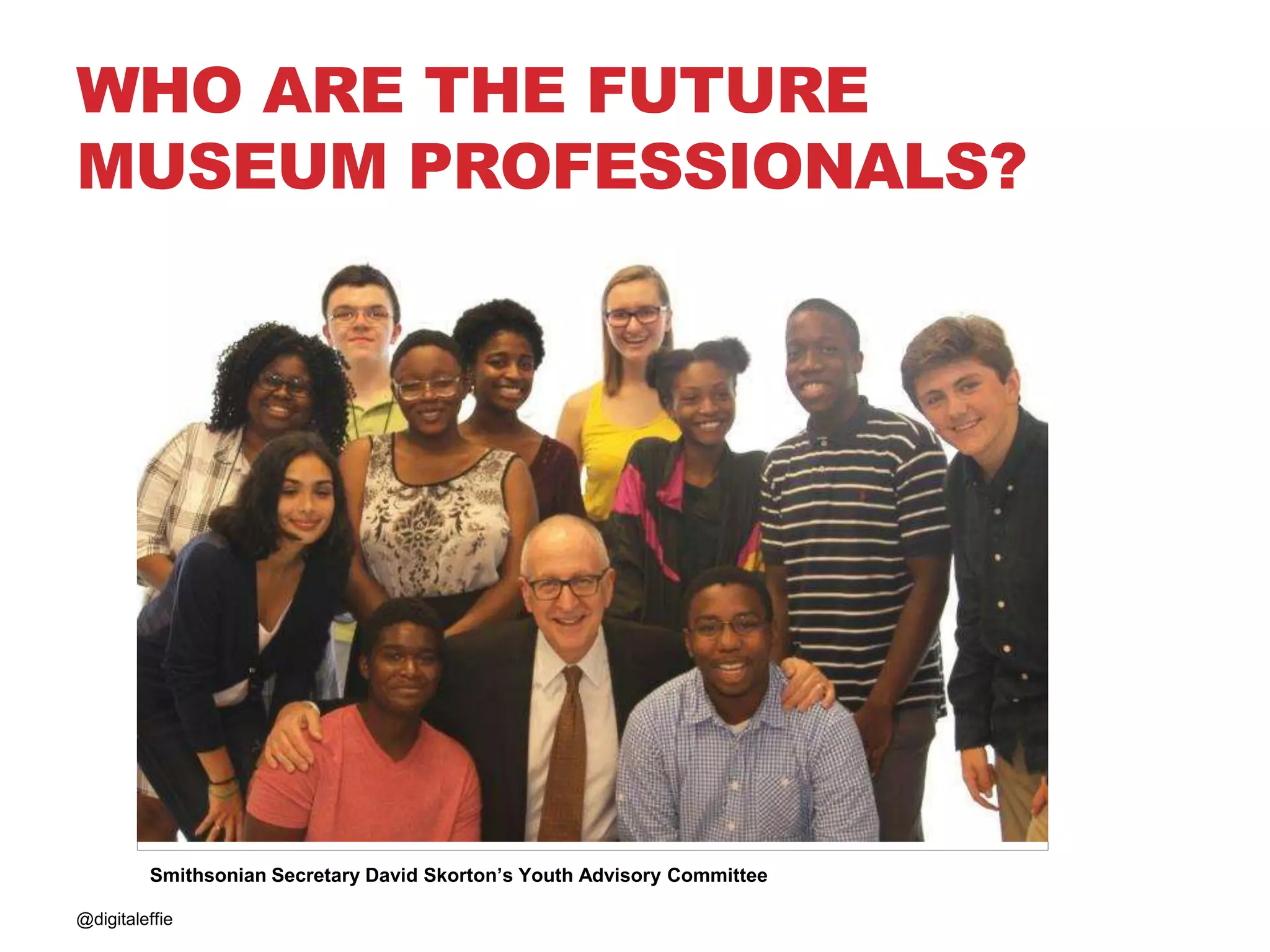
Smithsonian Secretary David Skorton’s Youth Advisory Committee
WHO ARE THE FUTURE
MUSEUM PROFESSIONALS?
OPENNESS + ACCESSIBILITY
“Accessibility is something that’s never
really done. It’s not like, ‘Oh, we checked
that box. We finished that work.’ It’s
really about an almost philosophical
approach and a practice of engagement,
and it’s something that we are continually
working to improve here.”
- Danielle Linzer, Warhol Museum's curator of education and interpretation
@digitaleffie

The Impact of Open Collections...and What's Next

  • 1.
    THE IMPACT OF OPEN COLLECTIONS (...ANDWHAT’S NEXT) EFFIE KAPSALIS SMITHSONIAN INSTITUTION ARCHIVES @digitaleffie
  • 2.
  • 3.
  • 4.
    @digitaleffie Anthony Quinn andAlan Bates, Zorba the Greek, 1964
  • 5.
  • 6.
    "IT IS ONLYBY EXCHANGE AND MUTUAL ASSISTANCE THAT NATURALLISTS [SIC] CAN POSSIBLY EVER SUCCEED IN ASSEMBLING TOGETHER A COLLECTION OF SUBJECTS OF THEIR STUDY, WHICH NATURE HAS MADE SO NUMEROUS, AND DISSEMINATED IN SUCH VARIOUS AND DISTANT PARTS OF THE WORLD,” JAMES SMITHSON @digitaleffie
  • 7.
    @digitaleffie Color Image ofthe Smithsonian Castle on Fire, January 24, 1865
  • 8.
    “…AN ESTABLISHMENT FORTHE INCREASE & DIFFUSION OF KNOWLEDGE AMONG MEN.“ - JAMES SMITHSON, 1826 @digitaleffie
  • 9.
  • 10.
    21ST CENTURY INCREASE &DIFFUSION @digitaleffie “An old tradition and a new technology have converged to make possible an unprecedented public good. The old tradition is the willingness of scientists and scholars to publish the fruits of their research in scholarly journals without payment, for the sake of inquiry and knowledge. The new technology is the internet.” - Budapest Open Access Initiative, 2001
  • 11.
    WE, THE WEBKIDS 1. We grew up with the Internet and on the Internet… The ability to find information is to us something as basic as the ability to find a railway station or a post office in an unknown city is to you… @digitaleffie
  • 12.
    WE, THE WEBKIDS 2. People who will share their expertise with us not for profit, but because of our shared belief that information exists in motion, that it wants to be free, that we all benefit from the exchange of information… @digitaleffie
  • 13.
    WE, THE WEBKIDS 3. What we value the most is freedom: freedom of speech, freedom of access to information and to culture. We feel that it is thanks to freedom that the Web is what it is, and that it is our duty to protect that freedom. We owe that to next generations, just as much as we owe to protect the environment. @digitaleffie
  • 14.
    WE, THE WEBKIDS One more thing: we do not want to pay for our memories. @digitaleffie
  • 15.
    OPEN ACCESS “…free availabilityon the public internet, permitting any users to read, download, copy, distribute, print, search, or link to the full texts of these articles, crawl them for indexing, pass them as data to software, or use them for any other lawful purpose, without financial, legal, or technical barriers other than those inseparable from gaining access to the internet itself.” - Budapest Open Access Initiative, 2001 @digitaleffie
  • 16.
    #OPENGLAM STUDY Trailer -http://s.si.edu/2cQ6PU1 Research - http://s.si.edu/2d8MNQS @digitaleffie
  • 17.
    #OPENGLAM RESULTS • Newfundraising and brand licensing opportunities. • More efficient image management and digitization processes. • A realignment of staff with more mission-critical activities • Furthering of research, educational and creative activities. • Increases in use and awareness of an institution’s collections. • Creation of a strengthened and more relevant brand. • Increased goodwill leading to increased public engagement. @digitaleffie
  • 18.
    #OPENGLAM – MISSION “Makingthe biodiversity heritage literature online has accelerated the pace of taxonomic science across the world.” - Martin Kalfatovic, Smithsonian Libraries @digitaleffie
  • 19.
    #OPENGLAM – MISSION “Openaccess increased the institution’s appetite for risk-taking, and enabled innovative research and experimentation with the library’s collections.” - Nora McGregor, British Libraries @digitaleffie
  • 20.
    #OPENGLAM – EMPLOYEE SATISFACTION Sincereleasing the museum’s collections online without restrictions, staff members have been spared from approving 14,000 image requests — and writing at least 28,000 emails. - “Reusing Te Papa’s collections images, by the numbers,” Adrian Kingston, digital collections analyst, Te Papa Museum of New Zealand @digitaleffie
  • 21.
    #OPENGLAM – INCREASED FUNDINGLANDSCAPE “We lost all our income on direct sales of images, but we gained a lot of new friends, sponsors, and new funding streams…more than we lost in revenue.” - Lizzy Jongma, formerly Rijksmuseum, Netwerk Oorlogsbronnen @digitaleffie
  • 22.
    #OPENGLAM – IMPROVEDBRAND Six months after launch, NYPL had received over 100 press mentions and was approached by a major New York retailer asking about brand licensing opportunities. @digitaleffie
  • 23.
    RISKS TO OPEN ACCESS •Increased demand on technical infrastructure. • Potential increase in staff workload if media delivery is not self- service. • Loss of rights and reproduction income….however doesn’t actually cover costs of doing that business. • Staff worries over loss of intellectual control and potential for abuse of collections; however, studies show that nothing of negative consequence results. @digitaleffie
  • 24.
    RISKS TO CLOSED •Decreased funding opportunities as funders move to requiring open access. • Reduced opportunities for collaboration with other knowledge organizations, open government initiatives, cultural heritage aggregators, Wikipedia, and digital humanities projects. • Reduced mission-impact. • Reduced marketing opportunities/irrelevant brand. • Potential reduction in activity from digital volunteers due to perception that their work is not supporting an open effort. • Large amounts of staff time spent on non-mission-critical tasks. @digitaleffie
  • 25.
    CHALLENGES • Not-so-nimble organizationalstructures • Resources needed for copyright research, digitization, dissemination activities. @digitaleffie
  • 26.
    @digitaleffie How do wemake it as useful as possible to many users, for many uses?
  • 27.
  • 28.
  • 29.
    @digitaleffie The first U.S.National Museum Building Committee, 1880, 78-10099
  • 30.
    “…when you’re invisiblepeople assume you’ve done nothing.” - Edith P. Mayo, Curator Emeritus, Smithsonian National Museum of American History @digitaleffie
  • 31.
    @digitaleffie Smithsonian Institution Archives“Women in Science Wednesday” Campaign https://siarchives.si.edu/blog/tag/women-science-wednesday
  • 32.
    @digitaleffie Screenshot of AfricanAmerican Contributions to the Smithsonian: Challenges and Achievements https://siarchives.si.edu/history/exhibits/african-americans IS OUR HISTORY INCLUSIVE?
  • 33.
    @digitaleffie “Color History withthe Smithsonian” Wikipedia Edit-A-Thon WHO KEEPS/DOCUMENTS OUR HISTORY?
  • 34.
    @digitaleffie Smithsonian Secretary DavidSkorton’s Youth Advisory Committee WHO ARE THE FUTURE MUSEUM PROFESSIONALS?
  • 35.
    OPENNESS + ACCESSIBILITY “Accessibilityis something that’s never really done. It’s not like, ‘Oh, we checked that box. We finished that work.’ It’s really about an almost philosophical approach and a practice of engagement, and it’s something that we are continually working to improve here.” - Danielle Linzer, Warhol Museum's curator of education and interpretation @digitaleffie

Editor's Notes

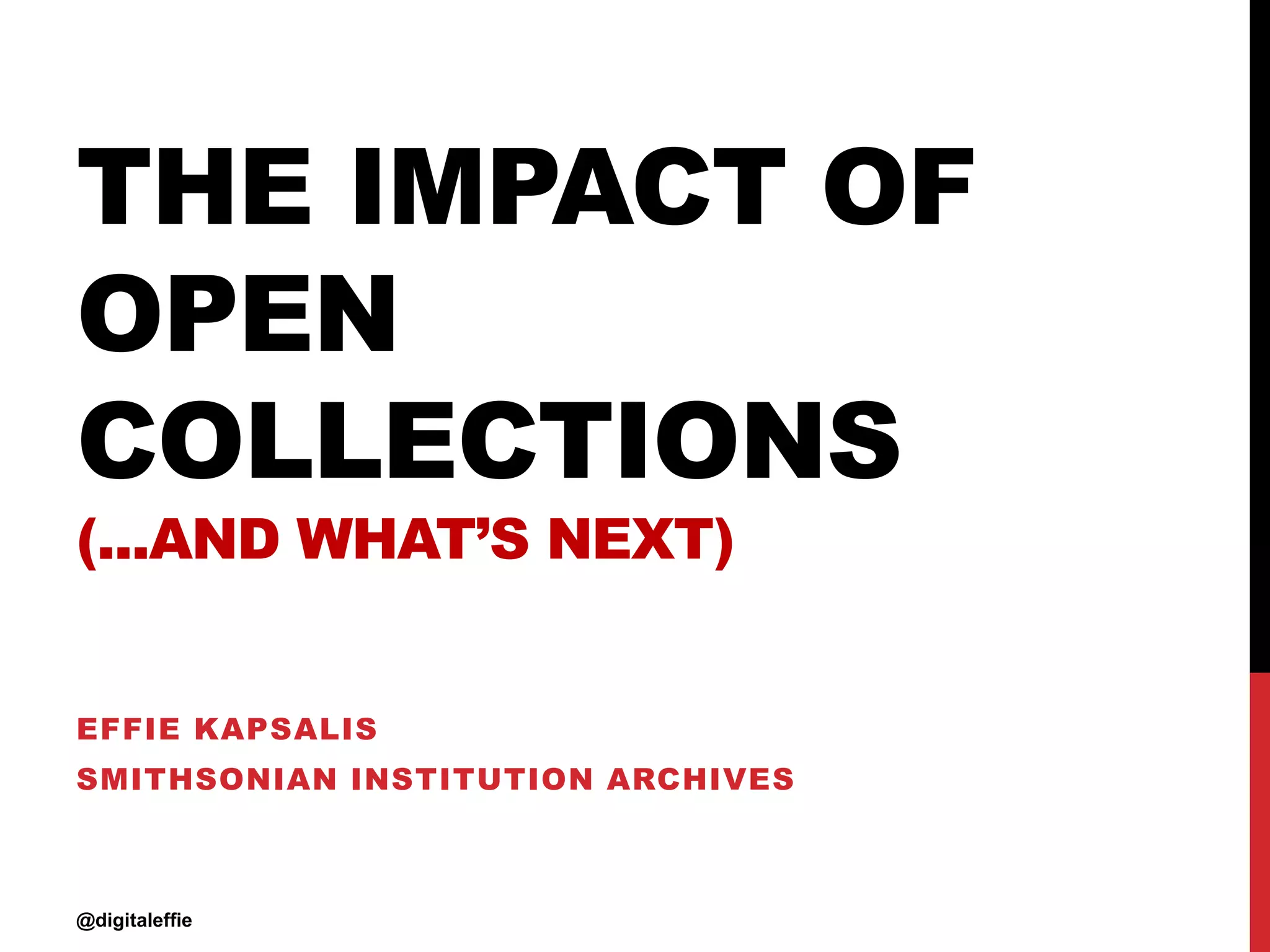
  • #3 Top of class in chemistry at University of Athens, no job opportunities, came to U.S. in 1962. Liquid Scintillation Spectrometer uses light emissions to determine elements in a compound. https://www.youtube.com/watch?v=lhX4EER5BBk
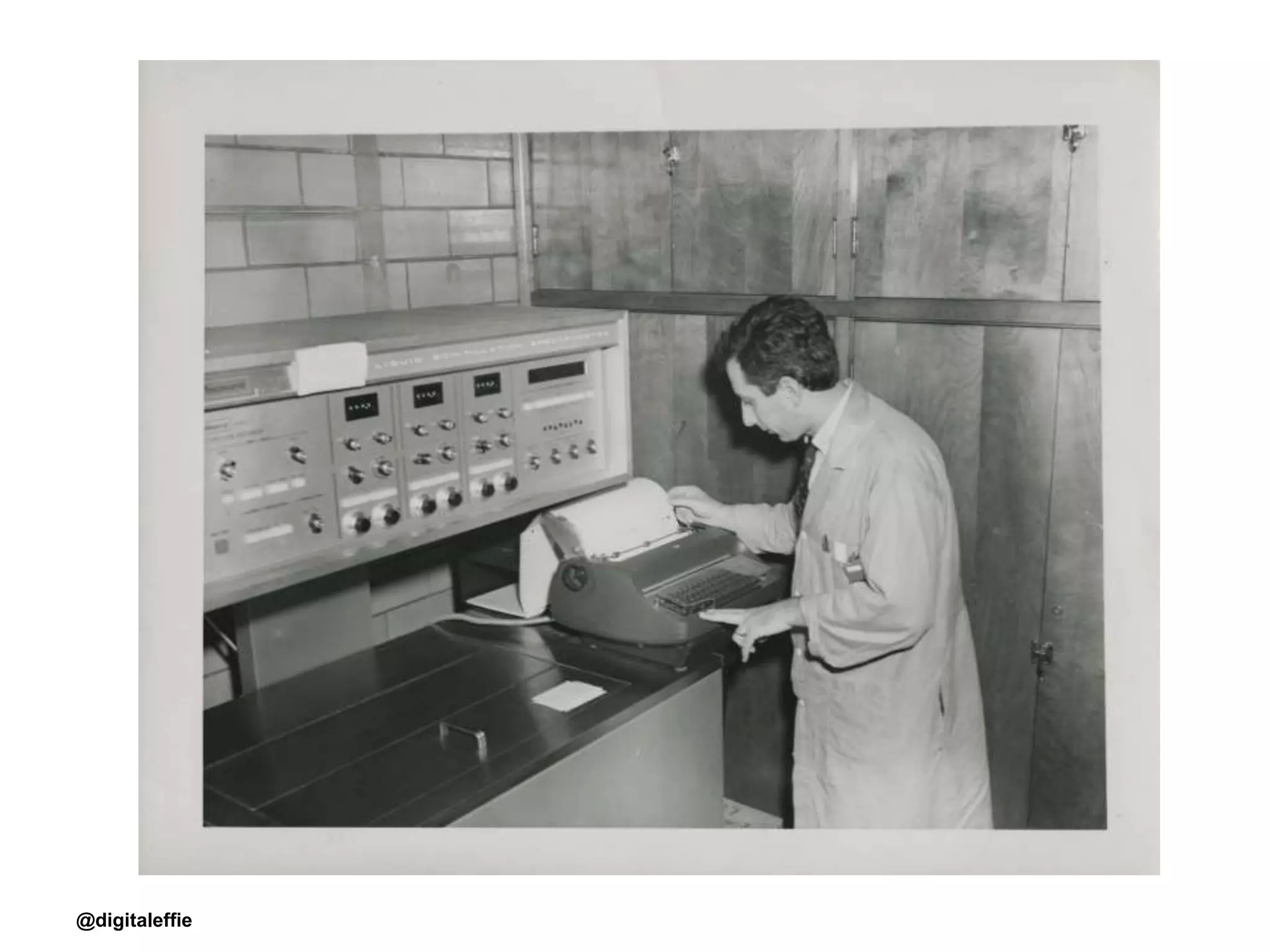
  • #4 He married an American, had two children.
  • #5 As he liked to call it, “the full catastrophe”
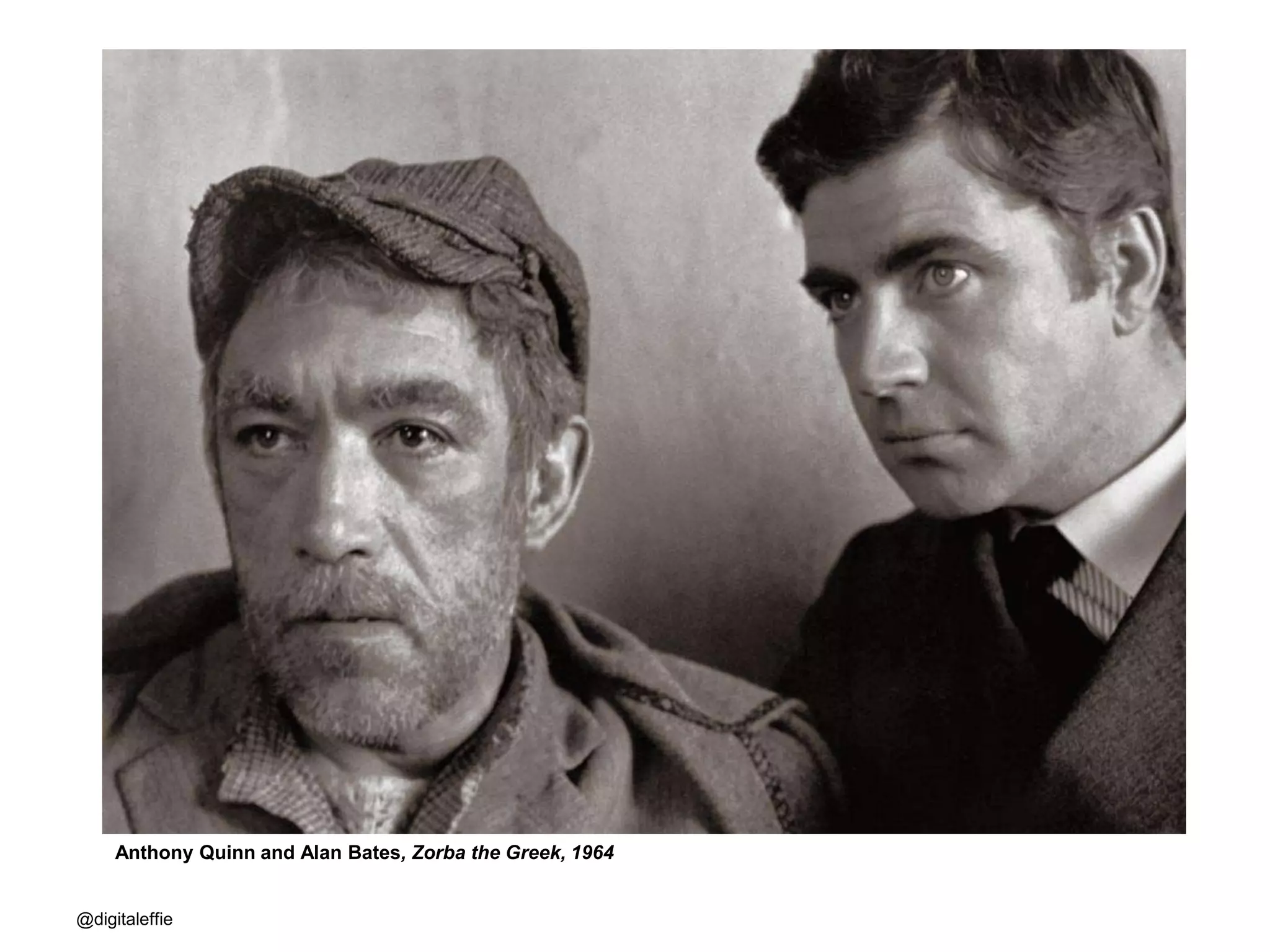
  • #6 Love letter to archives. They systematically record the history of people, organizations, and countries. They may seem dry on the surface, however, when examined, they provide important clues about who we are today.
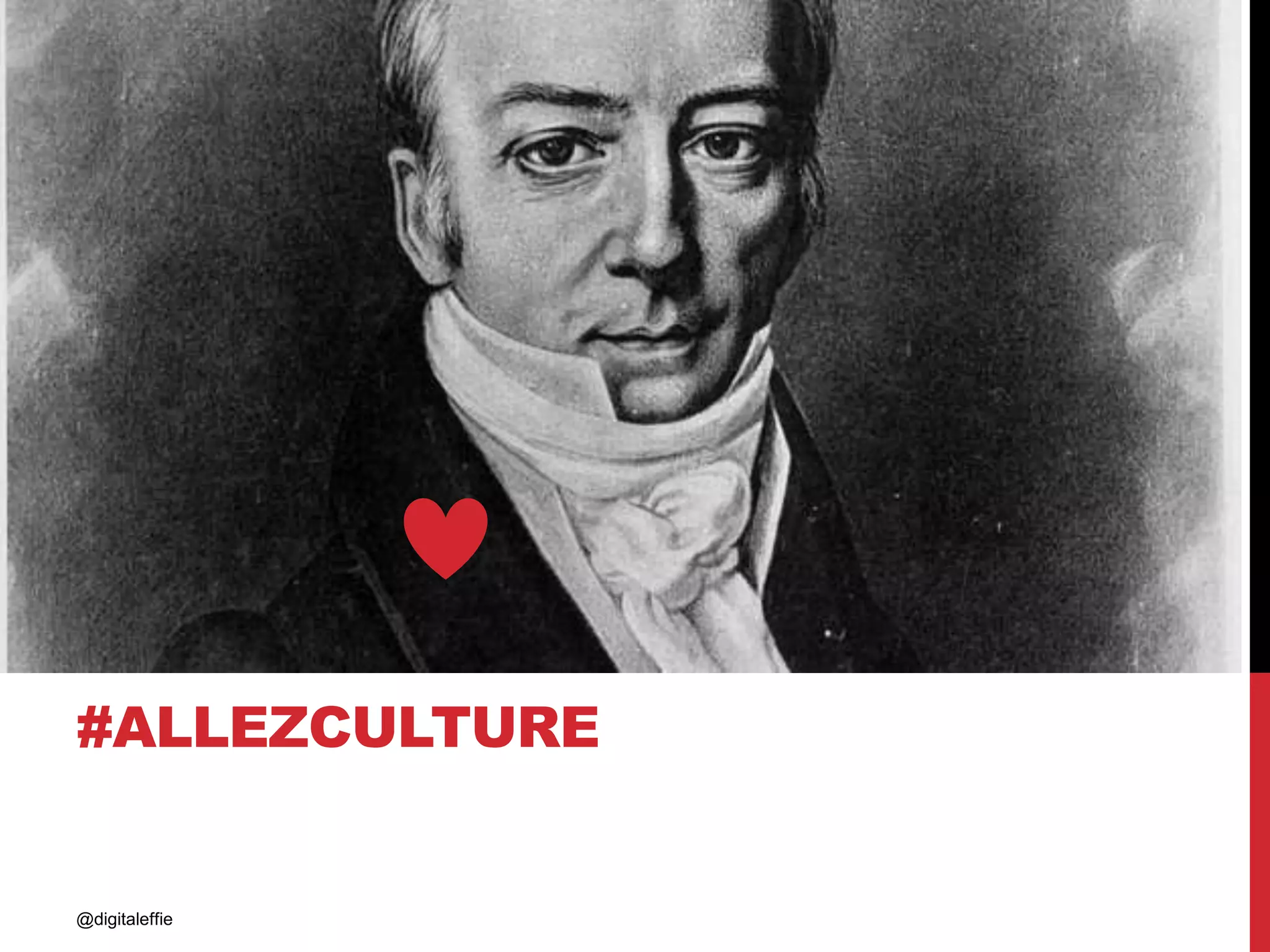
  • #7 Speaking of another chemist who saw opportunity in far lands: James Smithson (born 1765, un-acknowledged son of the first Duke of Northumberland. He was a chemist when chemistry was a new science = the original Smithsonian Hipster. He believed that the pursuit of science and knowledge was the key to happiness and prosperity for all of society. He saw scientists as benefactors of all mankind, and thought that they should be considered “citizens of the world.” Smithson was interested in studying almost everything: the venom of snakes, the chemistry of volcanoes, the constituents of a lady’s tear, and even the fundamental nature of electricity. He published twenty-seven papers in his lifetime, ranging from an improved method of making coffee, to an analysis of the mineral calamine, critical in the manufacture of brass…)
  • #8 His personal archives and collections were lost in a Castle fire that took place in 1865 in the dead of winter. “Historic re-enactment” of Castle Fire. What we do know was pieced together in archives across Europe.
  • #9 Toward the end of his life in 1826, under a clause in his will, he left his fortune to the United States, a place he had never visited, to found in Washington, under the name of the Smithsonian Institution, “an establishment for the increase and diffusion of knowledge among men.” Smithson died in Genoa, Italy, on June 27, 1829. Now, what would motivate someone who had never set foot in the United States to donate his entire fortune with such open terms? Smithson likely saw democratization of knowledge in the United States, something that was more restricted to a certain segment of society in Europe.
  • #10 A free and open web is something that would be close to his heart, I'd guess. (Smithson = pro net neutrality!!). I asked Smithson’s biographer, Heather Ewing, what he would think of the open sharing and collections movements in the cultural heritage world. To support this hypothesis, she cited the example of Smithson tried to use instruments that were made with readily available and inexpensive materials (in stark contrast to the French), so that anybody could replicate his experiments, participate, challenge him, etc. To support this hypothesis, she cited the example of Smithson tried to use instruments that were made with readily available and inexpensive materials (in stark contrast to the French), so that anybody could replicate his experiments, participate, challenge him, etc.
  • #11 What is the 21st century version of the increase and diffusion of knowledge among men? Definition of Budapest Open Access Initiative. Includes technology
  • #12 Piotr Czerski is a Polish writer and commentator, 2012
  • #14 Piotr Czerski is a Polish writer and commentator, 2012, http://www.theatlantic.com/technology/archive/2012/02/we-the-web-kids/253382/
  • #15 Piotr Czerski is a Polish writer and commentator, 2012
  • #17 Over a dozen international GLAM institutions. MK&G Tanner, Simon, “Reproduction charging models & rights policy for digital images in American art museums.” An Andrew W. Mellon Foundation study. King’s Digital Consultancy Services, August 2004. http://www.kdcs.kcl.ac.uk/fileadmin/documents/pubs/USMuseum_SimonTanner.pdf, accessed 7/8/2015. Kelly, Kristin, “Images of Works of Art in Museum Collections: The Experience of Open Access, a Study of 11 Museums,” p. 24. Prepared for The Andrew W. Mellon Foundation. Council on Library and Information Resources, June 2013. http://www.clir.org/pubs/reports/pub157/pub157.pdf, accessed 7/8/2015.
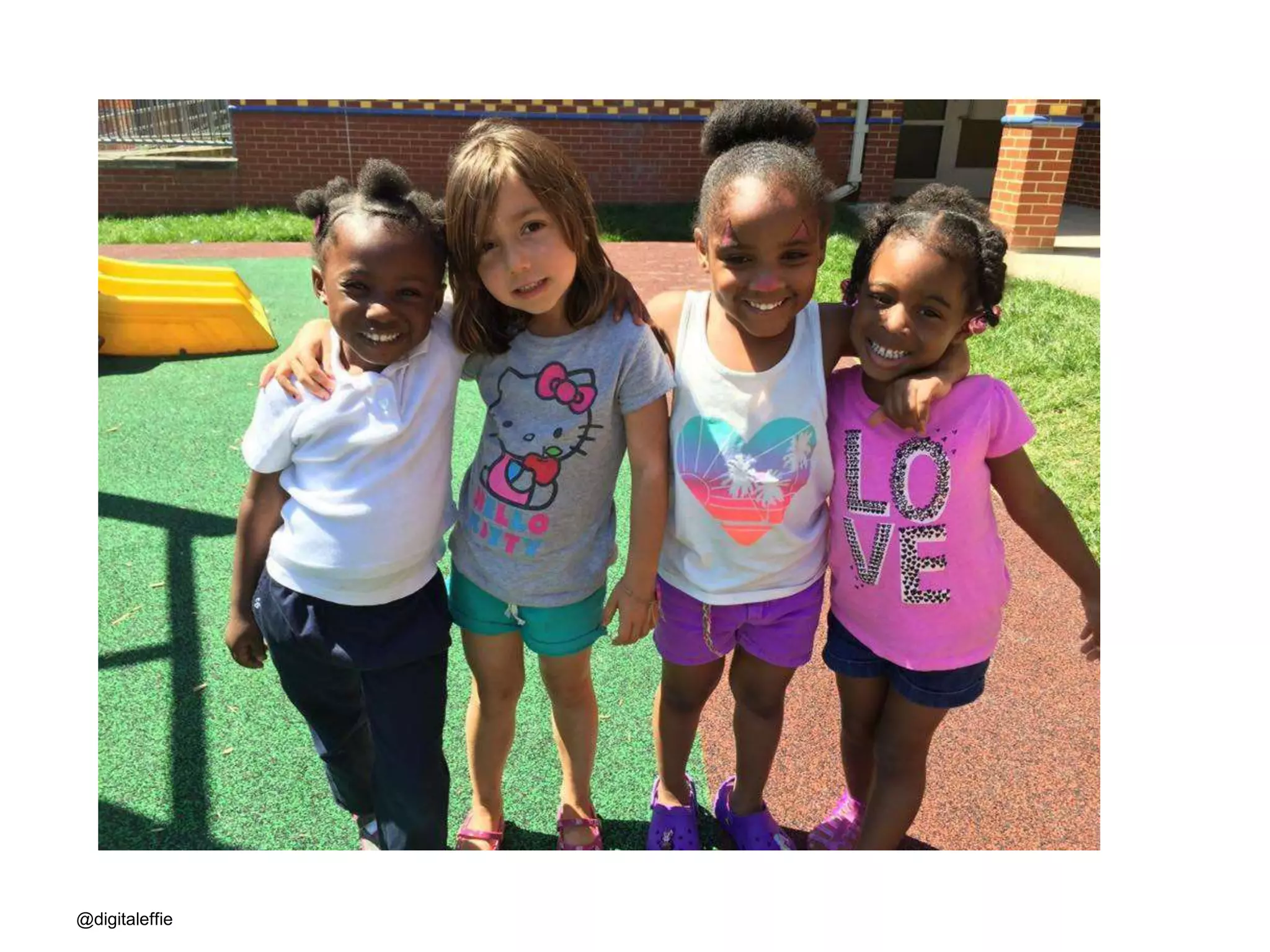
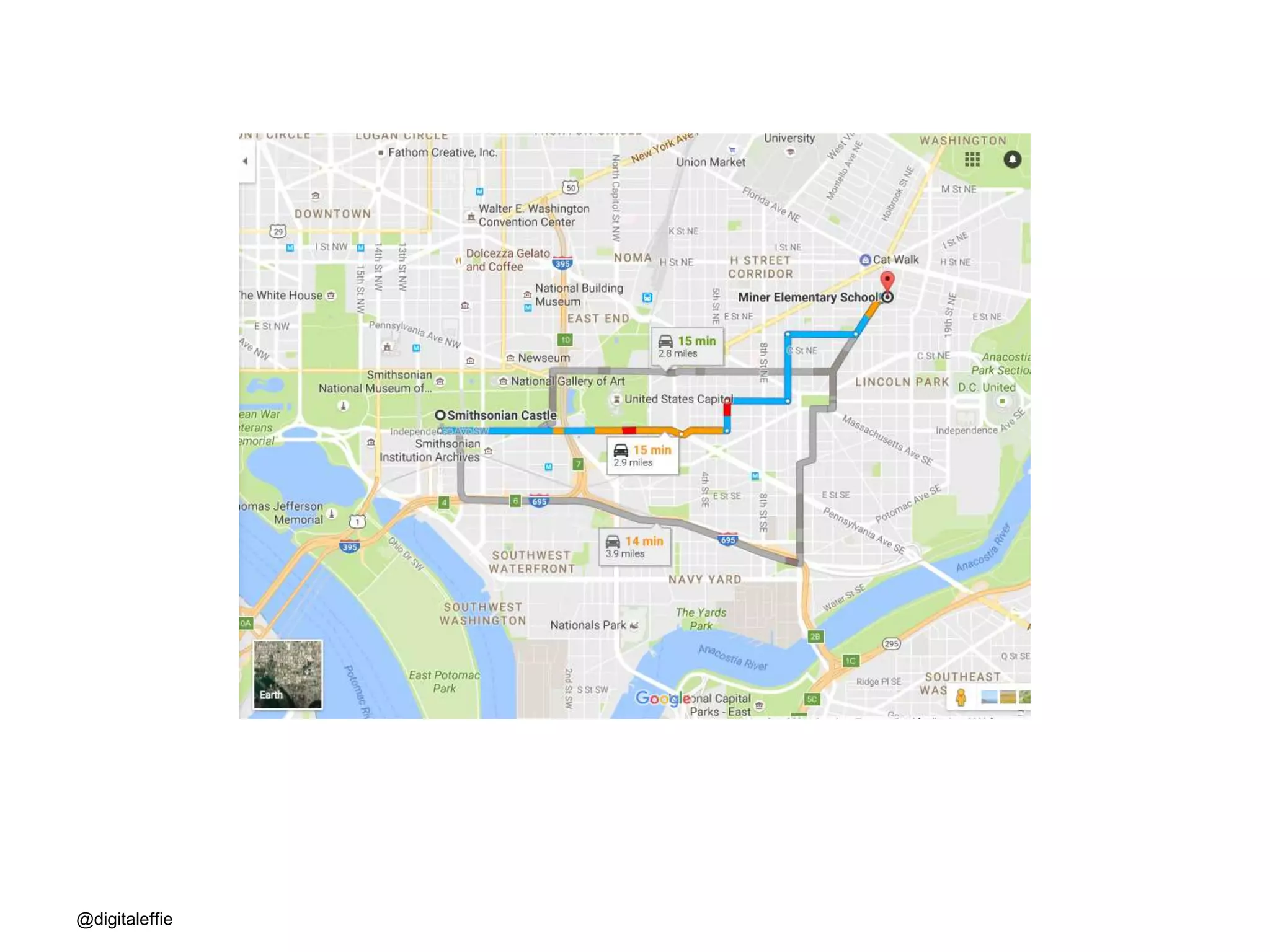
  • #28 This hit home at my daughters school. Local African American residents were not getting to the Smithsonian, a large complex of FREE museums less than 3 miles from home. Part relevance, part resources.
  • #29 This hit home at my daughters school. Local African American residents were not getting to the Smithsonian, a large complex of FREE museums less than 3 miles from home. Part relevance, part resources.
  • #30 As a woman and 1st generation American on my father’s side, I barely see myself in the archives.
  • #32 Pulling out little-documented women scientists. From campaign, to wikipedia edit-a-thons…
  • #33 We need to document and create more diverse histories even if it’s not our main mission.
  • #34 We need to involve more diverse producers of history. Though 28 percent of museum staffs are from underrepresented minorities, the great majority of these workers are concentrated in security, facilities, finance, and human resources jobs.  Among museum curators, conservators, educators, and leaders, only four percent are African American and just three percent Hispanic. - The Andrew W. Mellon Foundation, Art Museum Staff Demographic Survey, https://mellon.org/resources/news/articles/Diversity-American-Art-Museums/
  • #35 “Two recent studies paint a stark picture of the lack of ethnic and racial diversity among top museum staff in the US. While people of colour represent 38% of the country’s population, they make up only 9% of museum boards and 16% of the administrators, curators, conservators and educators who make decisions about what is exhibited and preserved as culturally important.” the Art Newspaper We need to pay our interns. Low income young people can’t afford unpaid internships.