The
Tongue
Tongue is a muscular structure that
 has the organs of taste reception.
  The organs for sense of taste are
  the taste buds. Tongue is located
inside the mouth and is an important
muscle. It does not have any bones.
It is reddish-pink in color. The main
 function of tongue is taste, help in
chewing food, in swallowing food and
               speech.
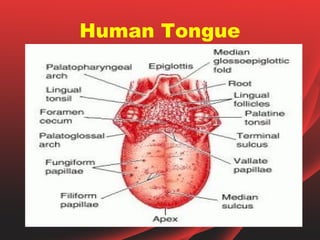
Human Tongue
Papillae
   Papillae contains taste bud (chemo-
   receptors), which helps us identify
   between different tastes of food.
   When we chew food, a portion of it
  dissolves in the saliva. This dissolved
 part of food comes in contact with the
taste buds and generates nerve impulses.
    These nerve fibres are known as
  microvilli. These nerve fibres carry
   messages to the taste center in the
 brain. Then brain perceives the taste.
Four Types Of Papillae
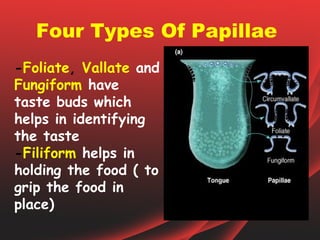
-Foliate, Vallate and
Fungiform have
taste buds which
helps in identifying
the taste
-Filiform helps in
holding the food ( to
grip the food in
place)
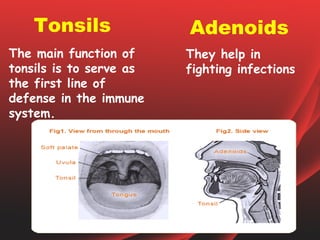
Tonsils              Adenoids
The main function of     They help in
tonsils is to serve as   fighting infections
the first line of
defense in the immune
system.
Types of Tonsils
1. The palatine tonsils or simply referred to as
'the tonsil'- inbetween the anterior &
posterior pillars of oropharynx
2. The Nasopharyngeal tonsils or the
adenoids- in the nasopharynx
3. The tubal tonsils- near opening of
eustachian tubes.
4. The Lingual tonsils- in the base of the
tongue.
5. Tonsillar patches in posterior pharyngeal
wall.
Frenulum linguae: It secures or
holds the tongue in place inside the
mouth.

Very small fibre-like or hair-like
projections are present on the upper
side of the tongue which connect with
nerve fibres at the lower end of the
tongue which lead to the brain.
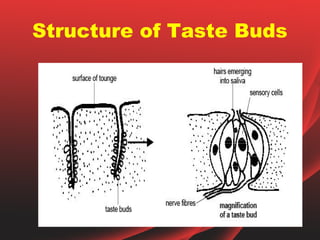
Taste Buds
-Are structures located on the surface
 of the tongue. They are embedded in
 the mucosa of the papillae of the
 tongue. The papillae are projections on
 the upper surface of the tongue.
-Taste buds contain the receptors for
 taste
Structure of Taste Buds
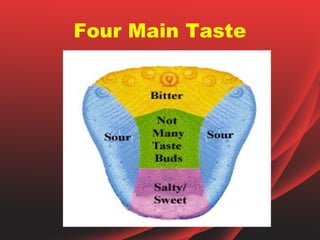
There are about 3000 taste buds on the
  tongue of an adult person. There are
  four main tastes - sweet, salty, sour
 and bitter. These four main tastes are
felt by different portion of the tongue.
  The tip of our tongue senses salt and
   sweet. The taste buds at the sides
 detect sour taste. The rear portion of
     the tongue detect bitter taste.
Four Main Taste
Taste receptor cells or
  gustatory receptors

They are spindle-shaped cells that are
 neurosensory. They have hairs on their
  free ends and on the other end, they
  have nerve fibres. They number 5-15
            in each taste bud
Supporting cells

They are columnar cells, numbering
 about 40 found between the taste
  receptor cells, supporting them.
Human Tongue
  Diseases
Oral Candidiasis
Candidiasis is a fungal infection, which is
   mostly caused a yeast called Candida
  albicans. Other less common causative
     agents are Candida glabrata and
   Candida tropicalis. When it occurs on
  the mucous membrane of the mouth, it
      is known as oral candidiasis.The
   identifying symptoms are appearance
      of thick white or cream-colored
    deposits on the surface of tongue.
The infected tongue may appear red and
   a bit raised from the normal level.
    Oral candidiasis causes a burning
 sensation and a lot of discomfort. It is
   treated with antifungal drugs. The
     patient is asked to use this oral
  suspension to wash around the mouth
 and swallow. In some severe cases, the
      medicine may be administered
       intravenously on the tongue.
Leukoplakia
  Leukoplakia is a disease the involves the
  formation of a white spot or patch on the
mucous membrane in the mouth. The common
   mouth parts that develop leukoplakia are
 tongue, gums, etc. If not treated on time,
     leukoplakia may lead to cancer. The
   leukoplakia patches on tongue cannot be
easily scraped off. The common causes of it
     are smoking and chewing tobacco. In
majority of the cases, this tongue disease is
  harmless. But seeking dental assistance is
         necessary to prevent cancer.
Keratosis Pharyngis
It occurs when the protein of the hair
  or nails, called keratin, grows at the
    pharynx. This is a tongue disease
    which belongs to a group of those
      disease for which there is no
     treatment known till date. The
  identifying symptoms are pain at the
   back of the throat and difficulty in
                swallowing.
Quiz time
1.) A muscular structure that has the
  organs of taste reception.
2.) Its contains taste buds which helps us
  identify between different tastes      of
  food.
3-6.) Give the four types of Papillae
7.) Serve as the first line of defense in the
  immune system.
8.) Contain the receptors for taste
9.) It secures or holds the tongue in    place
  inside the mouth.
10.) They are spindle-shaped cells that are
  neurosensory.
The human tongue

The human tongue

  • 1.
  • 2.
    Tongue is amuscular structure that has the organs of taste reception. The organs for sense of taste are the taste buds. Tongue is located inside the mouth and is an important muscle. It does not have any bones. It is reddish-pink in color. The main function of tongue is taste, help in chewing food, in swallowing food and speech.
  • 3.
  • 4.
    Papillae Papillae contains taste bud (chemo- receptors), which helps us identify between different tastes of food. When we chew food, a portion of it dissolves in the saliva. This dissolved part of food comes in contact with the taste buds and generates nerve impulses. These nerve fibres are known as microvilli. These nerve fibres carry messages to the taste center in the brain. Then brain perceives the taste.
  • 5.
    Four Types OfPapillae -Foliate, Vallate and Fungiform have taste buds which helps in identifying the taste -Filiform helps in holding the food ( to grip the food in place)
  • 6.
    Tonsils Adenoids The main function of They help in tonsils is to serve as fighting infections the first line of defense in the immune system.
  • 7.
    Types of Tonsils 1.The palatine tonsils or simply referred to as 'the tonsil'- inbetween the anterior & posterior pillars of oropharynx 2. The Nasopharyngeal tonsils or the adenoids- in the nasopharynx 3. The tubal tonsils- near opening of eustachian tubes. 4. The Lingual tonsils- in the base of the tongue. 5. Tonsillar patches in posterior pharyngeal wall.
  • 8.
    Frenulum linguae: Itsecures or holds the tongue in place inside the mouth. Very small fibre-like or hair-like projections are present on the upper side of the tongue which connect with nerve fibres at the lower end of the tongue which lead to the brain.
  • 9.
    Taste Buds -Are structureslocated on the surface of the tongue. They are embedded in the mucosa of the papillae of the tongue. The papillae are projections on the upper surface of the tongue. -Taste buds contain the receptors for taste
  • 10.
  • 11.
    There are about3000 taste buds on the tongue of an adult person. There are four main tastes - sweet, salty, sour and bitter. These four main tastes are felt by different portion of the tongue. The tip of our tongue senses salt and sweet. The taste buds at the sides detect sour taste. The rear portion of the tongue detect bitter taste.
  • 12.
  • 13.
    Taste receptor cellsor gustatory receptors They are spindle-shaped cells that are neurosensory. They have hairs on their free ends and on the other end, they have nerve fibres. They number 5-15 in each taste bud
  • 14.
    Supporting cells They arecolumnar cells, numbering about 40 found between the taste receptor cells, supporting them.
  • 15.
    Human Tongue Diseases
  • 16.
    Oral Candidiasis Candidiasis isa fungal infection, which is mostly caused a yeast called Candida albicans. Other less common causative agents are Candida glabrata and Candida tropicalis. When it occurs on the mucous membrane of the mouth, it is known as oral candidiasis.The identifying symptoms are appearance of thick white or cream-colored deposits on the surface of tongue.
  • 17.
    The infected tonguemay appear red and a bit raised from the normal level. Oral candidiasis causes a burning sensation and a lot of discomfort. It is treated with antifungal drugs. The patient is asked to use this oral suspension to wash around the mouth and swallow. In some severe cases, the medicine may be administered intravenously on the tongue.
  • 18.
    Leukoplakia Leukoplakiais a disease the involves the formation of a white spot or patch on the mucous membrane in the mouth. The common mouth parts that develop leukoplakia are tongue, gums, etc. If not treated on time, leukoplakia may lead to cancer. The leukoplakia patches on tongue cannot be easily scraped off. The common causes of it are smoking and chewing tobacco. In majority of the cases, this tongue disease is harmless. But seeking dental assistance is necessary to prevent cancer.
  • 19.
    Keratosis Pharyngis It occurswhen the protein of the hair or nails, called keratin, grows at the pharynx. This is a tongue disease which belongs to a group of those disease for which there is no treatment known till date. The identifying symptoms are pain at the back of the throat and difficulty in swallowing.
  • 20.
  • 21.
    1.) A muscularstructure that has the organs of taste reception. 2.) Its contains taste buds which helps us identify between different tastes of food. 3-6.) Give the four types of Papillae 7.) Serve as the first line of defense in the immune system. 8.) Contain the receptors for taste 9.) It secures or holds the tongue in place inside the mouth. 10.) They are spindle-shaped cells that are neurosensory.