1


                  Maine Regional School Unit #67
                          Chester, Lincoln, Mattawamkeag


             The Human Body Systems for Kids
KidsKonnect.com and kidshealth.org provide links to more detailed information
about each of the systems listed below. The first group of systems are commonly
taught in the elementary grades. Teachers wishing more detailed information should
consult sources beyond this handout.

There are many systems in the human body.
  • Skeletal System (bones)
  • Respiratory System (nose, trachea, lungs)
  • Circulatory System (heart, blood, vessels)
  • Digestive System (mouth, esophogus, stomach, intestines)
  • Muscular System (muscles)
  • Nervous System (brain, spinal cord, nerves)


  • Excretory System (lungs, large intestine, kidneys)
  • Urinary System (bladder, kidneys)
  • Endocrine System (glands)
  • Reproductive System (male and female reproductive organs)
  • Immune System (many types of protein, cells, organs, tissues)
2


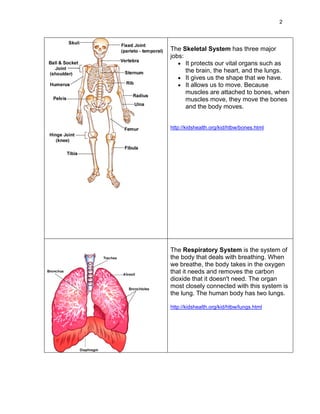
The Skeletal System has three major
jobs:
   • It protects our vital organs such as
      the brain, the heart, and the lungs.
   • It gives us the shape that we have.
   • It allows us to move. Because
      muscles are attached to bones, when
      muscles move, they move the bones
      and the body moves.


http://kidshealth.org/kid/htbw/bones.html


The Respiratory System is the system of
the body that deals with breathing. When
we breathe, the body takes in the oxygen
that it needs and removes the carbon
dioxide that it doesn't need. The organ
most closely connected with this system is
the lung. The human body has two lungs.

http://kidshealth.org/kid/htbw/lungs.html
3


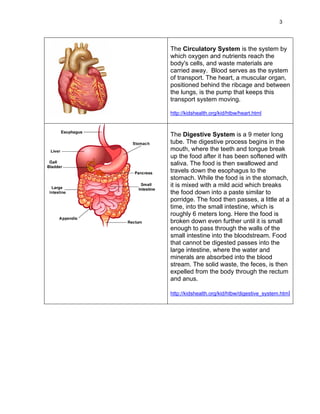
The Circulatory System is the system by
which oxygen and nutrients reach the
body's cells, and waste materials are
carried away. Blood serves as the system
of transport. The heart, a muscular organ,
positioned behind the ribcage and between
the lungs, is the pump that keeps this
transport system moving.

http://kidshealth.org/kid/htbw/heart.html


The Digestive System is a 9 meter long
tube. The digestive process begins in the
mouth, where the teeth and tongue break
up the food after it has been softened with
saliva. The food is then swallowed and
travels down the esophagus to the
stomach. While the food is in the stomach,
it is mixed with a mild acid which breaks
the food down into a paste similar to
porridge. The food then passes, a little at a
time, into the small intestine, which is
roughly 6 meters long. Here the food is
broken down even further until it is small
enough to pass through the walls of the
small intestine into the bloodstream. Food
that cannot be digested passes into the
large intestine, where the water and
minerals are absorbed into the blood
stream. The solid waste, the feces, is then
expelled from the body through the rectum
and anus.

http://kidshealth.org/kid/htbw/digestive_system.html
4


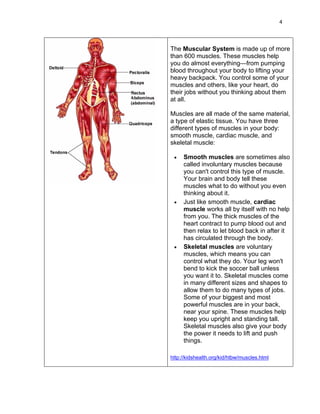
The Muscular System is made up of more
than 600 muscles. These muscles help
you do almost everything—from pumping
blood throughout your body to lifting your
heavy backpack. You control some of your
muscles and others, like your heart, do
their jobs without you thinking about them
at all.

Muscles are all made of the same material,
a type of elastic tissue. You have three
different types of muscles in your body:
smooth muscle, cardiac muscle, and
skeletal muscle:

 •   Smooth muscles are sometimes also
     called involuntary muscles because
     you can't control this type of muscle.
     Your brain and body tell these
     muscles what to do without you even
     thinking about it.
 •   Just like smooth muscle, cardiac
     muscle works all by itself with no help
     from you. The thick muscles of the
     heart contract to pump blood out and
     then relax to let blood back in after it
     has circulated through the body.
 •   Skeletal muscles are voluntary
     muscles, which means you can
     control what they do. Your leg won't
     bend to kick the soccer ball unless
     you want it to. Skeletal muscles come
     in many different sizes and shapes to
     allow them to do many types of jobs.
     Some of your biggest and most
     powerful muscles are in your back,
     near your spine. These muscles help
     keep you upright and standing tall.
     Skeletal muscles also give your body
     the power it needs to lift and push
     things.

http://kidshealth.org/kid/htbw/muscles.html
5


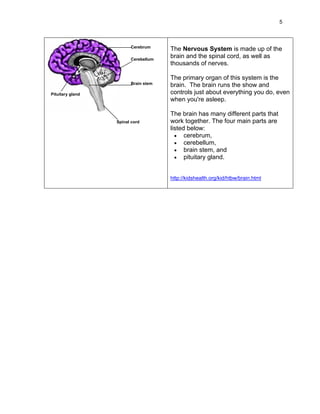
                        Cerebrum
                                     The Nervous System is made up of the
                        Cerebellum
                                     brain and the spinal cord, as well as
                                     thousands of nerves.

                                     The primary organ of this system is the
                        Brain stem   brain. The brain runs the show and
Pituitary gland                      controls just about everything you do, even
                                     when you're asleep.

                                     The brain has many different parts that
                  Spinal cord        work together. The four main parts are
                                     listed below:
                                       • cerebrum,
                                       • cerebellum,
                                       • brain stem, and
                                       • pituitary gland.


                                     http://kidshealth.org/kid/htbw/brain.html

The human body systems

  • 1.
    1 Maine Regional School Unit #67 Chester, Lincoln, Mattawamkeag The Human Body Systems for Kids KidsKonnect.com and kidshealth.org provide links to more detailed information about each of the systems listed below. The first group of systems are commonly taught in the elementary grades. Teachers wishing more detailed information should consult sources beyond this handout. There are many systems in the human body. • Skeletal System (bones) • Respiratory System (nose, trachea, lungs) • Circulatory System (heart, blood, vessels) • Digestive System (mouth, esophogus, stomach, intestines) • Muscular System (muscles) • Nervous System (brain, spinal cord, nerves) • Excretory System (lungs, large intestine, kidneys) • Urinary System (bladder, kidneys) • Endocrine System (glands) • Reproductive System (male and female reproductive organs) • Immune System (many types of protein, cells, organs, tissues)
  • 2.
    2 The Skeletal Systemhas three major jobs: • It protects our vital organs such as the brain, the heart, and the lungs. • It gives us the shape that we have. • It allows us to move. Because muscles are attached to bones, when muscles move, they move the bones and the body moves. http://kidshealth.org/kid/htbw/bones.html The Respiratory System is the system of the body that deals with breathing. When we breathe, the body takes in the oxygen that it needs and removes the carbon dioxide that it doesn't need. The organ most closely connected with this system is the lung. The human body has two lungs. http://kidshealth.org/kid/htbw/lungs.html
  • 3.
    3 The Circulatory Systemis the system by which oxygen and nutrients reach the body's cells, and waste materials are carried away. Blood serves as the system of transport. The heart, a muscular organ, positioned behind the ribcage and between the lungs, is the pump that keeps this transport system moving. http://kidshealth.org/kid/htbw/heart.html The Digestive System is a 9 meter long tube. The digestive process begins in the mouth, where the teeth and tongue break up the food after it has been softened with saliva. The food is then swallowed and travels down the esophagus to the stomach. While the food is in the stomach, it is mixed with a mild acid which breaks the food down into a paste similar to porridge. The food then passes, a little at a time, into the small intestine, which is roughly 6 meters long. Here the food is broken down even further until it is small enough to pass through the walls of the small intestine into the bloodstream. Food that cannot be digested passes into the large intestine, where the water and minerals are absorbed into the blood stream. The solid waste, the feces, is then expelled from the body through the rectum and anus. http://kidshealth.org/kid/htbw/digestive_system.html
  • 4.
    4 The Muscular Systemis made up of more than 600 muscles. These muscles help you do almost everything—from pumping blood throughout your body to lifting your heavy backpack. You control some of your muscles and others, like your heart, do their jobs without you thinking about them at all. Muscles are all made of the same material, a type of elastic tissue. You have three different types of muscles in your body: smooth muscle, cardiac muscle, and skeletal muscle: • Smooth muscles are sometimes also called involuntary muscles because you can't control this type of muscle. Your brain and body tell these muscles what to do without you even thinking about it. • Just like smooth muscle, cardiac muscle works all by itself with no help from you. The thick muscles of the heart contract to pump blood out and then relax to let blood back in after it has circulated through the body. • Skeletal muscles are voluntary muscles, which means you can control what they do. Your leg won't bend to kick the soccer ball unless you want it to. Skeletal muscles come in many different sizes and shapes to allow them to do many types of jobs. Some of your biggest and most powerful muscles are in your back, near your spine. These muscles help keep you upright and standing tall. Skeletal muscles also give your body the power it needs to lift and push things. http://kidshealth.org/kid/htbw/muscles.html
  • 5.
    5 Cerebrum The Nervous System is made up of the Cerebellum brain and the spinal cord, as well as thousands of nerves. The primary organ of this system is the Brain stem brain. The brain runs the show and Pituitary gland controls just about everything you do, even when you're asleep. The brain has many different parts that Spinal cord work together. The four main parts are listed below: • cerebrum, • cerebellum, • brain stem, and • pituitary gland. http://kidshealth.org/kid/htbw/brain.html