The Hedgehog Concept and 
How It Applies to Product 
Development 
By Chris Marocchi 
‘The Practical Product Marketer’ 
January 12, 2011
The Problem 
 Product Development and Management is 
all about managing the product lifecycle 
“Cradle to Grave”. 
 Customer and market research will 
determine what could be developed 
(product, feature set, service). 
 A common problem evolves from this: a 
brand loses its identity by becoming “All 
things to all people”.
The Question 
 After a product reaches a certain point of 
robustness and gains traction in the 
marketplace, the question evolves from: 
What to develop? 
into 
What not to develop?
The Answer 
 Jim Collins, in his book ‘Good to Great’, 
addresses this question by defining the 
Hedgehog Concept. 
 “Those who built the good-go-great 
companies were, to one degree or another, 
hedgehogs. Those who led the comparison 
companies tended to be foxes…, being 
scattered, diffused, and inconsistent.” 
(Collins, pg. 92)
The Story
Foxes vs. Hedgehogs 
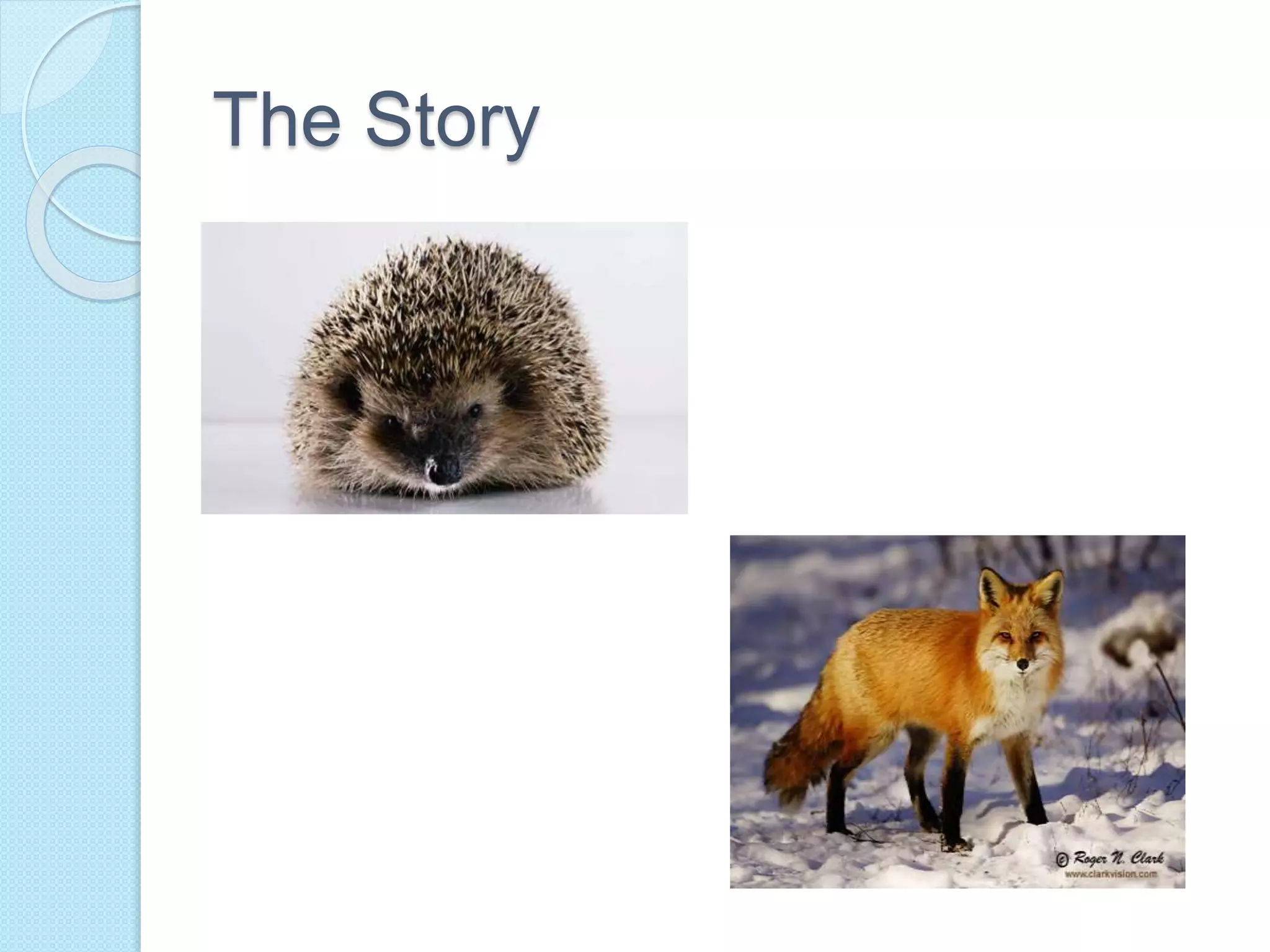
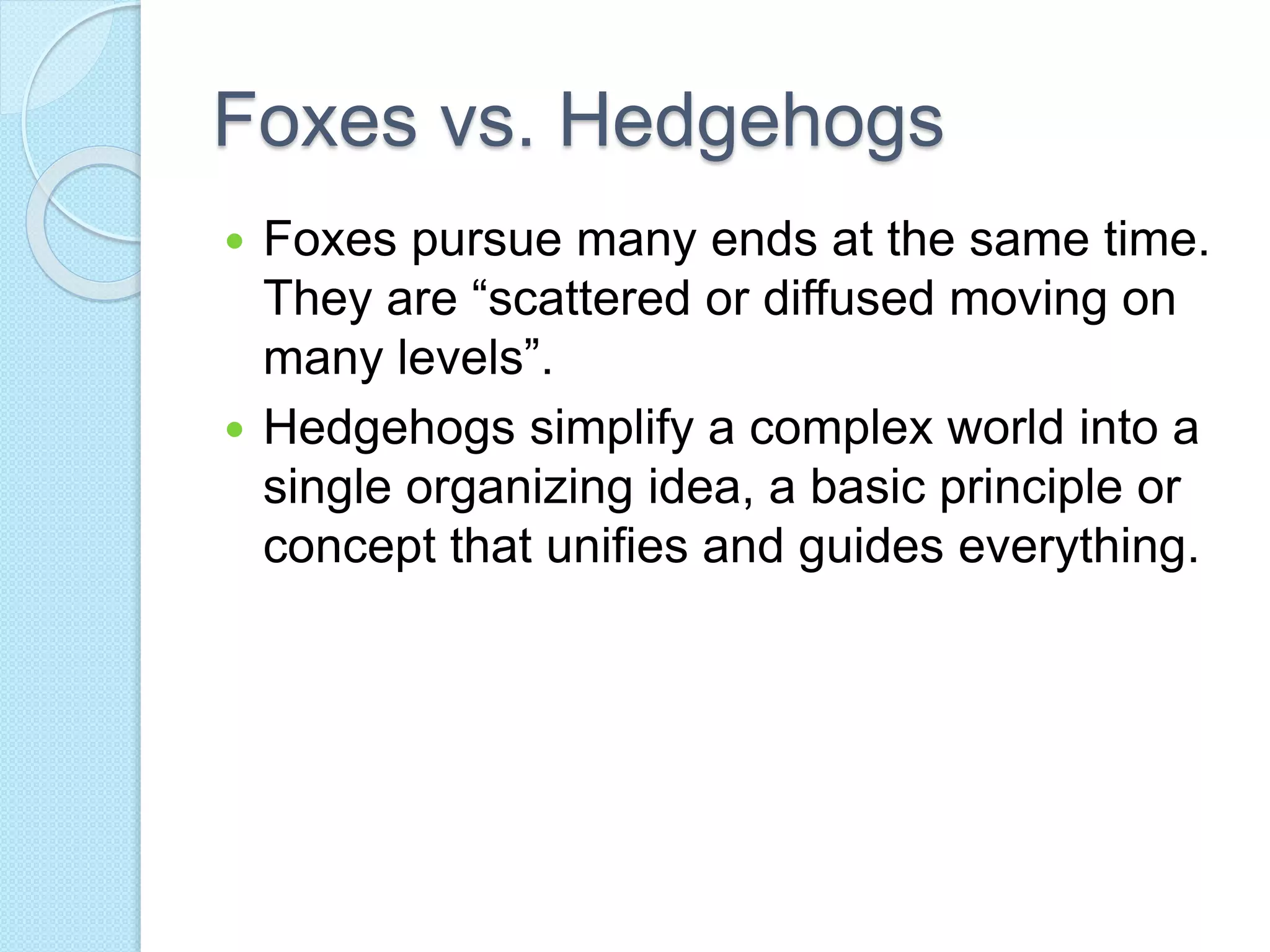
 Foxes pursue many ends at the same time. 
They are “scattered or diffused moving on 
many levels”. 
 Hedgehogs simplify a complex world into a 
single organizing idea, a basic principle or 
concept that unifies and guides everything.
Examples 
 Foxes: 
ITT in the 1990’s (owned Sheraton, ITT – Tech, 
etc.) 
UPS in early 2000’s (owned Marriott, aircraft 
carriers, etc.) 
Time Warner in the 1990’s (owned Warner 
Music Group, AOL, Time Inc., etc.) 
 Hedgehogs: 
In N Out Burger 
Krispy Kreme 
Starbucks
The Three Circles 
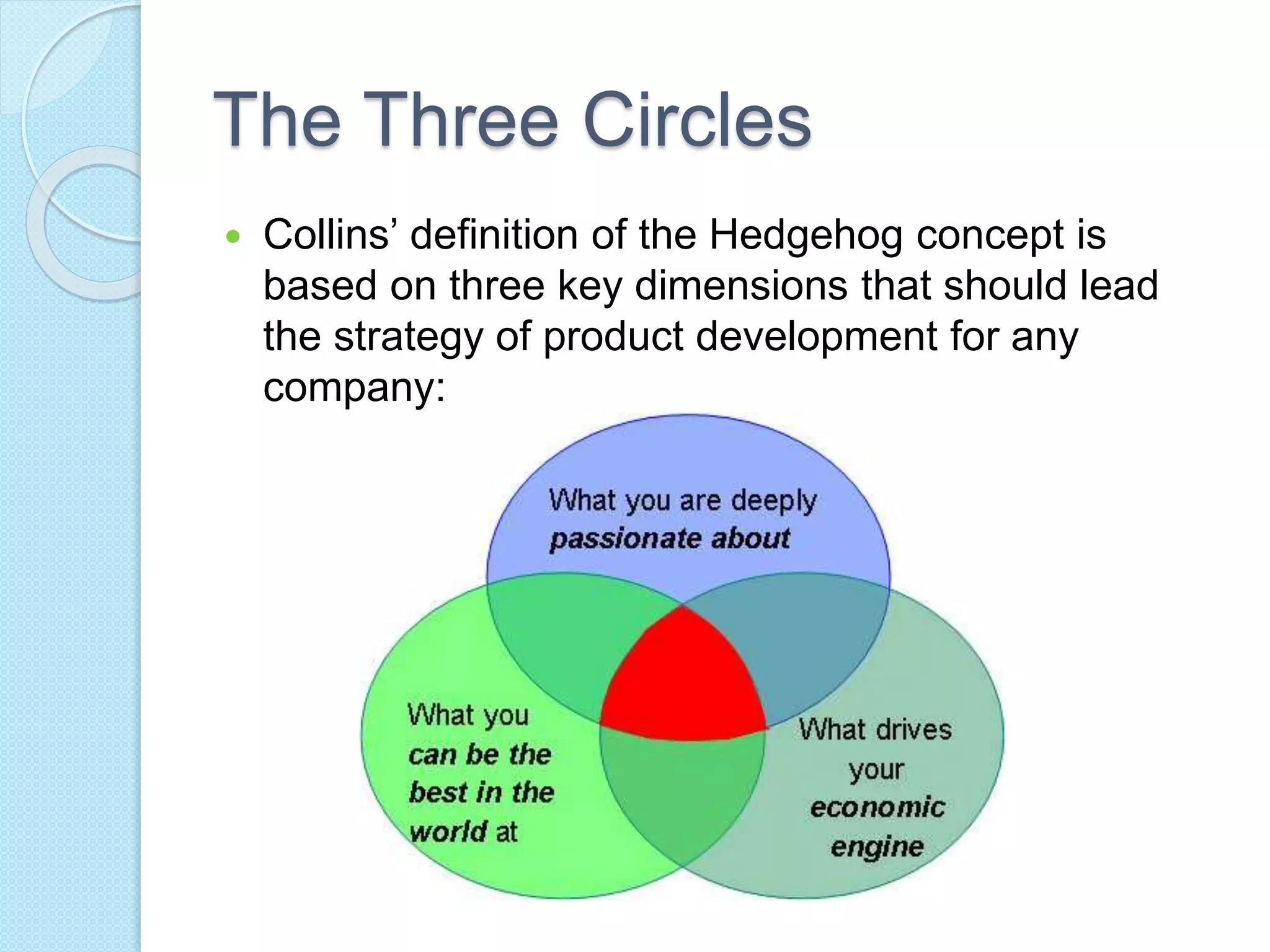
 Collins’ definition of the Hedgehog concept is 
based on three key dimensions that should lead 
the strategy of product development for any 
company:
Three Circles Defined 
 What you can be the best in the world at – it’s an 
understanding of what you can be the best at. Not 
just a core competency. 
 What drives your economic engine – determine 
what is your denominator. If you were to pick one 
ratio (e.g. profit per x), what would have the 
greatest and most sustainable impact on your 
business? 
 What are we passionate about? You can’t 
“manufacture” passion, you can only “discover” 
what ignites your passion and the passion of your 
employees.
A Case Study 
 Company – CB Richard Ellis 
 Division – Asset Services 
 Profit Center – Axis Portal Group 
 Team: 
Director 
Marketing Manager 
Business Analysts 
Customer Service Manager and Rep 
Developers
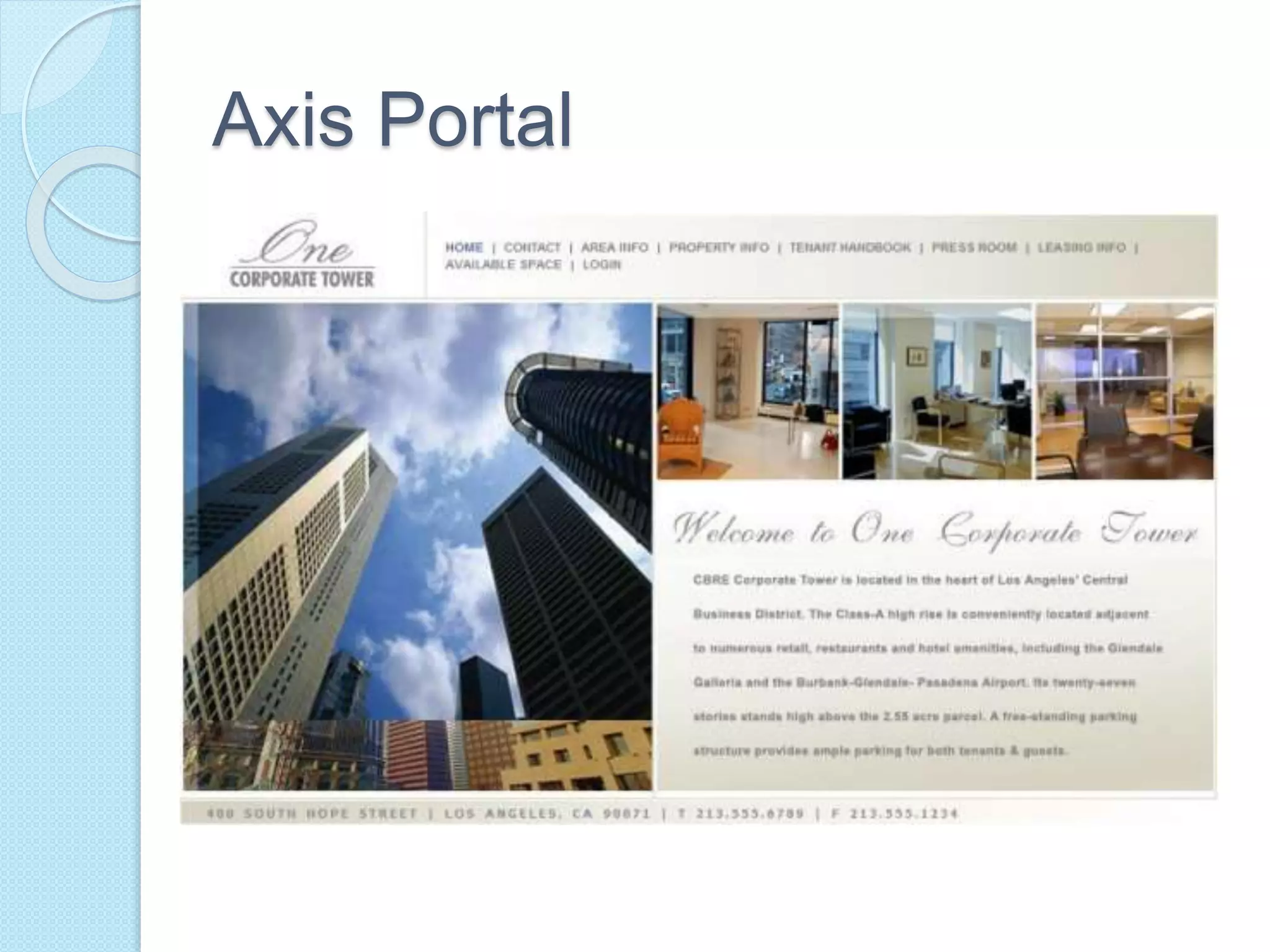
Axis Portal
Where To Begin? 
 Off-Site Strategy Meeting 
 Presentation of the Hedgehog Concept 
 Define objective: The team doesn’t leave 
the room until it defines the 3 circles and 
applies the Hedgehog Concept to the 
product strategy 
 Split into 3 teams 
 Brainstorm
The 3 Questions Answered 
 Compile the brainstormed answers from all 
teams into a single list 
 Compare and analyze the results of all 
three teams 
 Determine common patterns by analyzing 
frequency of results 
 Discussion 
 Agreement
The Answers 
 What can Axis Portal be the best in the world at 
doing? 
Offering online service products to benefit property 
managers and tenants 
Provide customer service/support 
• What drives Axis Portal’s economic engine? 
Monthly fees (recurring $ per month and the # of properties 
paying recurring fees) 
Setup fees 
• What are we passionate about? 
Web technology 
Providing high level of service and training 
Providing solutions to our clients’ challenges
The Results 
 What product enhancements should we 
pursue? 
Portfolio data/reporting 
Improved analytics 
Improved customer experience/footprint 
Axis Community 
Sustainability module 
 38% revenue growth with 14% margin 
increase over 3 years.
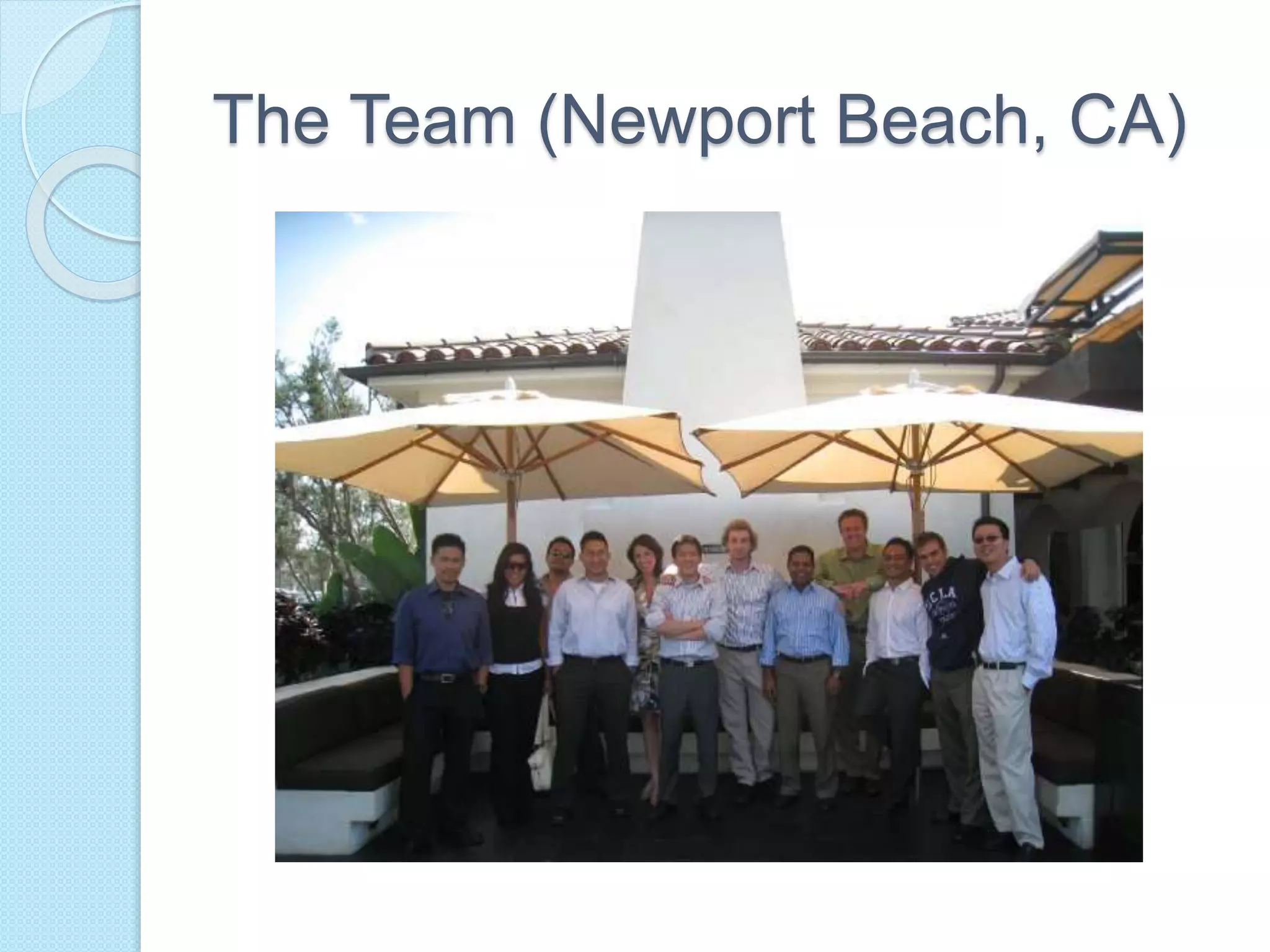
The Team (Newport Beach, CA)

The Hedgehog Concept

  • 1.
    The Hedgehog Conceptand How It Applies to Product Development By Chris Marocchi ‘The Practical Product Marketer’ January 12, 2011
  • 2.
    The Problem Product Development and Management is all about managing the product lifecycle “Cradle to Grave”.  Customer and market research will determine what could be developed (product, feature set, service).  A common problem evolves from this: a brand loses its identity by becoming “All things to all people”.
  • 3.
    The Question After a product reaches a certain point of robustness and gains traction in the marketplace, the question evolves from: What to develop? into What not to develop?
  • 4.
    The Answer Jim Collins, in his book ‘Good to Great’, addresses this question by defining the Hedgehog Concept.  “Those who built the good-go-great companies were, to one degree or another, hedgehogs. Those who led the comparison companies tended to be foxes…, being scattered, diffused, and inconsistent.” (Collins, pg. 92)
  • 5.
  • 6.
    Foxes vs. Hedgehogs  Foxes pursue many ends at the same time. They are “scattered or diffused moving on many levels”.  Hedgehogs simplify a complex world into a single organizing idea, a basic principle or concept that unifies and guides everything.
  • 7.
    Examples  Foxes: ITT in the 1990’s (owned Sheraton, ITT – Tech, etc.) UPS in early 2000’s (owned Marriott, aircraft carriers, etc.) Time Warner in the 1990’s (owned Warner Music Group, AOL, Time Inc., etc.)  Hedgehogs: In N Out Burger Krispy Kreme Starbucks
  • 8.
    The Three Circles  Collins’ definition of the Hedgehog concept is based on three key dimensions that should lead the strategy of product development for any company:
  • 9.
    Three Circles Defined  What you can be the best in the world at – it’s an understanding of what you can be the best at. Not just a core competency.  What drives your economic engine – determine what is your denominator. If you were to pick one ratio (e.g. profit per x), what would have the greatest and most sustainable impact on your business?  What are we passionate about? You can’t “manufacture” passion, you can only “discover” what ignites your passion and the passion of your employees.
  • 10.
    A Case Study  Company – CB Richard Ellis  Division – Asset Services  Profit Center – Axis Portal Group  Team: Director Marketing Manager Business Analysts Customer Service Manager and Rep Developers
  • 11.
  • 12.
    Where To Begin?  Off-Site Strategy Meeting  Presentation of the Hedgehog Concept  Define objective: The team doesn’t leave the room until it defines the 3 circles and applies the Hedgehog Concept to the product strategy  Split into 3 teams  Brainstorm
  • 13.
    The 3 QuestionsAnswered  Compile the brainstormed answers from all teams into a single list  Compare and analyze the results of all three teams  Determine common patterns by analyzing frequency of results  Discussion  Agreement
  • 14.
    The Answers What can Axis Portal be the best in the world at doing? Offering online service products to benefit property managers and tenants Provide customer service/support • What drives Axis Portal’s economic engine? Monthly fees (recurring $ per month and the # of properties paying recurring fees) Setup fees • What are we passionate about? Web technology Providing high level of service and training Providing solutions to our clients’ challenges
  • 15.
    The Results What product enhancements should we pursue? Portfolio data/reporting Improved analytics Improved customer experience/footprint Axis Community Sustainability module  38% revenue growth with 14% margin increase over 3 years.
  • 16.