

Social Science 
Class- 9th
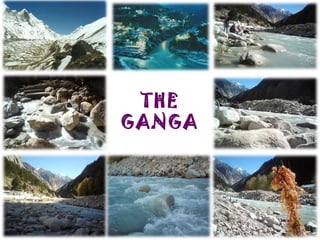
THE 
GANGA
The Ganges 
Length : Over 2500 km 
Drainage : Dendritic pattern 
Ambala : Water divide between 
Indus and Ganga 
Length of plains: 1800 km 
Fall in slope : Hardly 300 meters, 
i.e.one meter for every 
6 km therefore ,the river 
develops large meanders
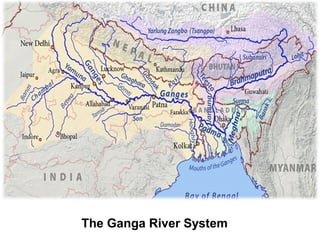
The Ganga River System
The Ganges river is one of 
the largest and by far the 
most important rivers in India. 
She has been a symbol of 
India’s age long culture and 
civilization, ever changing, 
ever flowing, and yet ever the 
same Ganga.
The river Ganges is officially 
and popularly known by it’s 
hindu name,Ganga. The 
Ganges is 1560 miles long 
and flows through China, 
India, Nepal and Bangladesh. 
The river flows through 29 
cities and about 48 towns.
Hindus, who constitute the 
vast majority of India's 
population, consider the 
Ganges a sacred river: 
Ganga (or Ganges) is the 
daughter of the mountain 
god, Himavan or Himalaya.
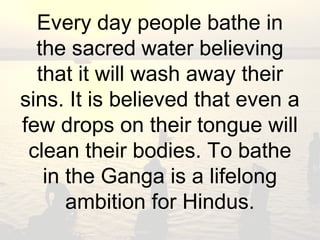
Every day people bathe in 
the sacred water believing 
that it will wash away their 
sins. It is believed that even a 
few drops on their tongue will 
clean their bodies. To bathe 
in the Ganga is a lifelong 
ambition for Hindus.
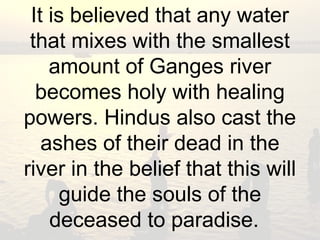
It is believed that any water 
that mixes with the smallest 
amount of Ganges river 
becomes holy with healing 
powers. Hindus also cast the 
ashes of their dead in the 
river in the belief that this will 
guide the souls of the 
deceased to paradise.
The Ganges has been used 
for irrigation since ancient 
times, the use of irrigation 
canals has increased the 
production of cash crops like 
sugarcane, cotton and 
oilseeds.
Floods of the Ganges have 
enriched the soil. This makes 
the Ganges Valley a great 
agricultural region in India. 
Fishing also is an important 
use of the Ganges. The 
Ganges is also a burial 
ground for the dead. 
Floods of the Ganges have 
enriched the soil. This makes the 
Ganges Valley a great agricultural 
region in India.
Drinking- Many cities get their 
drinking water from the 
Ganges, which is a large 
problem because the water is 
very polluted in some parts of 
the Ganges.
Energy-Only 20% of the 
estimated capacity of dams 
has been developed. At the 
upper part of the Ganges 
River, electricity is generated 
at the waterfalls of the 
Ganges River.
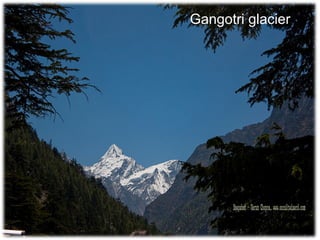
Gangotri glacier
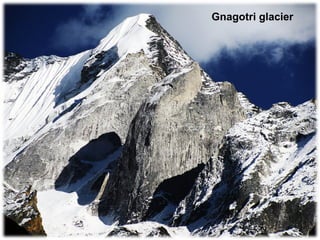
Gnagotri glacier
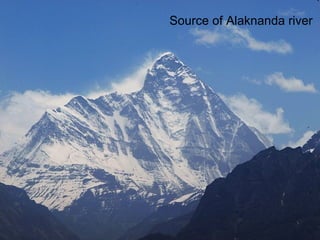
Source of Alaknanda river
The five river confluences of 
Alakananda are Vishnu Prayag, 
Nandaprayag, Karnaprayag, 
Rudraprayag and Devaprayag… All 
five along the path of the 
Alakananda river, that goes on 
assimilating other rivers… Till it 
reaches Devaprayag, where 
Alakandanda meets Bhagirathi and 
thereon, is known as Ganga.
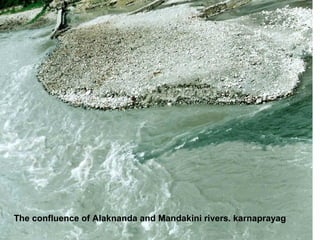
The confluence of Alaknanda and Mandakini rivers. karnaprayag
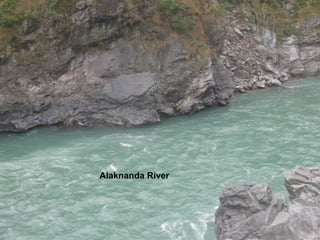
Alaknanda River
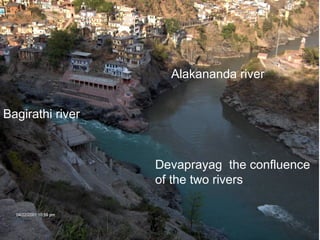
Alakananda river 
Bagirathi river 
Devaprayag the confluence 
of the two rivers
The headwaters of the 
Ganga called the ‘Bhagirathi’ 
is fed by the Gangotri Glacier 
and joined by the Alaknanda 
at Devaprayag in 
Uttaranchal. At Haridwar the 
Ganga emerges from the 
mountains on to the plains.
The Ganga is joined by many 
tributaries from the 
Himalayas, a few of them 
being major rivers 
such as the Yamuna, the 
Ghaghara, the Ghandak and 
the Kosi. The river Yamuna 
rises from the Yamunotri 
Glacier in the Himalayas.
Ganga Yamuna Sangam
The River Ganga 
Pollution
“ Environmentalists say 
the river supports over 
400 million people, and 
if the unabated pollution 
is not controlled, it will 
be the end of communities 
living along the banks.”
“Let each one of us be 
responsible and ensure 
we are not contributors 
to pollution of our 
environment.”
The ganga river system

The ganga river system

  • 1.
  • 2.
  • 3.
    The Ganges Length: Over 2500 km Drainage : Dendritic pattern Ambala : Water divide between Indus and Ganga Length of plains: 1800 km Fall in slope : Hardly 300 meters, i.e.one meter for every 6 km therefore ,the river develops large meanders
  • 4.
  • 5.
    The Ganges riveris one of the largest and by far the most important rivers in India. She has been a symbol of India’s age long culture and civilization, ever changing, ever flowing, and yet ever the same Ganga.
  • 6.
    The river Gangesis officially and popularly known by it’s hindu name,Ganga. The Ganges is 1560 miles long and flows through China, India, Nepal and Bangladesh. The river flows through 29 cities and about 48 towns.
  • 7.
    Hindus, who constitutethe vast majority of India's population, consider the Ganges a sacred river: Ganga (or Ganges) is the daughter of the mountain god, Himavan or Himalaya.
  • 8.
    Every day peoplebathe in the sacred water believing that it will wash away their sins. It is believed that even a few drops on their tongue will clean their bodies. To bathe in the Ganga is a lifelong ambition for Hindus.
  • 9.
    It is believedthat any water that mixes with the smallest amount of Ganges river becomes holy with healing powers. Hindus also cast the ashes of their dead in the river in the belief that this will guide the souls of the deceased to paradise.
  • 10.
    The Ganges hasbeen used for irrigation since ancient times, the use of irrigation canals has increased the production of cash crops like sugarcane, cotton and oilseeds.
  • 11.
    Floods of theGanges have enriched the soil. This makes the Ganges Valley a great agricultural region in India. Fishing also is an important use of the Ganges. The Ganges is also a burial ground for the dead. Floods of the Ganges have enriched the soil. This makes the Ganges Valley a great agricultural region in India.
  • 12.
    Drinking- Many citiesget their drinking water from the Ganges, which is a large problem because the water is very polluted in some parts of the Ganges.
  • 13.
    Energy-Only 20% ofthe estimated capacity of dams has been developed. At the upper part of the Ganges River, electricity is generated at the waterfalls of the Ganges River.
  • 14.
  • 15.
  • 16.
  • 17.
    The five riverconfluences of Alakananda are Vishnu Prayag, Nandaprayag, Karnaprayag, Rudraprayag and Devaprayag… All five along the path of the Alakananda river, that goes on assimilating other rivers… Till it reaches Devaprayag, where Alakandanda meets Bhagirathi and thereon, is known as Ganga.
  • 18.
    The confluence ofAlaknanda and Mandakini rivers. karnaprayag
  • 19.
  • 20.
    Alakananda river Bagirathiriver Devaprayag the confluence of the two rivers
  • 21.
    The headwaters ofthe Ganga called the ‘Bhagirathi’ is fed by the Gangotri Glacier and joined by the Alaknanda at Devaprayag in Uttaranchal. At Haridwar the Ganga emerges from the mountains on to the plains.
  • 22.
    The Ganga isjoined by many tributaries from the Himalayas, a few of them being major rivers such as the Yamuna, the Ghaghara, the Ghandak and the Kosi. The river Yamuna rises from the Yamunotri Glacier in the Himalayas.
  • 23.
  • 24.
    The River Ganga Pollution
  • 25.
    “ Environmentalists say the river supports over 400 million people, and if the unabated pollution is not controlled, it will be the end of communities living along the banks.”
  • 26.
    “Let each oneof us be responsible and ensure we are not contributors to pollution of our environment.”