The experiential
Learning Cycle
#Education
“Learning is the process whereby knowledge is
created through the transformation of experience.”
- David Kolb
1Concrete
Experience
2Reflective
Observation
3Abstract
Conceptualisation
4Active
Experimentation
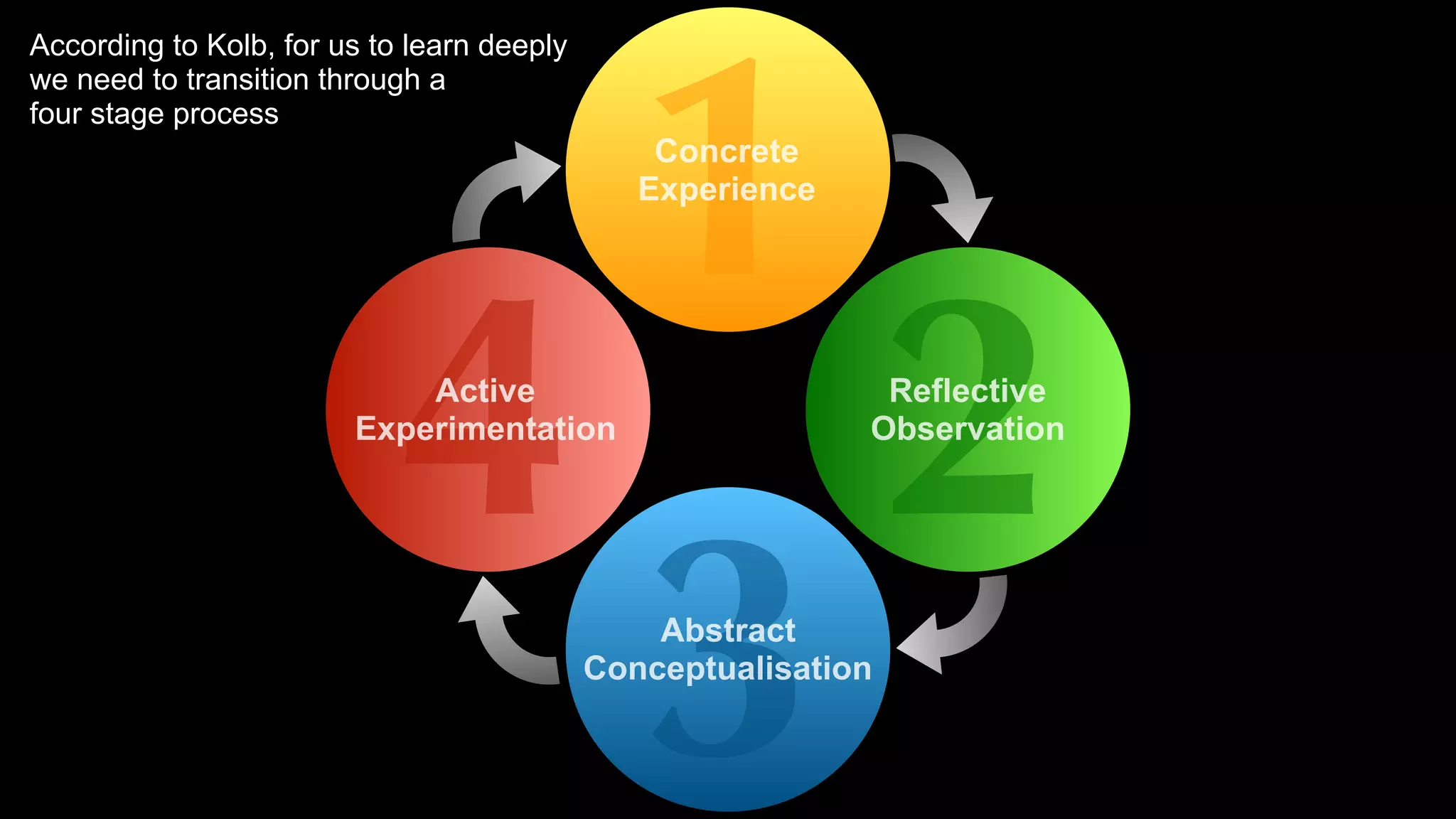
According to Kolb, for us to learn deeply
we need to transition through a
four stage process
1Concrete
Experience
Kolb's cycle begins with a profound experience
The more profound, the more
dramatic our ensuing emotional reaction
2Reflective
Observation
The second stage involves us stepping back from
the experience and reviewing what has occurred
This requires lots of questions being asked and communication channels staying open
3Abstract
Conceptualisation
This is the process of making sense of what has happened, and involves
interpreting our events and comprehending the relationships between them
The final stage of the learning cycle is to consider
how we’re going to put this learning into practice
4Active
Experimentation
Planning enables us to use our recently acquired knowledge to devise
and test new beliefs and behaviours, or refine and revise existing ones
1Do
2Review
3Conclude
4Test
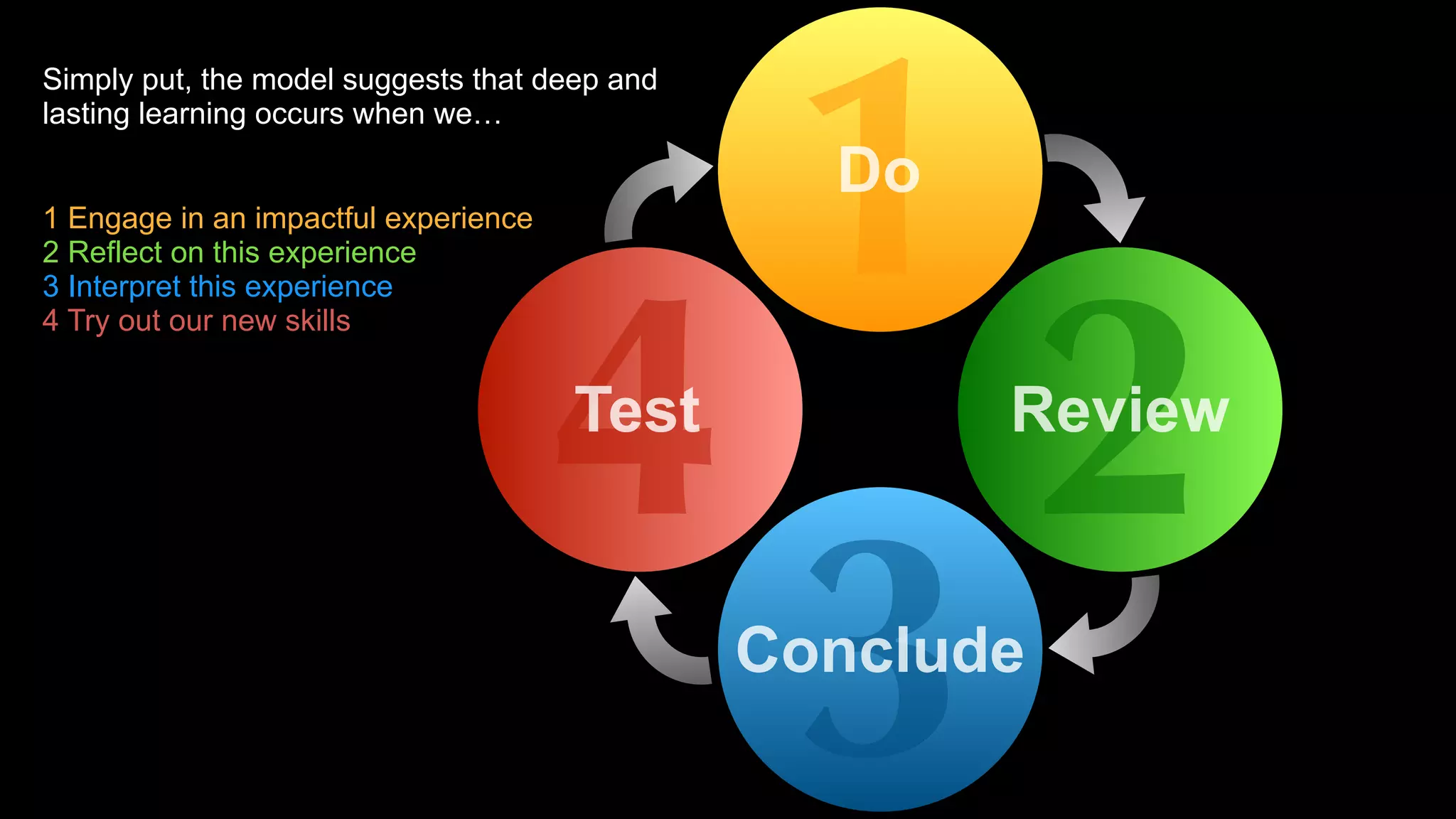
Simply put, the model suggests that deep and
lasting learning occurs when we…
1 Engage in an impactful experience
2 Reflect on this experience
3 Interpret this experience
4 Try out our new skills
Nathan Wood
Nathan Wood is a former professional sportsman and youth
international, mentor/assessor to Level 3 sports coaches, 

and a certified Level 4 master coach.

Now operating a sports performance consultancy, he works with a
diverse range of athletes, coaches, parents, and organisations,
helping them to realise their true sporting potential.
Let’s connect
linkedin.com/in/nathan-wood-coaching
twitter.com/NathanTheoWood
facebook.com/NathanWoodConsulting
instagram.com/nathantheowood
slideshare.net/NathanWood44
w w w . n a t h a n w o o d . c o n s u l t i n g

The Experiential Learning Cycle

  • 1.
  • 2.
    “Learning is theprocess whereby knowledge is created through the transformation of experience.” - David Kolb
  • 3.
  • 4.
    1Concrete Experience Kolb's cycle beginswith a profound experience The more profound, the more dramatic our ensuing emotional reaction
  • 5.
    2Reflective Observation The second stageinvolves us stepping back from the experience and reviewing what has occurred This requires lots of questions being asked and communication channels staying open
  • 6.
    3Abstract Conceptualisation This is theprocess of making sense of what has happened, and involves interpreting our events and comprehending the relationships between them
  • 7.
    The final stageof the learning cycle is to consider how we’re going to put this learning into practice 4Active Experimentation Planning enables us to use our recently acquired knowledge to devise and test new beliefs and behaviours, or refine and revise existing ones
  • 8.
    1Do 2Review 3Conclude 4Test Simply put, themodel suggests that deep and lasting learning occurs when we… 1 Engage in an impactful experience 2 Reflect on this experience 3 Interpret this experience 4 Try out our new skills
  • 9.
    Nathan Wood Nathan Woodis a former professional sportsman and youth international, mentor/assessor to Level 3 sports coaches, and a certified Level 4 master coach. Now operating a sports performance consultancy, he works with a diverse range of athletes, coaches, parents, and organisations, helping them to realise their true sporting potential. Let’s connect linkedin.com/in/nathan-wood-coaching twitter.com/NathanTheoWood facebook.com/NathanWoodConsulting instagram.com/nathantheowood slideshare.net/NathanWood44 w w w . n a t h a n w o o d . c o n s u l t i n g