Kolb's Model
O F E X P E R I E N T I A L L E A R N I N G
Kolb, D. A. (1984). Experiential learning: Experience as the source of learning and development. Prentice-Hall.
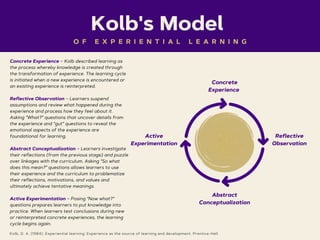
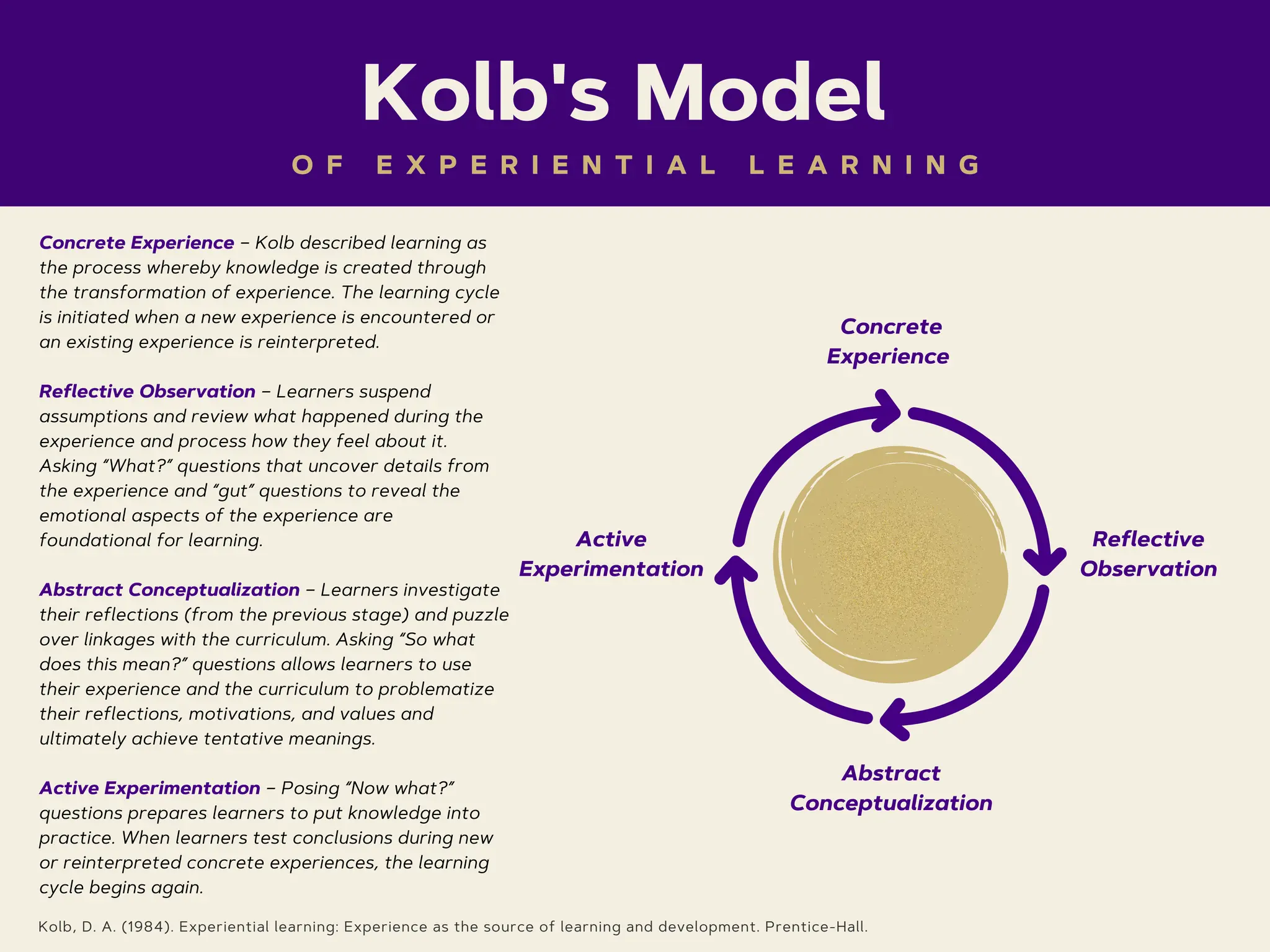
Concrete
Experience
Reflective
Observation
Abstract
Conceptualization
Active
Experimentation
Concrete Experience – Kolb described learning as
the process whereby knowledge is created through
the transformation of experience. The learning cycle
is initiated when a new experience is encountered or
an existing experience is reinterpreted.
Reflective Observation – Learners suspend
assumptions and review what happened during the
experience and process how they feel about it.
Asking “What?” questions that uncover details from
the experience and “gut” questions to reveal the
emotional aspects of the experience are
foundational for learning.
Abstract Conceptualization – Learners investigate
their reflections (from the previous stage) and puzzle
over linkages with the curriculum. Asking “So what
does this mean?” questions allows learners to use
their experience and the curriculum to problematize
their reflections, motivations, and values and
ultimately achieve tentative meanings.
Active Experimentation – Posing “Now what?”
questions prepares learners to put knowledge into
practice. When learners test conclusions during new
or reinterpreted concrete experiences, the learning
cycle begins again.

experiential_learninging_model_-_kolb.pdf

  • 1.
    Kolb's Model O FE X P E R I E N T I A L L E A R N I N G Kolb, D. A. (1984). Experiential learning: Experience as the source of learning and development. Prentice-Hall. Concrete Experience Reflective Observation Abstract Conceptualization Active Experimentation Concrete Experience – Kolb described learning as the process whereby knowledge is created through the transformation of experience. The learning cycle is initiated when a new experience is encountered or an existing experience is reinterpreted. Reflective Observation – Learners suspend assumptions and review what happened during the experience and process how they feel about it. Asking “What?” questions that uncover details from the experience and “gut” questions to reveal the emotional aspects of the experience are foundational for learning. Abstract Conceptualization – Learners investigate their reflections (from the previous stage) and puzzle over linkages with the curriculum. Asking “So what does this mean?” questions allows learners to use their experience and the curriculum to problematize their reflections, motivations, and values and ultimately achieve tentative meanings. Active Experimentation – Posing “Now what?” questions prepares learners to put knowledge into practice. When learners test conclusions during new or reinterpreted concrete experiences, the learning cycle begins again.