1.2 The evolution toward
Cloud Computing
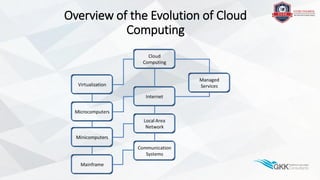
Overview of the Evolution of Cloud
Computing
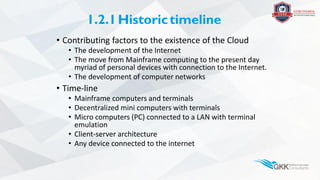
1.2.1Historictimeline
• Contributing factors to the existence of the Cloud
• The development of the Internet
• The move from Mainframe computing to the present day
myriad of personal devices with connection to the Internet.
• The development of computer networks
• Time-line
• Mainframe computers and terminals
• Decentralized mini computers with terminals
• Micro computers (PC) connected to a LAN with terminal
emulation
• Client-server architecture
• Any device connected to the internet
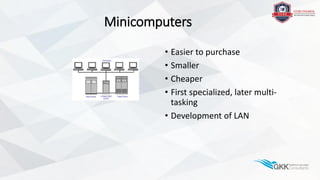
Minicomputers
• Easier to purchase
• Smaller
• Cheaper
• First specialized, later multi-
tasking
• Development of LAN
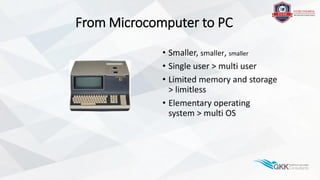
From Microcomputer to PC
• Smaller, smaller, smaller
• Single user > multi user
• Limited memory and storage
> limitless
• Elementary operating
system > multi OS
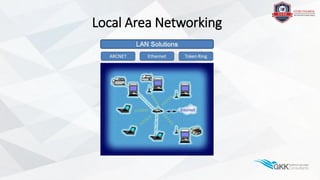
Local Area Networking
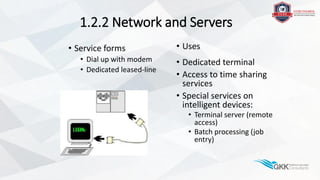
1.2.2 Network and Servers
• Service forms
• Dial up with modem
• Dedicated leased-line
• Uses
• Dedicated terminal
• Access to time sharing
services
• Special services on
intelligent devices:
• Terminal server (remote
access)
• Batch processing (job
entry)
1.2.3 The role of the Internet
• Initial vision: Intergalactic Computer Network
(Licklider, 1963)
• ARPANET (Advanced Research Projects Agency
Network, owned by the US Department of Defense,
1998)
• One protocol: the TCP/IP protocol (1983)
• One global and public network
• Internet services: www, ftp, smtp, http, …
1.2.4 Virtualization
Not NEW!
• Exists since the 1970s in mainframe environments
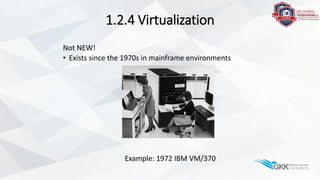
Example: 1972 IBM VM/370
• Concept of the Cloud: virtualized operating
environment & thin clients; Web-based delivery
• Virtualization is the solution for integration of:
• Internet
• Storage
• Processing power
• Key Features are:
• Multiplies the use of high performance computers
• Puts extra/excess capacity to use
• Multi-tenancy
Six types of virtualization
• Access virtualization (access from any device)
• Application virtualization (platform and operating
system independent)
• Processing virtualization (one system becomes many)
• Network virtualization (enables artificial views of the
network)
• Storage virtualization (enables sharing, concealing,
etc.)
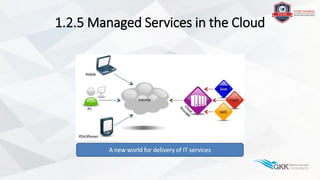
1.2.5 Managed Services in the Cloud
• Advantages:
• Accessibility everywhere
• Shift of focus from IT to core business
• No need for highly trained IT staff
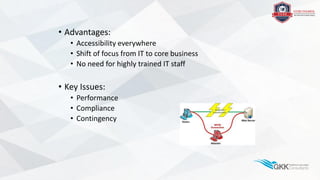
• Key Issues:
• Performance
• Compliance
• Contingency

The Evolution Towards Cloud Computing

  • 1.
    1.2 The evolutiontoward Cloud Computing
  • 2.
    Overview of theEvolution of Cloud Computing
  • 3.
    1.2.1Historictimeline • Contributing factorsto the existence of the Cloud • The development of the Internet • The move from Mainframe computing to the present day myriad of personal devices with connection to the Internet. • The development of computer networks • Time-line • Mainframe computers and terminals • Decentralized mini computers with terminals • Micro computers (PC) connected to a LAN with terminal emulation • Client-server architecture • Any device connected to the internet
  • 4.
    Minicomputers • Easier topurchase • Smaller • Cheaper • First specialized, later multi- tasking • Development of LAN
  • 5.
    From Microcomputer toPC • Smaller, smaller, smaller • Single user > multi user • Limited memory and storage > limitless • Elementary operating system > multi OS
  • 6.
  • 7.
    1.2.2 Network andServers • Service forms • Dial up with modem • Dedicated leased-line • Uses • Dedicated terminal • Access to time sharing services • Special services on intelligent devices: • Terminal server (remote access) • Batch processing (job entry)
  • 8.
    1.2.3 The roleof the Internet • Initial vision: Intergalactic Computer Network (Licklider, 1963) • ARPANET (Advanced Research Projects Agency Network, owned by the US Department of Defense, 1998) • One protocol: the TCP/IP protocol (1983) • One global and public network • Internet services: www, ftp, smtp, http, …
  • 9.
    1.2.4 Virtualization Not NEW! •Exists since the 1970s in mainframe environments Example: 1972 IBM VM/370
  • 10.
    • Concept ofthe Cloud: virtualized operating environment & thin clients; Web-based delivery • Virtualization is the solution for integration of: • Internet • Storage • Processing power • Key Features are: • Multiplies the use of high performance computers • Puts extra/excess capacity to use • Multi-tenancy
  • 11.
    Six types ofvirtualization • Access virtualization (access from any device) • Application virtualization (platform and operating system independent) • Processing virtualization (one system becomes many) • Network virtualization (enables artificial views of the network) • Storage virtualization (enables sharing, concealing, etc.)
  • 12.
  • 13.
    • Advantages: • Accessibilityeverywhere • Shift of focus from IT to core business • No need for highly trained IT staff • Key Issues: • Performance • Compliance • Contingency