Cloud Computing
Fares Jemni
Ali Ben Messaoud
Plan
•   Introduction
•   What is Cloud Computing ?
•   Cloud Computing Approaches
•   Key Technology: Virtualization
•   Conclusion
Introduction
• Cloud Computing is a new and exciting trend which many of
  us, even in the information technology field are, let’s say, a
  “little cloudy about”.

• What is cloud computing?

• Are there different levels or types of cloud computing?

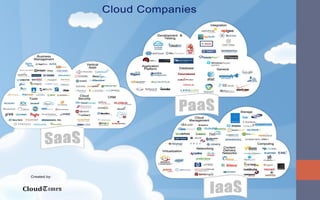
• Who exactly are these cloud computing providers?
What is Cloud Computing?
• Cloud Computing is a general term used to describe a
  new class of network based computing that takes
  place over the Internet,
  • a collection/group of integrated and networked hardware,
    software and Internet infrastructure
  • provides hardware, software and networking services to
    clients
• These platforms (networked hardware) hide the
  complexity to provide a very simple service
What is Cloud Computing?
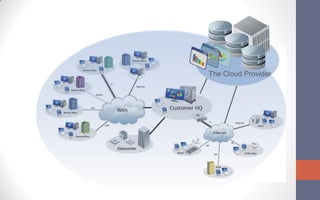
• Anything outside of your system’s firewall and
  includes a pay-per-use or subscription service that
  extends your agencies information technology
  through the internet as the primary access point.
Basic Cloud Characteristics
• “no-need-to-know”
  • details of infrastructure, applications interface with the
    infrastructure via the APIs.
• “flexibility and elasticity”
  • scale up and down allocated resource
• “pay as much as used and needed”
• “always on!, anywhere and any place”
3 Approaches to Cloud Computing
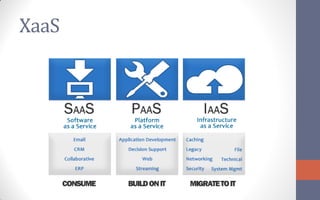
• Software as a service (SaaS) :
  • access to software and its functions remotely through internet
    browsers.
• Platform as a service (PaaS) :
  • computing platform is being delivered as a service, eg. purchase
    and manage hardware remotely.
• Infrastructure as a service (IaaS) :
  • defined as computer infrastructure, such as virtualization, being
    delivered as a service.
  • billed on usage and how much of the resource is used in data
    centers for example.
XaaS
Key Technology: Virtualization
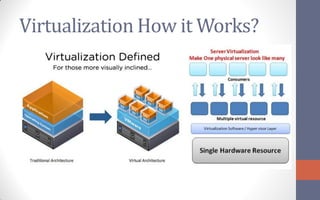
• The ability to run multiple version of something, such as a
  hardware platform, operating system, a storage device or
  network resources on a single physical system and share the
  underlying hardware resources.

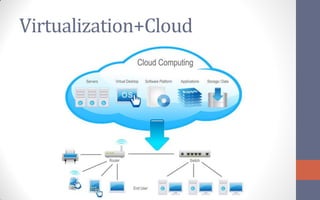
• cloud computing is famous for scalability because of
  virtualization.

• Without virtualization, cloud computing as we know it would
  not exist or would be in a different form.
Virtualize for Efficiency, Higher
Availability, and Lower Costs
• Run multiple operating systems and applications on a single
  computer
• Consolidate hardware to get vastly higher productivity from
  fewer servers
• Save 50% or more on overall IT costs
• Speed and simplify IT management, maintenance, and the
  deployment of new applications
Virtualization How it Works?
Virtualization+Cloud
Conclusion

• Cloud computing is the future.
  •   Cost
  •   Performance
  •   Data and Security
  •   Support
  •   Service Level Agreements

Cloud computing

  • 1.
  • 2.
    Plan • Introduction • What is Cloud Computing ? • Cloud Computing Approaches • Key Technology: Virtualization • Conclusion
  • 3.
    Introduction • Cloud Computingis a new and exciting trend which many of us, even in the information technology field are, let’s say, a “little cloudy about”. • What is cloud computing? • Are there different levels or types of cloud computing? • Who exactly are these cloud computing providers?
  • 4.
    What is CloudComputing? • Cloud Computing is a general term used to describe a new class of network based computing that takes place over the Internet, • a collection/group of integrated and networked hardware, software and Internet infrastructure • provides hardware, software and networking services to clients • These platforms (networked hardware) hide the complexity to provide a very simple service
  • 5.
    What is CloudComputing? • Anything outside of your system’s firewall and includes a pay-per-use or subscription service that extends your agencies information technology through the internet as the primary access point.
  • 7.
    Basic Cloud Characteristics •“no-need-to-know” • details of infrastructure, applications interface with the infrastructure via the APIs. • “flexibility and elasticity” • scale up and down allocated resource • “pay as much as used and needed” • “always on!, anywhere and any place”
  • 8.
    3 Approaches toCloud Computing • Software as a service (SaaS) : • access to software and its functions remotely through internet browsers. • Platform as a service (PaaS) : • computing platform is being delivered as a service, eg. purchase and manage hardware remotely. • Infrastructure as a service (IaaS) : • defined as computer infrastructure, such as virtualization, being delivered as a service. • billed on usage and how much of the resource is used in data centers for example.
  • 9.
  • 11.
    Key Technology: Virtualization •The ability to run multiple version of something, such as a hardware platform, operating system, a storage device or network resources on a single physical system and share the underlying hardware resources. • cloud computing is famous for scalability because of virtualization. • Without virtualization, cloud computing as we know it would not exist or would be in a different form.
  • 12.
    Virtualize for Efficiency,Higher Availability, and Lower Costs • Run multiple operating systems and applications on a single computer • Consolidate hardware to get vastly higher productivity from fewer servers • Save 50% or more on overall IT costs • Speed and simplify IT management, maintenance, and the deployment of new applications
  • 13.
  • 14.
  • 15.
    Conclusion • Cloud computingis the future. • Cost • Performance • Data and Security • Support • Service Level Agreements