THE ENDOCRINE SYSTEM 2 THE HORMONES
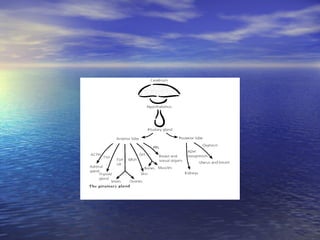
Hormones produced by the hypothalamus The secretion of hormones from the  anterior pituitary  is controlled by the production of hormones by the hypothalamus. Although there are a number of different hormones they can be split into two main types:
ANTERIOR PITUITARY hormones that tell the pituitary to switch on production of a hormone (a  releasing  hormone ); and  hormones that tell the pituitary to switch off production of a hormone (an  inhibiting  hormone ).
Posterior pituitary The hormones secreted by the  posterior pituitary  are produced in the hypothalamus and then passed down a tube between the hypothalamus and the pituitary (the pituitary stalk) when they are then secreted into the blood.
 
ALCOHOL CONSUMPTION Alcohol interferes with the release at ADH from the pituitary gland. Therefore, drinking alcohol leads to an increase in the urine produced and so a person will need to urinate more frequently. Drinking a great deal of alcohol can lead to dehydration, which is largely responsible for the headache the following morning.
The Pineal Gland The pineal gland is situated in the brain and releases a hormone called  melatonin.  More melatonin is released   when a person is in darkness and this results in sleepiness. In bright sunlight less melatonin is produced, so there is a lack of sleepiness. During sleep the melatonin level is high and then decreases to a low level again before awakening. Thus melatonin helps to control body rhythms.
The Thyroid The thyroid is made up of two lobes and is found in front of the throat, just below the voice box. It produces the hormones  thyroxine, triiodothyronine and calcitionin. Iodine  is needed by the thyroid to produce these hormones. The body obtains iodine from the food we eat. Lack of iodine causes the thyroid gland to enlarge, a condition known as  goitre .
The Thyroid Thyroxine  and  triiodothyronine  control the body’s metabolism and affects all tissues of the body.  It is the sum of all the chemical processes going on inside the body, especially the conversion of glucose into energy by the cells — in other words, the burning of calories to provide energy for the body. Thyroxine helps to control how energetic a person is by stimulating cells to burn more or less glucose as needed.  Calcitionin helps in the regulation of calcium and phosphorus levels in the body
The Parathyroids The four tiny parathyroid glands can he found embedded on the back of the thyroid gland. They produce the hormone  parathormone The Parathyroids are sensitive to the levels of calcium in the blood. Calcium is important as it is needed for muscle contraction transmission of nerve impulses and blood clotting. The main function of parathormone is to control calcium levels in the blood to maintain normal limits.  If calcium levels are low, parathormone will cause calcium to be taken from bones.
The Thymus The thymus gland is situated in the thorax  behind the sternum. It is made up of lymphoid tissue and in an infant it is large, but after puberty it begins to waste away. The thymus is thought to act as a brake on sexual development until puberty. It releases hormones, one of which is called  thymosin.  Thymosin is involved with the production of lymphocytes, which help fight against viruses and other infections in the body.
The adrenal Glands The adrenal glands are found   on   top of each kidney They are made of two parts, the cortex and the medulla The Cortex is the outside and the medulla  the inner part of the gland
Adrenal Cortex The adrenal Cortex is essential to life and plays an important role in states of stress. It is known that the adrenal cortex releases over 50 hormones. All of these hormones are steroids and are produced from a fatty substance called  cholesterol.  They are grouped into three Categories, sex corticoids glucocorticoids and mineral corticoids according to the type of action they are involved in.
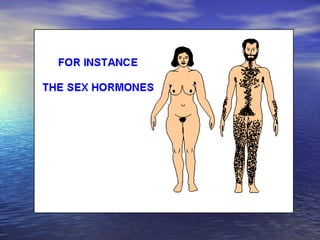
Sex Corticoids Sex corticoids help control the changes in males and females during puberty. The female sex hormones oestrogen and male hormones androgens are produced in small amounts from this gland.
Glucocorticoids The glucocorticoids help regulate nutrient levels within the blood. One main glucocorticoid is called  cortisol , also known as hydrocortisone. Adrenalin is quickly released from the adrenal medulla whenever danger threatens. Cortisol is released a little while later and prepares the body for the after-effects of danger. Cortisol helps reduce the feelings of pain, which is why people who are severely injured may feel no pain until some time later.
Mineral corticoids Mineral corticoids help to maintain the right balance of the minerals such as sodium (salt) and potassium in the body. One of the mineral corticoids is called  aldosterone  and is released if sodium levels drop in the body, e.g. through sweating a lot.  Oversecretion of aldosterone causes increased levels of sodium, which can lead to fluid retention (oedema).
Adrenal medulla The adrenal medulla produces hormones called  adrenalin  and  noradrenalin , which together prepare the body for action, known as the fight or flight response.  In response to stress, such as being chased by a mad cow, the hypothalamus sends a message via sympathetic nerves to the adrenal glands. Adrenalin is released and is distributed quickly by the blood. Noradrenalin is a neurotransmitter of the sympathetic nervous system and exerts the same effects as adrenalin in preparation for fight or flight.
The Pancreas To maintain the balance of sugar in the blood the  islets of Langerhans  in the pancreas release hormones. The islets of Langerhans are sensitive to sugar levels in the body. One of the hormones called  insulin  is released when the blood sugar levels are too high. Insulin causes the liver and muscles to store glucose in the form of glycogen. (Lots of glucose molecules joined together). This helps to bring the blood sugar levels down. If sugar   levels are too low in the blood a hormone called  glucagon  is released by the islets of Langerhans. It causes the liver and muscles to release glucose into the bloodstream to help restore blood sugar levels.
The ovaries The ovaries are a pair of almond-shaped organs found within the pelvis, one on either side of the womb. They produce the female hormones  oestrogen  and  progesterone , which are responsible for all female secondary sexual characteristics such as breasts, a female body shape and ova (egg) production.
Menstrual cycle During a menstrual cycle,  oestrogen  causes the lining of the uterus to thicken and grow. It also stimulates the release of an egg from the ovary. Progesterone  maintains the lining of the uterus. When the levels of progesterone fall, the lining then breaks down and is shed in the menstrual flow.
The Testes Testes are found in the groin area of the male in a sac called the scrotum.  The testes produce the hormone  testosterone , which is responsible for all male secondary sexual characteristics at puberty, such as, the voice breaking (deep voice) and muscle development, facial, pubic, axillary, abdominal and chest hair. The testes also contain fine tubes in which sperm are produced when stimulated by follicle stimulating hormone.
 
THE END

The Endocrine System

  • 1.
    THE ENDOCRINE SYSTEM2 THE HORMONES
  • 2.
    Hormones produced bythe hypothalamus The secretion of hormones from the anterior pituitary is controlled by the production of hormones by the hypothalamus. Although there are a number of different hormones they can be split into two main types:
  • 3.
    ANTERIOR PITUITARY hormonesthat tell the pituitary to switch on production of a hormone (a releasing hormone ); and hormones that tell the pituitary to switch off production of a hormone (an inhibiting hormone ).
  • 4.
    Posterior pituitary Thehormones secreted by the posterior pituitary are produced in the hypothalamus and then passed down a tube between the hypothalamus and the pituitary (the pituitary stalk) when they are then secreted into the blood.
  • 5.
  • 6.
    ALCOHOL CONSUMPTION Alcoholinterferes with the release at ADH from the pituitary gland. Therefore, drinking alcohol leads to an increase in the urine produced and so a person will need to urinate more frequently. Drinking a great deal of alcohol can lead to dehydration, which is largely responsible for the headache the following morning.
  • 7.
    The Pineal GlandThe pineal gland is situated in the brain and releases a hormone called melatonin. More melatonin is released when a person is in darkness and this results in sleepiness. In bright sunlight less melatonin is produced, so there is a lack of sleepiness. During sleep the melatonin level is high and then decreases to a low level again before awakening. Thus melatonin helps to control body rhythms.
  • 8.
    The Thyroid Thethyroid is made up of two lobes and is found in front of the throat, just below the voice box. It produces the hormones thyroxine, triiodothyronine and calcitionin. Iodine is needed by the thyroid to produce these hormones. The body obtains iodine from the food we eat. Lack of iodine causes the thyroid gland to enlarge, a condition known as goitre .
  • 9.
    The Thyroid Thyroxine and triiodothyronine control the body’s metabolism and affects all tissues of the body. It is the sum of all the chemical processes going on inside the body, especially the conversion of glucose into energy by the cells — in other words, the burning of calories to provide energy for the body. Thyroxine helps to control how energetic a person is by stimulating cells to burn more or less glucose as needed. Calcitionin helps in the regulation of calcium and phosphorus levels in the body
  • 10.
    The Parathyroids Thefour tiny parathyroid glands can he found embedded on the back of the thyroid gland. They produce the hormone parathormone The Parathyroids are sensitive to the levels of calcium in the blood. Calcium is important as it is needed for muscle contraction transmission of nerve impulses and blood clotting. The main function of parathormone is to control calcium levels in the blood to maintain normal limits. If calcium levels are low, parathormone will cause calcium to be taken from bones.
  • 11.
    The Thymus Thethymus gland is situated in the thorax behind the sternum. It is made up of lymphoid tissue and in an infant it is large, but after puberty it begins to waste away. The thymus is thought to act as a brake on sexual development until puberty. It releases hormones, one of which is called thymosin. Thymosin is involved with the production of lymphocytes, which help fight against viruses and other infections in the body.
  • 12.
    The adrenal GlandsThe adrenal glands are found on top of each kidney They are made of two parts, the cortex and the medulla The Cortex is the outside and the medulla the inner part of the gland
  • 13.
    Adrenal Cortex Theadrenal Cortex is essential to life and plays an important role in states of stress. It is known that the adrenal cortex releases over 50 hormones. All of these hormones are steroids and are produced from a fatty substance called cholesterol. They are grouped into three Categories, sex corticoids glucocorticoids and mineral corticoids according to the type of action they are involved in.
  • 14.
    Sex Corticoids Sexcorticoids help control the changes in males and females during puberty. The female sex hormones oestrogen and male hormones androgens are produced in small amounts from this gland.
  • 15.
    Glucocorticoids The glucocorticoidshelp regulate nutrient levels within the blood. One main glucocorticoid is called cortisol , also known as hydrocortisone. Adrenalin is quickly released from the adrenal medulla whenever danger threatens. Cortisol is released a little while later and prepares the body for the after-effects of danger. Cortisol helps reduce the feelings of pain, which is why people who are severely injured may feel no pain until some time later.
  • 16.
    Mineral corticoids Mineralcorticoids help to maintain the right balance of the minerals such as sodium (salt) and potassium in the body. One of the mineral corticoids is called aldosterone and is released if sodium levels drop in the body, e.g. through sweating a lot. Oversecretion of aldosterone causes increased levels of sodium, which can lead to fluid retention (oedema).
  • 17.
    Adrenal medulla Theadrenal medulla produces hormones called adrenalin and noradrenalin , which together prepare the body for action, known as the fight or flight response. In response to stress, such as being chased by a mad cow, the hypothalamus sends a message via sympathetic nerves to the adrenal glands. Adrenalin is released and is distributed quickly by the blood. Noradrenalin is a neurotransmitter of the sympathetic nervous system and exerts the same effects as adrenalin in preparation for fight or flight.
  • 18.
    The Pancreas Tomaintain the balance of sugar in the blood the islets of Langerhans in the pancreas release hormones. The islets of Langerhans are sensitive to sugar levels in the body. One of the hormones called insulin is released when the blood sugar levels are too high. Insulin causes the liver and muscles to store glucose in the form of glycogen. (Lots of glucose molecules joined together). This helps to bring the blood sugar levels down. If sugar levels are too low in the blood a hormone called glucagon is released by the islets of Langerhans. It causes the liver and muscles to release glucose into the bloodstream to help restore blood sugar levels.
  • 19.
    The ovaries Theovaries are a pair of almond-shaped organs found within the pelvis, one on either side of the womb. They produce the female hormones oestrogen and progesterone , which are responsible for all female secondary sexual characteristics such as breasts, a female body shape and ova (egg) production.
  • 20.
    Menstrual cycle Duringa menstrual cycle, oestrogen causes the lining of the uterus to thicken and grow. It also stimulates the release of an egg from the ovary. Progesterone maintains the lining of the uterus. When the levels of progesterone fall, the lining then breaks down and is shed in the menstrual flow.
  • 21.
    The Testes Testesare found in the groin area of the male in a sac called the scrotum. The testes produce the hormone testosterone , which is responsible for all male secondary sexual characteristics at puberty, such as, the voice breaking (deep voice) and muscle development, facial, pubic, axillary, abdominal and chest hair. The testes also contain fine tubes in which sperm are produced when stimulated by follicle stimulating hormone.
  • 22.
  • 23.