Hormones
UNIT XI
MISS HADISA
BIOCHEMISTRY
QADRI COLLEGE OF HEALTH SCIENCES
Hormones
organic substances, produced in small "amounts
by specific tissues (endocrine glands),
secreted into the blood stream, control the
metabolic and biological activities in the target
cells"
Chemical Messenger
Hormones may be regarded as the chemical
messengers involved in the transfer of
information form one tissue to another and
from cell to cell.
Hormones Help In The
Regulation Of
Metabolism
Contraction Of Cardiac & Smooth Muscle
Glandular Secretion
Some Immune Functions
Growth & Development
Reproduction
Extracellular Fluid
Hormones Receptors
Hormone receptors are protein molecules found
on the surface or inside cells that act as
"receiving stations" for hormones. When a
hormone binds to its specific receptor, it
initiates a series of biochemical reactions that
regulate various cellular processes and
functions.
Endocrine System
The endocrine system is a collection of glands
that produce and release hormones into the
bloodstream to regulate various bodily
functions and maintain homeostasis.
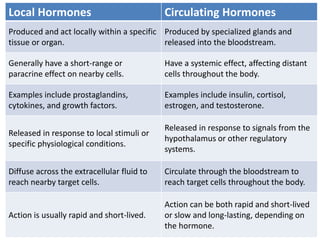
Local Hormones Circulating Hormones
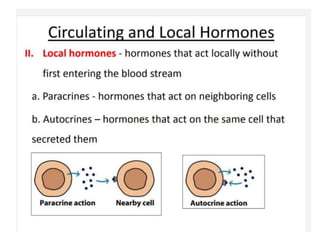
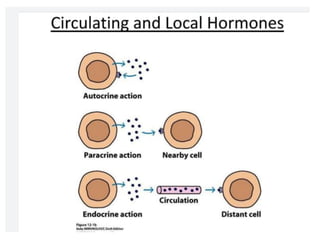
Produced and act locally within a specific
tissue or organ.
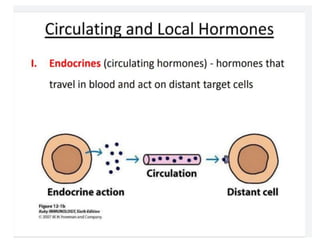
Produced by specialized glands and
released into the bloodstream.
Generally have a short-range or
paracrine effect on nearby cells.
Have a systemic effect, affecting distant
cells throughout the body.
Examples include prostaglandins,
cytokines, and growth factors.
Examples include insulin, cortisol,
estrogen, and testosterone.
Released in response to local stimuli or
specific physiological conditions.
Released in response to signals from the
hypothalamus or other regulatory
systems.
Diffuse across the extracellular fluid to
reach nearby target cells.
Circulate through the bloodstream to
reach target cells throughout the body.
Action is usually rapid and short-lived.
Action can be both rapid and short-lived
or slow and long-lasting, depending on
the hormone.
Lipid-soluble Hormones
• Steroid Hormones:
testosterone, estrogen, and progesterone.
• Thyroid Hormones:
triiodothyronine (T3) and thyroxine (T4).
• Vitamin D Hormone:
calcitriol.
These hormones are lipid-soluble, meaning they can
easily cross cell membranes and bind to intracellular
receptors to initiate their physiological effects.
Water-soluble Hormones
1. amines
epinephrine
norepinephrine
melatonin
seratonin
2. peptides, proteins, and glycoproteins
insulin
growth hormone
ADH
3. Eicosanoids
prostaglandins
leukotrienes
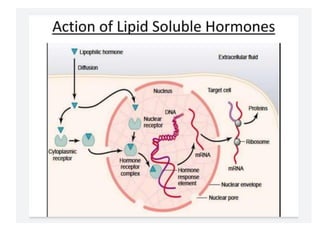
Action of Lipid Soluble Hormones
Lipid-soluble hormones bind to and activate
receptors within cells
The activated receptors then alter gene
expression which results in the formation of
new proteins.
The new proteins alter the cells activity and
result in the physiological responses of those
hormones.
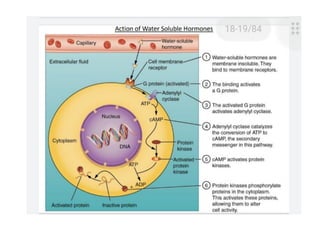
Action of Water Soluble Hormones
Water-soluble hormones alter cell functions by
activating plasma membrane receptors, which
set off a cascade of events inside the cell
First messenger - the water soluble hormone
that binds to the cell membrane receptor
Second messenger - a chemical activated
inside the target cell -Cyclic AMP - a typical
second messenger
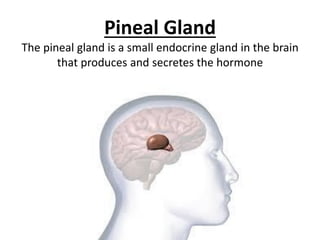
Pineal Gland
The pineal gland is a small endocrine gland in the brain
that produces and secretes the hormone
Pineal Gland
• Pineal gland regulates sleep-wake cycles through
melatonin secretion.
• It plays a role in maintaining the body's circadian
rhythm.
• Pineal gland may influence reproductive
hormone production.
• It is associated with the production of serotonin,
a neurotransmitter.
• Pineal gland has connections to spiritual and
mystical experiences.
Pancreas
• Endocrine and exocrine organ that regulates
blood sugar (glucose) levels.
• Produces insulin and glucagon to control
glucose metabolism.
• Located in the abdomen, behind the stomach.
• Helps in digestion by secreting digestive
enzymes.
• Plays a vital role in the development of
diabetes mellitus.
Pancreas
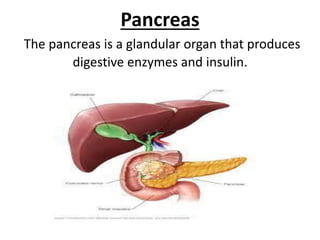
The pancreas is a glandular organ that produces
digestive enzymes and insulin.
Names Of Pancreatic Hormones
insulin,
glucagon,
somatostatin,
pancreatic polypeptide.
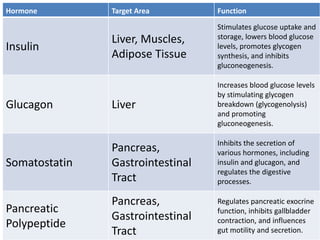
Hormone Target Area Function
Insulin
Liver, Muscles,
Adipose Tissue
Stimulates glucose uptake and
storage, lowers blood glucose
levels, promotes glycogen
synthesis, and inhibits
gluconeogenesis.
Glucagon Liver
Increases blood glucose levels
by stimulating glycogen
breakdown (glycogenolysis)
and promoting
gluconeogenesis.
Somatostatin
Pancreas,
Gastrointestinal
Tract
Inhibits the secretion of
various hormones, including
insulin and glucagon, and
regulates the digestive
processes.
Pancreatic
Polypeptide
Pancreas,
Gastrointestinal
Tract
Regulates pancreatic exocrine
function, inhibits gallbladder
contraction, and influences
gut motility and secretion.
Diabetes Mellitus
Since insulin play the crucial role in regulating
the metabolism of carbohydrates, fats and
protein, so any problem in the insulin either
insufficient production or insufficient
utilization, cause a serious chronic metabolic
problem known as diabetes mellitus
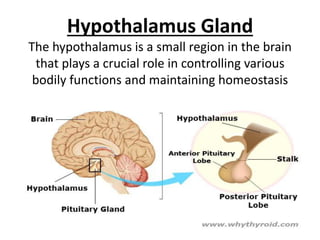
Hypothalamus Gland
The hypothalamus is a small region in the brain
that plays a crucial role in controlling various
bodily functions and maintaining homeostasis
Hormones Of Hypothalamus Gland
1-Thyrotropin-releasing hormone (TRH)
2-Corticotropin-releasing hormone (CRH)
3-Gonadotropin-releasing Hormone( GnRH)
4- Prolactin release-inhibiting hormone (PRIH)
5-Growth hormone-releasing hormone (GRH)
6-Growth hormone release-inhibiting hormone
(GRIH)
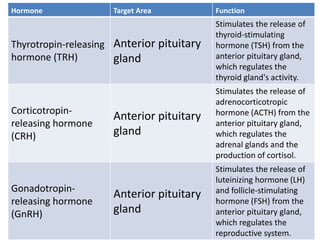
Hormone Target Area Function
Thyrotropin-releasing
hormone (TRH)
Anterior pituitary
gland
Stimulates the release of
thyroid-stimulating
hormone (TSH) from the
anterior pituitary gland,
which regulates the
thyroid gland's activity.
Corticotropin-
releasing hormone
(CRH)
Anterior pituitary
gland
Stimulates the release of
adrenocorticotropic
hormone (ACTH) from the
anterior pituitary gland,
which regulates the
adrenal glands and the
production of cortisol.
Gonadotropin-
releasing hormone
(GnRH)
Anterior pituitary
gland
Stimulates the release of
luteinizing hormone (LH)
and follicle-stimulating
hormone (FSH) from the
anterior pituitary gland,
which regulates the
reproductive system.
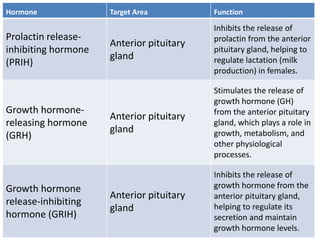
Hormone Target Area Function
Prolactin release-
inhibiting hormone
(PRIH)
Anterior pituitary
gland
Inhibits the release of
prolactin from the anterior
pituitary gland, helping to
regulate lactation (milk
production) in females.
Growth hormone-
releasing hormone
(GRH)
Anterior pituitary
gland
Stimulates the release of
growth hormone (GH)
from the anterior pituitary
gland, which plays a role in
growth, metabolism, and
other physiological
processes.
Growth hormone
release-inhibiting
hormone (GRIH)
Anterior pituitary
gland
Inhibits the release of
growth hormone from the
anterior pituitary gland,
helping to regulate its
secretion and maintain
growth hormone levels.
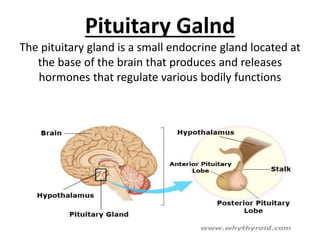
Pituitary Galnd
The pituitary gland is a small endocrine gland located at
the base of the brain that produces and releases
hormones that regulate various bodily functions
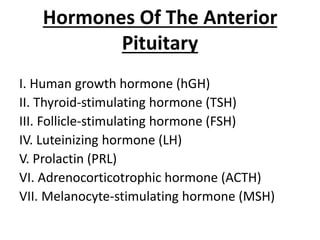
Hormones Of The Anterior
Pituitary
I. Human growth hormone (hGH)
II. Thyroid-stimulating hormone (TSH)
III. Follicle-stimulating hormone (FSH)
IV. Luteinizing hormone (LH)
V. Prolactin (PRL)
VI. Adrenocorticotrophic hormone (ACTH)
VII. Melanocyte-stimulating hormone (MSH)
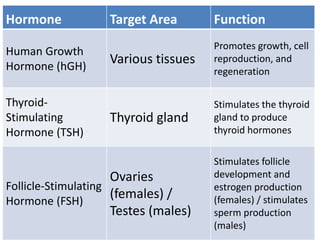
Hormone Target Area Function
Human Growth
Hormone (hGH)
Various tissues
Promotes growth, cell
reproduction, and
regeneration
Thyroid-
Stimulating
Hormone (TSH)
Thyroid gland
Stimulates the thyroid
gland to produce
thyroid hormones
Follicle-Stimulating
Hormone (FSH)
Ovaries
(females) /
Testes (males)
Stimulates follicle
development and
estrogen production
(females) / stimulates
sperm production
(males)
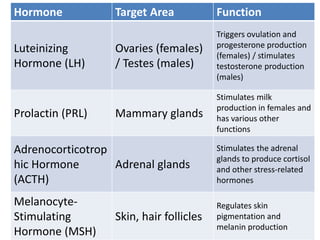
Hormone Target Area Function
Luteinizing
Hormone (LH)
Ovaries (females)
/ Testes (males)
Triggers ovulation and
progesterone production
(females) / stimulates
testosterone production
(males)
Prolactin (PRL) Mammary glands
Stimulates milk
production in females and
has various other
functions
Adrenocorticotrop
hic Hormone
(ACTH)
Adrenal glands
Stimulates the adrenal
glands to produce cortisol
and other stress-related
hormones
Melanocyte-
Stimulating
Hormone (MSH)
Skin, hair follicles
Regulates skin
pigmentation and
melanin production
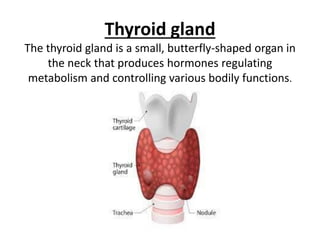
Thyroid gland
The thyroid gland is a small, butterfly-shaped organ in
the neck that produces hormones regulating
metabolism and controlling various bodily functions.
Thyroid Hormones
Thyroid hormones are synthesized from iodine
and tyrosine within a large glycoprotein
molecule called thyroglobulin (TGB)
Thyroxine (T4)
Triiodothyronine (T3)
Calcitonin (CT)
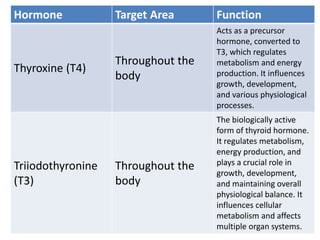
Hormone Target Area Function
Thyroxine (T4)
Throughout the
body
Acts as a precursor
hormone, converted to
T3, which regulates
metabolism and energy
production. It influences
growth, development,
and various physiological
processes.
Triiodothyronine
(T3)
Throughout the
body
The biologically active
form of thyroid hormone.
It regulates metabolism,
energy production, and
plays a crucial role in
growth, development,
and maintaining overall
physiological balance. It
influences cellular
metabolism and affects
multiple organ systems.
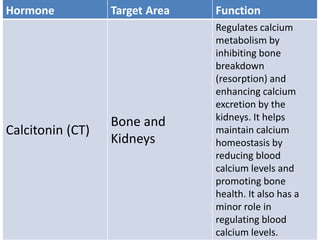
Hormone Target Area Function
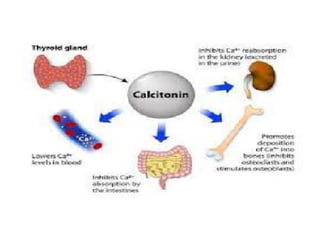
Calcitonin (CT)
Bone and
Kidneys
Regulates calcium
metabolism by
inhibiting bone
breakdown
(resorption) and
enhancing calcium
excretion by the
kidneys. It helps
maintain calcium
homeostasis by
reducing blood
calcium levels and
promoting bone
health. It also has a
minor role in
regulating blood
calcium levels.
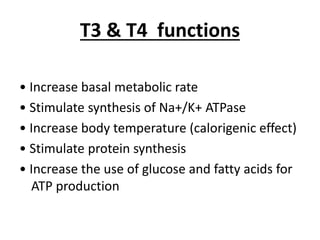
T3 & T4 functions
• Increase basal metabolic rate
• Stimulate synthesis of Na+/K+ ATPase
• Increase body temperature (calorigenic effect)
• Stimulate protein synthesis
• Increase the use of glucose and fatty acids for
ATP production
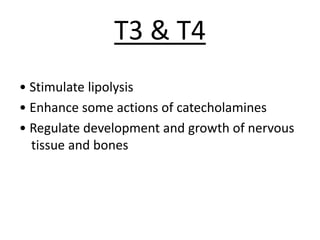
T3 & T4
• Stimulate lipolysis
• Enhance some actions of catecholamines
• Regulate development and growth of nervous
tissue and bones
Calcitonin Functions
It is responsible for building of bone &
stops resorption of bone (lowers
blood levels of Calcium)
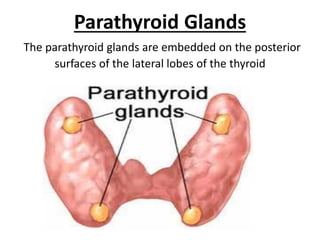
Parathyroid Glands
The parathyroid glands are embedded on the posterior
surfaces of the lateral lobes of the thyroid
Hormones Of Parathyroid Gland
• parathyroid hormone (PTH)
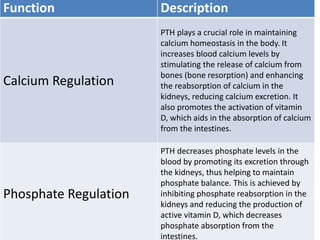
Function Description
Calcium Regulation
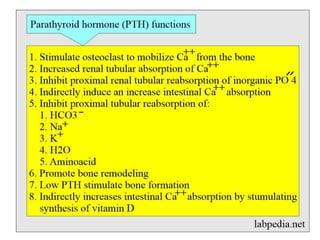
PTH plays a crucial role in maintaining
calcium homeostasis in the body. It
increases blood calcium levels by
stimulating the release of calcium from
bones (bone resorption) and enhancing
the reabsorption of calcium in the
kidneys, reducing calcium excretion. It
also promotes the activation of vitamin
D, which aids in the absorption of calcium
from the intestines.
Phosphate Regulation
PTH decreases phosphate levels in the
blood by promoting its excretion through
the kidneys, thus helping to maintain
phosphate balance. This is achieved by
inhibiting phosphate reabsorption in the
kidneys and reducing the production of
active vitamin D, which decreases
phosphate absorption from the
intestines.
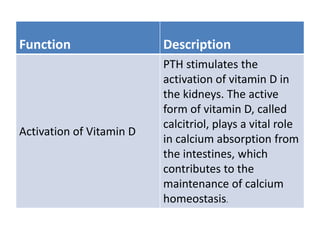
Function Description
Activation of Vitamin D
PTH stimulates the
activation of vitamin D in
the kidneys. The active
form of vitamin D, called
calcitriol, plays a vital role
in calcium absorption from
the intestines, which
contributes to the
maintenance of calcium
homeostasis.
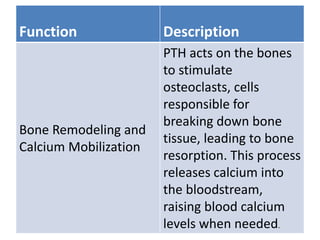
Function Description
Bone Remodeling and
Calcium Mobilization
PTH acts on the bones
to stimulate
osteoclasts, cells
responsible for
breaking down bone
tissue, leading to bone
resorption. This process
releases calcium into
the bloodstream,
raising blood calcium
levels when needed.
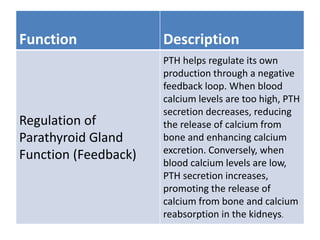
Function Description
Regulation of
Parathyroid Gland
Function (Feedback)
PTH helps regulate its own
production through a negative
feedback loop. When blood
calcium levels are too high, PTH
secretion decreases, reducing
the release of calcium from
bone and enhancing calcium
excretion. Conversely, when
blood calcium levels are low,
PTH secretion increases,
promoting the release of
calcium from bone and calcium
reabsorption in the kidneys.
Parathyroid hormone (PTH) regulates the
homeostasis of calcium and phosphate
• increase blood calcium level
• decrease blood phosphate level
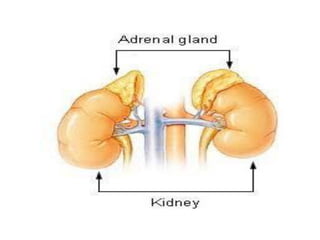
Adrenal Glands
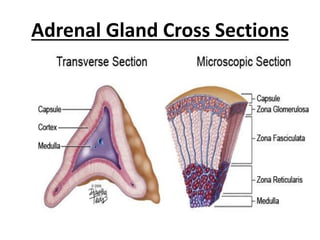
• The adrenal glands are located superior to the
kidneys • Consists of an outer cortex and an
inner medulla
Adrenal Gland Cross Sections
Adrenal Gland
• Cortex produces 3 different types of
hormones from 3 zones of cortex
• Medulla produces epinephrine &
norepinephrine
The Zona Glomerulosa
(Outer Zone)
• secretes mineralocorticoids (aldosterone)
• increase reabsorption of Na+ with Cl- ,
bicarbonate and H2O • It promotes excretion
of K+ and H+
The zona fasciculata
(middle zone)
• secretes Glucocorticoids (cortisol)
• increase rate of protein catabolism & lipolysis
• conversion of amino acids to glucose
• provide resistance to stress by making nutrients
available for ATP production
• raise blood pressure by vasoconstriction
• anti-inflammatory Adrenal Glands The zona
reticularis (inner zone)
• secretes Androgens
• insignificant in males
• in females is converted to estrogen in
postmenopausal Adren
The zona reticularis
(inner zone)
• secretes Androgens
• insignificant in males
• in females is converted to estrogen in
postmenopausal
Unit 6 biochemistry Hormones.pdf presentation

Unit 6 biochemistry Hormones.pdf presentation

  • 1.
  • 2.
    Hormones organic substances, producedin small "amounts by specific tissues (endocrine glands), secreted into the blood stream, control the metabolic and biological activities in the target cells"
  • 3.
    Chemical Messenger Hormones maybe regarded as the chemical messengers involved in the transfer of information form one tissue to another and from cell to cell.
  • 4.
    Hormones Help InThe Regulation Of Metabolism Contraction Of Cardiac & Smooth Muscle Glandular Secretion Some Immune Functions Growth & Development Reproduction Extracellular Fluid
  • 5.
    Hormones Receptors Hormone receptorsare protein molecules found on the surface or inside cells that act as "receiving stations" for hormones. When a hormone binds to its specific receptor, it initiates a series of biochemical reactions that regulate various cellular processes and functions.
  • 6.
    Endocrine System The endocrinesystem is a collection of glands that produce and release hormones into the bloodstream to regulate various bodily functions and maintain homeostasis.
  • 7.
    Local Hormones CirculatingHormones Produced and act locally within a specific tissue or organ. Produced by specialized glands and released into the bloodstream. Generally have a short-range or paracrine effect on nearby cells. Have a systemic effect, affecting distant cells throughout the body. Examples include prostaglandins, cytokines, and growth factors. Examples include insulin, cortisol, estrogen, and testosterone. Released in response to local stimuli or specific physiological conditions. Released in response to signals from the hypothalamus or other regulatory systems. Diffuse across the extracellular fluid to reach nearby target cells. Circulate through the bloodstream to reach target cells throughout the body. Action is usually rapid and short-lived. Action can be both rapid and short-lived or slow and long-lasting, depending on the hormone.
  • 11.
    Lipid-soluble Hormones • SteroidHormones: testosterone, estrogen, and progesterone. • Thyroid Hormones: triiodothyronine (T3) and thyroxine (T4). • Vitamin D Hormone: calcitriol. These hormones are lipid-soluble, meaning they can easily cross cell membranes and bind to intracellular receptors to initiate their physiological effects.
  • 12.
    Water-soluble Hormones 1. amines epinephrine norepinephrine melatonin seratonin 2.peptides, proteins, and glycoproteins insulin growth hormone ADH
  • 13.
  • 14.
    Action of LipidSoluble Hormones Lipid-soluble hormones bind to and activate receptors within cells The activated receptors then alter gene expression which results in the formation of new proteins. The new proteins alter the cells activity and result in the physiological responses of those hormones.
  • 16.
    Action of WaterSoluble Hormones Water-soluble hormones alter cell functions by activating plasma membrane receptors, which set off a cascade of events inside the cell First messenger - the water soluble hormone that binds to the cell membrane receptor Second messenger - a chemical activated inside the target cell -Cyclic AMP - a typical second messenger
  • 18.
    Pineal Gland The pinealgland is a small endocrine gland in the brain that produces and secretes the hormone
  • 19.
    Pineal Gland • Pinealgland regulates sleep-wake cycles through melatonin secretion. • It plays a role in maintaining the body's circadian rhythm. • Pineal gland may influence reproductive hormone production. • It is associated with the production of serotonin, a neurotransmitter. • Pineal gland has connections to spiritual and mystical experiences.
  • 20.
    Pancreas • Endocrine andexocrine organ that regulates blood sugar (glucose) levels. • Produces insulin and glucagon to control glucose metabolism. • Located in the abdomen, behind the stomach. • Helps in digestion by secreting digestive enzymes. • Plays a vital role in the development of diabetes mellitus.
  • 21.
    Pancreas The pancreas isa glandular organ that produces digestive enzymes and insulin.
  • 22.
    Names Of PancreaticHormones insulin, glucagon, somatostatin, pancreatic polypeptide.
  • 23.
    Hormone Target AreaFunction Insulin Liver, Muscles, Adipose Tissue Stimulates glucose uptake and storage, lowers blood glucose levels, promotes glycogen synthesis, and inhibits gluconeogenesis. Glucagon Liver Increases blood glucose levels by stimulating glycogen breakdown (glycogenolysis) and promoting gluconeogenesis. Somatostatin Pancreas, Gastrointestinal Tract Inhibits the secretion of various hormones, including insulin and glucagon, and regulates the digestive processes. Pancreatic Polypeptide Pancreas, Gastrointestinal Tract Regulates pancreatic exocrine function, inhibits gallbladder contraction, and influences gut motility and secretion.
  • 24.
    Diabetes Mellitus Since insulinplay the crucial role in regulating the metabolism of carbohydrates, fats and protein, so any problem in the insulin either insufficient production or insufficient utilization, cause a serious chronic metabolic problem known as diabetes mellitus
  • 25.
    Hypothalamus Gland The hypothalamusis a small region in the brain that plays a crucial role in controlling various bodily functions and maintaining homeostasis
  • 26.
    Hormones Of HypothalamusGland 1-Thyrotropin-releasing hormone (TRH) 2-Corticotropin-releasing hormone (CRH) 3-Gonadotropin-releasing Hormone( GnRH) 4- Prolactin release-inhibiting hormone (PRIH) 5-Growth hormone-releasing hormone (GRH) 6-Growth hormone release-inhibiting hormone (GRIH)
  • 27.
    Hormone Target AreaFunction Thyrotropin-releasing hormone (TRH) Anterior pituitary gland Stimulates the release of thyroid-stimulating hormone (TSH) from the anterior pituitary gland, which regulates the thyroid gland's activity. Corticotropin- releasing hormone (CRH) Anterior pituitary gland Stimulates the release of adrenocorticotropic hormone (ACTH) from the anterior pituitary gland, which regulates the adrenal glands and the production of cortisol. Gonadotropin- releasing hormone (GnRH) Anterior pituitary gland Stimulates the release of luteinizing hormone (LH) and follicle-stimulating hormone (FSH) from the anterior pituitary gland, which regulates the reproductive system.
  • 28.
    Hormone Target AreaFunction Prolactin release- inhibiting hormone (PRIH) Anterior pituitary gland Inhibits the release of prolactin from the anterior pituitary gland, helping to regulate lactation (milk production) in females. Growth hormone- releasing hormone (GRH) Anterior pituitary gland Stimulates the release of growth hormone (GH) from the anterior pituitary gland, which plays a role in growth, metabolism, and other physiological processes. Growth hormone release-inhibiting hormone (GRIH) Anterior pituitary gland Inhibits the release of growth hormone from the anterior pituitary gland, helping to regulate its secretion and maintain growth hormone levels.
  • 29.
    Pituitary Galnd The pituitarygland is a small endocrine gland located at the base of the brain that produces and releases hormones that regulate various bodily functions
  • 30.
    Hormones Of TheAnterior Pituitary I. Human growth hormone (hGH) II. Thyroid-stimulating hormone (TSH) III. Follicle-stimulating hormone (FSH) IV. Luteinizing hormone (LH) V. Prolactin (PRL) VI. Adrenocorticotrophic hormone (ACTH) VII. Melanocyte-stimulating hormone (MSH)
  • 31.
    Hormone Target AreaFunction Human Growth Hormone (hGH) Various tissues Promotes growth, cell reproduction, and regeneration Thyroid- Stimulating Hormone (TSH) Thyroid gland Stimulates the thyroid gland to produce thyroid hormones Follicle-Stimulating Hormone (FSH) Ovaries (females) / Testes (males) Stimulates follicle development and estrogen production (females) / stimulates sperm production (males)
  • 32.
    Hormone Target AreaFunction Luteinizing Hormone (LH) Ovaries (females) / Testes (males) Triggers ovulation and progesterone production (females) / stimulates testosterone production (males) Prolactin (PRL) Mammary glands Stimulates milk production in females and has various other functions Adrenocorticotrop hic Hormone (ACTH) Adrenal glands Stimulates the adrenal glands to produce cortisol and other stress-related hormones Melanocyte- Stimulating Hormone (MSH) Skin, hair follicles Regulates skin pigmentation and melanin production
  • 33.
    Thyroid gland The thyroidgland is a small, butterfly-shaped organ in the neck that produces hormones regulating metabolism and controlling various bodily functions.
  • 34.
    Thyroid Hormones Thyroid hormonesare synthesized from iodine and tyrosine within a large glycoprotein molecule called thyroglobulin (TGB) Thyroxine (T4) Triiodothyronine (T3) Calcitonin (CT)
  • 35.
    Hormone Target AreaFunction Thyroxine (T4) Throughout the body Acts as a precursor hormone, converted to T3, which regulates metabolism and energy production. It influences growth, development, and various physiological processes. Triiodothyronine (T3) Throughout the body The biologically active form of thyroid hormone. It regulates metabolism, energy production, and plays a crucial role in growth, development, and maintaining overall physiological balance. It influences cellular metabolism and affects multiple organ systems.
  • 36.
    Hormone Target AreaFunction Calcitonin (CT) Bone and Kidneys Regulates calcium metabolism by inhibiting bone breakdown (resorption) and enhancing calcium excretion by the kidneys. It helps maintain calcium homeostasis by reducing blood calcium levels and promoting bone health. It also has a minor role in regulating blood calcium levels.
  • 37.
    T3 & T4functions • Increase basal metabolic rate • Stimulate synthesis of Na+/K+ ATPase • Increase body temperature (calorigenic effect) • Stimulate protein synthesis • Increase the use of glucose and fatty acids for ATP production
  • 38.
    T3 & T4 •Stimulate lipolysis • Enhance some actions of catecholamines • Regulate development and growth of nervous tissue and bones
  • 39.
    Calcitonin Functions It isresponsible for building of bone & stops resorption of bone (lowers blood levels of Calcium)
  • 41.
    Parathyroid Glands The parathyroidglands are embedded on the posterior surfaces of the lateral lobes of the thyroid
  • 42.
    Hormones Of ParathyroidGland • parathyroid hormone (PTH)
  • 43.
    Function Description Calcium Regulation PTHplays a crucial role in maintaining calcium homeostasis in the body. It increases blood calcium levels by stimulating the release of calcium from bones (bone resorption) and enhancing the reabsorption of calcium in the kidneys, reducing calcium excretion. It also promotes the activation of vitamin D, which aids in the absorption of calcium from the intestines. Phosphate Regulation PTH decreases phosphate levels in the blood by promoting its excretion through the kidneys, thus helping to maintain phosphate balance. This is achieved by inhibiting phosphate reabsorption in the kidneys and reducing the production of active vitamin D, which decreases phosphate absorption from the intestines.
  • 44.
    Function Description Activation ofVitamin D PTH stimulates the activation of vitamin D in the kidneys. The active form of vitamin D, called calcitriol, plays a vital role in calcium absorption from the intestines, which contributes to the maintenance of calcium homeostasis.
  • 45.
    Function Description Bone Remodelingand Calcium Mobilization PTH acts on the bones to stimulate osteoclasts, cells responsible for breaking down bone tissue, leading to bone resorption. This process releases calcium into the bloodstream, raising blood calcium levels when needed.
  • 46.
    Function Description Regulation of ParathyroidGland Function (Feedback) PTH helps regulate its own production through a negative feedback loop. When blood calcium levels are too high, PTH secretion decreases, reducing the release of calcium from bone and enhancing calcium excretion. Conversely, when blood calcium levels are low, PTH secretion increases, promoting the release of calcium from bone and calcium reabsorption in the kidneys.
  • 47.
    Parathyroid hormone (PTH)regulates the homeostasis of calcium and phosphate • increase blood calcium level • decrease blood phosphate level
  • 49.
    Adrenal Glands • Theadrenal glands are located superior to the kidneys • Consists of an outer cortex and an inner medulla
  • 51.
  • 52.
    Adrenal Gland • Cortexproduces 3 different types of hormones from 3 zones of cortex • Medulla produces epinephrine & norepinephrine
  • 53.
    The Zona Glomerulosa (OuterZone) • secretes mineralocorticoids (aldosterone) • increase reabsorption of Na+ with Cl- , bicarbonate and H2O • It promotes excretion of K+ and H+
  • 54.
    The zona fasciculata (middlezone) • secretes Glucocorticoids (cortisol) • increase rate of protein catabolism & lipolysis • conversion of amino acids to glucose • provide resistance to stress by making nutrients available for ATP production • raise blood pressure by vasoconstriction • anti-inflammatory Adrenal Glands The zona reticularis (inner zone) • secretes Androgens • insignificant in males • in females is converted to estrogen in postmenopausal Adren
  • 55.
    The zona reticularis (innerzone) • secretes Androgens • insignificant in males • in females is converted to estrogen in postmenopausal