The End ofThe Cold War
Communism FailsFailures of CommunismMost Communist countries were struggling by the 1980’sEconomic failuresExtreme povertyFood shortagesPolitical (government) failuresCorruptionHarsh treatment of peopleVery few freedoms
Reform in the Soviet Union (1985-1991)Mikhail Gorbachev: leader who reformed the Soviet UnionPerestroika: restructuring of Soviet economy and governmentAllowed some private ownership and profitCreated a Soviet ParliamentGlasnost: openness of government and freedom of speechAllowed people to openly criticize or disagree with the governmentSelf-determination: people of Eastern Europe could choose their own governmentsThe Soviet military would no longer be used to keep Communist governments of other nations in power
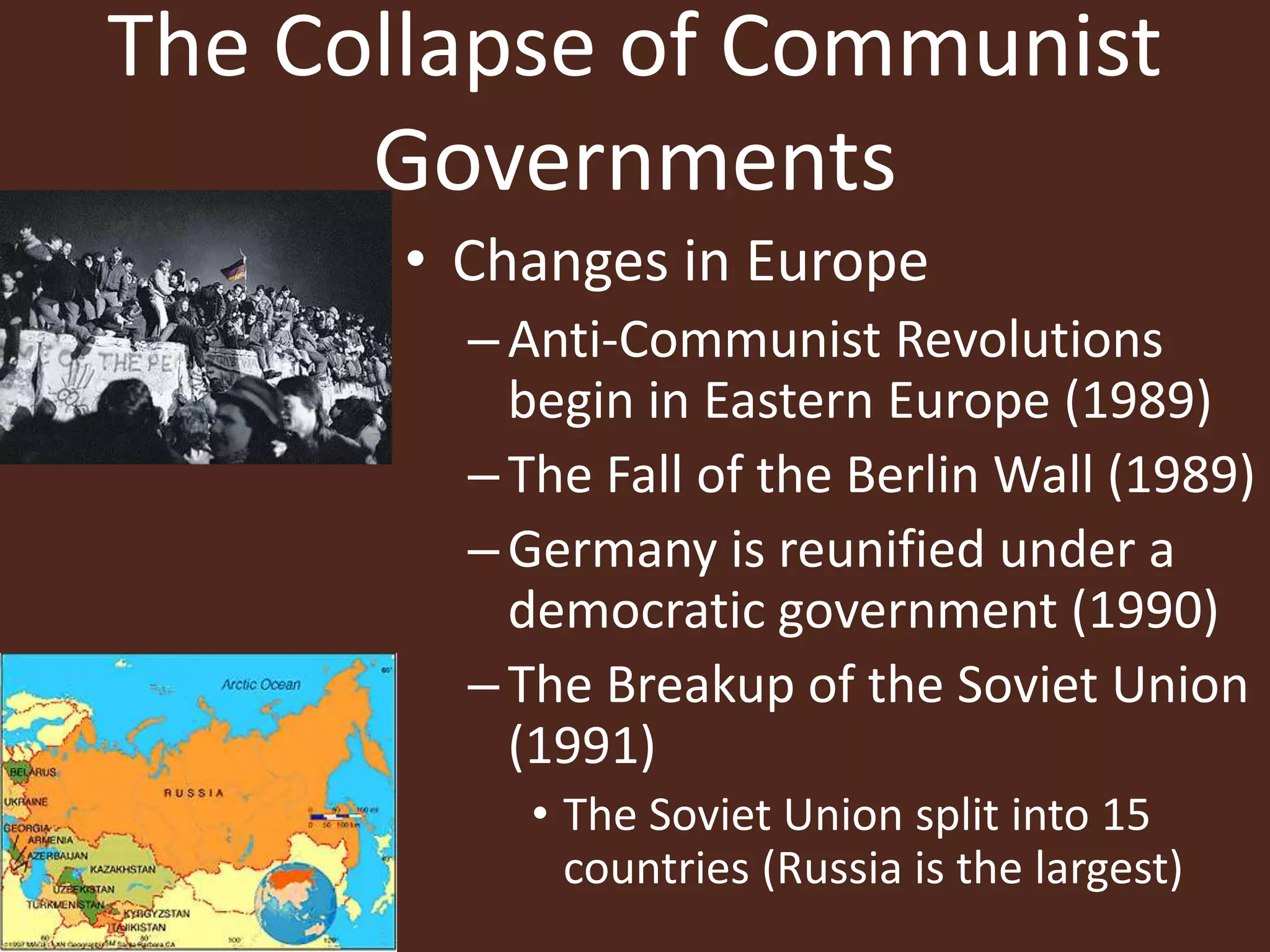
The Collapse of Communist GovernmentsChanges in EuropeAnti-Communist Revolutions begin in Eastern Europe (1989)The Fall of the Berlin Wall (1989)Germany is reunified under a democratic government (1990)The Breakup of the Soviet Union (1991)The Soviet Union split into 15 countries (Russia is the largest)
Changes in ChinaBy the 1980s, many people in China were unhappy with the ruling Communist governmentTiananmen Square Massacre (1989)Hundreds of pro-democracy demonstrators were massacred by Chinese militaryChina has relaxed its communist economic policies but it remains a totalitarian nation

The end of the cold war

  • 1.
  • 2.
    Communism FailsFailures ofCommunismMost Communist countries were struggling by the 1980’sEconomic failuresExtreme povertyFood shortagesPolitical (government) failuresCorruptionHarsh treatment of peopleVery few freedoms
  • 3.
    Reform in theSoviet Union (1985-1991)Mikhail Gorbachev: leader who reformed the Soviet UnionPerestroika: restructuring of Soviet economy and governmentAllowed some private ownership and profitCreated a Soviet ParliamentGlasnost: openness of government and freedom of speechAllowed people to openly criticize or disagree with the governmentSelf-determination: people of Eastern Europe could choose their own governmentsThe Soviet military would no longer be used to keep Communist governments of other nations in power
  • 4.
    The Collapse ofCommunist GovernmentsChanges in EuropeAnti-Communist Revolutions begin in Eastern Europe (1989)The Fall of the Berlin Wall (1989)Germany is reunified under a democratic government (1990)The Breakup of the Soviet Union (1991)The Soviet Union split into 15 countries (Russia is the largest)
  • 5.
    Changes in ChinaBythe 1980s, many people in China were unhappy with the ruling Communist governmentTiananmen Square Massacre (1989)Hundreds of pro-democracy demonstrators were massacred by Chinese militaryChina has relaxed its communist economic policies but it remains a totalitarian nation