The Superpowers 1945 - 1948 
What attitudes and motives shaped the 
development of hostility between the 
USA and the USSR at the start of the 
Cold War?
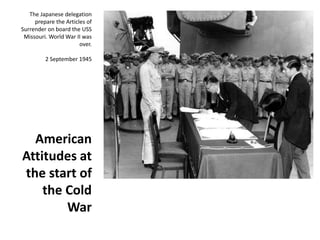
The Japanese delegation 
prepare the Articles of 
Surrender on board the USS 
Missouri. World War II was 
over. 
2 September 1945 
American 
Attitudes at 
the start of 
the Cold 
War
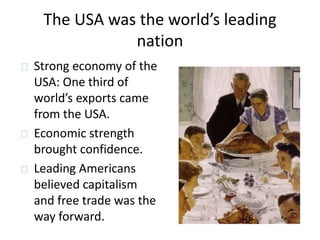
The USA was the world’s leading 
nation 
Strong economy of the 
USA: One third of 
world’s exports came 
from the USA. 
Economic strength 
brought confidence. 
Leading Americans 
believed capitalism 
and free trade was the 
way forward.
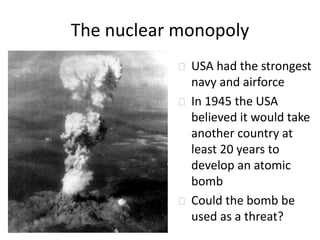
The nuclear monopoly 
USA had the strongest 
navy and airforce 
In 1945 the USA 
believed it would take 
another country at 
least 20 years to 
develop an atomic 
bomb 
Could the bomb be 
used as a threat?
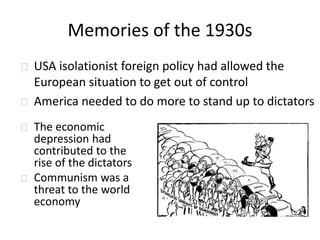
Memories of the 1930s 
USA isolationist foreign policy had allowed the 
European situation to get out of control 
America needed to do more to stand up to dictators 
The economic 
depression had 
contributed to the 
rise of the dictators 
Communism was a 
threat to the world 
economy
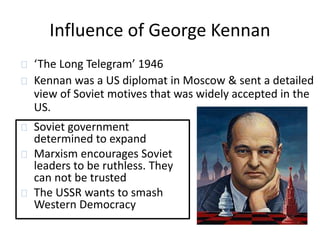
Influence of George Kennan 
‘The Long Telegram’ 1946 
Kennan was a US diplomat in Moscow & sent a detailed 
view of Soviet motives that was widely accepted in the 
US. 
Soviet government 
determined to expand 
Marxism encourages Soviet 
leaders to be ruthless. They 
can not be trusted 
The USSR wants to smash 
Western Democracy
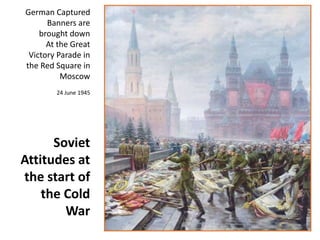
German Captured 
Banners are 
brought down 
At the Great 
Victory Parade in 
the Red Square in 
Moscow 
24 June 1945 
Soviet 
Attitudes at 
the start of 
the Cold 
War
The War was a triumph for Soviet 
Communism 
• In the battle 
between 
communism and 
fascism, 
communism had 
triumphed 
• The USSR had made 
the most important 
contribution in the 
defeat of Nazi 
Germany
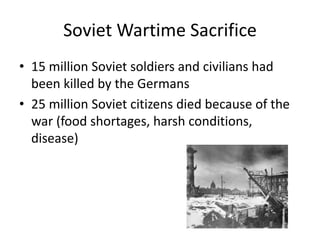
Soviet Wartime Sacrifice 
• 15 million Soviet soldiers and civilians had 
been killed by the Germans 
• 25 million Soviet citizens died because of the 
war (food shortages, harsh conditions, 
disease)
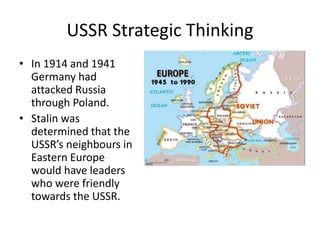
USSR Strategic Thinking 
• In 1914 and 1941 
Germany had 
attacked Russia 
through Poland. 
• Stalin was 
determined that the 
USSR’s neighbours in 
Eastern Europe 
would have leaders 
who were friendly 
towards the USSR.
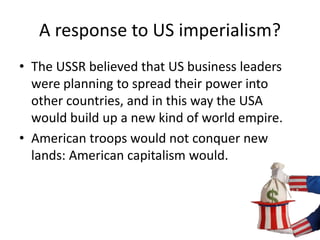
A response to US imperialism? 
• The USSR believed that US business leaders 
were planning to spread their power into 
other countries, and in this way the USA 
would build up a new kind of world empire. 
• American troops would not conquer new 
lands: American capitalism would.
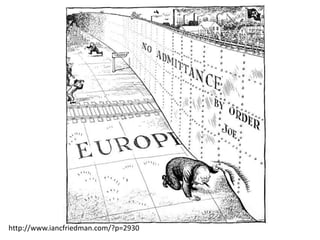
http://www.iancfriedman.com/?p=2930
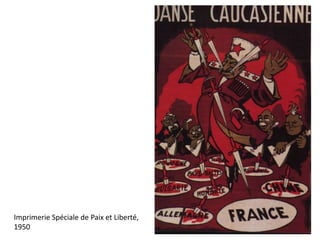
Imprimerie Spéciale de Paix et Liberté, 
1950
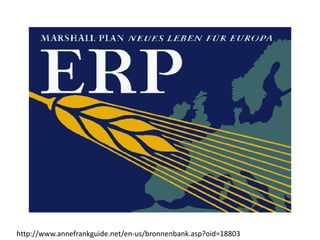
http://www.annefrankguide.net/en-us/bronnenbank.asp?oid=18803
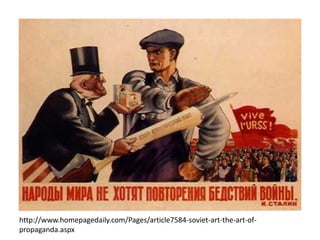
http://www.homepagedaily.com/Pages/article7584-soviet-art-the-art-of-propaganda. 
aspx
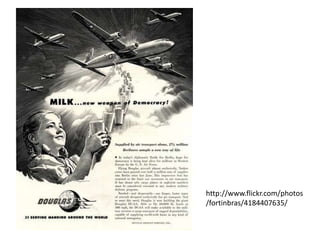
http://www.flickr.com/photos 
/fortinbras/4184407635/

The Emerging Superpowers

  • 1.
    The Superpowers 1945- 1948 What attitudes and motives shaped the development of hostility between the USA and the USSR at the start of the Cold War?
  • 2.
    The Japanese delegation prepare the Articles of Surrender on board the USS Missouri. World War II was over. 2 September 1945 American Attitudes at the start of the Cold War
  • 3.
    The USA wasthe world’s leading nation Strong economy of the USA: One third of world’s exports came from the USA. Economic strength brought confidence. Leading Americans believed capitalism and free trade was the way forward.
  • 4.
    The nuclear monopoly USA had the strongest navy and airforce In 1945 the USA believed it would take another country at least 20 years to develop an atomic bomb Could the bomb be used as a threat?
  • 5.
    Memories of the1930s USA isolationist foreign policy had allowed the European situation to get out of control America needed to do more to stand up to dictators The economic depression had contributed to the rise of the dictators Communism was a threat to the world economy
  • 6.
    Influence of GeorgeKennan ‘The Long Telegram’ 1946 Kennan was a US diplomat in Moscow & sent a detailed view of Soviet motives that was widely accepted in the US. Soviet government determined to expand Marxism encourages Soviet leaders to be ruthless. They can not be trusted The USSR wants to smash Western Democracy
  • 7.
    German Captured Bannersare brought down At the Great Victory Parade in the Red Square in Moscow 24 June 1945 Soviet Attitudes at the start of the Cold War
  • 8.
    The War wasa triumph for Soviet Communism • In the battle between communism and fascism, communism had triumphed • The USSR had made the most important contribution in the defeat of Nazi Germany
  • 9.
    Soviet Wartime Sacrifice • 15 million Soviet soldiers and civilians had been killed by the Germans • 25 million Soviet citizens died because of the war (food shortages, harsh conditions, disease)
  • 10.
    USSR Strategic Thinking • In 1914 and 1941 Germany had attacked Russia through Poland. • Stalin was determined that the USSR’s neighbours in Eastern Europe would have leaders who were friendly towards the USSR.
  • 11.
    A response toUS imperialism? • The USSR believed that US business leaders were planning to spread their power into other countries, and in this way the USA would build up a new kind of world empire. • American troops would not conquer new lands: American capitalism would.
  • 12.
  • 13.
    Imprimerie Spéciale dePaix et Liberté, 1950
  • 14.
  • 15.
  • 16.

Editor's Notes

  • #14 This political poster issued by the Imprimerie Spéciale de Paix et Liberté exposes the perceived threat to France from the French Communist Party. The caricature of Stalin as a Russian dancer drops knives into a series of bloodied white ovals. These ovals represent nations that have adopted Communist regimes: Poland, Checkoslovakia, Romania, the Baltic States, Bulgaria, Hungary, Germany and China. The message is that France is poised to be the next country destroyed by Communism. The four figures playing balalaikas, Russian folk music instruments, are Marcel Cachin, Jacques Duclos, André Marty and Maurice Thorez, then leaders of the French Communist Party.
  • #15 Poster promoting European Recovery Program (Marshall Plan) in English and German. The Marshall Plan was the name given to the plan that was developed to rebuild Europe after the Second World War. It was officially known as the European Recovery Plan (ERP). It was named after the United States Secretary of State George Marshall, and was intended to bring stability and peace to the world at a very difficult time. The reconstruction plan was developed at a meeting of the participating European countries in July 1947. The Soviet Union and the countries of Eastern Europe were invited, but the Soviet leader Josef Stalin saw the plan as a threat and did not allow the participation of any countries under Soviet control. The U.S. President Truman signed the Marshall Plan into law on April 3, 1948.
  • #16 Take for instance the poster above; it's littered with clever short hands to show the strength of the Soviet worker in refusing a deceptive offer from the Americans. The famous poster was made at the time of the Marshall Plan (1948), when the US was offering Europe (including the USSR) aid, and development. The Soviets, fearing that the US was slying their way into their sphere of influence refused all aid, branding the Marshall Plan as a way for the US to expand its military power into the Soviet Union. The poster itself is interesting, if you look closely at the flag in the background you can see that it's written not in Russian but French, showing to the population of the USSR that there was international support for their doctrine, and that it was spreading. Secondly, contrast the two main figures, the first the American (presumably George Marshall, the designer of the Marshall plan) is portly to say the least, hunching over and in the dress of the bourgeoisie. Compare him to the second figure, the noble, and honest Soviet worker pushing aside the money for higher ideals.