THE NUTRITION FUNCTION I.
The digestive system.
The nutrition function.
 Taking in of nutrients (found in food) which are
organic substances and mineral ions, containing
raw materials or energy for growth and tissue
repair, absorbing and assimilating them.
 In multicellular organisms, several systems take
part in this function.
 Digestive system.
 Respiratory system.
 Circulatory system.
 Excretory system.
Intimately interlinked.
Endocrine and nervous
system also participate.
Digestive System Processes.
 Ingestion : Intake of food into the body through
mouth.
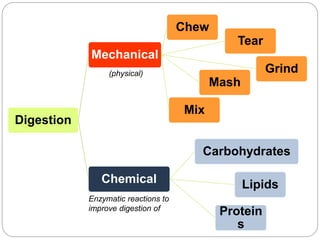
 Digestion: The process of break-down of
large, insoluble food molecules into small, water
soluble molecules using mechanical and chemical
processes.
 Absorption : The process of passing digested food
molecules across the wall of the intestine into the
blood or lymph.
 Assimilation : The movement of digested food
molecules into the cells of the body where they are
used, becoming part of the cells.
 Egestion : Passing out of undigested food, in
the form of faeces, through the anus.
Digestion
Mechanical
Chew
Tear
Grind
Mash
Mix
Chemical
Carbohydrates
Lipids
Protein
s
(physical)
Enzymatic reactions to
improve digestion of
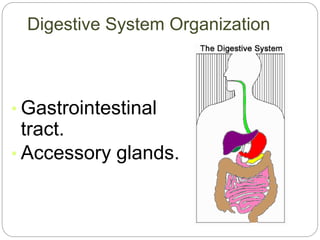
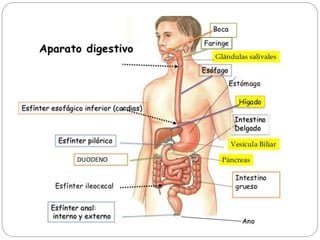
Digestive System Organization
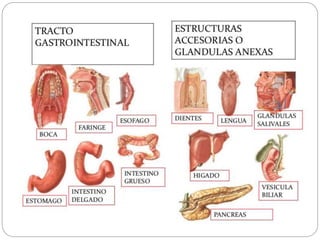
• Gastrointestinal
tract.
• Accessory glands.
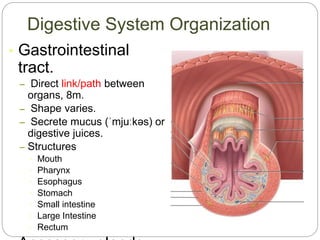
Digestive System Organization
• Gastrointestinal
tract.
– Direct link/path between
organs, 8m.
– Shape varies.
– Secrete mucus (ˈmjuːkəs) or
digestive juices.
– Structures
• Mouth
• Pharynx
• Esophagus
• Stomach
• Small intestine
• Large Intestine
• Rectum
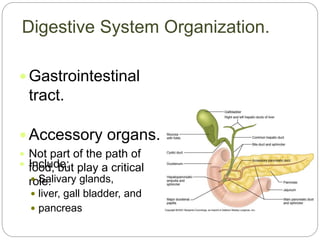
Digestive System Organization.
 Gastrointestinal
tract.
 Accessory organs.
 Not part of the path of
food, but play a critical
role.
 Include:
 Salivary glands,
 liver, gall bladder, and
 pancreas
Mouth
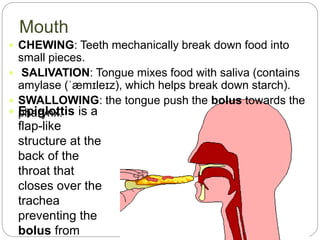
 Epiglottis is a
flap-like
structure at the
back of the
throat that
closes over the
trachea
preventing the
bolus from
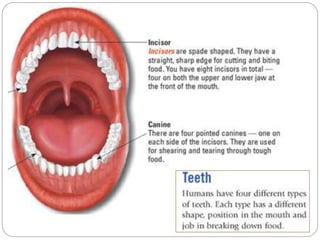
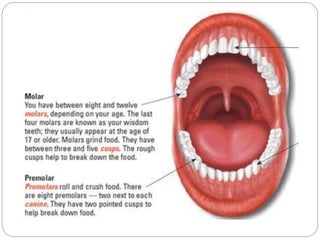
 CHEWING: Teeth mechanically break down food into
small pieces.
 SALIVATION: Tongue mixes food with saliva (contains
amylase (ˈæmɪleɪz), which helps break down starch).
 SWALLOWING: the tongue push the bolus towards the
pharynx.
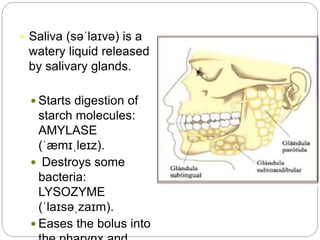
 Saliva (səˈlaɪvə) is a
watery liquid released
by salivary glands.
 Starts digestion of
starch molecules:
AMYLASE
(ˈæmɪˌleɪz).
 Destroys some
bacteria:
LYSOZYME
(ˈlaɪsəˌzaɪm).
 Eases the bolus into
PHARYNX
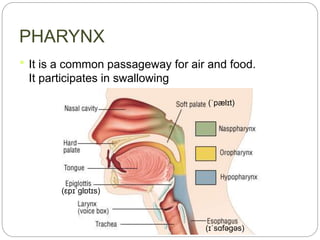
 It is a common passageway for air and food.
It participates in swallowing
(ˈpælɪt)
(ɛpɪˈɡlɒtɪs)
(ɪˈsɑfəgəs)
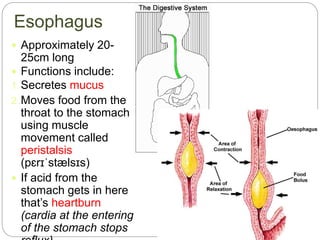
Esophagus
 Approximately 20-
25cm long
 Functions include:
1.Secretes mucus
2.Moves food from the
throat to the stomach
using muscle
movement called
peristalsis
(pɛrɪˈstælsɪs)
 If acid from the
stomach gets in here
that’s heartburn
(cardia at the entering
of the stomach stops
Stomach
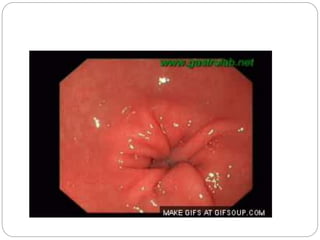
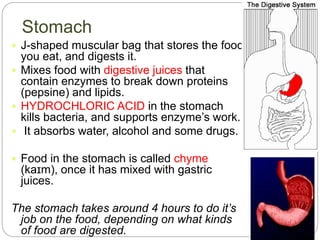
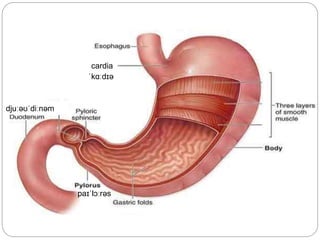
 J-shaped muscular bag that stores the food
you eat, and digests it.
 Mixes food with digestive juices that
contain enzymes to break down proteins
(pepsine) and lipids.
 HYDROCHLORIC ACID in the stomach
kills bacteria, and supports enzyme’s work.
 It absorbs water, alcohol and some drugs.
 Food in the stomach is called chyme
(kaɪm), once it has mixed with gastric
juices.
The stomach takes around 4 hours to do it’s
job on the food, depending on what kinds
of food are digested.
cardia
paɪˈlɔːrəs
ˈkɑːdɪə
djuːəʊˈdiːnəm
Small Intestine
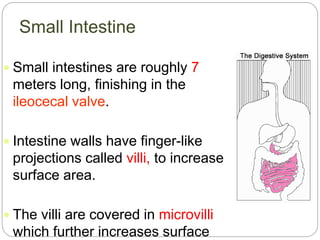
 Small intestines are roughly 7
meters long, finishing in the
ileocecal valve.
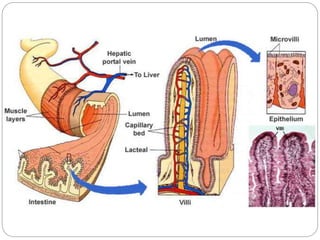
 Intestine walls have finger-like
projections called villi, to increase
surface area.
 The villi are covered in microvilli
which further increases surface
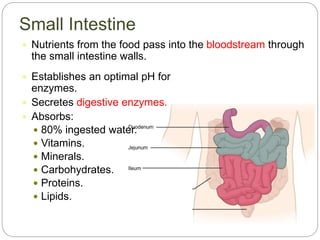
Small Intestine
 Nutrients from the food pass into the bloodstream through
the small intestine walls.
 Establishes an optimal pH for
enzymes.
 Secretes digestive enzymes.
 Absorbs:
 80% ingested water.
 Vitamins.
 Minerals.
 Carbohydrates.
 Proteins.
 Lipids.
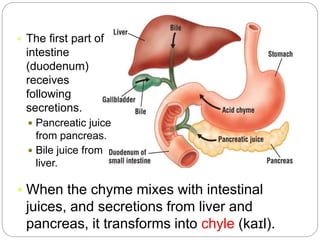
 When the chyme mixes with intestinal
juices, and secretions from liver and
pancreas, it transforms into chyle (kaɪl).
 The first part of
intestine
(duodenum)
receives
following
secretions.
 Pancreatic juice
from pancreas.
 Bile juice from
liver.
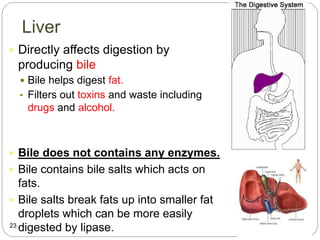
Liver
 Directly affects digestion by
producing bile
 Bile helps digest fat.
• Filters out toxins and waste including
drugs and alcohol.
 Bile does not contains any enzymes.
 Bile contains bile salts which acts on
fats.
 Bile salts break fats up into smaller fat
droplets which can be more easily
digested by lipase.23
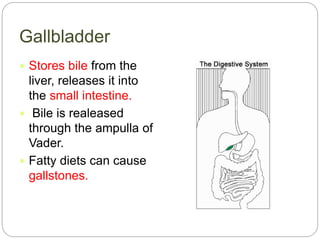
Gallbladder
 Stores bile from the
liver, releases it into
the small intestine.
 Bile is realeased
through the ampulla of
Vader.
 Fatty diets can cause
gallstones.
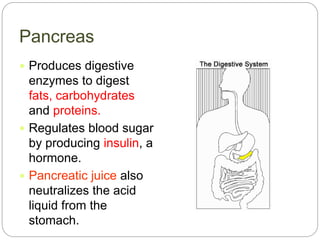
Pancreas
 Produces digestive
enzymes to digest
fats, carbohydrates
and proteins.
 Regulates blood sugar
by producing insulin, a
hormone.
 Pancreatic juice also
neutralizes the acid
liquid from the
stomach.
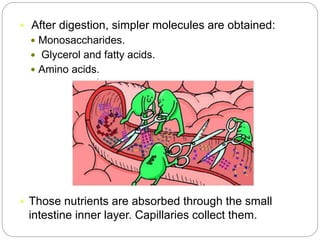
 After digestion, simpler molecules are obtained:
 Monosaccharides.
 Glycerol and fatty acids.
 Amino acids.
 Those nutrients are absorbed through the small
intestine inner layer. Capillaries collect them.
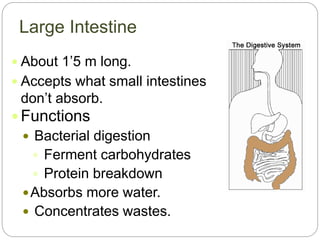
Large Intestine
 About 1’5 m long.
 Accepts what small intestines
don’t absorb.
 Functions
 Bacterial digestion
 Ferment carbohydrates
 Protein breakdown
Absorbs more water.
 Concentrates wastes.
Large Intestine
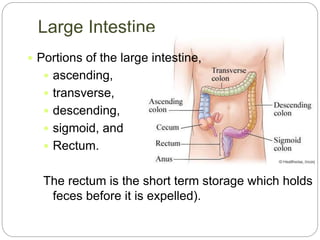
 Portions of the large intestine,
 ascending,
 transverse,
 descending,
 sigmoid, and
 Rectum.
The rectum is the short term storage which holds
feces before it is expelled).
https://www.youtube.com/watch?v=8YXKklSxW30
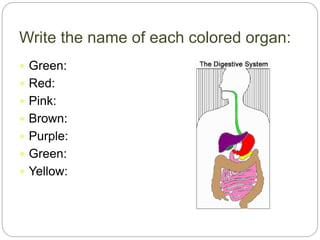
Write the name of each colored organ:
 Green:
 Red:
 Pink:
 Brown:
 Purple:
 Green:
 Yellow:
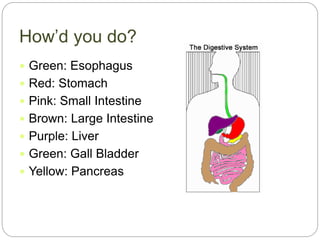
How’d you do?
 Green: Esophagus
 Red: Stomach
 Pink: Small Intestine
 Brown: Large Intestine
 Purple: Liver
 Green: Gall Bladder
 Yellow: Pancreas
References and Links
 Inner body: http://www.innerbody.com/
 Your Digestive System and How It Works
 Digestive system diagram comes from this site
 The Real Deal on the Digestive System
 Pancreas: Introduction and Index
 Your Gross and Cool Body - Digestive System
The digestive system.

The digestive system.

  • 1.
    THE NUTRITION FUNCTIONI. The digestive system.
  • 2.
    The nutrition function. Taking in of nutrients (found in food) which are organic substances and mineral ions, containing raw materials or energy for growth and tissue repair, absorbing and assimilating them.  In multicellular organisms, several systems take part in this function.  Digestive system.  Respiratory system.  Circulatory system.  Excretory system. Intimately interlinked. Endocrine and nervous system also participate.
  • 3.
    Digestive System Processes. Ingestion : Intake of food into the body through mouth.  Digestion: The process of break-down of large, insoluble food molecules into small, water soluble molecules using mechanical and chemical processes.  Absorption : The process of passing digested food molecules across the wall of the intestine into the blood or lymph.  Assimilation : The movement of digested food molecules into the cells of the body where they are used, becoming part of the cells.  Egestion : Passing out of undigested food, in the form of faeces, through the anus.
  • 4.
  • 5.
    Digestive System Organization •Gastrointestinal tract. • Accessory glands.
  • 6.
    Digestive System Organization •Gastrointestinal tract. – Direct link/path between organs, 8m. – Shape varies. – Secrete mucus (ˈmjuːkəs) or digestive juices. – Structures • Mouth • Pharynx • Esophagus • Stomach • Small intestine • Large Intestine • Rectum
  • 7.
    Digestive System Organization. Gastrointestinal tract.  Accessory organs.  Not part of the path of food, but play a critical role.  Include:  Salivary glands,  liver, gall bladder, and  pancreas
  • 10.
    Mouth  Epiglottis isa flap-like structure at the back of the throat that closes over the trachea preventing the bolus from  CHEWING: Teeth mechanically break down food into small pieces.  SALIVATION: Tongue mixes food with saliva (contains amylase (ˈæmɪleɪz), which helps break down starch).  SWALLOWING: the tongue push the bolus towards the pharynx.
  • 11.
     Saliva (səˈlaɪvə)is a watery liquid released by salivary glands.  Starts digestion of starch molecules: AMYLASE (ˈæmɪˌleɪz).  Destroys some bacteria: LYSOZYME (ˈlaɪsəˌzaɪm).  Eases the bolus into
  • 14.
    PHARYNX  It isa common passageway for air and food. It participates in swallowing (ˈpælɪt) (ɛpɪˈɡlɒtɪs) (ɪˈsɑfəgəs)
  • 15.
    Esophagus  Approximately 20- 25cmlong  Functions include: 1.Secretes mucus 2.Moves food from the throat to the stomach using muscle movement called peristalsis (pɛrɪˈstælsɪs)  If acid from the stomach gets in here that’s heartburn (cardia at the entering of the stomach stops
  • 17.
    Stomach  J-shaped muscularbag that stores the food you eat, and digests it.  Mixes food with digestive juices that contain enzymes to break down proteins (pepsine) and lipids.  HYDROCHLORIC ACID in the stomach kills bacteria, and supports enzyme’s work.  It absorbs water, alcohol and some drugs.  Food in the stomach is called chyme (kaɪm), once it has mixed with gastric juices. The stomach takes around 4 hours to do it’s job on the food, depending on what kinds of food are digested.
  • 18.
  • 19.
    Small Intestine  Smallintestines are roughly 7 meters long, finishing in the ileocecal valve.  Intestine walls have finger-like projections called villi, to increase surface area.  The villi are covered in microvilli which further increases surface
  • 21.
    Small Intestine  Nutrientsfrom the food pass into the bloodstream through the small intestine walls.  Establishes an optimal pH for enzymes.  Secretes digestive enzymes.  Absorbs:  80% ingested water.  Vitamins.  Minerals.  Carbohydrates.  Proteins.  Lipids.
  • 22.
     When thechyme mixes with intestinal juices, and secretions from liver and pancreas, it transforms into chyle (kaɪl).  The first part of intestine (duodenum) receives following secretions.  Pancreatic juice from pancreas.  Bile juice from liver.
  • 23.
    Liver  Directly affectsdigestion by producing bile  Bile helps digest fat. • Filters out toxins and waste including drugs and alcohol.  Bile does not contains any enzymes.  Bile contains bile salts which acts on fats.  Bile salts break fats up into smaller fat droplets which can be more easily digested by lipase.23
  • 24.
    Gallbladder  Stores bilefrom the liver, releases it into the small intestine.  Bile is realeased through the ampulla of Vader.  Fatty diets can cause gallstones.
  • 25.
    Pancreas  Produces digestive enzymesto digest fats, carbohydrates and proteins.  Regulates blood sugar by producing insulin, a hormone.  Pancreatic juice also neutralizes the acid liquid from the stomach.
  • 26.
     After digestion,simpler molecules are obtained:  Monosaccharides.  Glycerol and fatty acids.  Amino acids.  Those nutrients are absorbed through the small intestine inner layer. Capillaries collect them.
  • 27.
    Large Intestine  About1’5 m long.  Accepts what small intestines don’t absorb.  Functions  Bacterial digestion  Ferment carbohydrates  Protein breakdown Absorbs more water.  Concentrates wastes.
  • 28.
    Large Intestine  Portionsof the large intestine,  ascending,  transverse,  descending,  sigmoid, and  Rectum. The rectum is the short term storage which holds feces before it is expelled).
  • 29.
  • 30.
    Write the nameof each colored organ:  Green:  Red:  Pink:  Brown:  Purple:  Green:  Yellow:
  • 31.
    How’d you do? Green: Esophagus  Red: Stomach  Pink: Small Intestine  Brown: Large Intestine  Purple: Liver  Green: Gall Bladder  Yellow: Pancreas
  • 32.
    References and Links Inner body: http://www.innerbody.com/  Your Digestive System and How It Works  Digestive system diagram comes from this site  The Real Deal on the Digestive System  Pancreas: Introduction and Index  Your Gross and Cool Body - Digestive System