The Complete Genome
Sequence of a Neanderthal from
the Altai Mountains
Prüfer et al., 2013
Presentation by Sveta Jagannathan
 Ancient toe phalanx found in Altai Mountains in
Denisova Cave
 Genome sequenced and compared to
Neanderthal, Denisovian and Human DNA
 Homozygosity compared to determine amount of
inbreeding
 Gene flow and evolutionary patterns predicted
Experiment Overview
 Gene flow- Different populations or species
interbreed and exchange DNA
 mtDNA is mitochondrial DNA- a type of DNA that
gets passed on from maternal lineage
 Not affected by sexual reproduction
 Stays roughly the same (except for mutations)
Background
 MtDNA used to sequence toe phalanx genome
 Toe phalanx genome compared to 6 neanderthal
genomes, 25 human genomes and 1 denisovian
genome
 Common ancestor was found between neanderthal and
toe genome while humans and Denisovians were
farther away
 Toe phalanx was determined to have been part of a
newly found type of Neanderthal- the Altai Neanderthal
Genome sequencing
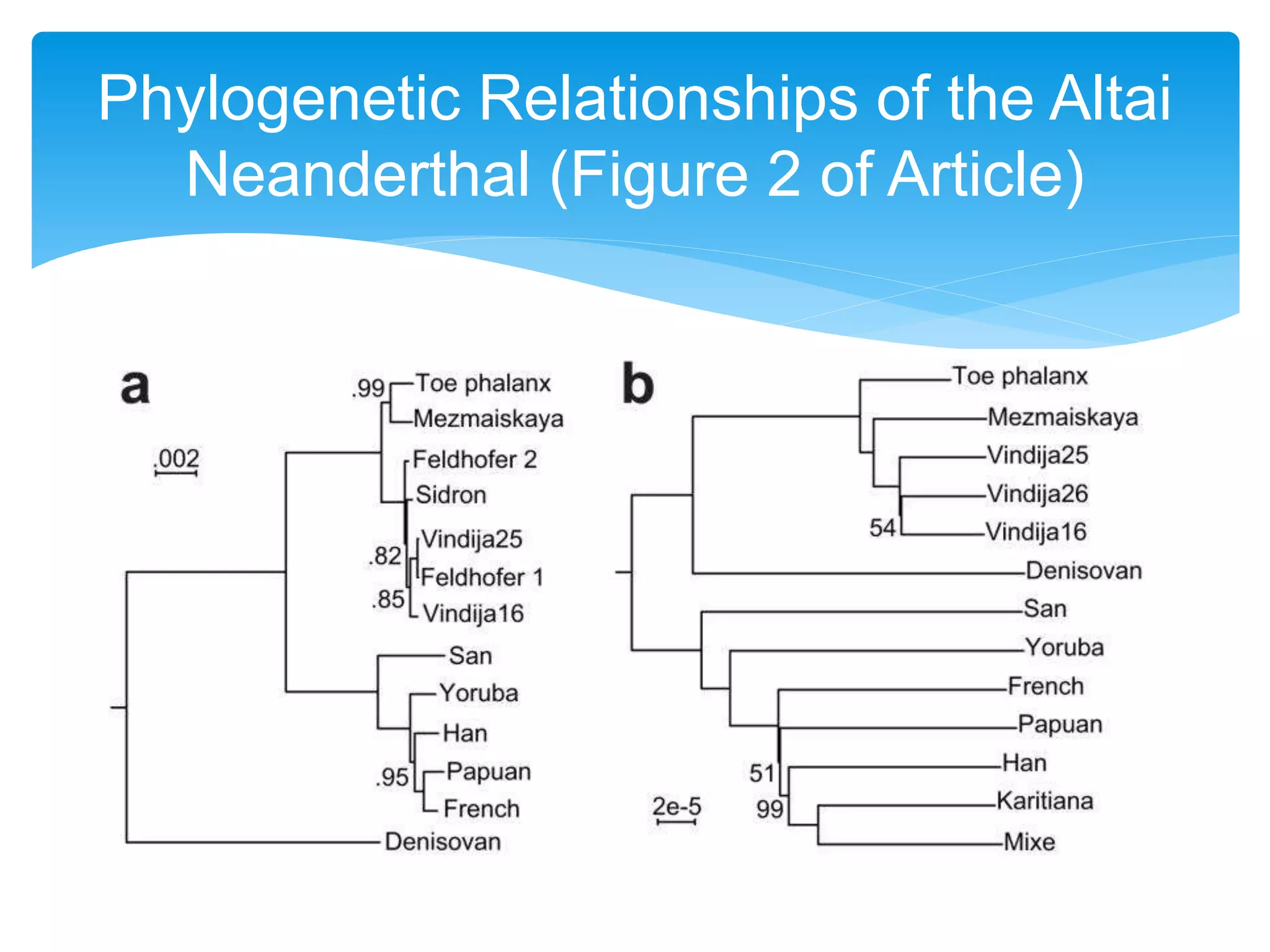
 Researchers predicted a phylogenetic tree
 Denisovians and Neanderthals were closer to the
common ancestor
 Used two methods (one using mutation rates and
one using the frequency at which a certain allele is
derived) to estimate when each group diverged
 Altai Neanderthal predicted to diverge from other
known Neanderthals between 77,000-114,000 years
ago
Relationship between Altai
Neanderthal and other genomes
Phylogenetic Relationships of the Altai
Neanderthal (Figure 2 of Article)
 Altai Neanderthal genome examined for homozygosity
(related regions of DNA more than 10 cM long)
 20 regions of homozygosity found that indicated that the
Neanderthals parents were probably half-siblings
 These homozygous runs were removed and the remaining
DNA was examined for homozygous runs of smaller length
 Many found, which indicated that inbreeding was popular
among Altai Neanderthals
 Remaining Heterozygous regions were compared to
Denisovians’ heterozygosity to find that the amount of
inbreeding among Altai Neanderthals was similar to that of
Denisovians
 Heterozygosity of Denisovians and Neanderthals was among
the lowest of any organism!
Inbreeding and Homozygosity
 Similar or identical DNA was found in Neanderthals,
Denisovians and Humans
 Researchers compared that DNA to find patterns to show the
gene flow of that time period
 Similarity of Human DNA to Denisovian and Neanderthal
depended on region (the least similarity was in Africa, with
mainland Asians close)
 Americans and some Asians had higher amounts of
Denisovian DNA than Europeans!
 This suggested gene flow between Neanderthals and
Denisovians, between Neanderthals and humans and
between Denisovians and humans which was further
investigated
Gene Flow
 New Neanderthal in Altai Mountains near
Denisovians
 Neanderthals and Denisovians are more closely
related to their common ancestor than humans are
 Denisovians and Neanderthals had more
inbreeding than most other organisms
 Altai Neanderthals and other Neanderthals split
between 77,000 and 114,000 years ago
Major Findings Part 1
 Humans retain some Neanderthal and Denisovian
DNA, likely due to some sort of interbreeding event
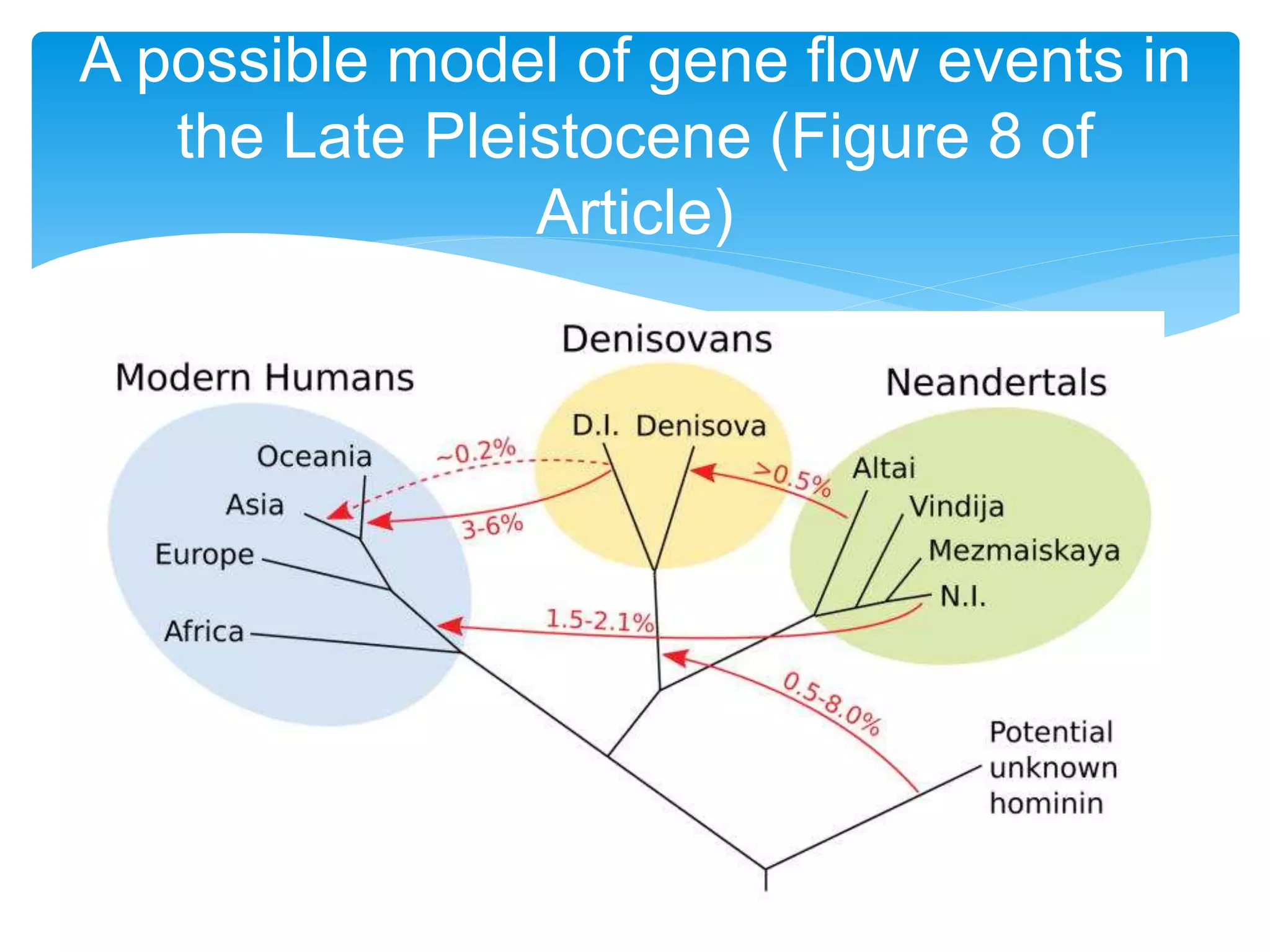
 Gene flow occurred from Neanderthals into
Denisovians, most likely through some other
hominin (possibly Homo erectus)
 Genes provided by Neanderthals performed
necessary functions
 Gene flow from Neanderthals/Denisovians to
humans is most likely due to direct interbreeding
Major Findings Part 2- Gene Flow
 Humans and Neanderthals likely coexisted for
enough time to interbreed and exchange DNA
 Denisovians probably also interbred with humans
 Some other hominin existed that was able to
interbreed between Denisovians and Neanderthals
and pass on the DNA
 Neanderthal DNA found in humans may have
functional significance!
Implications
A possible model of gene flow events in
the Late Pleistocene (Figure 8 of
Article)

The complete genome sequence of a neanderthal article presentation

  • 1.
    The Complete Genome Sequenceof a Neanderthal from the Altai Mountains Prüfer et al., 2013 Presentation by Sveta Jagannathan
  • 2.
     Ancient toephalanx found in Altai Mountains in Denisova Cave  Genome sequenced and compared to Neanderthal, Denisovian and Human DNA  Homozygosity compared to determine amount of inbreeding  Gene flow and evolutionary patterns predicted Experiment Overview
  • 3.
     Gene flow-Different populations or species interbreed and exchange DNA  mtDNA is mitochondrial DNA- a type of DNA that gets passed on from maternal lineage  Not affected by sexual reproduction  Stays roughly the same (except for mutations) Background
  • 4.
     MtDNA usedto sequence toe phalanx genome  Toe phalanx genome compared to 6 neanderthal genomes, 25 human genomes and 1 denisovian genome  Common ancestor was found between neanderthal and toe genome while humans and Denisovians were farther away  Toe phalanx was determined to have been part of a newly found type of Neanderthal- the Altai Neanderthal Genome sequencing
  • 5.
     Researchers predicteda phylogenetic tree  Denisovians and Neanderthals were closer to the common ancestor  Used two methods (one using mutation rates and one using the frequency at which a certain allele is derived) to estimate when each group diverged  Altai Neanderthal predicted to diverge from other known Neanderthals between 77,000-114,000 years ago Relationship between Altai Neanderthal and other genomes
  • 6.
    Phylogenetic Relationships ofthe Altai Neanderthal (Figure 2 of Article)
  • 7.
     Altai Neanderthalgenome examined for homozygosity (related regions of DNA more than 10 cM long)  20 regions of homozygosity found that indicated that the Neanderthals parents were probably half-siblings  These homozygous runs were removed and the remaining DNA was examined for homozygous runs of smaller length  Many found, which indicated that inbreeding was popular among Altai Neanderthals  Remaining Heterozygous regions were compared to Denisovians’ heterozygosity to find that the amount of inbreeding among Altai Neanderthals was similar to that of Denisovians  Heterozygosity of Denisovians and Neanderthals was among the lowest of any organism! Inbreeding and Homozygosity
  • 8.
     Similar oridentical DNA was found in Neanderthals, Denisovians and Humans  Researchers compared that DNA to find patterns to show the gene flow of that time period  Similarity of Human DNA to Denisovian and Neanderthal depended on region (the least similarity was in Africa, with mainland Asians close)  Americans and some Asians had higher amounts of Denisovian DNA than Europeans!  This suggested gene flow between Neanderthals and Denisovians, between Neanderthals and humans and between Denisovians and humans which was further investigated Gene Flow
  • 9.
     New Neanderthalin Altai Mountains near Denisovians  Neanderthals and Denisovians are more closely related to their common ancestor than humans are  Denisovians and Neanderthals had more inbreeding than most other organisms  Altai Neanderthals and other Neanderthals split between 77,000 and 114,000 years ago Major Findings Part 1
  • 10.
     Humans retainsome Neanderthal and Denisovian DNA, likely due to some sort of interbreeding event  Gene flow occurred from Neanderthals into Denisovians, most likely through some other hominin (possibly Homo erectus)  Genes provided by Neanderthals performed necessary functions  Gene flow from Neanderthals/Denisovians to humans is most likely due to direct interbreeding Major Findings Part 2- Gene Flow
  • 11.
     Humans andNeanderthals likely coexisted for enough time to interbreed and exchange DNA  Denisovians probably also interbred with humans  Some other hominin existed that was able to interbreed between Denisovians and Neanderthals and pass on the DNA  Neanderthal DNA found in humans may have functional significance! Implications
  • 12.
    A possible modelof gene flow events in the Late Pleistocene (Figure 8 of Article)