TCA CYCLE
Atia Ali
INTRODUCTION
Citric acid cycle / TCA cycle/ tricarboxylic acid cycle/ Krebs cycle
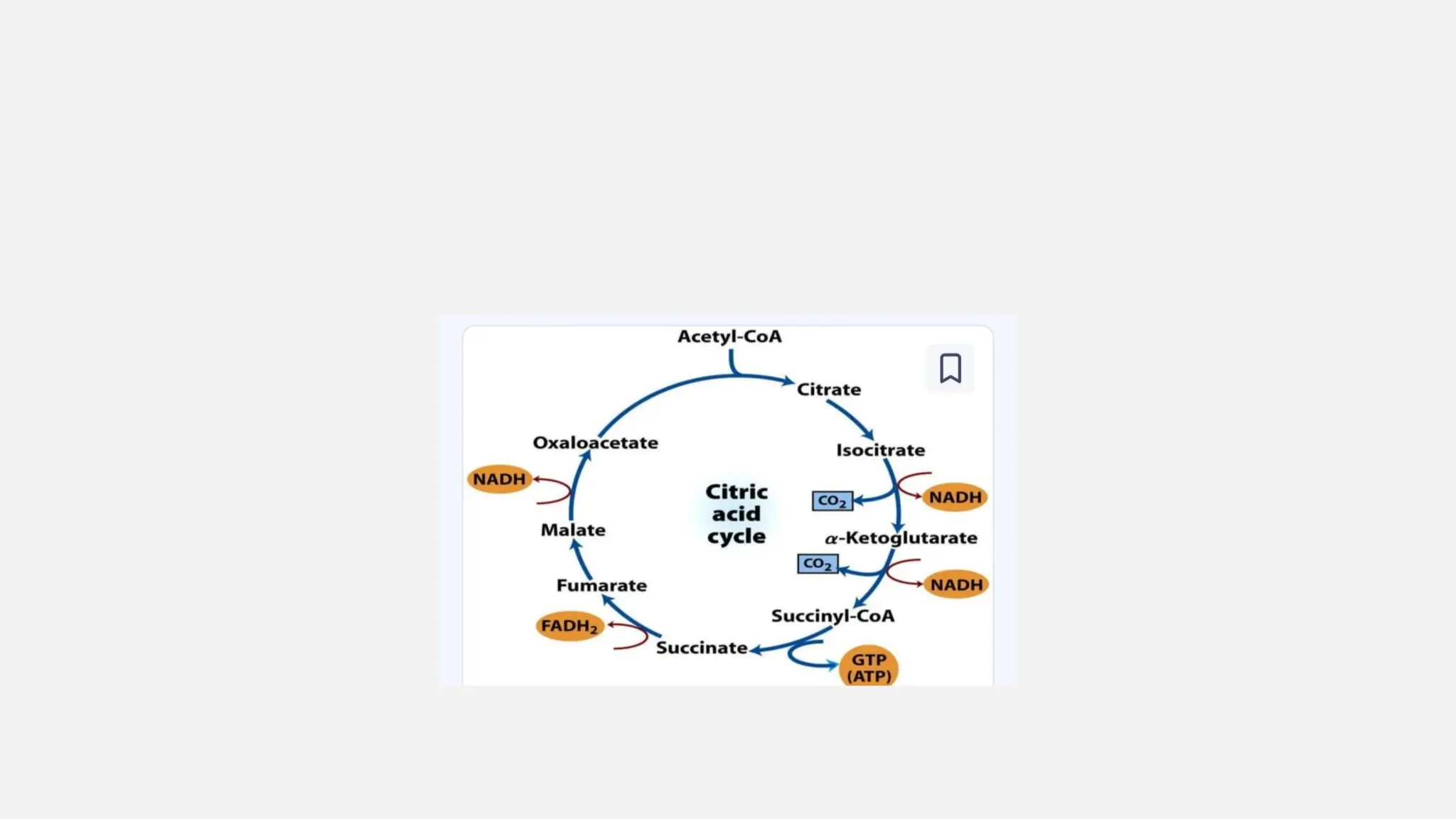
• TCA cycle essentially involves the oxidation of acetyl CoA to CO2 and H2O.
• TCA cycle –the central metabolic pathway
• The TCA cycle is the final common oxidative pathway for carbohydrates,
fats, amino acids.
• It supplies energy & also provides many intermediates required for the
synthesis of amino acids, glucose, heme etc.
• TCA cycle is the most important central pathway connecting almost all the
individual metabolic pathways.
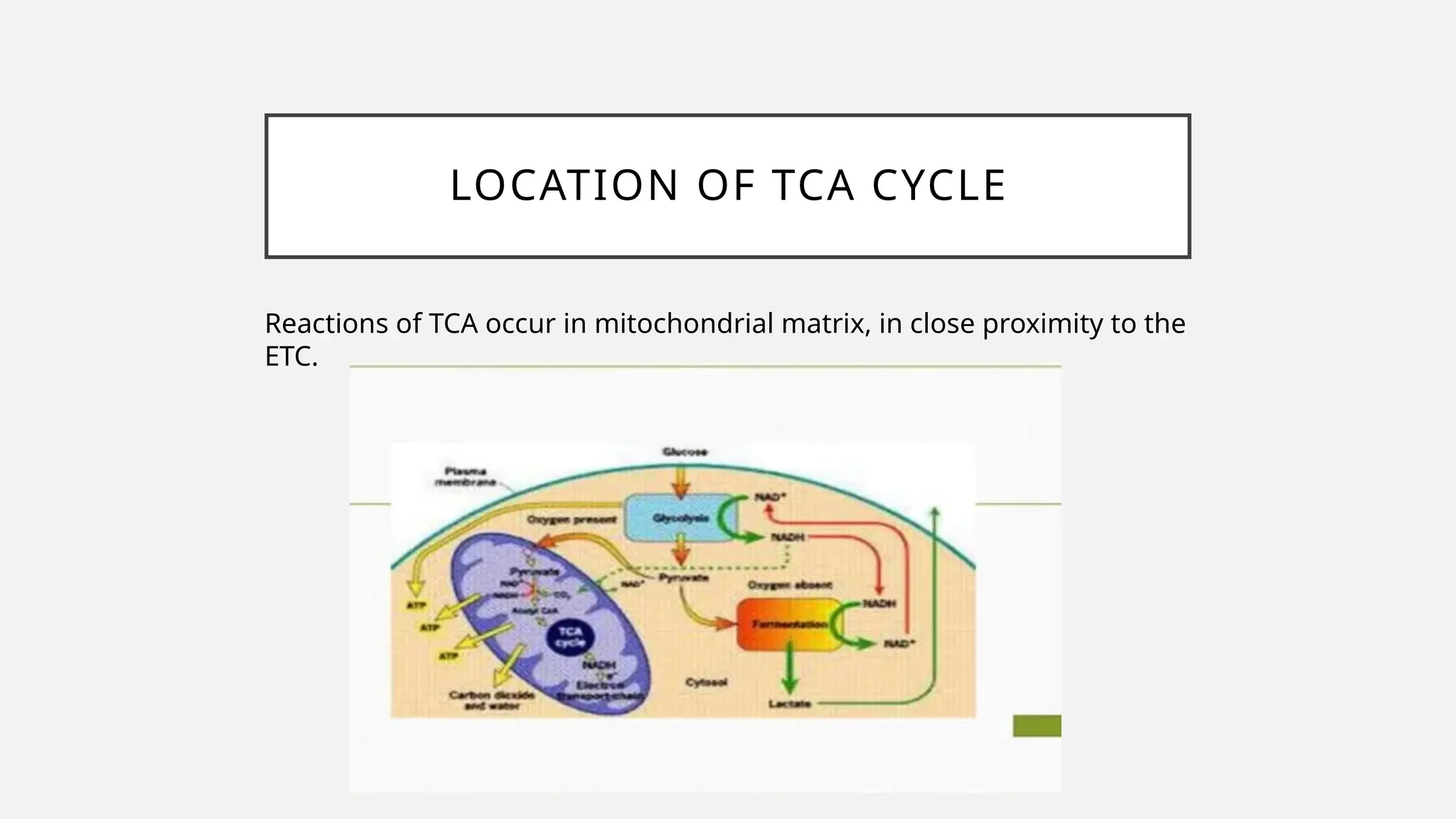
LOCATION OF TCA CYCLE
Reactions of TCA occur in mitochondrial matrix, in close proximity to the
ETC.
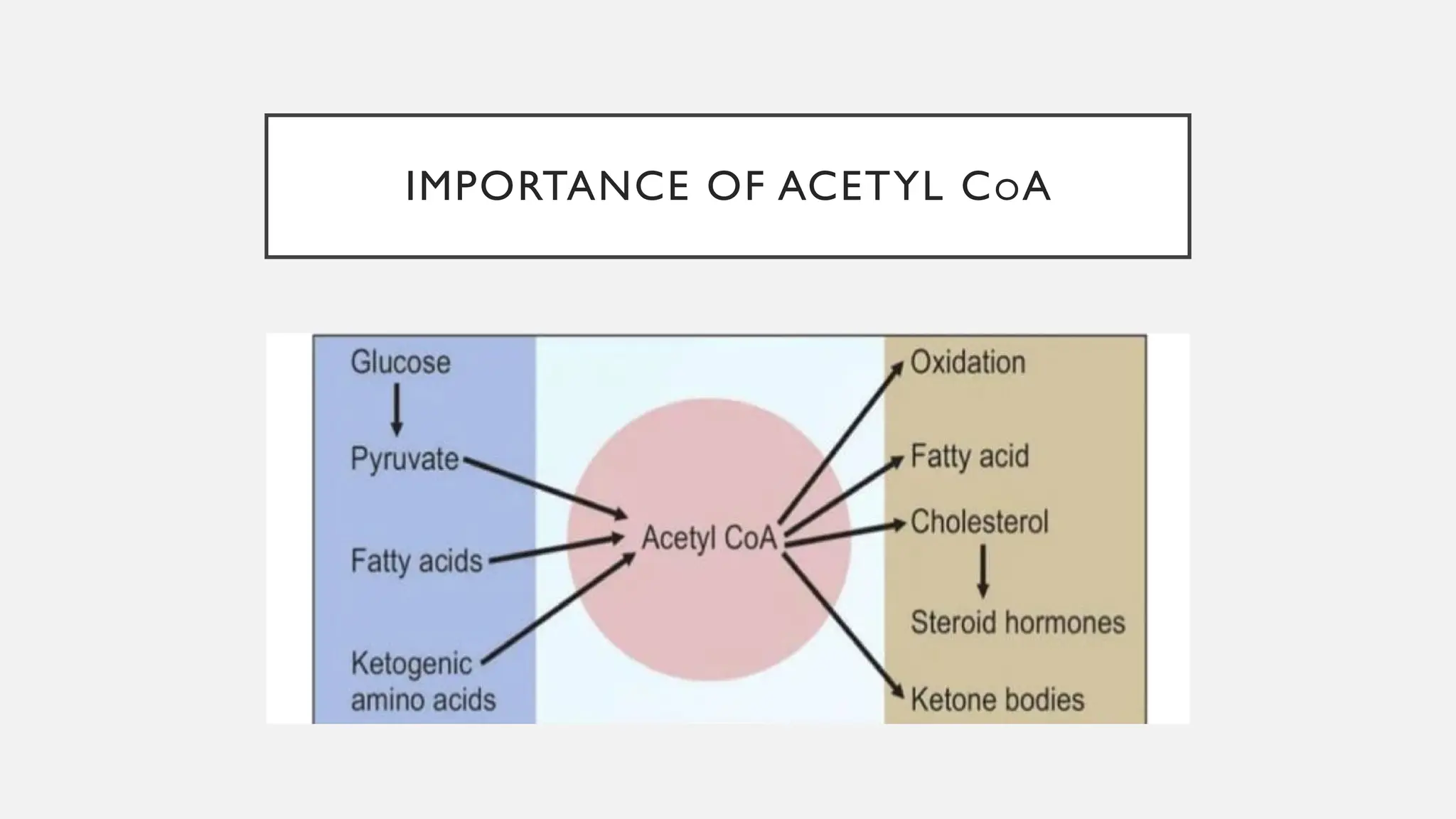
IMPORTANCE OF ACETYL COA
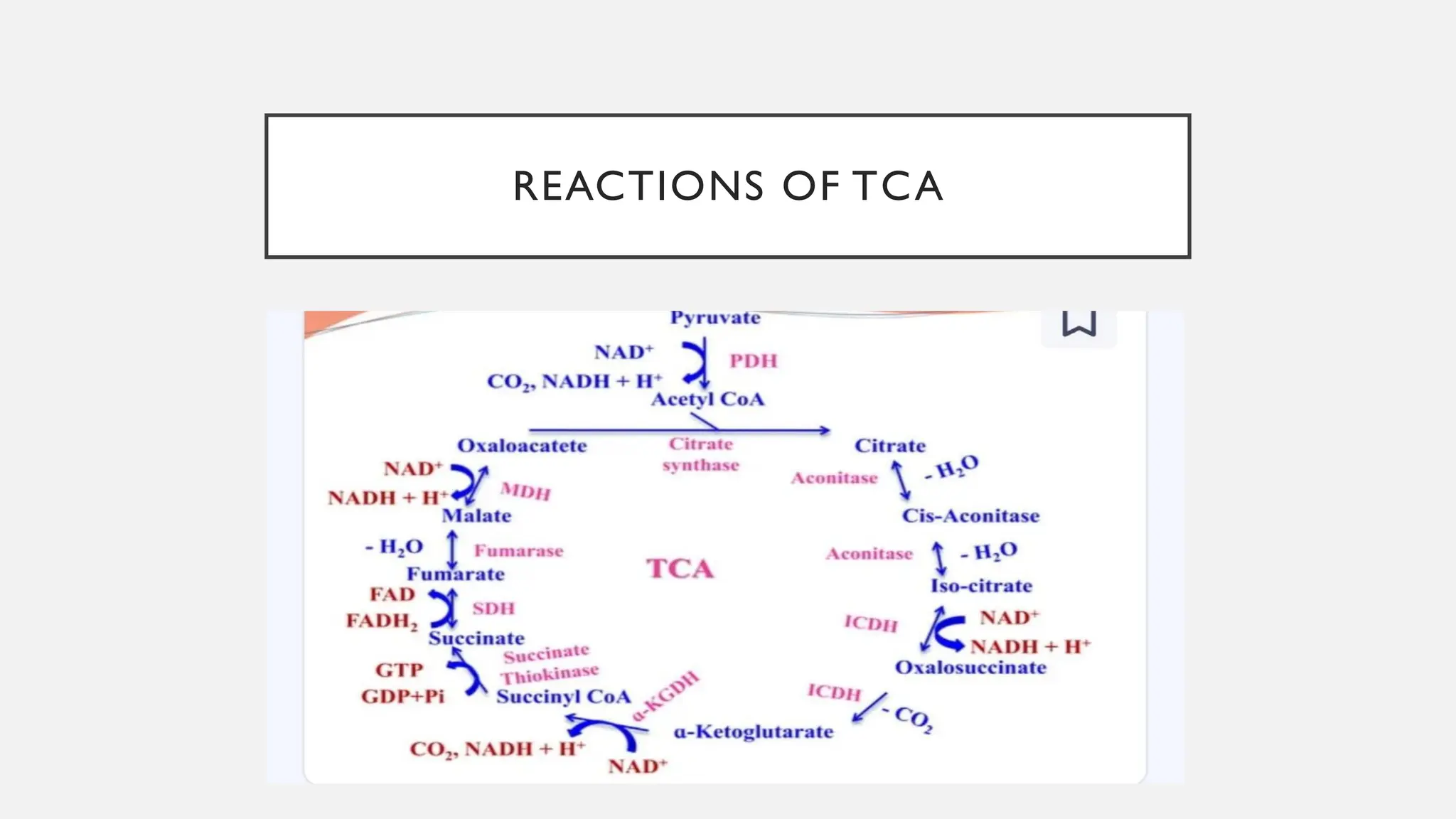
REACTIONS OF TCA
REACTIONS OF TCA CYCLE
It starts with oxidative decarboxylation of pyruvate to acetyl CoA by
PDH complex. This step is connecting link between glycolysis and TCA
cycle.
Step:1 Formation of citrate
• Oxaloacetate condenses with acetyl CoA to form Citrate, catalysed
by the enzyme citrate synthase
• This reaction is inhibited by ATP, NADH, Citrate - competitive
inhibitor of oxaloacetate.
Steps 2 & 3: Isomerization
• Citrate is isomerized to isocitrate by the enzyme aconitase
• This is achieved in a two stage reaction of dehydration followed by
hydration through the formation of an intermediate -cis-aconiase
Steps 4 & 5: Formation of alpha-ketoglutarate
• Isocitrate dehydrogenase (ICDH) catalyses the conversion of
(oxidative decarboxylation) of isocitrate to oxalosuccinate & then to
alpha ketoglutarate.
• The formation of NADH & the liberation of CO2 occur at this stage
• Stimulated (cooperative) by isocitrate, NAD+, Mg2+, ADP, Ca2+ (links
with contraction).
• Inhibited by NADH & ATP
Step: 6 Conversion of alpha-ketoglutarate to succinyl CoA
• Occurs through oxidative decarboxylation, catalysed by alpha-
ketoglutarate dehydrogenase complex
• At this stage of TCA cycle, second NADH is produced & the second
CO2 is liberated
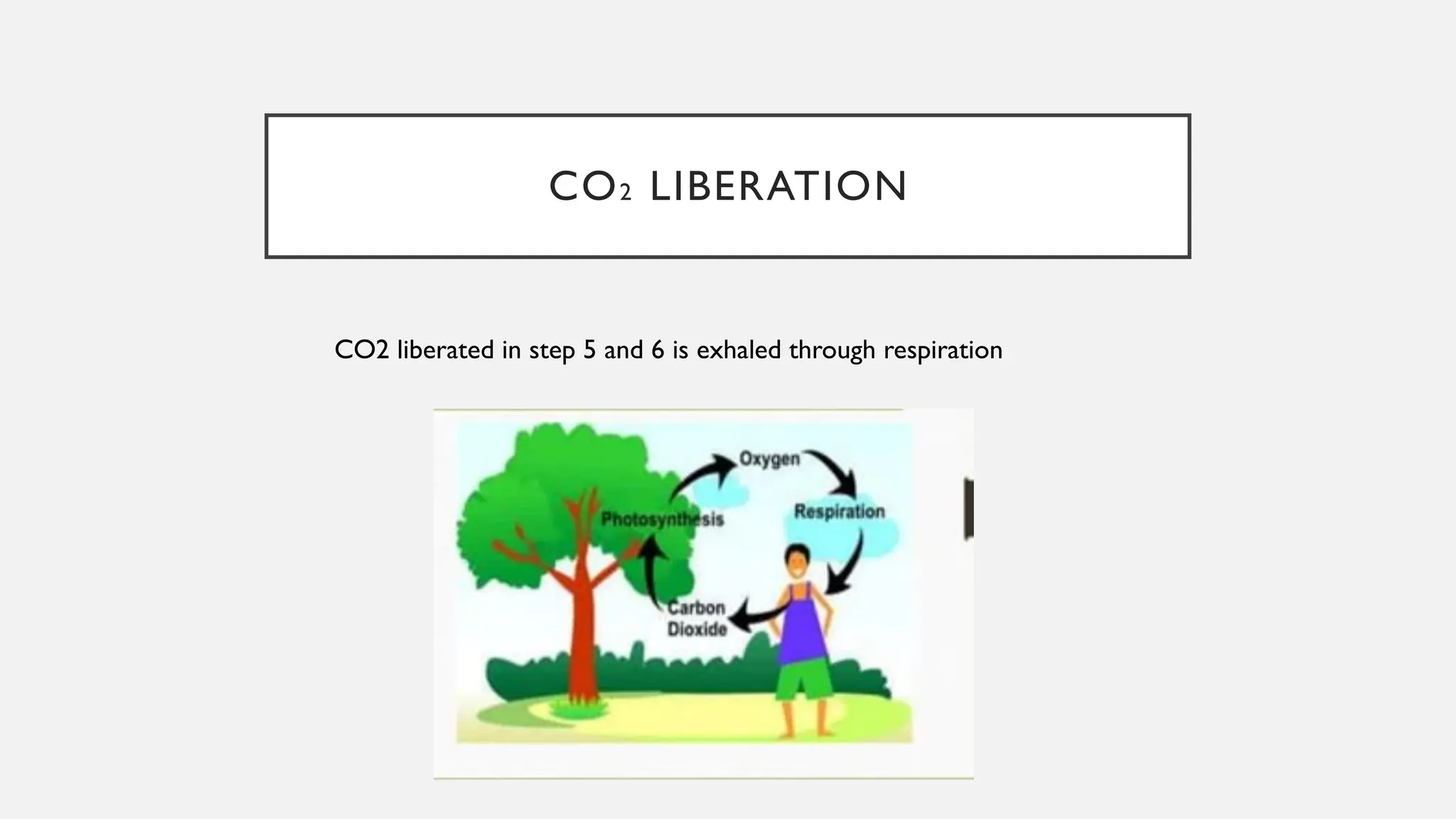
CO2 LIBERATION
CO2 liberated in step 5 and 6 is exhaled through respiration
Step: 7 Formation of succinate
• Succinyl CoA is converted to succinate by succinate thiokinase.
• This reaction is coupled with the phosphorylation of GDP to GTP.
• This is a substrate level phosphorylation.
• GTP is converted to ATP by the enzyme nucleoside diphosphate
kinase.
Step: 8 Conversion of succinate to fumarate
• Succinate is oxidized by succinate dehydrogenase to fumarate
• This reaction results in the production of FADH2
Step: 9 Formation of malate:
The enzyme fumarase catalyses the conversion of fumarate to malate
with the addition of H2O
Step:10 Conversion of malate to oxaloacetate
• Malate is then oxidized to oxaloacetate by malate dehydrogenase
• The third & final synthesis of NADH occurs at this stage
• The oxaloacetate is regenerated which can combine with another
molecule of acetyl CoA & continue the cycle
REGENERATION OF OXALOACETATE
The TCA cycle basically involves the oxidation of acetyl CoA to CO2
with the simultaneous regeneration of oxaloacetate
There is no net consumption of oxaloacetate or any other
intermediate in the cycle.
SIGNIFICANCE OF TCA CYCLE
• Complete oxidation of acetyl CoA.
• ATP generation
• Final common oxidative pathway.
• Integration of major metabolic pathways.
• Fat is burned on the wick of carbohydrates.
• Excess carbohydrates are converted as neutral fat
• No net synthesis of carbohydrates from fat.
ENERGETICS OF TCA CYCLE
• Oxidation of 3 NADH by ETC coupled with oxidative phosphorylation
results in the synthesis of 9ATP.
• FADH2 leads to the formation of 2ATP.
• One substrate level phosphorylation.
• Thus, a total of 12 ATP are produced from one acetyl CoA.
REQUIREMENT OF O2 BY TCA CYCLE
• There is no direct participation of O2 in TCA cycle.
• Operates only under aerobic conditions.
• This is due to, NAD+ & FAD required for the operation of the cycle can
be regenerated in the respiratory chain only in presence of O2.
• Therefore, citric acid cycle is strictly aerobic.
Regulation of TCA Cycle: Three regulatory enzymes
1. Citrate synthase
2. Isocitrate dehydrogenase
3. α-ketoglutarate dehydrogenase
THANKYOU

The citric acid cycle - elementary biochemistry

  • 1.
  • 2.
    INTRODUCTION Citric acid cycle/ TCA cycle/ tricarboxylic acid cycle/ Krebs cycle • TCA cycle essentially involves the oxidation of acetyl CoA to CO2 and H2O. • TCA cycle –the central metabolic pathway • The TCA cycle is the final common oxidative pathway for carbohydrates, fats, amino acids. • It supplies energy & also provides many intermediates required for the synthesis of amino acids, glucose, heme etc. • TCA cycle is the most important central pathway connecting almost all the individual metabolic pathways.
  • 3.
    LOCATION OF TCACYCLE Reactions of TCA occur in mitochondrial matrix, in close proximity to the ETC.
  • 4.
  • 5.
  • 6.
    REACTIONS OF TCACYCLE It starts with oxidative decarboxylation of pyruvate to acetyl CoA by PDH complex. This step is connecting link between glycolysis and TCA cycle. Step:1 Formation of citrate • Oxaloacetate condenses with acetyl CoA to form Citrate, catalysed by the enzyme citrate synthase • This reaction is inhibited by ATP, NADH, Citrate - competitive inhibitor of oxaloacetate.
  • 7.
    Steps 2 &3: Isomerization • Citrate is isomerized to isocitrate by the enzyme aconitase • This is achieved in a two stage reaction of dehydration followed by hydration through the formation of an intermediate -cis-aconiase
  • 8.
    Steps 4 &5: Formation of alpha-ketoglutarate • Isocitrate dehydrogenase (ICDH) catalyses the conversion of (oxidative decarboxylation) of isocitrate to oxalosuccinate & then to alpha ketoglutarate. • The formation of NADH & the liberation of CO2 occur at this stage • Stimulated (cooperative) by isocitrate, NAD+, Mg2+, ADP, Ca2+ (links with contraction). • Inhibited by NADH & ATP
  • 9.
    Step: 6 Conversionof alpha-ketoglutarate to succinyl CoA • Occurs through oxidative decarboxylation, catalysed by alpha- ketoglutarate dehydrogenase complex • At this stage of TCA cycle, second NADH is produced & the second CO2 is liberated
  • 10.
    CO2 LIBERATION CO2 liberatedin step 5 and 6 is exhaled through respiration
  • 11.
    Step: 7 Formationof succinate • Succinyl CoA is converted to succinate by succinate thiokinase. • This reaction is coupled with the phosphorylation of GDP to GTP. • This is a substrate level phosphorylation. • GTP is converted to ATP by the enzyme nucleoside diphosphate kinase.
  • 12.
    Step: 8 Conversionof succinate to fumarate • Succinate is oxidized by succinate dehydrogenase to fumarate • This reaction results in the production of FADH2 Step: 9 Formation of malate: The enzyme fumarase catalyses the conversion of fumarate to malate with the addition of H2O
  • 13.
    Step:10 Conversion ofmalate to oxaloacetate • Malate is then oxidized to oxaloacetate by malate dehydrogenase • The third & final synthesis of NADH occurs at this stage • The oxaloacetate is regenerated which can combine with another molecule of acetyl CoA & continue the cycle
  • 15.
    REGENERATION OF OXALOACETATE TheTCA cycle basically involves the oxidation of acetyl CoA to CO2 with the simultaneous regeneration of oxaloacetate There is no net consumption of oxaloacetate or any other intermediate in the cycle.
  • 16.
    SIGNIFICANCE OF TCACYCLE • Complete oxidation of acetyl CoA. • ATP generation • Final common oxidative pathway. • Integration of major metabolic pathways. • Fat is burned on the wick of carbohydrates. • Excess carbohydrates are converted as neutral fat • No net synthesis of carbohydrates from fat.
  • 17.
    ENERGETICS OF TCACYCLE • Oxidation of 3 NADH by ETC coupled with oxidative phosphorylation results in the synthesis of 9ATP. • FADH2 leads to the formation of 2ATP. • One substrate level phosphorylation. • Thus, a total of 12 ATP are produced from one acetyl CoA.
  • 18.
    REQUIREMENT OF O2BY TCA CYCLE • There is no direct participation of O2 in TCA cycle. • Operates only under aerobic conditions. • This is due to, NAD+ & FAD required for the operation of the cycle can be regenerated in the respiratory chain only in presence of O2. • Therefore, citric acid cycle is strictly aerobic. Regulation of TCA Cycle: Three regulatory enzymes 1. Citrate synthase 2. Isocitrate dehydrogenase 3. α-ketoglutarate dehydrogenase
  • 19.