


The Architecture of
Teaching & Learning
Peter Morville, IA Summit 2016, Atlanta
3
“Think Until Your Brain Hurts!”
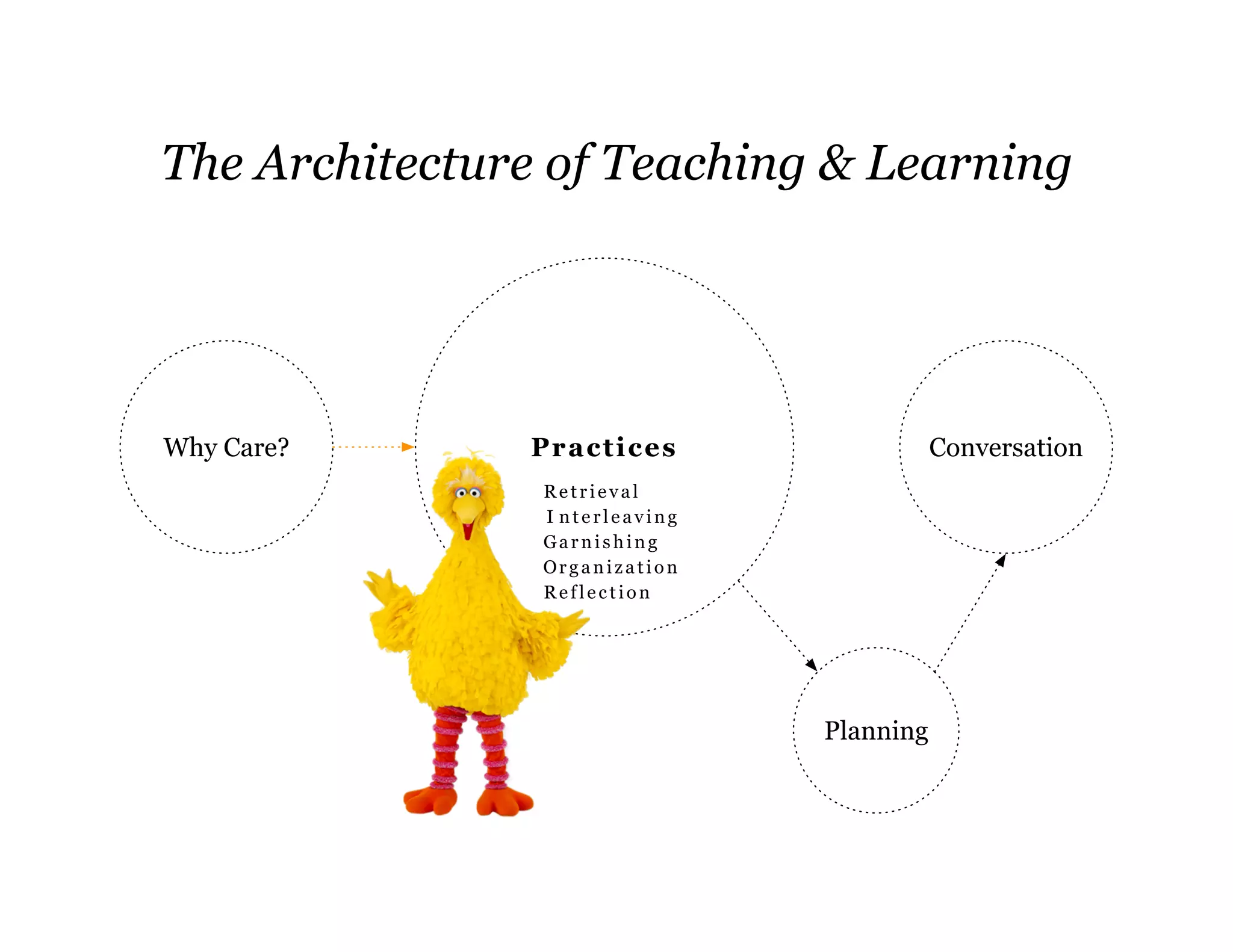
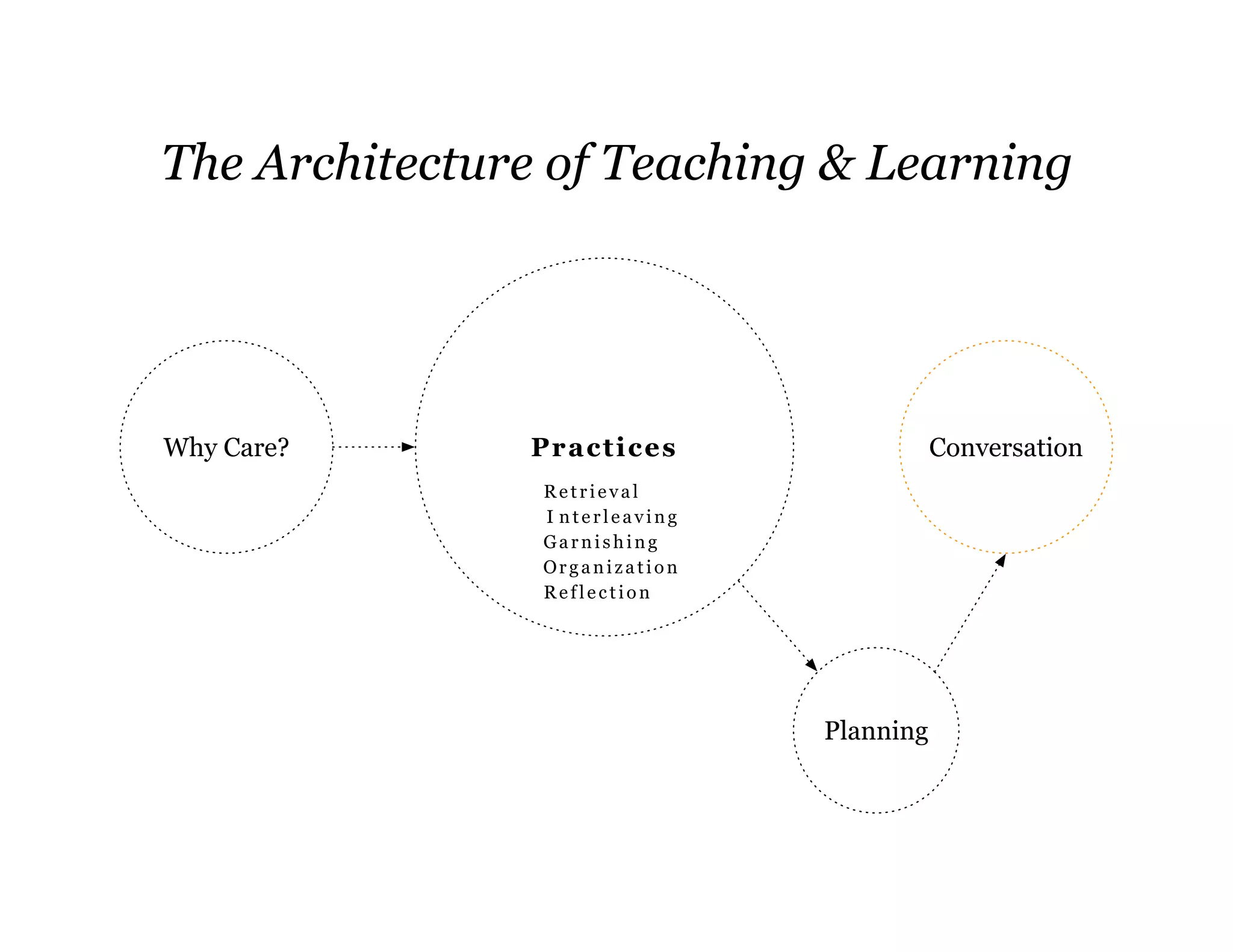
The Architecture of Teaching & Learning
Why Care? Practices Conversation
Planning
etrieval
nterleaving
arnishing
rganization
eflection
R
I
G
O
R
5
R I G O R
etrieval
nterleaving
arnishing
rganization
eflection
6
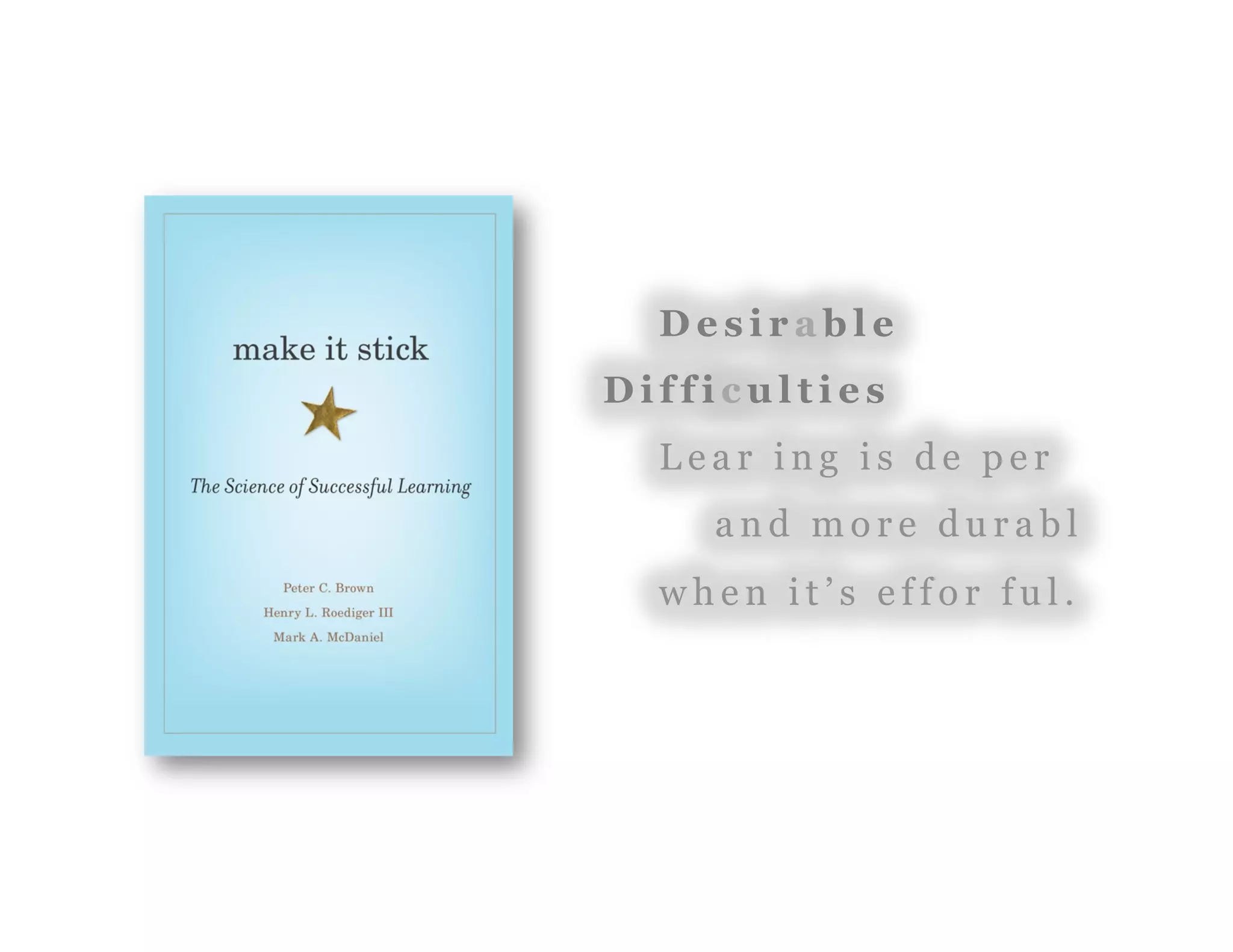
D e s i r a b l e
D i f f i c u l t i e s
L e a r i n g i s d e p e r
a n d m o r e d u r a b l
w h e n i t ’ s e f f o r f u l .
7
R I G O R
etrieval
nterleaving
arnishing
rganization
eflection
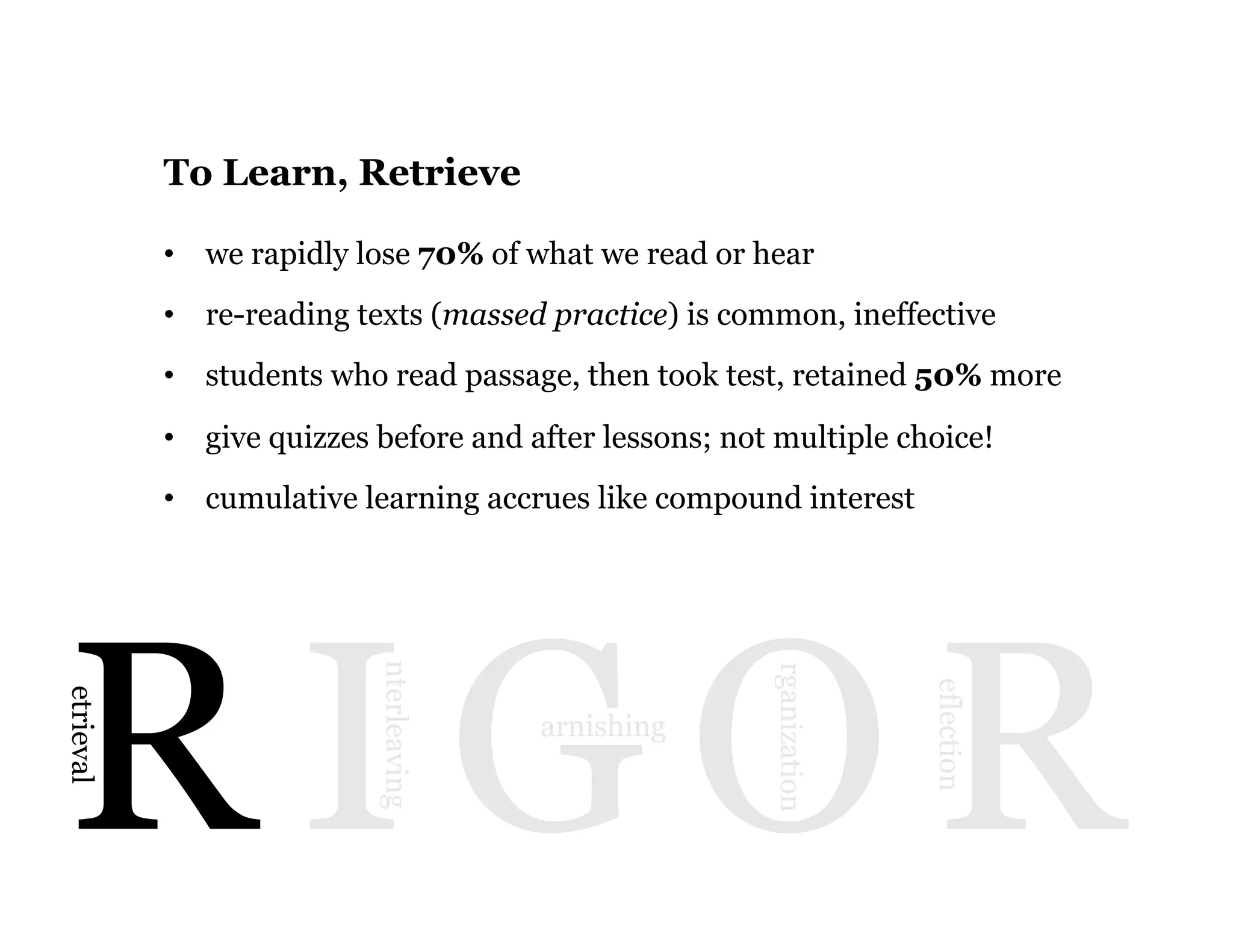
To Learn, Retrieve
•  we rapidly lose 70% of what we read or hear
•  re-reading texts (massed practice) is common, ineffective
•  students who read passage, then took test, retained 50% more
•  give quizzes before and after lessons; not multiple choice!
•  cumulative learning accrues like compound interest
A B B
9
R I G O R
etrieval
nterleaving
arnishing
rganization
eflection
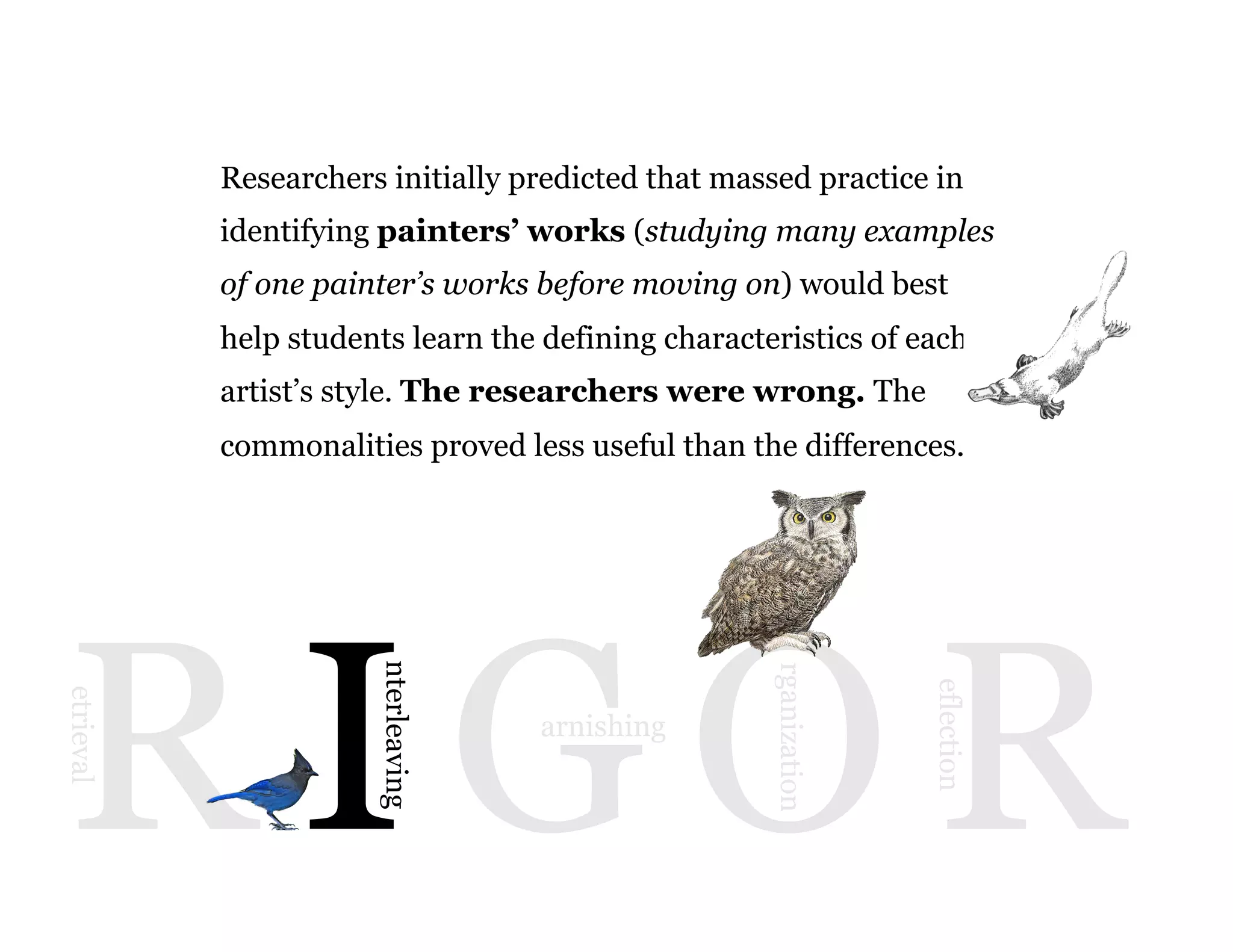
Researchers initially predicted that massed practice in
identifying painters’ works (studying many examples
of one painter’s works before moving on) would best
help students learn the defining characteristics of each
artist’s style. The researchers were wrong. The
commonalities proved less useful than the differences.
10
R I G O R
etrieval
nterleaving
arnishing
rganization
eflection
To Learn, Interleave Your Practices
•  mixing skills, subjects, problem types (interleaving)
•  in one study, it boosted test performance by 215%
•  what kind of problem is this? (assess context)
•  feels slower, so it’s unpopular, seldom used
•  sleep enables memory consolidation (spaced practice)
11
R I G O R
etrieval
nterleaving
arnishing
rganization
eflection
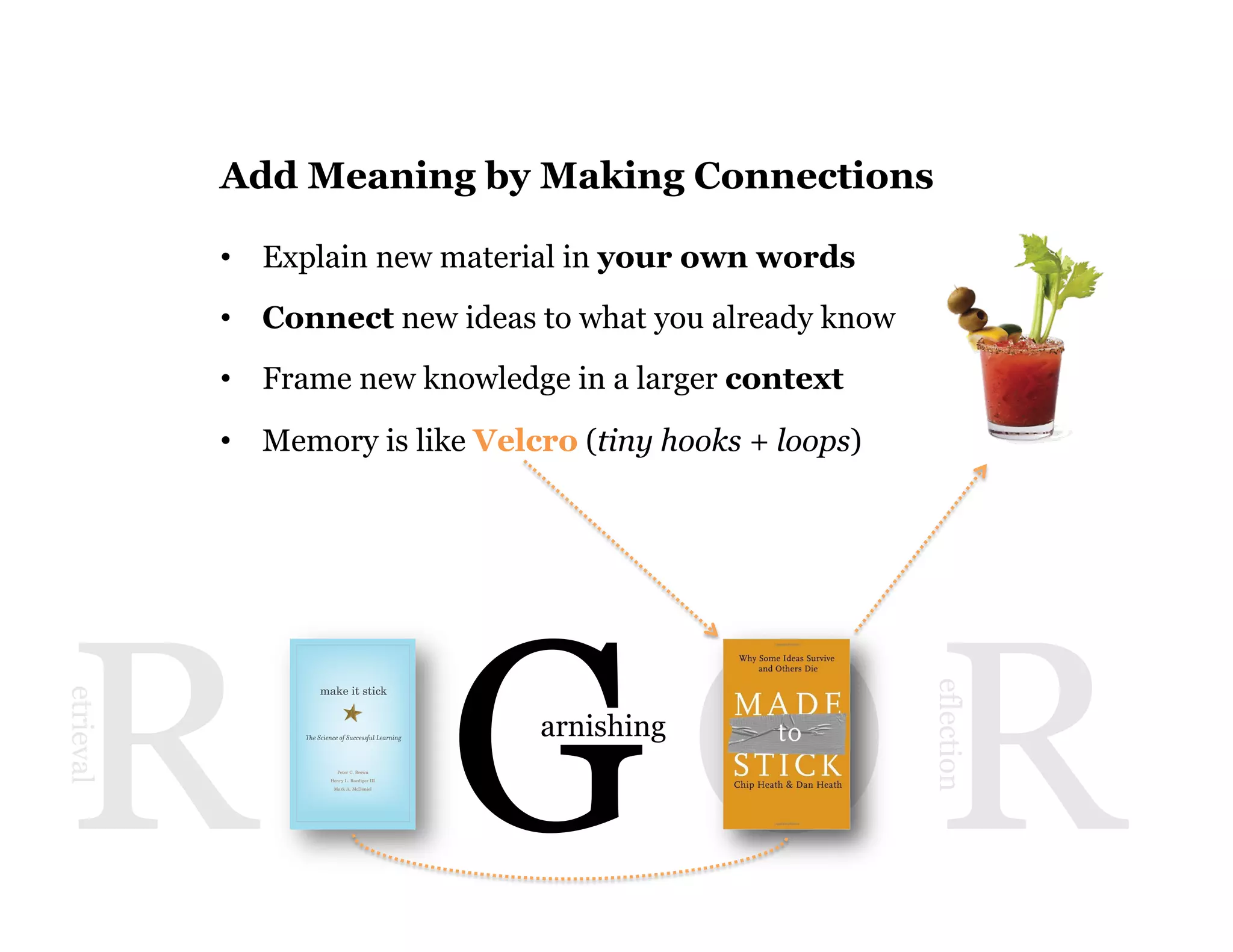
Add Meaning by Making Connections
•  Explain new material in your own words
•  Connect new ideas to what you already know
•  Frame new knowledge in a larger context
•  Memory is like Velcro (tiny hooks + loops)
12
R I G O R
etrieval
nterleaving
arnishing
rganization
eflection
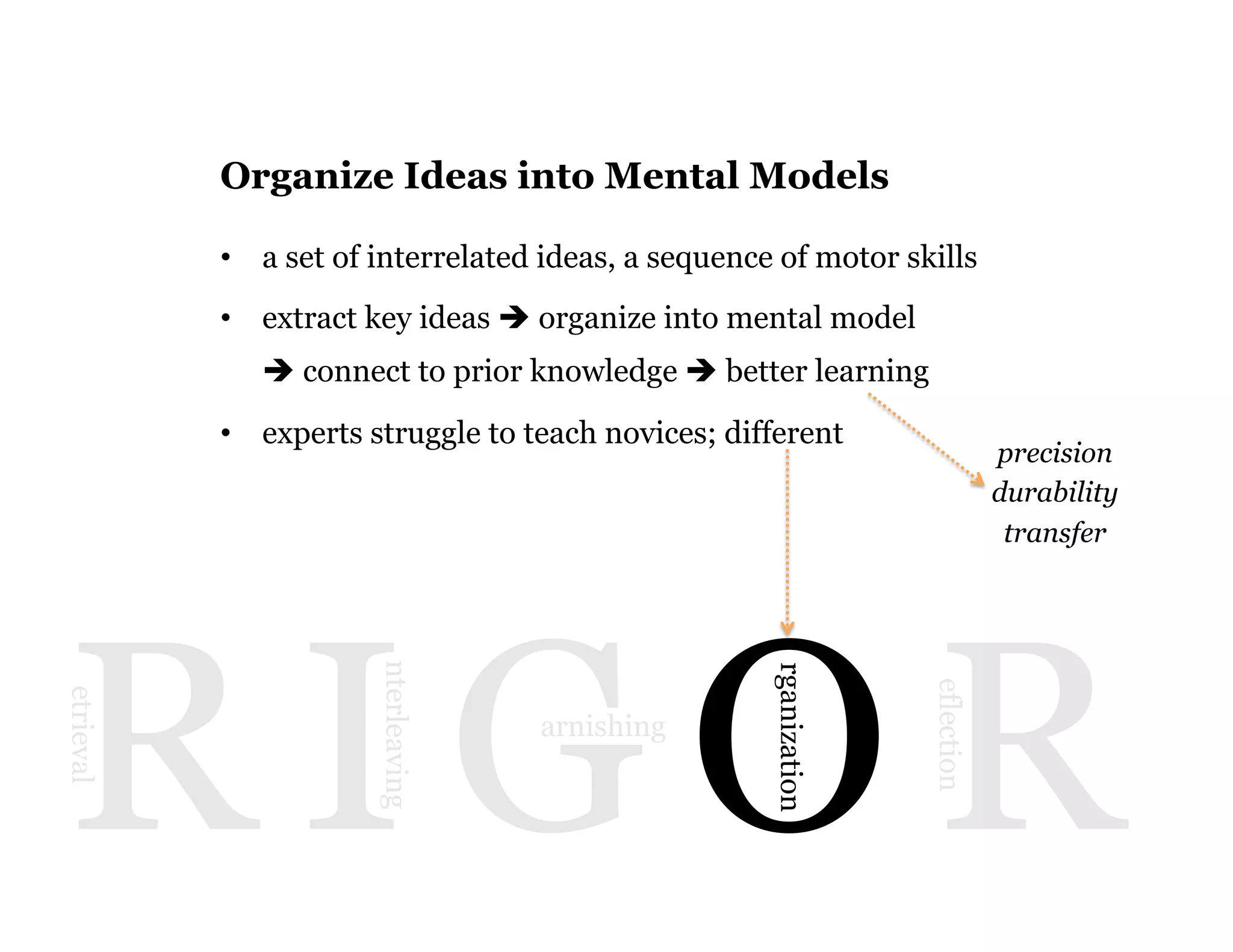
Organize Ideas into Mental Models
•  a set of interrelated ideas, a sequence of motor skills
•  extract key ideas è organize into mental model
è connect to prior knowledge è better learning
•  experts struggle to teach novices; different
precision
durability
transfer
13
R I G O R
etrieval
nterleaving
arnishing
rganization
eflection
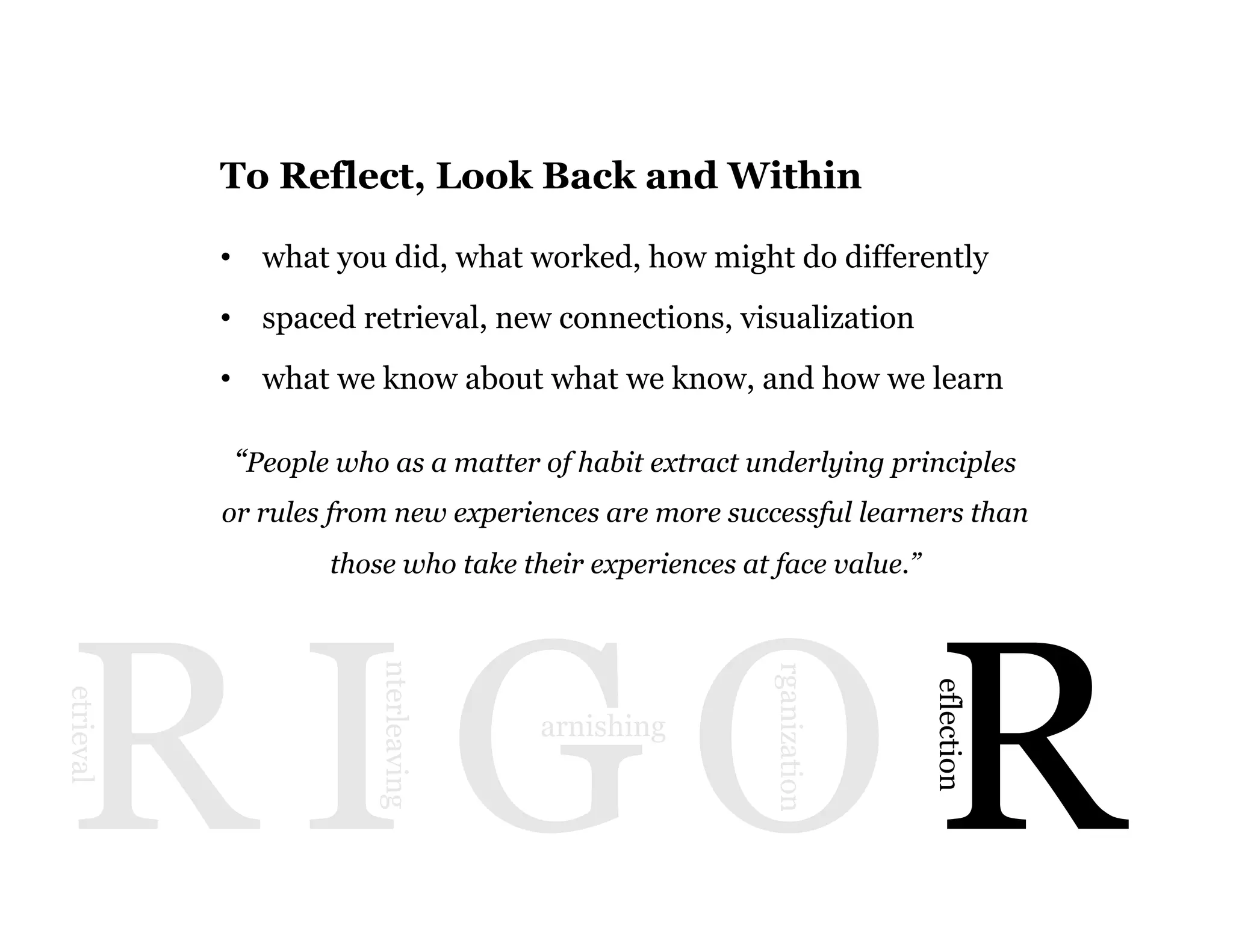
To Reflect, Look Back and Within
•  what you did, what worked, how might do differently
•  spaced retrieval, new connections, visualization
•  what we know about what we know, and how we learn
“People who as a matter of habit extract underlying principles
or rules from new experiences are more successful learners than
those who take their experiences at face value.”
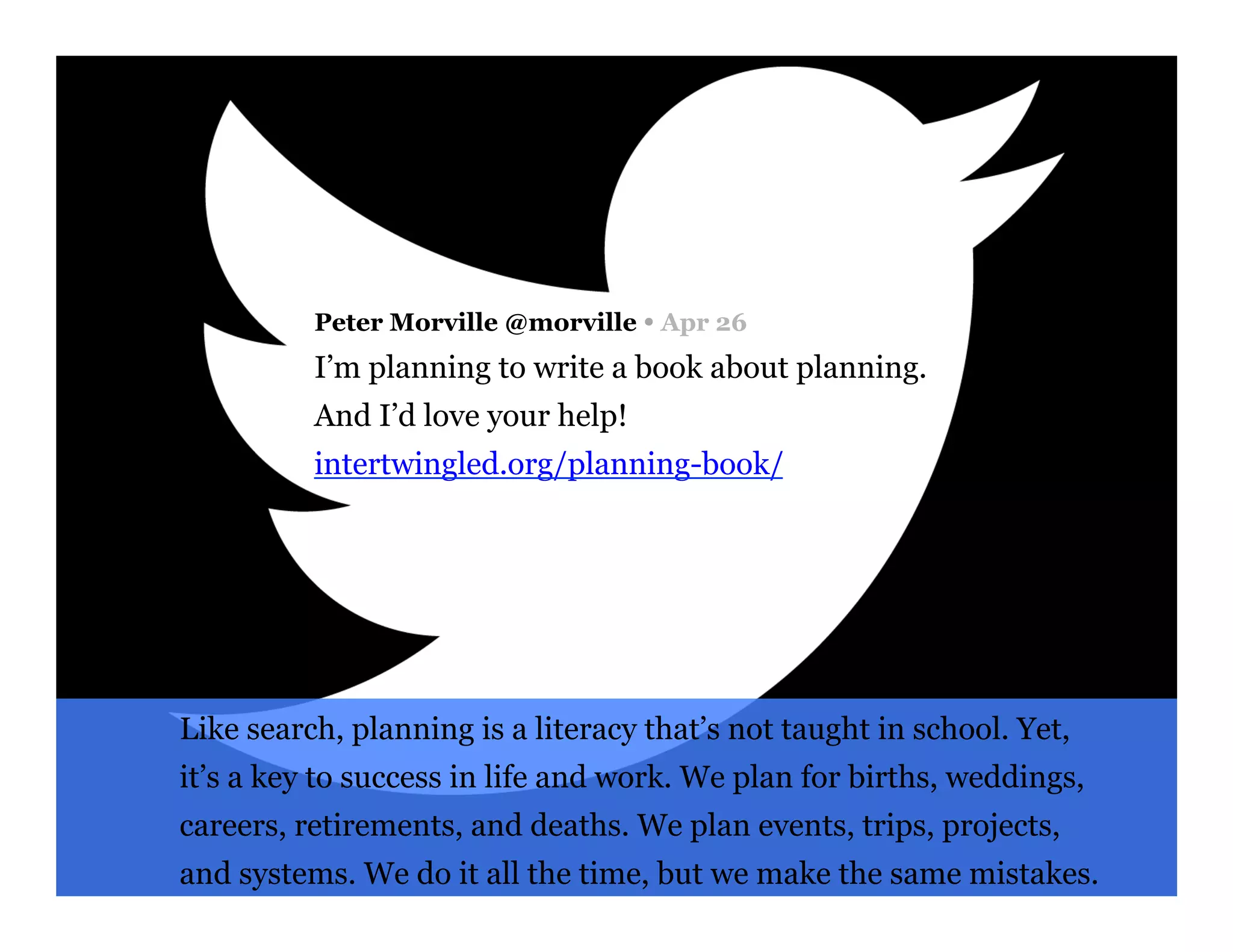
Peter Morville @morville Ÿ Apr 26
I’m planning to write a book about planning.
And I’d love your help!
intertwingled.org/planning-book/
Like search, planning is a literacy that’s not taught in school. Yet,
it’s a key to success in life and work. We plan for births, weddings,
careers, retirements, and deaths. We plan events, trips, projects,
and systems. We do it all the time, but we make the same mistakes.
15
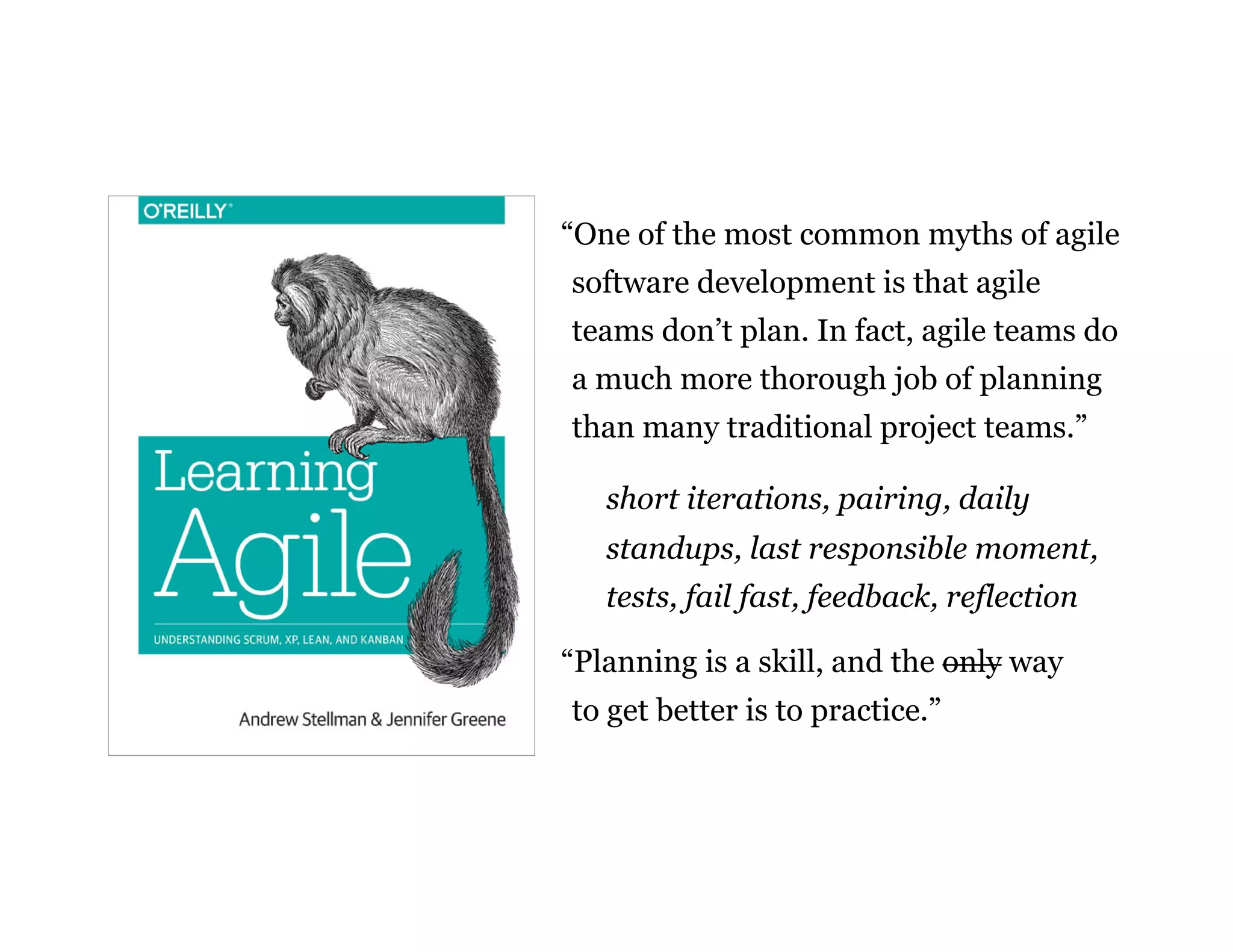
“One of the most common myths of agile
software development is that agile
teams don’t plan. In fact, agile teams do
a much more thorough job of planning
than many traditional project teams.”
short iterations, pairing, daily
standups, last responsible moment,
tests, fail fast, feedback, reflection
“Planning is a skill, and the only way
to get better is to practice.”
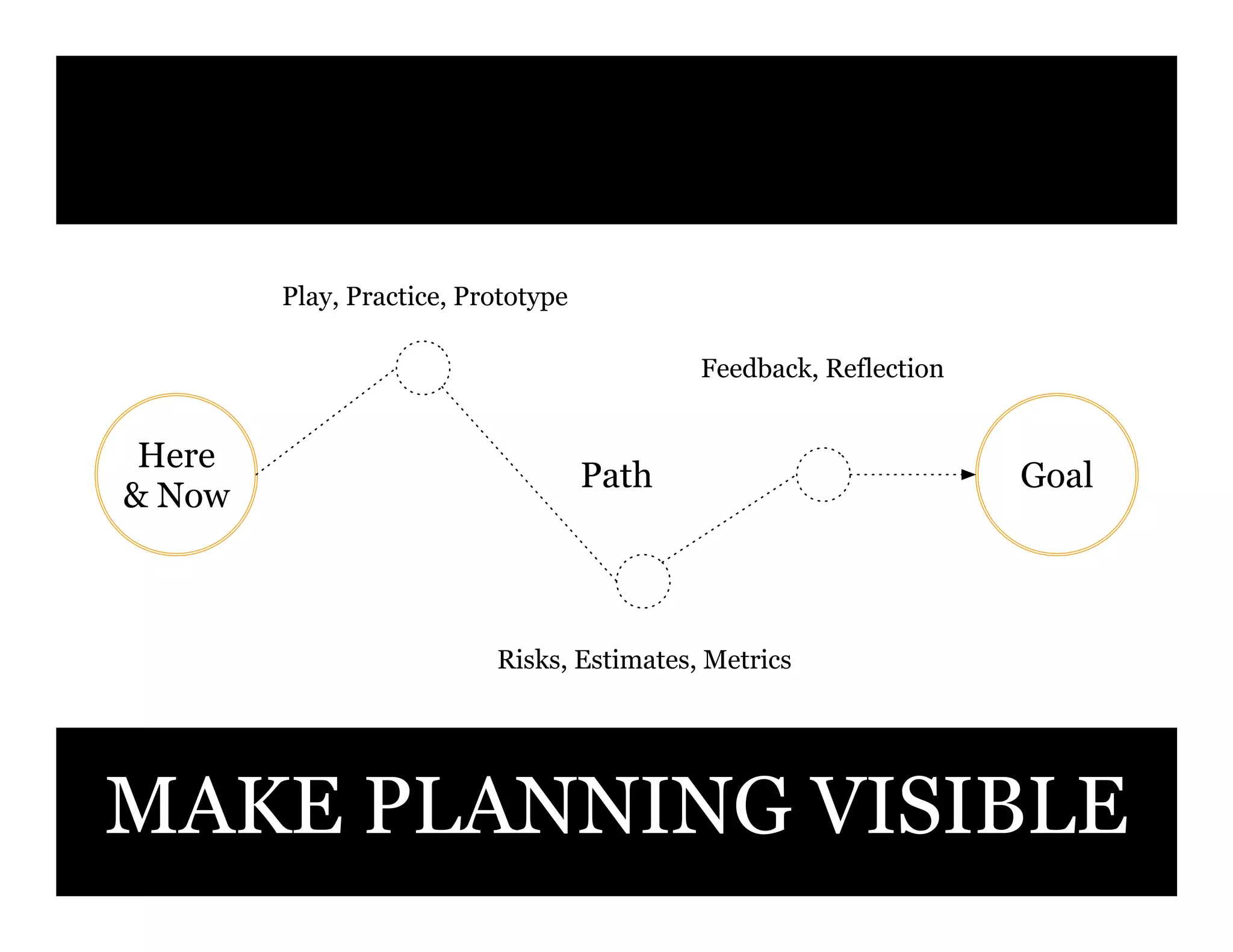
MAKE PLANNING VISIBLE
GoalPath
Here
& Now
Risks, Estimates, Metrics
Play, Practice, Prototype
Feedback, Reflection
18
R I G O R
etrieval
nterleaving
arnishing
rganization
eflection
The Architecture of Teaching & Learning
Why Care? Practices Conversation
Planning
etrieval
nterleaving
arnishing
rganization
eflection
R
I
G
O
R
Thank You!
@morville

The Architecture of Teaching & Learning (ATL)

  • 1.
    The Architecture of Teaching& Learning Peter Morville, IA Summit 2016, Atlanta
  • 3.
    3 “Think Until YourBrain Hurts!”
  • 4.
    The Architecture ofTeaching & Learning Why Care? Practices Conversation Planning etrieval nterleaving arnishing rganization eflection R I G O R
  • 5.
    5 R I GO R etrieval nterleaving arnishing rganization eflection
  • 6.
    6 D e si r a b l e D i f f i c u l t i e s L e a r i n g i s d e p e r a n d m o r e d u r a b l w h e n i t ’ s e f f o r f u l .
  • 7.
    7 R I GO R etrieval nterleaving arnishing rganization eflection To Learn, Retrieve •  we rapidly lose 70% of what we read or hear •  re-reading texts (massed practice) is common, ineffective •  students who read passage, then took test, retained 50% more •  give quizzes before and after lessons; not multiple choice! •  cumulative learning accrues like compound interest
  • 8.
  • 9.
    9 R I GO R etrieval nterleaving arnishing rganization eflection Researchers initially predicted that massed practice in identifying painters’ works (studying many examples of one painter’s works before moving on) would best help students learn the defining characteristics of each artist’s style. The researchers were wrong. The commonalities proved less useful than the differences.
  • 10.
    10 R I GO R etrieval nterleaving arnishing rganization eflection To Learn, Interleave Your Practices •  mixing skills, subjects, problem types (interleaving) •  in one study, it boosted test performance by 215% •  what kind of problem is this? (assess context) •  feels slower, so it’s unpopular, seldom used •  sleep enables memory consolidation (spaced practice)
  • 11.
    11 R I GO R etrieval nterleaving arnishing rganization eflection Add Meaning by Making Connections •  Explain new material in your own words •  Connect new ideas to what you already know •  Frame new knowledge in a larger context •  Memory is like Velcro (tiny hooks + loops)
  • 12.
    12 R I GO R etrieval nterleaving arnishing rganization eflection Organize Ideas into Mental Models •  a set of interrelated ideas, a sequence of motor skills •  extract key ideas è organize into mental model è connect to prior knowledge è better learning •  experts struggle to teach novices; different precision durability transfer
  • 13.
    13 R I GO R etrieval nterleaving arnishing rganization eflection To Reflect, Look Back and Within •  what you did, what worked, how might do differently •  spaced retrieval, new connections, visualization •  what we know about what we know, and how we learn “People who as a matter of habit extract underlying principles or rules from new experiences are more successful learners than those who take their experiences at face value.”
  • 14.
    Peter Morville @morvilleŸ Apr 26 I’m planning to write a book about planning. And I’d love your help! intertwingled.org/planning-book/ Like search, planning is a literacy that’s not taught in school. Yet, it’s a key to success in life and work. We plan for births, weddings, careers, retirements, and deaths. We plan events, trips, projects, and systems. We do it all the time, but we make the same mistakes.
  • 15.
    15 “One of themost common myths of agile software development is that agile teams don’t plan. In fact, agile teams do a much more thorough job of planning than many traditional project teams.” short iterations, pairing, daily standups, last responsible moment, tests, fail fast, feedback, reflection “Planning is a skill, and the only way to get better is to practice.”
  • 16.
    MAKE PLANNING VISIBLE GoalPath Here &Now Risks, Estimates, Metrics Play, Practice, Prototype Feedback, Reflection
  • 18.
    18 R I GO R etrieval nterleaving arnishing rganization eflection
  • 19.
    The Architecture ofTeaching & Learning Why Care? Practices Conversation Planning etrieval nterleaving arnishing rganization eflection R I G O R
  • 20.