THE ADDITION
POLYMERIZATION
Name of the Team Members :
Atharva Milind Salvi-127
Samarth Mishra-128
Sambhav Sanjay Singh-129
Alisha Ashish Sankhe-130
Nirmohi Ketan Sankhe-131
Shreya Suhas Sankhe-132
Guided By: Dr. Anuradha Tyagi
 AIM / BENEFITS OF THE TOPIC:
The aim of this micro project is to study the addition Polymerization monomers react to form a
polymer without the formation of the product.
 Course Outcomes:
From this project we will learn how to define addition polymerization with plastic. We will also
learn how to determine the structure of addition polymer.
 POLYMERIZATION- ADDITION
POLYMERS:
 ADDITION POLYMERS:
 A polymer formed by chain addition reaction between monomer units that are
repeatedly added to form long chain without the elimination of any by product
molecules.
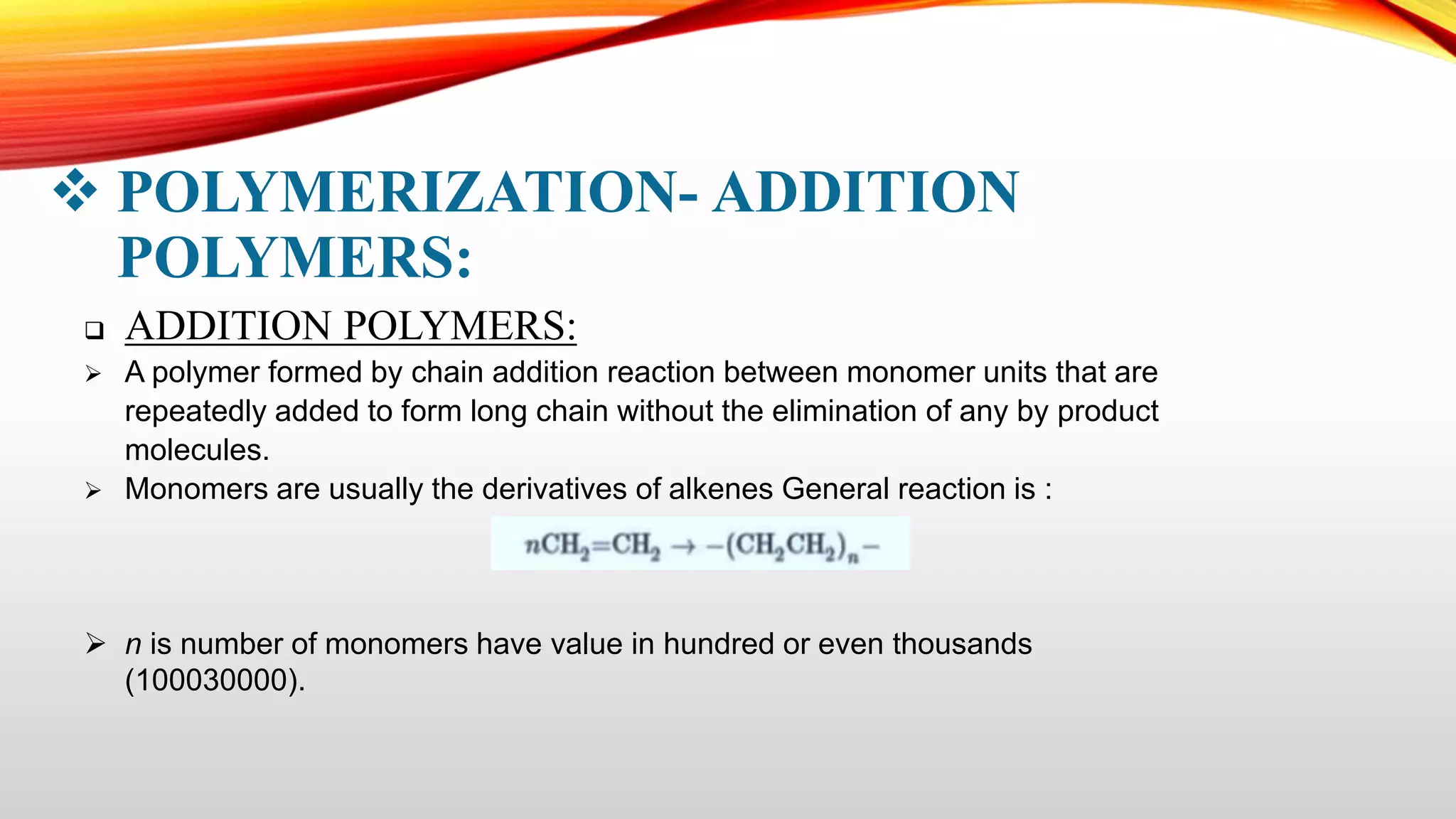
 Monomers are usually the derivatives of alkenes General reaction is :
 n is number of monomers have value in hundred or even thousands
(100030000).
❖EXAMPLES AND USES:
 POLYETHENE (Polythene):
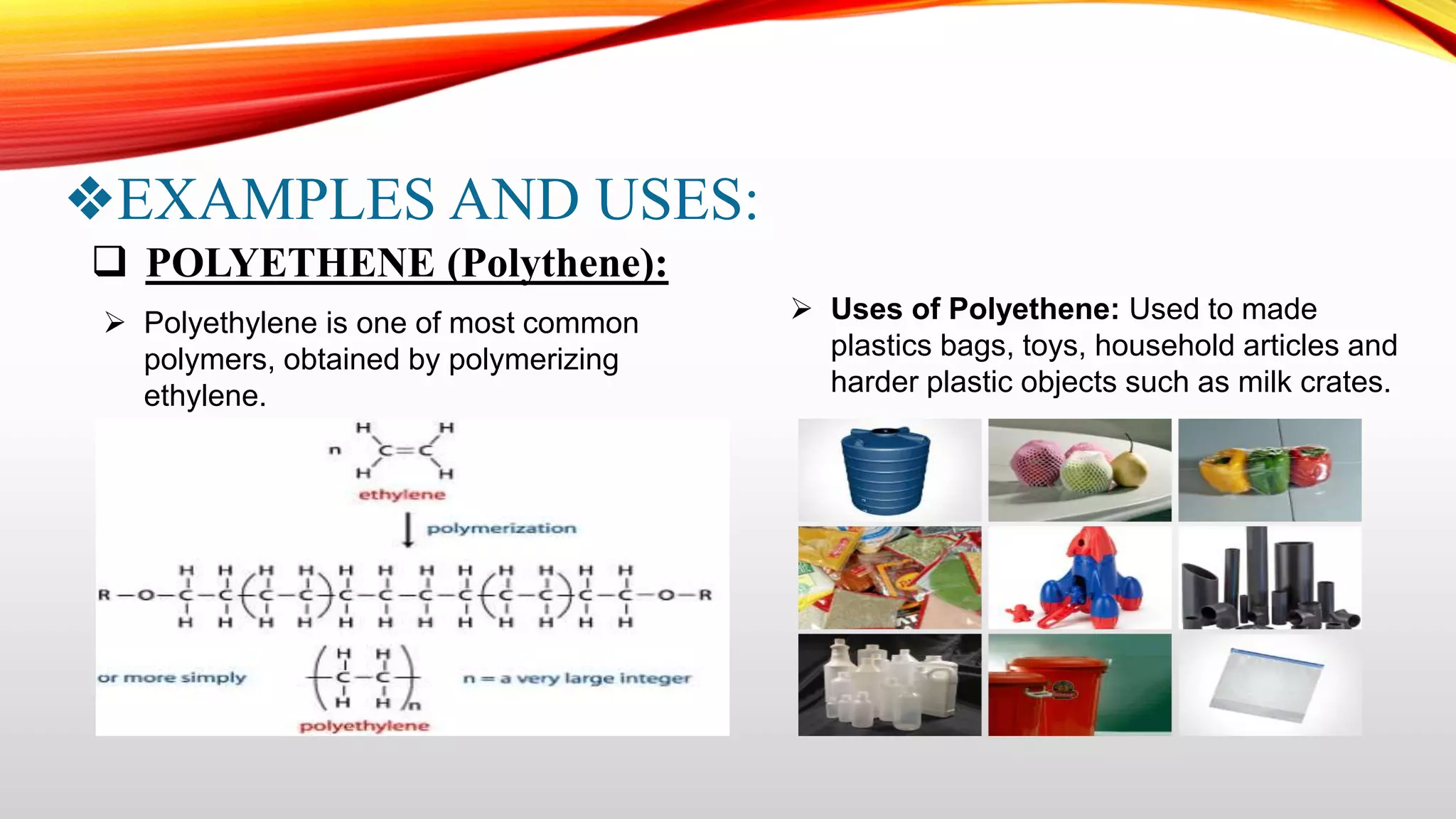
 Polyethylene is one of most common
polymers, obtained by polymerizing
ethylene.
 Uses of Polyethene: Used to made
plastics bags, toys, household articles and
harder plastic objects such as milk crates.
 POLYVINYL CHORIDE (PVC):
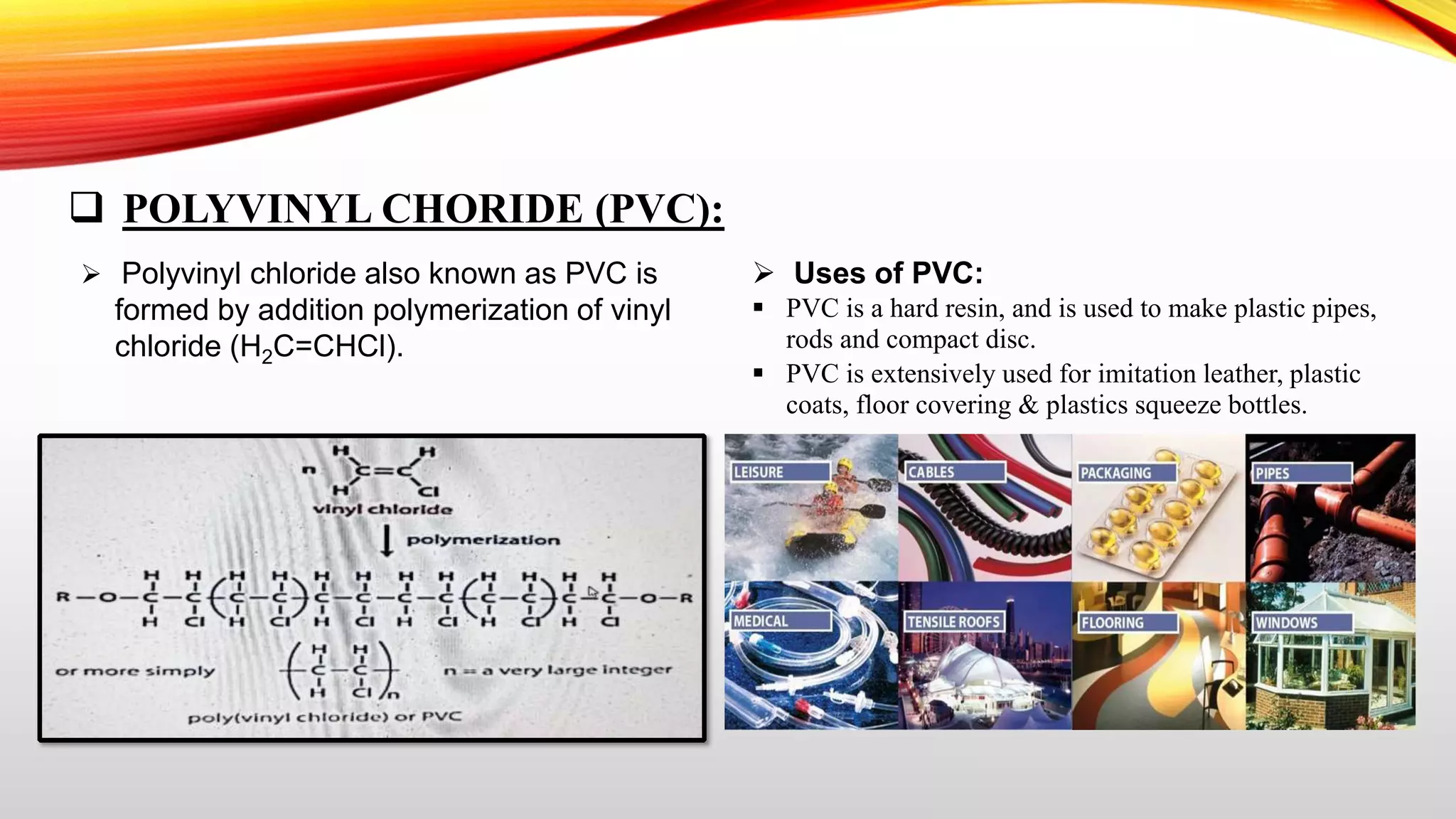
 Polyvinyl chloride also known as PVC is
formed by addition polymerization of vinyl
chloride (H2C=CHCl).
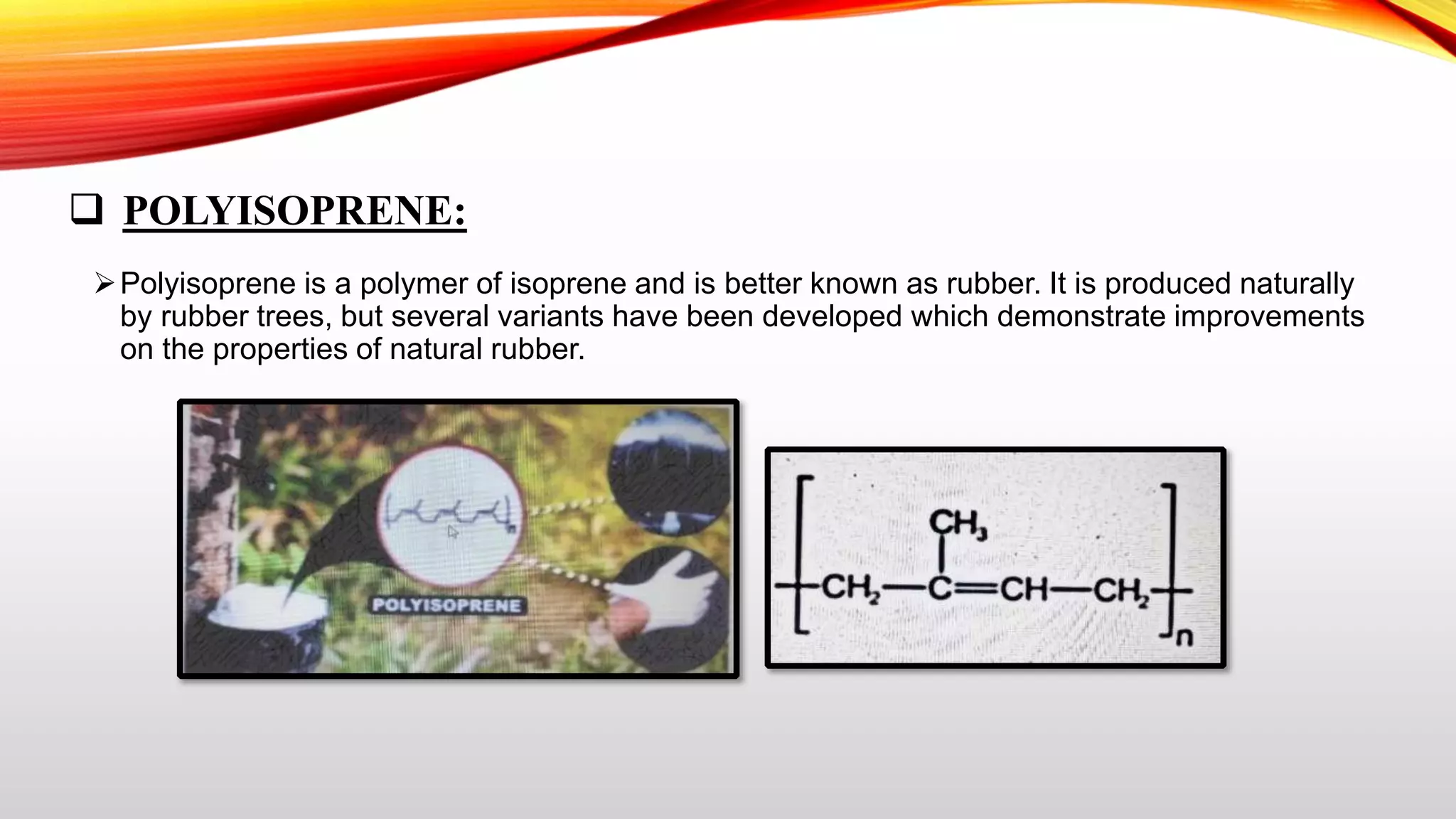
 Uses of PVC:
 PVC is a hard resin, and is used to make plastic pipes,
rods and compact disc.
 PVC is extensively used for imitation leather, plastic
coats, floor covering & plastics squeeze bottles.
 POLYISOPRENE:
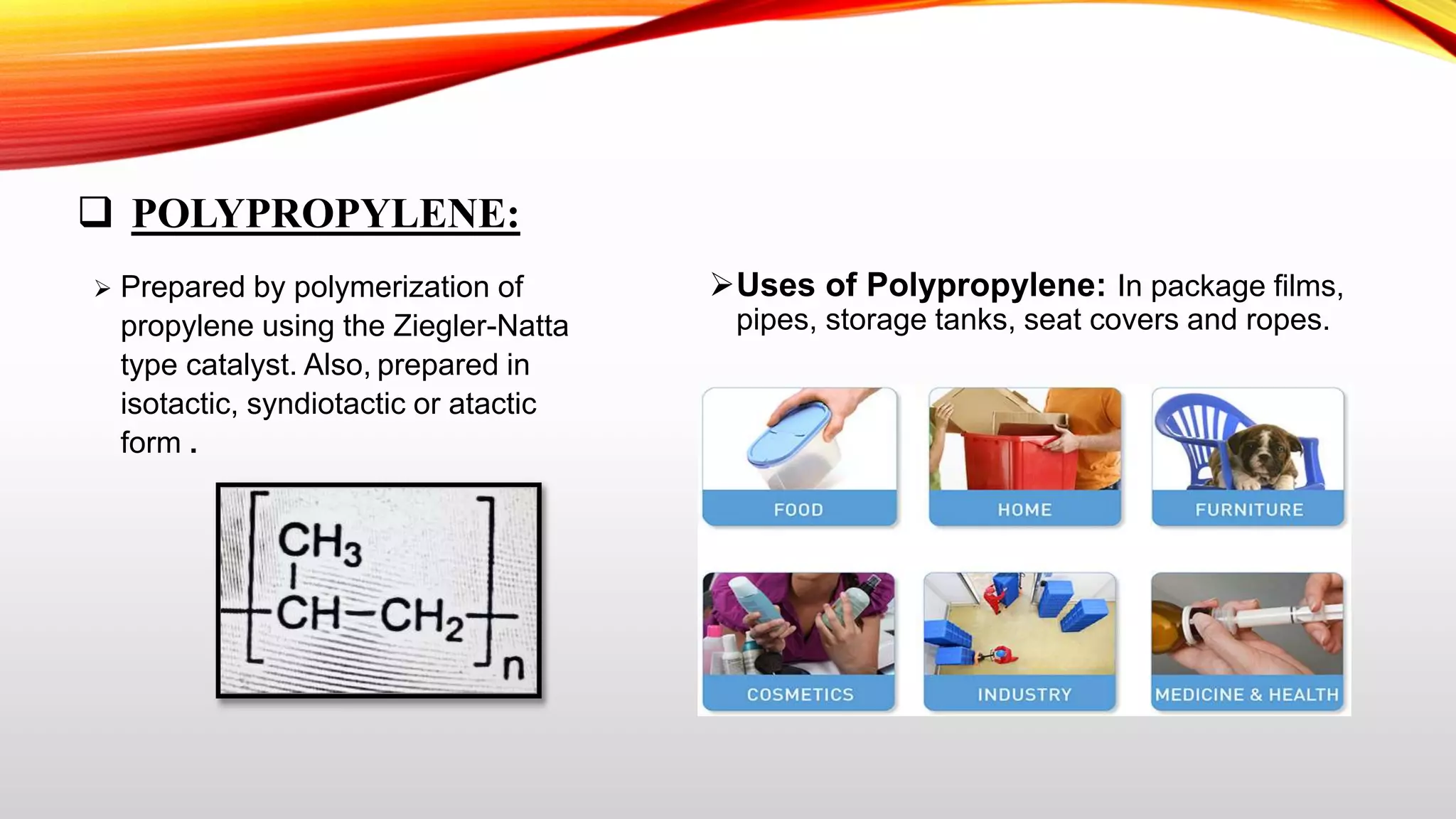
Polyisoprene is a polymer of isoprene and is better known as rubber. It is produced naturally
by rubber trees, but several variants have been developed which demonstrate improvements
on the properties of natural rubber.
• Polyisoprene is a polymer of isoprene and is better known as rubber.
It is produced naturally by rubber trees, but several variants have
been developed which demonstrate improvements on the properties
 POLYPROPYLENE:
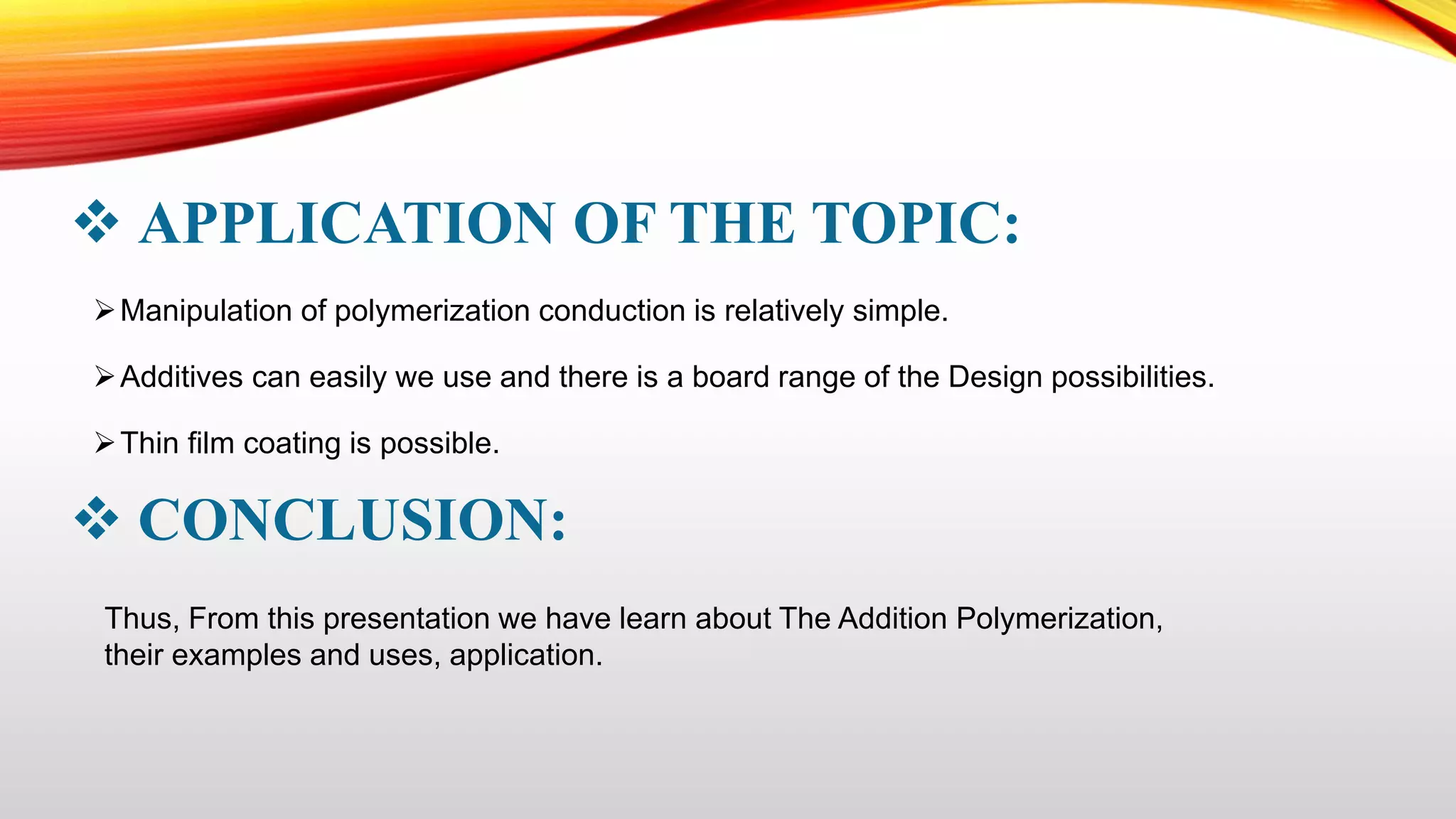
 Prepared by polymerization of
propylene using the Ziegler-Natta
type catalyst. Also, prepared in
isotactic, syndiotactic or atactic
form .
Uses of Polypropylene: In package films,
pipes, storage tanks, seat covers and ropes.
 APPLICATION OF THE TOPIC:
Manipulation of polymerization conduction is relatively simple.
Additives can easily we use and there is a board range of the Design possibilities.
Thin film coating is possible.
 CONCLUSION:
Thus, From this presentation we have learn about The Addition Polymerization,
their examples and uses, application.
THANK YOU

the addition polymerization

  • 1.
    THE ADDITION POLYMERIZATION Name ofthe Team Members : Atharva Milind Salvi-127 Samarth Mishra-128 Sambhav Sanjay Singh-129 Alisha Ashish Sankhe-130 Nirmohi Ketan Sankhe-131 Shreya Suhas Sankhe-132 Guided By: Dr. Anuradha Tyagi
  • 2.
     AIM /BENEFITS OF THE TOPIC: The aim of this micro project is to study the addition Polymerization monomers react to form a polymer without the formation of the product.  Course Outcomes: From this project we will learn how to define addition polymerization with plastic. We will also learn how to determine the structure of addition polymer.
  • 3.
     POLYMERIZATION- ADDITION POLYMERS: ADDITION POLYMERS:  A polymer formed by chain addition reaction between monomer units that are repeatedly added to form long chain without the elimination of any by product molecules.  Monomers are usually the derivatives of alkenes General reaction is :  n is number of monomers have value in hundred or even thousands (100030000).
  • 4.
    ❖EXAMPLES AND USES: POLYETHENE (Polythene):  Polyethylene is one of most common polymers, obtained by polymerizing ethylene.  Uses of Polyethene: Used to made plastics bags, toys, household articles and harder plastic objects such as milk crates.
  • 5.
     POLYVINYL CHORIDE(PVC):  Polyvinyl chloride also known as PVC is formed by addition polymerization of vinyl chloride (H2C=CHCl).  Uses of PVC:  PVC is a hard resin, and is used to make plastic pipes, rods and compact disc.  PVC is extensively used for imitation leather, plastic coats, floor covering & plastics squeeze bottles.
  • 6.
     POLYISOPRENE: Polyisoprene isa polymer of isoprene and is better known as rubber. It is produced naturally by rubber trees, but several variants have been developed which demonstrate improvements on the properties of natural rubber. • Polyisoprene is a polymer of isoprene and is better known as rubber. It is produced naturally by rubber trees, but several variants have been developed which demonstrate improvements on the properties
  • 7.
     POLYPROPYLENE:  Preparedby polymerization of propylene using the Ziegler-Natta type catalyst. Also, prepared in isotactic, syndiotactic or atactic form . Uses of Polypropylene: In package films, pipes, storage tanks, seat covers and ropes.
  • 8.
     APPLICATION OFTHE TOPIC: Manipulation of polymerization conduction is relatively simple. Additives can easily we use and there is a board range of the Design possibilities. Thin film coating is possible.  CONCLUSION: Thus, From this presentation we have learn about The Addition Polymerization, their examples and uses, application.
  • 9.