
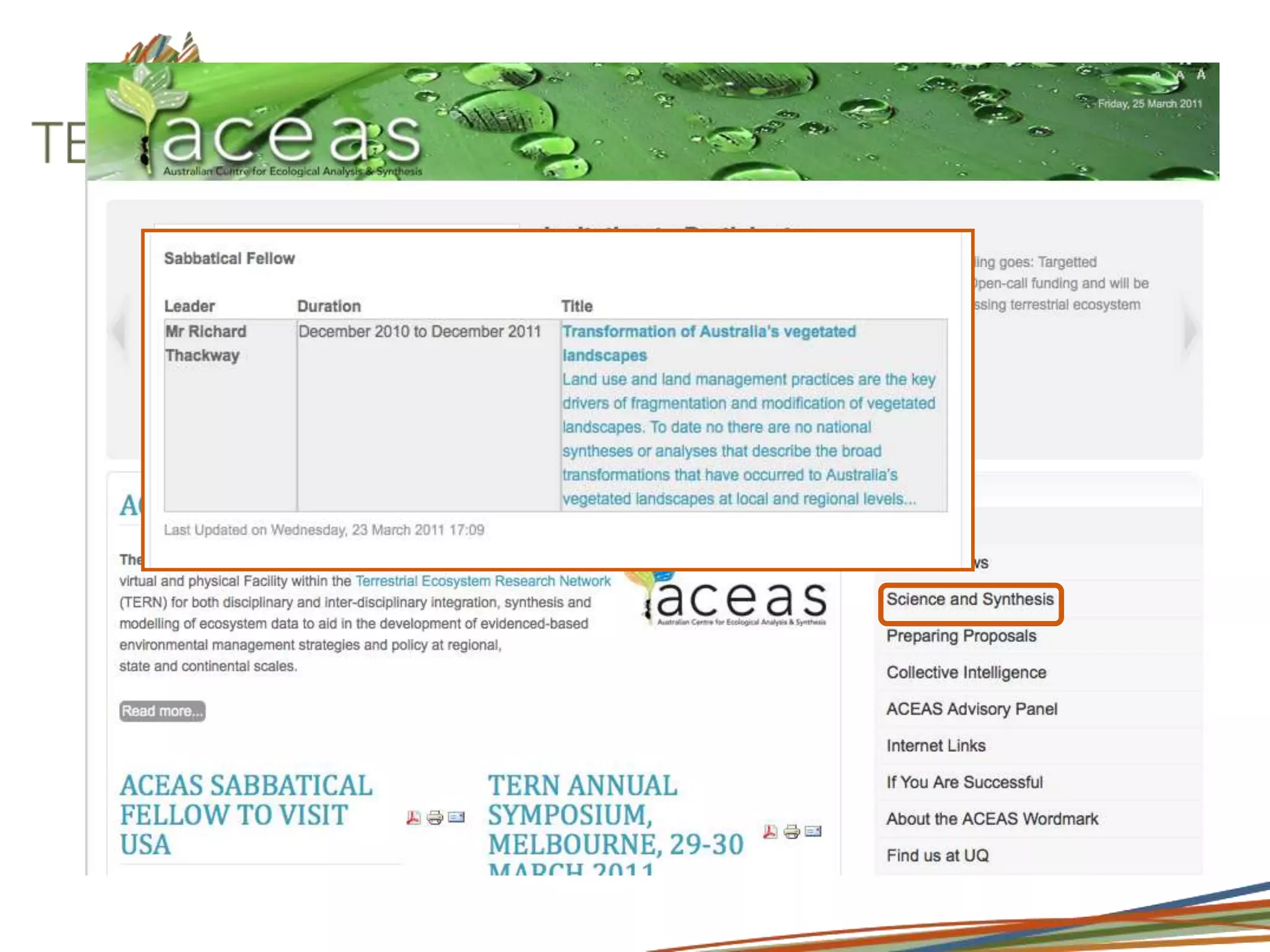
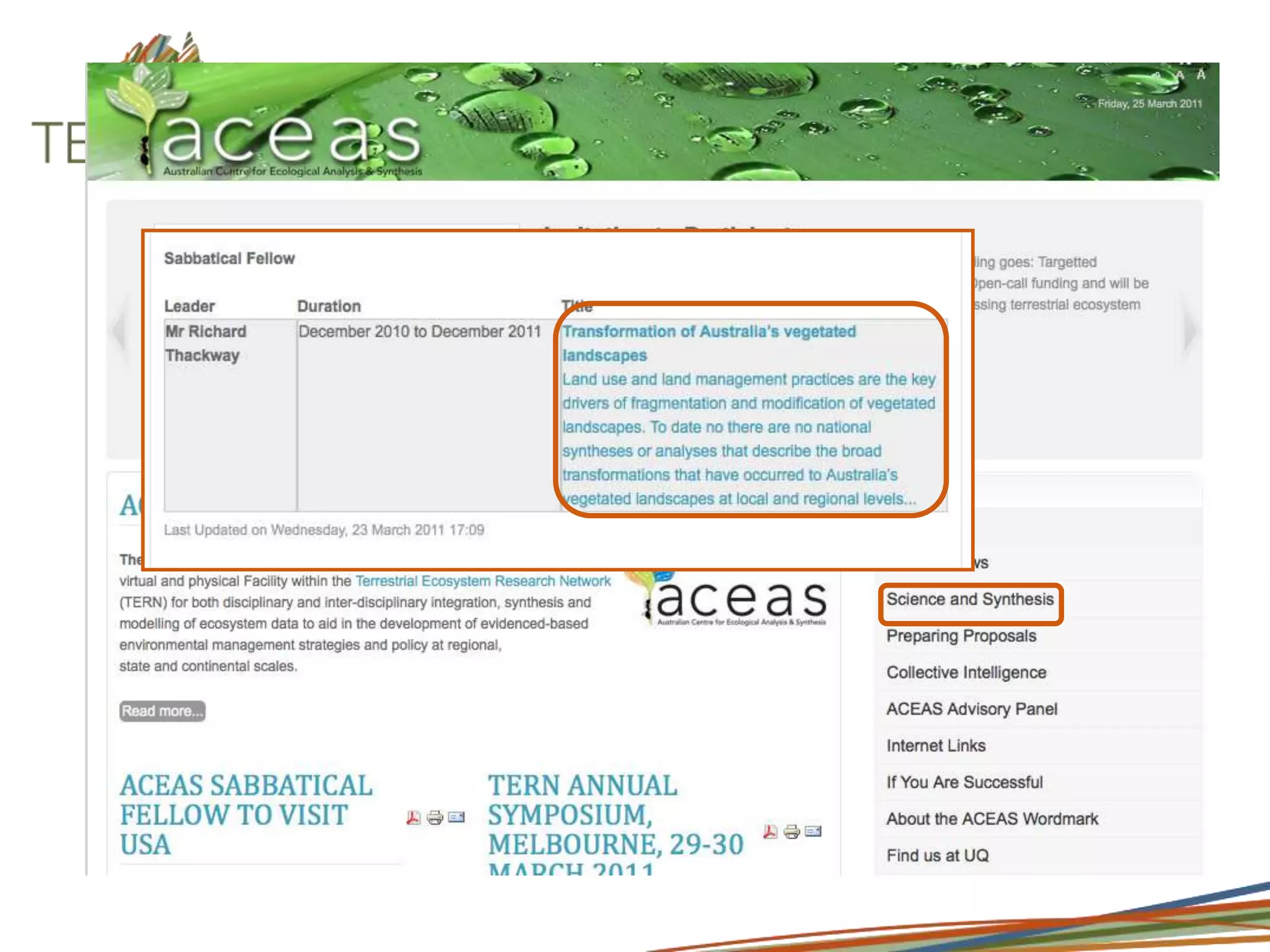
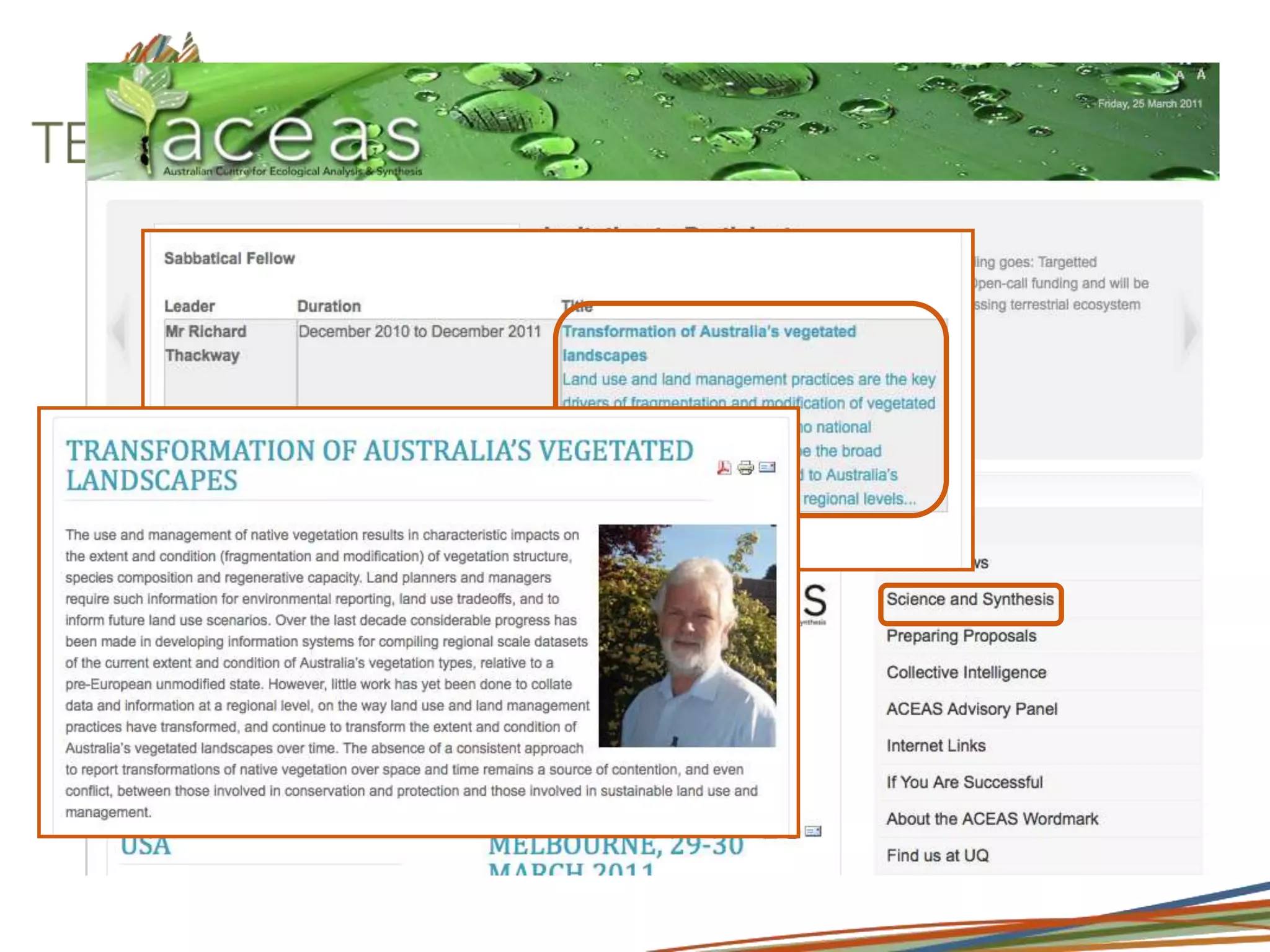


Managing native vegetation - insights from longitudinal site management historiesRichard ThackwayACEAS Sabbatical FellowCSIRO ES Seminar Series 19 May 2011Canberra
OutlineTERN and ACEAS
Definitions and concepts
The method – vegetation transformations
A case study
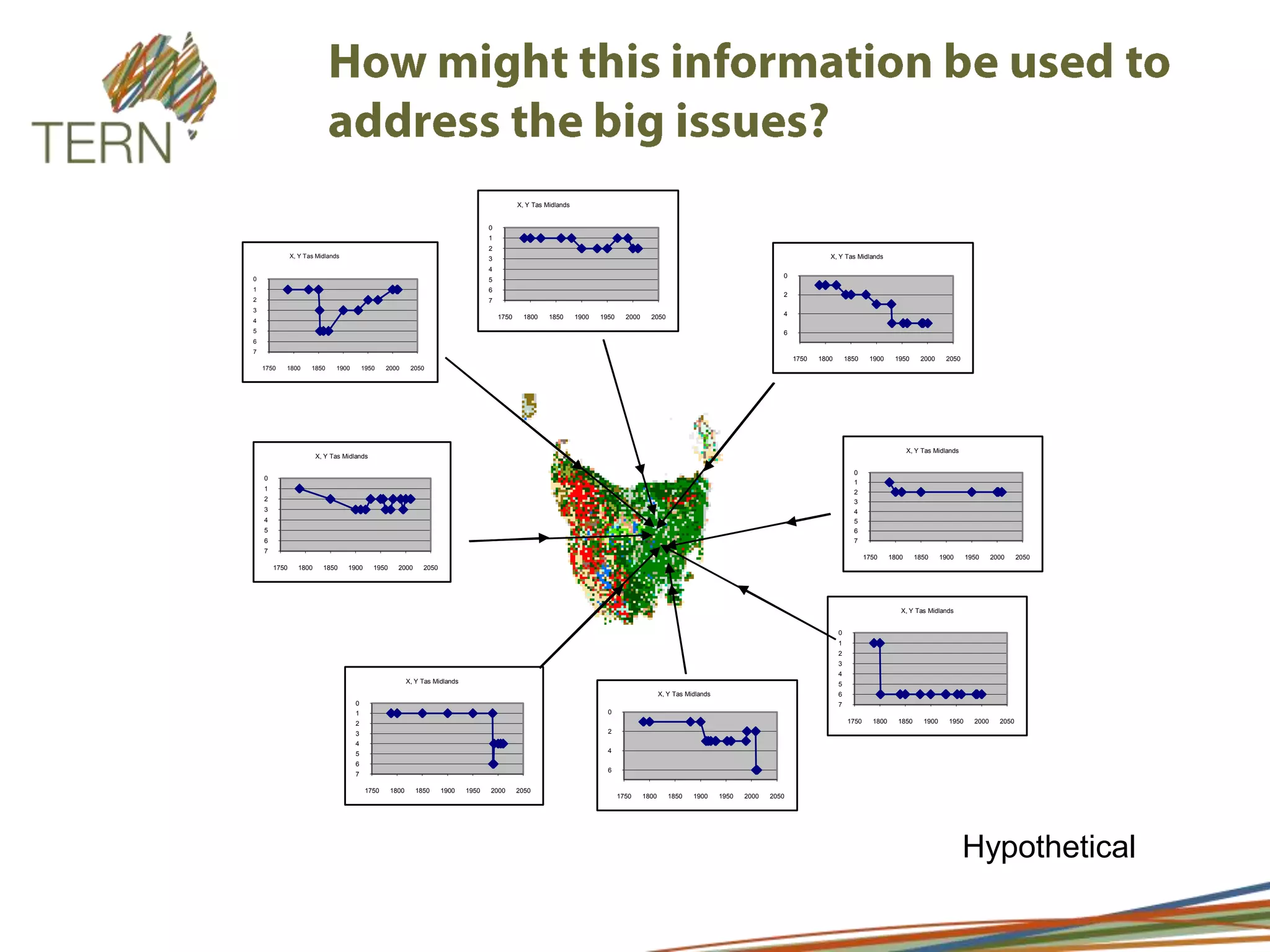
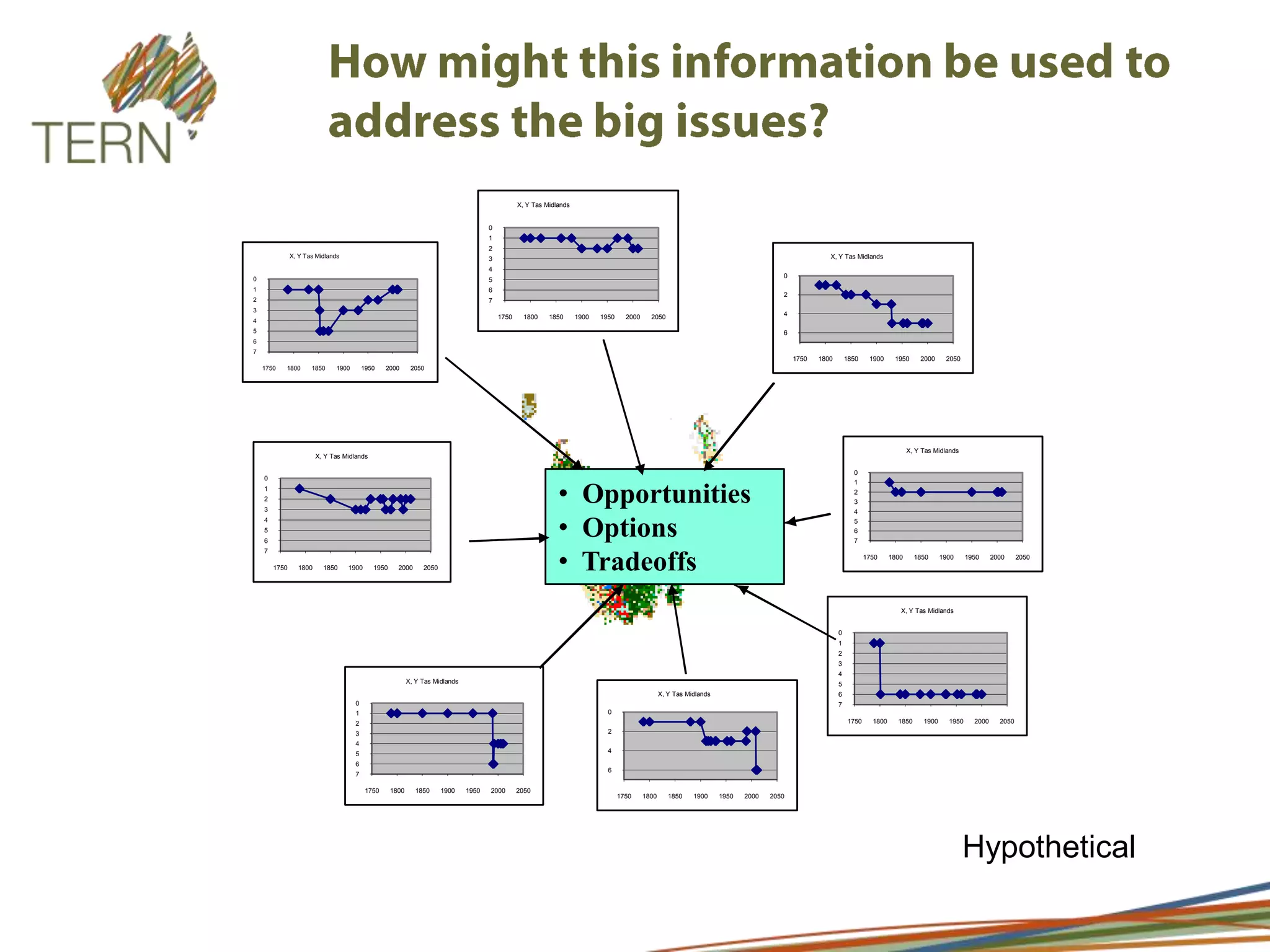
How might this information be used?
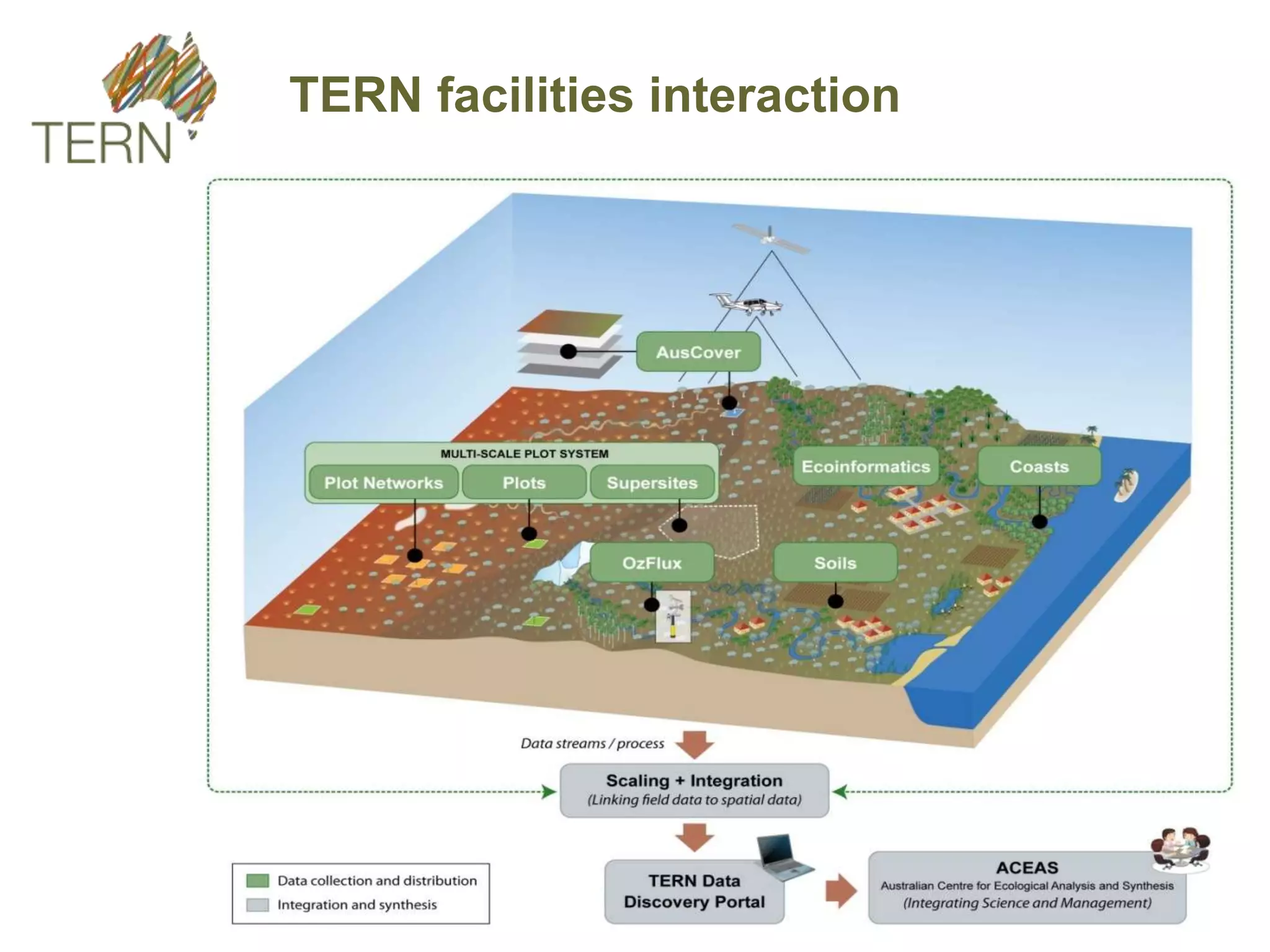
Where to from hereTERN facilities interaction
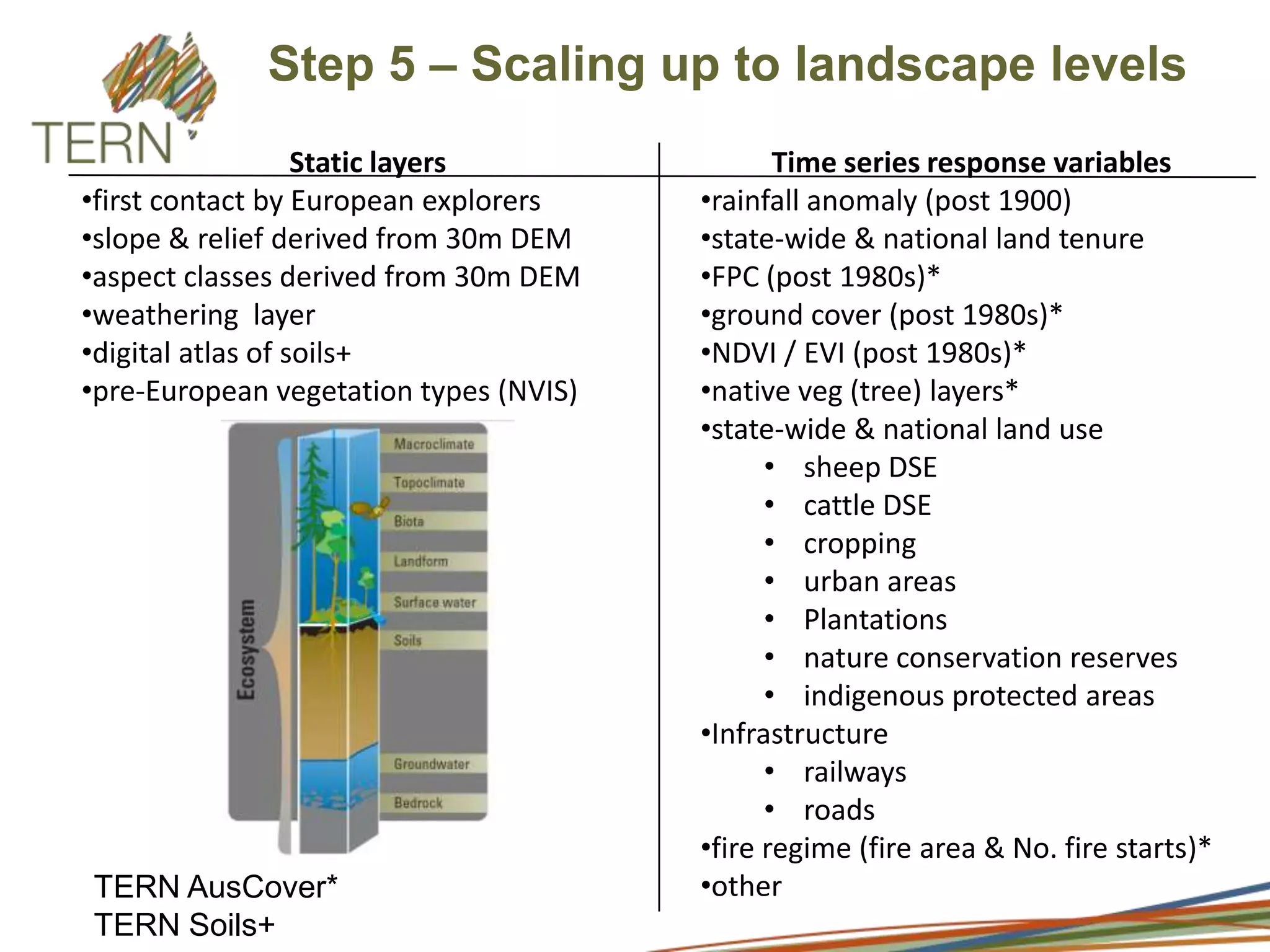
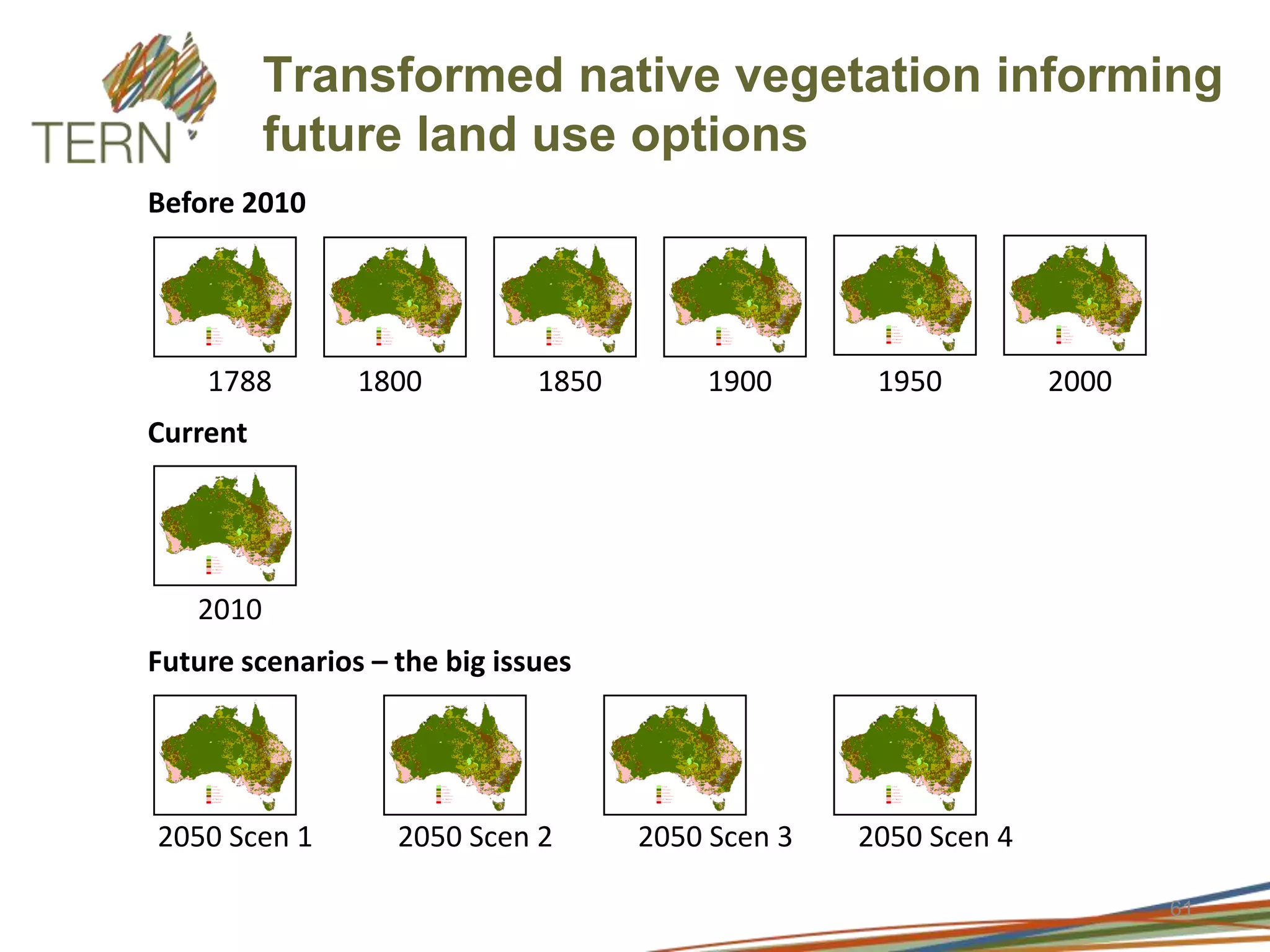
Australia’s future landscapes – The big issues and questionsBiodiversity conservation, biodiverse carbon, biosequestration, food security - agriculture moving to northern Australia etcWhat has happened in this landscape over time e.g.  <200yrs?How might historic/ contemporary impacts of land use (LU) and land management practices (LMP) affect future land use options/ decisions?
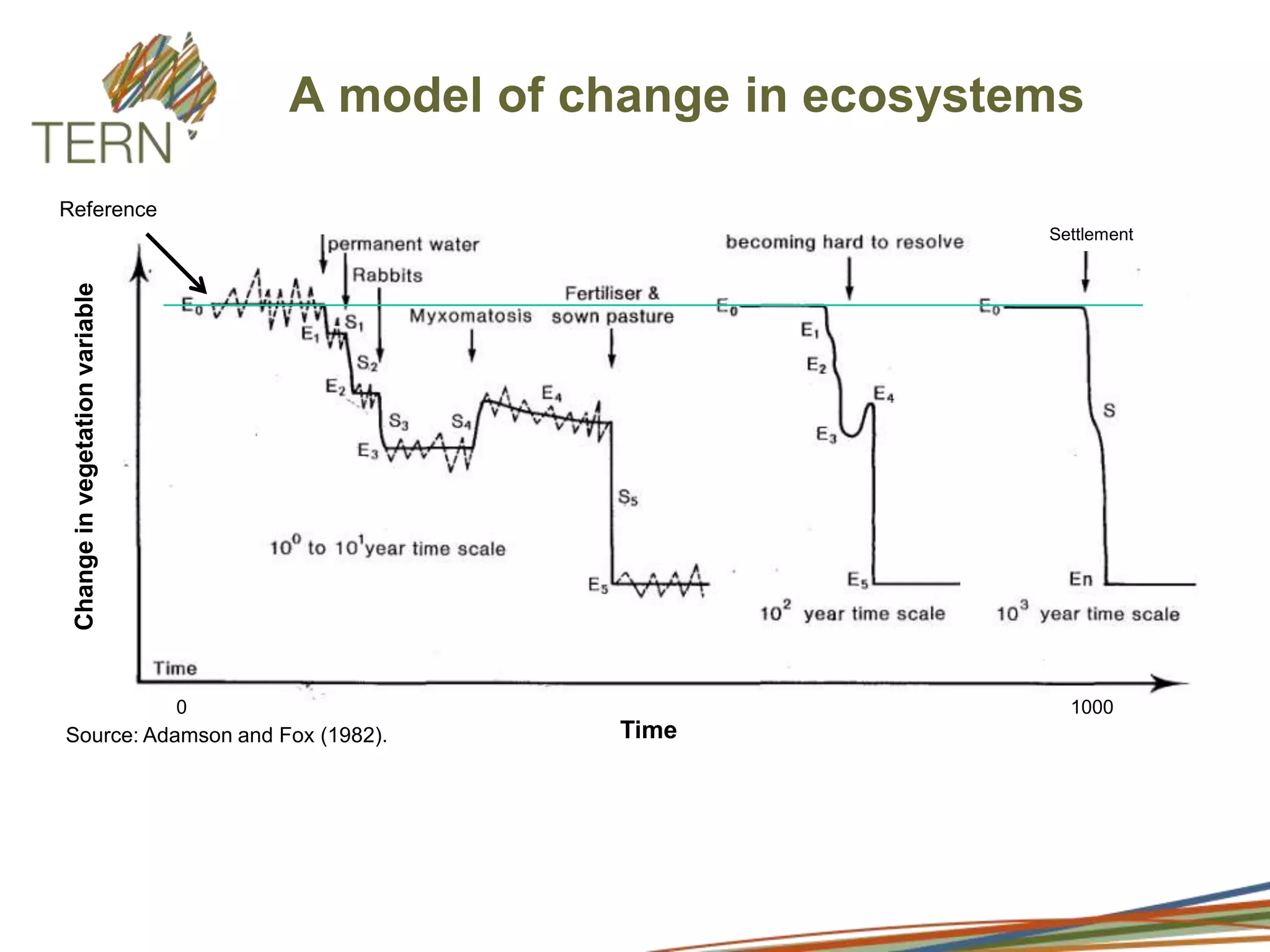
A model of change in ecosystemsReferenceSettlementChange in vegetation variable 10000Time Source: Adamson and Fox (1982).
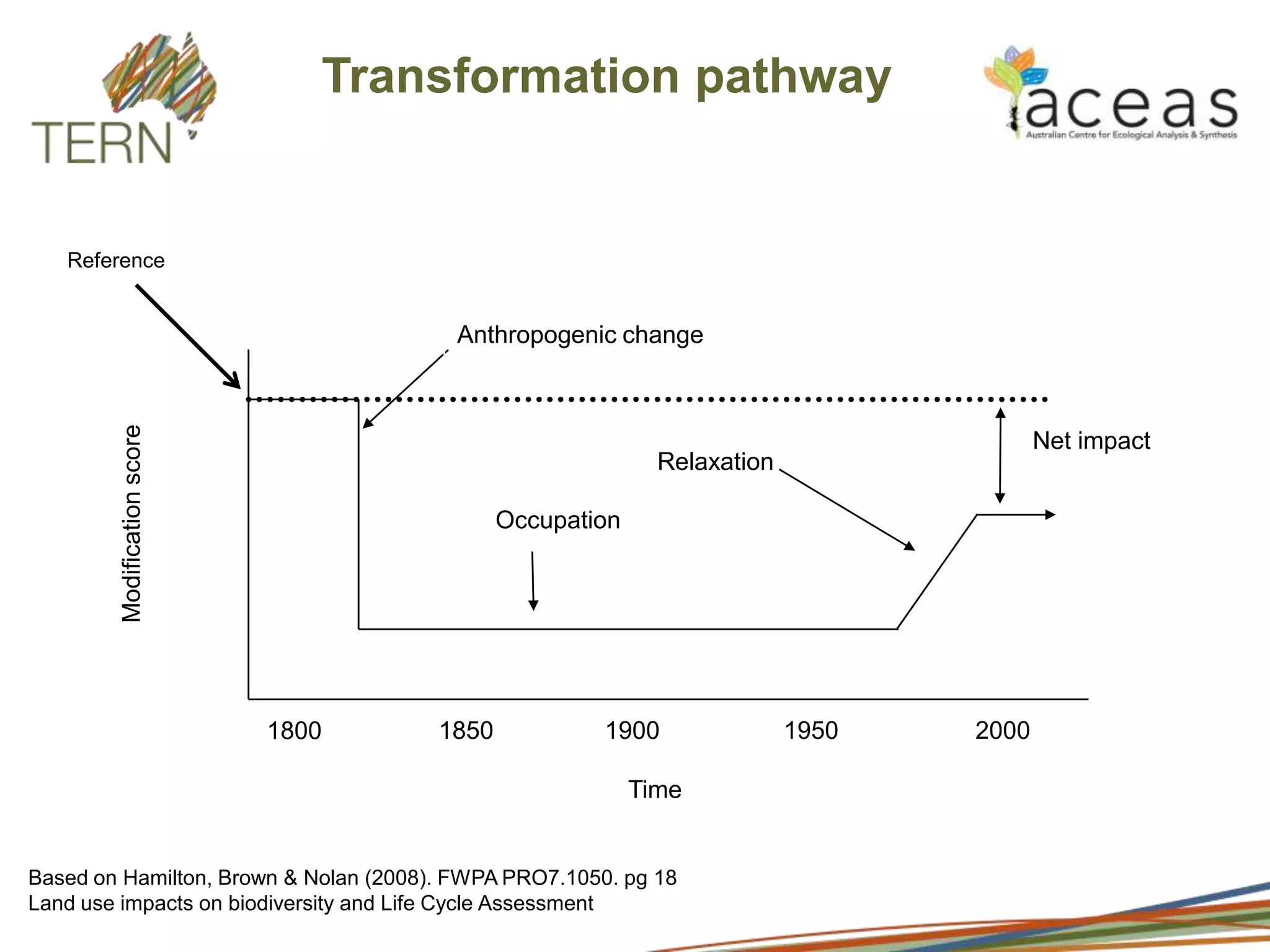
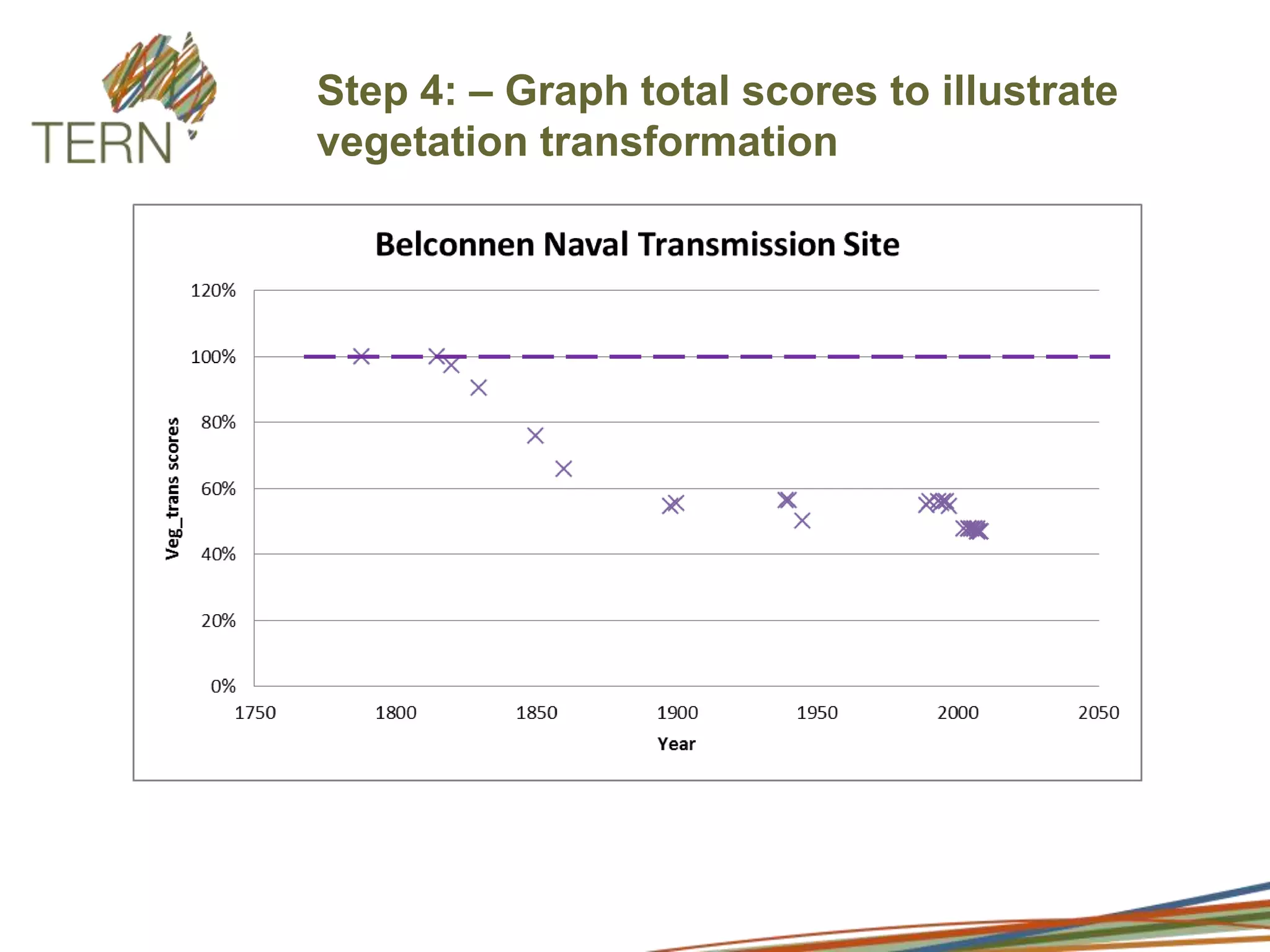
Anthropogenic change   Net impactRelaxation OccupationModification score 1850 1900 1950 2000 1800 Time Transformation pathway ReferenceBased on Hamilton, Brown & Nolan (2008). FWPA PRO7.1050. pg 18Land use impacts on biodiversity and Life Cycle Assessment
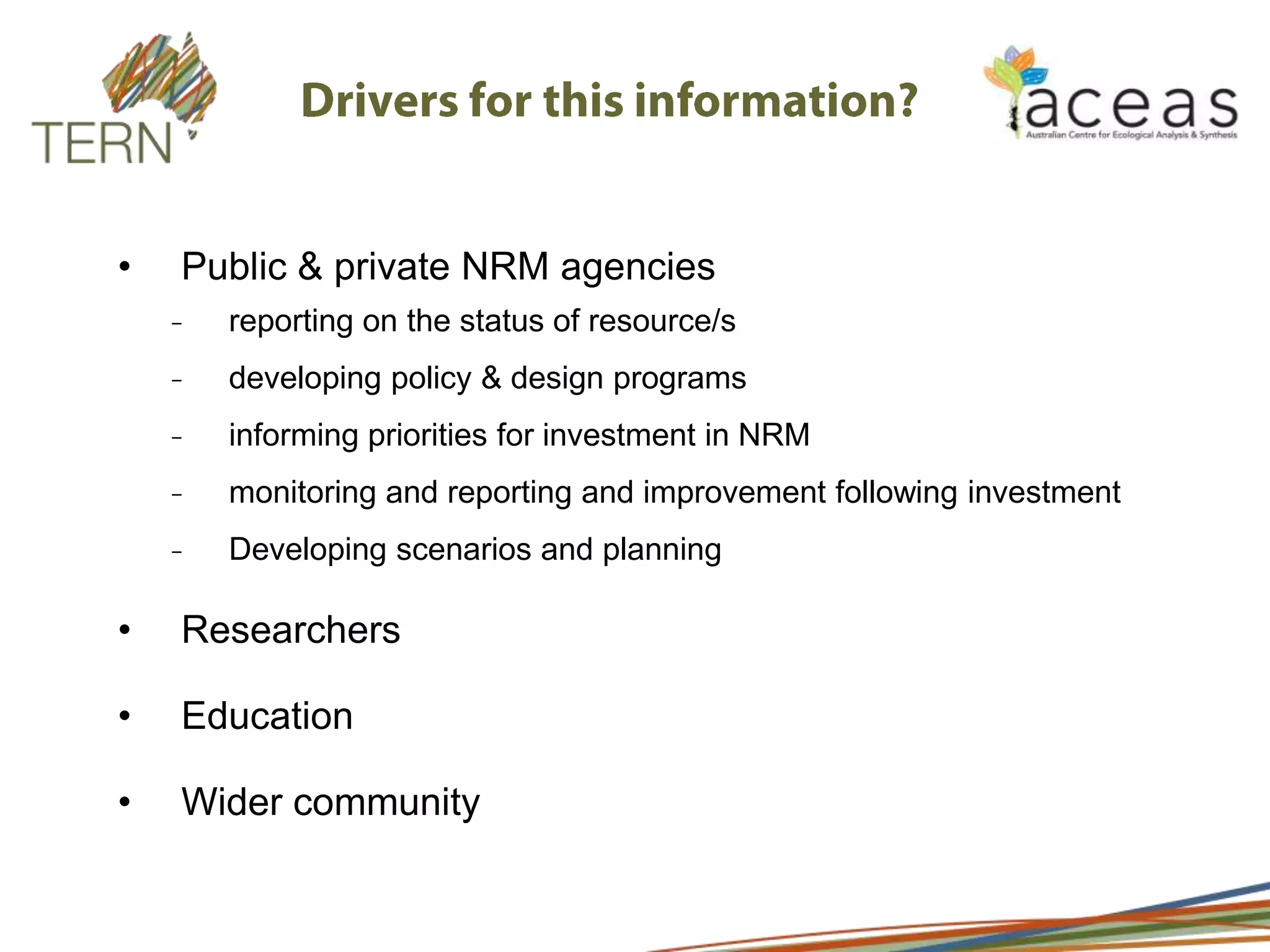
Drivers for this information?Public & private NRM agencies
reporting on the status of resource/s
developing policy & design programs
informing priorities for investment in NRM
monitoring and reporting and improvement following investment
Developing scenarios and planning
Researchers
Education
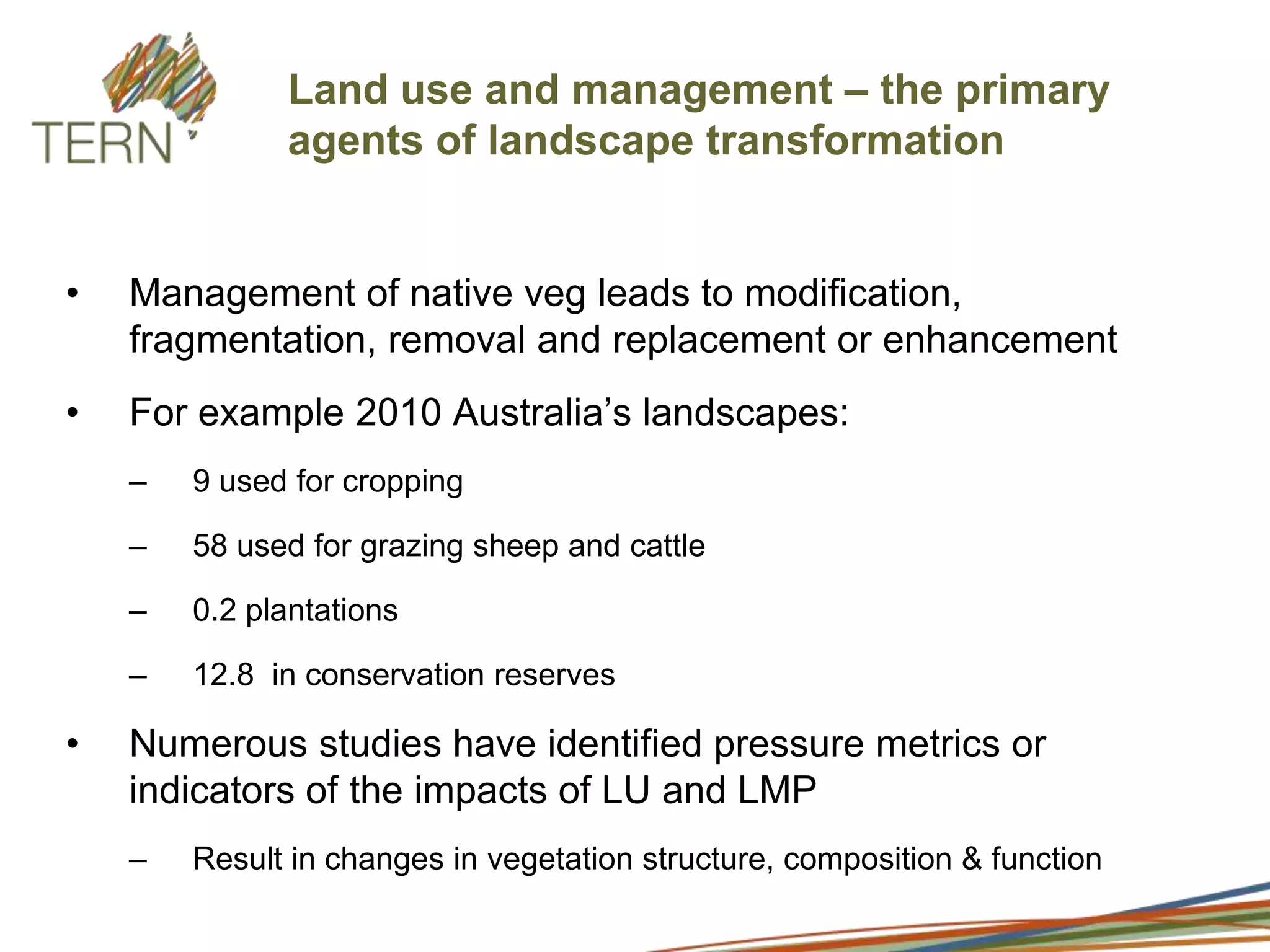
Wider community Land use and management – the primary agents of landscape transformation Management of native veg leads to modification, fragmentation, removal and replacement or enhancement
For example 2010 Australia’s landscapes:
9 used for cropping
58 used for grazing sheep and cattle
0.2 plantations
12.8  in conservation reserves
Numerous studies have identified pressure metrics or indicators of the impacts of LU and LMP
Result in changes in vegetation structure, composition & functionSolutions to date – snap shotsSite-based assessments
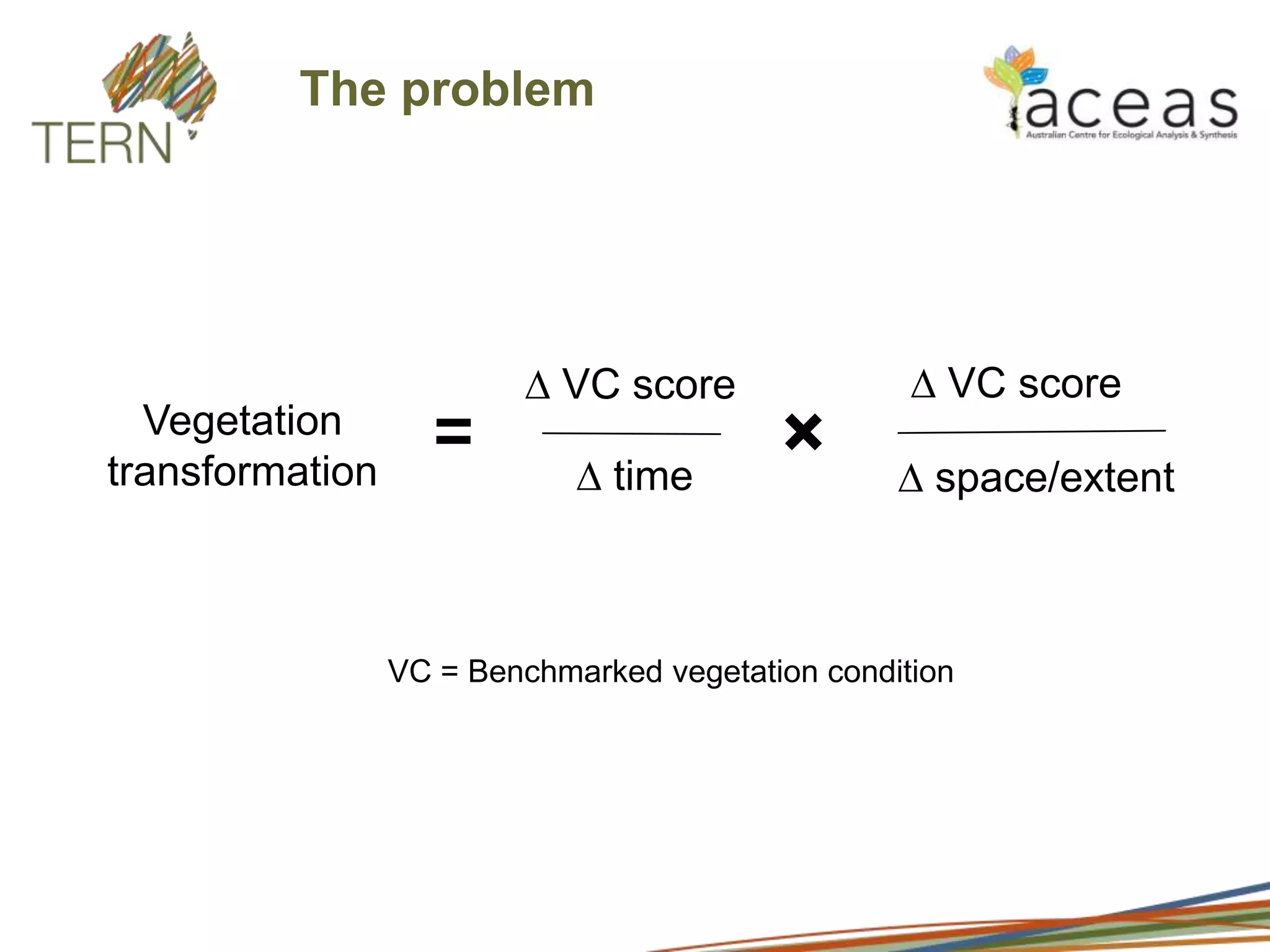
Scoring survey sites relative to benchmark sites e.g. BioCondition, Habitat Hectares etc
State and transition models
Whole of landscape assessments
Classifying mapping units relative to reference unmodified /least modified statee.g. VAST (Vegetation Assets States and Transitions) and Vegmachine9
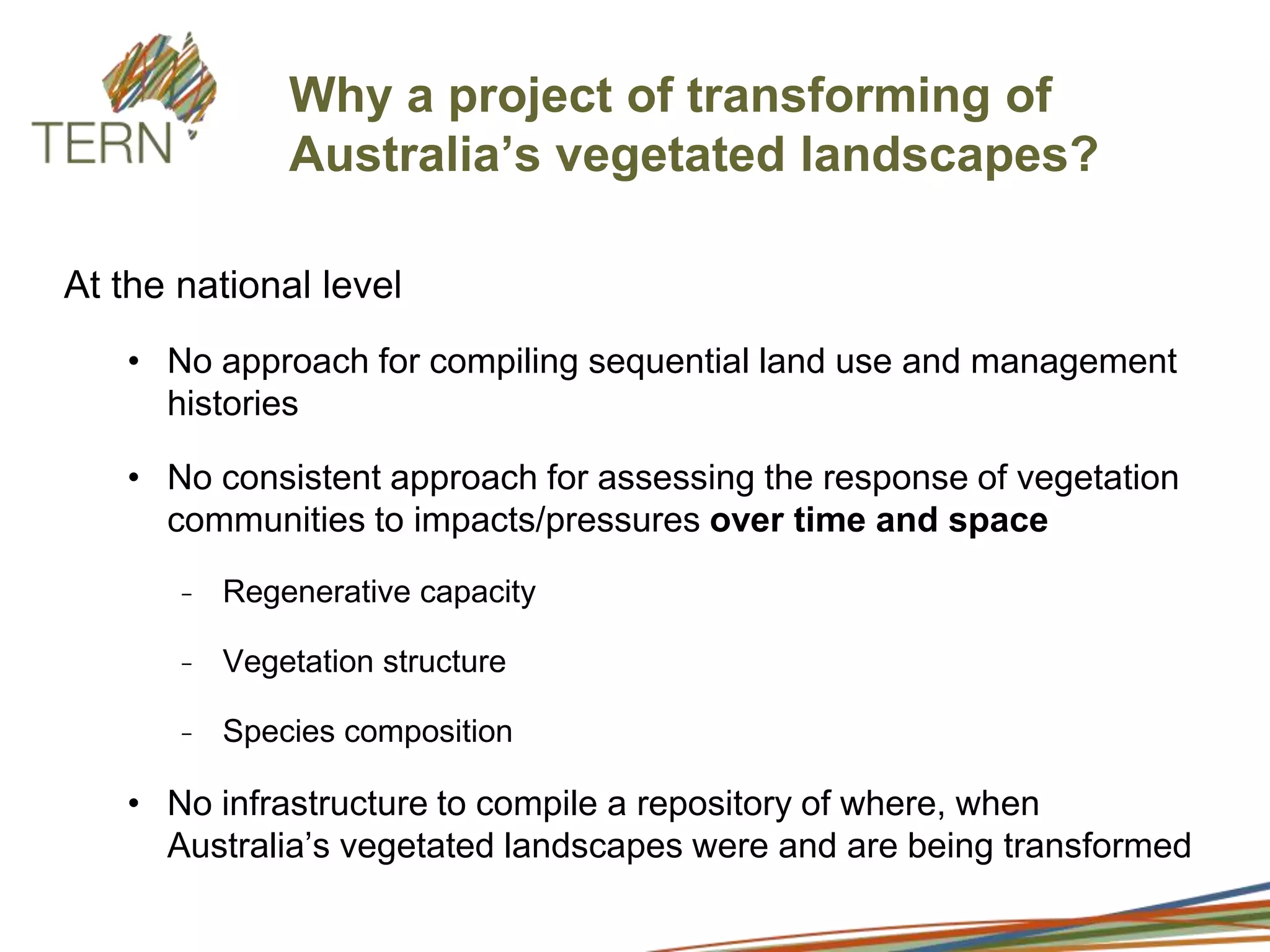
The problem∆ VC score ∆ VC score×Vegetation transformation∆ time∆ space/extentVC = Benchmarked vegetation condition
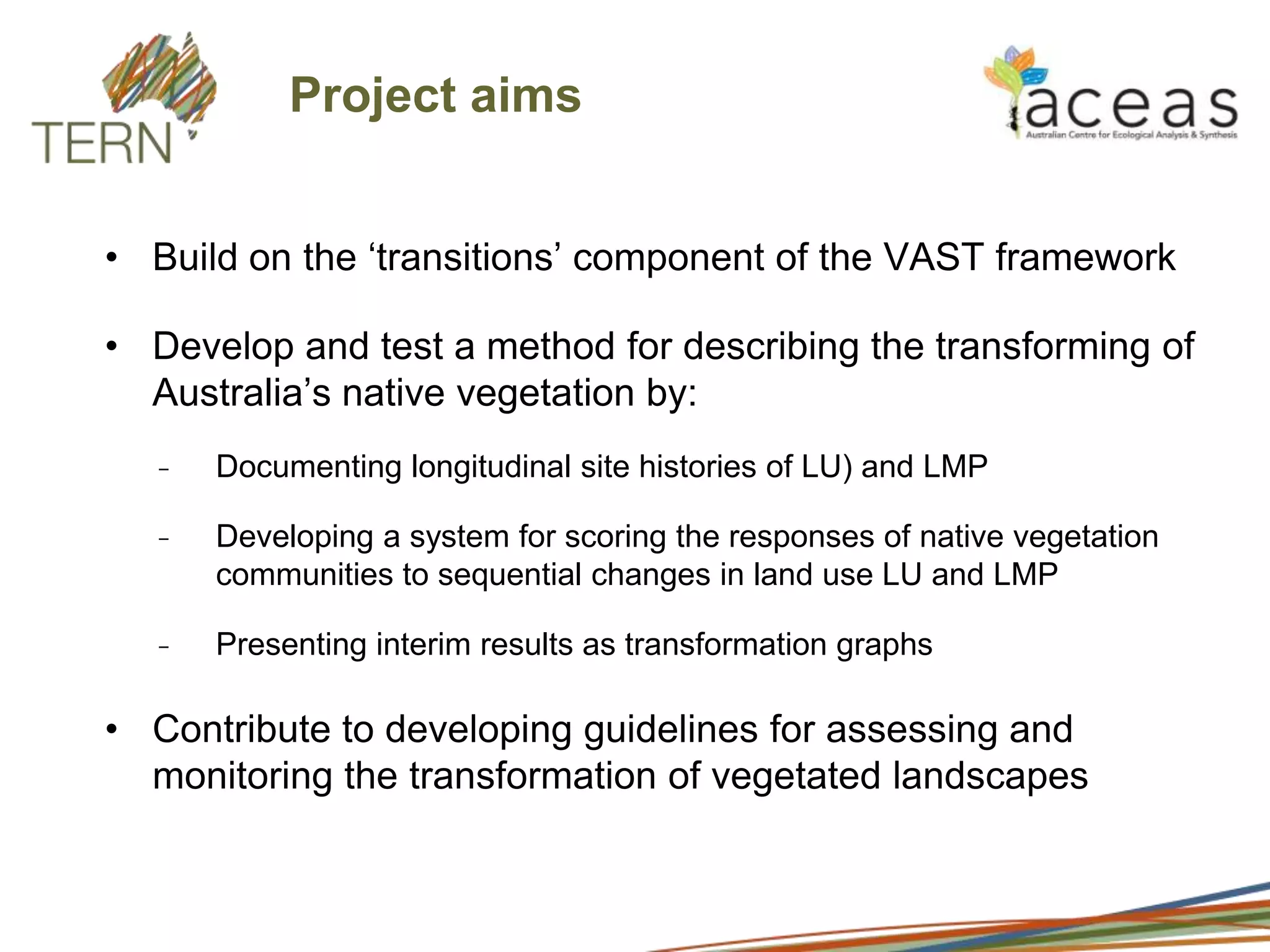
Why a project of transforming of Australia’s vegetated landscapes?At the national level No approach for compiling sequential land use and management histories
No consistent approach for assessing the response of vegetation communities to impacts/pressures over time and space
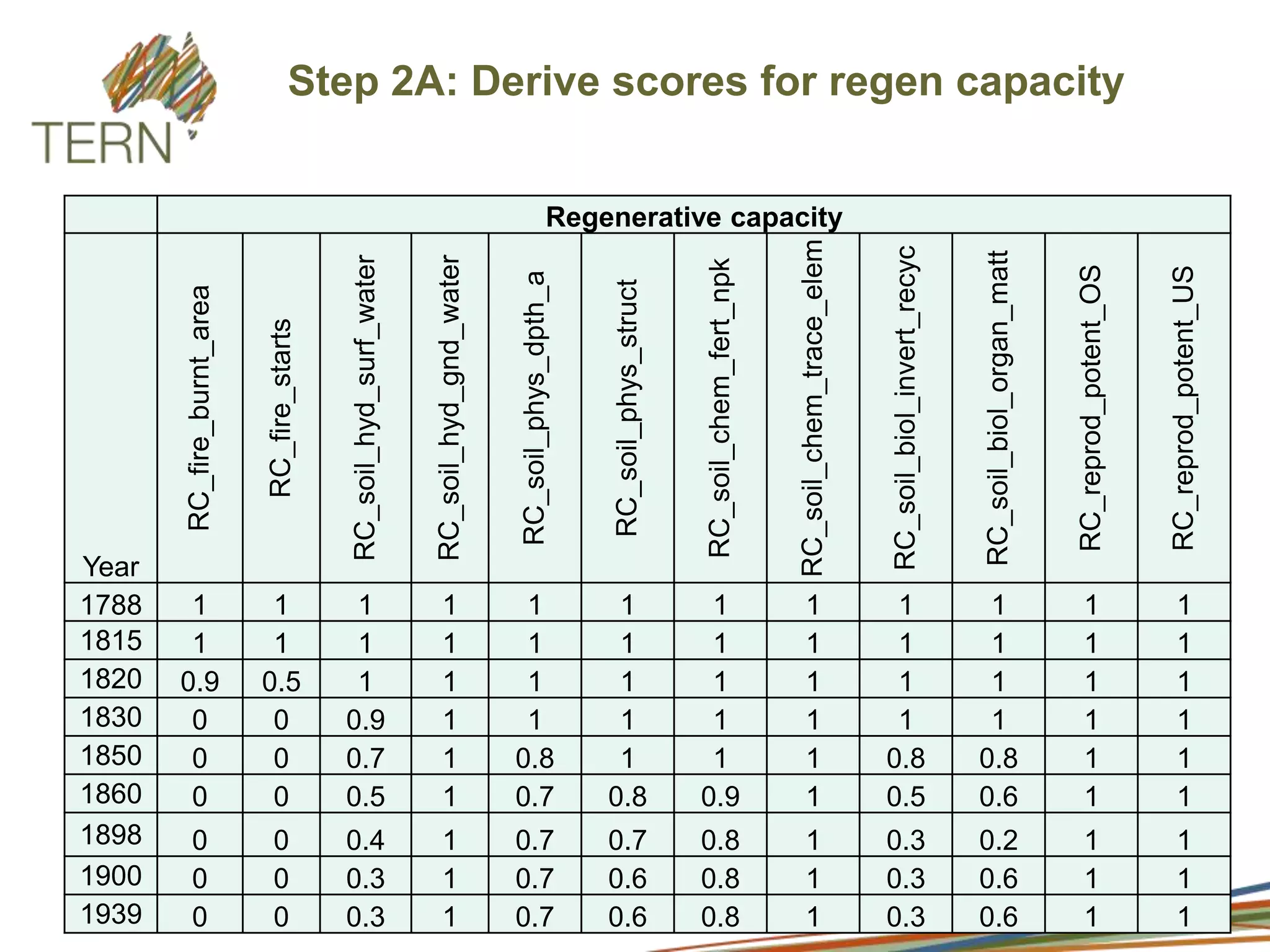
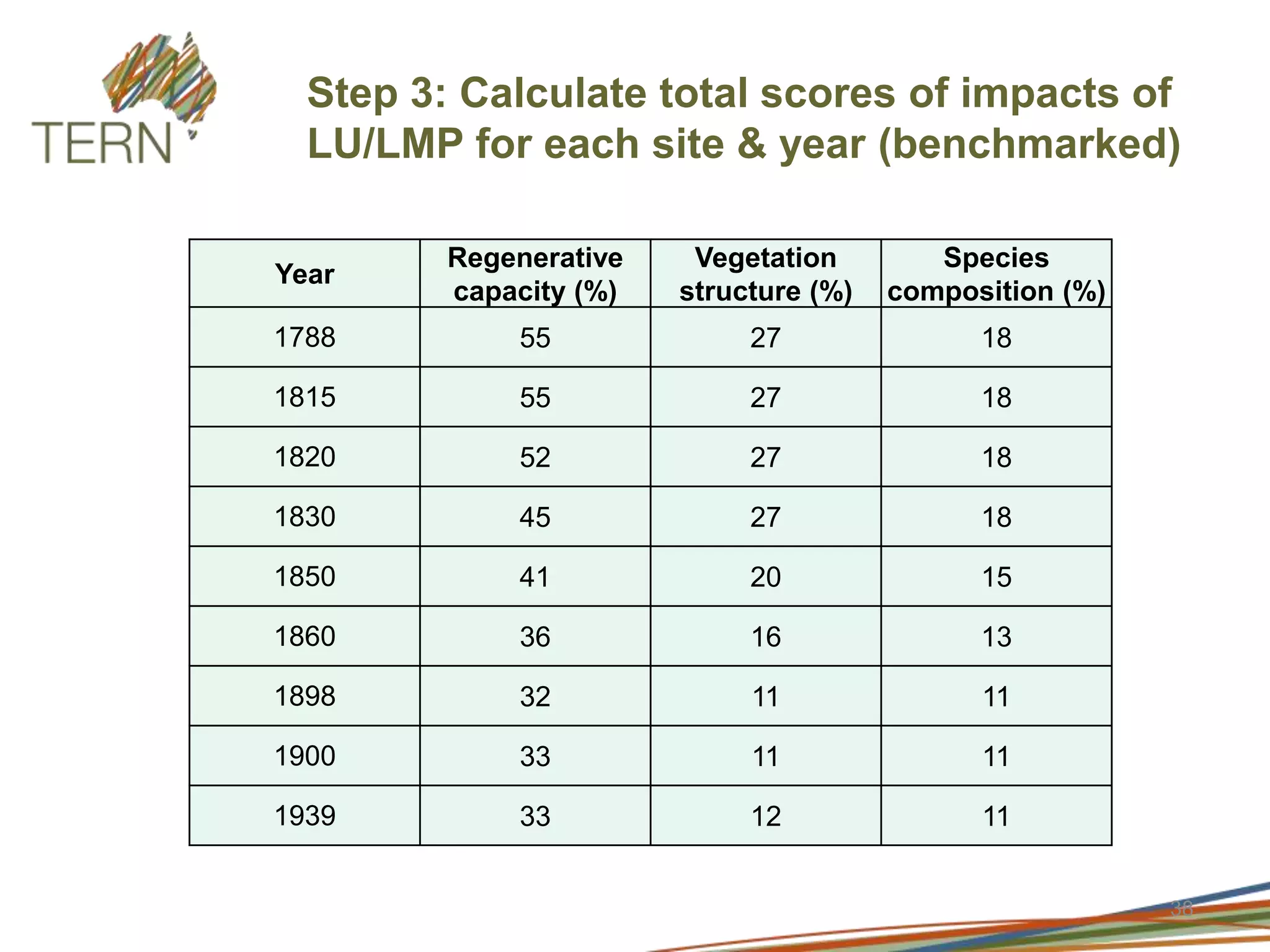
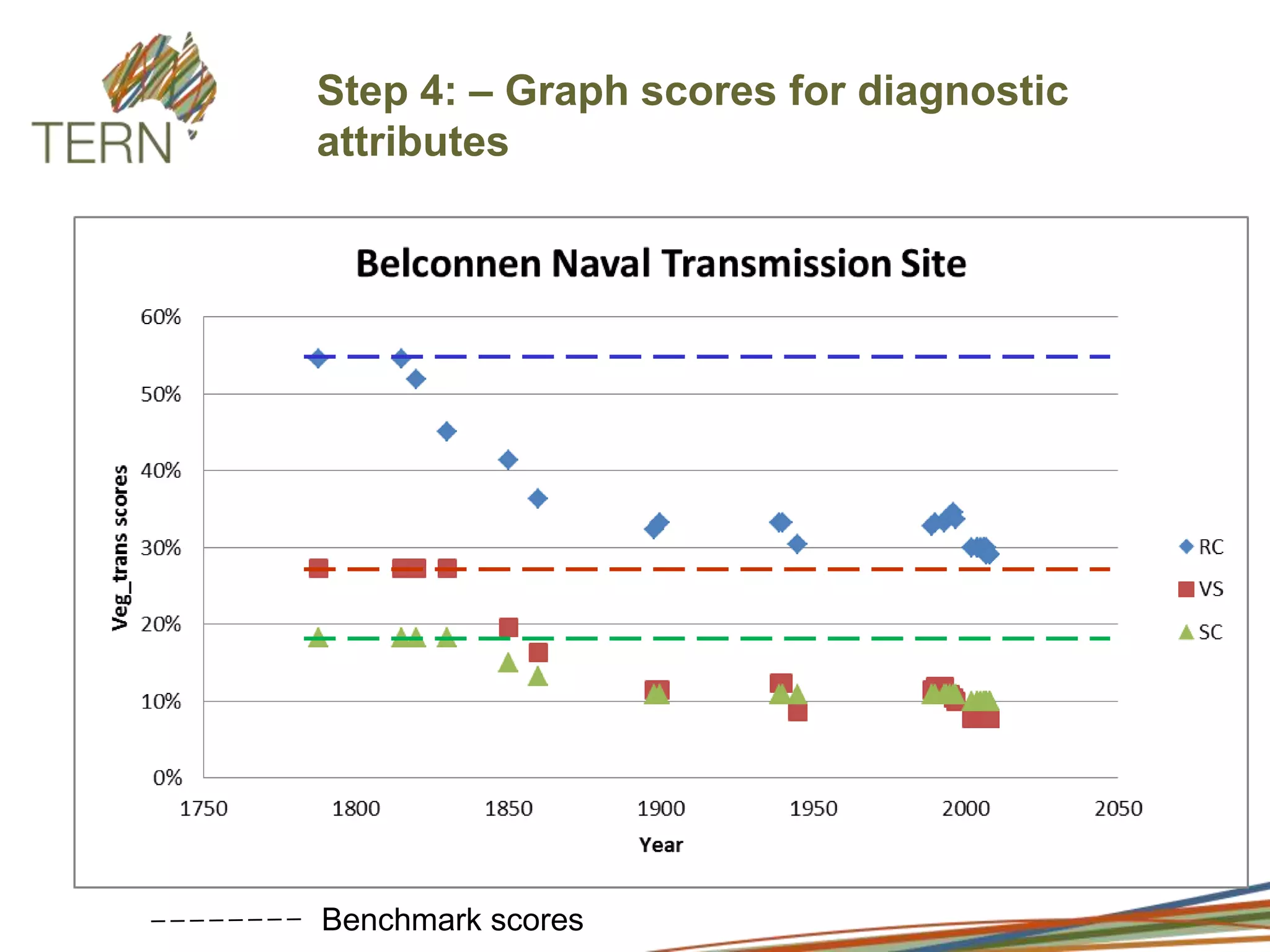
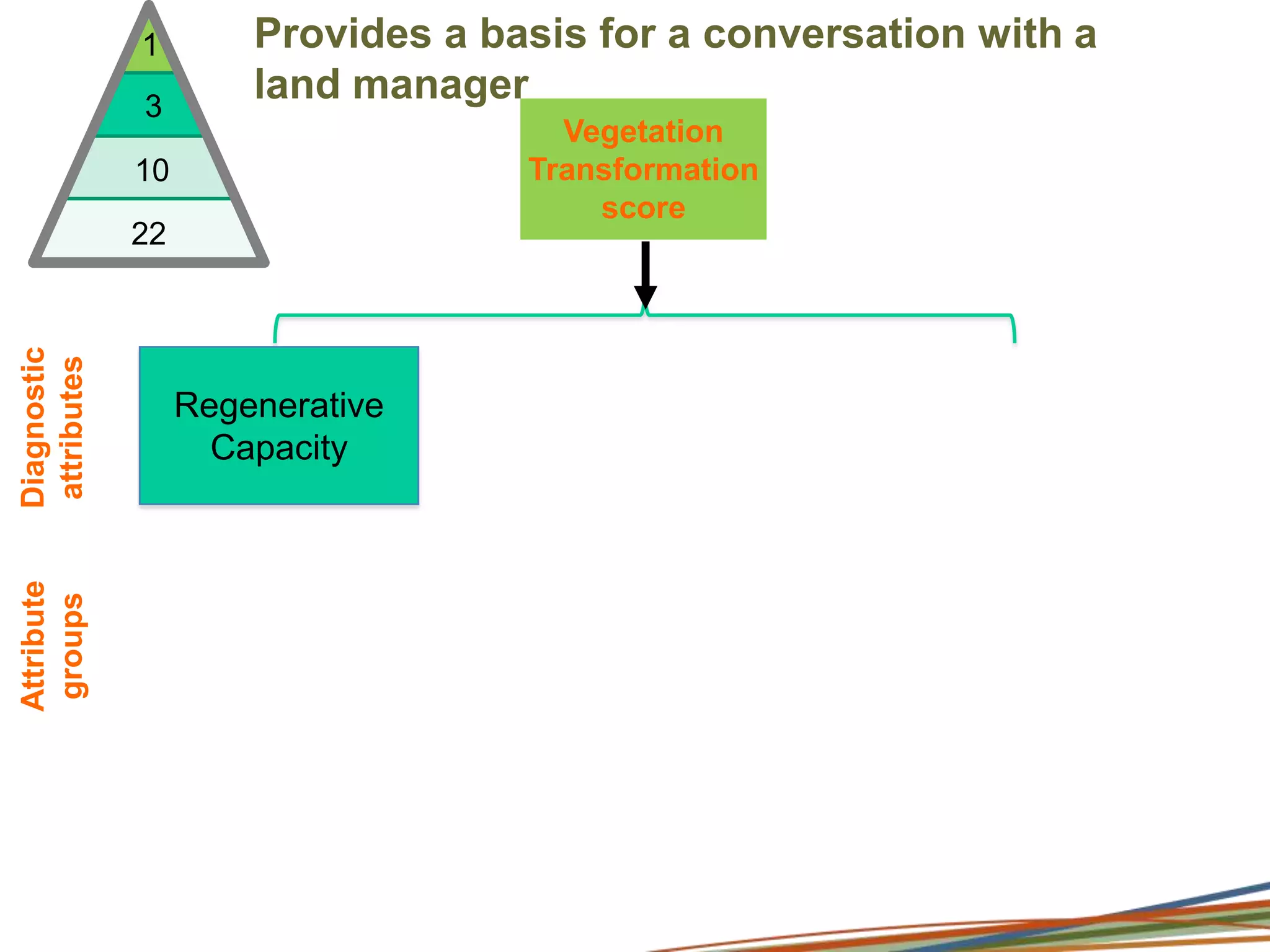
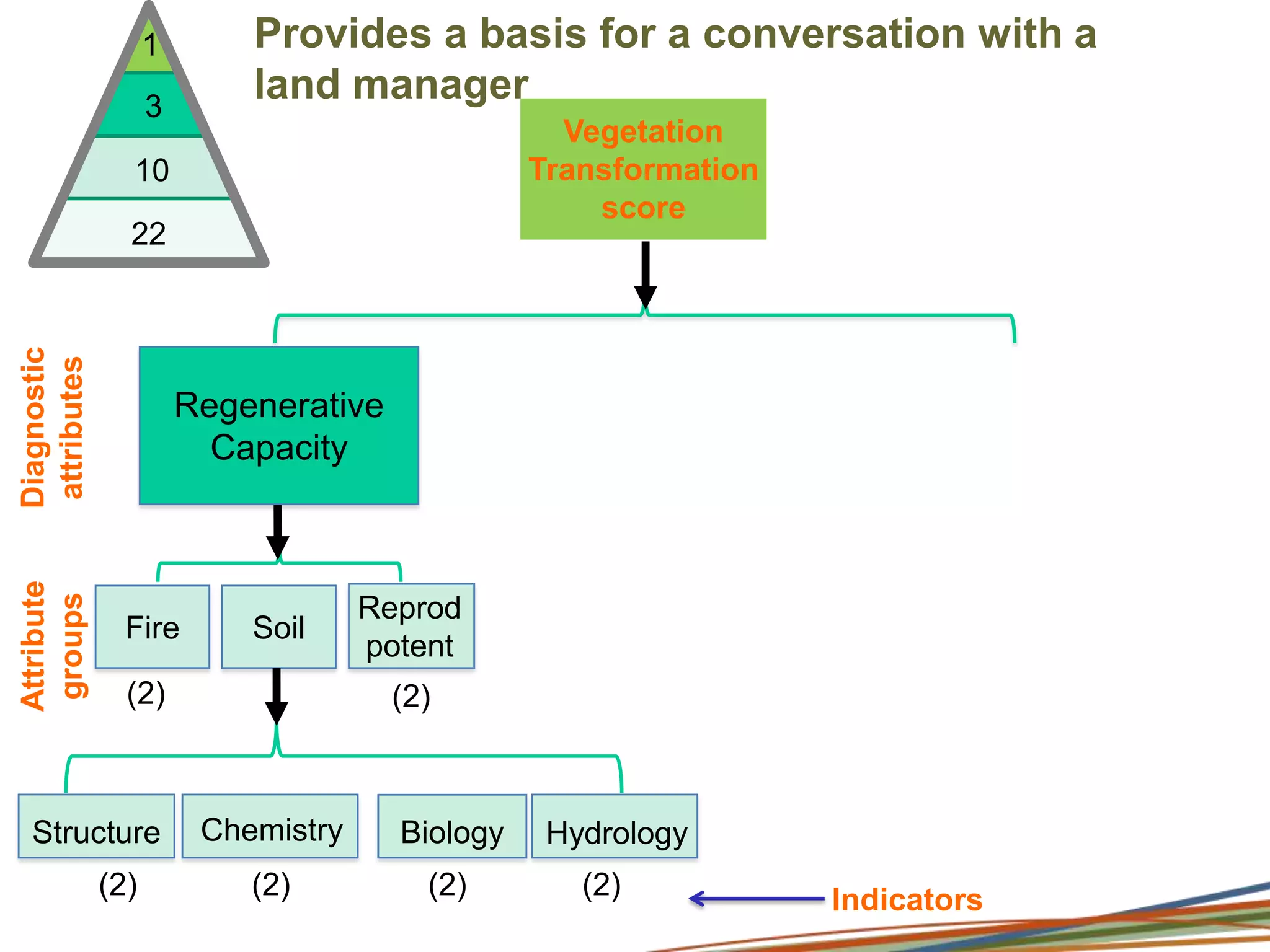
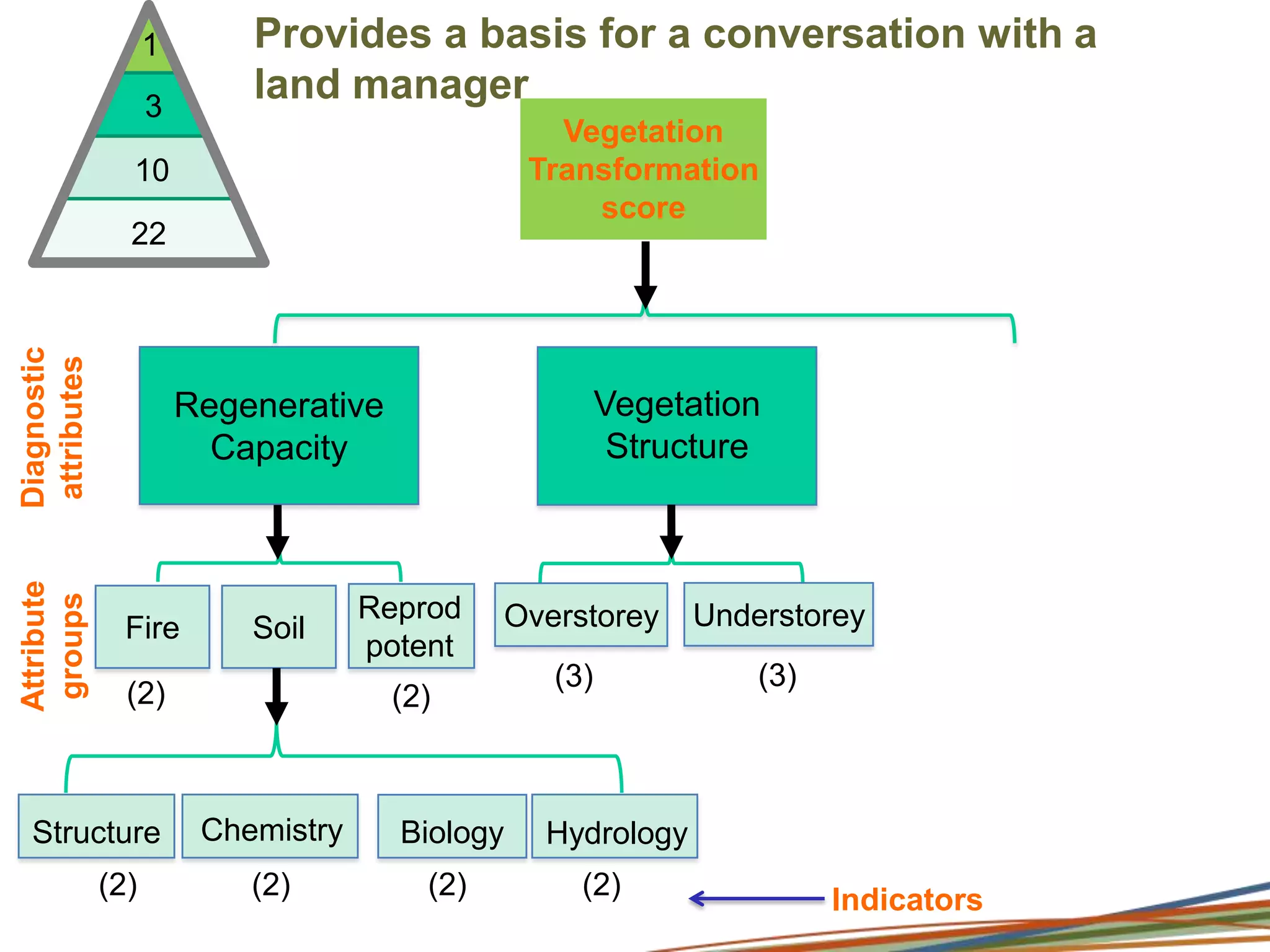
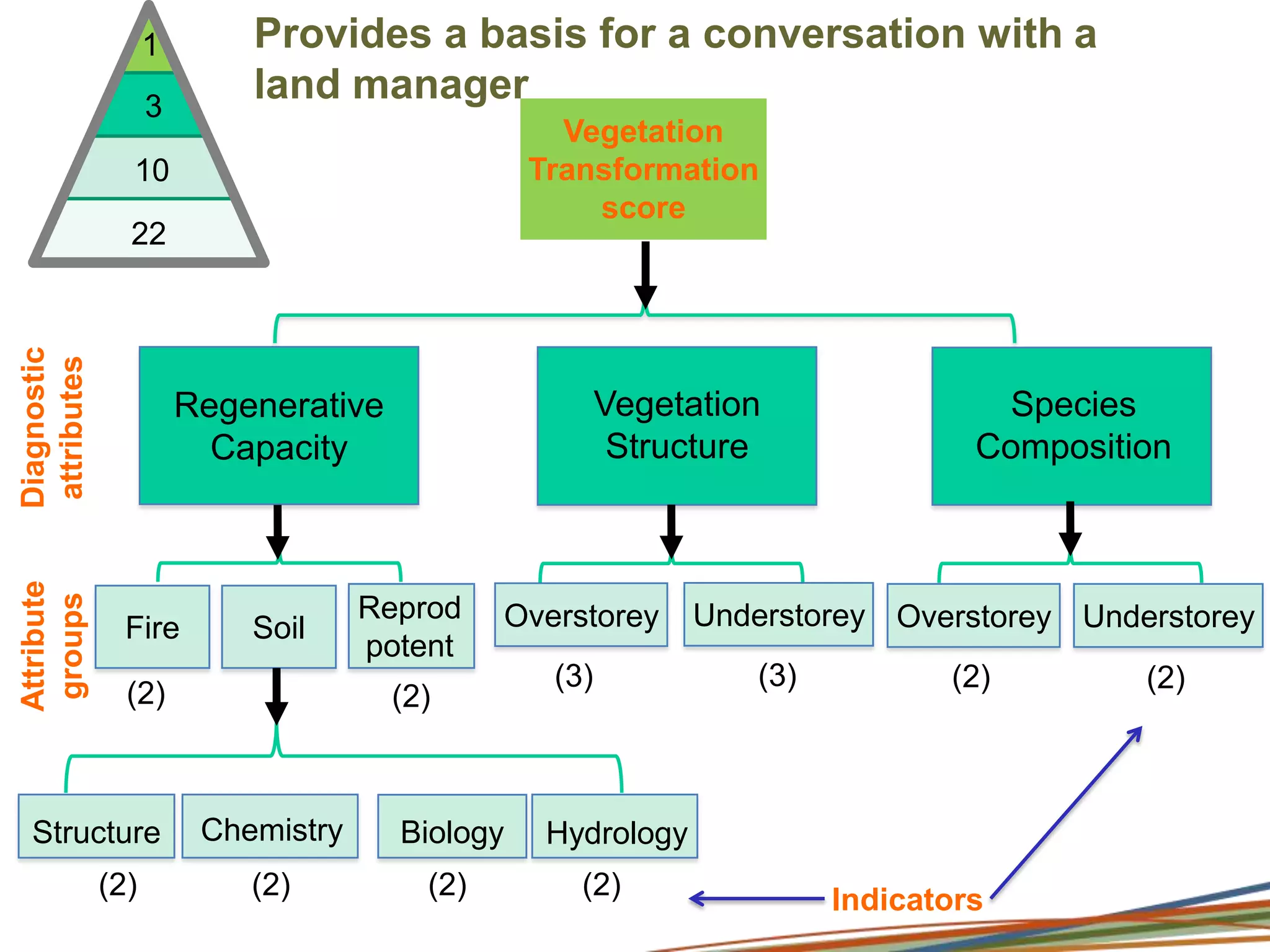
Regenerative capacity
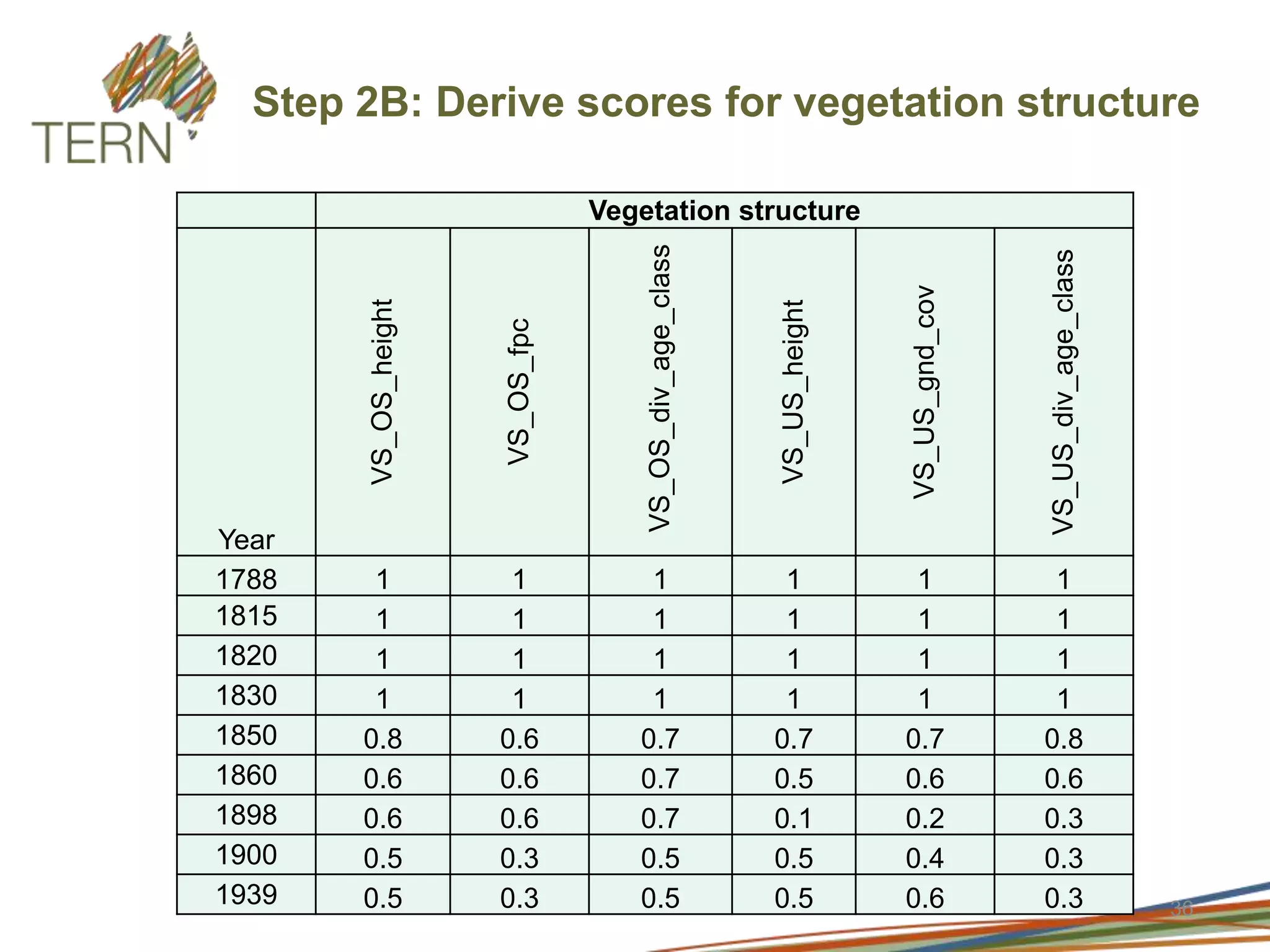
Vegetation structure
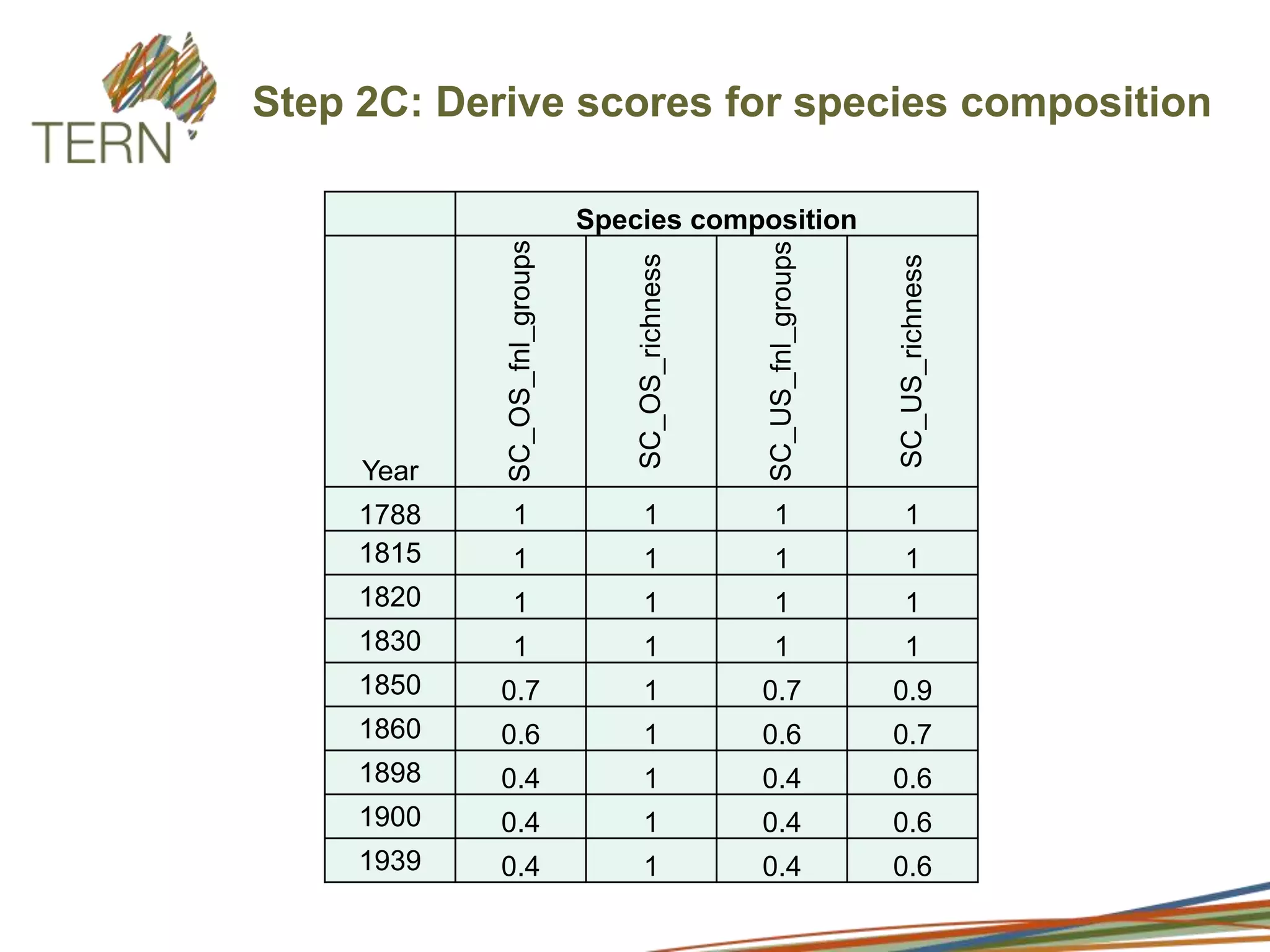
Species composition
No infrastructure to compile a repository of where, when Australia’s vegetated landscapes were and are being transformed  Project aimsBuild on the ‘transitions’ component of the VAST framework
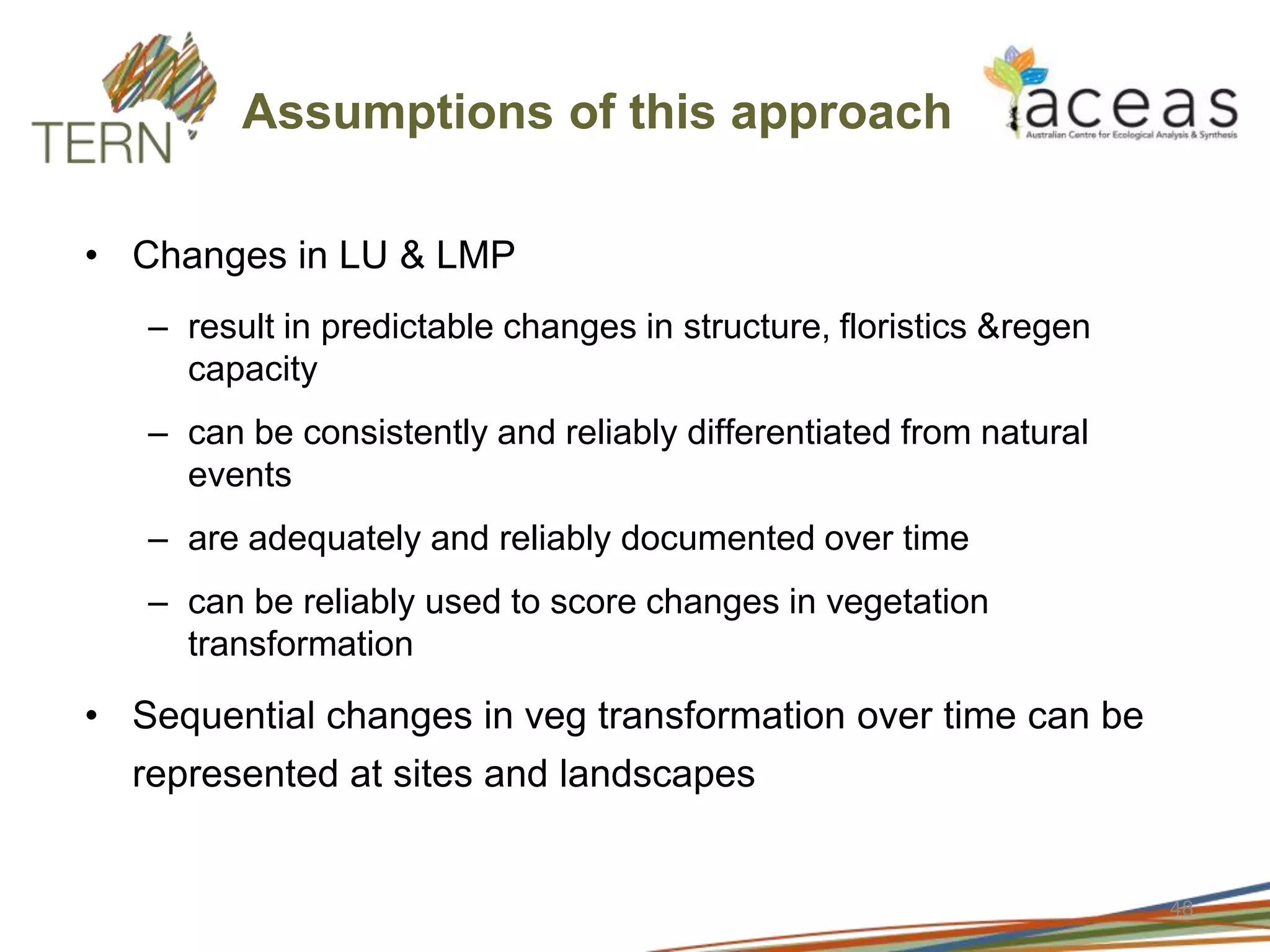
Develop and test a method for describing the transforming of Australia’s native vegetation by:
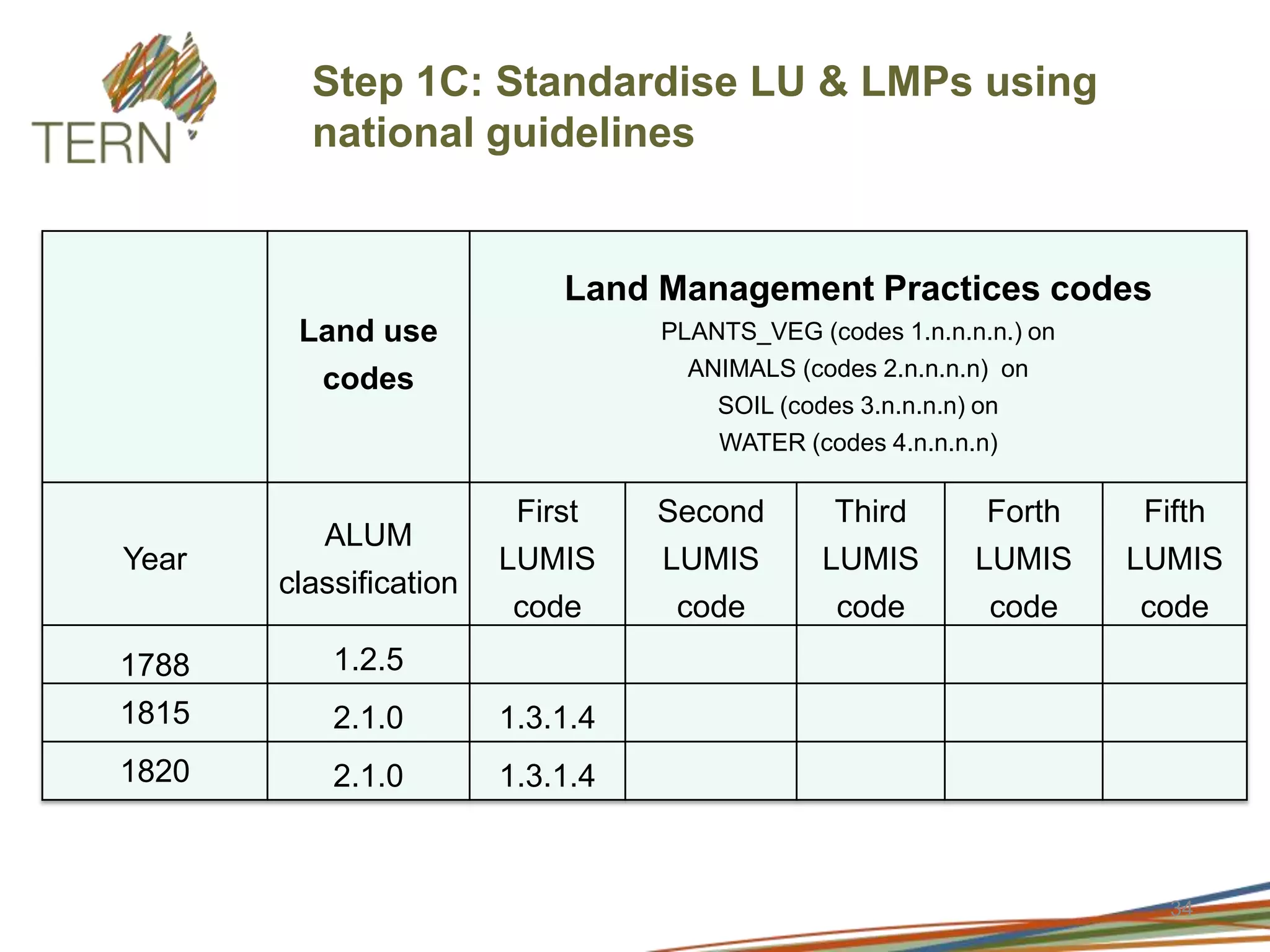
Documenting longitudinal site histories of LU) and LMP
Developing a system for scoring the responses of native vegetation communities to sequential changes in land use LU and LMP
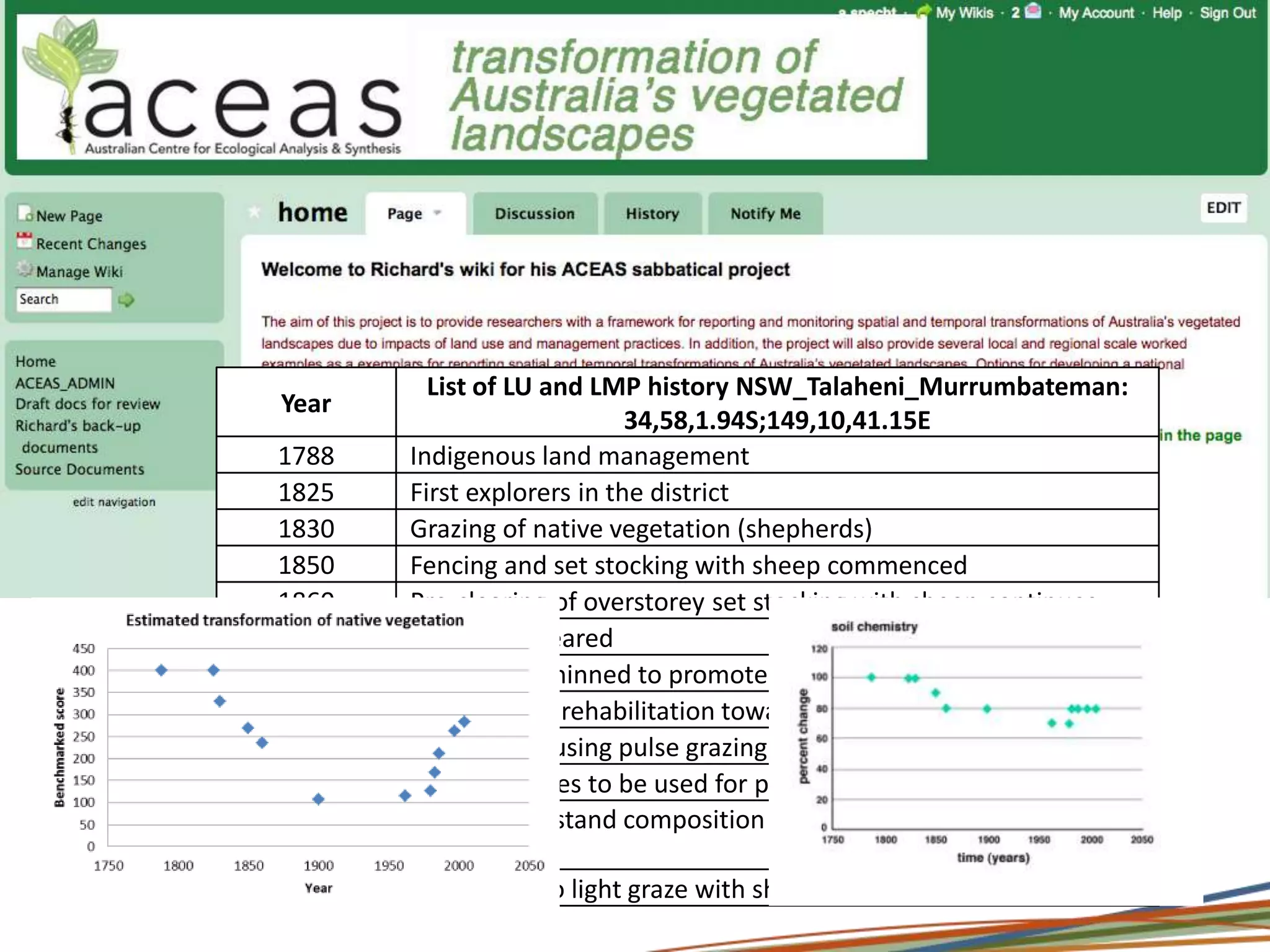
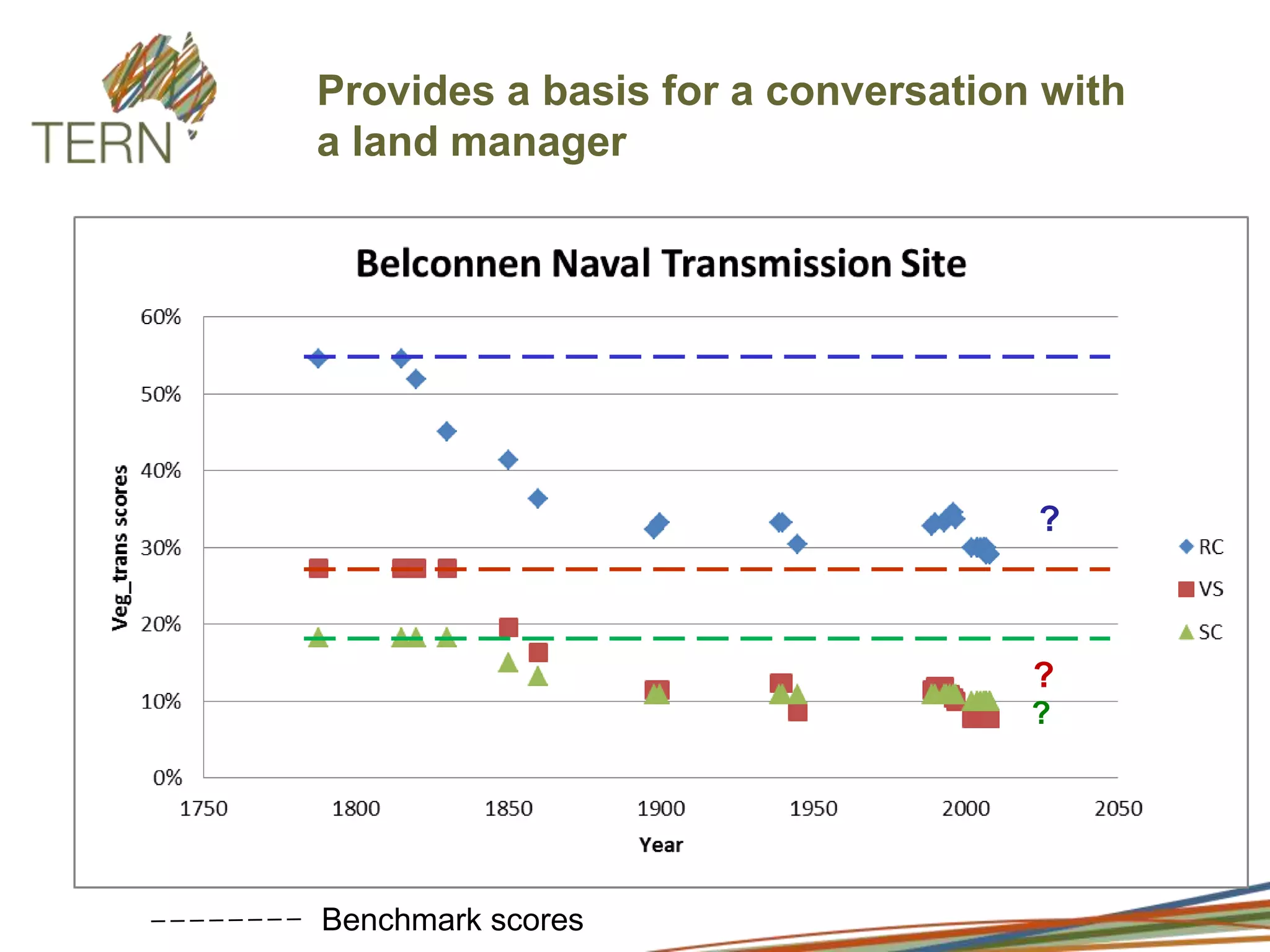
Presenting interim results as transformation graphs
Contribute to developing guidelines for assessing and monitoring the transformation of vegetated landscapes
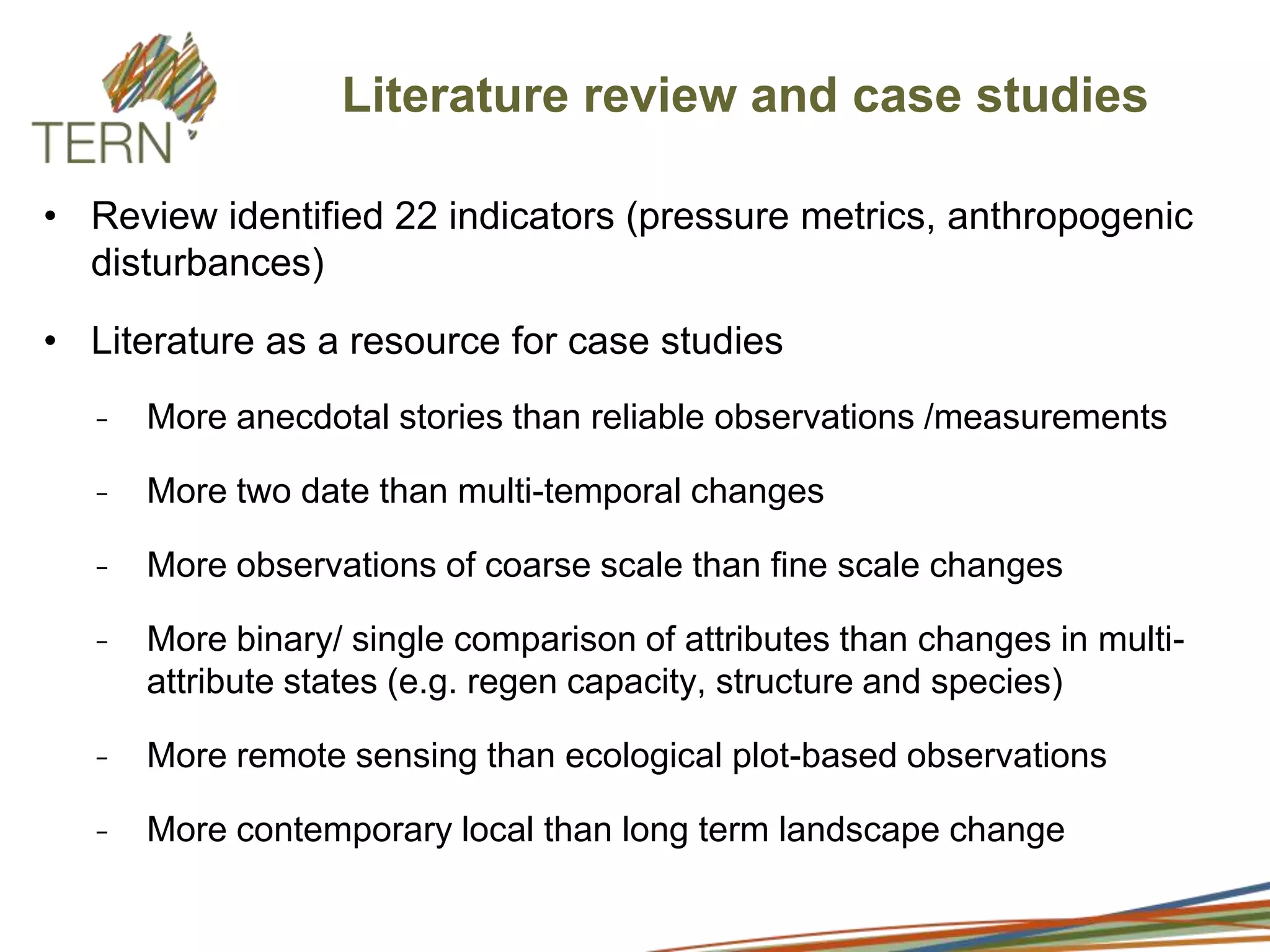
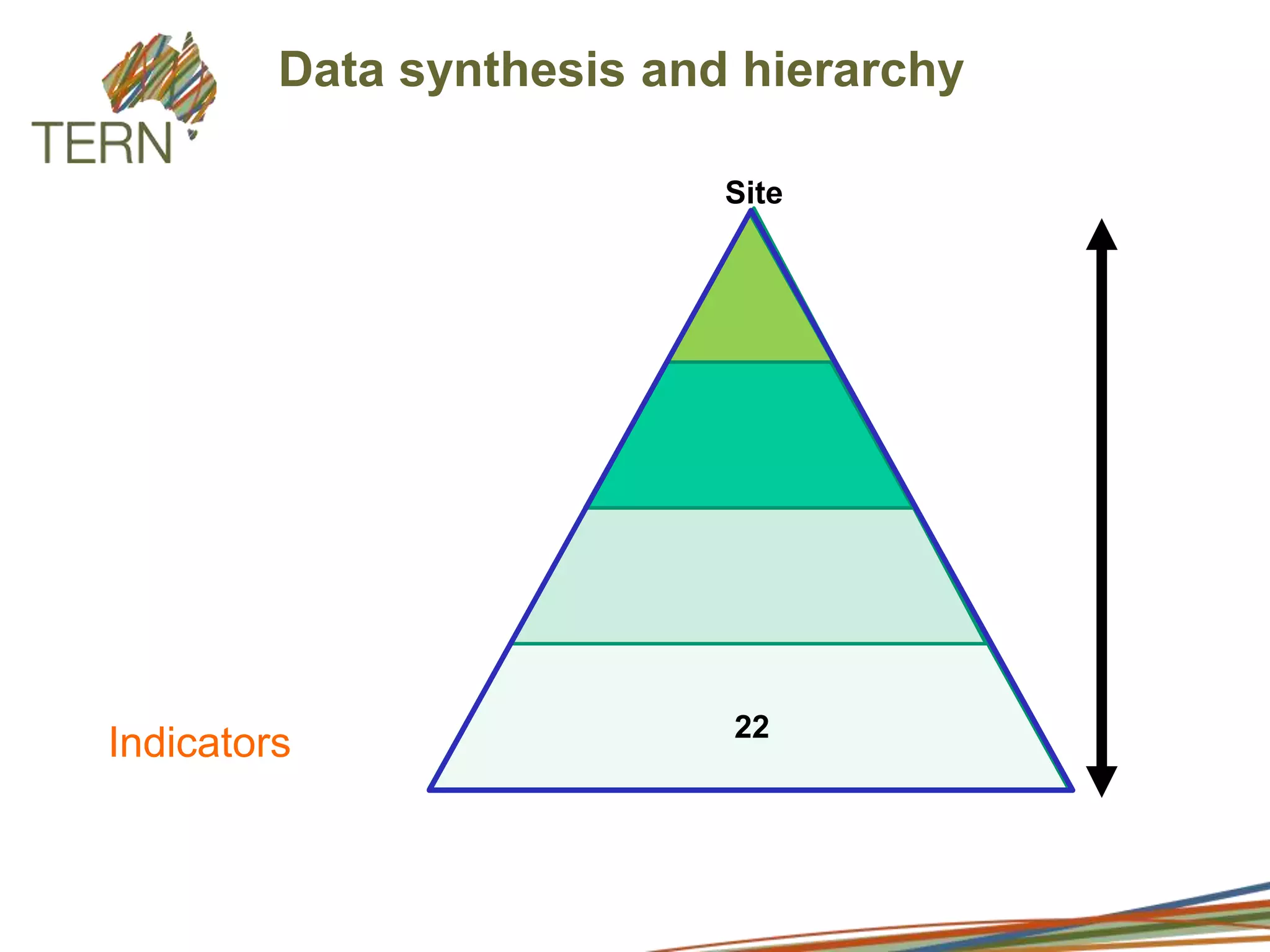
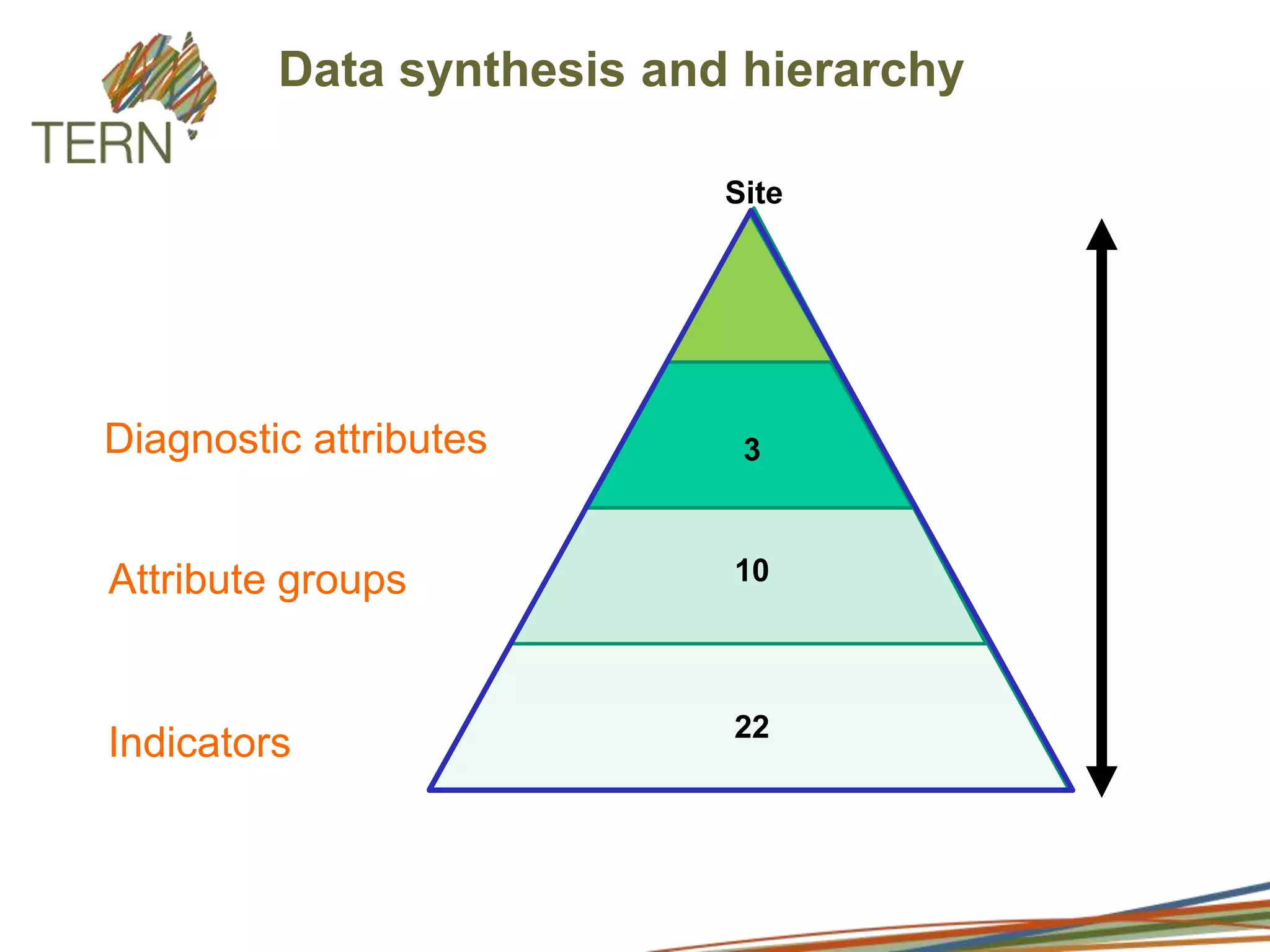
Literature review and case studiesReview identified 22 indicators (pressure metrics, anthropogenic disturbances)
Literature as a resource for case studies
More anecdotal stories than reliable observations /measurements
More two date than multi-temporal changes
More observations of coarse scale than fine scale changes
More binary/ single comparison of attributes than changes in multi-attribute states (e.g. regen capacity, structure and species)
More remote sensing than ecological plot-based observations
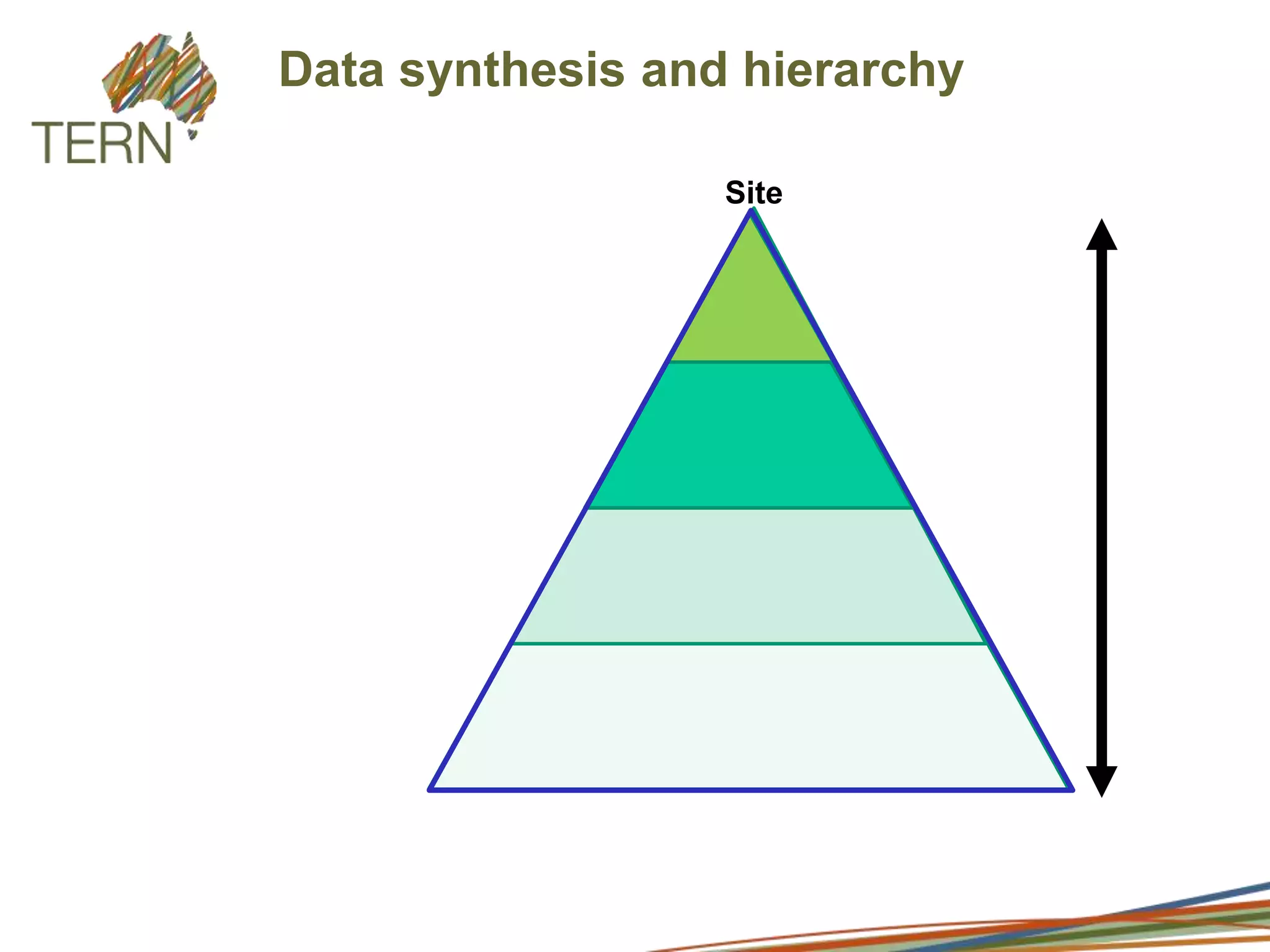
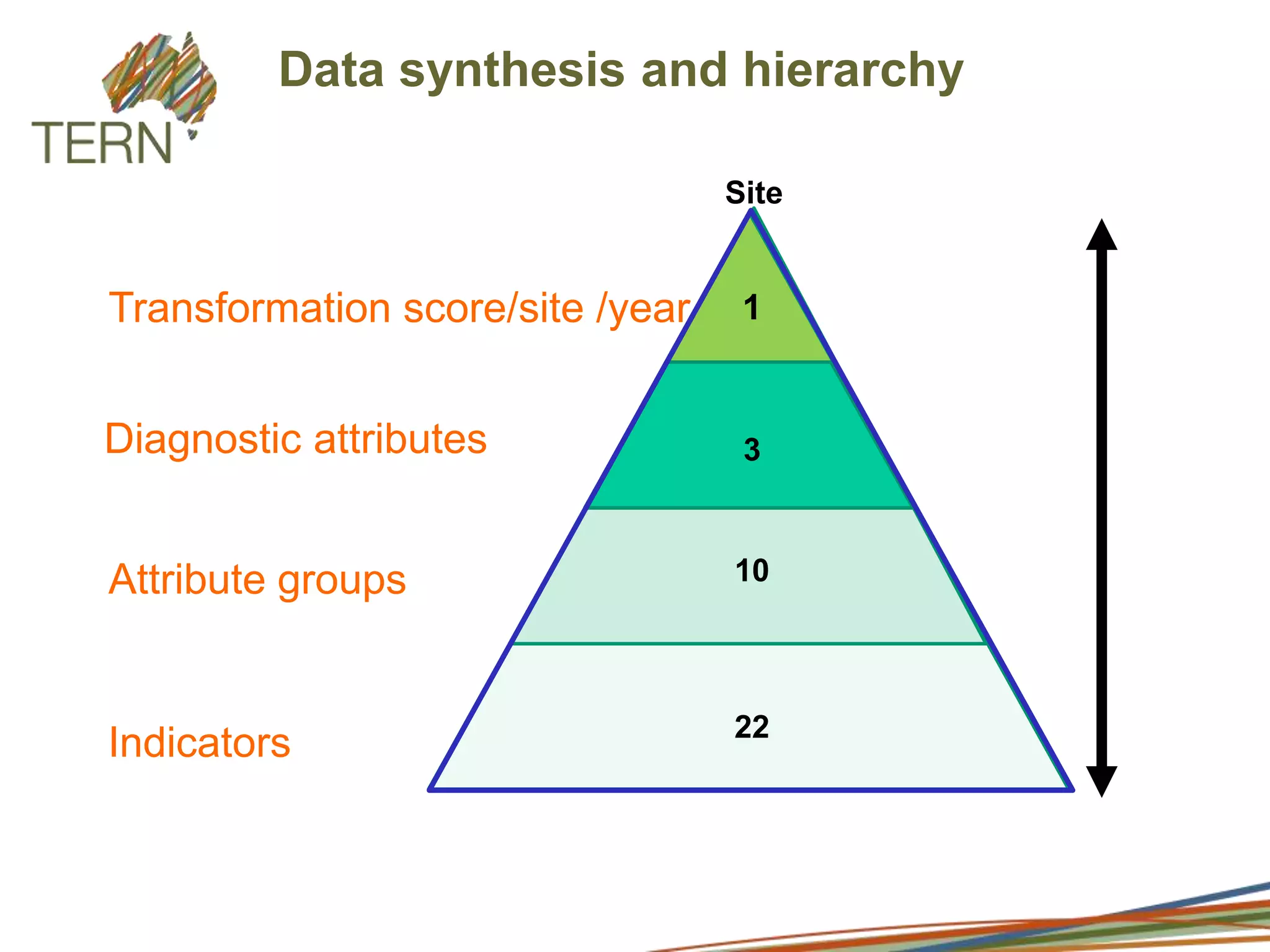
More contemporary local than long term landscape changeData synthesis and hierarchySite
Data synthesis and hierarchySite22Indicators
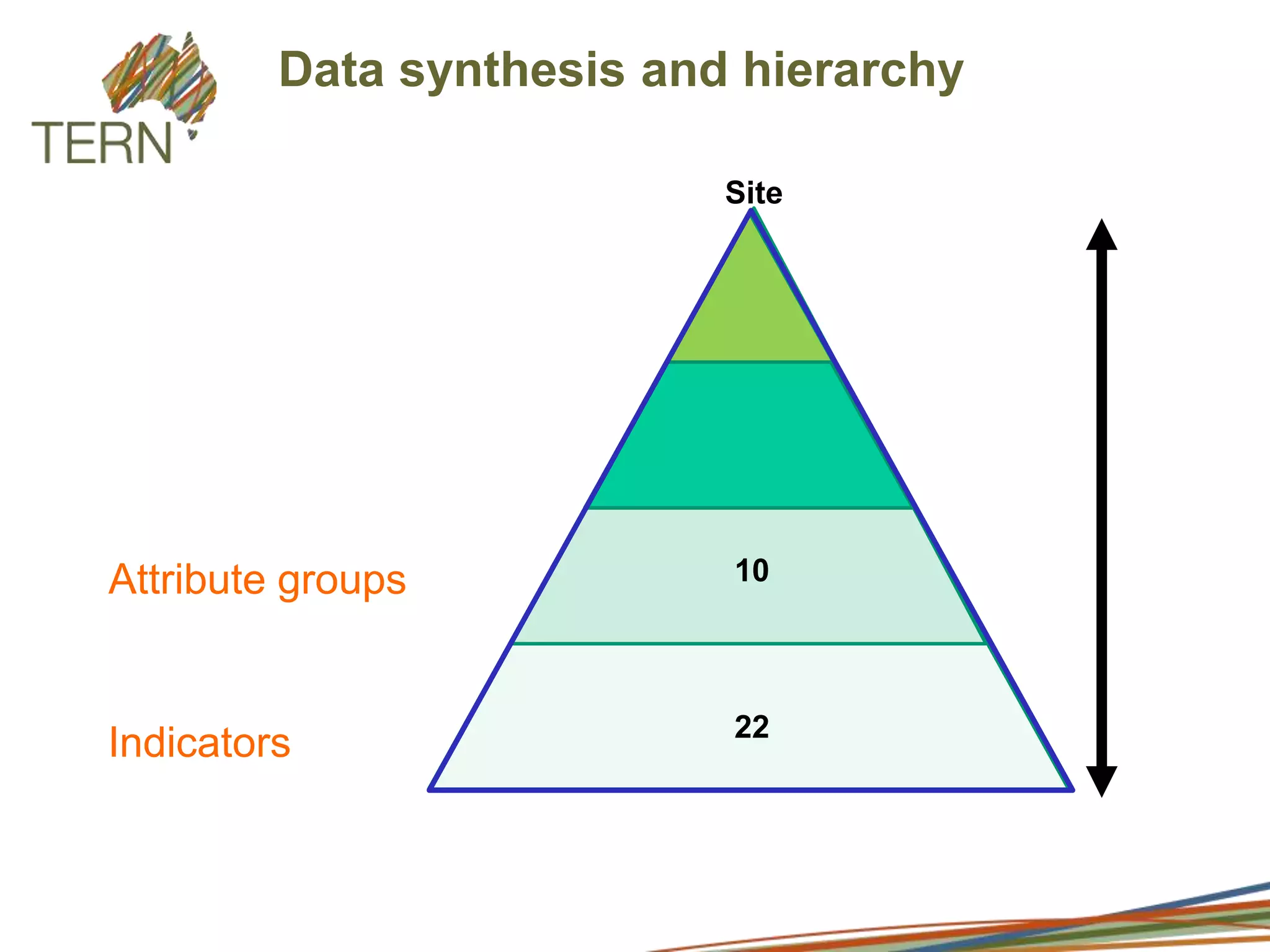
Data synthesis and hierarchySite10Attribute groups22Indicators
Data synthesis and hierarchySiteDiagnostic attributes310Attribute groups22Indicators
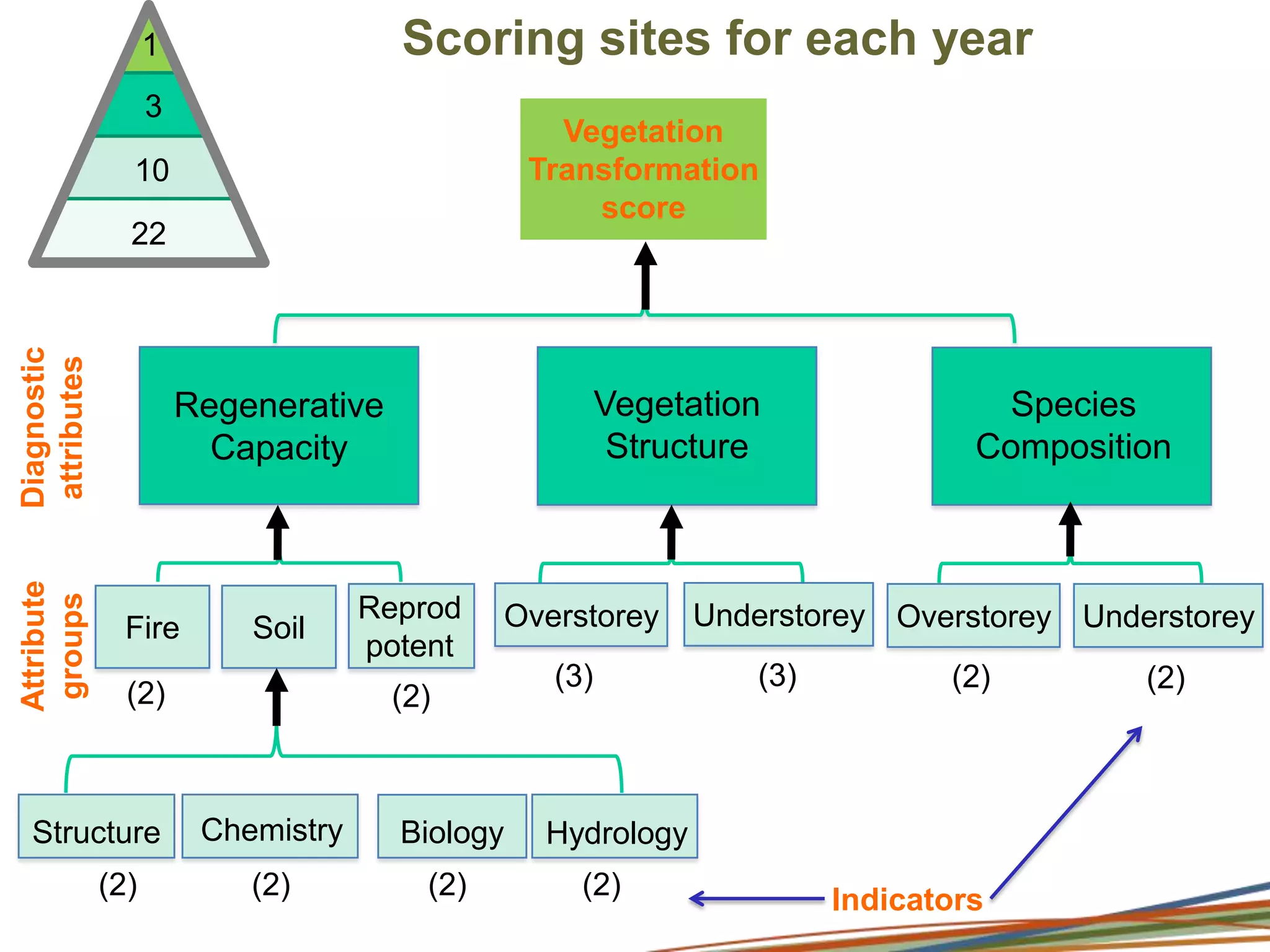
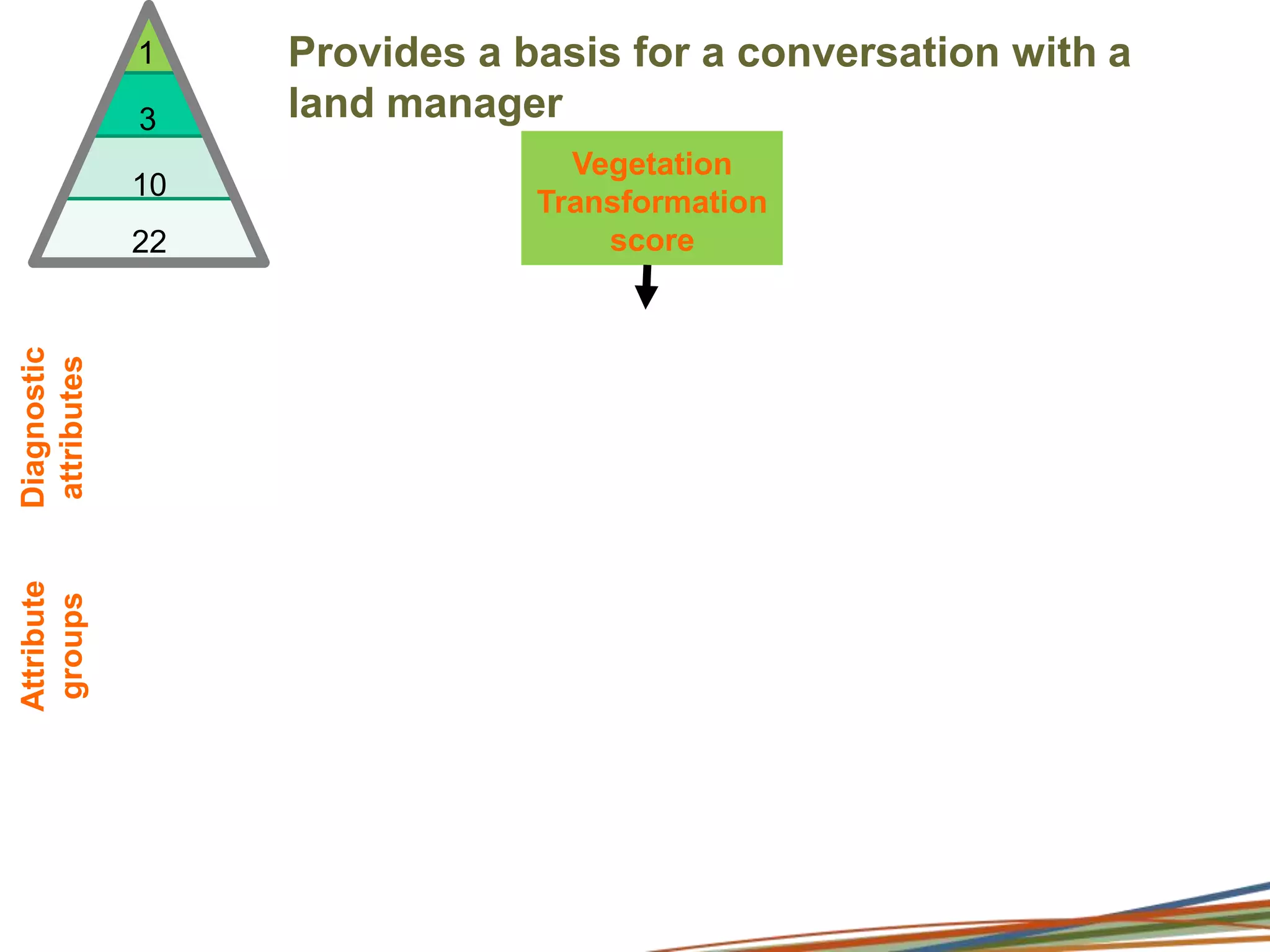
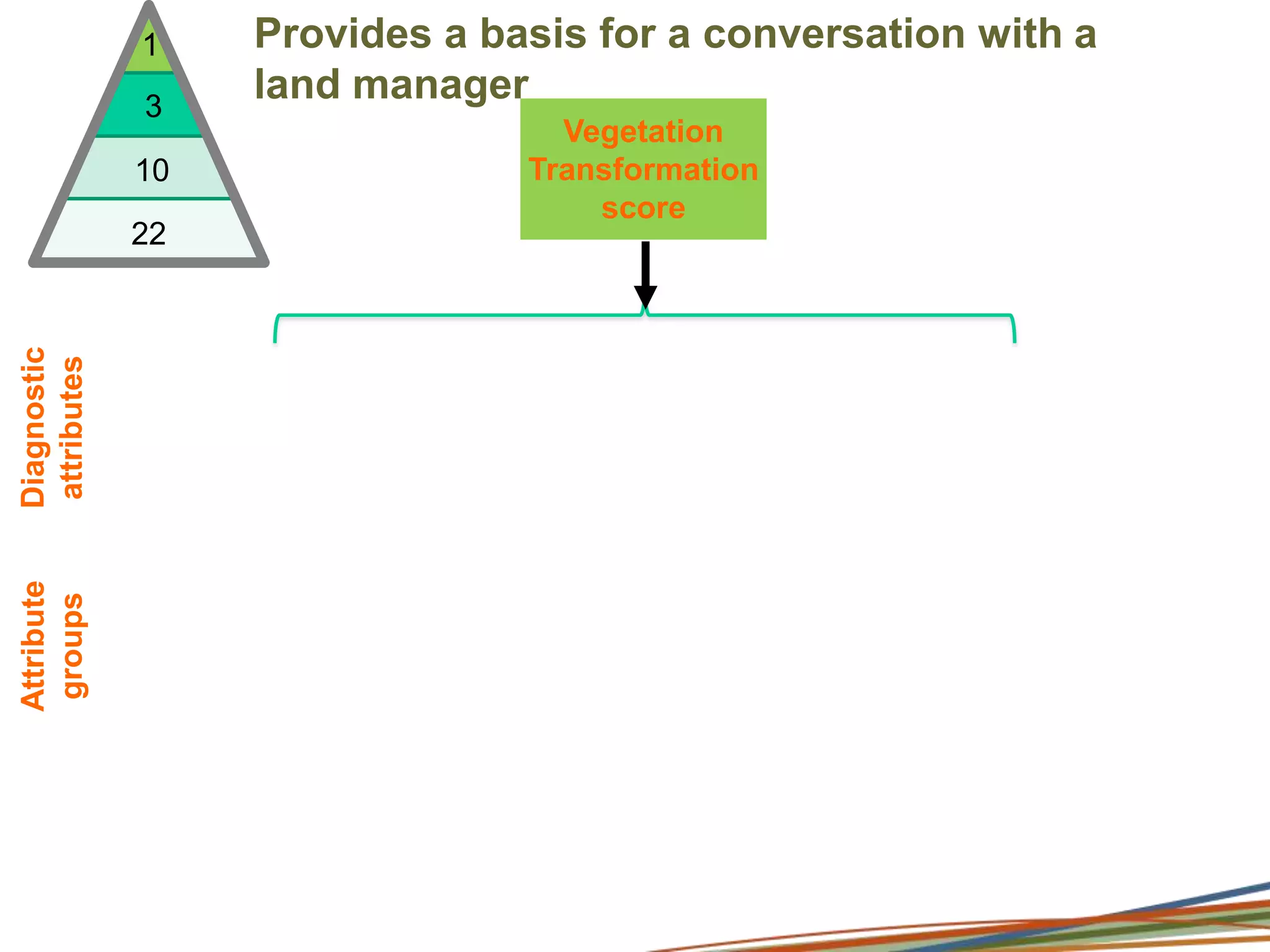
Data synthesis and hierarchySiteTransformation score/site /year1Diagnostic attributes310Attribute groups22Indicators
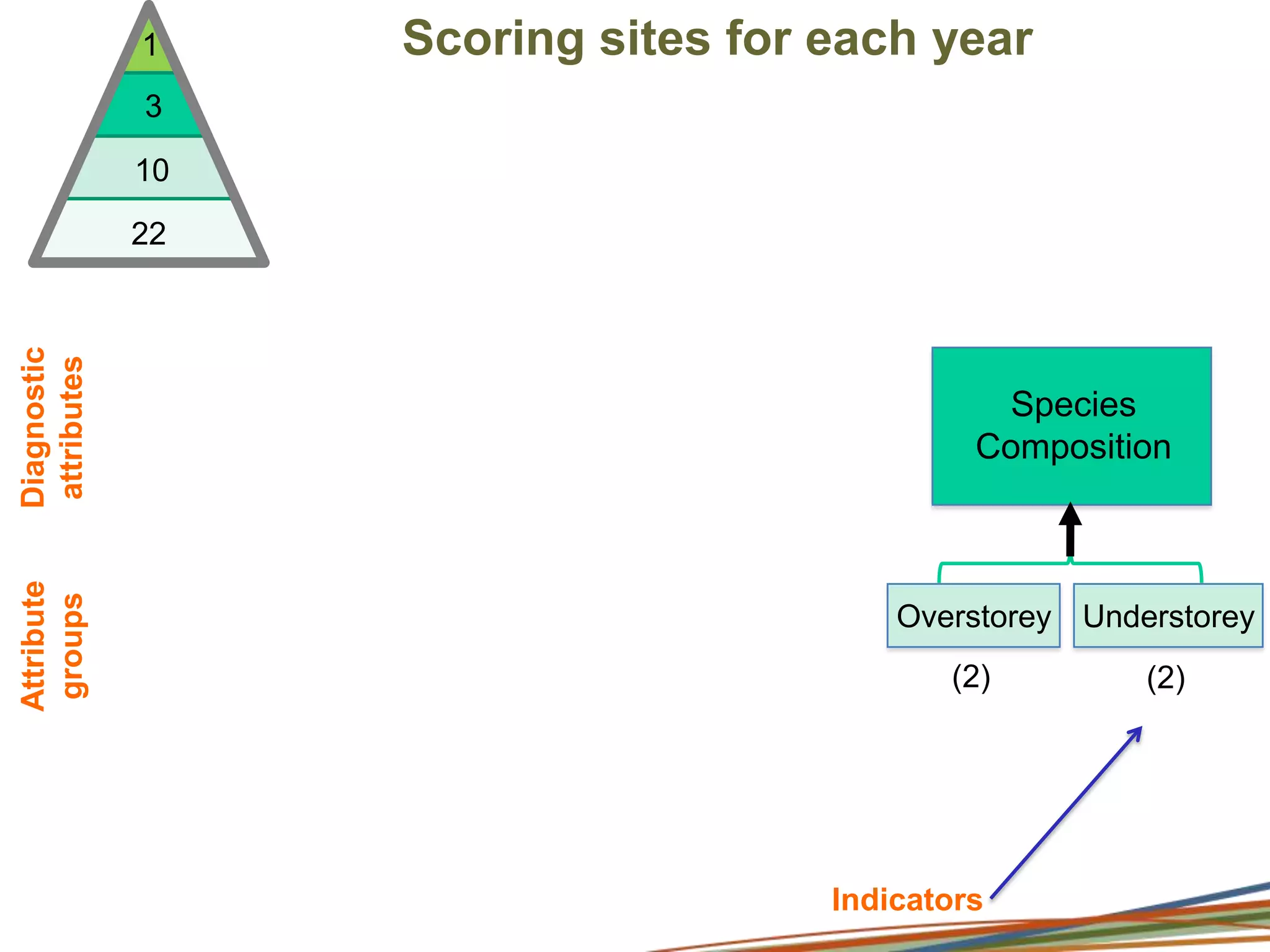
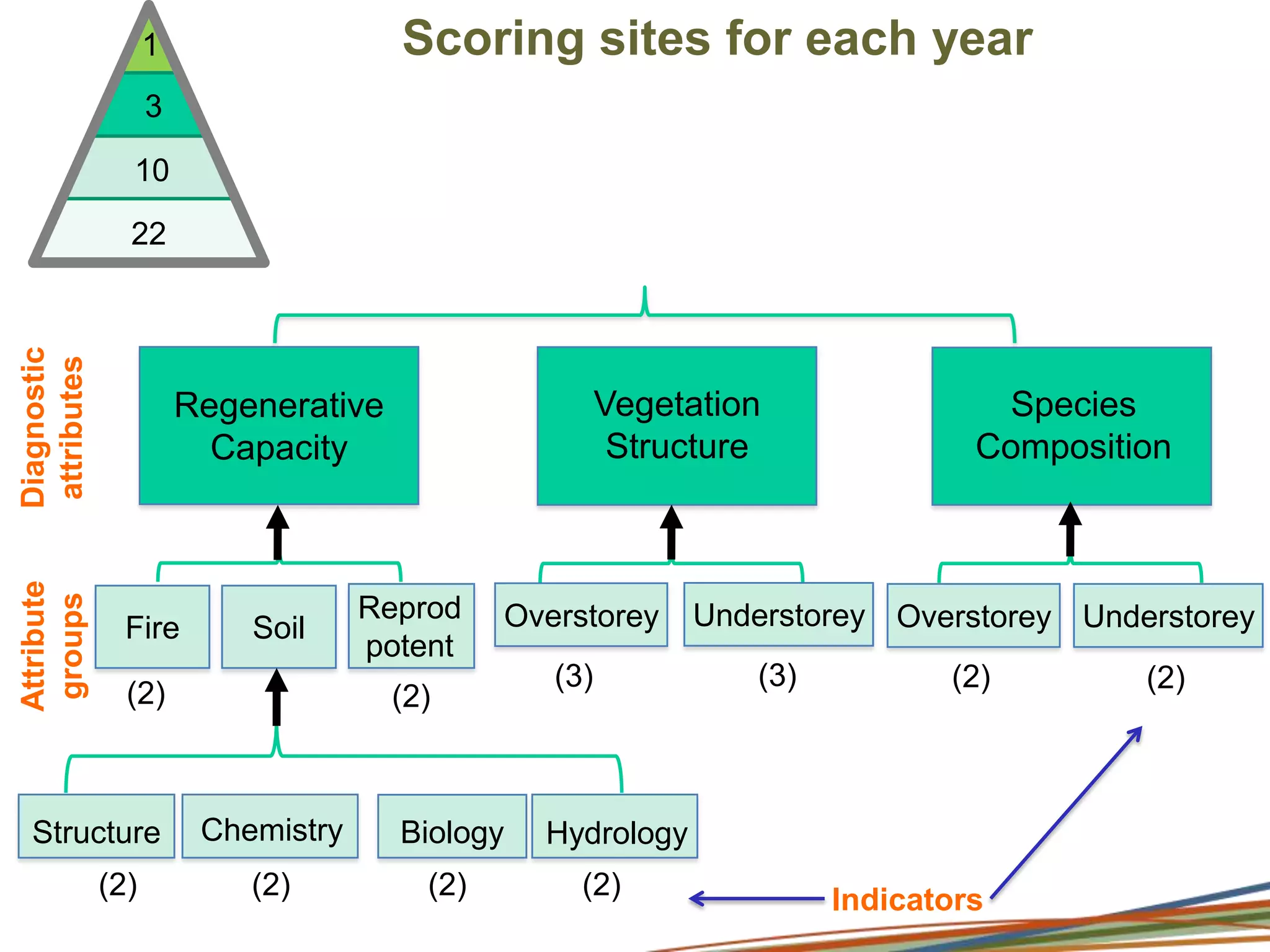
Scoring sites for each year131022DiagnosticattributesSpeciesCompositionAttributegroupsUnderstoreyOverstorey(2)(2)Indicators
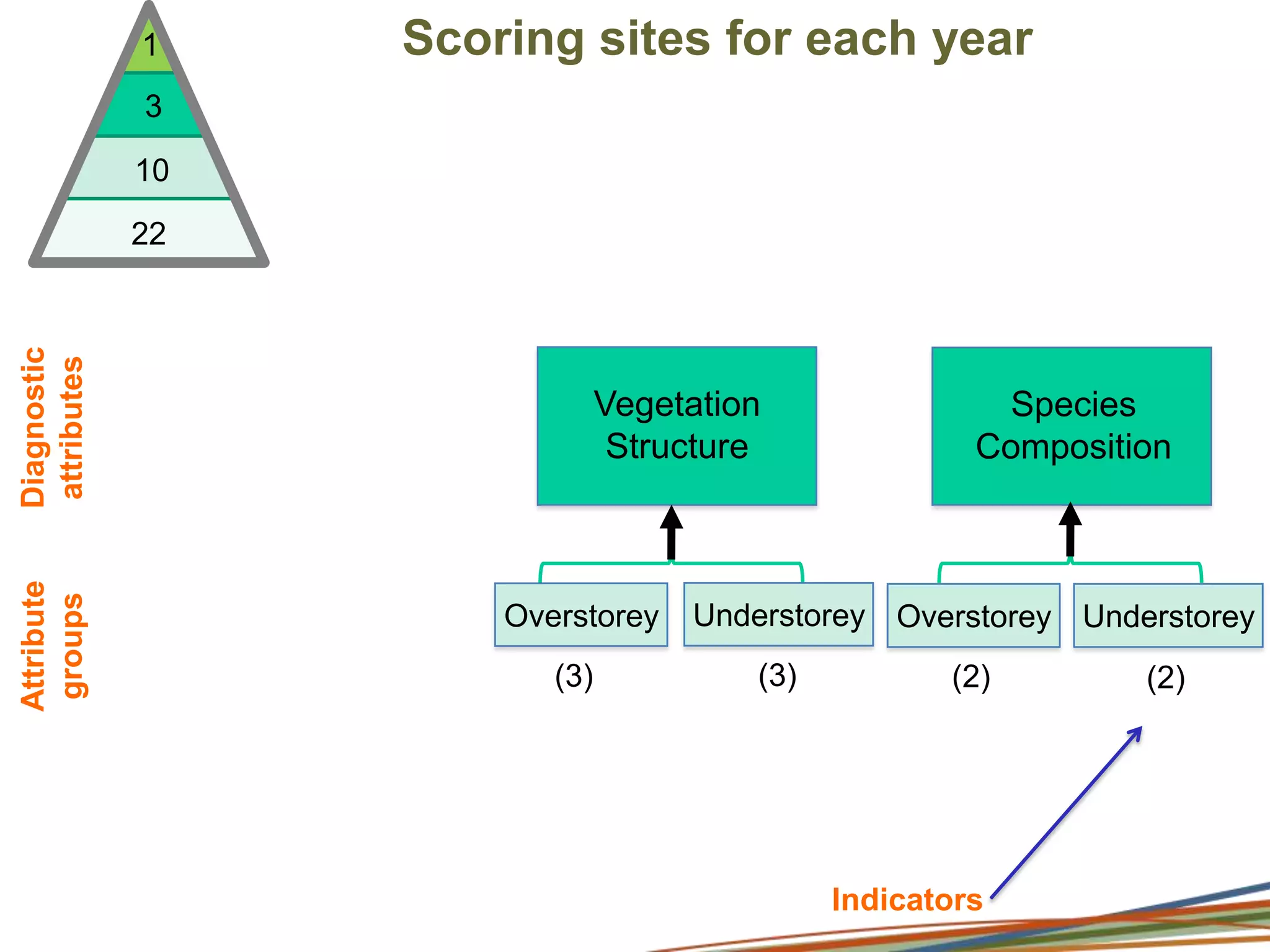
Scoring sites for each year131022DiagnosticattributesVegetationStructureSpeciesCompositionAttributegroupsOverstoreyUnderstoreyOverstoreyUnderstorey(3)(2)(2)(3)Indicators
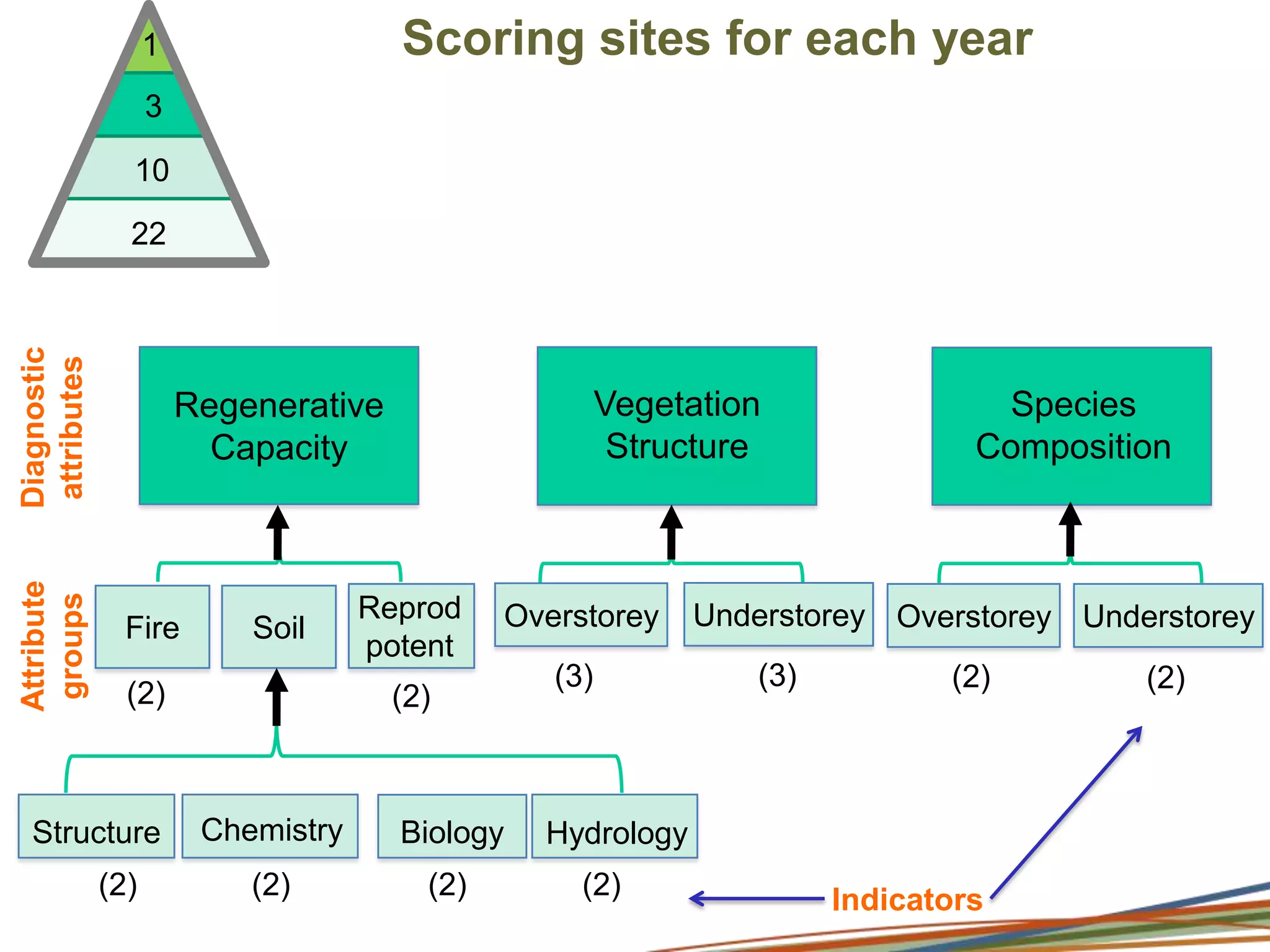
Scoring sites for each year131022DiagnosticattributesVegetationStructureSpeciesCompositionRegenerativeCapacityAttributegroupsReprodpotentFireSoilOverstoreyUnderstoreyOverstoreyUnderstorey(3)(2)(2)(3)(2)(2)BiologyStructureChemistryHydrologyIndicators(2)(2)(2)(2)
Scoring sites for each year1VegetationTransformationscore31022DiagnosticattributesVegetationStructureSpeciesCompositionRegenerativeCapacityAttributegroupsReprodpotentFireSoilOverstoreyUnderstoreyOverstoreyUnderstorey(3)(2)(2)(3)(2)(2)BiologyStructureChemistryHydrologyIndicators(2)(2)(2)(2)
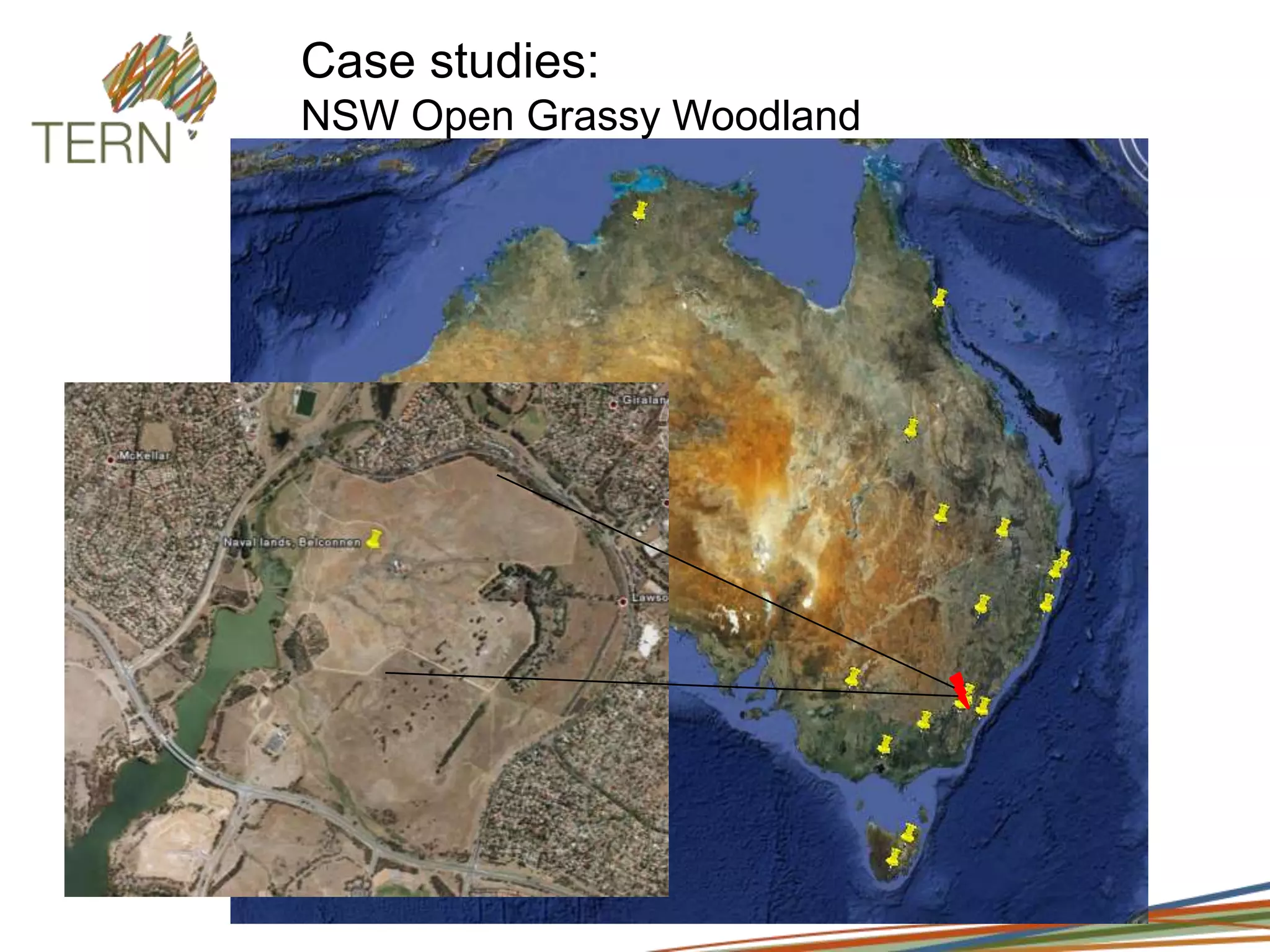
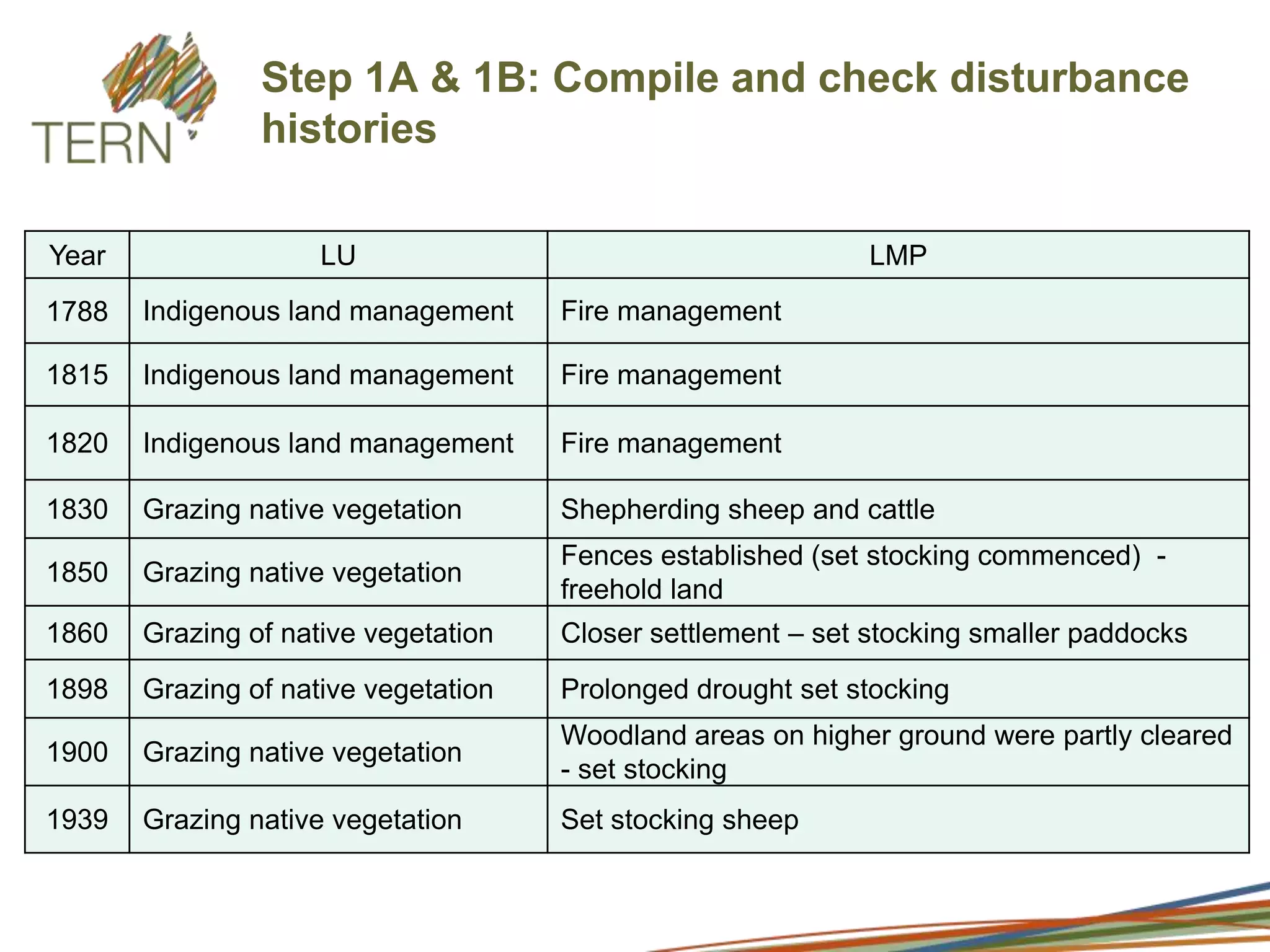
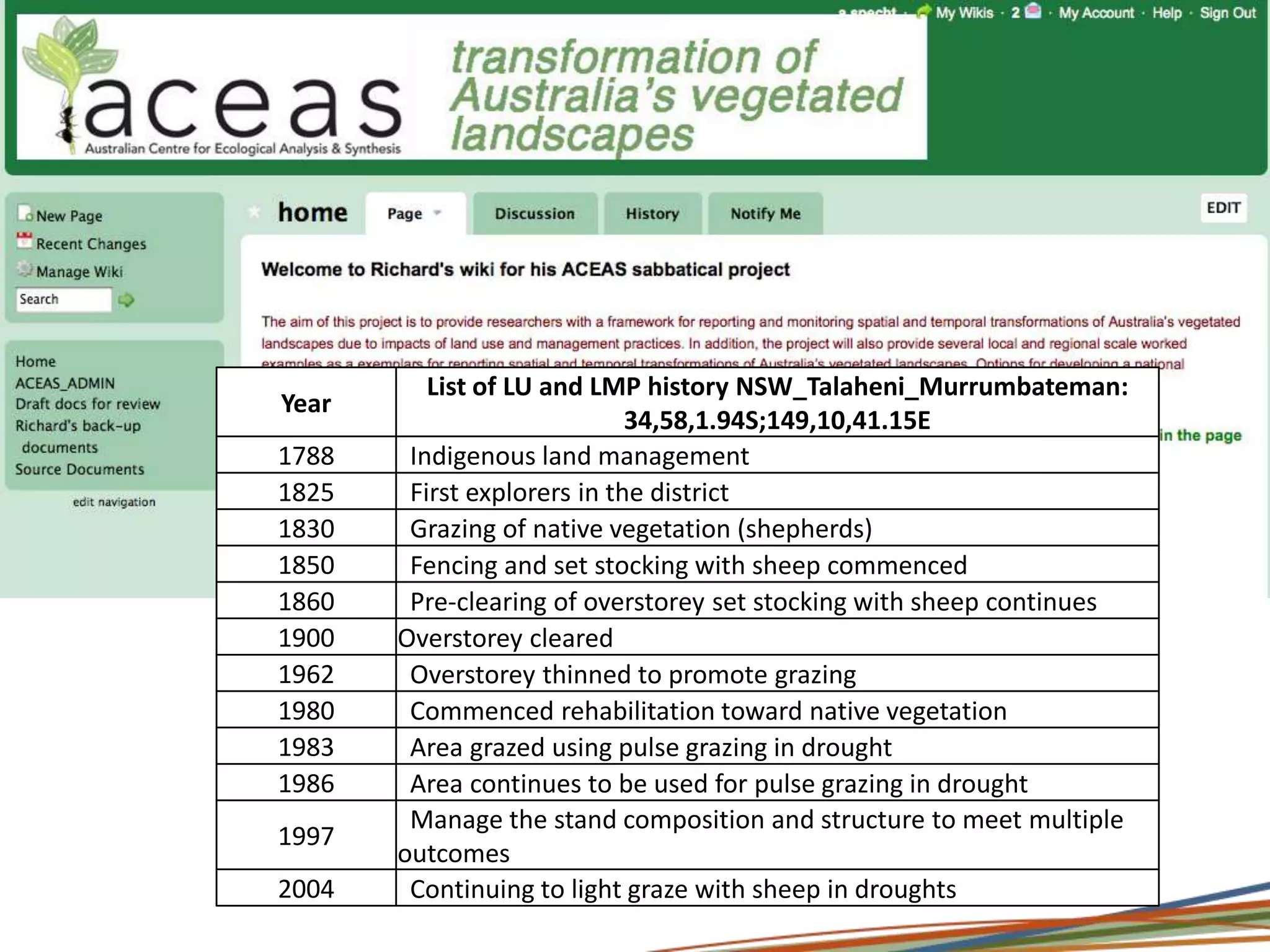
Case studies: NSW Open Grassy Woodland
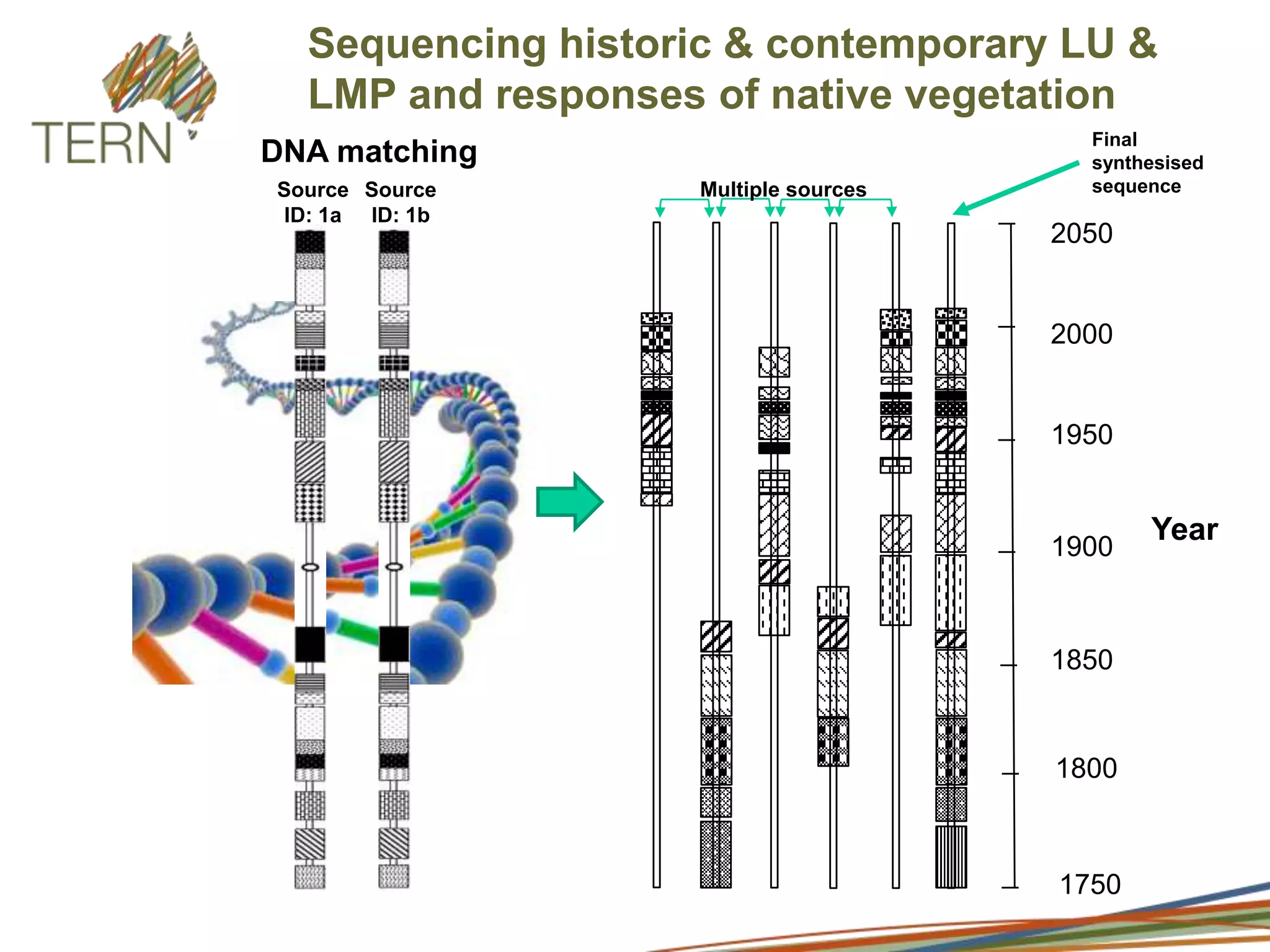
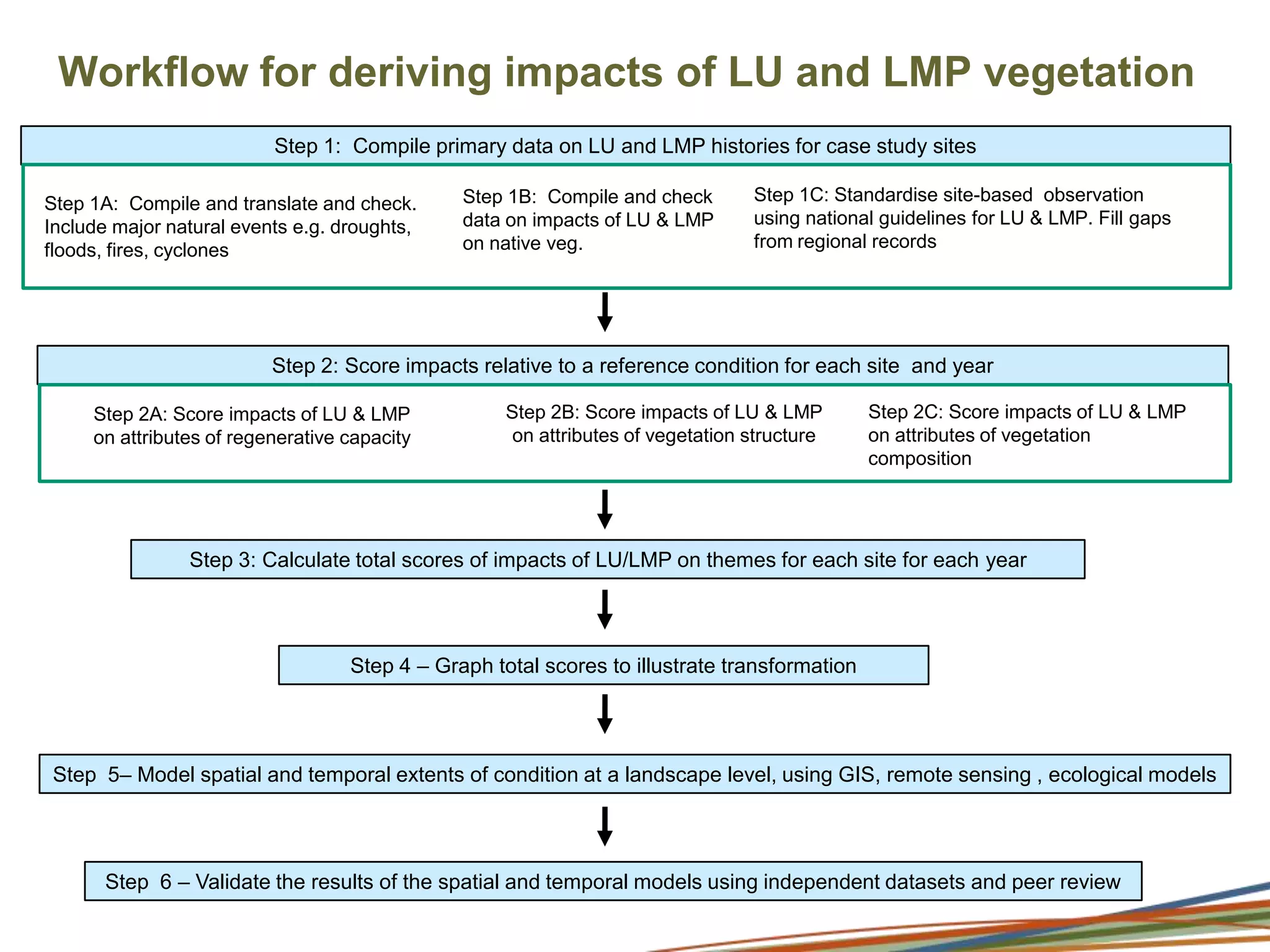
How are longitudinal site histories compiled and transformation data derived for each site?
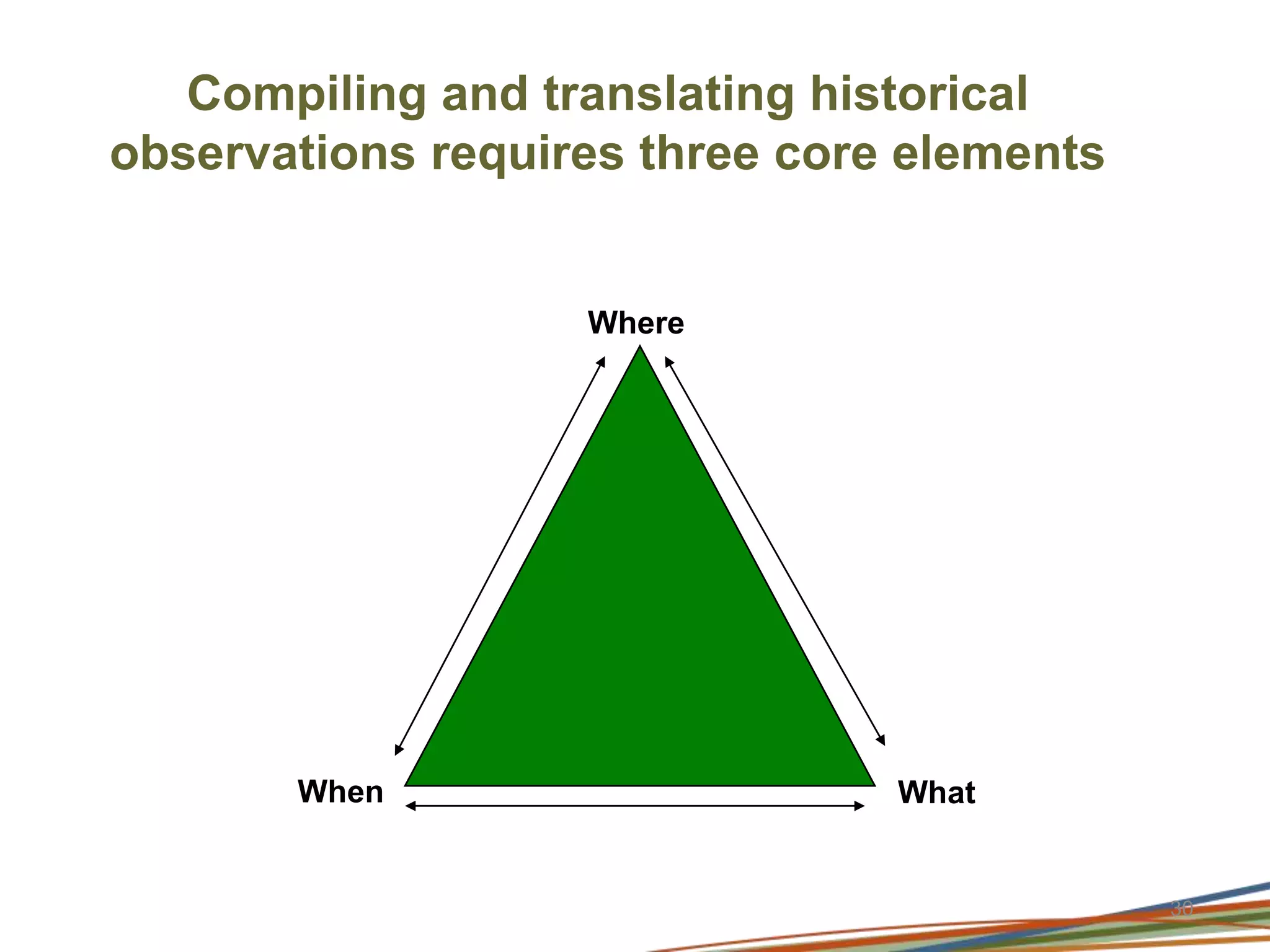
Compiling and translating historical observations requires three core elementsWhereWhenWhat30

Thackway_MAY_presentation