Tuesday 30th June 2020
How can we use tenses?
C - I can write verbs in different tenses
A - I can convert between tenses
E - I can write my own sentences in a specific tense
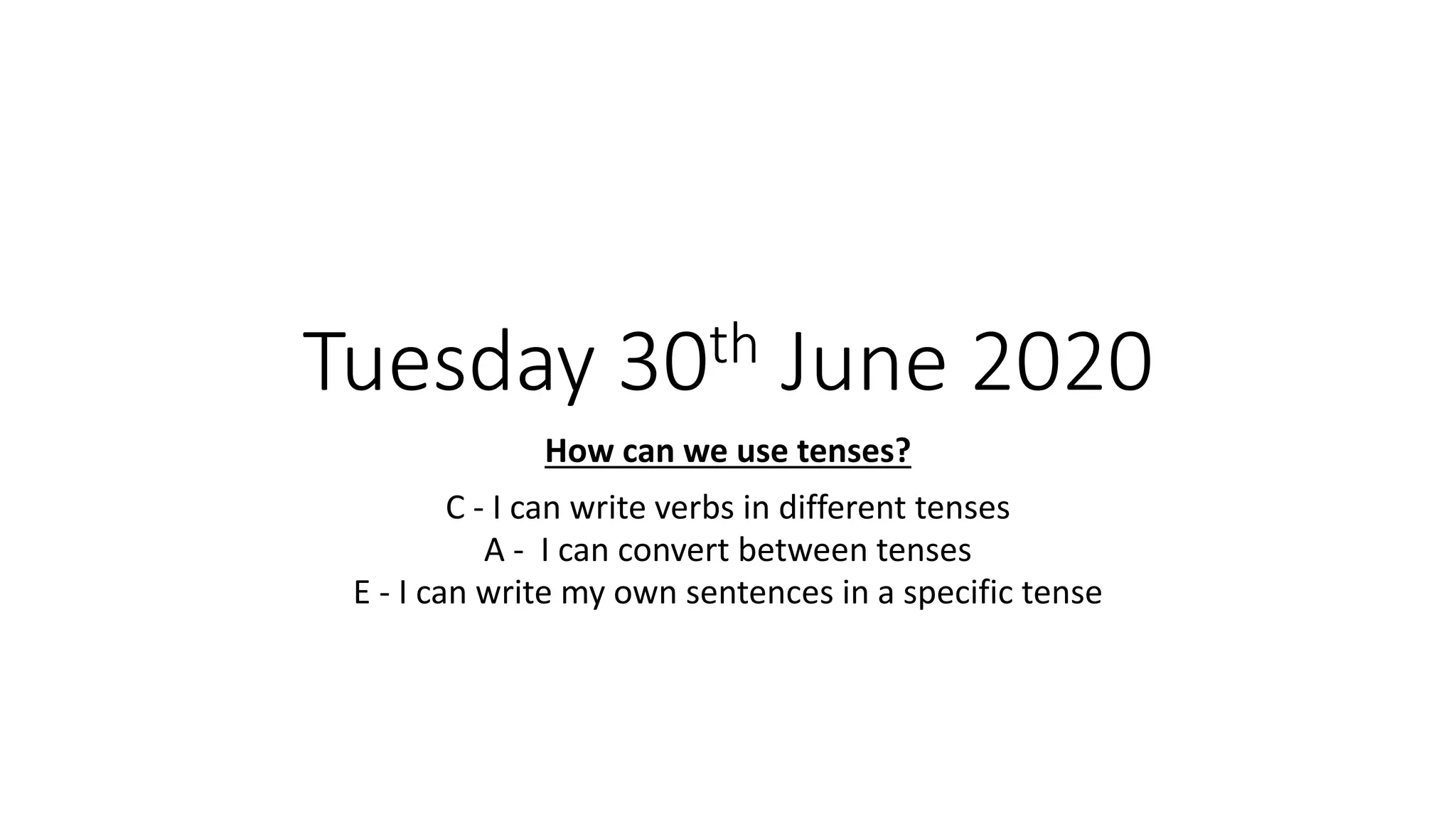
The simple past and simple present tense
If something is in the present tense it is happening now. For
example:
I play outside.
Something in the past tense has already happened. For
example:
I played outside.
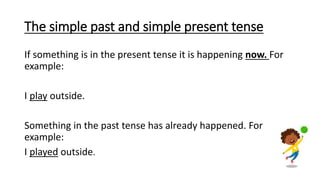
Sort these verbs in to simple past and simple
present tense.
walk
dance
look
cook
jump
walked
cooked
lookeddanced
jumped
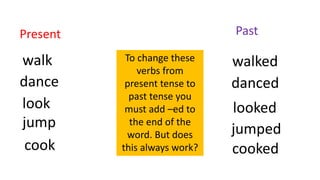
walk
dance
look
cook
jump
walked
cooked
looked
danced
jumped
Present Past
To change these
verbs from
present tense to
past tense you
must add –ed to
the end of the
word. But does
this always work?
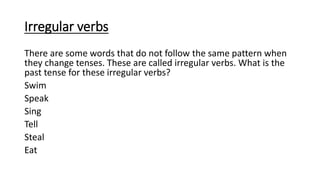
Irregular verbs
There are some words that do not follow the same pattern when
they change tenses. These are called irregular verbs. What is the
past tense for these irregular verbs?
Swim
Speak
Sing
Tell
Steal
Eat
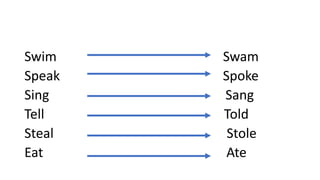
Swim Swam
Speak Spoke
Sing Sang
Tell Told
Steal Stole
Eat Ate
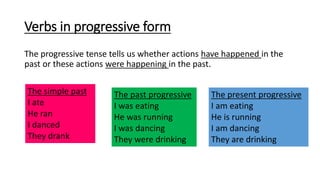
Verbs in progressive form
The progressive tense tells us whether actions have happened in the
past or these actions were happening in the past.
The simple past
I ate
He ran
I danced
They drank
The past progressive
I was eating
He was running
I was dancing
They were drinking
The present progressive
I am eating
He is running
I am dancing
They are drinking
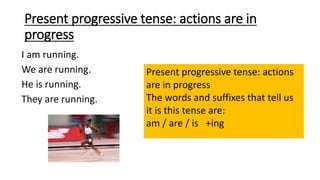
Present progressive tense: actions are in
progress
I am running.
We are running.
He is running.
They are running.
Present progressive tense: actions
are in progress
The words and suffixes that tell us
it is this tense are:
am / are / is +ing
Past progressive tense: actions were in
progress
I was running.
We were running.
He was running.
They were running.
The words and suffixes
that tell us it is this
tense are: were /
was +ing
Present perfect tense
The present perfect tense tells us that something has started in
the past and whether it is finished or unfinished it still affects the
present in some way. The present perfect uses have, has and a
past tense verb usually ending in –ed or –en. For example:
Tom drove to work today  Tom has driven to work today.
Idris travelled to London  Idris has travelled to London for a
meeting.
The birds flew South for the winter  The birds have flown south
for the winter.

Tenses

  • 1.
    Tuesday 30th June2020 How can we use tenses? C - I can write verbs in different tenses A - I can convert between tenses E - I can write my own sentences in a specific tense
  • 2.
    The simple pastand simple present tense If something is in the present tense it is happening now. For example: I play outside. Something in the past tense has already happened. For example: I played outside.
  • 3.
    Sort these verbsin to simple past and simple present tense. walk dance look cook jump walked cooked lookeddanced jumped
  • 4.
    walk dance look cook jump walked cooked looked danced jumped Present Past To changethese verbs from present tense to past tense you must add –ed to the end of the word. But does this always work?
  • 5.
    Irregular verbs There aresome words that do not follow the same pattern when they change tenses. These are called irregular verbs. What is the past tense for these irregular verbs? Swim Speak Sing Tell Steal Eat
  • 6.
    Swim Swam Speak Spoke SingSang Tell Told Steal Stole Eat Ate
  • 7.
    Verbs in progressiveform The progressive tense tells us whether actions have happened in the past or these actions were happening in the past. The simple past I ate He ran I danced They drank The past progressive I was eating He was running I was dancing They were drinking The present progressive I am eating He is running I am dancing They are drinking
  • 8.
    Present progressive tense:actions are in progress I am running. We are running. He is running. They are running. Present progressive tense: actions are in progress The words and suffixes that tell us it is this tense are: am / are / is +ing
  • 9.
    Past progressive tense:actions were in progress I was running. We were running. He was running. They were running. The words and suffixes that tell us it is this tense are: were / was +ing
  • 10.
    Present perfect tense Thepresent perfect tense tells us that something has started in the past and whether it is finished or unfinished it still affects the present in some way. The present perfect uses have, has and a past tense verb usually ending in –ed or –en. For example: Tom drove to work today  Tom has driven to work today. Idris travelled to London  Idris has travelled to London for a meeting. The birds flew South for the winter  The birds have flown south for the winter.