London
Make a list of things you associate
with London.
London
What in your list would have been in
London 400 years ago?
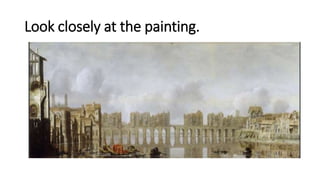
The painting that we will look at on the next slides was
painted by the Dutch painter Claude de Jongh in 1630 and is
called Old London Bridge.
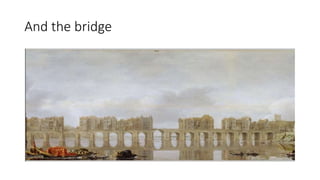
This was at least the seventh bridge to cross the Thames. It
was built in the 13th Century.
The small arches at the bottom of the Bridge meant the water
did not flow so quickly and it is believed this was a factor in
the Thames freezing. From 1309 until 1814, the surface of the
river froze over twenty-four times.
It would be dangerous to cross the bridge by foot as it was so
narrow and people preferred to take the boat.
Look closely at the painting.
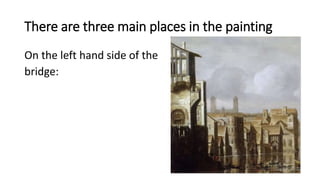
There are three main places in the painting
On the left hand side of the
bridge:
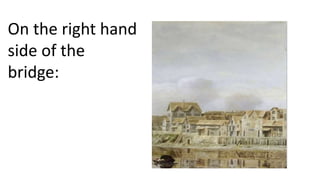
On the right hand
side of the
bridge:
And the bridge
Go back through the slides and look
at each area.
Make a list of what can you see in
them
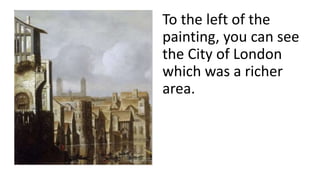
To the left of the
painting, you can see
the City of London
which was a richer
area.
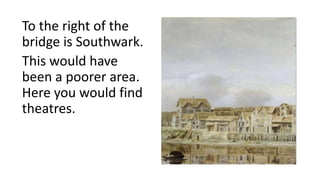
To the right of the
bridge is Southwark.
This would have
been a poorer area.
Here you would find
theatres.
Writing task
Can you write a
persuasive speech to
convince others they
should live on a particular
side of the river?
Things to remember:
Use emotive language
Use rhetorical questions
Use persuasive phrases
Try to make opinions sound like facts.
Use powerful verbs and strong adjectives.
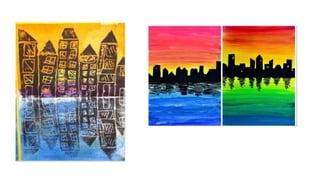
Art extension - Reflections
Draw or paint a picture of a city landscape which
includes a river and draw the reflection. If you
have a small mirror you could use it to help you.
There are some examples of reflection art work
by children on the next slide.
Art writing year 5

Art writing year 5

  • 2.
    London Make a listof things you associate with London.
  • 3.
    London What in yourlist would have been in London 400 years ago?
  • 4.
    The painting thatwe will look at on the next slides was painted by the Dutch painter Claude de Jongh in 1630 and is called Old London Bridge. This was at least the seventh bridge to cross the Thames. It was built in the 13th Century. The small arches at the bottom of the Bridge meant the water did not flow so quickly and it is believed this was a factor in the Thames freezing. From 1309 until 1814, the surface of the river froze over twenty-four times. It would be dangerous to cross the bridge by foot as it was so narrow and people preferred to take the boat.
  • 5.
    Look closely atthe painting.
  • 6.
    There are threemain places in the painting On the left hand side of the bridge:
  • 7.
    On the righthand side of the bridge:
  • 8.
  • 9.
    Go back throughthe slides and look at each area. Make a list of what can you see in them
  • 10.
    To the leftof the painting, you can see the City of London which was a richer area.
  • 11.
    To the rightof the bridge is Southwark. This would have been a poorer area. Here you would find theatres.
  • 12.
    Writing task Can youwrite a persuasive speech to convince others they should live on a particular side of the river?
  • 13.
    Things to remember: Useemotive language Use rhetorical questions Use persuasive phrases Try to make opinions sound like facts. Use powerful verbs and strong adjectives.
  • 14.
    Art extension -Reflections Draw or paint a picture of a city landscape which includes a river and draw the reflection. If you have a small mirror you could use it to help you. There are some examples of reflection art work by children on the next slide.