Ten construction applications
for unmanned aerial vehicles
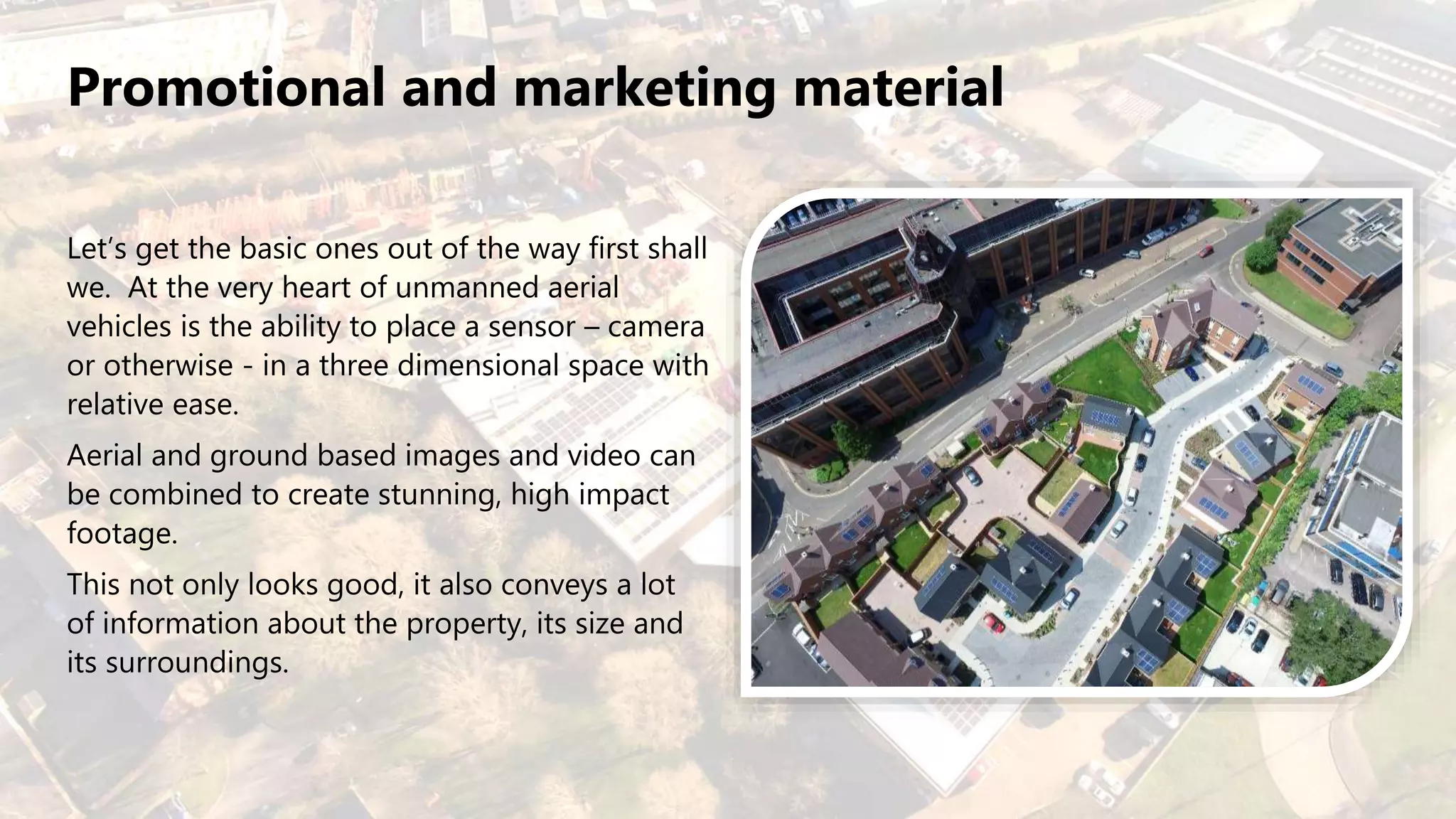
Let’s get the basic ones out of the way first shall
we. At the very heart of unmanned aerial
vehicles is the ability to place a sensor – camera
or otherwise - in a three dimensional space with
relative ease.
Aerial and ground based images and video can
be combined to create stunning, high impact
footage.
This not only looks good, it also conveys a lot
of information about the property, its size and
its surroundings.
Promotional and marketing material
Routine progress monitoring
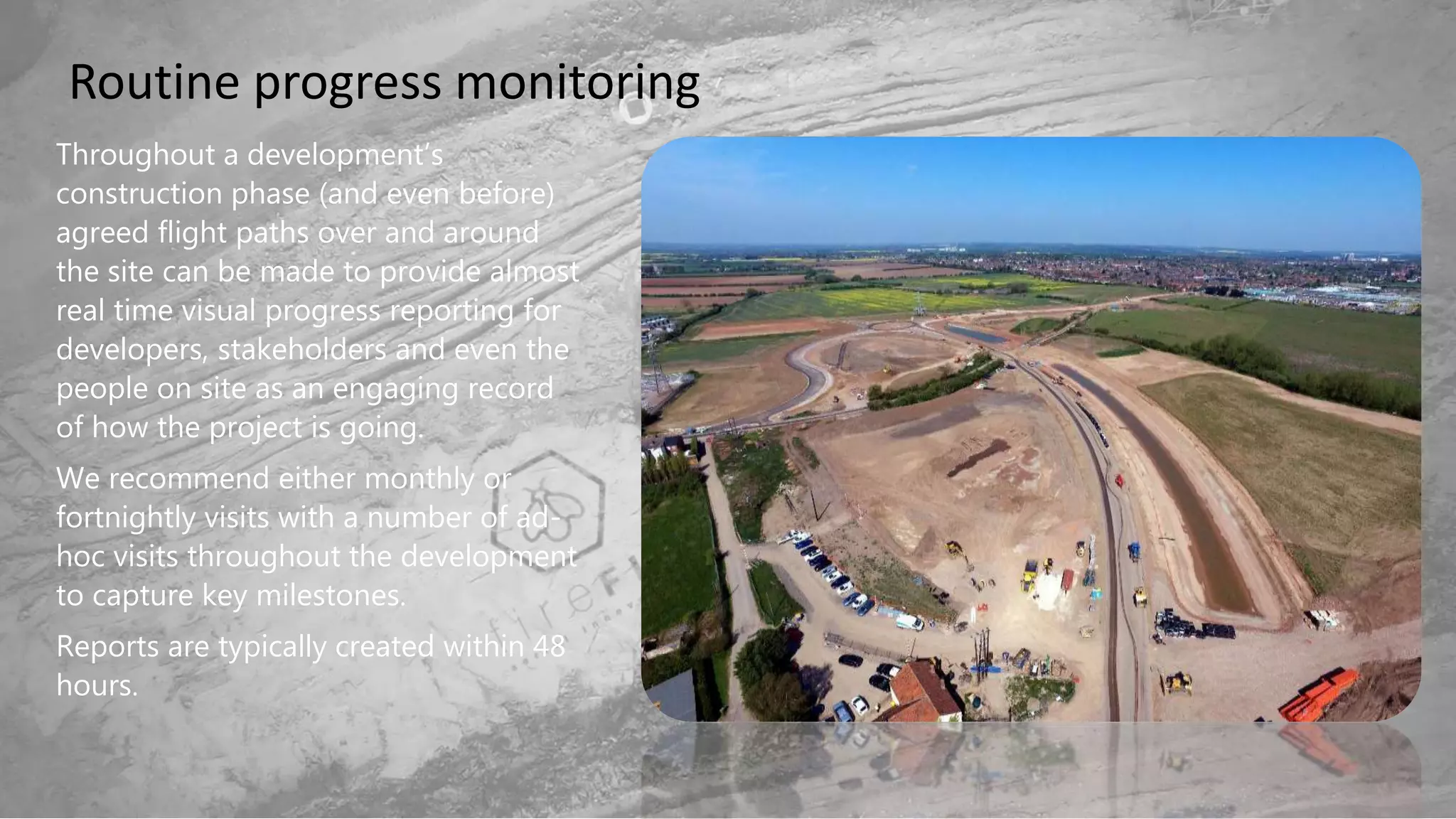
Throughout a development’s
construction phase (and even before)
agreed flight paths over and around
the site can be made to provide almost
real time visual progress reporting for
developers, stakeholders and even the
people on site as an engaging record
of how the project is going.
We recommend either monthly or
fortnightly visits with a number of ad-
hoc visits throughout the development
to capture key milestones.
Reports are typically created within 48
hours.
3D modelling
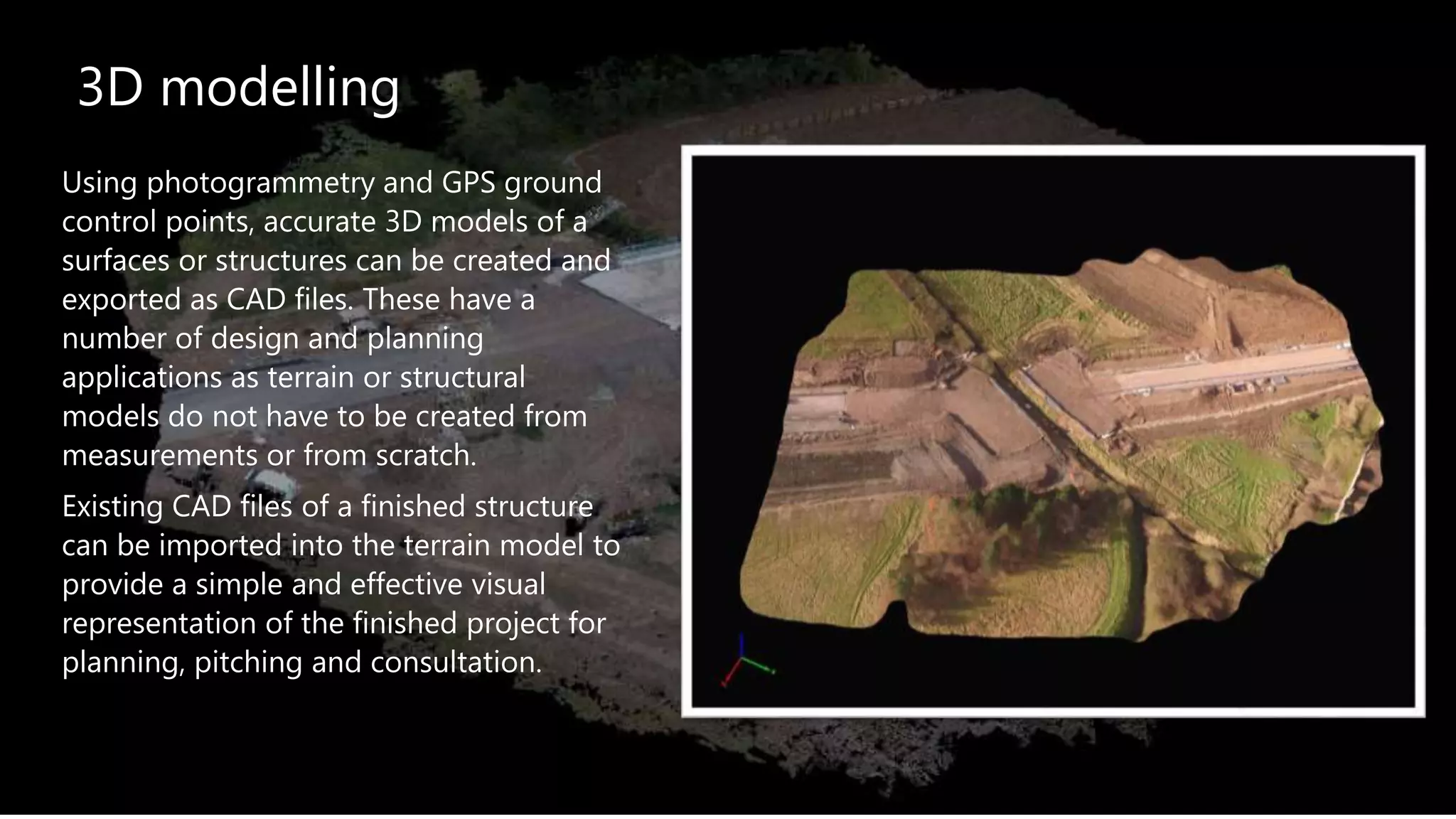
Using photogrammetry and GPS ground
control points, accurate 3D models of a
surfaces or structures can be created and
exported as CAD files. These have a
number of design and planning
applications as terrain or structural
models do not have to be created from
measurements or from scratch.
Existing CAD files of a finished structure
can be imported into the terrain model to
provide a simple and effective visual
representation of the finished project for
planning, pitching and consultation.
Inspection and survey
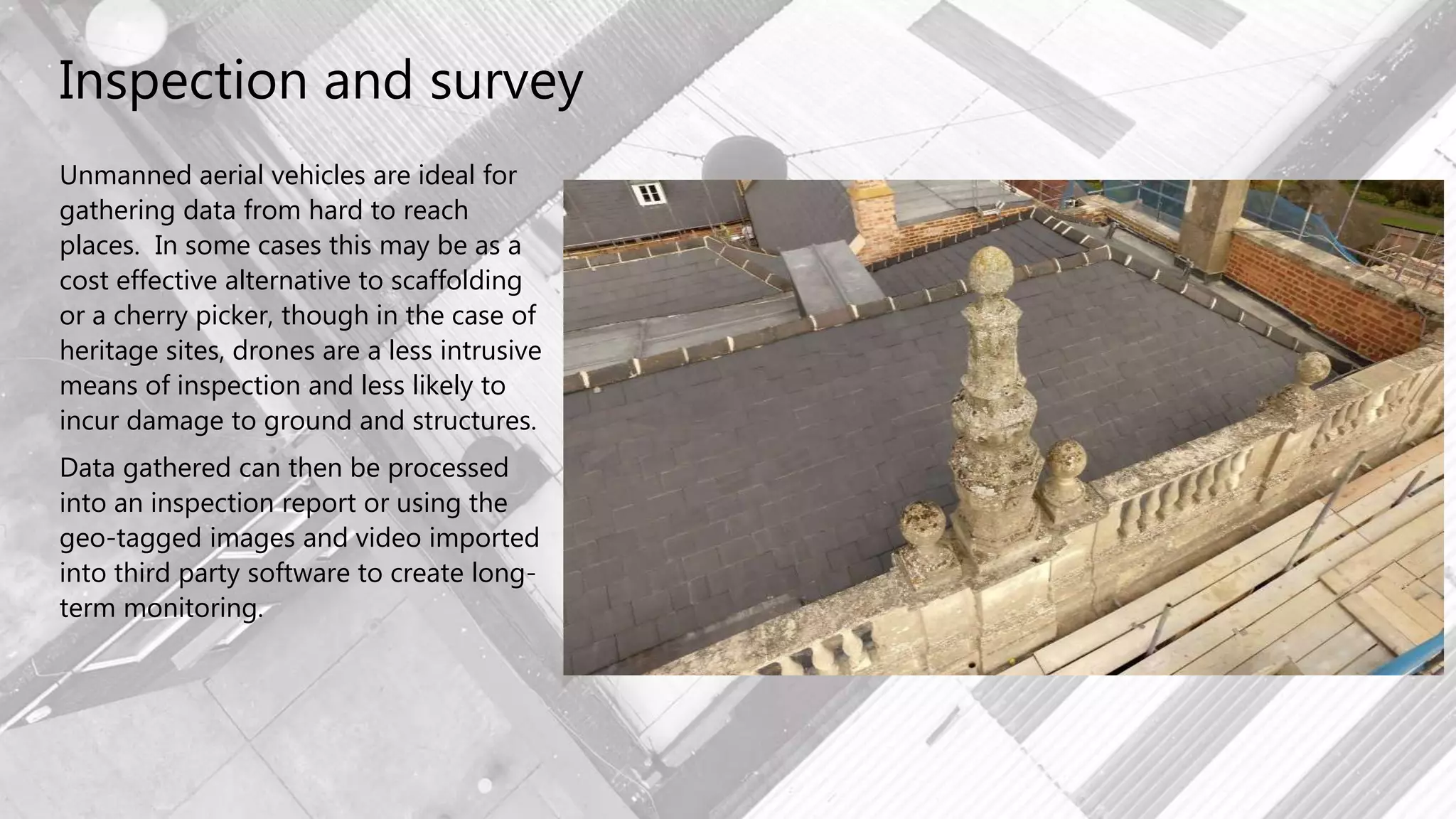
Unmanned aerial vehicles are ideal for
gathering data from hard to reach
places. In some cases this may be as a
cost effective alternative to scaffolding
or a cherry picker, though in the case of
heritage sites, drones are a less intrusive
means of inspection and less likely to
incur damage to ground and structures.
Data gathered can then be processed
into an inspection report or using the
geo-tagged images and video imported
into third party software to create long-
term monitoring.
Planning and consultation
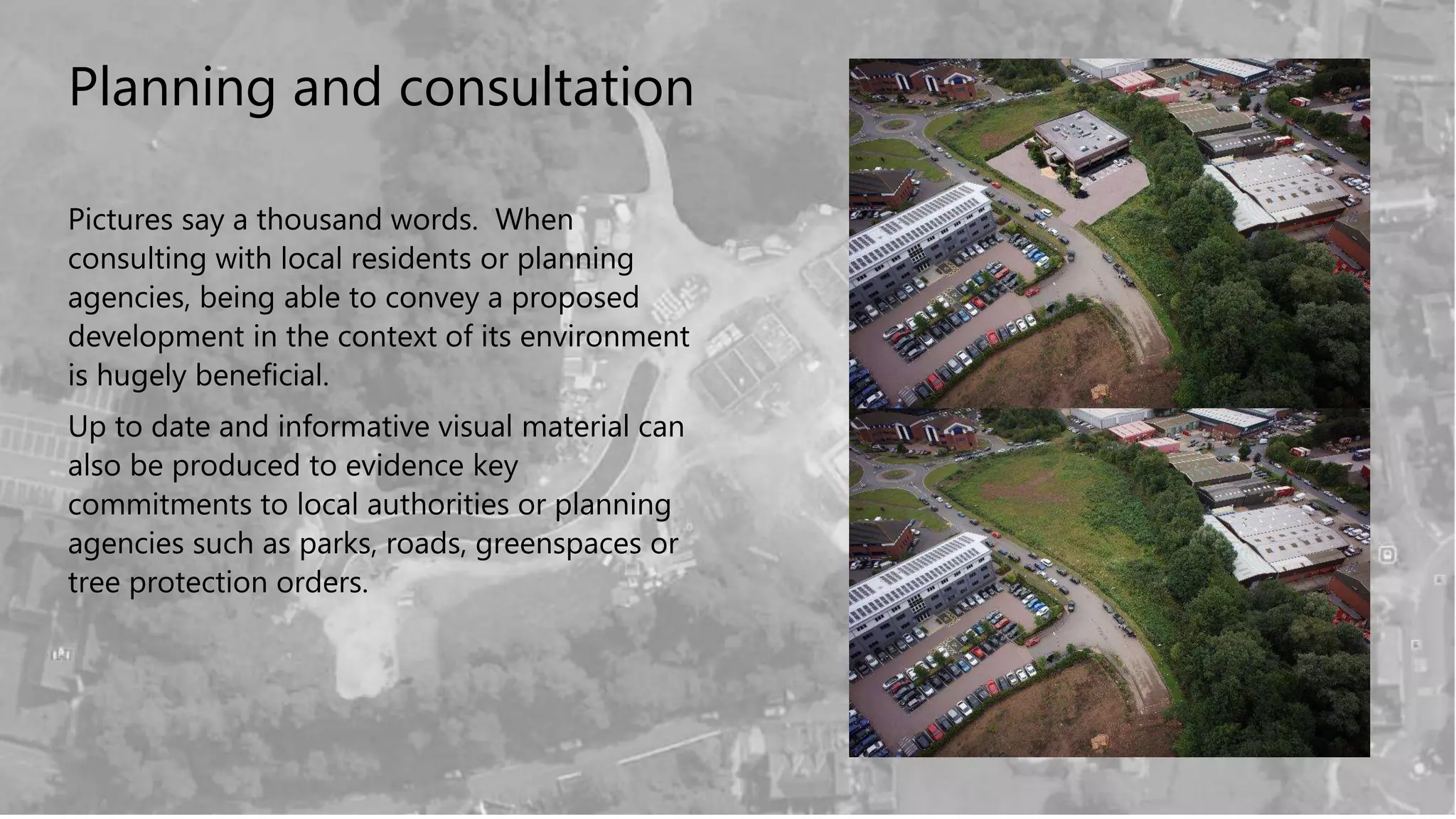
Pictures say a thousand words. When
consulting with local residents or planning
agencies, being able to convey a proposed
development in the context of its environment
is hugely beneficial.
Up to date and informative visual material can
also be produced to evidence key
commitments to local authorities or planning
agencies such as parks, roads, greenspaces or
tree protection orders.
Line of sight visualization
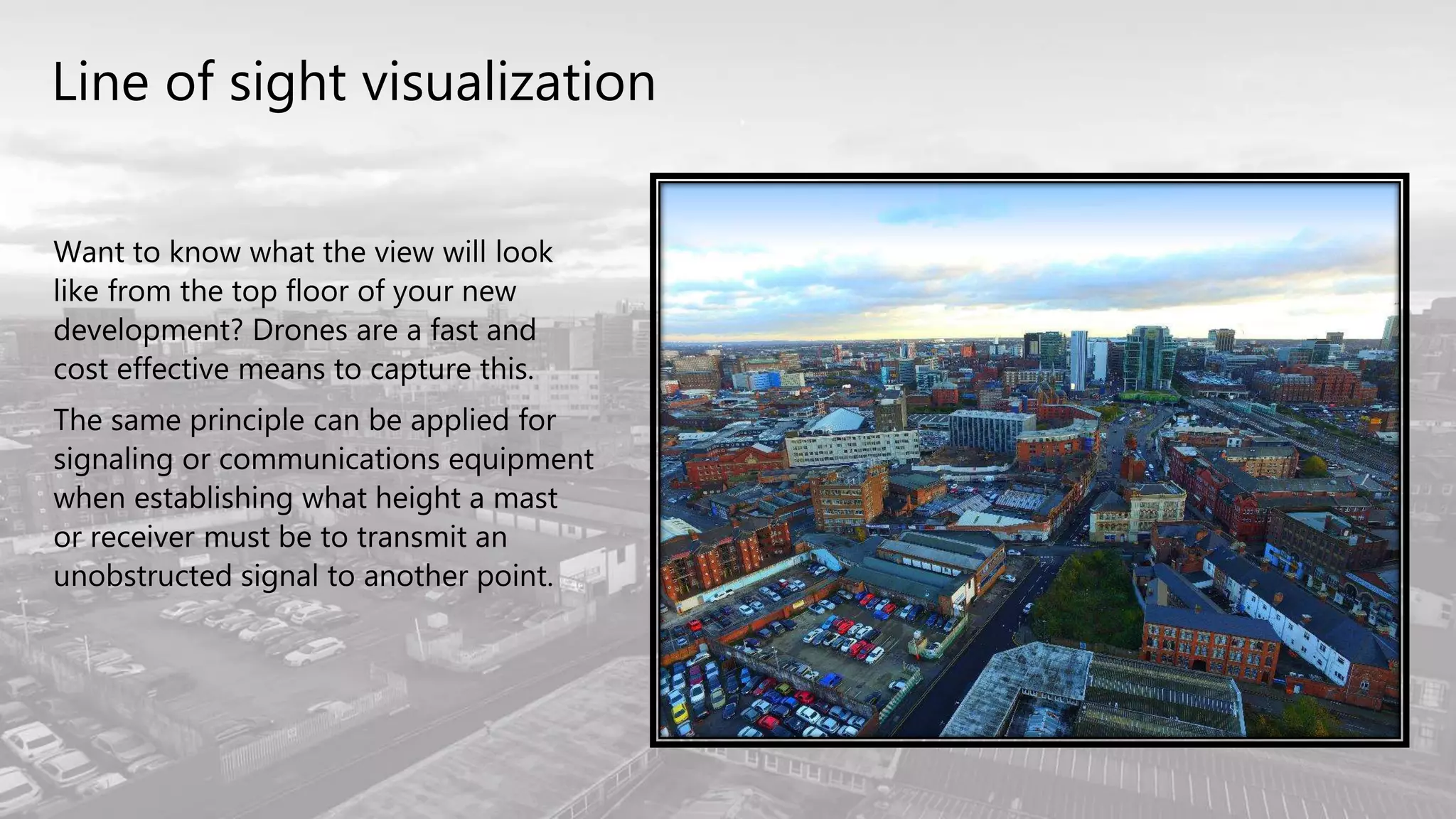
Want to know what the view will look
like from the top floor of your new
development? Drones are a fast and
cost effective means to capture this.
The same principle can be applied for
signaling or communications equipment
when establishing what height a mast
or receiver must be to transmit an
unobstructed signal to another point.
Volumetric measurement
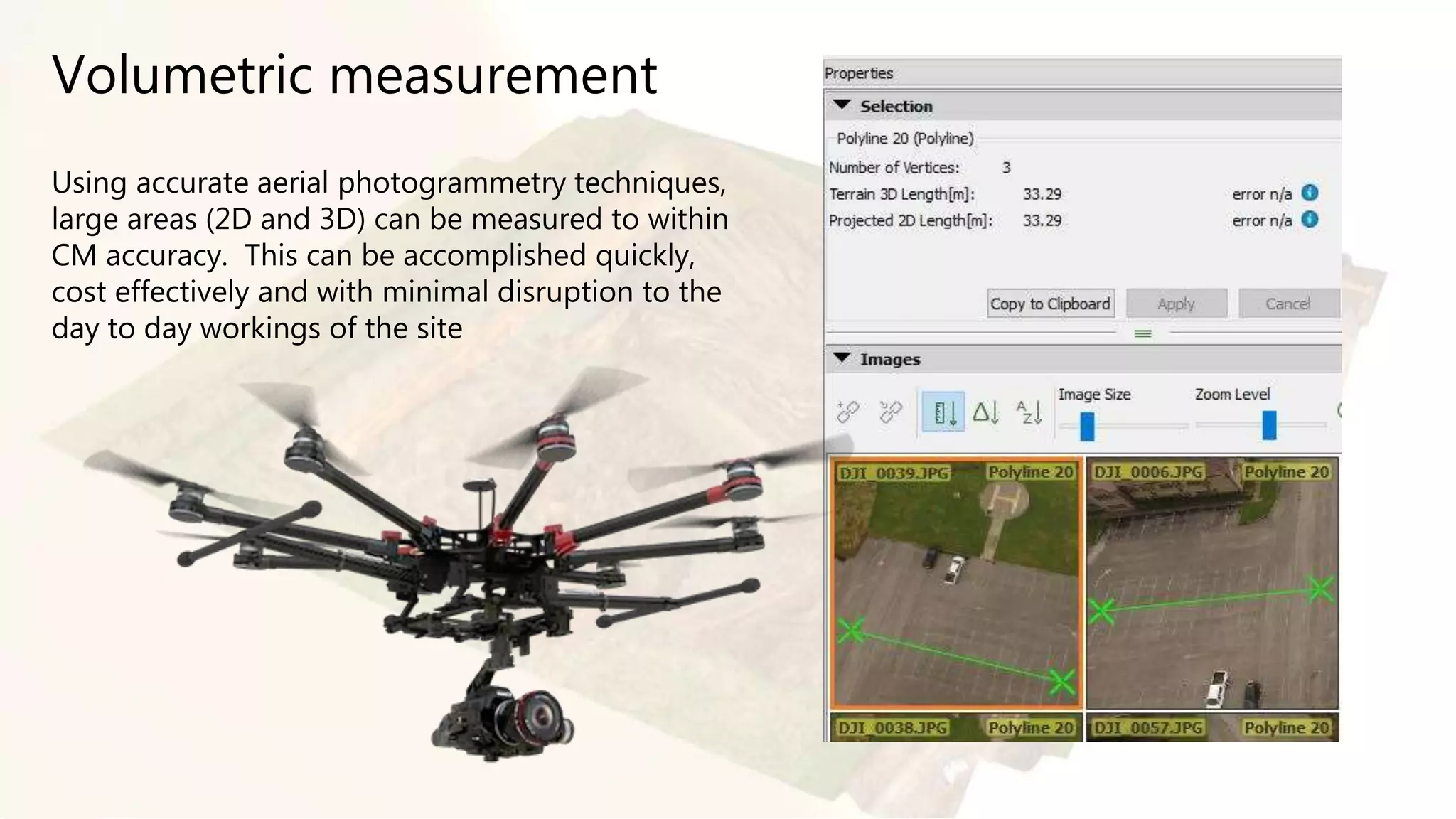
Using accurate aerial photogrammetry techniques,
large areas (2D and 3D) can be measured to within
CM accuracy. This can be accomplished quickly,
cost effectively and with minimal disruption to the
day to day workings of the site
360 VR material
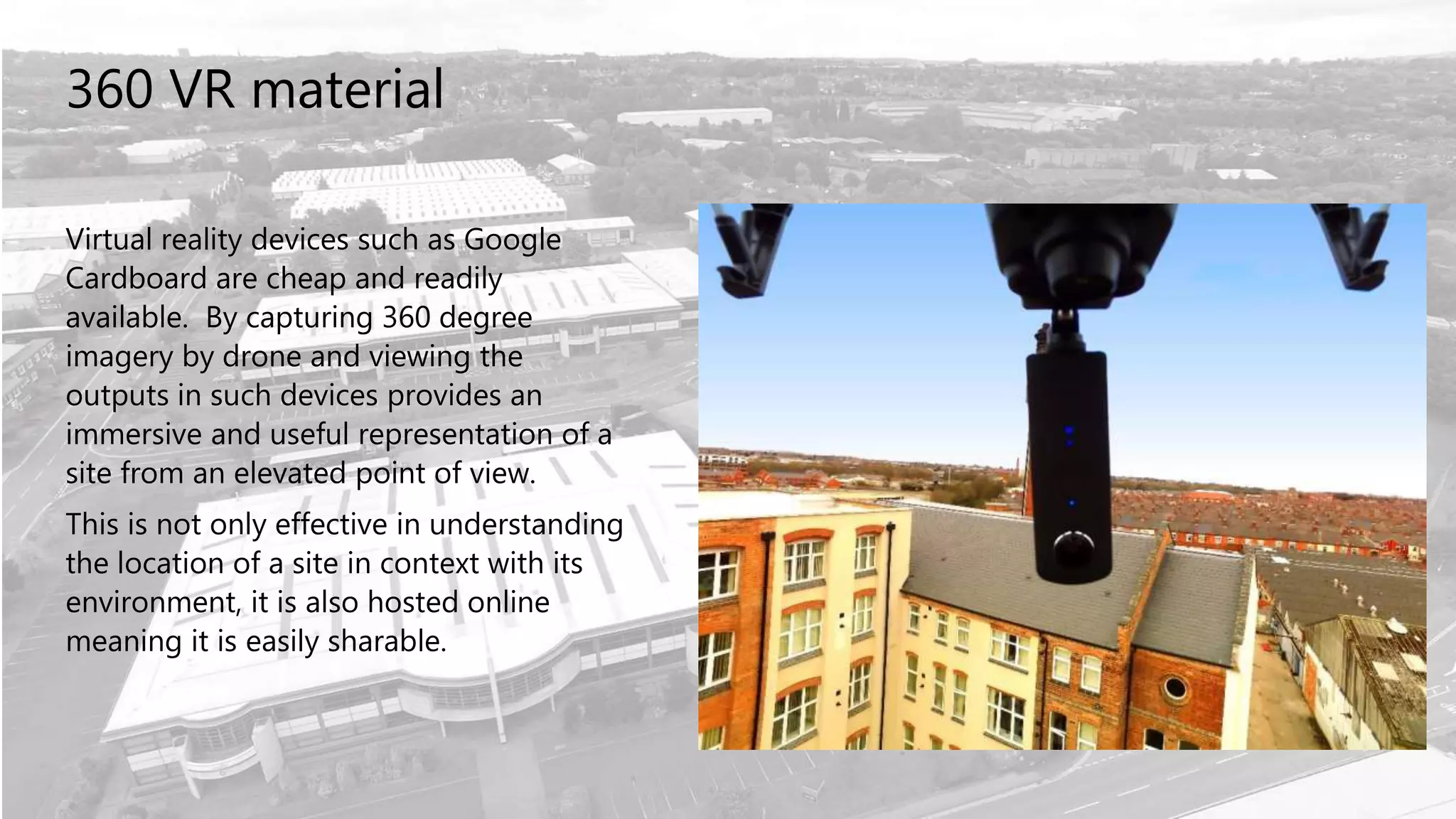
Virtual reality devices such as Google
Cardboard are cheap and readily
available. By capturing 360 degree
imagery by drone and viewing the
outputs in such devices provides an
immersive and useful representation of a
site from an elevated point of view.
This is not only effective in understanding
the location of a site in context with its
environment, it is also hosted online
meaning it is easily sharable.
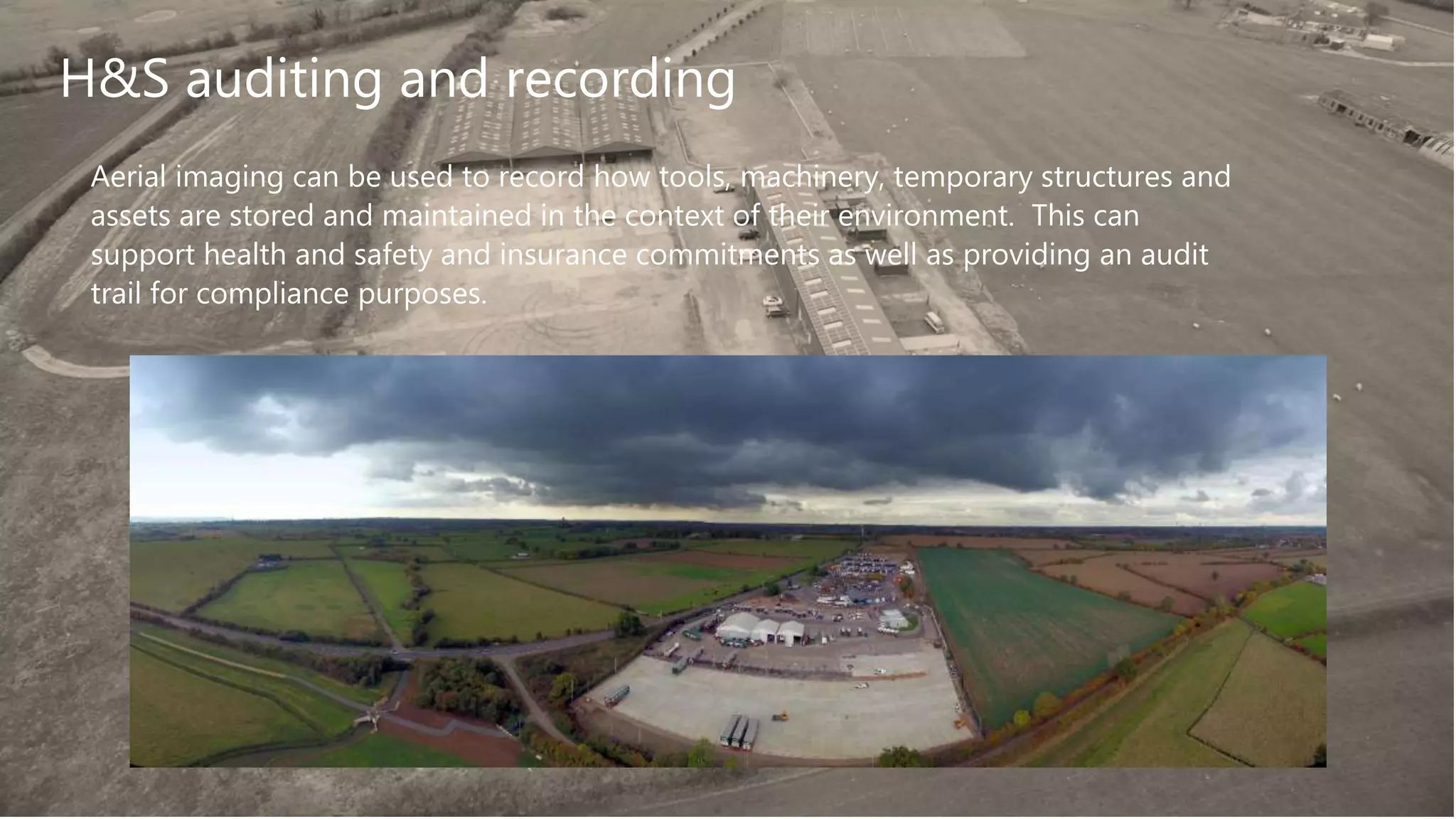
Aerial imaging can be used to record how tools, machinery, temporary structures and
assets are stored and maintained in the context of their environment. This can
support health and safety and insurance commitments as well as providing an audit
trail for compliance purposes.
H&S auditing and recording
Thermal imaging
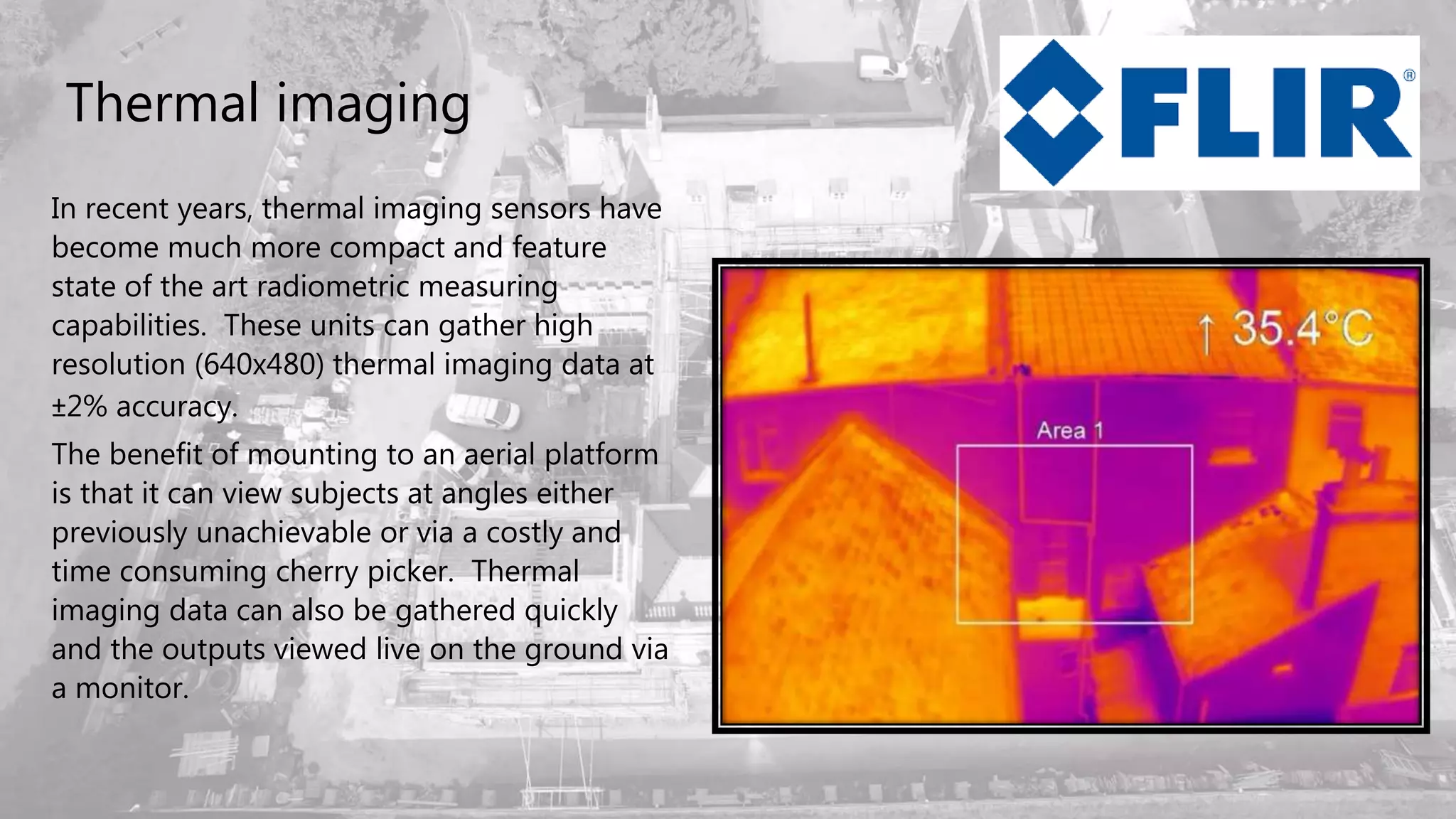
In recent years, thermal imaging sensors have
become much more compact and feature
state of the art radiometric measuring
capabilities. These units can gather high
resolution (640x480) thermal imaging data at
±2% accuracy.
The benefit of mounting to an aerial platform
is that it can view subjects at angles either
previously unachievable or via a costly and
time consuming cherry picker. Thermal
imaging data can also be gathered quickly
and the outputs viewed live on the ground via
a monitor.

Ten Applications for Drones in Construction

  • 1.
    Ten construction applications forunmanned aerial vehicles
  • 2.
    Let’s get thebasic ones out of the way first shall we. At the very heart of unmanned aerial vehicles is the ability to place a sensor – camera or otherwise - in a three dimensional space with relative ease. Aerial and ground based images and video can be combined to create stunning, high impact footage. This not only looks good, it also conveys a lot of information about the property, its size and its surroundings. Promotional and marketing material
  • 3.
    Routine progress monitoring Throughouta development’s construction phase (and even before) agreed flight paths over and around the site can be made to provide almost real time visual progress reporting for developers, stakeholders and even the people on site as an engaging record of how the project is going. We recommend either monthly or fortnightly visits with a number of ad- hoc visits throughout the development to capture key milestones. Reports are typically created within 48 hours.
  • 4.
    3D modelling Using photogrammetryand GPS ground control points, accurate 3D models of a surfaces or structures can be created and exported as CAD files. These have a number of design and planning applications as terrain or structural models do not have to be created from measurements or from scratch. Existing CAD files of a finished structure can be imported into the terrain model to provide a simple and effective visual representation of the finished project for planning, pitching and consultation.
  • 5.
    Inspection and survey Unmannedaerial vehicles are ideal for gathering data from hard to reach places. In some cases this may be as a cost effective alternative to scaffolding or a cherry picker, though in the case of heritage sites, drones are a less intrusive means of inspection and less likely to incur damage to ground and structures. Data gathered can then be processed into an inspection report or using the geo-tagged images and video imported into third party software to create long- term monitoring.
  • 6.
    Planning and consultation Picturessay a thousand words. When consulting with local residents or planning agencies, being able to convey a proposed development in the context of its environment is hugely beneficial. Up to date and informative visual material can also be produced to evidence key commitments to local authorities or planning agencies such as parks, roads, greenspaces or tree protection orders.
  • 7.
    Line of sightvisualization Want to know what the view will look like from the top floor of your new development? Drones are a fast and cost effective means to capture this. The same principle can be applied for signaling or communications equipment when establishing what height a mast or receiver must be to transmit an unobstructed signal to another point.
  • 8.
    Volumetric measurement Using accurateaerial photogrammetry techniques, large areas (2D and 3D) can be measured to within CM accuracy. This can be accomplished quickly, cost effectively and with minimal disruption to the day to day workings of the site
  • 9.
    360 VR material Virtualreality devices such as Google Cardboard are cheap and readily available. By capturing 360 degree imagery by drone and viewing the outputs in such devices provides an immersive and useful representation of a site from an elevated point of view. This is not only effective in understanding the location of a site in context with its environment, it is also hosted online meaning it is easily sharable.
  • 10.
    Aerial imaging canbe used to record how tools, machinery, temporary structures and assets are stored and maintained in the context of their environment. This can support health and safety and insurance commitments as well as providing an audit trail for compliance purposes. H&S auditing and recording
  • 11.
    Thermal imaging In recentyears, thermal imaging sensors have become much more compact and feature state of the art radiometric measuring capabilities. These units can gather high resolution (640x480) thermal imaging data at ±2% accuracy. The benefit of mounting to an aerial platform is that it can view subjects at angles either previously unachievable or via a costly and time consuming cherry picker. Thermal imaging data can also be gathered quickly and the outputs viewed live on the ground via a monitor.