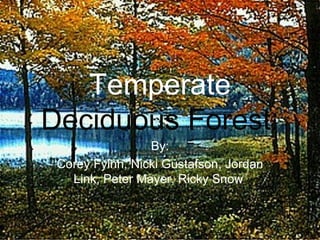
Temperate  Deciduous Forest: By: Corey Fylnn, Nicki Gustafson, Jordan Link, Peter Mayer, Ricky Snow
Location: Most of the Eastern United States with parts of southern Ontario. Farthest North-  Southern Ontario and Quebec Eastern-  Atlantic Coast Southern-  Gulf Coast Western-  Midwestern Plains of the United States
Climate: Range: -22 - 109 Degrees Fahrenheit Average Temperature 53 Degrees Fahrenheit  Seasons: Wet Season- Autumn and Spring 20 - 40 inches of precipitation Dry Season- Summer and Winter 10 - 20 inches of precipitation Average Precipitation: 30 - 60 inches of precipitation.
Plants: Tree Stratums: Beach Maple Chestnut Hickory Elm Sweet gum Burch Oak Magnolia 60-100 feet tall Shrubs: Huckleberries Mountain Laurel Ferns Herb Zone: Oxlip Bluebells Painted Trilliums Ground Zone: Likens Club Moss True Mosses
Forest Strata
Plant Adaptations: During Winter Months:  As winter arrives, the photo-period decreases and becomes detrimental for plants to continue photosynthesizing.  To avoid losing water through the stomata, and absorbs magnesium they lose their leaves to survive. All Months Plants position toward light Phototrophic Trees: Thin broad light-weight leaves Have Thick Ridged Bark to protect against winter Wildflowers: Trees in forest create a canopy once their leaves return in the spring, so wildflowers sprout up quicker and earlier before the canopy cover them.
Animals: Primary Consumers: Fat Door Mouse Grey Squirrel White Tail Deer Eastern Chipmunk Song Birds Secondary Least Weasel  American Black Bears Birds of Prey Amphibians: Frogs  Salamanders Tertiary: American Bald Eagle Hawks
 
Animal Adaptations: Hibernation Larger mammals sleep during winter, saving energy.  Eating an abundant amounts of food, storing fat, keeping warm. Migration Birds move south during winter to warmer climates Camouflage Animals protect themselves from predators. Freeze Tolerance Release starch from liver, surround cells, water defuses from the cell into the cytoplasm.  No water inside of the cell, so deflates water freezes outside of the cell, preventing being stabbed from the cell.  Frogs and other amphibians. Food Cache Squirrels store nuts during winter.
Threats: Deforestation. Humans cutting trees down, for the use of the forest Houses Lumber Agriculture Ash Trees Threatened by a plague of beetles.  Emerald Ash Borer

Temperate Deciduous Forest

  • 1.
    Temperate DeciduousForest: By: Corey Fylnn, Nicki Gustafson, Jordan Link, Peter Mayer, Ricky Snow
  • 2.
    Location: Most ofthe Eastern United States with parts of southern Ontario. Farthest North- Southern Ontario and Quebec Eastern- Atlantic Coast Southern- Gulf Coast Western- Midwestern Plains of the United States
  • 3.
    Climate: Range: -22- 109 Degrees Fahrenheit Average Temperature 53 Degrees Fahrenheit Seasons: Wet Season- Autumn and Spring 20 - 40 inches of precipitation Dry Season- Summer and Winter 10 - 20 inches of precipitation Average Precipitation: 30 - 60 inches of precipitation.
  • 4.
    Plants: Tree Stratums:Beach Maple Chestnut Hickory Elm Sweet gum Burch Oak Magnolia 60-100 feet tall Shrubs: Huckleberries Mountain Laurel Ferns Herb Zone: Oxlip Bluebells Painted Trilliums Ground Zone: Likens Club Moss True Mosses
  • 5.
  • 6.
    Plant Adaptations: DuringWinter Months: As winter arrives, the photo-period decreases and becomes detrimental for plants to continue photosynthesizing. To avoid losing water through the stomata, and absorbs magnesium they lose their leaves to survive. All Months Plants position toward light Phototrophic Trees: Thin broad light-weight leaves Have Thick Ridged Bark to protect against winter Wildflowers: Trees in forest create a canopy once their leaves return in the spring, so wildflowers sprout up quicker and earlier before the canopy cover them.
  • 7.
    Animals: Primary Consumers:Fat Door Mouse Grey Squirrel White Tail Deer Eastern Chipmunk Song Birds Secondary Least Weasel American Black Bears Birds of Prey Amphibians: Frogs Salamanders Tertiary: American Bald Eagle Hawks
  • 8.
  • 9.
    Animal Adaptations: HibernationLarger mammals sleep during winter, saving energy. Eating an abundant amounts of food, storing fat, keeping warm. Migration Birds move south during winter to warmer climates Camouflage Animals protect themselves from predators. Freeze Tolerance Release starch from liver, surround cells, water defuses from the cell into the cytoplasm. No water inside of the cell, so deflates water freezes outside of the cell, preventing being stabbed from the cell. Frogs and other amphibians. Food Cache Squirrels store nuts during winter.
  • 10.
    Threats: Deforestation. Humanscutting trees down, for the use of the forest Houses Lumber Agriculture Ash Trees Threatened by a plague of beetles. Emerald Ash Borer