






CLC, 3/8/16, Early Head Start
Deb Weiner, LICSW
Goals for today:
• Talking about “normal”
• Increasing good days
• Minimizing tantrums
• Dealing well with tantrums
Parents’ Goals:
What one thing would you like to
learn or try at home with your
toddler?
You have a short-term goal to increase
peace and compliance in your household.
You have a long-term goal of developing a
healthy, happy, well-behaved child…
At times, these are in conflict!
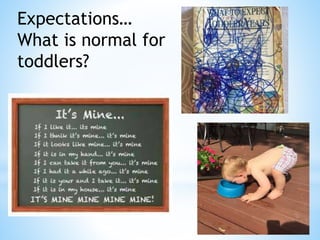
Expectations…
What is normal for
toddlers?
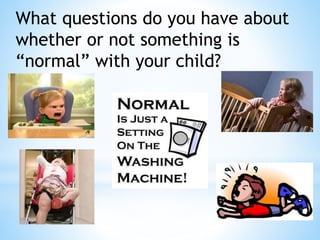
What questions do you have about
whether or not something is
“normal” with your child?
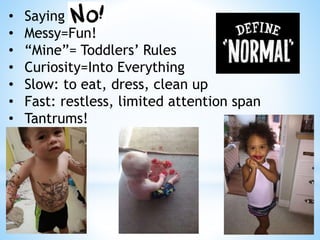
• Saying
• Messy=Fun!
• “Mine”= Toddlers’ Rules
• Curiosity=Into Everything
• Slow: to eat, dress, clean up
• Fast: restless, limited attention span
• Tantrums!
Allowing Feelings While Managing
Behaviors and Maintaining Boundaries
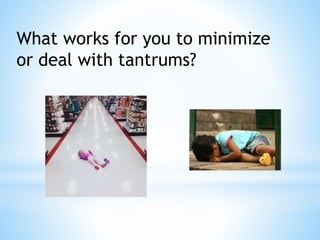
What works for you to minimize
or deal with tantrums?
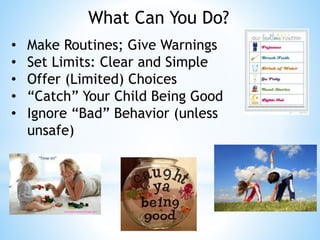
• Make Routines; Give Warnings
• Set Limits: Clear and Simple
• Offer (Limited) Choices
• “Catch” Your Child Being Good
• Ignore “Bad” Behavior (unless
unsafe)
What Can You Do?
What Can You Do? Part 2
• Tell your child what she CAN do
• Model behavior you want to see
• Talk to your child at eye level
• Use simple, positive directions
• Use “matter of fact” tone
• Have a countdown to choice of
you do it or mom/dad will
• Don’t try to reason during tantrum
• Remain calm, consistent
• Avoid overtiredness, “hangry”
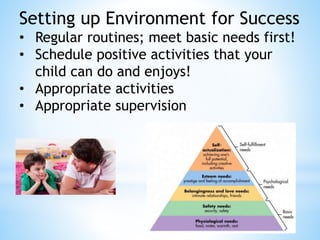
Setting up Environment for Success
• Regular routines; meet basic needs first!
• Schedule positive activities that your
child can do and enjoys!
• Appropriate activities
• Appropriate supervision
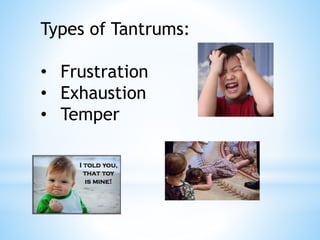
Types of Tantrums:
• Frustration
• Exhaustion
• Temper
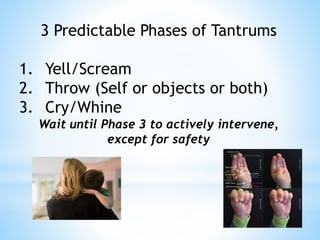
3 Predictable Phases of Tantrums
1. Yell/Scream
2. Throw (Self or objects or both)
3. Cry/Whine
Wait until Phase 3 to actively intervene,
except for safety
Video Clip – To See the 3 Phases…
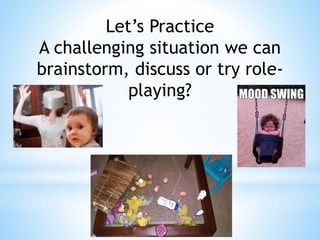
Let’s Practice
A challenging situation we can
brainstorm, discuss or try role-
playing?
• What one thing will you try to set up your
home for success?
• What one thing will you do to handle the
next tantrum that does occur?
• Write down on index card and post where
you can see it!
• Ask for help.
Thanks for your
attention!
Remember to practice
your “one thing” a few
minutes each day!
Deb Weiner, LICSW
deb.weiner@email.edcc.edu

Temper Tantrums and Power Struggles

  • 1.
    CLC, 3/8/16, EarlyHead Start Deb Weiner, LICSW
  • 2.
    Goals for today: •Talking about “normal” • Increasing good days • Minimizing tantrums • Dealing well with tantrums
  • 3.
    Parents’ Goals: What onething would you like to learn or try at home with your toddler?
  • 4.
    You have ashort-term goal to increase peace and compliance in your household. You have a long-term goal of developing a healthy, happy, well-behaved child… At times, these are in conflict!
  • 5.
  • 6.
    What questions doyou have about whether or not something is “normal” with your child?
  • 7.
    • Saying • Messy=Fun! •“Mine”= Toddlers’ Rules • Curiosity=Into Everything • Slow: to eat, dress, clean up • Fast: restless, limited attention span • Tantrums!
  • 9.
    Allowing Feelings WhileManaging Behaviors and Maintaining Boundaries
  • 10.
    What works foryou to minimize or deal with tantrums?
  • 11.
    • Make Routines;Give Warnings • Set Limits: Clear and Simple • Offer (Limited) Choices • “Catch” Your Child Being Good • Ignore “Bad” Behavior (unless unsafe) What Can You Do?
  • 12.
    What Can YouDo? Part 2 • Tell your child what she CAN do • Model behavior you want to see • Talk to your child at eye level • Use simple, positive directions • Use “matter of fact” tone • Have a countdown to choice of you do it or mom/dad will • Don’t try to reason during tantrum • Remain calm, consistent • Avoid overtiredness, “hangry”
  • 13.
    Setting up Environmentfor Success • Regular routines; meet basic needs first! • Schedule positive activities that your child can do and enjoys! • Appropriate activities • Appropriate supervision
  • 14.
    Types of Tantrums: •Frustration • Exhaustion • Temper
  • 15.
    3 Predictable Phasesof Tantrums 1. Yell/Scream 2. Throw (Self or objects or both) 3. Cry/Whine Wait until Phase 3 to actively intervene, except for safety
  • 16.
    Video Clip –To See the 3 Phases…
  • 17.
    Let’s Practice A challengingsituation we can brainstorm, discuss or try role- playing?
  • 18.
    • What onething will you try to set up your home for success? • What one thing will you do to handle the next tantrum that does occur? • Write down on index card and post where you can see it! • Ask for help.
  • 19.
    Thanks for your attention! Rememberto practice your “one thing” a few minutes each day! Deb Weiner, LICSW deb.weiner@email.edcc.edu