NAIL BITING
ANUSREE VIJAYAN E
PHYSICAL SCIENCE
ROLL NO:31
KUTEC DHARMASALA
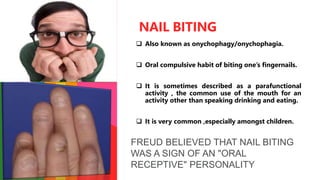
 Also known as onychophagy/onychophagia.
 Oral compulsive habit of biting one’s fingernails.
 It is sometimes described as a parafunctional
activity , the common use of the mouth for an
activity other than speaking drinking and eating.
 It is very common ,especially amongst children.
NAIL BITING
FREUD BELIEVED THAT NAIL BITING
WAS A SIGN OF AN "ORAL
RECEPTIVE" PERSONALITY
Psychology's viewpoint
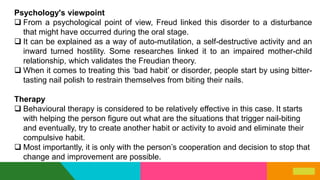
 From a psychological point of view, Freud linked this disorder to a disturbance
that might have occurred during the oral stage.
 It can be explained as a way of auto-mutilation, a self-destructive activity and an
inward turned hostility. Some researches linked it to an impaired mother-child
relationship, which validates the Freudian theory.
 When it comes to treating this ‘bad habit’ or disorder, people start by using bitter-
tasting nail polish to restrain themselves from biting their nails.
Therapy
 Behavioural therapy is considered to be relatively effective in this case. It starts
with helping the person figure out what are the situations that trigger nail-biting
and eventually, try to create another habit or activity to avoid and eliminate their
compulsive habit.
 Most importantly, it is only with the person’s cooperation and decision to stop that
change and improvement are possible.
1. Genetics
Kids whose parents bite their nails are more
likely to follow suit-even if the parent stop
the behaviour before the child is born.
2. Anxiety
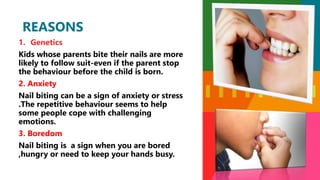
Nail biting can be a sign of anxiety or stress
.The repetitive behaviour seems to help
some people cope with challenging
emotions.
3. Boredom
Nail biting is a sign when you are bored
,hungry or need to keep your hands busy.
REASONS
4. Emotional / psychological problem
 Attention deficit hyperactivity disorder (ADHD)
 Major depressive disorder (MDD)
 Obsessive –compulsive disorder (OCD)
 Oppositional defiant disorder
 Separation anxiety disorder
 Tourette syndrome
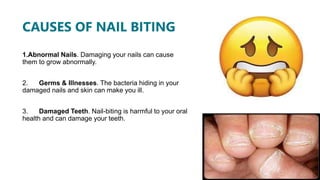
1.Abnormal Nails. Damaging your nails can cause
them to grow abnormally.
2. Germs & Illnesses. The bacteria hiding in your
damaged nails and skin can make you ill.
3. Damaged Teeth. Nail-biting is harmful to your oral
health and can damage your teeth.
CAUSES OF NAIL BITING
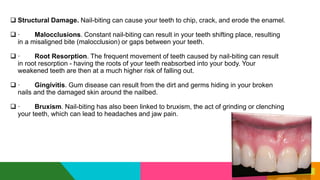
 Structural Damage. Nail-biting can cause your teeth to chip, crack, and erode the enamel.
 · Malocclusions. Constant nail-biting can result in your teeth shifting place, resulting
in a misaligned bite (malocclusion) or gaps between your teeth.
 · Root Resorption. The frequent movement of teeth caused by nail-biting can result
in root resorption - having the roots of your teeth reabsorbed into your body. Your
weakened teeth are then at a much higher risk of falling out.
 · Gingivitis. Gum disease can result from the dirt and germs hiding in your broken
nails and the damaged skin around the nailbed.
 · Bruxism. Nail-biting has also been linked to bruxism, the act of grinding or clenching
your teeth, which can lead to headaches and jaw pain.
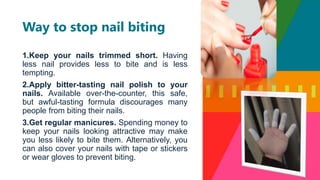
1.Keep your nails trimmed short. Having
less nail provides less to bite and is less
tempting.
2.Apply bitter-tasting nail polish to your
nails. Available over-the-counter, this safe,
but awful-tasting formula discourages many
people from biting their nails.
3.Get regular manicures. Spending money to
keep your nails looking attractive may make
you less likely to bite them. Alternatively, you
can also cover your nails with tape or stickers
or wear gloves to prevent biting.
Way to stop nail biting
4. Replace the nail-biting habit with a good
habit. When you feel like biting your nails, try playing
with a stress ball or silly putty instead. This will help
keep your hands busy and away from your mouth.
5. Identify your triggers. These could be physical
triggers, such as the presence of hangnails, or other
triggers, such as boredom, stress, or anxiety. By
figuring out what causes you to bite your nails, you can
figure out how to avoid these situations and develop a
plan to stop. Just knowing when you’re inclined to bite
may help solve the problem.
6.Try to gradually stop biting your nails. Some
doctors recommend taking a gradual approach to break
the habit. Try to stop biting one set of nails, such as
your thumb nails, first. When that’s successful,
eliminate your pinky nails, pointer nails, or even an
entire hand. The goal is to get to the point where you no
longer bite any of your nails.
NAIL BITING

NAIL BITING

  • 1.
    NAIL BITING ANUSREE VIJAYANE PHYSICAL SCIENCE ROLL NO:31 KUTEC DHARMASALA
  • 2.
     Also knownas onychophagy/onychophagia.  Oral compulsive habit of biting one’s fingernails.  It is sometimes described as a parafunctional activity , the common use of the mouth for an activity other than speaking drinking and eating.  It is very common ,especially amongst children. NAIL BITING FREUD BELIEVED THAT NAIL BITING WAS A SIGN OF AN "ORAL RECEPTIVE" PERSONALITY
  • 3.
    Psychology's viewpoint  Froma psychological point of view, Freud linked this disorder to a disturbance that might have occurred during the oral stage.  It can be explained as a way of auto-mutilation, a self-destructive activity and an inward turned hostility. Some researches linked it to an impaired mother-child relationship, which validates the Freudian theory.  When it comes to treating this ‘bad habit’ or disorder, people start by using bitter- tasting nail polish to restrain themselves from biting their nails. Therapy  Behavioural therapy is considered to be relatively effective in this case. It starts with helping the person figure out what are the situations that trigger nail-biting and eventually, try to create another habit or activity to avoid and eliminate their compulsive habit.  Most importantly, it is only with the person’s cooperation and decision to stop that change and improvement are possible.
  • 4.
    1. Genetics Kids whoseparents bite their nails are more likely to follow suit-even if the parent stop the behaviour before the child is born. 2. Anxiety Nail biting can be a sign of anxiety or stress .The repetitive behaviour seems to help some people cope with challenging emotions. 3. Boredom Nail biting is a sign when you are bored ,hungry or need to keep your hands busy. REASONS
  • 5.
    4. Emotional /psychological problem  Attention deficit hyperactivity disorder (ADHD)  Major depressive disorder (MDD)  Obsessive –compulsive disorder (OCD)  Oppositional defiant disorder  Separation anxiety disorder  Tourette syndrome
  • 6.
    1.Abnormal Nails. Damagingyour nails can cause them to grow abnormally. 2. Germs & Illnesses. The bacteria hiding in your damaged nails and skin can make you ill. 3. Damaged Teeth. Nail-biting is harmful to your oral health and can damage your teeth. CAUSES OF NAIL BITING
  • 7.
     Structural Damage.Nail-biting can cause your teeth to chip, crack, and erode the enamel.  · Malocclusions. Constant nail-biting can result in your teeth shifting place, resulting in a misaligned bite (malocclusion) or gaps between your teeth.  · Root Resorption. The frequent movement of teeth caused by nail-biting can result in root resorption - having the roots of your teeth reabsorbed into your body. Your weakened teeth are then at a much higher risk of falling out.  · Gingivitis. Gum disease can result from the dirt and germs hiding in your broken nails and the damaged skin around the nailbed.  · Bruxism. Nail-biting has also been linked to bruxism, the act of grinding or clenching your teeth, which can lead to headaches and jaw pain.
  • 8.
    1.Keep your nailstrimmed short. Having less nail provides less to bite and is less tempting. 2.Apply bitter-tasting nail polish to your nails. Available over-the-counter, this safe, but awful-tasting formula discourages many people from biting their nails. 3.Get regular manicures. Spending money to keep your nails looking attractive may make you less likely to bite them. Alternatively, you can also cover your nails with tape or stickers or wear gloves to prevent biting. Way to stop nail biting
  • 9.
    4. Replace thenail-biting habit with a good habit. When you feel like biting your nails, try playing with a stress ball or silly putty instead. This will help keep your hands busy and away from your mouth. 5. Identify your triggers. These could be physical triggers, such as the presence of hangnails, or other triggers, such as boredom, stress, or anxiety. By figuring out what causes you to bite your nails, you can figure out how to avoid these situations and develop a plan to stop. Just knowing when you’re inclined to bite may help solve the problem. 6.Try to gradually stop biting your nails. Some doctors recommend taking a gradual approach to break the habit. Try to stop biting one set of nails, such as your thumb nails, first. When that’s successful, eliminate your pinky nails, pointer nails, or even an entire hand. The goal is to get to the point where you no longer bite any of your nails.