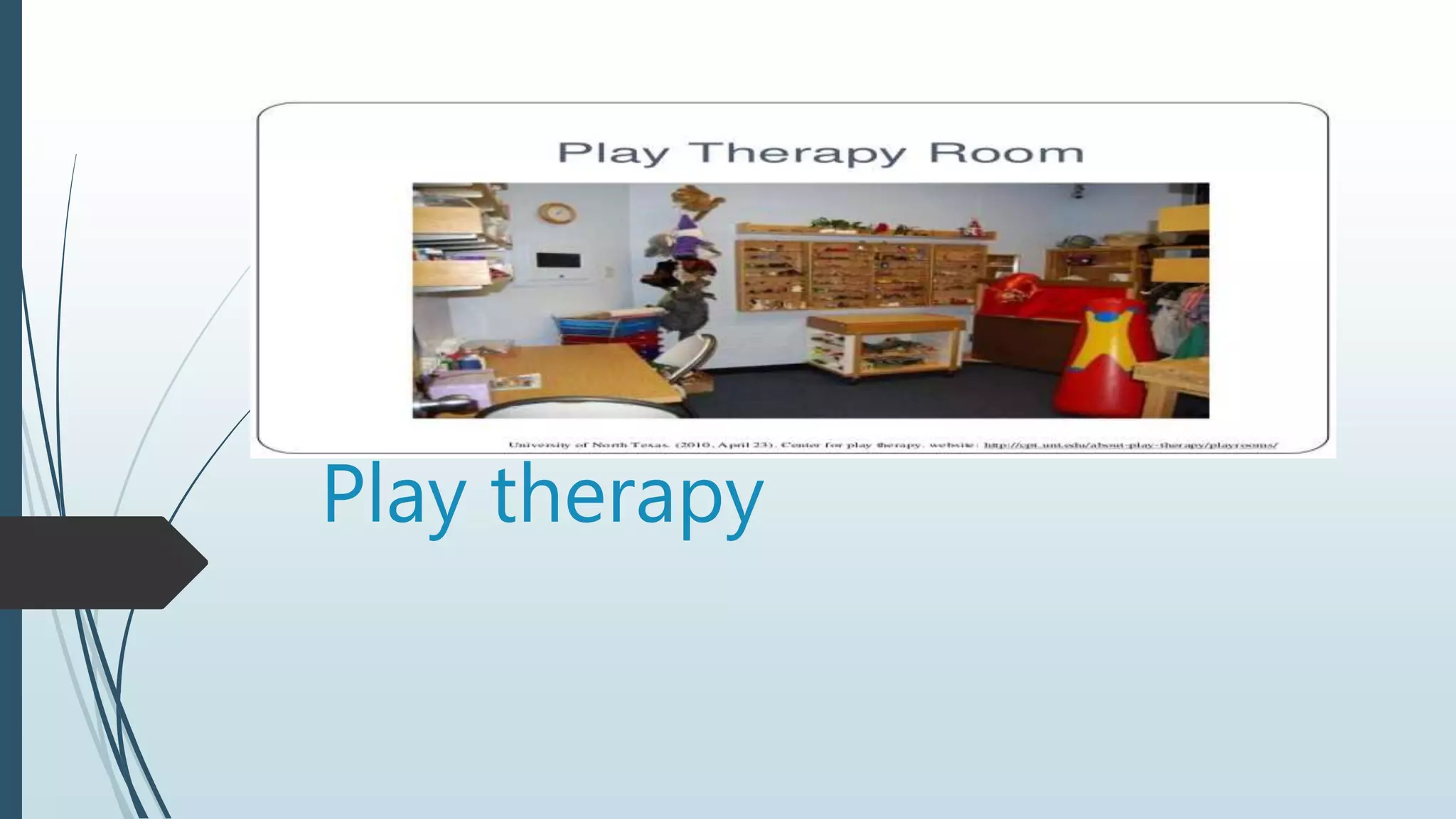
Play therapy
Definition
A form of counselling or psychotherapy in
which play is used as a means of helping
children express or communicate their
feelings.
Importance
Play therapy is generally employed with children
aged 3 through 11
It provides a way for them to express their
experiences and feelings through a natural, self-
guided, self-healing process.
 Children’s experiences and knowledge are often
communicated through play,
It becomes an important vehicle for them to know
and accept themselves and others.
Advantage
 Better social integration,
Growth and development,
Emotional modulation,
 Trauma resolution.
Play therapy can also be used as a tool of
diagnosis
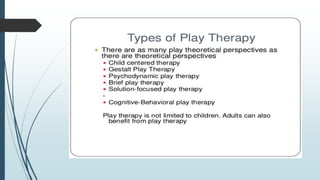
TYPES
Play therapy can be divided into two
basic types:
Non-directive
Directive.
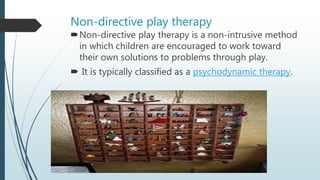
Non-directive play therapy
Non-directive play therapy is a non-intrusive method
in which children are encouraged to work toward
their own solutions to problems through play.
 It is typically classified as a psychodynamic therapy.
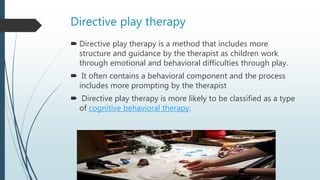
Directive play therapy
 Directive play therapy is a method that includes more
structure and guidance by the therapist as children work
through emotional and behavioral difficulties through play.
 It often contains a behavioral component and the process
includes more prompting by the therapist
 Directive play therapy is more likely to be classified as a type
of cognitive behavioral therapy.
Play therapy ppt
Play therapy ppt
Play therapy ppt
Play therapy ppt

Play therapy ppt

  • 1.
  • 2.
    Definition A form ofcounselling or psychotherapy in which play is used as a means of helping children express or communicate their feelings.
  • 3.
    Importance Play therapy isgenerally employed with children aged 3 through 11 It provides a way for them to express their experiences and feelings through a natural, self- guided, self-healing process.  Children’s experiences and knowledge are often communicated through play, It becomes an important vehicle for them to know and accept themselves and others.
  • 4.
    Advantage  Better socialintegration, Growth and development, Emotional modulation,  Trauma resolution. Play therapy can also be used as a tool of diagnosis
  • 5.
    TYPES Play therapy canbe divided into two basic types: Non-directive Directive.
  • 6.
    Non-directive play therapy Non-directiveplay therapy is a non-intrusive method in which children are encouraged to work toward their own solutions to problems through play.  It is typically classified as a psychodynamic therapy.
  • 7.
    Directive play therapy Directive play therapy is a method that includes more structure and guidance by the therapist as children work through emotional and behavioral difficulties through play.  It often contains a behavioral component and the process includes more prompting by the therapist  Directive play therapy is more likely to be classified as a type of cognitive behavioral therapy.