Teens & Libraries:
A Media Literacy
Perspective
Renee Hobbs
YALSA Teens and Libraries Summit
January 24, 2013
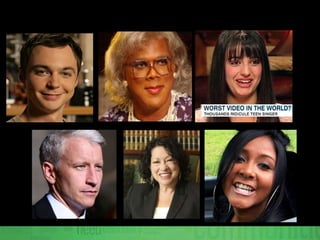
ROGER HOBBS
Author of Ghostman
ALA Gala Author Tea
Mon, Jan 28
RACHEL HOBBS
Planned Parenthood Fundraiser
www.mediaeducationlab.com
http://mediaeducationlab.com
What do we need to know and be able to do when it comes to
supporting and extending teens’ use of print, visual, sound and
digital texts, tools and technologies?
A Lifelong Process
A Lifelong Process
A Lifelong Process
NEW RELATIONSHIPS
NEW TEXTS
NEW TOOLS
PRINT
MEDIA
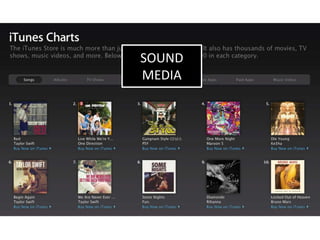
SOUND
MEDIA
VISUAL
MEDIA
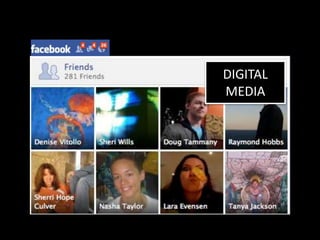
DIGITAL
MEDIA
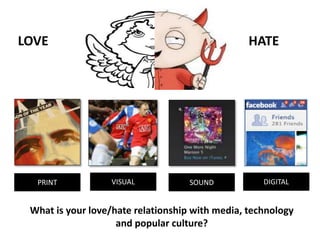
LOVE HATE
PRINT VISUAL SOUND DIGITAL
What is your love/hate relationship with media, technology
and popular culture?
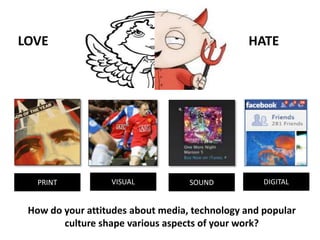
LOVE HATE
PRINT VISUAL SOUND DIGITAL
How do your attitudes about media, technology and popular
culture shape various aspects of your work?
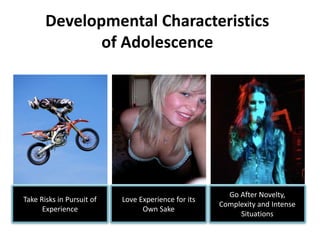
Developmental Characteristics
of Adolescence
Love Experience for its
Own Sake
Take Risks in Pursuit of
Experience
Go After Novelty,
Complexity and Intense
Situations
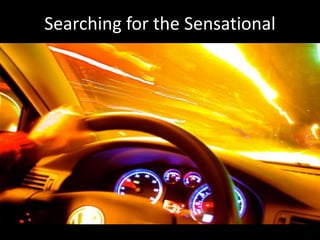
Searching for the Sensational
Escaping to Alternative Worlds
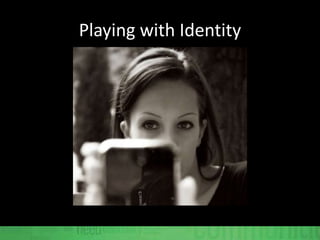
Playing with Identity
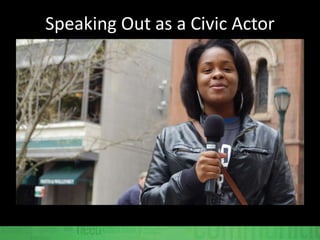
Speaking Out as a Civic Actor
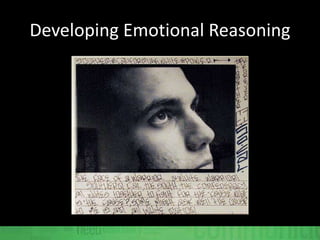
Developing Emotional Reasoning
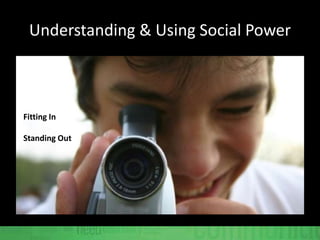
Understanding & Using Social Power
Fitting In
Standing Out
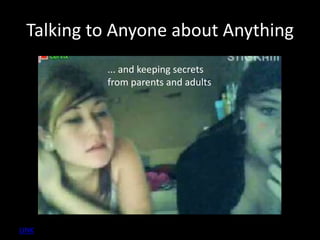
Talking to Anyone about Anything
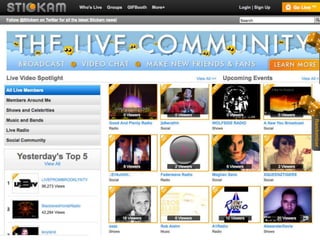
LINK
... and keeping secrets
from parents and adults
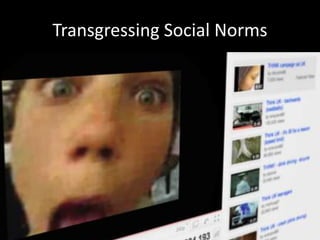
Transgressing Social Norms
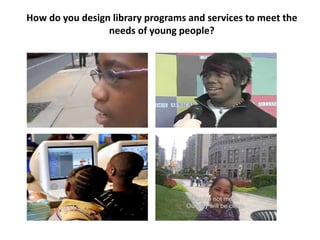
How do you design library programs and services to meet the
needs of young people?
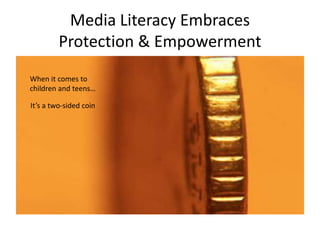
Media Literacy Embraces
Protection & Empowerment
When it comes to
children and teens…
It’s a two-sided coin
Empowerment
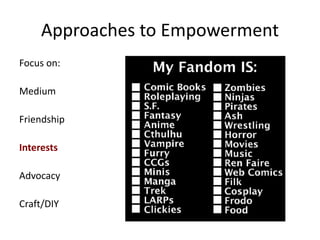
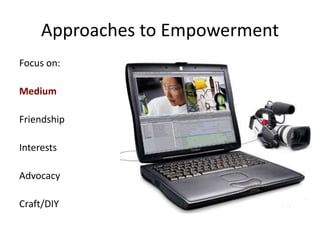
Approaches to Empowerment
Focus on:
Medium
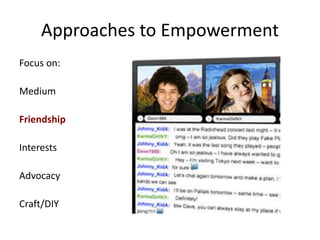
Friendship
Interests
Advocacy
Craft/DIY
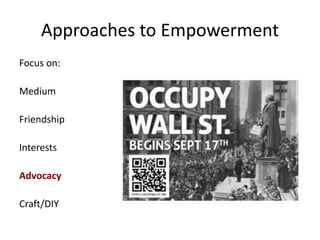
Approaches to Empowerment
Focus on:
Medium
Friendship
Interests
Advocacy
Craft/DIY
Approaches to Empowerment
Focus on:
Medium
Friendship
Interests
Advocacy
Craft/DIY
Approaches to Empowerment
Focus on:
Medium
Friendship
Interests
Advocacy
Craft/DIY
Approaches to Empowerment
Focus on:
Medium
Friendship
Interests
Advocacy
Craft/DIY
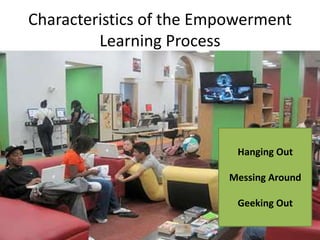
Characteristics of the Empowerment
Learning Process
Hanging Out
Messing Around
Geeking Out
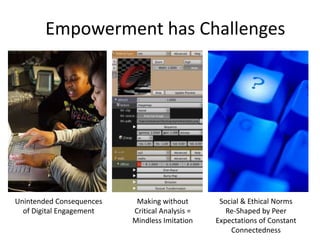
Empowerment has Challenges
Unintended Consequences
of Digital Engagement
Making without
Critical Analysis =
Mindless Imitation
Social & Ethical Norms
Re-Shaped by Peer
Expectations of Constant
Connectedness
Protection
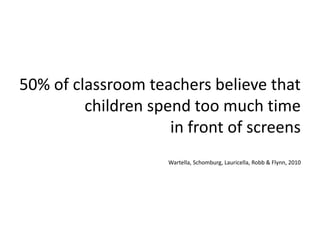
50% of classroom teachers believe that
children spend too much time
in front of screens
Wartella, Schomburg, Lauricella, Robb & Flynn, 2010
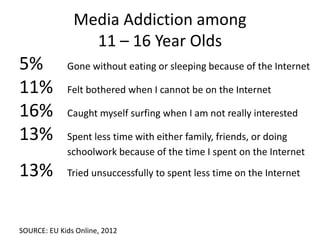
Media Addiction among
11 – 16 Year Olds
5% Gone without eating or sleeping because of the Internet
11% Felt bothered when I cannot be on the Internet
16% Caught myself surfing when I am not really interested
13% Spent less time with either family, friends, or doing
schoolwork because of the time I spent on the Internet
13% Tried unsuccessfully to spent less time on the Internet
SOURCE: EU Kids Online, 2012
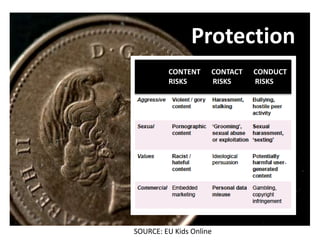
Protection
CONTENT CONTACT CONDUCT
RISKS RISKS RISKS
SOURCE: EU Kids Online
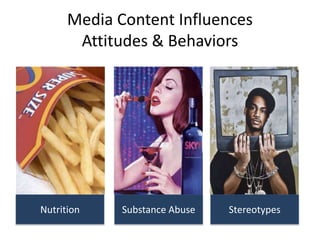
Media Content Influences
Attitudes & Behaviors
Nutrition Substance Abuse Stereotypes
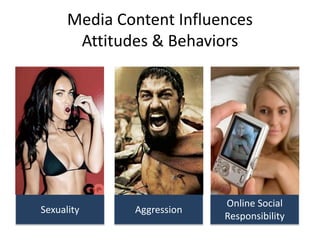
Sexuality Aggression
Online Social
Responsibility
Media Content Influences
Attitudes & Behaviors
From Passive to Active Users
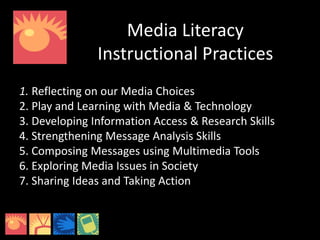
Media Literacy
Instructional Practices
1. Reflecting on our Media Choices
2. Play and Learning with Media & Technology
3. Developing Information Access & Research Skills
4. Strengthening Message Analysis Skills
5. Composing Messages using Multimedia Tools
6. Exploring Media Issues in Society
7. Sharing Ideas and Taking Action
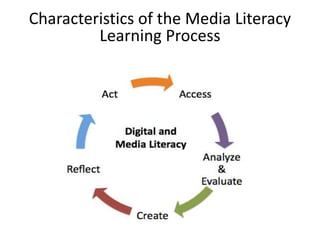
Characteristics of the Media Literacy
Learning Process
Core Concepts of Media Literacy
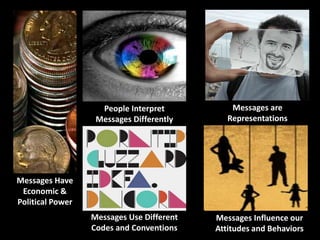
Messages are
Representations
Messages Influence our
Attitudes and Behaviors
People Interpret
Messages Differently
Messages Use Different
Codes and Conventions
Messages Have
Economic &
Political Power
http://whatspoppyn.blogspot.com
LINK
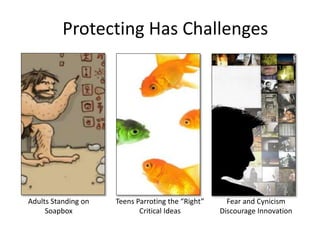
Protecting Has Challenges
Adults Standing on
Soapbox
Teens Parroting the “Right”
Critical Ideas
Fear and Cynicism
Discourage Innovation
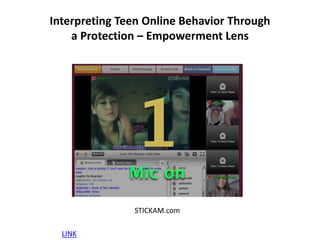
Interpreting Teen Online Behavior Through
a Protection – Empowerment Lens
LINK
STICKAM.com
What did you notice?
Is this activity harmful or harmless?
What questions should be asked?
Opportunities for frank and candid discussion about media,
technology and popular culture should be an essential component
of teen library programs
Discourses of
protection and
empowerment shape
teen media use
choices, attitudes and
behaviors
Why does it matter?
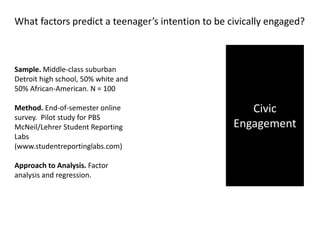
Civic
Engagement
What factors predict a teenager’s intention to be civically engaged?
Sample. Middle-class suburban
Detroit high school, 50% white and
50% African-American. N = 100
Method. End-of-semester online
survey. Pilot study for PBS
McNeil/Lehrer Student Reporting
Labs
(www.studentreportinglabs.com)
Approach to Analysis. Factor
analysis and regression.
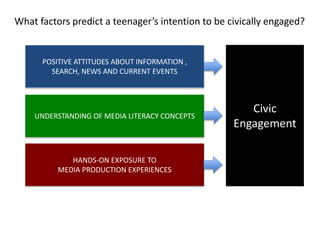
Civic
Engagement
POSITIVE ATTITUDES ABOUT INFORMATION ,
SEARCH, NEWS AND CURRENT EVENTS
UNDERSTANDING OF MEDIA LITERACY CONCEPTS
HANDS-ON EXPOSURE TO
MEDIA PRODUCTION EXPERIENCES
What factors predict a teenager’s intention to be civically engaged?
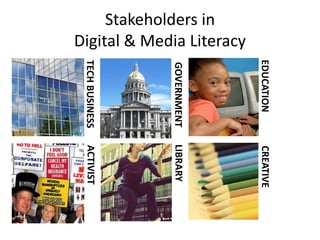
Stakeholders in
Digital & Media Literacy
TECH
BUSINESS
ACTIVIST
GOVERNMENT
LIBRARY
EDUCATION
CREATIVE
Teens & Libraries:
A Media Literacy
Perspective
Renee Hobbs
Harrington School of Communication and Media
University of Rhode Island
Email: hobbs@uri.edu
Twitter: reneehobbs
Web: http://mediaeducationlab.com

Teens and Libraries: A Media Literacy Perspective

Editor's Notes

  • #12  People of all ages will internalize the practice of asking critical questions about the author, purpose and point of view of every sort of message--- from political campaigns, pharmaceutical advertising, reports and surveys issued by think-tanks, websites, breaking news, email, blogs, and the opinions of politicians, pundits and celebrities.   Teachers will use engaging instructional methods to explore the complex role of news and current events in society, making connections to literature, science, health and history, building bridges between the classroom and the living room that support a lifetime of learning.   People of all ages will be responsible and civil in their communication behaviors, treating others with respect and appreciating the need for social norms of behavior that create a sense of personal accountability for one’s online and offline actions.   As a fundamental part of instruction, students will compose and create authentic messages for real audiences, using digital tools, images, language, sound and interactivity to develop knowledge and skills and discover the power of being an effective communicator.   People from all walks of life will be able to achieve their goals in finding, sharing and using information solve problems, developing the ability to access, analyze, evaluate, communicate and share ideas and information, participating in meaningful social action in their neighborhoods, communities, nation and the world.   In the process, teamwork, collaboration, reflection, ethics and social responsibility will flourish. Teachers won’t have to complain about a generation of young people who lack the ability to identify appropriate keywords for an online search activity, those who aren’t aware of which American city was devastated by Hurricane Katrina, and those who cannot identify the author of a web page.
  • #15  People of all ages will internalize the practice of asking critical questions about the author, purpose and point of view of every sort of message--- from political campaigns, pharmaceutical advertising, reports and surveys issued by think-tanks, websites, breaking news, email, blogs, and the opinions of politicians, pundits and celebrities.   Teachers will use engaging instructional methods to explore the complex role of news and current events in society, making connections to literature, science, health and history, building bridges between the classroom and the living room that support a lifetime of learning.   People of all ages will be responsible and civil in their communication behaviors, treating others with respect and appreciating the need for social norms of behavior that create a sense of personal accountability for one’s online and offline actions.   As a fundamental part of instruction, students will compose and create authentic messages for real audiences, using digital tools, images, language, sound and interactivity to develop knowledge and skills and discover the power of being an effective communicator.   People from all walks of life will be able to achieve their goals in finding, sharing and using information solve problems, developing the ability to access, analyze, evaluate, communicate and share ideas and information, participating in meaningful social action in their neighborhoods, communities, nation and the world.   In the process, teamwork, collaboration, reflection, ethics and social responsibility will flourish. Teachers won’t have to complain about a generation of young people who lack the ability to identify appropriate keywords for an online search activity, those who aren’t aware of which American city was devastated by Hurricane Katrina, and those who cannot identify the author of a web page.
  • #16  People of all ages will internalize the practice of asking critical questions about the author, purpose and point of view of every sort of message--- from political campaigns, pharmaceutical advertising, reports and surveys issued by think-tanks, websites, breaking news, email, blogs, and the opinions of politicians, pundits and celebrities.   Teachers will use engaging instructional methods to explore the complex role of news and current events in society, making connections to literature, science, health and history, building bridges between the classroom and the living room that support a lifetime of learning.   People of all ages will be responsible and civil in their communication behaviors, treating others with respect and appreciating the need for social norms of behavior that create a sense of personal accountability for one’s online and offline actions.   As a fundamental part of instruction, students will compose and create authentic messages for real audiences, using digital tools, images, language, sound and interactivity to develop knowledge and skills and discover the power of being an effective communicator.   People from all walks of life will be able to achieve their goals in finding, sharing and using information solve problems, developing the ability to access, analyze, evaluate, communicate and share ideas and information, participating in meaningful social action in their neighborhoods, communities, nation and the world.   In the process, teamwork, collaboration, reflection, ethics and social responsibility will flourish. Teachers won’t have to complain about a generation of young people who lack the ability to identify appropriate keywords for an online search activity, those who aren’t aware of which American city was devastated by Hurricane Katrina, and those who cannot identify the author of a web page.
  • #24  People of all ages will be responsible and civil in their communication behaviors, treating others with respect and appreciating the need for social norms of behavior that create a sense of personal accountability for one’s online and offline actions.
  • #25  We’ll reach underserved youth including those young people who experience the juvenile justice system, who may be among the most vulnerable to negative messages in the media because of the lack of access to supportive adults and other resiliency factors.
  • #26  We’ll reach underserved youth including those young people who experience the juvenile justice system, who may be among the most vulnerable to negative messages in the media because of the lack of access to supportive adults and other resiliency factors.
  • #40 EU Survey of risks N = 25,000 kids from 13 countries The survey asked about a range of risks, as detailed in what follows. Looking across all these risks, 41% of European 9-16 year olds have encountered one or more of these risks.  Risks increase with age: 14% of 9-10 year olds have encountered one or more of the risks asked about, rising to 33% of 11-12 year olds, 49% of 13-14 year olds and 63% of 15-16 year olds.
  • #43 EU Survey of risks N = 25,000 kids from 13 countries The survey asked about a range of risks, as detailed in what follows. Looking across all these risks, 41% of European 9-16 year olds have encountered one or more of these risks.  Risks increase with age: 14% of 9-10 year olds have encountered one or more of the risks asked about, rising to 33% of 11-12 year olds, 49% of 13-14 year olds and 63% of 15-16 year olds.
  • #56 Please share the White Paper with colleagues and all who see that the time is now – together, we can build a community education movement for digital and media literacy.