










Renee Hobbs
Harrington School of Communication and Media
University of Rhode Island
Media Education Lab
Email: hobbs@uri.edu
Twitter: @reneehobbs
Web: www.mediaeducationlab.com
DIGITAL MEDIA LITERACY
PEDAGOGIES
 Engage and motivate learners
 Activate critical thinking
 Build students’ confidence as authors
 Support creativity and collaboration
competencies
 Connect classroom learning to culture and
society
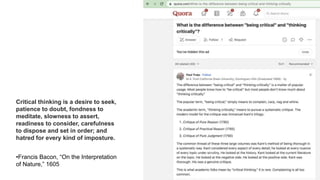
Critical thinking is a desire to seek,
patience to doubt, fondness to
meditate, slowness to assert,
readiness to consider, carefulness
to dispose and set in order; and
hatred for every kind of imposture.
•Francis Bacon, “On the Interpretation
of Nature,” 1605
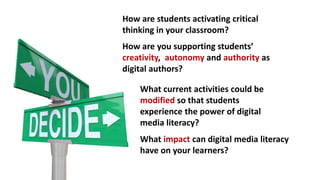
How are students activating critical
thinking in your classroom?
How are you supporting students’
creativity, autonomy and authority as
digital authors?
What current activities could be
modified so that students
experience the power of digital
media literacy?
What impact can digital media literacy
have on your learners?
“FAKE NEWS”
DISINFORMATION
CONSPIRACY CULTURE
PROPAGANDA
PROPAGANDA
AFFECTIVE POLARIZATION
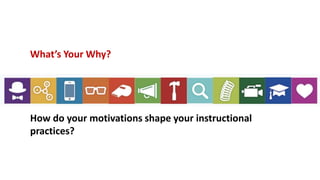
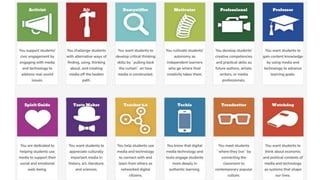
What’s Your Why?
How do your motivations shape your instructional
practices?
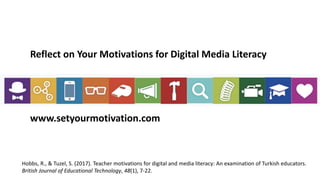
Reflect on Your Motivations for Digital Media Literacy
www.setyourmotivation.com
Hobbs, R., & Tuzel, S. (2017). Teacher motivations for digital and media literacy: An examination of Turkish educators.
British Journal of Educational Technology, 48(1), 7-22.
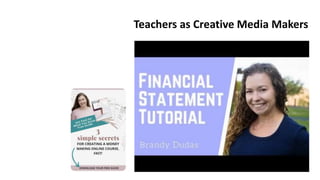
Teachers as Creative Media Makers
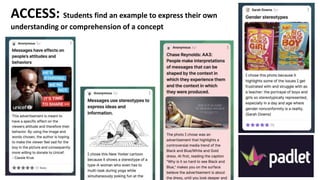
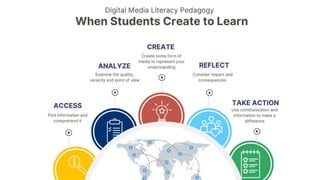
ACCESS: Students find an example to express their own
understanding or comprehension of a concept
@reneehobbs
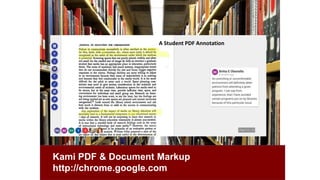
Kami PDF & Document Markup
http://chrome.google.com
A Student PDF Annotation
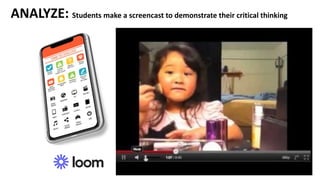
ANALYZE: Students make a screencast to demonstrate their critical thinking
@reneehobbs
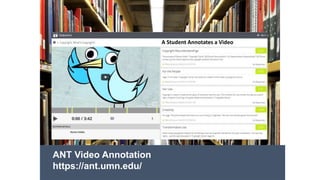
A Student Annotates a Video
ANT Video Annotation
https://ant.umn.edu/
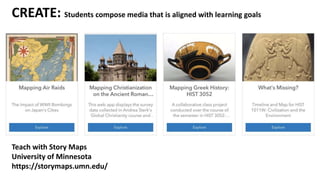
CREATE: Students compose media that is aligned with learning goals
Teach with Story Maps
University of Minnesota
https://storymaps.umn.edu/
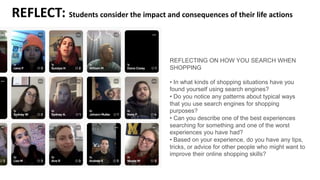
REFLECT: Students consider the impact and consequences of their life actions
REFLECTING ON HOW YOU SEARCH WHEN
SHOPPING
• In what kinds of shopping situations have you
found yourself using search engines?
• Do you notice any patterns about typical ways
that you use search engines for shopping
purposes?
• Can you describe one of the best experiences
searching for something and one of the worst
experiences you have had?
• Based on your experience, do you have any tips,
tricks, or advice for other people who might want to
improve their online shopping skills?
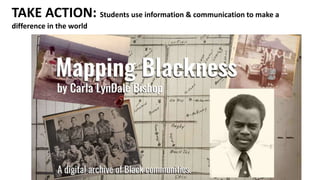
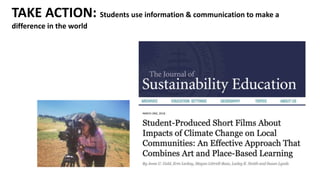
TAKE ACTION: Students use information & communication to make a
difference in the world
TAKE ACTION: Students use information & communication to make a
difference in the world
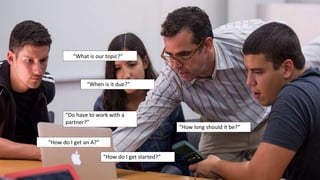
“How do I get started?”
“What is our topic?”
“When is it due?”
“How long should it be?”
“Do have to work with a
partner?”
“How do I get an A?”
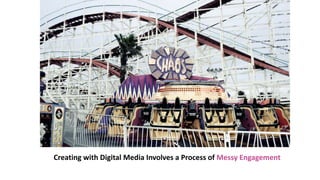
Creating with Digital Media Involves a Process of Messy Engagement
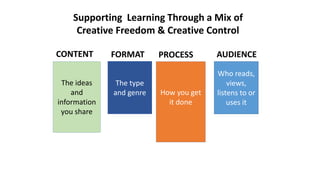
FORMAT
CONTENT AUDIENCE
PROCESS
Supporting Learning Through a Mix of
Creative Freedom & Creative Control
The type
and genre How you get
it done
The ideas
and
information
you share
Who reads,
views,
listens to or
uses it
https://medium.com/propagandacom416
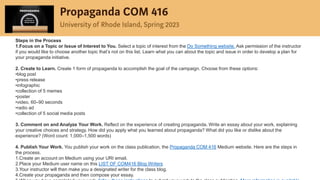
Steps in the Process
1.Focus on a Topic or Issue of Interest to You. Select a topic of interest from the Do Something website. Ask permission of the instructor
if you would like to choose another topic that’s not on this list. Learn what you can about the topic and issue in order to develop a plan for
your propaganda initiative.
2. Create to Learn. Create 1 form of propaganda to accomplish the goal of the campaign. Choose from these options:
•blog post
•press release
•infographic
•collection of 5 memes
•poster
•video, 60–90 seconds
•radio ad
•collection of 5 social media posts
3. Comment on and Analyze Your Work. Reflect on the experience of creating propaganda. Write an essay about your work, explaining
your creative choices and strategy. How did you apply what you learned about propaganda? What did you like or dislike about the
experience? (Word count: 1,000–1,500 words)
4. Publish Your Work. You publish your work on the class publication, the Propaganda COM 416 Medium website. Here are the steps in
the process.
1.Create an account on Medium using your URI email.
2.Place your Medium user name on this LIST OF COM416 Blog Writers
3.Your instructor will then make you a designated writer for the class blog.
4.Create your propaganda and then compose your essay.
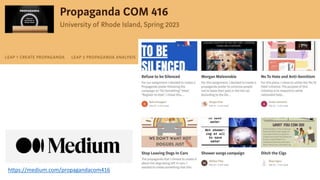
https://medium.com/propagandacom416
FORMAT
CONTENT AUDIENCE
PROCESS
Supporting Learning Through a Mix of
Creative Freedom & Creative Control
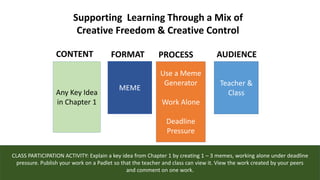
MEME
Use a Meme
Generator
Work Alone
Deadline
Pressure
Any Key Idea
in Chapter 1
CLASS PARTICIPATION ACTIVITY: Explain a key idea from Chapter 1 by creating 1 – 3 memes, working alone under deadline
pressure. Publish your work on a Padlet so that the teacher and class can view it. View the work created by your peers
and comment on one work.
Teacher &
Class
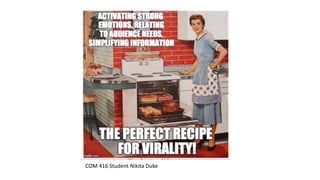
COM 416 Student Nikita Duke
FORMAT
CONTENT AUDIENCE
PROCESS
Supporting Learning Through a Mix of
Creative Freedom & Creative Control
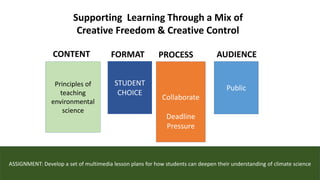
STUDENT
CHOICE
Collaborate
Deadline
Pressure
Principles of
teaching
environmental
science
ASSIGNMENT: Develop a set of multimedia lesson plans for how students can deepen their understanding of climate science
Public
FORMAT
CONTENT AUDIENCE
PROCESS
Supporting Learning Through a Mix of
Creative Freedom & Creative Control
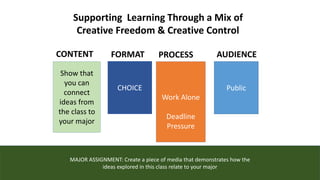
CHOICE
Work Alone
Deadline
Pressure
Show that
you can
connect
ideas from
the class to
your major
MAJOR ASSIGNMENT: Create a piece of media that demonstrates how the
ideas explored in this class relate to your major
Public
CHOICE
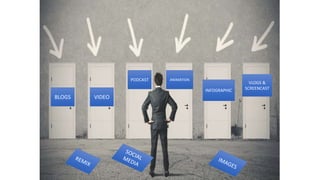
MATTERS
Hobbs, R. (2017). Create to Learn. NY: Wiley.
BLOGS VIDEO
PODCAST ANIMATION
INFOGRAPHIC
VLOGS &
SCREENCAST
Learner
creative control
changes everything
deeper learning
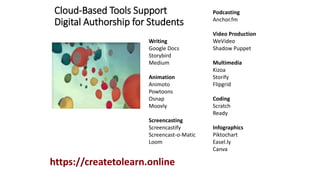
Cloud-Based Tools Support
Digital Authorship for Students
Writing
Google Docs
Storybird
Medium
Animation
Animoto
Powtoons
Osnap
Moovly
Screencasting
Screencastify
Screencast-o-Matic
Loom
Podcasting
Anchor.fm
Video Production
WeVideo
Shadow Puppet
Multimedia
Kizoa
Storify
Flipgrid
Coding
Scratch
Ready
Infographics
Piktochart
Easel.ly
Canva
https://createtolearn.online
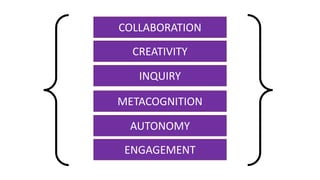
INQUIRY
CREATIVITY
COLLABORATION
METACOGNITION
AUTONOMY
ENGAGEMENT
1. There are a lot of different reasons why educators are incorporating digital media literacy
pedagogies in higher education
2. Educators benefit from reflecting on their own values for using digital texts, tools, and
technologies
3. Respect for diverse motivations increases collegiality and stimulates intellectual curiosity
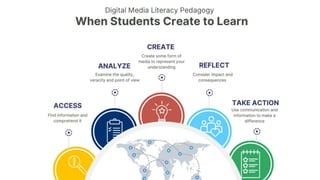
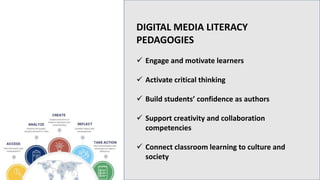
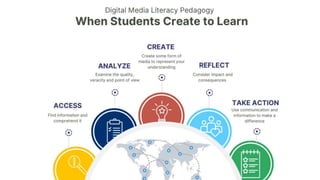
4. The create to learn process involves 5 steps: access, analyze, create, reflect & take action
5. Instructors support student learning by offering a mix of creative freedom and creative
control
6. Creating media under deadline pressure or with a partner creates opportunities for
cognitive, social, and emotional growth
7. When learners shift away from the “sit and get” mentality, they increase
engagement and motivation for learning
Summary of Key Ideas
How are students “creating to learn” in
your classroom?
How are you supporting the
development of student autonomy
and authority as digital authors?
What current activities could be
modified so that students
experience the power of digital
media literacy?
What potential impact might digital media
literacy have on your learners?
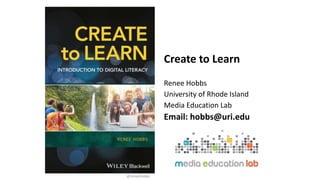
Create to Learn
Renee Hobbs
University of Rhode Island
Media Education Lab
Email: hobbs@uri.edu
@reneehobbs
Renee Hobbs
Harrington School of Communication and Media
University of Rhode Island
Media Education Lab
Email: hobbs@uri.edu
Twitter: @reneehobbs
Web: www.mediaeducationlab.com

HOBBS Digital Media Literacy.pptx

  • 1.
    Renee Hobbs Harrington Schoolof Communication and Media University of Rhode Island Media Education Lab Email: hobbs@uri.edu Twitter: @reneehobbs Web: www.mediaeducationlab.com
  • 4.
    DIGITAL MEDIA LITERACY PEDAGOGIES Engage and motivate learners  Activate critical thinking  Build students’ confidence as authors  Support creativity and collaboration competencies  Connect classroom learning to culture and society
  • 6.
    Critical thinking isa desire to seek, patience to doubt, fondness to meditate, slowness to assert, readiness to consider, carefulness to dispose and set in order; and hatred for every kind of imposture. •Francis Bacon, “On the Interpretation of Nature,” 1605
  • 7.
    How are studentsactivating critical thinking in your classroom? How are you supporting students’ creativity, autonomy and authority as digital authors? What current activities could be modified so that students experience the power of digital media literacy? What impact can digital media literacy have on your learners?
  • 13.
  • 14.
  • 15.
  • 16.
  • 17.
  • 19.
  • 21.
    What’s Your Why? Howdo your motivations shape your instructional practices?
  • 22.
    Reflect on YourMotivations for Digital Media Literacy www.setyourmotivation.com Hobbs, R., & Tuzel, S. (2017). Teacher motivations for digital and media literacy: An examination of Turkish educators. British Journal of Educational Technology, 48(1), 7-22.
  • 25.
  • 27.
    ACCESS: Students findan example to express their own understanding or comprehension of a concept
  • 28.
    @reneehobbs Kami PDF &Document Markup http://chrome.google.com A Student PDF Annotation
  • 29.
    ANALYZE: Students makea screencast to demonstrate their critical thinking
  • 30.
    @reneehobbs A Student Annotatesa Video ANT Video Annotation https://ant.umn.edu/
  • 31.
    CREATE: Students composemedia that is aligned with learning goals Teach with Story Maps University of Minnesota https://storymaps.umn.edu/
  • 32.
    REFLECT: Students considerthe impact and consequences of their life actions REFLECTING ON HOW YOU SEARCH WHEN SHOPPING • In what kinds of shopping situations have you found yourself using search engines? • Do you notice any patterns about typical ways that you use search engines for shopping purposes? • Can you describe one of the best experiences searching for something and one of the worst experiences you have had? • Based on your experience, do you have any tips, tricks, or advice for other people who might want to improve their online shopping skills?
  • 33.
    TAKE ACTION: Studentsuse information & communication to make a difference in the world
  • 34.
    TAKE ACTION: Studentsuse information & communication to make a difference in the world
  • 36.
    “How do Iget started?” “What is our topic?” “When is it due?” “How long should it be?” “Do have to work with a partner?” “How do I get an A?”
  • 37.
    Creating with DigitalMedia Involves a Process of Messy Engagement
  • 38.
    FORMAT CONTENT AUDIENCE PROCESS Supporting LearningThrough a Mix of Creative Freedom & Creative Control The type and genre How you get it done The ideas and information you share Who reads, views, listens to or uses it
  • 39.
  • 40.
    Steps in theProcess 1.Focus on a Topic or Issue of Interest to You. Select a topic of interest from the Do Something website. Ask permission of the instructor if you would like to choose another topic that’s not on this list. Learn what you can about the topic and issue in order to develop a plan for your propaganda initiative. 2. Create to Learn. Create 1 form of propaganda to accomplish the goal of the campaign. Choose from these options: •blog post •press release •infographic •collection of 5 memes •poster •video, 60–90 seconds •radio ad •collection of 5 social media posts 3. Comment on and Analyze Your Work. Reflect on the experience of creating propaganda. Write an essay about your work, explaining your creative choices and strategy. How did you apply what you learned about propaganda? What did you like or dislike about the experience? (Word count: 1,000–1,500 words) 4. Publish Your Work. You publish your work on the class publication, the Propaganda COM 416 Medium website. Here are the steps in the process. 1.Create an account on Medium using your URI email. 2.Place your Medium user name on this LIST OF COM416 Blog Writers 3.Your instructor will then make you a designated writer for the class blog. 4.Create your propaganda and then compose your essay.
  • 41.
  • 42.
    FORMAT CONTENT AUDIENCE PROCESS Supporting LearningThrough a Mix of Creative Freedom & Creative Control MEME Use a Meme Generator Work Alone Deadline Pressure Any Key Idea in Chapter 1 CLASS PARTICIPATION ACTIVITY: Explain a key idea from Chapter 1 by creating 1 – 3 memes, working alone under deadline pressure. Publish your work on a Padlet so that the teacher and class can view it. View the work created by your peers and comment on one work. Teacher & Class
  • 43.
    COM 416 StudentNikita Duke
  • 45.
    FORMAT CONTENT AUDIENCE PROCESS Supporting LearningThrough a Mix of Creative Freedom & Creative Control STUDENT CHOICE Collaborate Deadline Pressure Principles of teaching environmental science ASSIGNMENT: Develop a set of multimedia lesson plans for how students can deepen their understanding of climate science Public
  • 47.
    FORMAT CONTENT AUDIENCE PROCESS Supporting LearningThrough a Mix of Creative Freedom & Creative Control CHOICE Work Alone Deadline Pressure Show that you can connect ideas from the class to your major MAJOR ASSIGNMENT: Create a piece of media that demonstrates how the ideas explored in this class relate to your major Public
  • 48.
    CHOICE MATTERS Hobbs, R. (2017).Create to Learn. NY: Wiley. BLOGS VIDEO PODCAST ANIMATION INFOGRAPHIC VLOGS & SCREENCAST
  • 49.
  • 50.
    Cloud-Based Tools Support DigitalAuthorship for Students Writing Google Docs Storybird Medium Animation Animoto Powtoons Osnap Moovly Screencasting Screencastify Screencast-o-Matic Loom Podcasting Anchor.fm Video Production WeVideo Shadow Puppet Multimedia Kizoa Storify Flipgrid Coding Scratch Ready Infographics Piktochart Easel.ly Canva https://createtolearn.online
  • 53.
  • 55.
    1. There area lot of different reasons why educators are incorporating digital media literacy pedagogies in higher education 2. Educators benefit from reflecting on their own values for using digital texts, tools, and technologies 3. Respect for diverse motivations increases collegiality and stimulates intellectual curiosity 4. The create to learn process involves 5 steps: access, analyze, create, reflect & take action 5. Instructors support student learning by offering a mix of creative freedom and creative control 6. Creating media under deadline pressure or with a partner creates opportunities for cognitive, social, and emotional growth 7. When learners shift away from the “sit and get” mentality, they increase engagement and motivation for learning Summary of Key Ideas
  • 56.
    How are students“creating to learn” in your classroom? How are you supporting the development of student autonomy and authority as digital authors? What current activities could be modified so that students experience the power of digital media literacy? What potential impact might digital media literacy have on your learners?
  • 57.
    Create to Learn ReneeHobbs University of Rhode Island Media Education Lab Email: hobbs@uri.edu @reneehobbs
  • 58.
    Renee Hobbs Harrington Schoolof Communication and Media University of Rhode Island Media Education Lab Email: hobbs@uri.edu Twitter: @reneehobbs Web: www.mediaeducationlab.com