Digital & Media Literacy 
Renee Hobbs
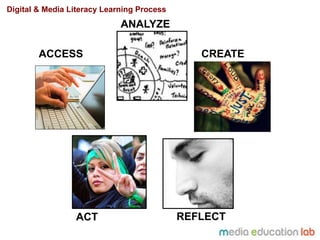
Digital & Media Literacy Learning Process 
ANALYZEE 
CREATE 
ACCESS 
ACT REFLECT
Digital Literacy Competencies 
Access, Use and Share 
 Keyboard and mouse skills 
 Be familiar with hardware, storage and file 
management practices 
 Understand hyperlinking & digital space 
 Gain competence with software applications 
 Use social media, mobile, peripheral & cloud 
computing tools 
 Identify information needs 
 Use effective search and find strategies 
 Troubleshoot and problem-solve 
 Learn how to learn 
 Listening skills 
 Reading comprehension
Digital & Media Literacy Competencies 
Analyze & Evaluate 
 Understand how symbols work: the 
concept of representation 
 Identify the author, genre, purpose and 
point of view of a message 
 Compare and contrast sources 
 Evaluate credibility and quality 
 Understand one’s own biases 
and world view 
 Recognize power relationships that shape 
how information and ideas circulate in 
culture 
 Understand the economic context of 
information and entertainment production 
 Examine the political and social 
ramifications of inequalities in information 
flows
Digital Literacy Competencies 
Create & Collaborate 
 Recognize the need for communication and 
self-expression 
 Identify your own purpose, target 
audience, medium & genre 
 Brainstorm and generate ideas 
 Compose creatively 
 Play and interact 
 Edit and revise 
 Use appropriate distribution, promotion & 
marketing channels 
 Receive audience feedback 
Work collaboratively 
Comment, curate and remix
Digital Literacy Competencies 
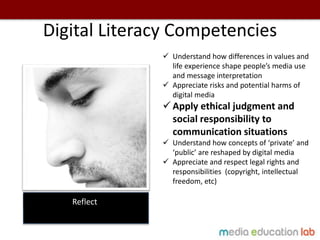
Reflect 
 Understand how differences in values and 
life experience shape people’s media use 
and message interpretation 
 Appreciate risks and potential harms of 
digital media 
 Apply ethical judgment and 
social responsibility to 
communication situations 
 Understand how concepts of ‘private’ and 
‘public’ are reshaped by digital media 
 Appreciate and respect legal rights and 
responsibilities (copyright, intellectual 
freedom, etc)
Digital Literacy Competencies 
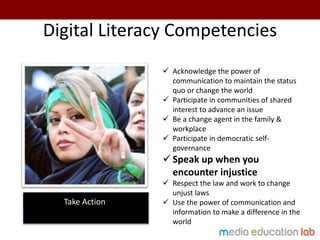
Take Action 
 Acknowledge the power of 
communication to maintain the status 
quo or change the world 
 Participate in communities of shared 
interest to advance an issue 
 Be a change agent in the family & 
workplace 
 Participate in democratic self-governance 
 Speak up when you 
encounter injustice 
 Respect the law and work to change 
unjust laws 
 Use the power of communication and 
information to make a difference in the 
world
Digital & Media Literacy Learning Process 
ANALYZEE 
CREATE 
ACCESS 
ACT REFLECT

Digital and Media Literacy Learning Process

  • 1.
    Digital & MediaLiteracy Renee Hobbs
  • 2.
    Digital & MediaLiteracy Learning Process ANALYZEE CREATE ACCESS ACT REFLECT
  • 3.
    Digital Literacy Competencies Access, Use and Share  Keyboard and mouse skills  Be familiar with hardware, storage and file management practices  Understand hyperlinking & digital space  Gain competence with software applications  Use social media, mobile, peripheral & cloud computing tools  Identify information needs  Use effective search and find strategies  Troubleshoot and problem-solve  Learn how to learn  Listening skills  Reading comprehension
  • 4.
    Digital & MediaLiteracy Competencies Analyze & Evaluate  Understand how symbols work: the concept of representation  Identify the author, genre, purpose and point of view of a message  Compare and contrast sources  Evaluate credibility and quality  Understand one’s own biases and world view  Recognize power relationships that shape how information and ideas circulate in culture  Understand the economic context of information and entertainment production  Examine the political and social ramifications of inequalities in information flows
  • 5.
    Digital Literacy Competencies Create & Collaborate  Recognize the need for communication and self-expression  Identify your own purpose, target audience, medium & genre  Brainstorm and generate ideas  Compose creatively  Play and interact  Edit and revise  Use appropriate distribution, promotion & marketing channels  Receive audience feedback Work collaboratively Comment, curate and remix
  • 6.
    Digital Literacy Competencies Reflect  Understand how differences in values and life experience shape people’s media use and message interpretation  Appreciate risks and potential harms of digital media  Apply ethical judgment and social responsibility to communication situations  Understand how concepts of ‘private’ and ‘public’ are reshaped by digital media  Appreciate and respect legal rights and responsibilities (copyright, intellectual freedom, etc)
  • 7.
    Digital Literacy Competencies Take Action  Acknowledge the power of communication to maintain the status quo or change the world  Participate in communities of shared interest to advance an issue  Be a change agent in the family & workplace  Participate in democratic self-governance  Speak up when you encounter injustice  Respect the law and work to change unjust laws  Use the power of communication and information to make a difference in the world
  • 8.
    Digital & MediaLiteracy Learning Process ANALYZEE CREATE ACCESS ACT REFLECT