





Understanding,
Analyzing and
Creating Advertising,
Persuasion &
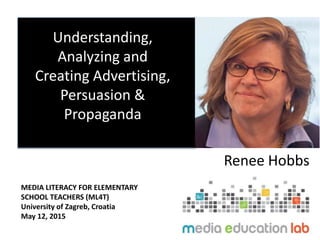
Propaganda
Renee Hobbs
MEDIA LITERACY FOR ELEMENTARY
SCHOOL TEACHERS (ML4T)
University of Zagreb, Croatia
May 12, 2015
PEER-TO-PEER FILE SHARING
Questions for Today
Why is it important to teach children about advertising and
marketing?
What are the beneficial and harmful dimensions of
persuasion, advertising and propaganda?
How is this topic relevant to the elementary curriculum?
What instructional strategies are effective for teaching
children to critically analyze and create advertising in the
classroom?
Consumer culture is an ideology
that operates from cradle to grave
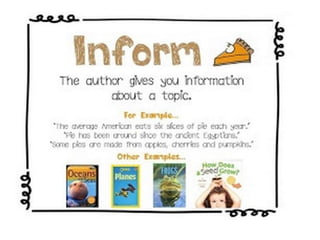
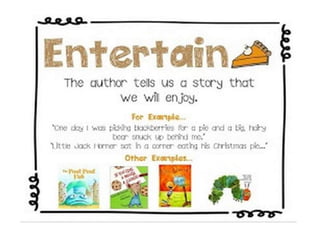
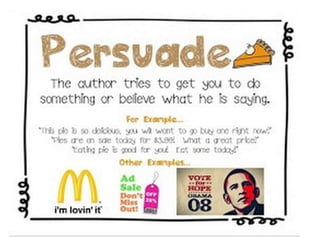
Children need practice to
recognize how messages are
designed to inform, entertain and
persuade
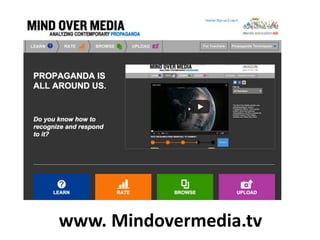
www. Mindovermedia.tv
Propaganda can be used for
beneficial or harmful purposes
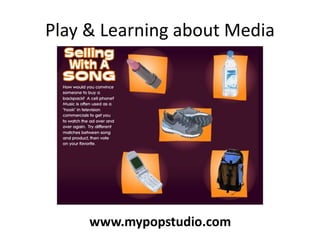
Play & Learning about Media
www.mypopstudio.com
Advertising links products with
feelings by using many techniques
to appeal to our identity, our
emotions & our values
Doc.dr.sc. Igor Kanižaj
Sveučilište u Zagrebu
Fakultet političkih znanosti
Studij novinarstva
www.fpzg.unizg.hr
Advertising techniques?
1. Classical Advertising
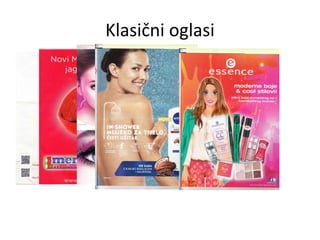
Klasični oglasi
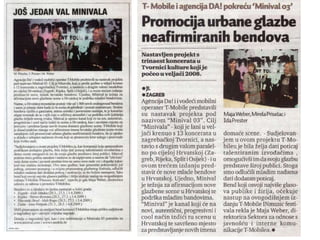
2. Hidden advertising?
18
19
20
2. Product placement
22
23
24
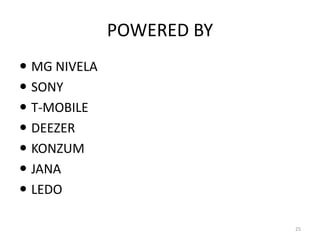
POWERED BY
 MG NIVELA
 SONY
 T-MOBILE
 DEEZER
 KONZUM
 JANA
 LEDO
25
3. Advertising in video games
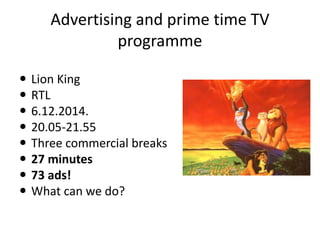
Advertising and prime time TV
programme
 Lion King
 RTL
 6.12.2014.
 20.05-21.55
 Three commercial breaks
 27 minutes
 73 ads!
 What can we do?
You can teach the children to count
the ads they see…
AIDA – Frank Wobst
A – attention
I – interest
D – desire
A - action
Are there any good commericals for
the family?
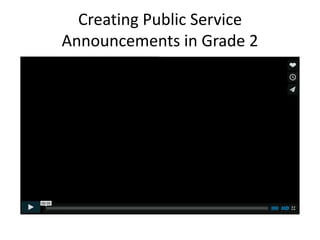
Creating Public Service
Announcements in Grade 2
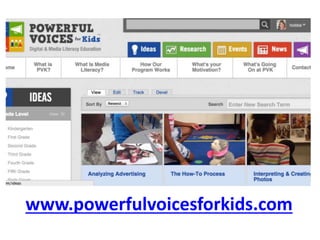
www.powerfulvoicesforkids.com
Media literacy educators use
creative strategies to help children
develop critical thinking skills
about advertising, persuasion and
propaganda
PEER-TO-PEER FILE SHARING
Conclusion
Consumer culture is an ideology that operates from cradle to
grave
Children need practice to recognize how messages are
designed to inform, entertain and persuade
Propaganda can be used for beneficial or harmful purposes
Advertising links products with feelings by using many
techniques to appeal to our identity and our emotions
Media literacy educators use creative strategies to help
children develop critical thinking skills about advertising,
persuasion and propaganda
 Hobbs, R., He, H. & RobbGrieco, M. (2014). Seeing, believing and learning to be skeptical: Supporting
language learning through advertising analysis activities. TESOL Journal DOI: 10.1002/tesj.153
 Hobbs, R. (2013). The blurring of art, journalism and advocacy: Confronting 21st century propaganda in a
world of online journalism. I/S: A Journal of Law and Policy for the Information Society 8(3), 625 – 638.
 Hobbs, R. & RobbGrieco, M. (2012). African-American children’s active reasoning about media texts as a
precursor to media literacy. Journal of Children and Media 6(4), 502 – 519.
 Babad, E., Peer, A., & Hobbs, R. (2012). Media literacy and media bias: Are media literacy students less
susceptible to non-verbal judgment biases? Psychology of Popular Media Culture.1(2), 97 – 107. DOI:
10.137/a0028181
 Morris, N., Gilpin, D., Lenos, M. & Hobbs, R. (2011). Interpretations of cigarette advertisement warning
labels by Philadelphia Puerto Ricans. Journal of Health Communication 16(8), 908 – 922.
 Hobbs, R., Broder, S., Pope, H. & Rowe, J. (2006). How adolescent girls interpret weight-loss advertising.
Health Education Research. 21(5), 719-730.
 Hobbs, R. and Rowe, J. (2008). Creative remixing and digital learning: Developing an online media literacy
tool for girls. In P. C. Rivoltella (Ed.). Digital literacy: Tools and methodologies for an information society.
Hershey, PA: Idea Group Press (pgs. 230 – 241).
 Hobbs, R. (2004). Does media literacy work? An empirical study of learning how to analyze
advertisements. Advertising and Society Review 5(4), 1 – 28.
 Hobbs, R. (2004). Analyzing advertising in the English language arts classroom: A quasi-experimental
study. Studies in Media & Information Literacy Education, 4(2). Available online:
http://www.utpress.utoronto.ca/journal/ejournals/simile
 Denniston, R., Hobbs, R. & Arkin, E. (1998). Media literacy as a complementary strategy to social
marketing. Social Marketing Quarterly 4(4), 40 – 42.
www.mediaeducationlab.com
Renee Hobbs
Professor of Communication Studies
Director, Media Education Lab
Harrington School of Communication
and Media
University of Rhode Island USA
Email: hobbs@uri.edu
Twitter: @reneehobbs
WEB: www.mediaeducationlab.com

Analyzing Advertising ML4T Croatia

  • 1.
    Understanding, Analyzing and Creating Advertising, Persuasion& Propaganda Renee Hobbs MEDIA LITERACY FOR ELEMENTARY SCHOOL TEACHERS (ML4T) University of Zagreb, Croatia May 12, 2015
  • 2.
    PEER-TO-PEER FILE SHARING Questionsfor Today Why is it important to teach children about advertising and marketing? What are the beneficial and harmful dimensions of persuasion, advertising and propaganda? How is this topic relevant to the elementary curriculum? What instructional strategies are effective for teaching children to critically analyze and create advertising in the classroom?
  • 4.
    Consumer culture isan ideology that operates from cradle to grave
  • 9.
    Children need practiceto recognize how messages are designed to inform, entertain and persuade
  • 10.
  • 11.
    Propaganda can beused for beneficial or harmful purposes
  • 12.
    Play & Learningabout Media www.mypopstudio.com
  • 13.
    Advertising links productswith feelings by using many techniques to appeal to our identity, our emotions & our values
  • 14.
    Doc.dr.sc. Igor Kanižaj Sveučilišteu Zagrebu Fakultet političkih znanosti Studij novinarstva www.fpzg.unizg.hr Advertising techniques?
  • 15.
  • 16.
  • 17.
  • 18.
  • 19.
  • 20.
  • 21.
  • 22.
  • 23.
  • 24.
  • 25.
    POWERED BY  MGNIVELA  SONY  T-MOBILE  DEEZER  KONZUM  JANA  LEDO 25
  • 26.
    3. Advertising invideo games
  • 27.
    Advertising and primetime TV programme  Lion King  RTL  6.12.2014.  20.05-21.55  Three commercial breaks  27 minutes  73 ads!  What can we do?
  • 28.
    You can teachthe children to count the ads they see…
  • 30.
    AIDA – FrankWobst A – attention I – interest D – desire A - action
  • 32.
    Are there anygood commericals for the family?
  • 33.
  • 34.
  • 35.
    Media literacy educatorsuse creative strategies to help children develop critical thinking skills about advertising, persuasion and propaganda
  • 36.
    PEER-TO-PEER FILE SHARING Conclusion Consumerculture is an ideology that operates from cradle to grave Children need practice to recognize how messages are designed to inform, entertain and persuade Propaganda can be used for beneficial or harmful purposes Advertising links products with feelings by using many techniques to appeal to our identity and our emotions Media literacy educators use creative strategies to help children develop critical thinking skills about advertising, persuasion and propaganda
  • 37.
     Hobbs, R.,He, H. & RobbGrieco, M. (2014). Seeing, believing and learning to be skeptical: Supporting language learning through advertising analysis activities. TESOL Journal DOI: 10.1002/tesj.153  Hobbs, R. (2013). The blurring of art, journalism and advocacy: Confronting 21st century propaganda in a world of online journalism. I/S: A Journal of Law and Policy for the Information Society 8(3), 625 – 638.  Hobbs, R. & RobbGrieco, M. (2012). African-American children’s active reasoning about media texts as a precursor to media literacy. Journal of Children and Media 6(4), 502 – 519.  Babad, E., Peer, A., & Hobbs, R. (2012). Media literacy and media bias: Are media literacy students less susceptible to non-verbal judgment biases? Psychology of Popular Media Culture.1(2), 97 – 107. DOI: 10.137/a0028181  Morris, N., Gilpin, D., Lenos, M. & Hobbs, R. (2011). Interpretations of cigarette advertisement warning labels by Philadelphia Puerto Ricans. Journal of Health Communication 16(8), 908 – 922.  Hobbs, R., Broder, S., Pope, H. & Rowe, J. (2006). How adolescent girls interpret weight-loss advertising. Health Education Research. 21(5), 719-730.  Hobbs, R. and Rowe, J. (2008). Creative remixing and digital learning: Developing an online media literacy tool for girls. In P. C. Rivoltella (Ed.). Digital literacy: Tools and methodologies for an information society. Hershey, PA: Idea Group Press (pgs. 230 – 241).  Hobbs, R. (2004). Does media literacy work? An empirical study of learning how to analyze advertisements. Advertising and Society Review 5(4), 1 – 28.  Hobbs, R. (2004). Analyzing advertising in the English language arts classroom: A quasi-experimental study. Studies in Media & Information Literacy Education, 4(2). Available online: http://www.utpress.utoronto.ca/journal/ejournals/simile  Denniston, R., Hobbs, R. & Arkin, E. (1998). Media literacy as a complementary strategy to social marketing. Social Marketing Quarterly 4(4), 40 – 42. www.mediaeducationlab.com
  • 38.
    Renee Hobbs Professor ofCommunication Studies Director, Media Education Lab Harrington School of Communication and Media University of Rhode Island USA Email: hobbs@uri.edu Twitter: @reneehobbs WEB: www.mediaeducationlab.com