TECHNOLOGY LIFE CYCLE
ROSHAN BHATTARAI
THE TECHNOLOGY LIFE CYCLE MODEL
• is a model that describes the different stages that a technology goes through
• from its initial development to its eventual decline
• can help businesses and innovators understand
• the stages of technology development,
• anticipate future trends, and
• make strategic decisions about investment and development
Four stages in the technology life cycle:
• the innovation stage,
• the commercialization stage,
• the diffusion stage, and
• the substitution stage
THE INNOVATION STAGE (R&D PHASE)
• earliest stage of the technology life cycle
• characterized by the initial development and introduction of a new technology
• the technology is often untested and experimental
• there may be few or no competitors in the market
• Innovators invest heavily in research and development to refine the technology
and demonstrate its potential benefits
THE COMMERCIALIZATION STAGE (GROWTH PHASE)
• the technology begins to gain wider acceptance and adoption
• gains more demand for the product or service
• technology is refined and improved, and new competitors enter the market
• profits for early adopters and innovators can be high, but competition can also be
fierce
THE DIFFUSION STAGE (MATURITY PHASE)
• the technology becomes more standardized and widely adopted
• growth begins to slow down
• the market becomes more saturated, and competition becomes more intense
• Companies focus on reducing costs and increasing efficiency, rather than investing
in new innovations
• Profits are often lower than in the growth stage
THE SUBSTITUTION STAGE (DECLINE PHASE)
• demand begins to decline
• companies may continue to sell the product or service, but profits are low
• investment in new innovation declines
• eventually, the technology becomes obsolete, and
• companies must adapt or move on to new technologies
It’s important to note that
• not all technologies follow this exact cycle
• the length and intensity of each stage can vary depending on the technology and
market conditions
• understanding the technology life cycle can help businesses and innovators make
strategic decisions about investment and development, and
• prepare for future trends and changes in the market
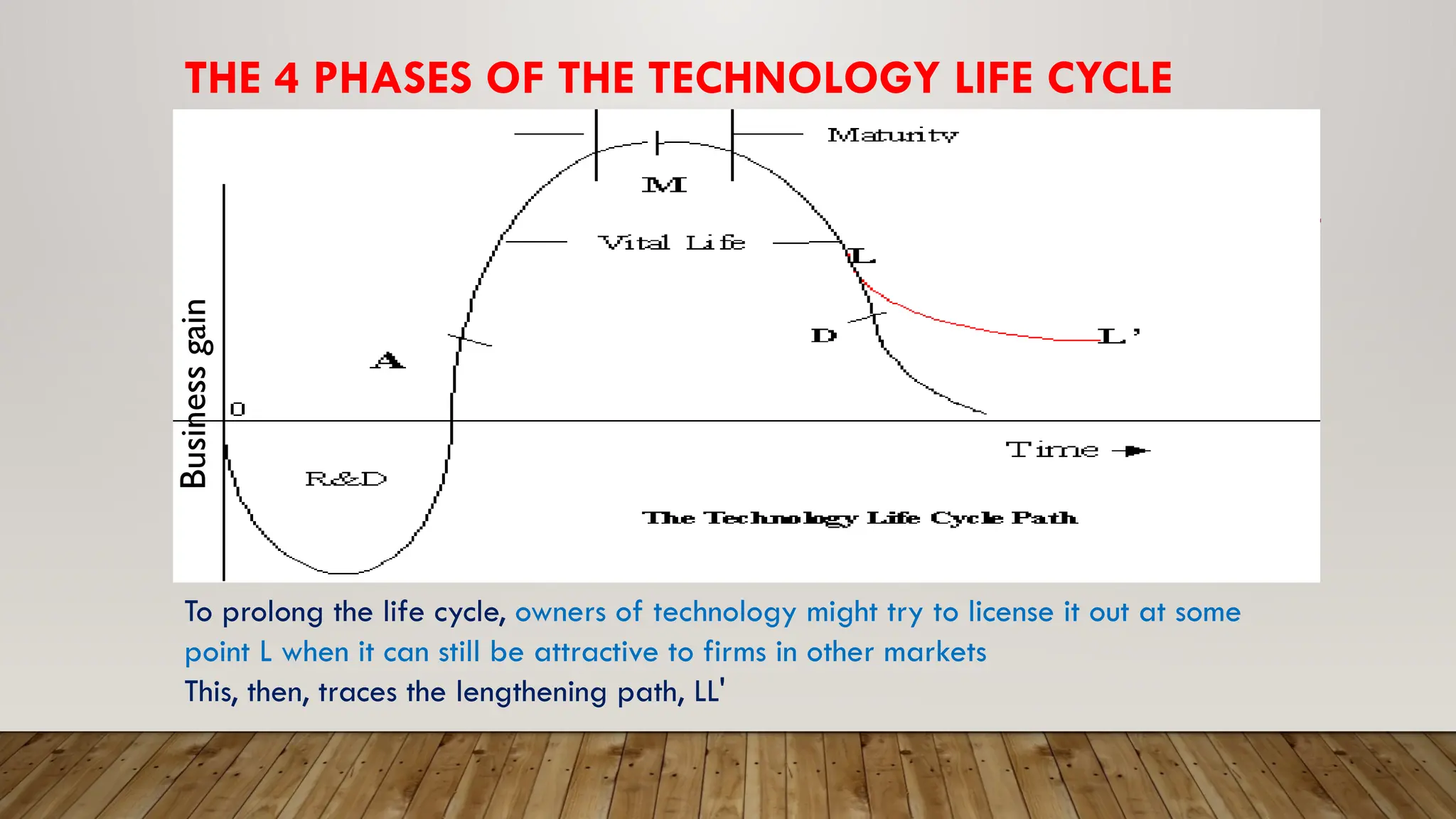
THE 4 PHASES OF THE TECHNOLOGY LIFE CYCLE
To prolong the life cycle, owners of technology might try to license it out at some
point L when it can still be attractive to firms in other markets
This, then, traces the lengthening path, LL'
Business
gain
• In the early 2000’s the mobile brand Nokia was one of the best of the crops
• was much loved and adored by its loyal customers
• The Symbian technology used in its mobile phones was an instant hit with the
customers
• the brand was the market leader for a very long time until the inception of ios
and Android technologies by Apple and Google
• that were high on the levels of revolutionary ideation and innovation leading to
the decline stage of Nokia and its technologies
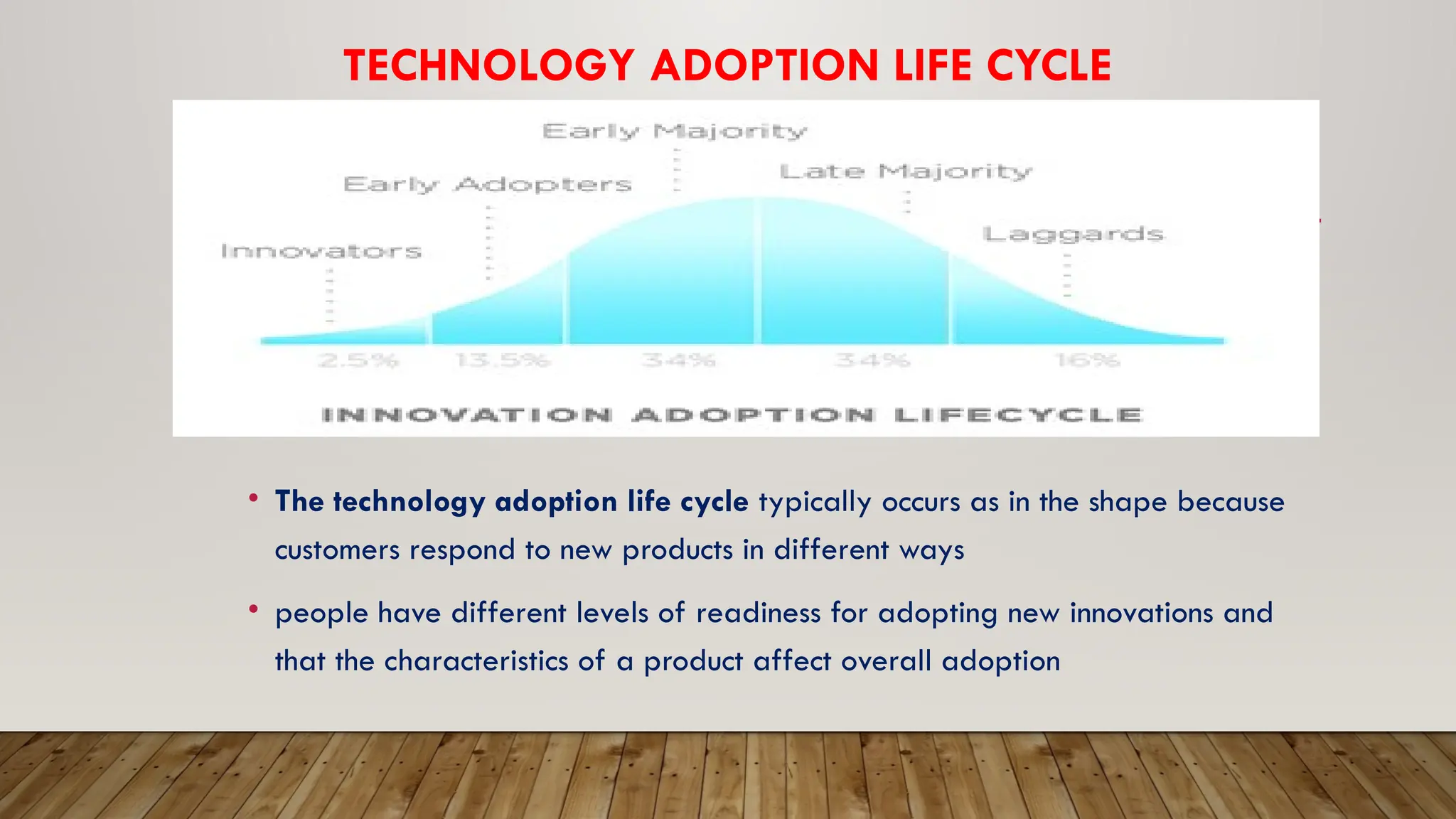
TECHNOLOGY ADOPTION LIFE CYCLE
• The technology adoption life cycle typically occurs as in the shape because
customers respond to new products in different ways
• people have different levels of readiness for adopting new innovations and
that the characteristics of a product affect overall adoption
• Rogers classified individuals into five groups:
• innovators,
• early adopters,
• early majority,
• late majority, and
• laggards.
• In the curve, innovators occupy 2.5%, early adopters 13.5%,
early majority 34%, late majority 34%, and laggards 16%
ADOPTER CATEGORY
Innovators
• Innovators are :
• willing to take risks,
• have the highest social status,
• have financial liquidity,
• have closest contact to scientific sources and interaction
with other innovators
• Their risk tolerance allows them to adopt technologies
that may ultimately fail
Early adopters
• These individuals have the highest degree of opinion leadership among the
adopter categories
• They have:
• higher social status,
• financial liquidity,
• advanced education
• more socially forward than late adopters
• more tactful in adoption choices than innovators
Early Majority
• They adopt an innovation after significantly longer time
than the innovators and early adopters
• Early Majority have
• above average social status,
• contact with early adopters and
• relatively hold lower positions of opinion leadership in a
system
Late Majority
• They adopt an innovation after the average participant
• approach an innovation with a high degree of doubt and after the majority
of society has adopted the innovation
• They are typically
• doubtful about an innovation,
• have below average social status,
• little financial liquidity,
• in contact with others in late majority and early majority and
• very little opinion leadership
Laggards
• They are the last to adopt an innovation
• individuals in this category show no opinion leadership
• These individuals typically have
• lowest social status,
• lowest financial liquidity,
• oldest among adopters, and
• in contact with only family and close friends
THANKYOU !!

Technology Life Cycle and Technology Management

  • 1.
  • 2.
    THE TECHNOLOGY LIFECYCLE MODEL • is a model that describes the different stages that a technology goes through • from its initial development to its eventual decline • can help businesses and innovators understand • the stages of technology development, • anticipate future trends, and • make strategic decisions about investment and development
  • 3.
    Four stages inthe technology life cycle: • the innovation stage, • the commercialization stage, • the diffusion stage, and • the substitution stage
  • 4.
    THE INNOVATION STAGE(R&D PHASE) • earliest stage of the technology life cycle • characterized by the initial development and introduction of a new technology • the technology is often untested and experimental • there may be few or no competitors in the market • Innovators invest heavily in research and development to refine the technology and demonstrate its potential benefits
  • 5.
    THE COMMERCIALIZATION STAGE(GROWTH PHASE) • the technology begins to gain wider acceptance and adoption • gains more demand for the product or service • technology is refined and improved, and new competitors enter the market • profits for early adopters and innovators can be high, but competition can also be fierce
  • 6.
    THE DIFFUSION STAGE(MATURITY PHASE) • the technology becomes more standardized and widely adopted • growth begins to slow down • the market becomes more saturated, and competition becomes more intense • Companies focus on reducing costs and increasing efficiency, rather than investing in new innovations • Profits are often lower than in the growth stage
  • 7.
    THE SUBSTITUTION STAGE(DECLINE PHASE) • demand begins to decline • companies may continue to sell the product or service, but profits are low • investment in new innovation declines • eventually, the technology becomes obsolete, and • companies must adapt or move on to new technologies
  • 8.
    It’s important tonote that • not all technologies follow this exact cycle • the length and intensity of each stage can vary depending on the technology and market conditions • understanding the technology life cycle can help businesses and innovators make strategic decisions about investment and development, and • prepare for future trends and changes in the market
  • 9.
    THE 4 PHASESOF THE TECHNOLOGY LIFE CYCLE To prolong the life cycle, owners of technology might try to license it out at some point L when it can still be attractive to firms in other markets This, then, traces the lengthening path, LL' Business gain
  • 10.
    • In theearly 2000’s the mobile brand Nokia was one of the best of the crops • was much loved and adored by its loyal customers • The Symbian technology used in its mobile phones was an instant hit with the customers • the brand was the market leader for a very long time until the inception of ios and Android technologies by Apple and Google • that were high on the levels of revolutionary ideation and innovation leading to the decline stage of Nokia and its technologies
  • 11.
    TECHNOLOGY ADOPTION LIFECYCLE • The technology adoption life cycle typically occurs as in the shape because customers respond to new products in different ways • people have different levels of readiness for adopting new innovations and that the characteristics of a product affect overall adoption
  • 12.
    • Rogers classifiedindividuals into five groups: • innovators, • early adopters, • early majority, • late majority, and • laggards. • In the curve, innovators occupy 2.5%, early adopters 13.5%, early majority 34%, late majority 34%, and laggards 16%
  • 13.
    ADOPTER CATEGORY Innovators • Innovatorsare : • willing to take risks, • have the highest social status, • have financial liquidity, • have closest contact to scientific sources and interaction with other innovators • Their risk tolerance allows them to adopt technologies that may ultimately fail
  • 14.
    Early adopters • Theseindividuals have the highest degree of opinion leadership among the adopter categories • They have: • higher social status, • financial liquidity, • advanced education • more socially forward than late adopters • more tactful in adoption choices than innovators
  • 15.
    Early Majority • Theyadopt an innovation after significantly longer time than the innovators and early adopters • Early Majority have • above average social status, • contact with early adopters and • relatively hold lower positions of opinion leadership in a system
  • 16.
    Late Majority • Theyadopt an innovation after the average participant • approach an innovation with a high degree of doubt and after the majority of society has adopted the innovation • They are typically • doubtful about an innovation, • have below average social status, • little financial liquidity, • in contact with others in late majority and early majority and • very little opinion leadership
  • 17.
    Laggards • They arethe last to adopt an innovation • individuals in this category show no opinion leadership • These individuals typically have • lowest social status, • lowest financial liquidity, • oldest among adopters, and • in contact with only family and close friends
  • 18.