1
A.T.E. Enterprises Private Limited
V2.1 Mar 2018
Technological Advancements in Technical
Textiles
Gurudas Aras
A.T.E. Enterprises Private Limited
22
2
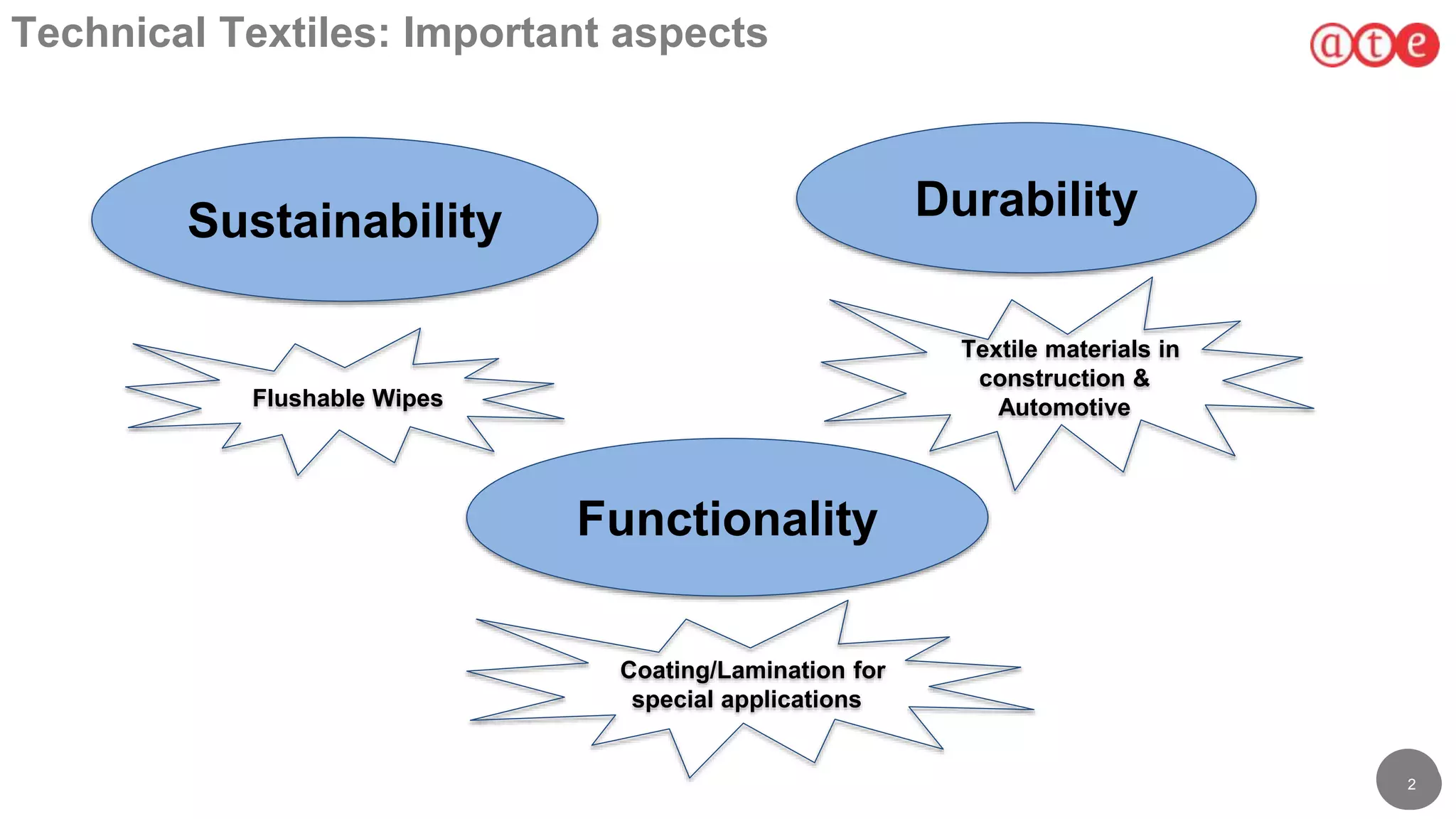
Sustainability Durability
Functionality
Flushable Wipes
Textile materials in
construction &
Automotive
Coating/Lamination for
special applications
Technical Textiles: Important aspects
3
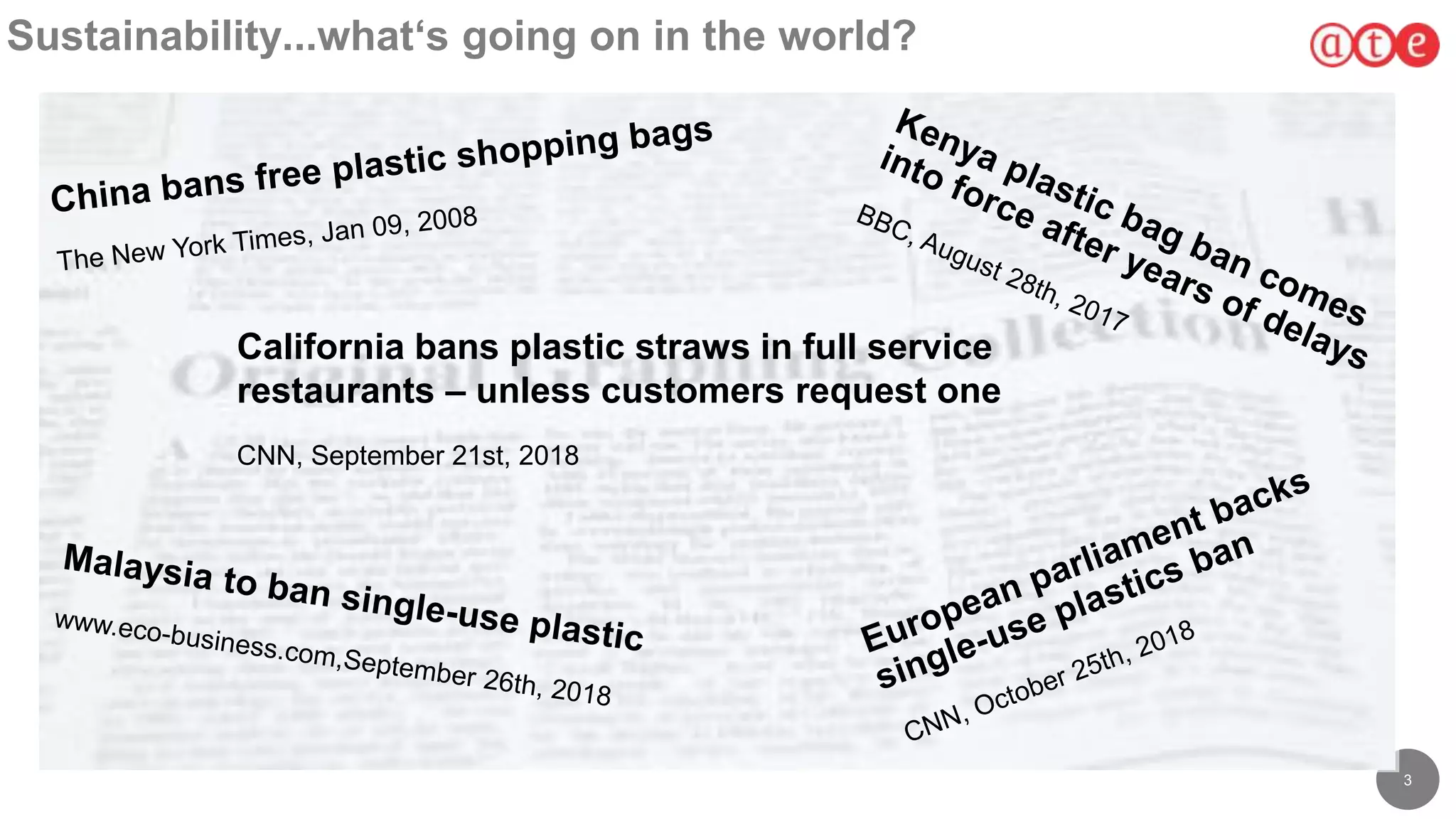
Sustainability...what‘s going on in the world?
California bans plastic straws in full service
restaurants – unless customers request one
CNN, September 21st, 2018
4
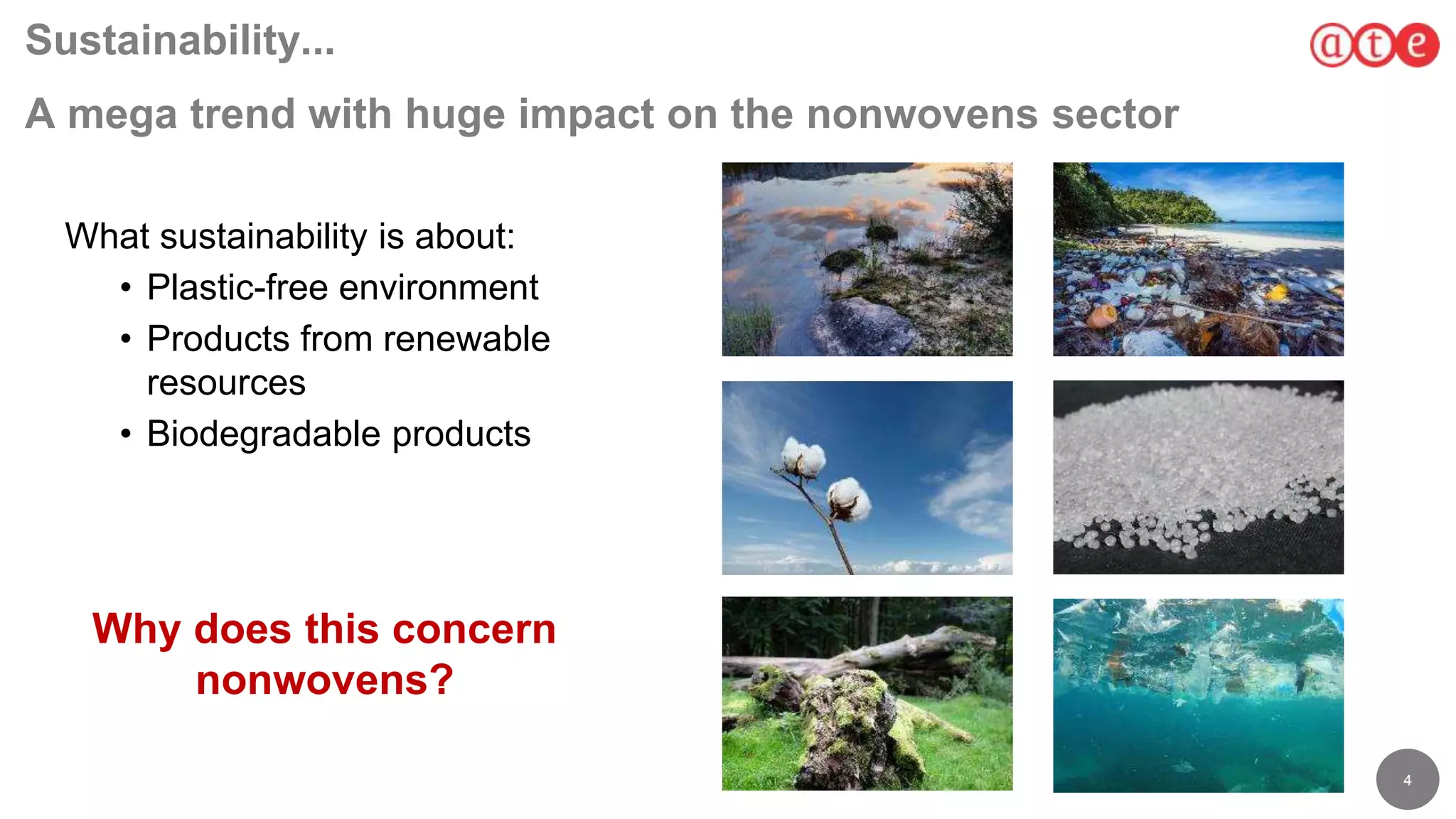
Sustainability...
A mega trend with huge impact on the nonwovens sector
What sustainability is about:
• Plastic-free environment
• Products from renewable
resources
• Biodegradable products
Why does this concern
nonwovens?
5
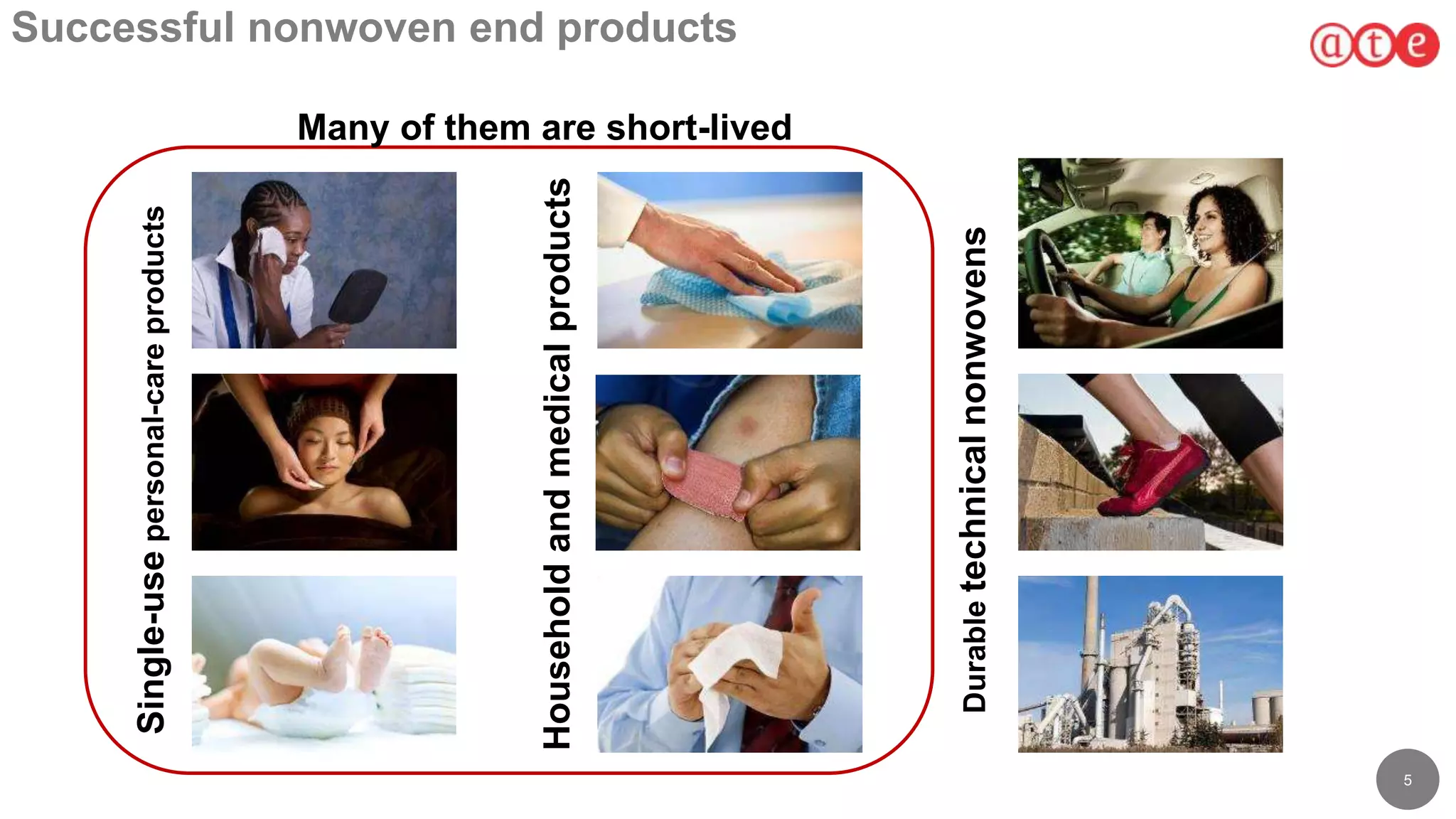
Successful nonwoven end products
Single-usepersonal-careproducts
Durabletechnicalnonwovens
Householdandmedicalproducts
Many of them are short-lived
6
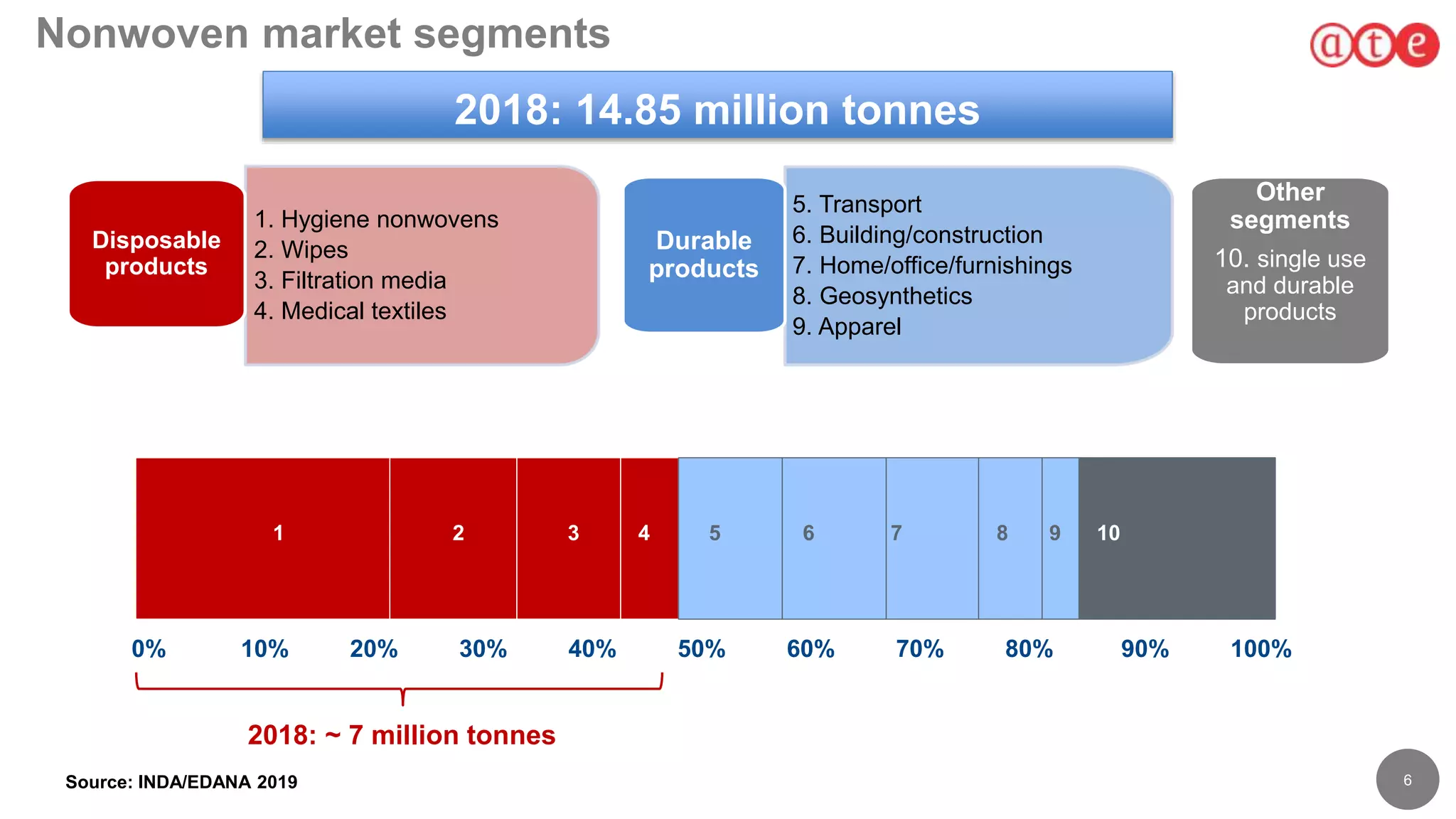
Nonwoven market segments
2018: 14.85 million tonnes
0% 10% 20% 30% 40% 50% 60% 70% 80% 90% 100%
1. Hygiene nonwovens
2. Wipes
3. Filtration media
4. Medical textiles
Disposable
products
5. Transport
6. Building/construction
7. Home/office/furnishings
8. Geosynthetics
9. Apparel
Durable
products
1 2 3 4 5 6 7 8 9 10
Source: INDA/EDANA 2019
2018: ~ 7 million tonnes
Other
segments
10. single use
and durable
products
7
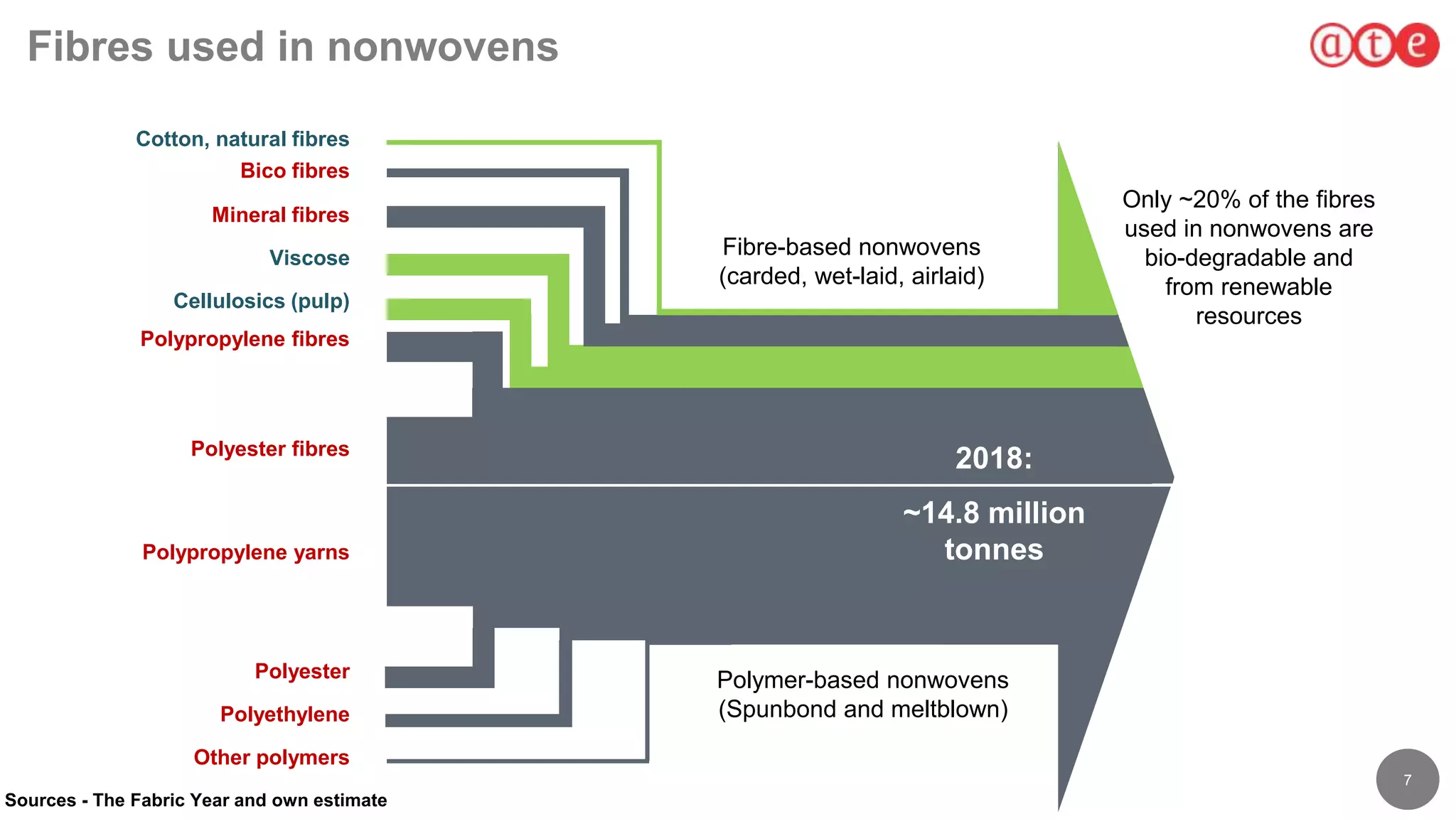
Fibres used in nonwovens
Polyester fibres
Mineral fibres
Cellulosics (pulp)
Polypropylene fibres
Bico fibres
Viscose
Polypropylene yarns
Other polymers
Polyethylene
Polyester
Cotton, natural fibres
Fibre-based nonwovens
(carded, wet-laid, airlaid)
Sources - The Fabric Year and own estimate
Polymer-based nonwovens
(Spunbond and meltblown)
2018:
~14.8 million
tonnes
Only ~20% of the fibres
used in nonwovens are
bio-degradable and
from renewable
resources
8
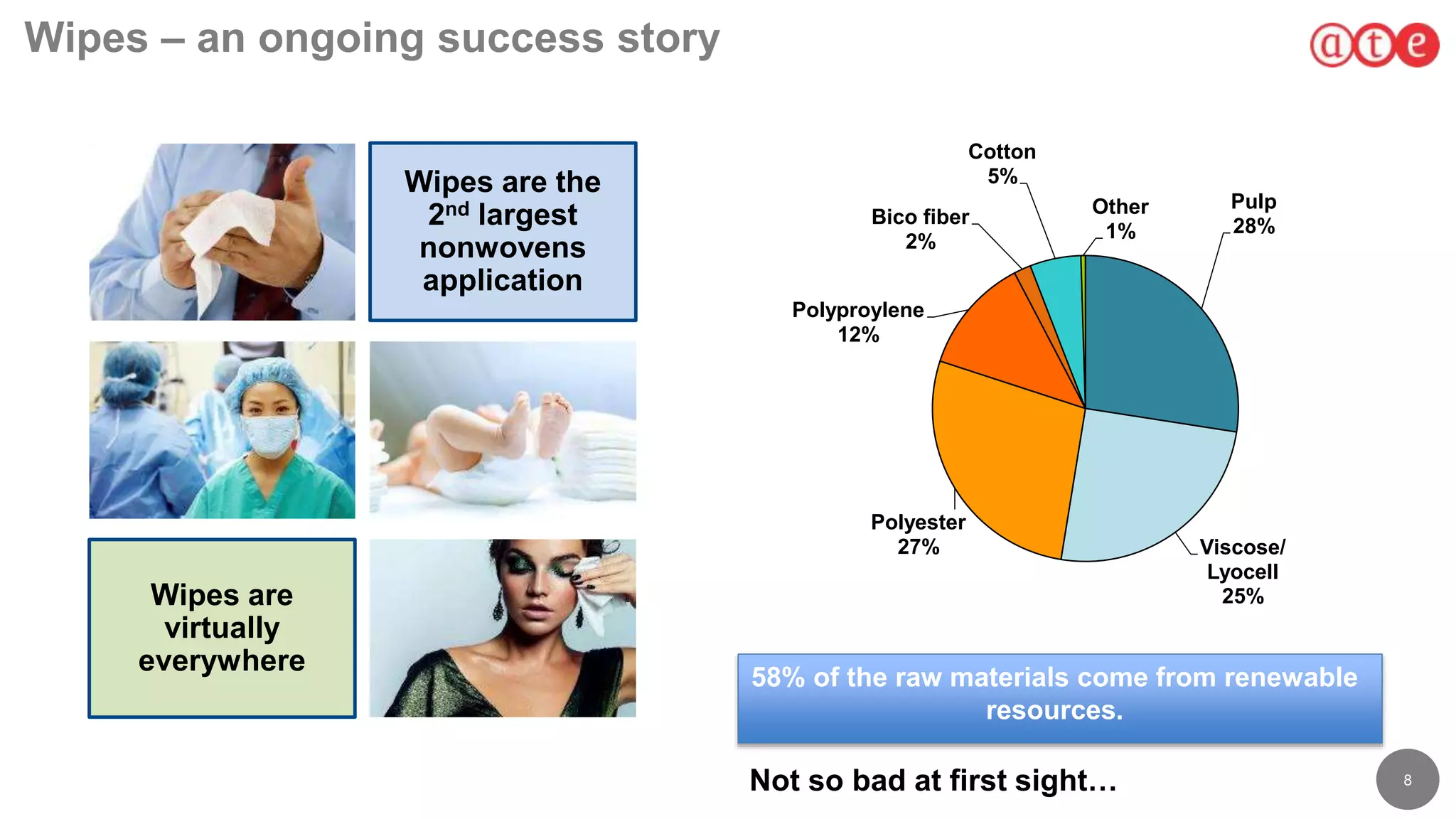
Pulp
28%
Viscose/
Lyocell
25%
Polyester
27%
Polyproylene
12%
Bico fiber
2%
Cotton
5%
Other
1%
Wipes are
virtually
everywhere
Wipes are the
2nd largest
nonwovens
application
Wipes – an ongoing success story
58% of the raw materials come from renewable
resources.
Not so bad at first sight…
9
Bico fiber
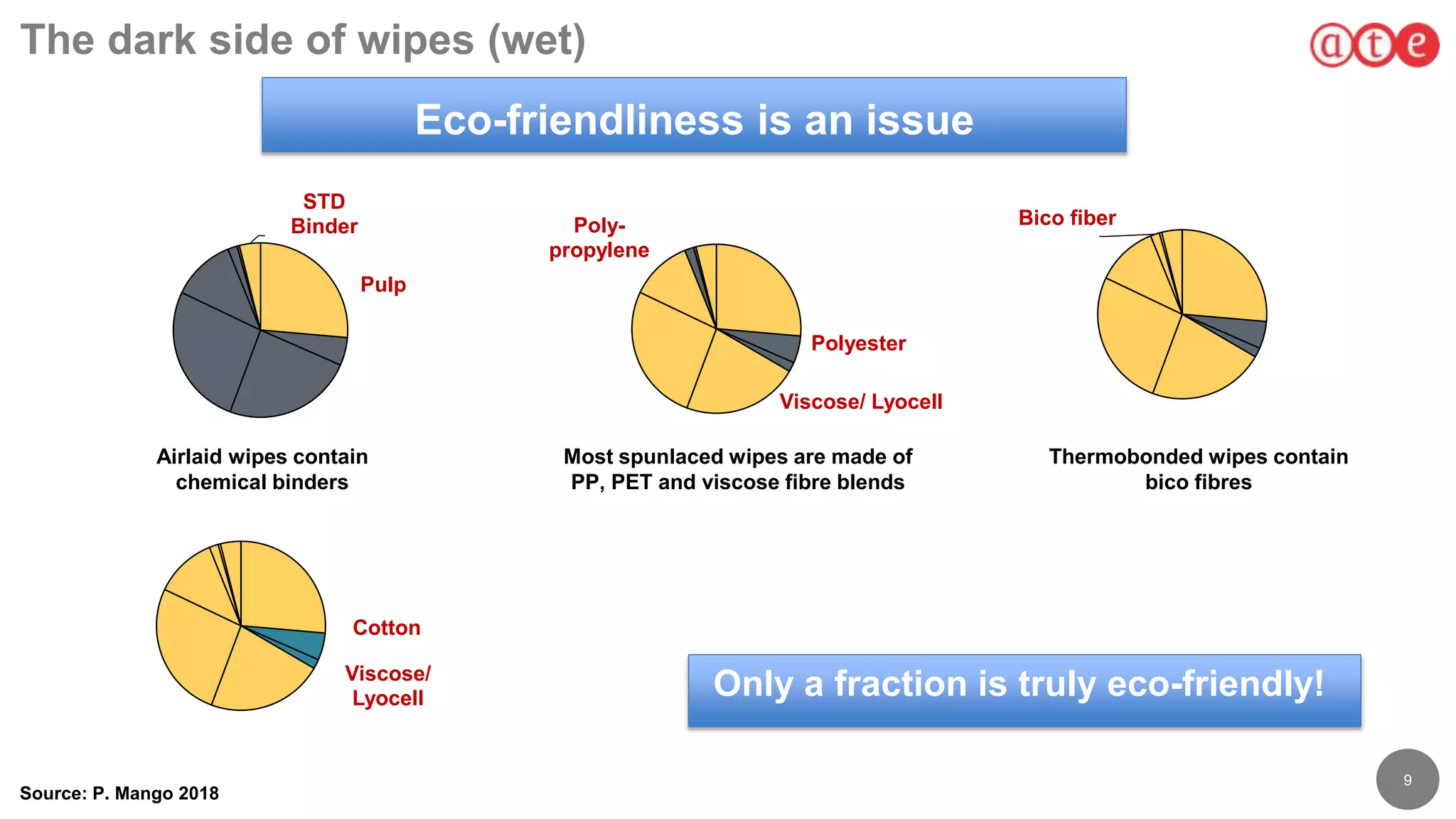
The dark side of wipes (wet)
Eco-friendliness is an issue
Source: P. Mango 2018
Airlaid wipes contain
chemical binders
Most spunlaced wipes are made of
PP, PET and viscose fibre blends
Viscose/ Lyocell
Polyester
Poly-
propylene
Only a fraction is truly eco-friendly!
Thermobonded wipes contain
bico fibres
Cotton
Viscose/
Lyocell
Pulp
STD
Binder
10
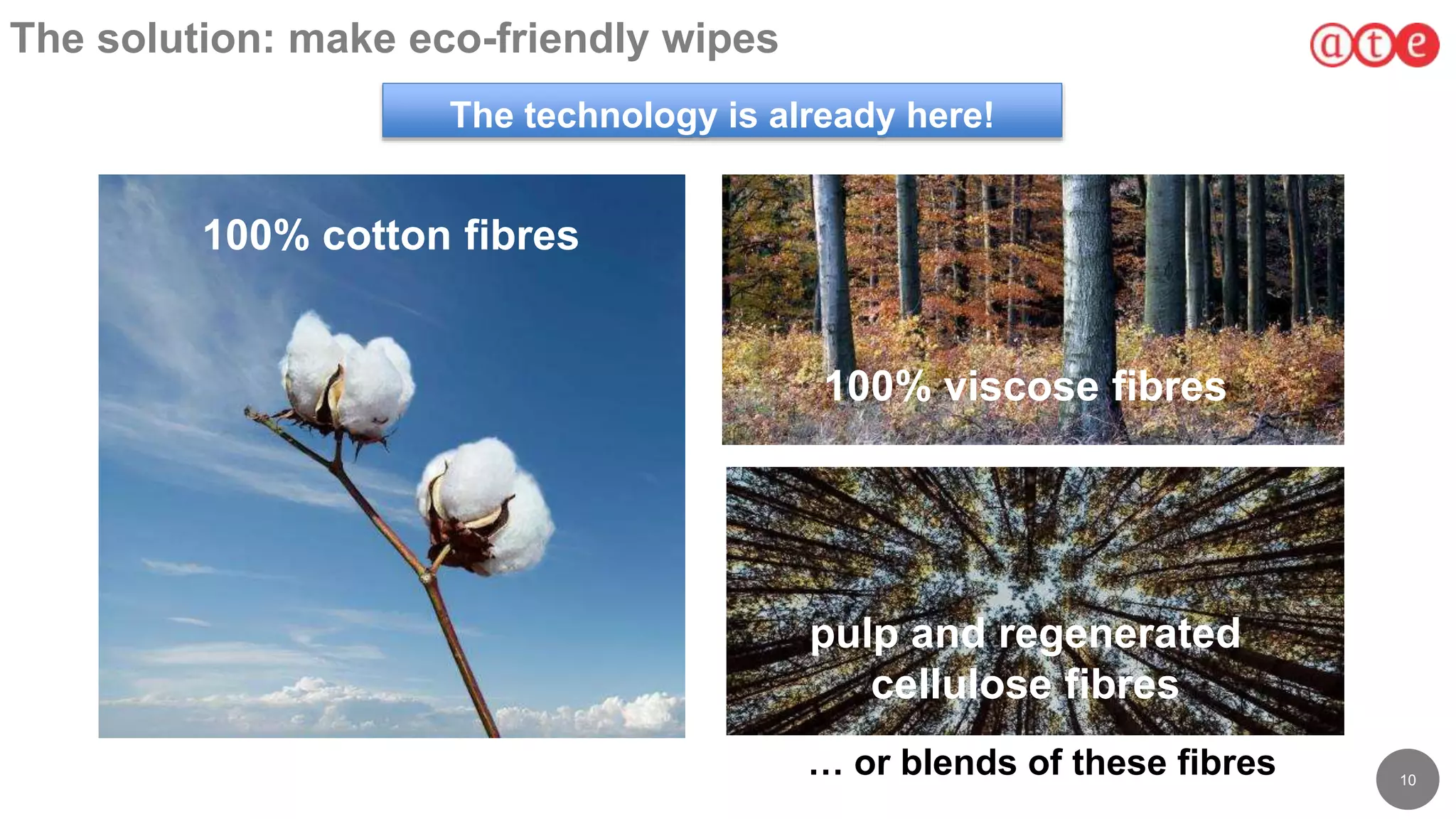
The solution: make eco-friendly wipes
The technology is already here!
100% cotton fibres
100% viscose fibres
pulp and regenerated
cellulose fibres
… or blends of these fibres
11
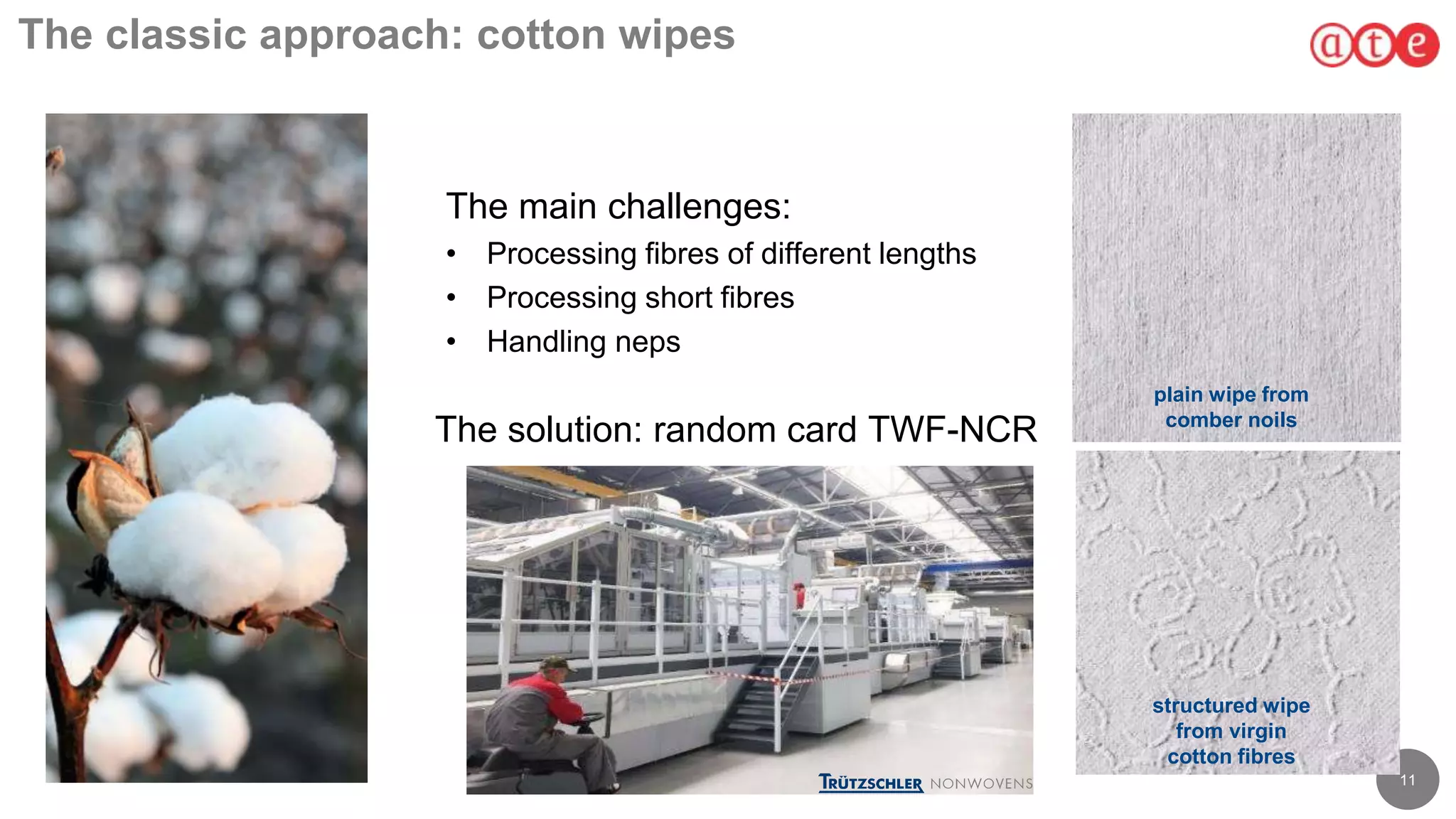
The classic approach: cotton wipes
The main challenges:
• Processing fibres of different lengths
• Processing short fibres
• Handling neps
plain wipe from
comber noils
structured wipe
from virgin
cotton fibres
The solution: random card TWF-NCR
12
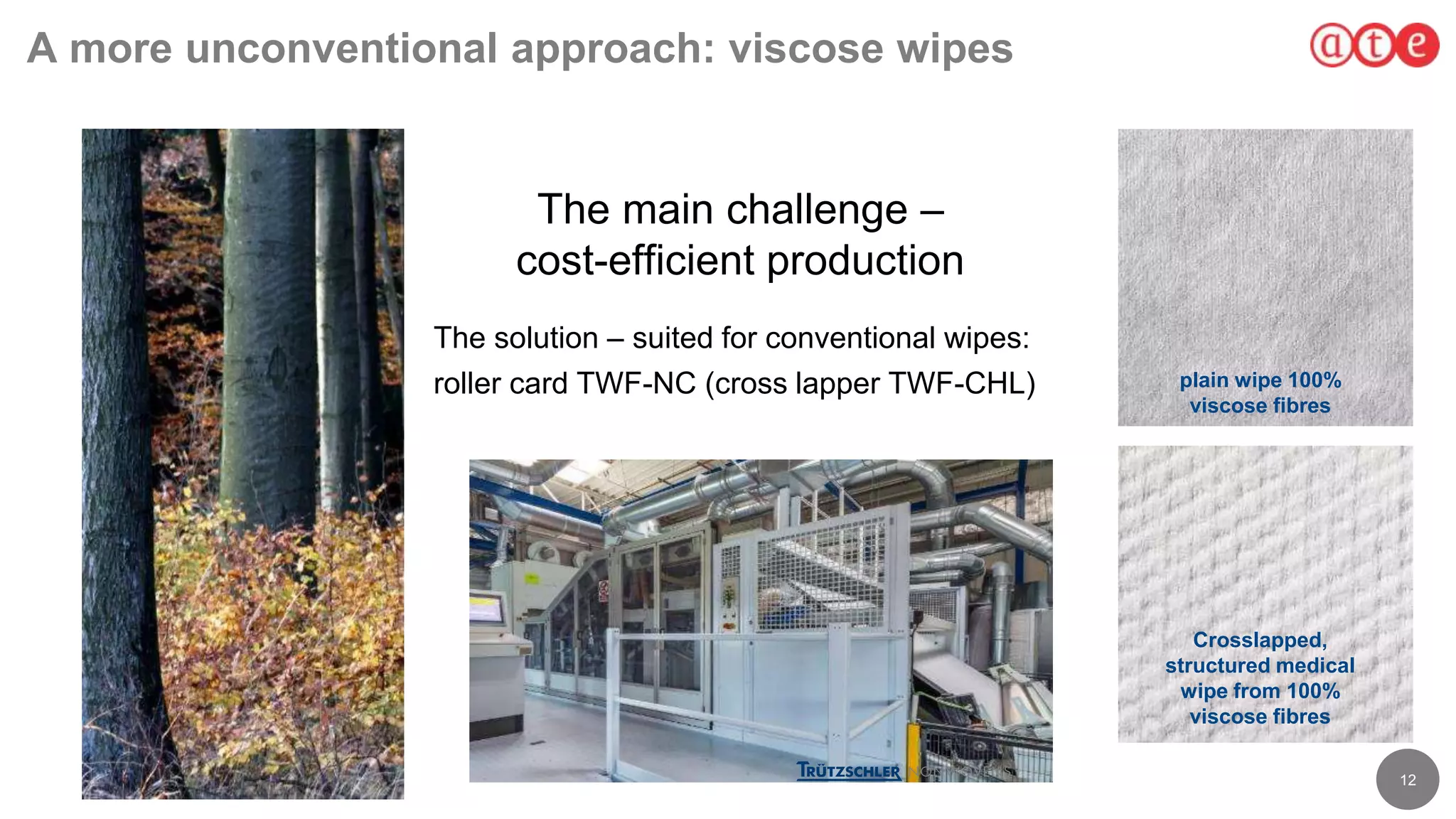
A more unconventional approach: viscose wipes
The main challenge –
cost-efficient production
The solution – suited for conventional wipes:
roller card TWF-NC (cross lapper TWF-CHL) plain wipe 100%
viscose fibres
Crosslapped,
structured medical
wipe from 100%
viscose fibres
13
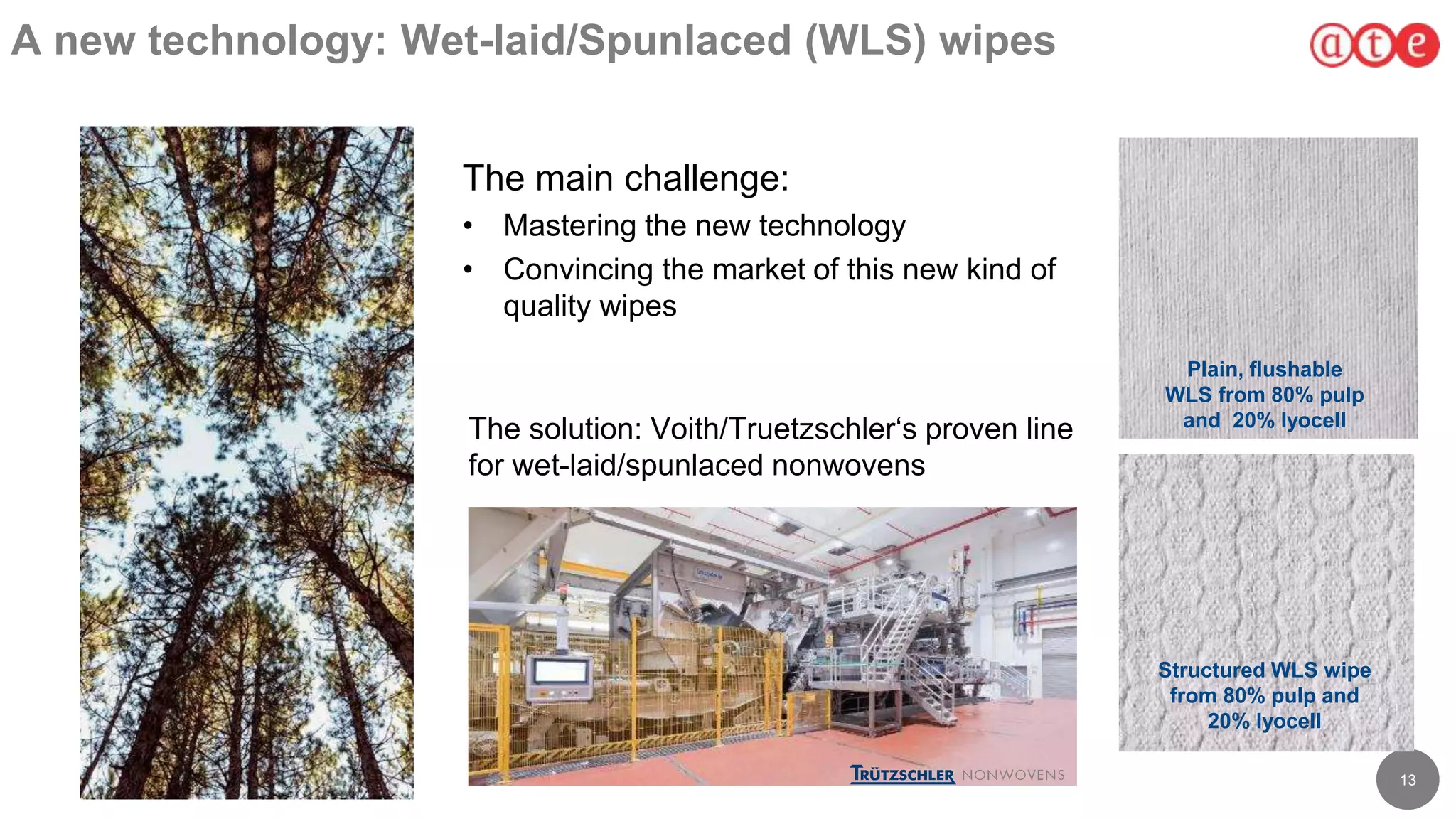
A new technology: Wet-laid/Spunlaced (WLS) wipes
The main challenge:
• Mastering the new technology
• Convincing the market of this new kind of
quality wipes
The solution: Voith/Truetzschler‘s proven line
for wet-laid/spunlaced nonwovens
Plain, flushable
WLS from 80% pulp
and 20% lyocell
Structured WLS wipe
from 80% pulp and
20% lyocell
1414
14
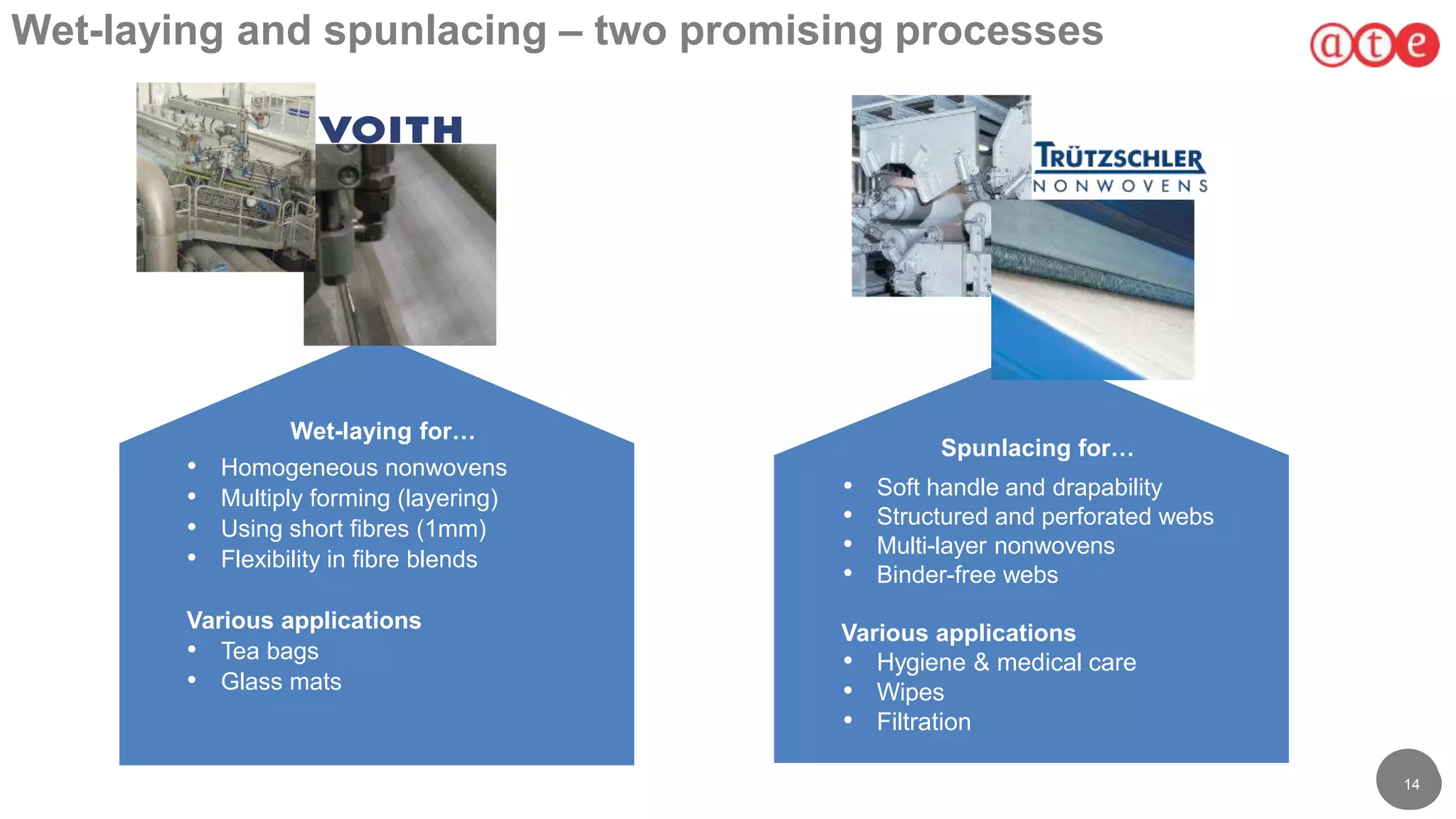
Wet-laying and spunlacing – two promising processes
Wet-laying for…
• Homogeneous nonwovens
• Multiply forming (layering)
• Using short fibres (1mm)
• Flexibility in fibre blends
Various applications
• Tea bags
• Glass mats
Spunlacing for…
• Soft handle and drapability
• Structured and perforated webs
• Multi-layer nonwovens
• Binder-free webs
Various applications
• Hygiene & medical care
• Wipes
• Filtration
15
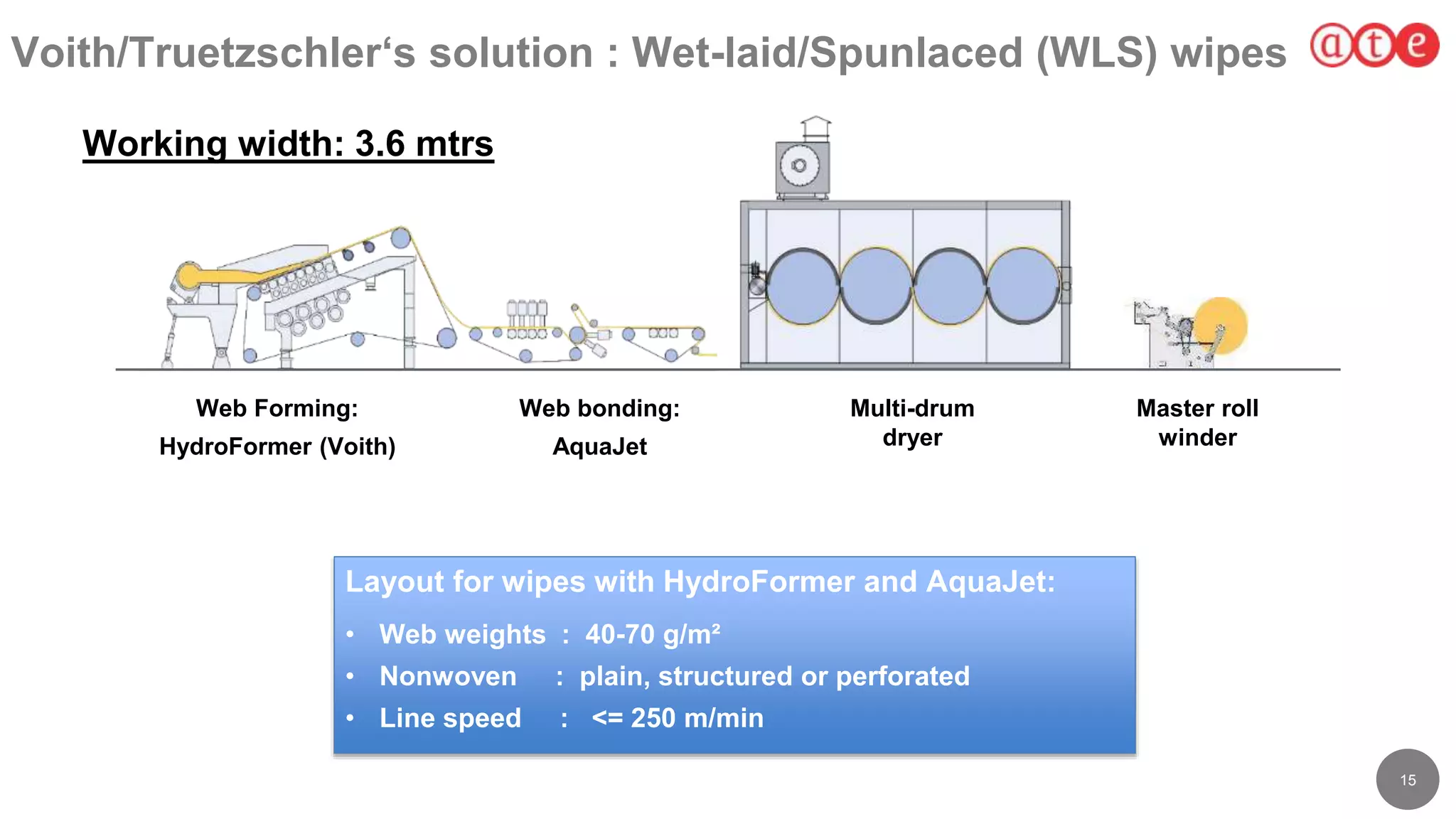
Voith/Truetzschler‘s solution : Wet-laid/Spunlaced (WLS) wipes
Working width: 3.6 mtrs
Layout for wipes with HydroFormer and AquaJet:
• Web weights : 40-70 g/m²
• Nonwoven : plain, structured or perforated
• Line speed : <= 250 m/min
Web Forming:
HydroFormer (Voith)
Web bonding:
AquaJet
Multi-drum
dryer
Master roll
winder
1616
16
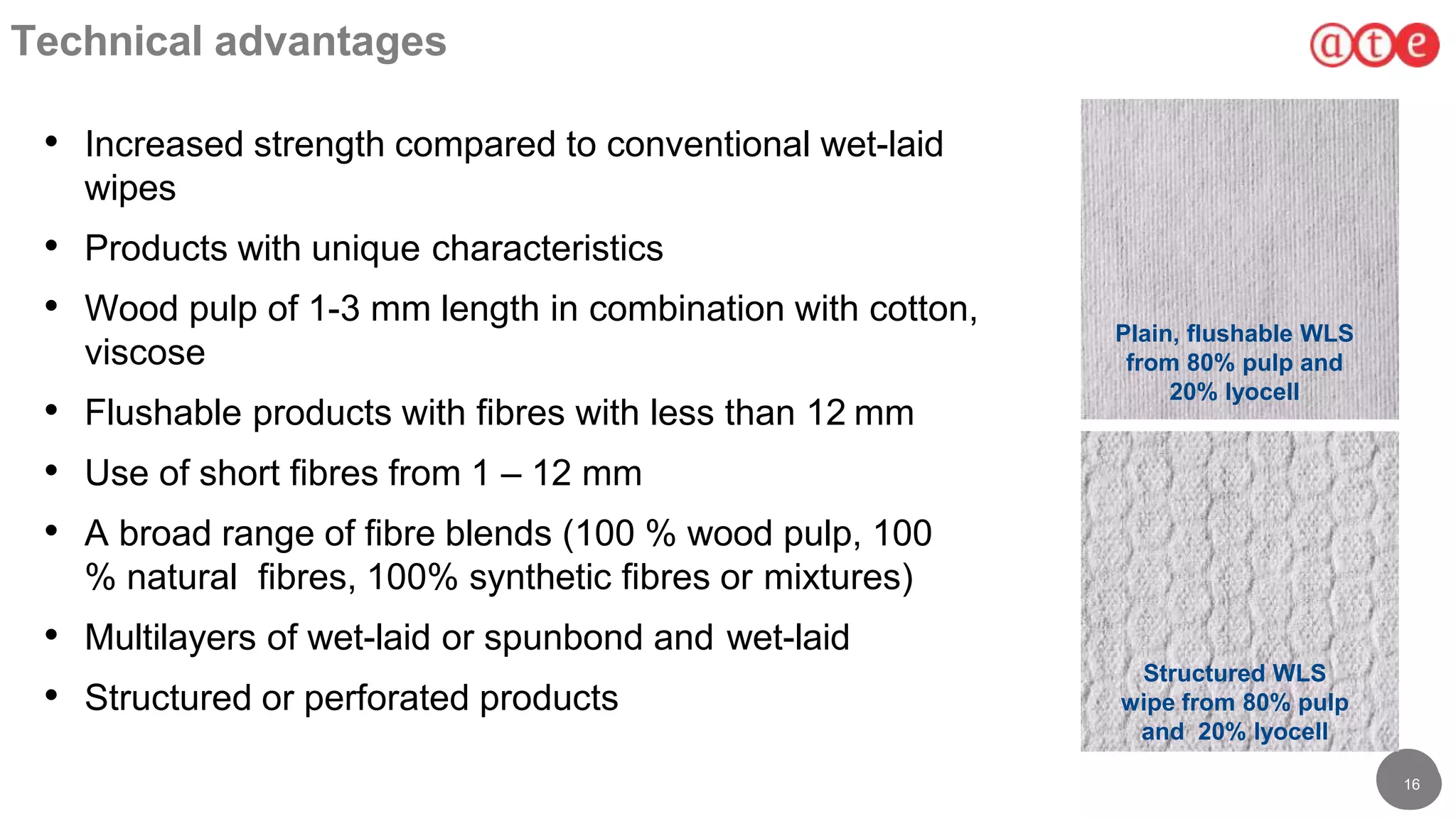
Technical advantages
• Increased strength compared to conventional wet-laid
wipes
• Products with unique characteristics
• Wood pulp of 1-3 mm length in combination with cotton,
viscose
• Flushable products with fibres with less than 12 mm
• Use of short fibres from 1 – 12 mm
• A broad range of fibre blends (100 % wood pulp, 100
% natural fibres, 100% synthetic fibres or mixtures)
• Multilayers of wet-laid or spunbond and wet-laid
• Structured or perforated products
Plain, flushable WLS
from 80% pulp and
20% lyocell
Structured WLS
wipe from 80% pulp
and 20% lyocell
17
India in the global context
Sustainability is and will be an issue
India has held back imposing a blanket ban on single-use plastics to combat
pollution because alternatives were not immediately available.
India consumes 14 million tonnes of plastics annually
Side effects:
• we are surrounded by micro plastics
• it already entered the food chain: micro plastics is found in foods and drink
• if it enters the human body, it can be one of the causes of cancer
The world:
• 250 million tonnes of plastics are produced every year
• 8 million tonnes of plastics enter the oceans every year
• Over years a high amount crumbles into micro particles (micro plastics)
source: ET
18
The Indian perspective
Do things right from the beginning
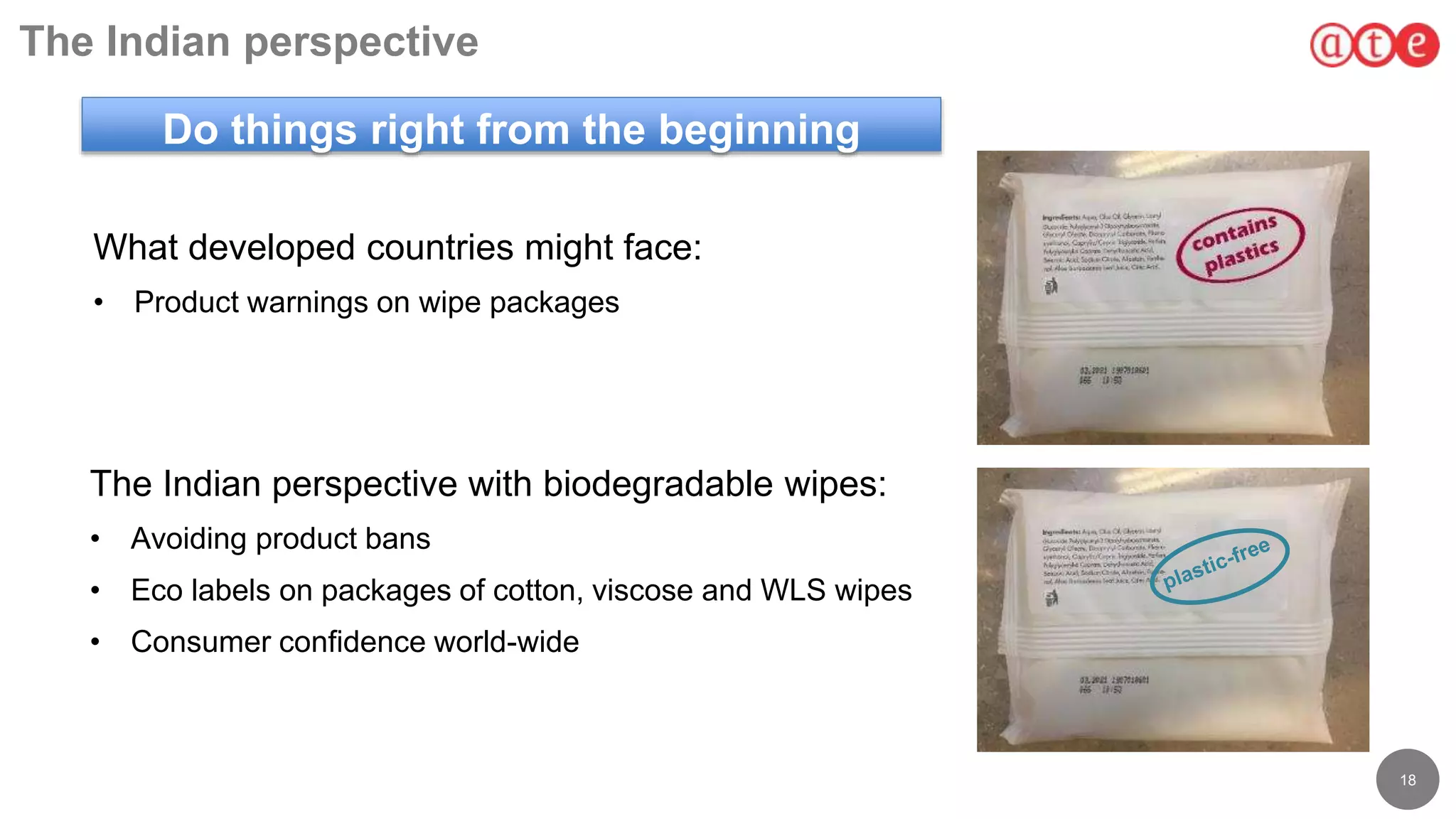
What developed countries might face:
• Product warnings on wipe packages
The Indian perspective with biodegradable wipes:
• Avoiding product bans
• Eco labels on packages of cotton, viscose and WLS wipes
• Consumer confidence world-wide
19
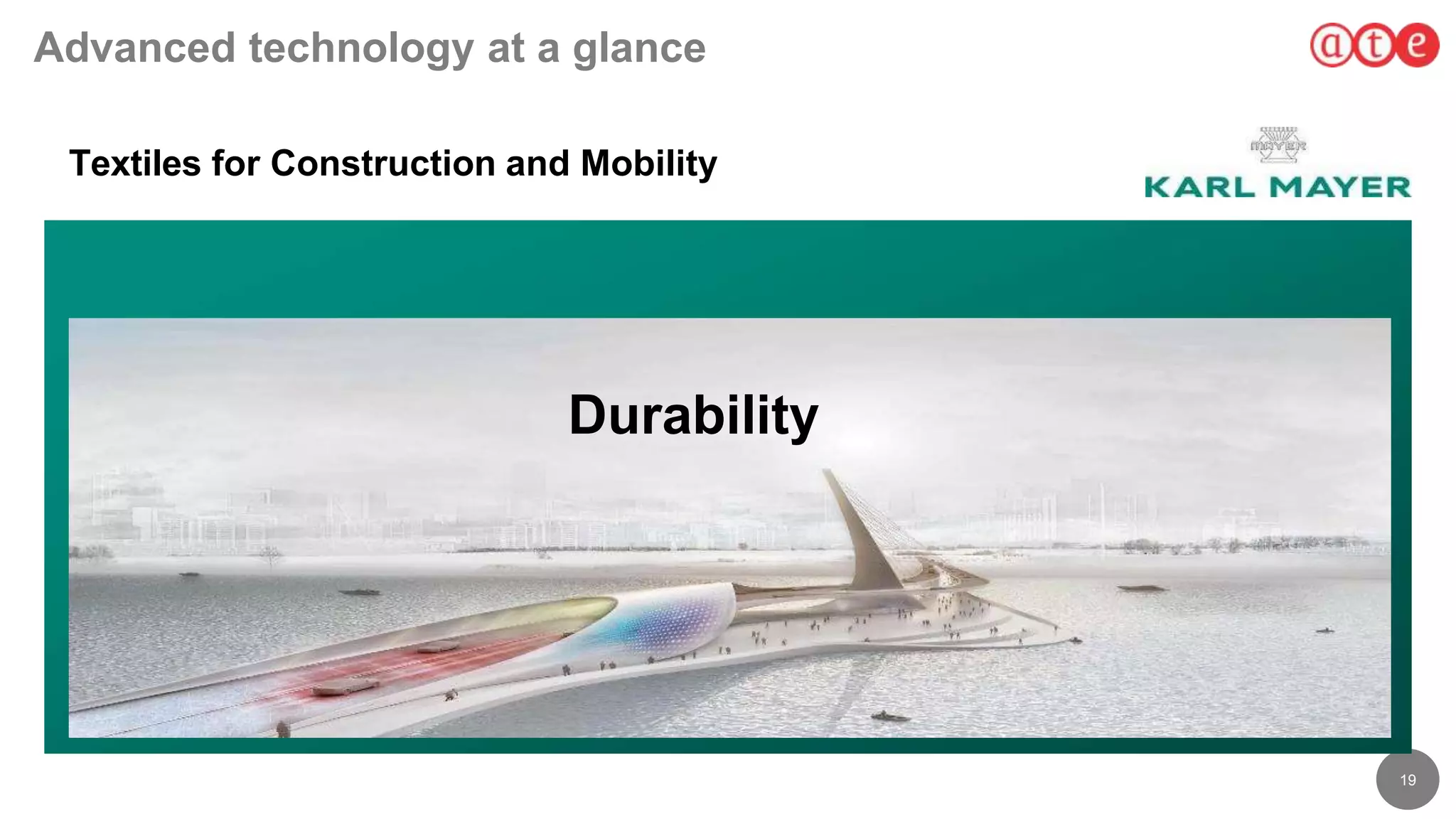
Advanced technology at a glance
Durability
Textiles for Construction and Mobility
20s 2
0
21
2
22
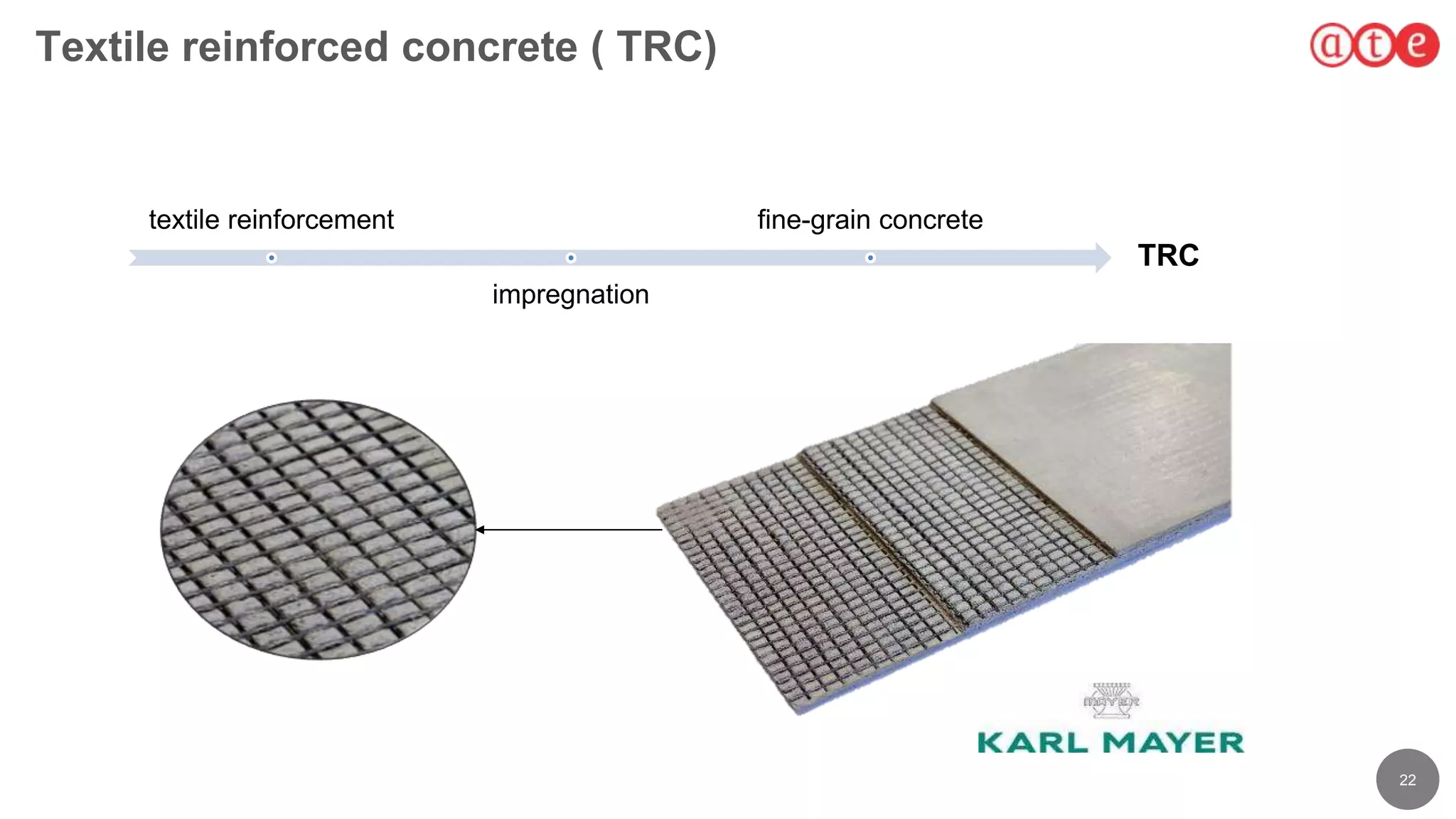
Textile reinforced concrete ( TRC)
textile reinforcement
impregnation
fine-grain concrete
TRC
23
The future of building will be textile made
TRC
0 A.D.
pop. 0.2 billion
opus caementicium
1850
pop. 1.2 billion
reinforced concrete
2017
pop. 7.5 billion
carbon concrete
5 N/mm² 500 N/mm²
tensile strength of reinforcement
2500 N/mm²
tensile strength of reinforcement
8 BN
m²/a
24x
efficiency
>5x
durability
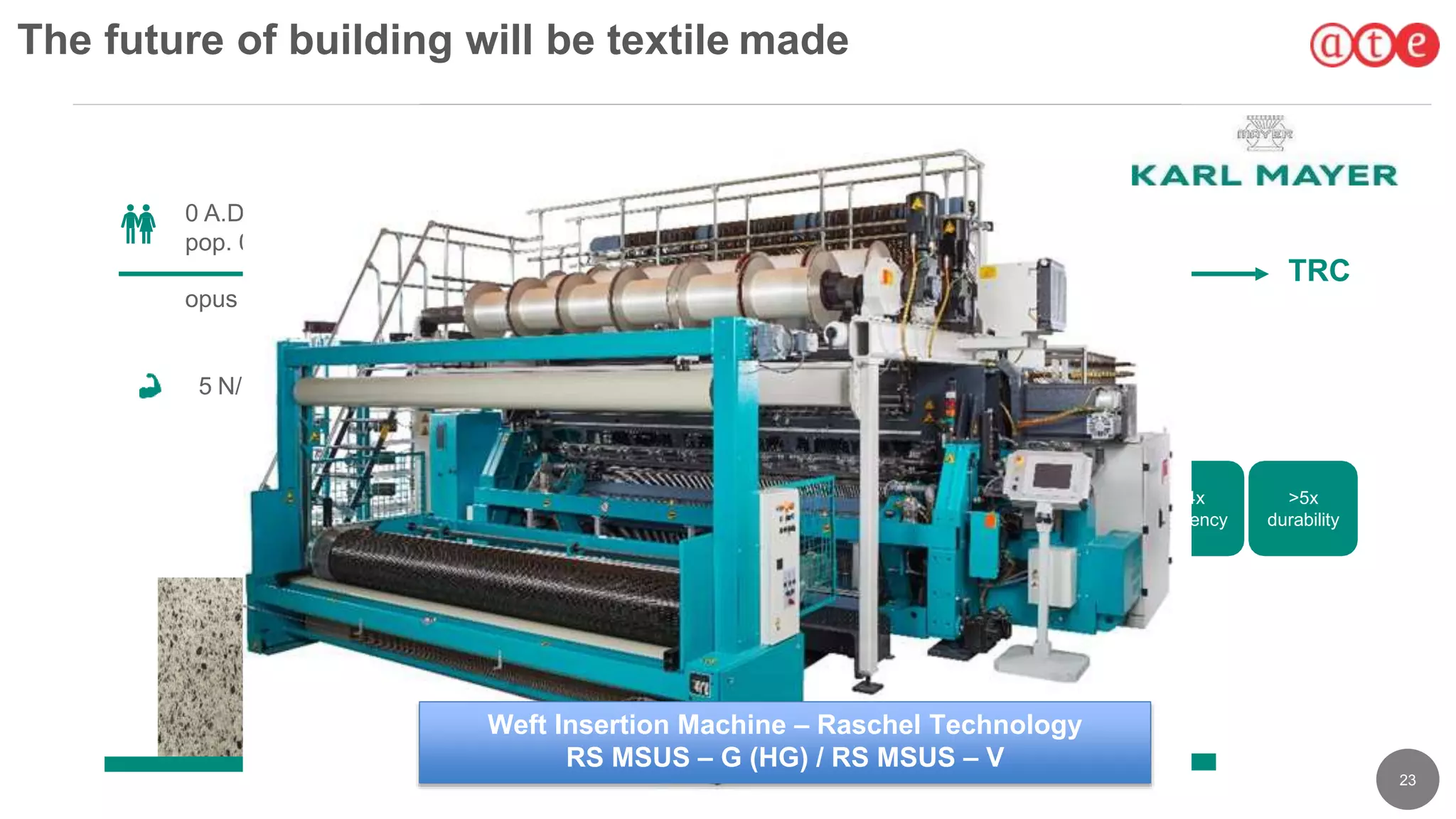
Weft Insertion Machine – Raschel Technology
RS MSUS – G (HG) / RS MSUS – V
24
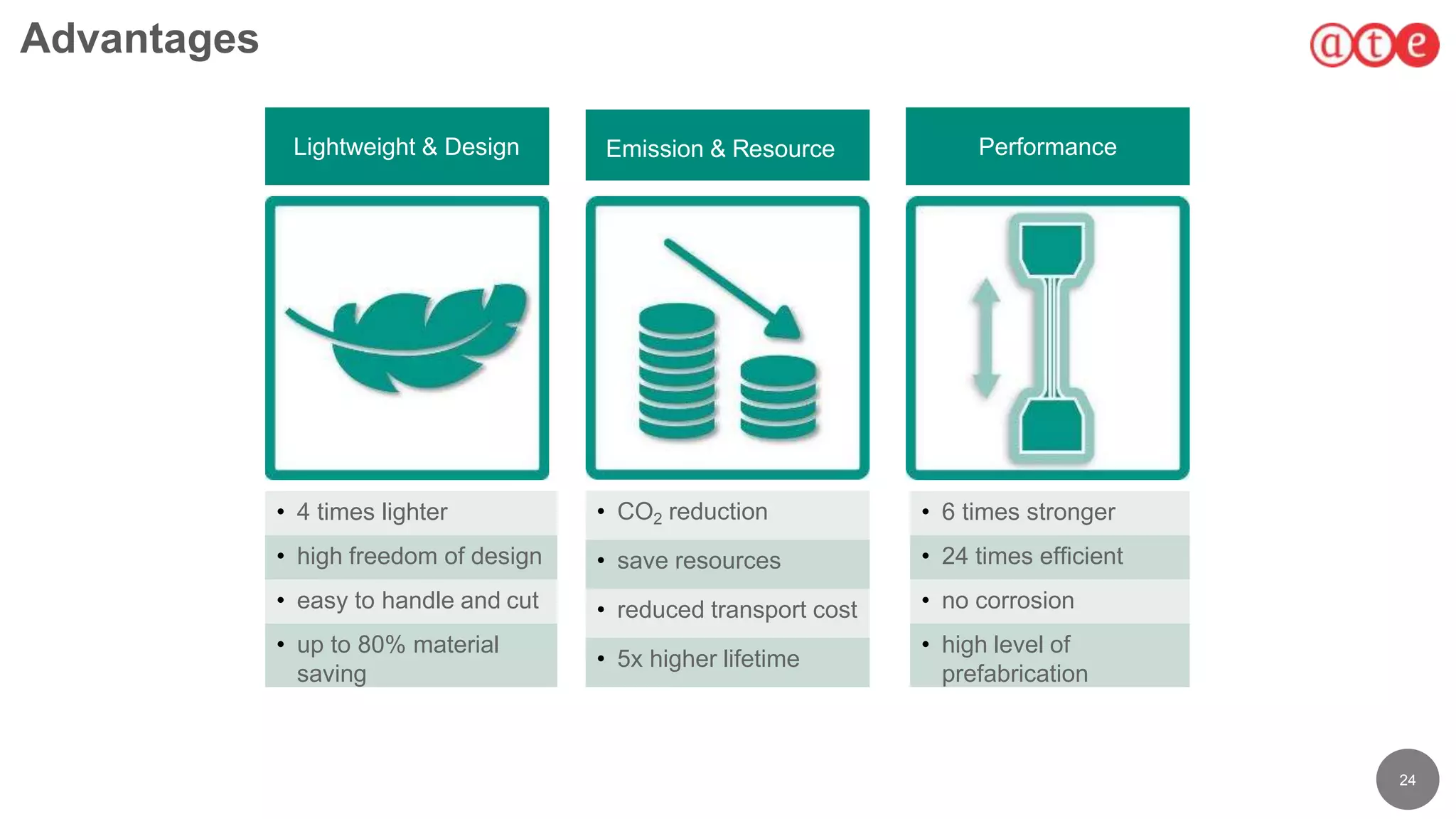
Advantages
Lightweight & Design Emission & Resource Performance
• 4 times lighter
• high freedom of design
• easy to handle and cut
• up to 80% material
saving
• 6 times stronger
• 24 times efficient
• no corrosion
• high level of
prefabrication
• CO2 reduction
• save resources
• reduced transport cost
• 5x higher lifetime
25
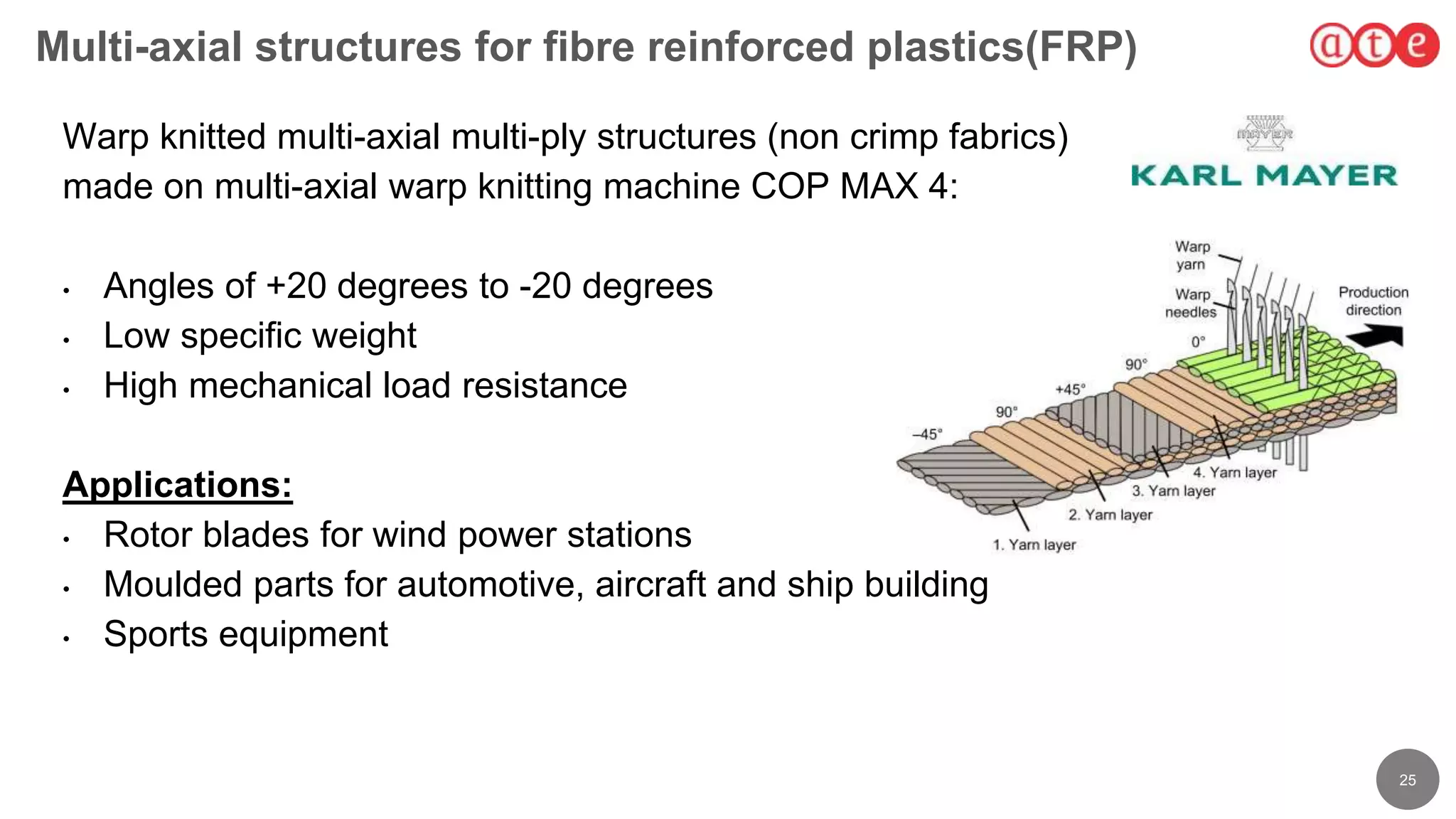
Warp knitted multi-axial multi-ply structures (non crimp fabrics)
made on multi-axial warp knitting machine COP MAX 4:
• Angles of +20 degrees to -20 degrees
• Low specific weight
• High mechanical load resistance
Applications:
• Rotor blades for wind power stations
• Moulded parts for automotive, aircraft and ship building
• Sports equipment
Multi-axial structures for fibre reinforced plastics(FRP)
26
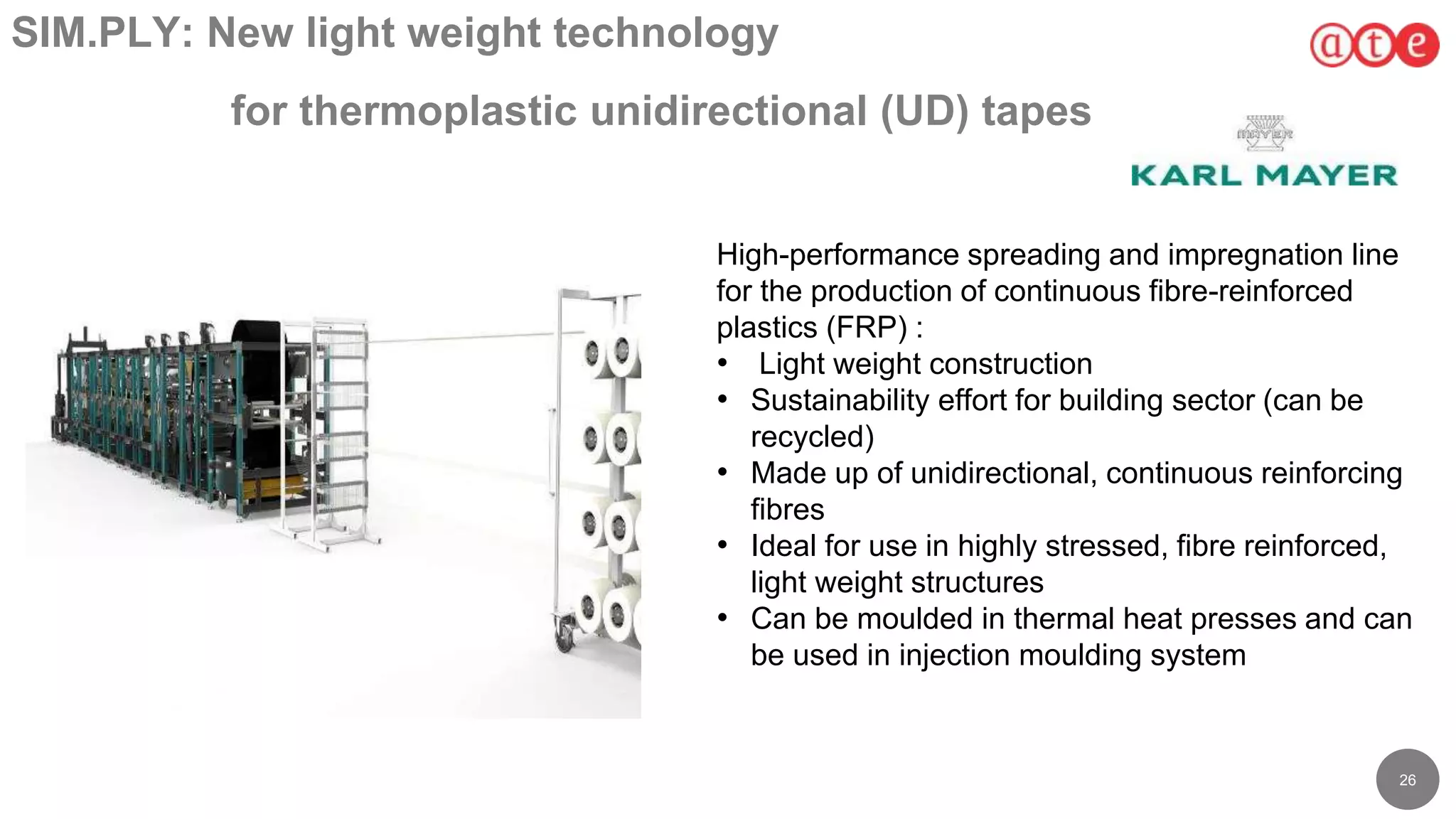
SIM.PLY: New light weight technology
for thermoplastic unidirectional (UD) tapes
High-performance spreading and impregnation line
for the production of continuous fibre-reinforced
plastics (FRP) :
• Light weight construction
• Sustainability effort for building sector (can be
recycled)
• Made up of unidirectional, continuous reinforcing
fibres
• Ideal for use in highly stressed, fibre reinforced,
light weight structures
• Can be moulded in thermal heat presses and can
be used in injection moulding system
27
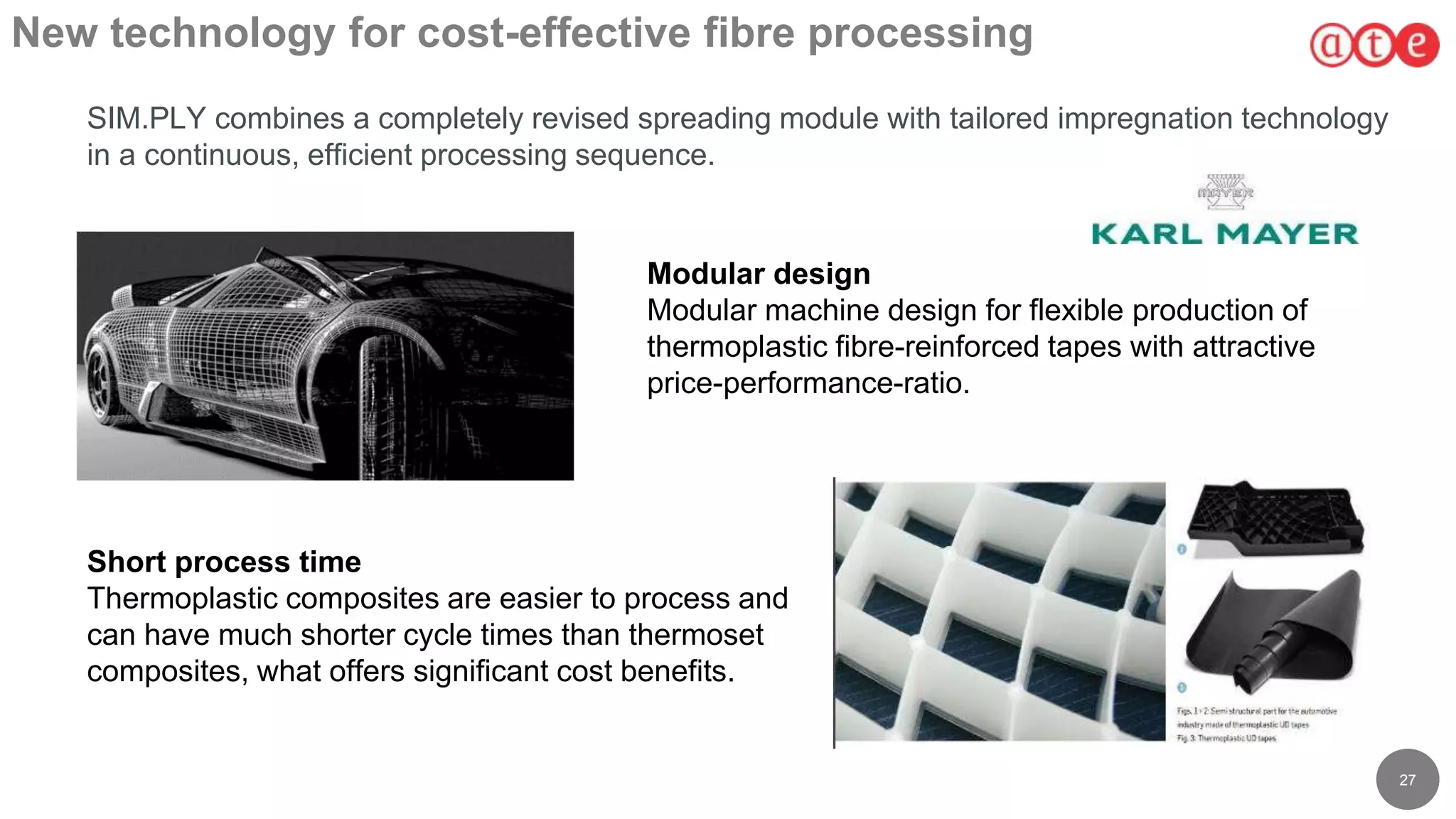
New technology for cost-effective fibre processing
SIM.PLY combines a completely revised spreading module with tailored impregnation technology
in a continuous, efficient processing sequence.
Modular design
Modular machine design for flexible production of
thermoplastic fibre-reinforced tapes with attractive
price-performance-ratio.
Short process time
Thermoplastic composites are easier to process and
can have much shorter cycle times than thermoset
composites, what offers significant cost benefits.
28
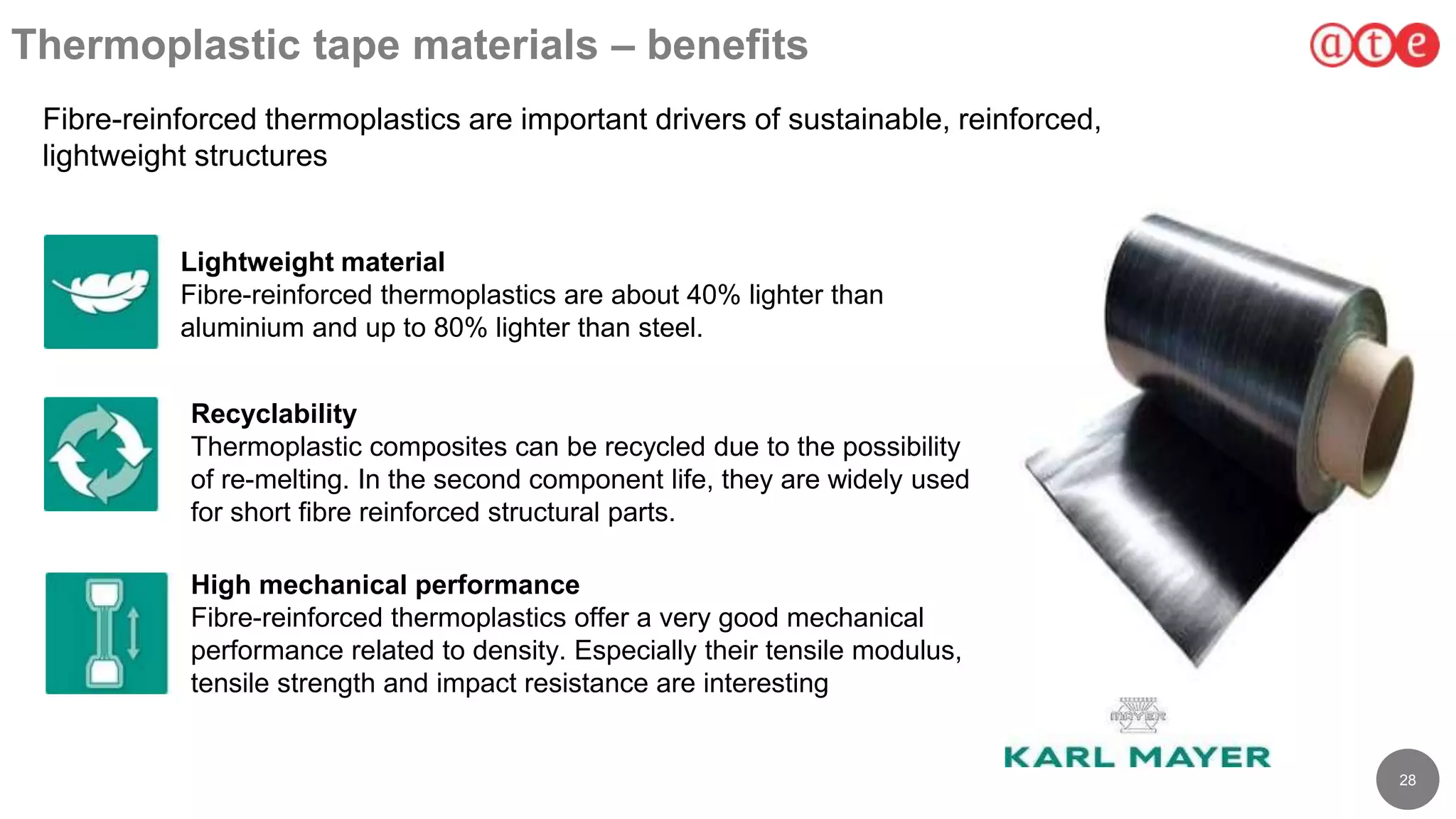
Thermoplastic tape materials – benefits
Fibre-reinforced thermoplastics are important drivers of sustainable, reinforced,
lightweight structures
Lightweight material
Fibre-reinforced thermoplastics are about 40% lighter than
aluminium and up to 80% lighter than steel.
Recyclability
Thermoplastic composites can be recycled due to the possibility
of re-melting. In the second component life, they are widely used
for short fibre reinforced structural parts.
High mechanical performance
Fibre-reinforced thermoplastics offer a very good mechanical
performance related to density. Especially their tensile modulus,
tensile strength and impact resistance are interesting
29
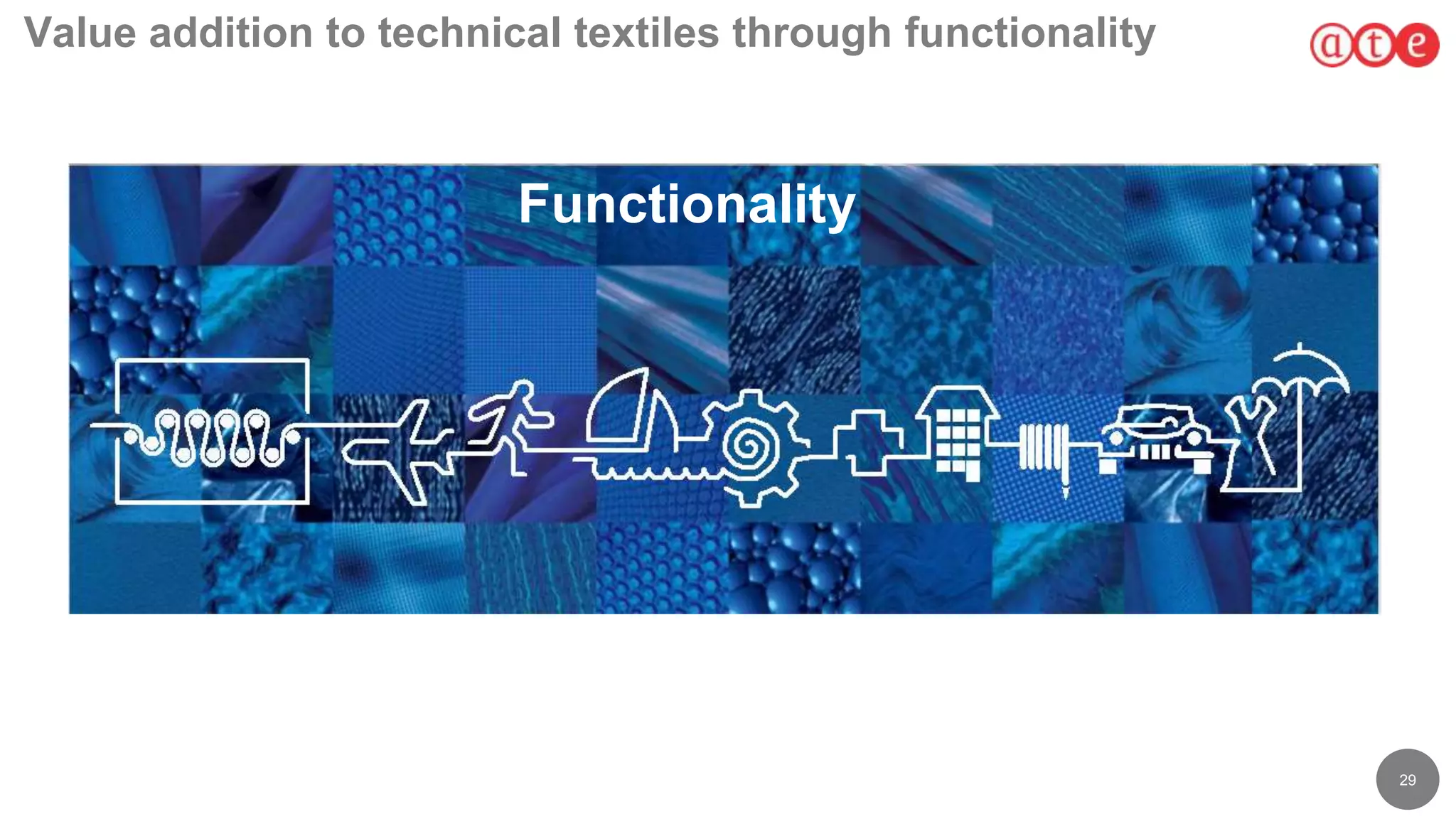
Value addition to technical textiles through functionality
Functionality
30
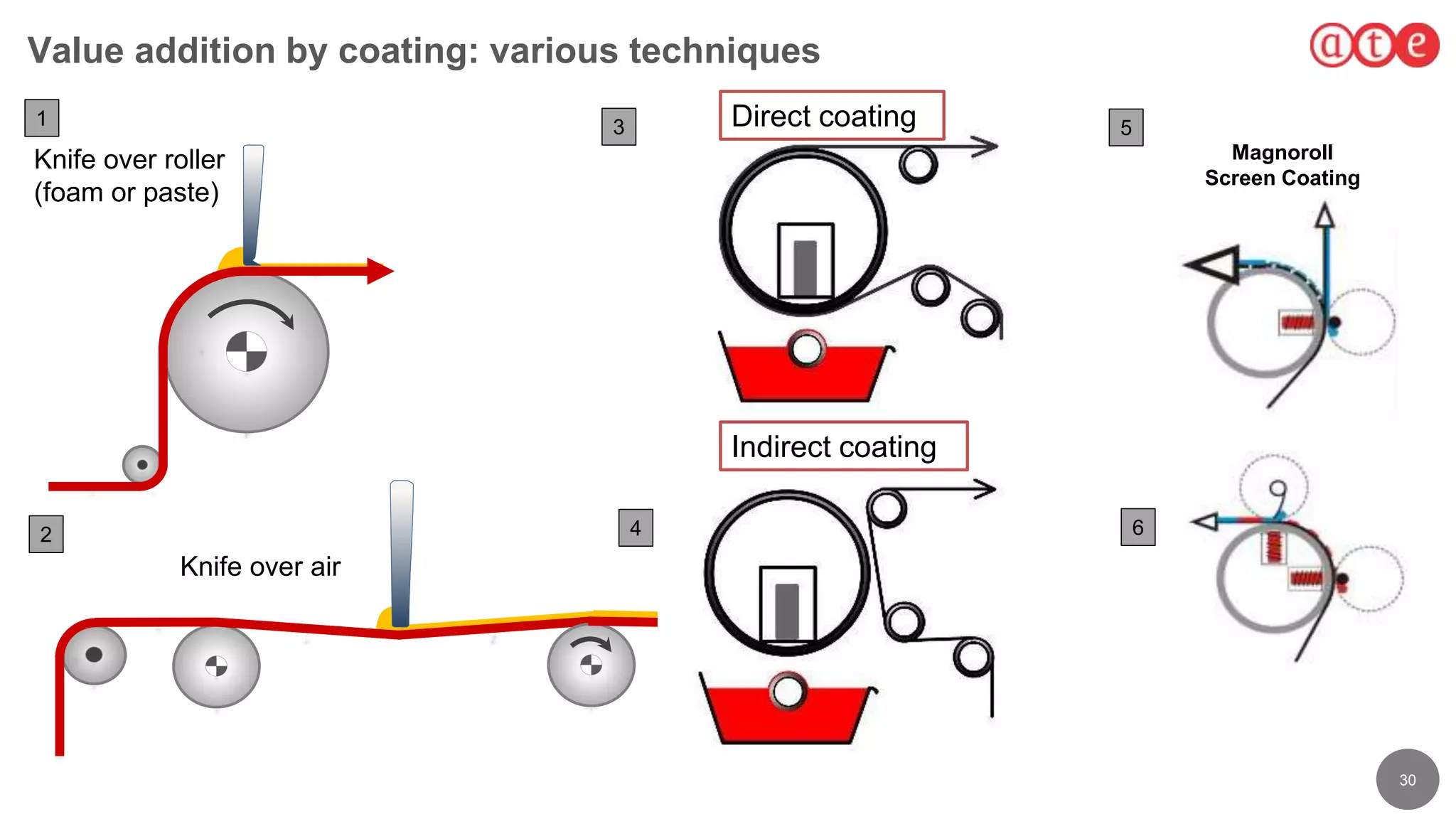
Value addition by coating: various techniques
Knife over roller
(foam or paste)
Knife over air
Magnoroll
Screen Coating
Direct coating
Indirect coating
1
2
3
4
5
6
3131
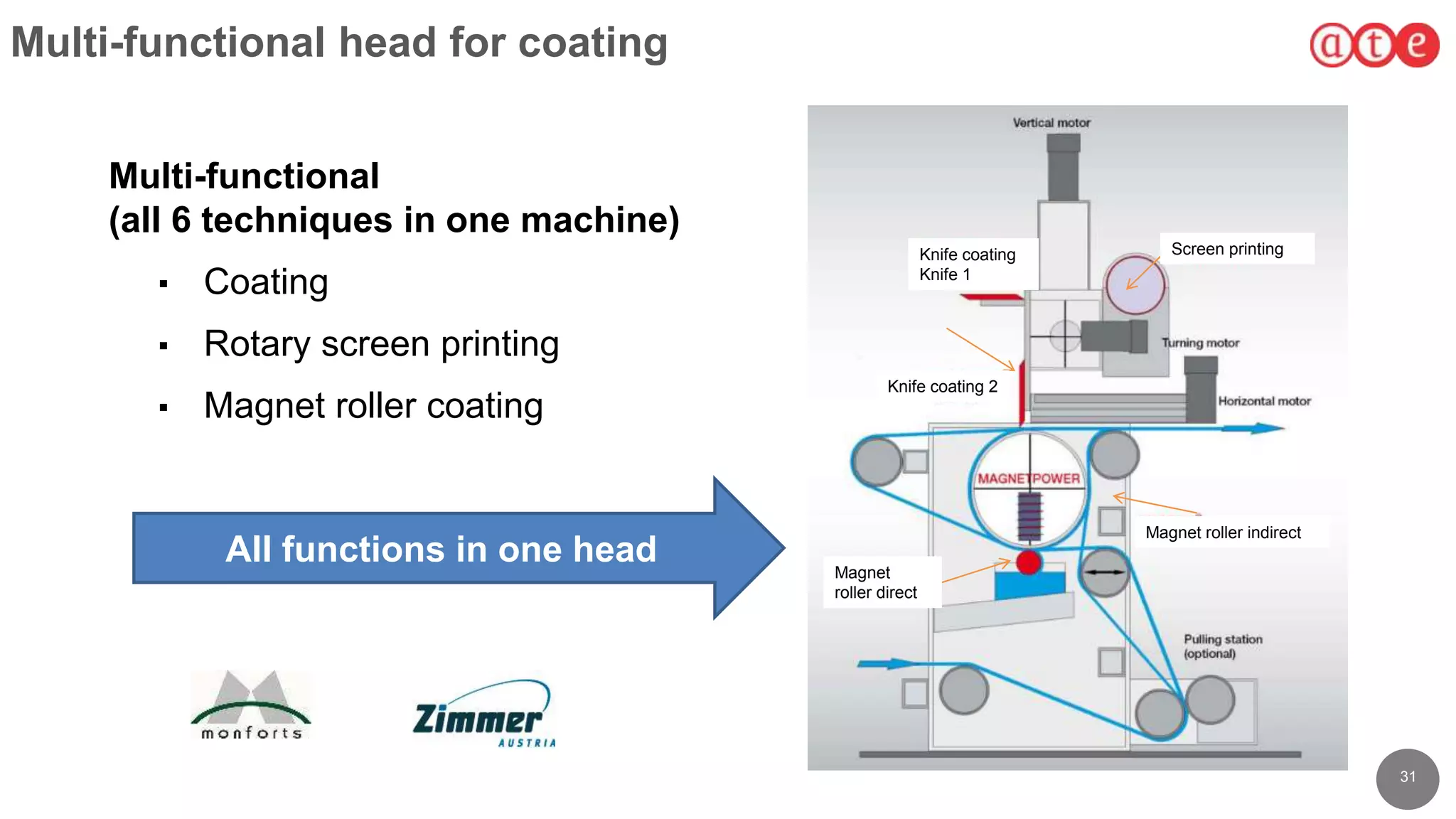
Multi-functional head for coating
Multi-functional
(all 6 techniques in one machine)
▪ Coating
▪ Rotary screen printing
▪ Magnet roller coating
Screen printingKnife coating
Knife 1
Knife coating 2
Magnet roller indirect
Magnet
roller direct
All functions in one head
3232
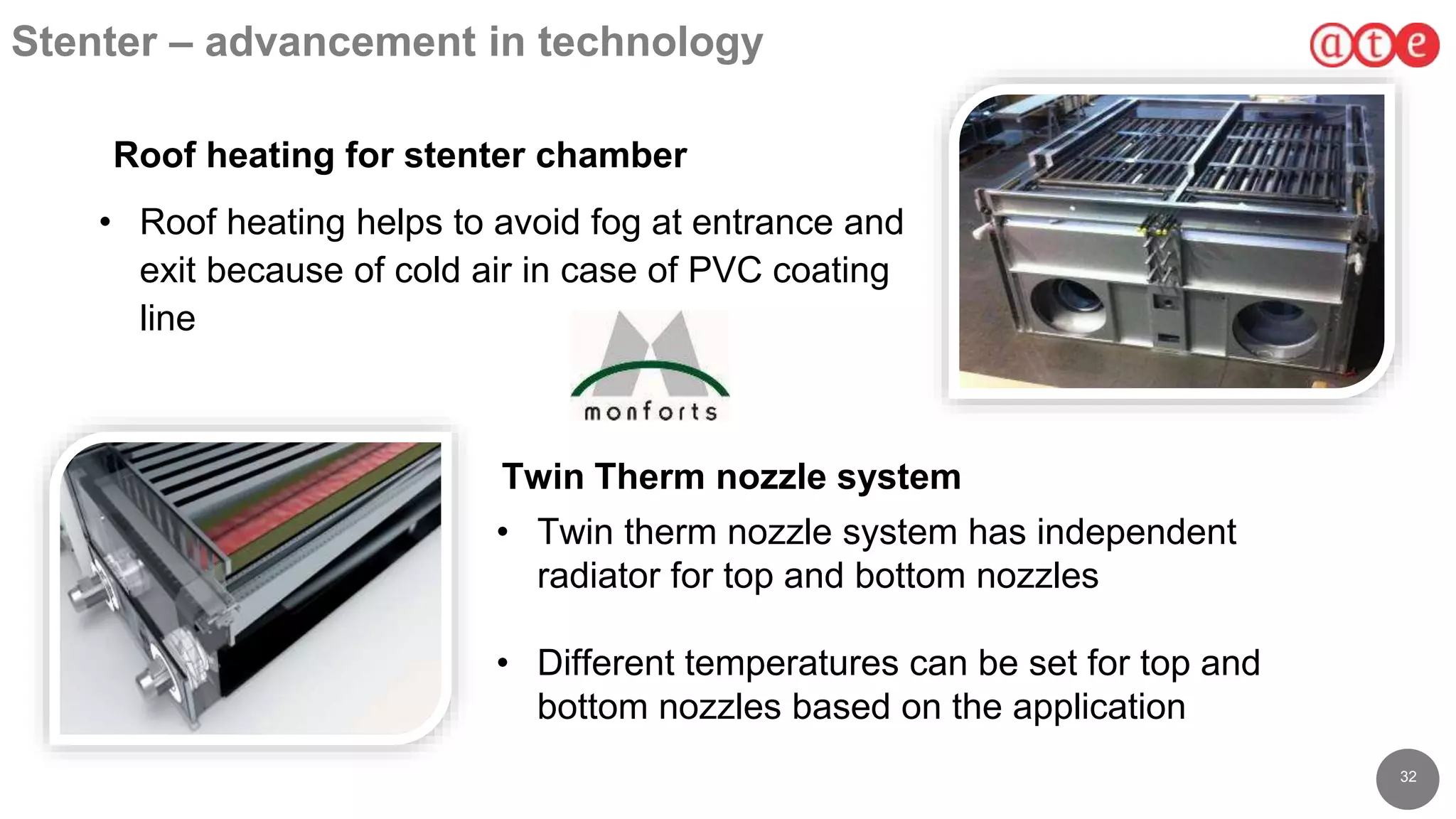
Stenter – advancement in technology
• Roof heating helps to avoid fog at entrance and
exit because of cold air in case of PVC coating
line
Roof heating for stenter chamber
Twin Therm nozzle system
• Twin therm nozzle system has independent
radiator for top and bottom nozzles
• Different temperatures can be set for top and
bottom nozzles based on the application
33
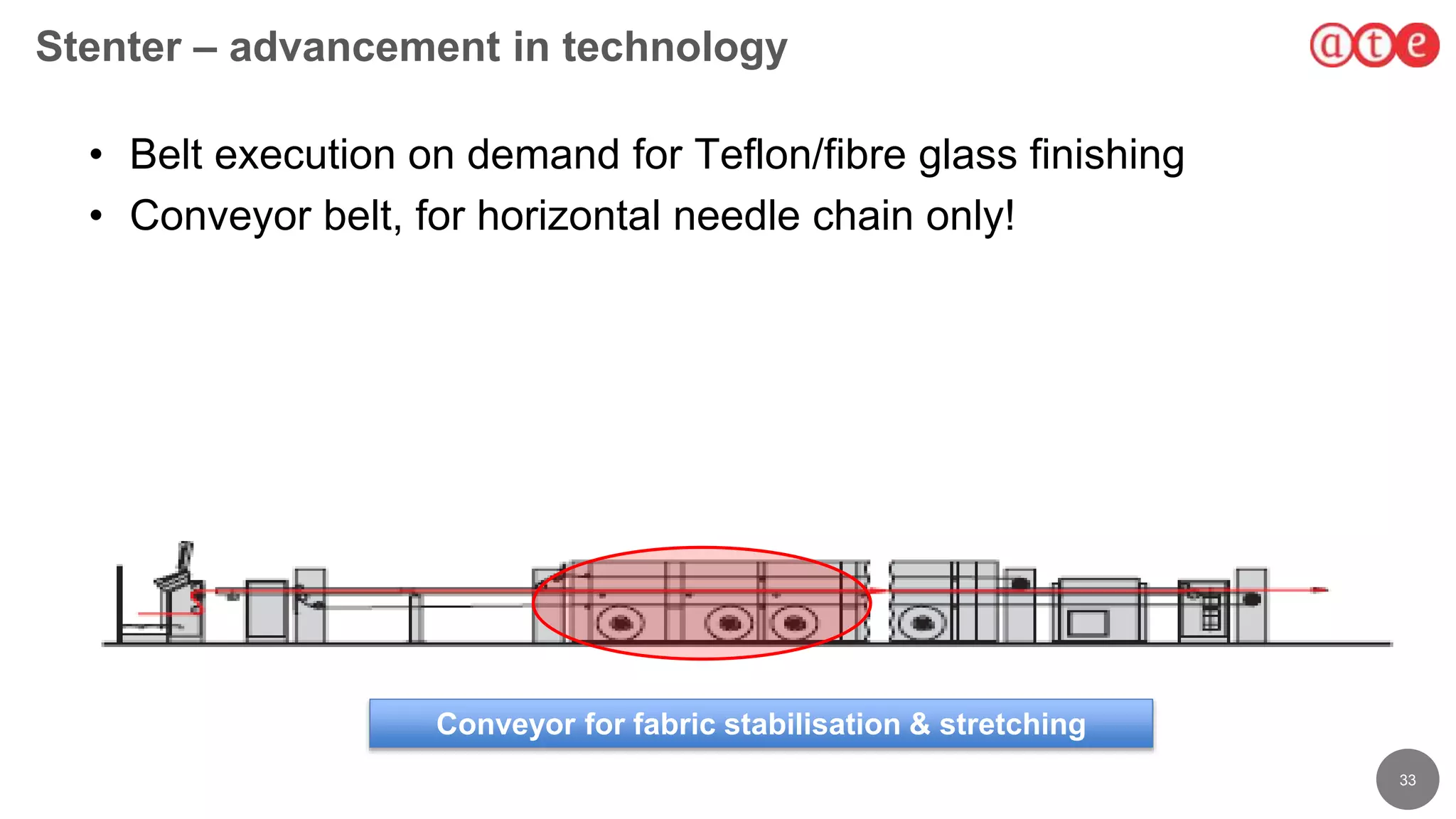
Stenter – advancement in technology
Conveyor for fabric stabilisation & stretching
• Belt execution on demand for Teflon/fibre glass finishing
• Conveyor belt, for horizontal needle chain only!
34
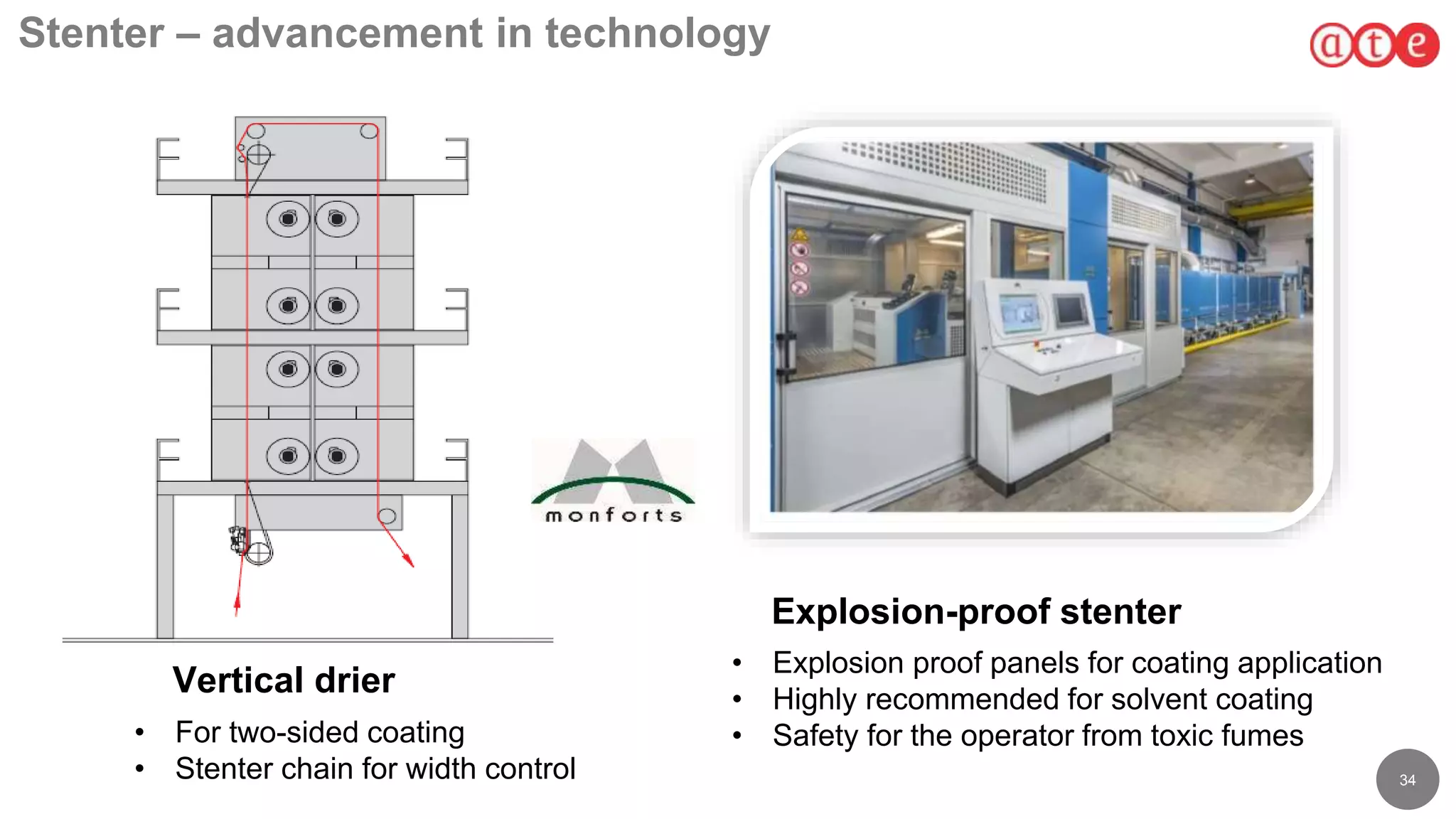
Stenter – advancement in technology
Vertical drier
• For two-sided coating
• Stenter chain for width control
Explosion-proof stenter
• Explosion proof panels for coating application
• Highly recommended for solvent coating
• Safety for the operator from toxic fumes
35
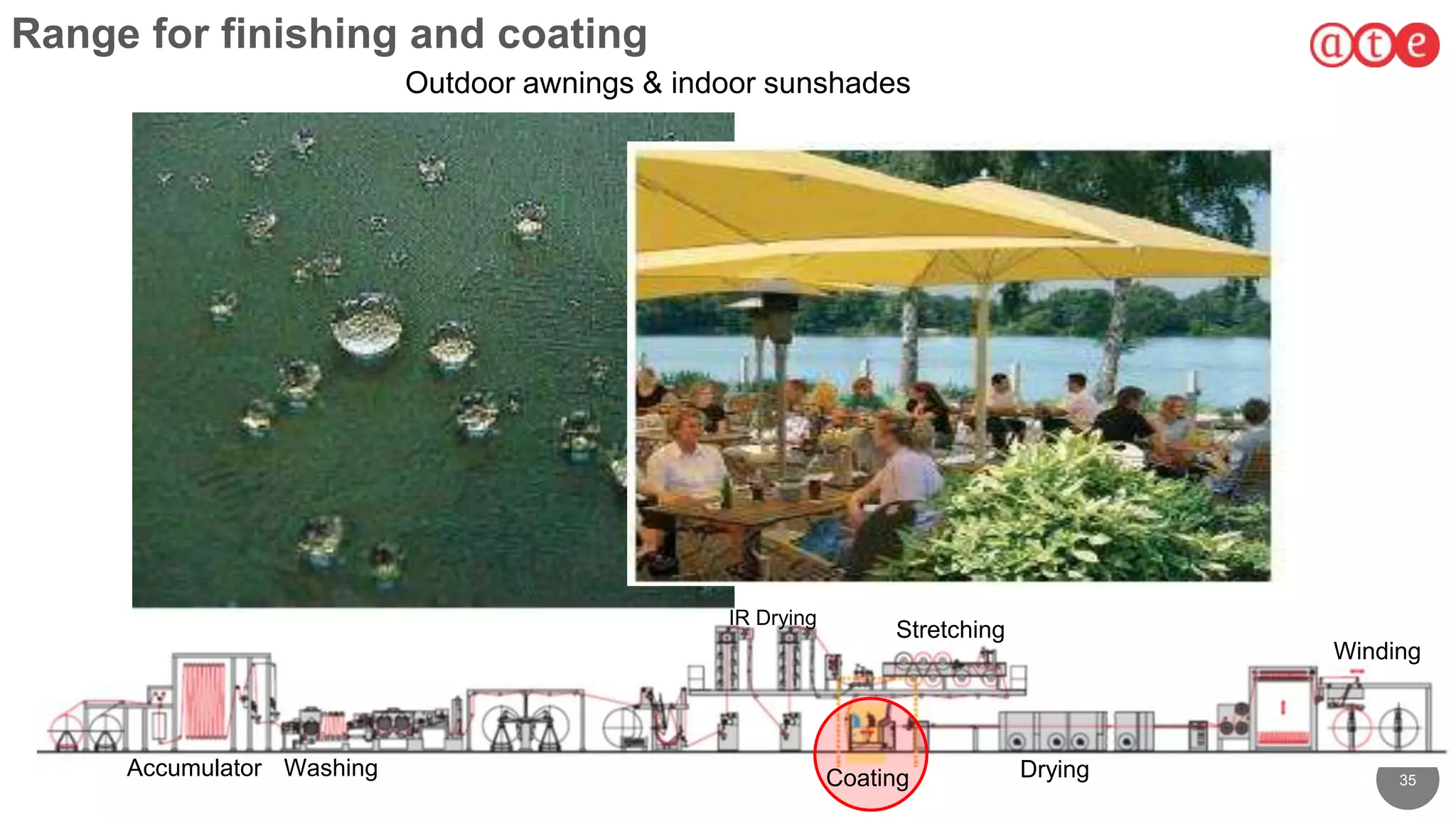
Range for finishing and coating
Outdoor awnings & indoor sunshades
Accumulator Washing Coating Drying
Stretching
Winding
IR Drying
36
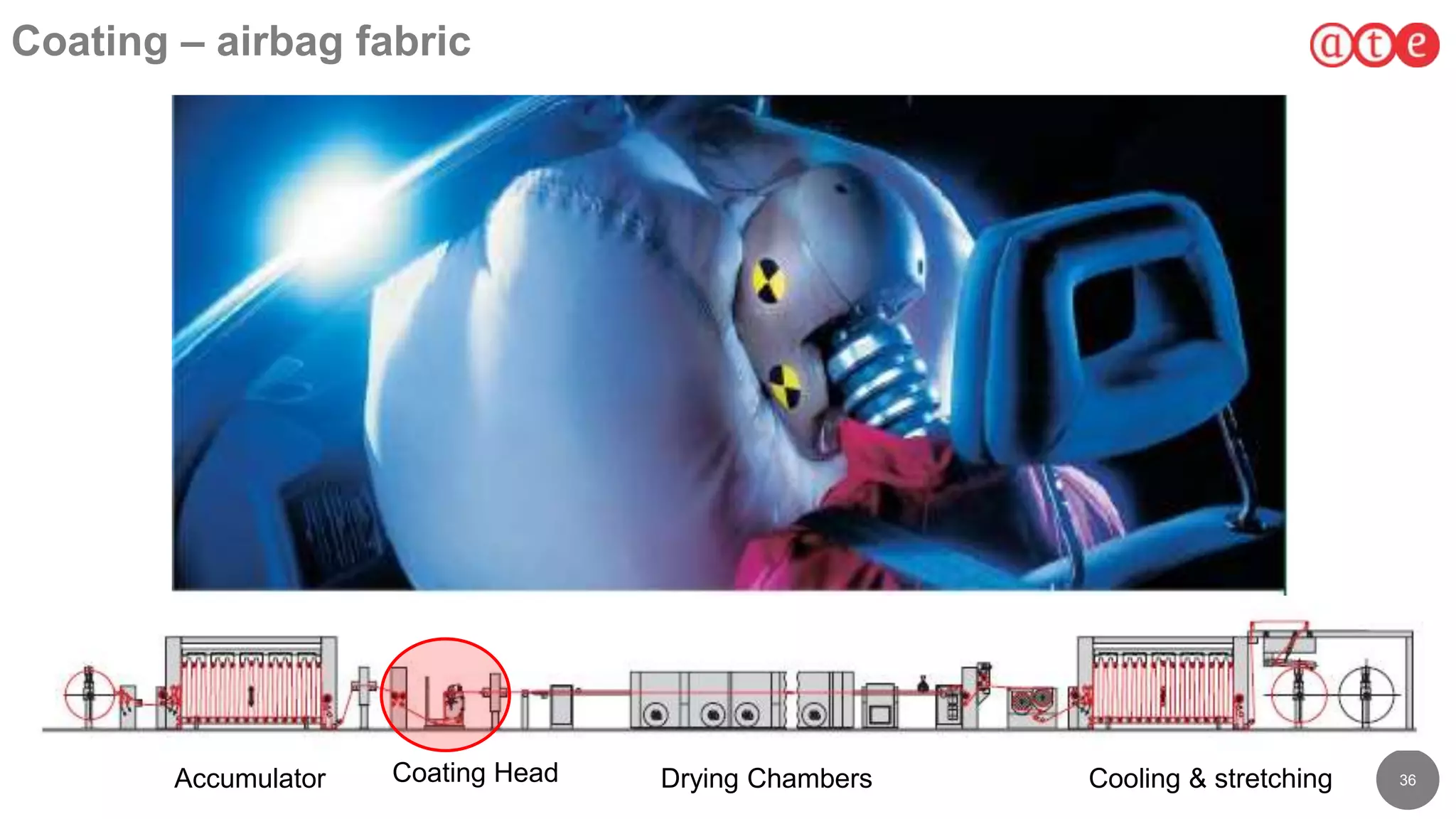
Coating – airbag fabric
Accumulator Coating Head Drying Chambers Cooling & stretching
37
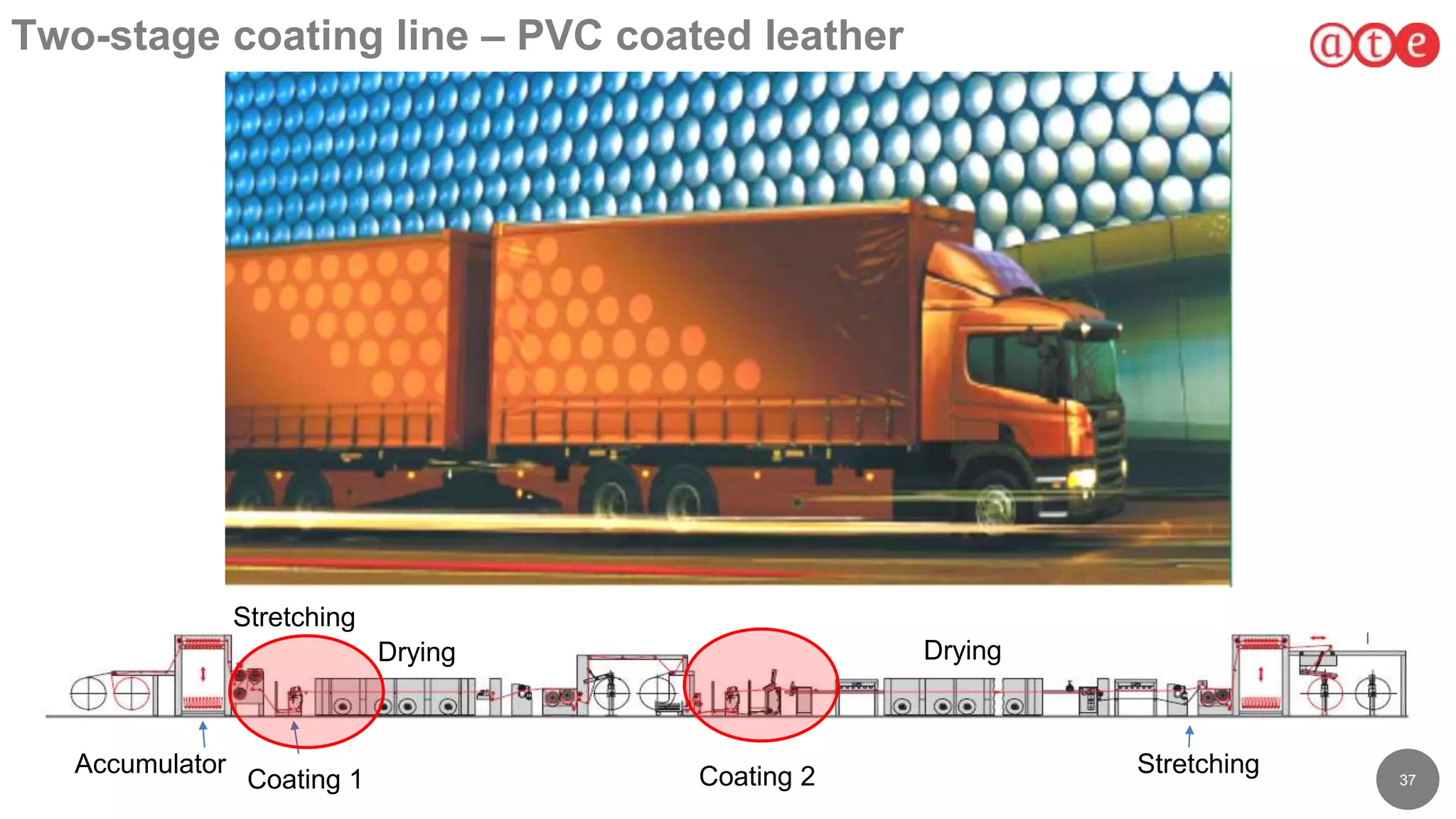
Two-stage coating line – PVC coated leather
Accumulator
Stretching
Coating 1
Stretching
Drying Drying
Coating 2
38
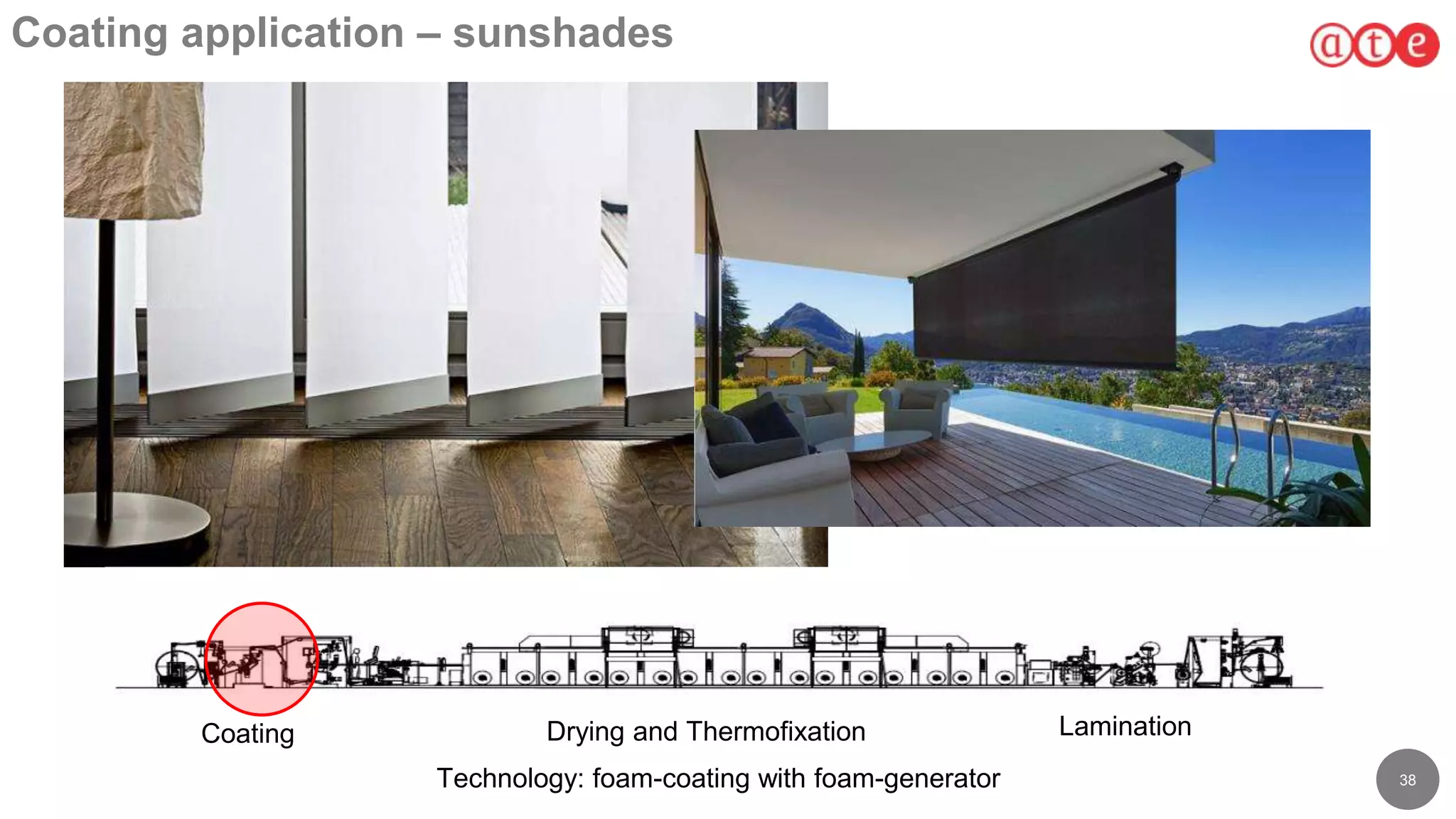
Coating application – sunshades
Technology: foam-coating with foam-generator
Coating Drying and Thermofixation Lamination
39
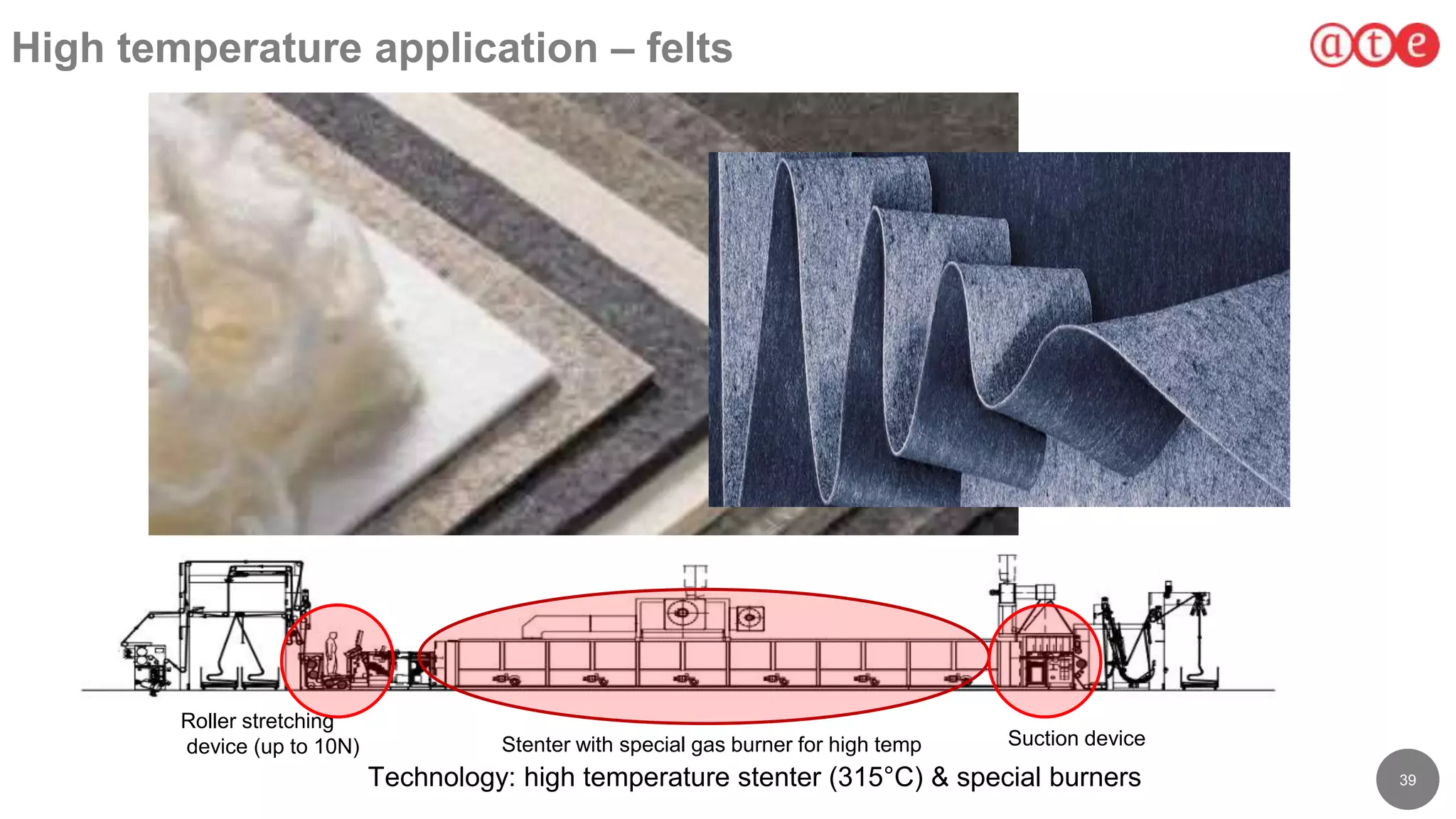
High temperature application – felts
Technology: high temperature stenter (315°C) & special burners
Roller stretching
device (up to 10N) Stenter with special gas burner for high temp Suction device
40
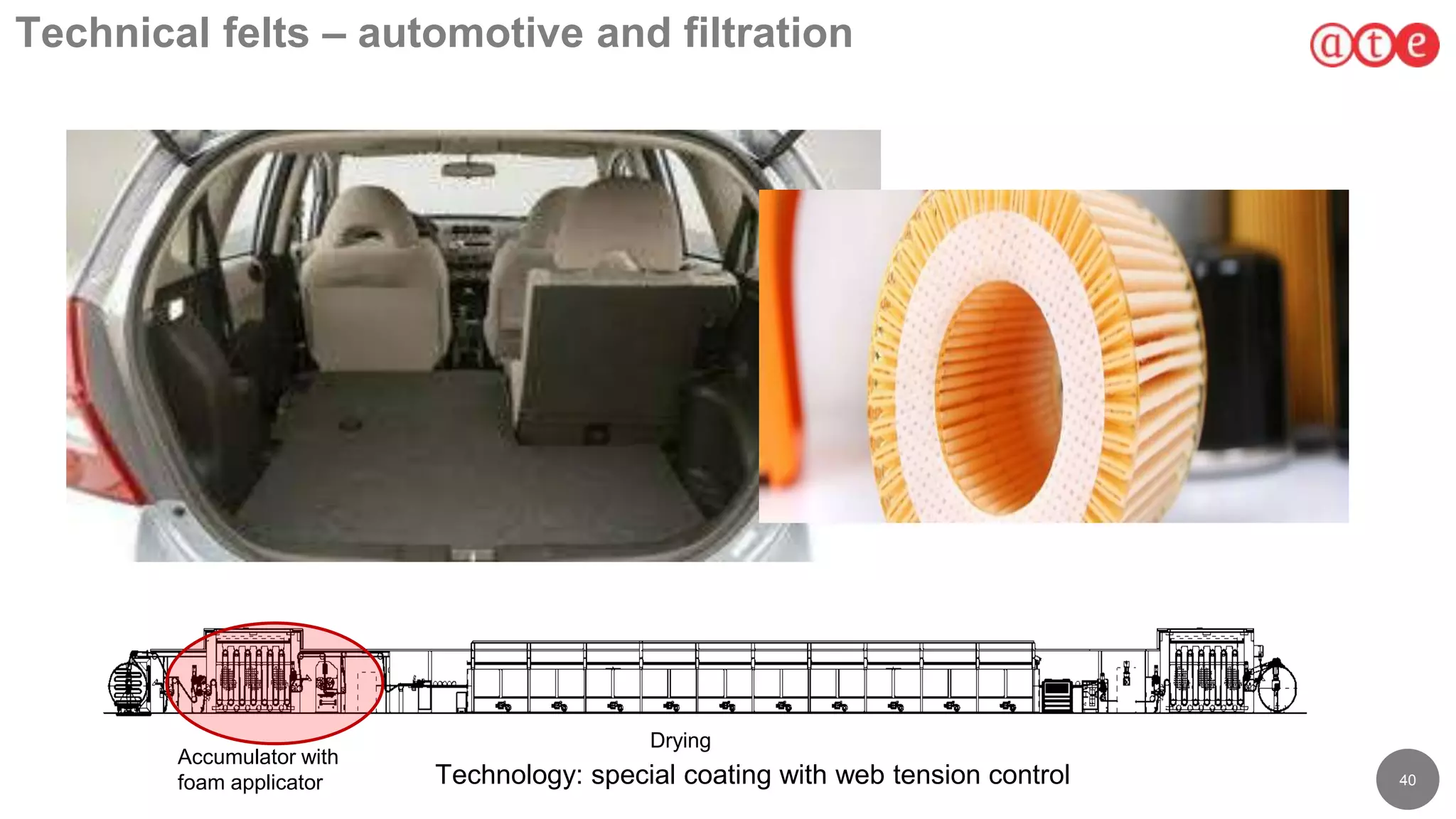
Technical felts – automotive and filtration
Technology: special coating with web tension control
Accumulator with
foam applicator
Drying
41
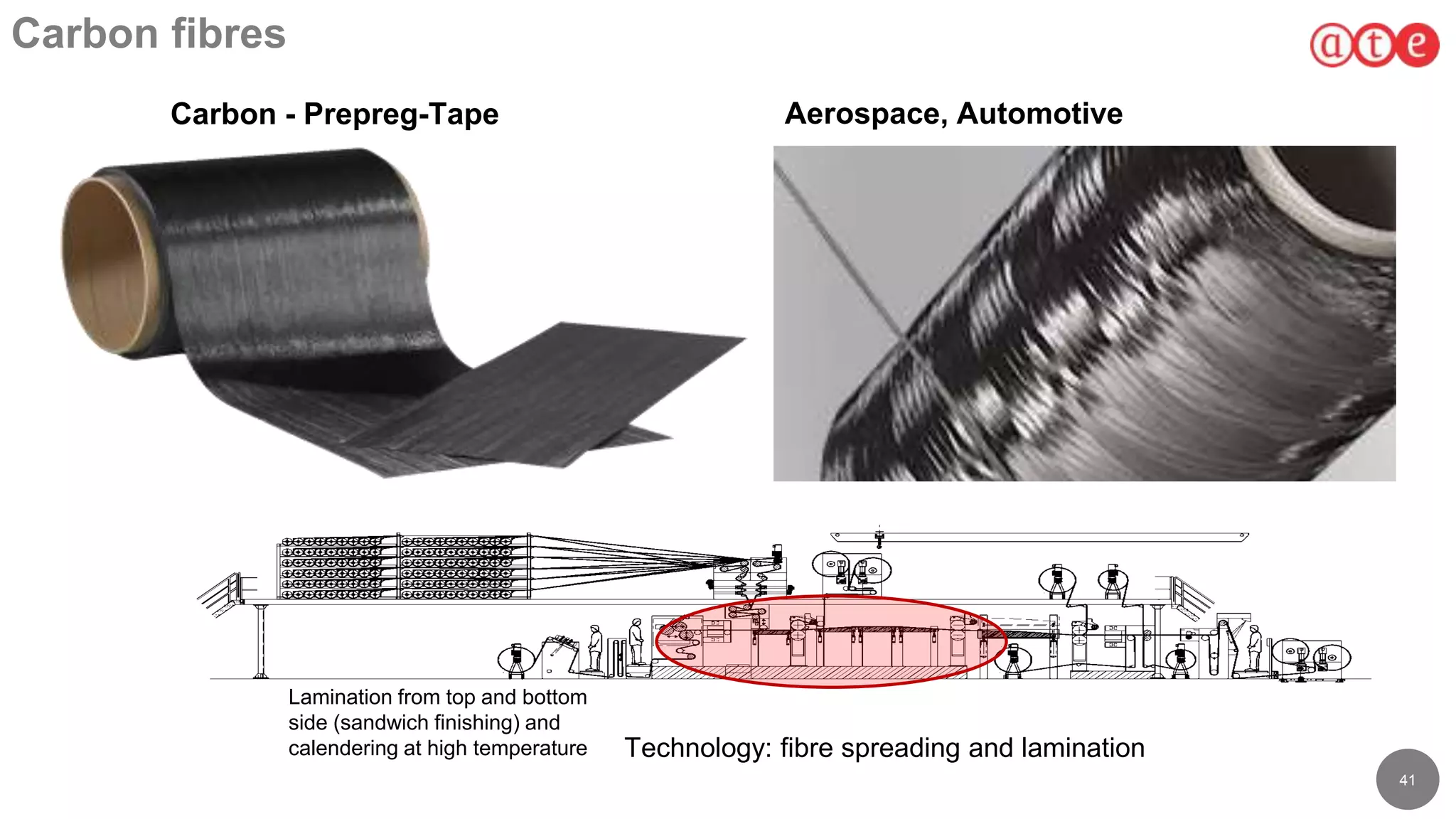
Carbon fibres
Carbon - Prepreg-Tape Aerospace, Automotive
Technology: fibre spreading and lamination
Lamination from top and bottom
side (sandwich finishing) and
calendering at high temperature
42
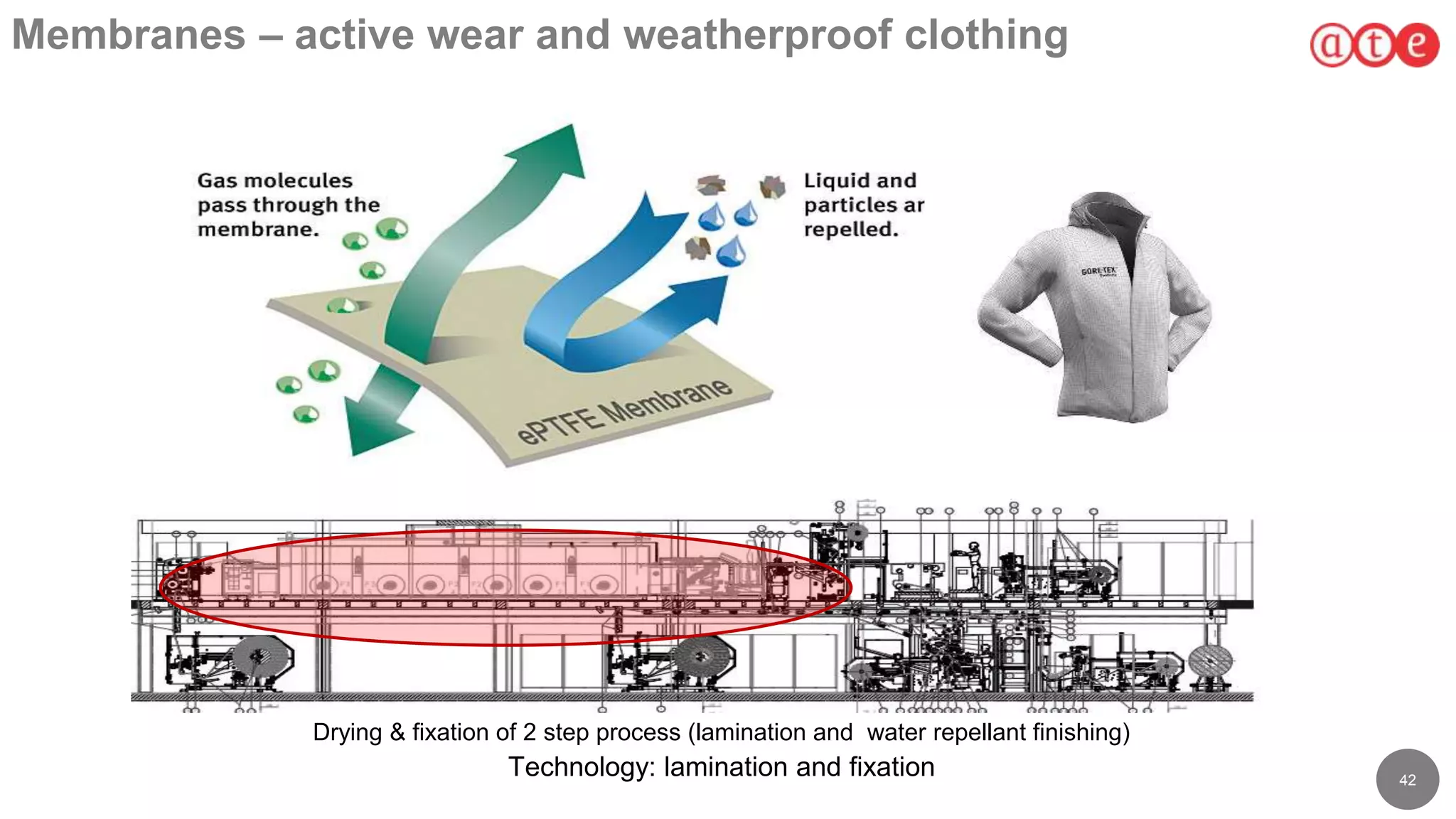
Membranes – active wear and weatherproof clothing
Drying & fixation of 2 step process (lamination and water repellant finishing)
Technology: lamination and fixation
43
THANK YOU

Technological advancements in technical textiles

  • 1.
    1 A.T.E. Enterprises PrivateLimited V2.1 Mar 2018 Technological Advancements in Technical Textiles Gurudas Aras A.T.E. Enterprises Private Limited
  • 2.
    22 2 Sustainability Durability Functionality Flushable Wipes Textilematerials in construction & Automotive Coating/Lamination for special applications Technical Textiles: Important aspects
  • 3.
    3 Sustainability...what‘s going onin the world? California bans plastic straws in full service restaurants – unless customers request one CNN, September 21st, 2018
  • 4.
    4 Sustainability... A mega trendwith huge impact on the nonwovens sector What sustainability is about: • Plastic-free environment • Products from renewable resources • Biodegradable products Why does this concern nonwovens?
  • 5.
    5 Successful nonwoven endproducts Single-usepersonal-careproducts Durabletechnicalnonwovens Householdandmedicalproducts Many of them are short-lived
  • 6.
    6 Nonwoven market segments 2018:14.85 million tonnes 0% 10% 20% 30% 40% 50% 60% 70% 80% 90% 100% 1. Hygiene nonwovens 2. Wipes 3. Filtration media 4. Medical textiles Disposable products 5. Transport 6. Building/construction 7. Home/office/furnishings 8. Geosynthetics 9. Apparel Durable products 1 2 3 4 5 6 7 8 9 10 Source: INDA/EDANA 2019 2018: ~ 7 million tonnes Other segments 10. single use and durable products
  • 7.
    7 Fibres used innonwovens Polyester fibres Mineral fibres Cellulosics (pulp) Polypropylene fibres Bico fibres Viscose Polypropylene yarns Other polymers Polyethylene Polyester Cotton, natural fibres Fibre-based nonwovens (carded, wet-laid, airlaid) Sources - The Fabric Year and own estimate Polymer-based nonwovens (Spunbond and meltblown) 2018: ~14.8 million tonnes Only ~20% of the fibres used in nonwovens are bio-degradable and from renewable resources
  • 8.
    8 Pulp 28% Viscose/ Lyocell 25% Polyester 27% Polyproylene 12% Bico fiber 2% Cotton 5% Other 1% Wipes are virtually everywhere Wipesare the 2nd largest nonwovens application Wipes – an ongoing success story 58% of the raw materials come from renewable resources. Not so bad at first sight…
  • 9.
    9 Bico fiber The darkside of wipes (wet) Eco-friendliness is an issue Source: P. Mango 2018 Airlaid wipes contain chemical binders Most spunlaced wipes are made of PP, PET and viscose fibre blends Viscose/ Lyocell Polyester Poly- propylene Only a fraction is truly eco-friendly! Thermobonded wipes contain bico fibres Cotton Viscose/ Lyocell Pulp STD Binder
  • 10.
    10 The solution: makeeco-friendly wipes The technology is already here! 100% cotton fibres 100% viscose fibres pulp and regenerated cellulose fibres … or blends of these fibres
  • 11.
    11 The classic approach:cotton wipes The main challenges: • Processing fibres of different lengths • Processing short fibres • Handling neps plain wipe from comber noils structured wipe from virgin cotton fibres The solution: random card TWF-NCR
  • 12.
    12 A more unconventionalapproach: viscose wipes The main challenge – cost-efficient production The solution – suited for conventional wipes: roller card TWF-NC (cross lapper TWF-CHL) plain wipe 100% viscose fibres Crosslapped, structured medical wipe from 100% viscose fibres
  • 13.
    13 A new technology:Wet-laid/Spunlaced (WLS) wipes The main challenge: • Mastering the new technology • Convincing the market of this new kind of quality wipes The solution: Voith/Truetzschler‘s proven line for wet-laid/spunlaced nonwovens Plain, flushable WLS from 80% pulp and 20% lyocell Structured WLS wipe from 80% pulp and 20% lyocell
  • 14.
    1414 14 Wet-laying and spunlacing– two promising processes Wet-laying for… • Homogeneous nonwovens • Multiply forming (layering) • Using short fibres (1mm) • Flexibility in fibre blends Various applications • Tea bags • Glass mats Spunlacing for… • Soft handle and drapability • Structured and perforated webs • Multi-layer nonwovens • Binder-free webs Various applications • Hygiene & medical care • Wipes • Filtration
  • 15.
    15 Voith/Truetzschler‘s solution :Wet-laid/Spunlaced (WLS) wipes Working width: 3.6 mtrs Layout for wipes with HydroFormer and AquaJet: • Web weights : 40-70 g/m² • Nonwoven : plain, structured or perforated • Line speed : <= 250 m/min Web Forming: HydroFormer (Voith) Web bonding: AquaJet Multi-drum dryer Master roll winder
  • 16.
    1616 16 Technical advantages • Increasedstrength compared to conventional wet-laid wipes • Products with unique characteristics • Wood pulp of 1-3 mm length in combination with cotton, viscose • Flushable products with fibres with less than 12 mm • Use of short fibres from 1 – 12 mm • A broad range of fibre blends (100 % wood pulp, 100 % natural fibres, 100% synthetic fibres or mixtures) • Multilayers of wet-laid or spunbond and wet-laid • Structured or perforated products Plain, flushable WLS from 80% pulp and 20% lyocell Structured WLS wipe from 80% pulp and 20% lyocell
  • 17.
    17 India in theglobal context Sustainability is and will be an issue India has held back imposing a blanket ban on single-use plastics to combat pollution because alternatives were not immediately available. India consumes 14 million tonnes of plastics annually Side effects: • we are surrounded by micro plastics • it already entered the food chain: micro plastics is found in foods and drink • if it enters the human body, it can be one of the causes of cancer The world: • 250 million tonnes of plastics are produced every year • 8 million tonnes of plastics enter the oceans every year • Over years a high amount crumbles into micro particles (micro plastics) source: ET
  • 18.
    18 The Indian perspective Dothings right from the beginning What developed countries might face: • Product warnings on wipe packages The Indian perspective with biodegradable wipes: • Avoiding product bans • Eco labels on packages of cotton, viscose and WLS wipes • Consumer confidence world-wide
  • 19.
    19 Advanced technology ata glance Durability Textiles for Construction and Mobility
  • 20.
  • 21.
  • 22.
    22 Textile reinforced concrete( TRC) textile reinforcement impregnation fine-grain concrete TRC
  • 23.
    23 The future ofbuilding will be textile made TRC 0 A.D. pop. 0.2 billion opus caementicium 1850 pop. 1.2 billion reinforced concrete 2017 pop. 7.5 billion carbon concrete 5 N/mm² 500 N/mm² tensile strength of reinforcement 2500 N/mm² tensile strength of reinforcement 8 BN m²/a 24x efficiency >5x durability Weft Insertion Machine – Raschel Technology RS MSUS – G (HG) / RS MSUS – V
  • 24.
    24 Advantages Lightweight & DesignEmission & Resource Performance • 4 times lighter • high freedom of design • easy to handle and cut • up to 80% material saving • 6 times stronger • 24 times efficient • no corrosion • high level of prefabrication • CO2 reduction • save resources • reduced transport cost • 5x higher lifetime
  • 25.
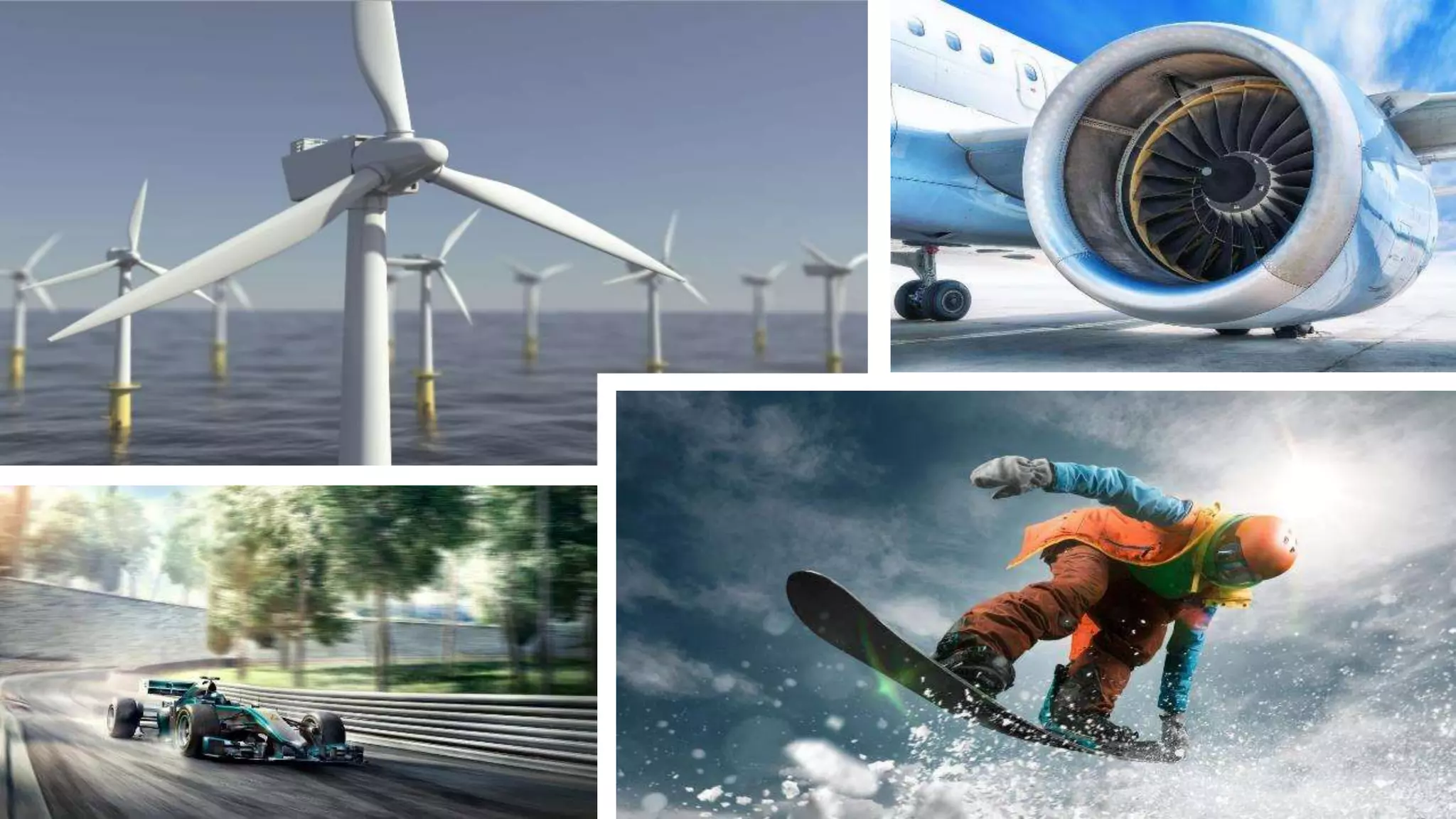
    25 Warp knitted multi-axialmulti-ply structures (non crimp fabrics) made on multi-axial warp knitting machine COP MAX 4: • Angles of +20 degrees to -20 degrees • Low specific weight • High mechanical load resistance Applications: • Rotor blades for wind power stations • Moulded parts for automotive, aircraft and ship building • Sports equipment Multi-axial structures for fibre reinforced plastics(FRP)
  • 26.
    26 SIM.PLY: New lightweight technology for thermoplastic unidirectional (UD) tapes High-performance spreading and impregnation line for the production of continuous fibre-reinforced plastics (FRP) : • Light weight construction • Sustainability effort for building sector (can be recycled) • Made up of unidirectional, continuous reinforcing fibres • Ideal for use in highly stressed, fibre reinforced, light weight structures • Can be moulded in thermal heat presses and can be used in injection moulding system
  • 27.
    27 New technology forcost-effective fibre processing SIM.PLY combines a completely revised spreading module with tailored impregnation technology in a continuous, efficient processing sequence. Modular design Modular machine design for flexible production of thermoplastic fibre-reinforced tapes with attractive price-performance-ratio. Short process time Thermoplastic composites are easier to process and can have much shorter cycle times than thermoset composites, what offers significant cost benefits.
  • 28.
    28 Thermoplastic tape materials– benefits Fibre-reinforced thermoplastics are important drivers of sustainable, reinforced, lightweight structures Lightweight material Fibre-reinforced thermoplastics are about 40% lighter than aluminium and up to 80% lighter than steel. Recyclability Thermoplastic composites can be recycled due to the possibility of re-melting. In the second component life, they are widely used for short fibre reinforced structural parts. High mechanical performance Fibre-reinforced thermoplastics offer a very good mechanical performance related to density. Especially their tensile modulus, tensile strength and impact resistance are interesting
  • 29.
    29 Value addition totechnical textiles through functionality Functionality
  • 30.
    30 Value addition bycoating: various techniques Knife over roller (foam or paste) Knife over air Magnoroll Screen Coating Direct coating Indirect coating 1 2 3 4 5 6
  • 31.
    3131 Multi-functional head forcoating Multi-functional (all 6 techniques in one machine) ▪ Coating ▪ Rotary screen printing ▪ Magnet roller coating Screen printingKnife coating Knife 1 Knife coating 2 Magnet roller indirect Magnet roller direct All functions in one head
  • 32.
    3232 Stenter – advancementin technology • Roof heating helps to avoid fog at entrance and exit because of cold air in case of PVC coating line Roof heating for stenter chamber Twin Therm nozzle system • Twin therm nozzle system has independent radiator for top and bottom nozzles • Different temperatures can be set for top and bottom nozzles based on the application
  • 33.
    33 Stenter – advancementin technology Conveyor for fabric stabilisation & stretching • Belt execution on demand for Teflon/fibre glass finishing • Conveyor belt, for horizontal needle chain only!
  • 34.
    34 Stenter – advancementin technology Vertical drier • For two-sided coating • Stenter chain for width control Explosion-proof stenter • Explosion proof panels for coating application • Highly recommended for solvent coating • Safety for the operator from toxic fumes
  • 35.
    35 Range for finishingand coating Outdoor awnings & indoor sunshades Accumulator Washing Coating Drying Stretching Winding IR Drying
  • 36.
    36 Coating – airbagfabric Accumulator Coating Head Drying Chambers Cooling & stretching
  • 37.
    37 Two-stage coating line– PVC coated leather Accumulator Stretching Coating 1 Stretching Drying Drying Coating 2
  • 38.
    38 Coating application –sunshades Technology: foam-coating with foam-generator Coating Drying and Thermofixation Lamination
  • 39.
    39 High temperature application– felts Technology: high temperature stenter (315°C) & special burners Roller stretching device (up to 10N) Stenter with special gas burner for high temp Suction device
  • 40.
    40 Technical felts –automotive and filtration Technology: special coating with web tension control Accumulator with foam applicator Drying
  • 41.
    41 Carbon fibres Carbon -Prepreg-Tape Aerospace, Automotive Technology: fibre spreading and lamination Lamination from top and bottom side (sandwich finishing) and calendering at high temperature
  • 42.
    42 Membranes – activewear and weatherproof clothing Drying & fixation of 2 step process (lamination and water repellant finishing) Technology: lamination and fixation
  • 43.

Editor's Notes

  • #2 First Slide - Introduction
  • #3 Note – Main Topics for TT
  • #28 Examples