NEW FUNCTIONAL
FIBRES
WHAT ARE FUNCTIONAL
FIBRES?
Specifically engineered to deliver a pre
defined performance or functionality to
the user, over and above it's normal
functions.
Made from a mix of innovative
materials, and functionality in this case
would imply the added value or
function that a garment is expected to
perform.
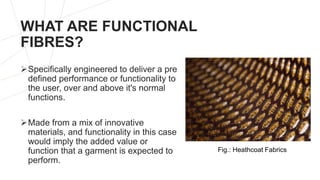
Fig.: Heathcoat Fabrics
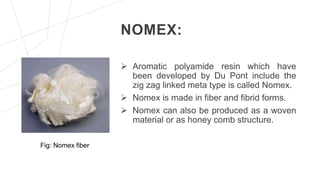
NOMEX:
 Aromatic polyamide resin which have
been developed by Du Pont include the
zig zag linked meta type is called Nomex.
 Nomex is made in fiber and fibrid forms.
 Nomex can also be produced as a woven
material or as honey comb structure.
Fig: Nomex fiber
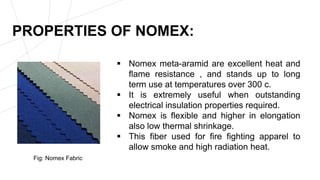
PROPERTIES OF NOMEX:
 Nomex meta-aramid are excellent heat and
flame resistance , and stands up to long
term use at temperatures over 300 c.
 It is extremely useful when outstanding
electrical insulation properties required.
 Nomex is flexible and higher in elongation
also low thermal shrinkage.
 This fiber used for fire fighting apparel to
allow smoke and high radiation heat.
Fig: Nomex Fabric
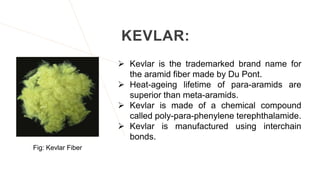
KEVLAR:
 Kevlar is the trademarked brand name for
the aramid fiber made by Du Pont.
 Heat-ageing lifetime of para-aramids are
superior than meta-aramids.
 Kevlar is made of a chemical compound
called poly-para-phenylene terephthalamide.
 Kevlar is manufactured using interchain

bonds.
Fig: Kevlar Fiber
PROPERTIES OF KEVLAR
 Kevlar has an impressive tensile strength,
kevlar is ten times stronger than steel in
tensile strength.
 Kevlar is an ideal combination of suitability in
ballistic performance , these are not only very
strong also have dynamic energy absorption
behavior.
 This fiber produce a thick char which act as
thermal barrier.
Fig: Woven Kevler Fabric
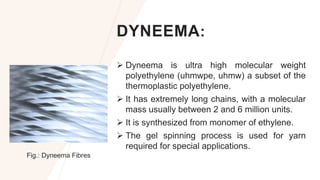
DYNEEMA:
 Dyneema is ultra high molecular weight
polyethylene (uhmwpe, uhmw) a subset of the
thermoplastic polyethylene.
 It has extremely long chains, with a molecular
mass usually between 2 and 6 million units.
 It is synthesized from monomer of ethylene.
 The gel spinning process is used for yarn
required for special applications.
Fig.: Dyneema Fibres
PROPERTIES OF DYNEEMA:
 It has good molecular alignment
 High crystallization, low density
 It has long molecular chains due to which they
are load absorbing fibers
 15 times stronger than steel and up to 40%
stronger than aramids
 Floats on water, resistant to moisture,
chemicals and UV
 Soft as silk & High pliability
 Low melting point, Cut and tear resistant
Fig.: Woven with
Dyneema
HYGRA:
Recently high moisture absorptive and highly
moisture releasing nylon was developed by
Unitika.
When nylon was used for clothes the lacks of
moisture absorbency caused stuffiness,
stickiness and was uncomfortable.
Unitika succeeded in making fiber from highly
water absorptive polymer, which can absorb
water 35 times, the polymer weight and
developed an epoch-making fiber Hygra.
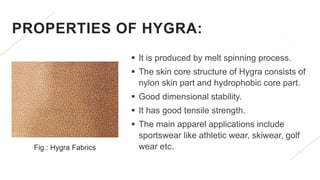
PROPERTIES OF HYGRA:
 It is produced by melt spinning process.
 The skin core structure of Hygra consists of
nylon skin part and hydrophobic core part.
 Good dimensional stability.
 It has good tensile strength.
 The main apparel applications include
sportswear like athletic wear, skiwear, golf
wear etc.
Fig.: Hygra Fabrics
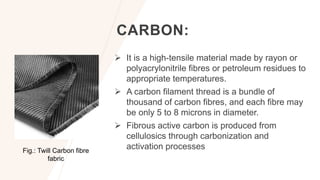
CARBON:
 It is a high-tensile material made by rayon or
polyacrylonitrile fibres or petroleum residues to
appropriate temperatures.
 A carbon filament thread is a bundle of
thousand of carbon fibres, and each fibre may
be only 5 to 8 microns in diameter.
 Fibrous active carbon is produced from
cellulosics through carbonization and
activation processes
Fig.: Twill Carbon fibre
fabric
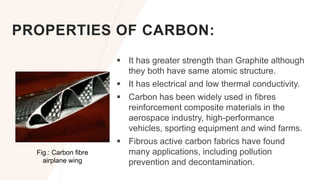
PROPERTIES OF CARBON:
 It has greater strength than Graphite although
they both have same atomic structure.
 It has electrical and low thermal conductivity.
 Carbon has been widely used in fibres
reinforcement composite materials in the
aerospace industry, high-performance
vehicles, sporting equipment and wind farms.
 Fibrous active carbon fabrics have found
many applications, including pollution
prevention and decontamination.
Fig.: Carbon fibre
airplane wing
GLASS FIBRE:
 It is an inorganic man-made fibre.
 The ingredients normally used in making glass
fibres are silicon dioxide, calcium oxide,
alluminium oxide, boron oxide, plus a few
other metal oxides.
 More than 99% of continuous glass fibres are
spun from an E-glass formulation.
Fig.: Glass fibre
chopped strand
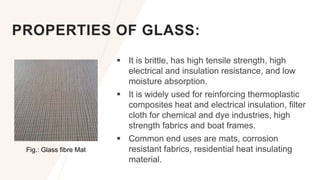
PROPERTIES OF GLASS:
 It is brittle, has high tensile strength, high
electrical and insulation resistance, and low
moisture absorption.
 It is widely used for reinforcing thermoplastic
composites heat and electrical insulation, filter
cloth for chemical and dye industries, high
strength fabrics and boat frames.
 Common end uses are mats, corrosion
resistant fabrics, residential heat insulating
material.
Fig.: Glass fibre Mat
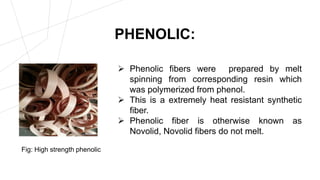
PHENOLIC:
 Phenolic fibers were prepared by melt
spinning from corresponding resin which
was polymerized from phenol.
 This is a extremely heat resistant synthetic
fiber.
 Phenolic fiber is otherwise known as
Novolid, Novolid fibers do not melt.
Fig: High strength phenolic
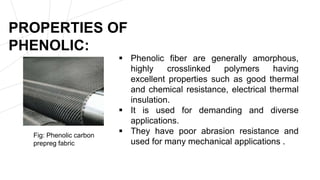
PROPERTIES OF
PHENOLIC:
 Phenolic fiber are generally amorphous,
highly crosslinked polymers having
excellent properties such as good thermal
and chemical resistance, electrical thermal
insulation.
 It is used for demanding and diverse
applications.
 They have poor abrasion resistance and
used for many mechanical applications .
Fig: Phenolic carbon
prepreg fabric
20XX Pitch Deck 17
20XX Pitch Deck 18
20XX Pitch Deck 20
20XX Pitch Deck 22
PRODUCT BENEFITS
Cool and stylish product
Areas for community connections
Online store and market swap
20XX Pitch Deck 23
20XX Pitch Deck 24
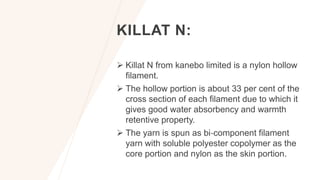
KILLAT N:
 Killat N from kanebo limited is a nylon hollow
filament.
 The hollow portion is about 33 per cent of the
cross section of each filament due to which it
gives good water absorbency and warmth
retentive property.
 The yarn is spun as bi‐component filament
yarn with soluble polyester copolymer as the
core portion and nylon as the skin portion.
COMPANY
OVERVIEW
BUSINESS MODEL
ABSTRACT
We based our research on market trends and social media
DESIGN
We believe people need more products specifically dedicated
to this niche market
RESEARCH
Minimalist and easy to use
20XX Pitch Deck 28
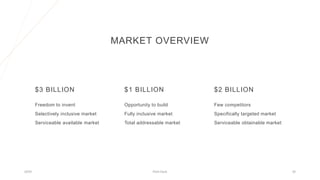
MARKET OVERVIEW
$3 BILLION
Freedom to invent
Selectively inclusive market
Serviceable available market
$1 BILLION
Opportunity to build
Fully inclusive market
Total addressable market
$2 BILLION
Few competitors
Specifically targeted market
Serviceable obtainable market
20XX Pitch Deck 30
MARKET COMPARISON
$3B $2B $1B
OPPORTUNITY TO
BUILD
FREEDOM TO INVENT FEW COMPETITORS
Addressable market Serviceable market Obtainable market
20XX Pitch Deck 31
OUR COMPETITION
CONTOSO
Our product is priced below that of other
companies on the market
Design is simple and easy to use,
compared to the complex designs of the
competitors
Affordability is the main draw for our
consumers to our product
COMPETITORS
Company A
Product is more expensive
Companies B & C
Product is expensive and inconvenient to
use
Companies D & E
Product is affordable, but inconvenient to
use
20XX Pitch Deck 32
OUR COMPETITION
CONVENIENT
Competitor A
CONTOSO
AFFORDABLE EXPENSIVE
Competitor B
Competitor C
Competitor D
INCONVENIENT
Competitor E
20XX Pitch Deck 33
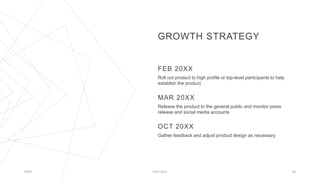
GROWTH STRATEGY
FEB 20XX
Roll out product to high profile or top-level participants to help
establish the product
MAR 20XX
Release the product to the general public and monitor press
release and social media accounts
OCT 20XX
Gather feedback and adjust product design as necessary
20XX Pitch Deck 34
TRACTION
Forecasting for success
KEY
METRICS
Clients Orders
Gross
revenue
Net revenue
20XX 10 1100 $10,000 $7,000
20XX 20 200 $20,000 $16,000
20XX 30 300 $30,000 $25,000
20XX 40 400 $40,000 $30,000
REVENUE BY YEAR
$0
$10,000
$20,000
$30,000
$40,000
20XX 20XX 20XX 20XX
20XX Pitch Deck 35
TWO-YEAR ACTION PLAN
DRAFT
BLUEPRINTS
GATHER
FEEDBACK
DELIVER TO
CLIENT
20XX JAN FEB MAR APR MAY JUN JUL AUG SEP OCT NOV DEC
RUN FOCUS
GROUPS
TEST DESIGN LAUNCH DESIGN
20XX Pitch Deck 36
FINANCIALS
20XX Pitch Deck 37
Year 1 Year 2 Year 3
INCOME
Users 50,000 400,000 1,600,000
Sales 500,000 4,000,000 16,000,000
Average price per sale 75 80 90
Revenue @ 15% 5,625,000 48,000,000 216,000,000
GROSS PROFIT 5,625,000 48,000,000 216,000,000
Expenses
Sales & marketing 5,062,500 38,400,000 151,200,000 70%
Customer service 1,687,500 9,600,000 21,600,000 10%
Product development 562,500 2,400,000 10,800,000 5%
Research 281,250 2,400,000 4,320,000 2%
TOTAL EXPENSES 7,593,750 52,800,000 187,920,000
MEET THE TEAM
TAKUMA HAYASHI​ MIRJAM NILSSON​ FLORA BERGGREN​
RAJESH
SANTOSHI​
President Chief Executive
Of f icer
Chief Operations
Of f icer
VP Mark eting
20XX Pitch Deck 38
MEET THE TEAM
TAKUMA H AYASHI
P r e s i d e n t
MIR JAM N ILSSON​
C h i e f E x e c u t i v e O f f i c e r
FLORA BERGGREN​
C h i e f O p e r a t i o n s O f f i c e r
R AJESH SAN TOSHI
V P M a r k e t i n g
GR AHAM BAR NES
V P P r o d u c t
R OW AN MU R PHY
S E O S t r a t e g i s t
ELIZABETH MOOR E
P r o d u c t D e s i g n e r
R OBIN KLIN E
C o n t e n t D e v e l o p e r
20XX Pitch Deck 39
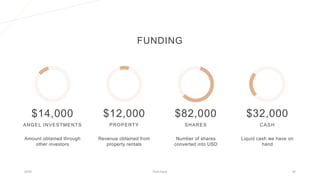
FUNDING
$14,000
ANGEL INVESTMENTS
Amount obtained through
other investors
$12,000
PROPERTY
Revenue obtained from
property rentals
$82,000
SHARES
Number of shares
converted into USD
$32,000
CASH
Liquid cash we have on
hand
20XX Pitch Deck 40
SUMMARY
At Contoso, we believe in giving 110%. By using our
next-generation data architecture, we help organizations
virtually manage agile workflows. We thrive because of
our market knowledge and great team behind our
product. As our CEO says, "Efficiencies will come from
proactively transforming how we do business.”
THANK YOU
Presented by
SONALI PRUSTY
DIBYANI DIBYADARSHINI
JYOTIRMAYEE MOHAPATRA
SATYASHREE PATTANAIK

seminar DIBYANI.pptx

  • 1.
  • 2.
    WHAT ARE FUNCTIONAL FIBRES? Specificallyengineered to deliver a pre defined performance or functionality to the user, over and above it's normal functions. Made from a mix of innovative materials, and functionality in this case would imply the added value or function that a garment is expected to perform. Fig.: Heathcoat Fabrics
  • 3.
    NOMEX:  Aromatic polyamideresin which have been developed by Du Pont include the zig zag linked meta type is called Nomex.  Nomex is made in fiber and fibrid forms.  Nomex can also be produced as a woven material or as honey comb structure. Fig: Nomex fiber
  • 4.
    PROPERTIES OF NOMEX: Nomex meta-aramid are excellent heat and flame resistance , and stands up to long term use at temperatures over 300 c.  It is extremely useful when outstanding electrical insulation properties required.  Nomex is flexible and higher in elongation also low thermal shrinkage.  This fiber used for fire fighting apparel to allow smoke and high radiation heat. Fig: Nomex Fabric
  • 5.
    KEVLAR:  Kevlar isthe trademarked brand name for the aramid fiber made by Du Pont.  Heat-ageing lifetime of para-aramids are superior than meta-aramids.  Kevlar is made of a chemical compound called poly-para-phenylene terephthalamide.  Kevlar is manufactured using interchain bonds. Fig: Kevlar Fiber
  • 6.
    PROPERTIES OF KEVLAR Kevlar has an impressive tensile strength, kevlar is ten times stronger than steel in tensile strength.  Kevlar is an ideal combination of suitability in ballistic performance , these are not only very strong also have dynamic energy absorption behavior.  This fiber produce a thick char which act as thermal barrier. Fig: Woven Kevler Fabric
  • 7.
    DYNEEMA:  Dyneema isultra high molecular weight polyethylene (uhmwpe, uhmw) a subset of the thermoplastic polyethylene.  It has extremely long chains, with a molecular mass usually between 2 and 6 million units.  It is synthesized from monomer of ethylene.  The gel spinning process is used for yarn required for special applications. Fig.: Dyneema Fibres
  • 8.
    PROPERTIES OF DYNEEMA: It has good molecular alignment  High crystallization, low density  It has long molecular chains due to which they are load absorbing fibers  15 times stronger than steel and up to 40% stronger than aramids  Floats on water, resistant to moisture, chemicals and UV  Soft as silk & High pliability  Low melting point, Cut and tear resistant Fig.: Woven with Dyneema
  • 9.
    HYGRA: Recently high moistureabsorptive and highly moisture releasing nylon was developed by Unitika. When nylon was used for clothes the lacks of moisture absorbency caused stuffiness, stickiness and was uncomfortable. Unitika succeeded in making fiber from highly water absorptive polymer, which can absorb water 35 times, the polymer weight and developed an epoch-making fiber Hygra.
  • 10.
    PROPERTIES OF HYGRA: It is produced by melt spinning process.  The skin core structure of Hygra consists of nylon skin part and hydrophobic core part.  Good dimensional stability.  It has good tensile strength.  The main apparel applications include sportswear like athletic wear, skiwear, golf wear etc. Fig.: Hygra Fabrics
  • 11.
    CARBON:  It isa high-tensile material made by rayon or polyacrylonitrile fibres or petroleum residues to appropriate temperatures.  A carbon filament thread is a bundle of thousand of carbon fibres, and each fibre may be only 5 to 8 microns in diameter.  Fibrous active carbon is produced from cellulosics through carbonization and activation processes Fig.: Twill Carbon fibre fabric
  • 12.
    PROPERTIES OF CARBON: It has greater strength than Graphite although they both have same atomic structure.  It has electrical and low thermal conductivity.  Carbon has been widely used in fibres reinforcement composite materials in the aerospace industry, high-performance vehicles, sporting equipment and wind farms.  Fibrous active carbon fabrics have found many applications, including pollution prevention and decontamination. Fig.: Carbon fibre airplane wing
  • 13.
    GLASS FIBRE:  Itis an inorganic man-made fibre.  The ingredients normally used in making glass fibres are silicon dioxide, calcium oxide, alluminium oxide, boron oxide, plus a few other metal oxides.  More than 99% of continuous glass fibres are spun from an E-glass formulation. Fig.: Glass fibre chopped strand
  • 14.
    PROPERTIES OF GLASS: It is brittle, has high tensile strength, high electrical and insulation resistance, and low moisture absorption.  It is widely used for reinforcing thermoplastic composites heat and electrical insulation, filter cloth for chemical and dye industries, high strength fabrics and boat frames.  Common end uses are mats, corrosion resistant fabrics, residential heat insulating material. Fig.: Glass fibre Mat
  • 15.
    PHENOLIC:  Phenolic fiberswere prepared by melt spinning from corresponding resin which was polymerized from phenol.  This is a extremely heat resistant synthetic fiber.  Phenolic fiber is otherwise known as Novolid, Novolid fibers do not melt. Fig: High strength phenolic
  • 16.
    PROPERTIES OF PHENOLIC:  Phenolicfiber are generally amorphous, highly crosslinked polymers having excellent properties such as good thermal and chemical resistance, electrical thermal insulation.  It is used for demanding and diverse applications.  They have poor abrasion resistance and used for many mechanical applications . Fig: Phenolic carbon prepreg fabric
  • 17.
  • 18.
  • 20.
  • 22.
  • 23.
    PRODUCT BENEFITS Cool andstylish product Areas for community connections Online store and market swap 20XX Pitch Deck 23
  • 24.
  • 26.
    KILLAT N:  KillatN from kanebo limited is a nylon hollow filament.  The hollow portion is about 33 per cent of the cross section of each filament due to which it gives good water absorbency and warmth retentive property.  The yarn is spun as bi‐component filament yarn with soluble polyester copolymer as the core portion and nylon as the skin portion.
  • 27.
  • 28.
    BUSINESS MODEL ABSTRACT We basedour research on market trends and social media DESIGN We believe people need more products specifically dedicated to this niche market RESEARCH Minimalist and easy to use 20XX Pitch Deck 28
  • 30.
    MARKET OVERVIEW $3 BILLION Freedomto invent Selectively inclusive market Serviceable available market $1 BILLION Opportunity to build Fully inclusive market Total addressable market $2 BILLION Few competitors Specifically targeted market Serviceable obtainable market 20XX Pitch Deck 30
  • 31.
    MARKET COMPARISON $3B $2B$1B OPPORTUNITY TO BUILD FREEDOM TO INVENT FEW COMPETITORS Addressable market Serviceable market Obtainable market 20XX Pitch Deck 31
  • 32.
    OUR COMPETITION CONTOSO Our productis priced below that of other companies on the market Design is simple and easy to use, compared to the complex designs of the competitors Affordability is the main draw for our consumers to our product COMPETITORS Company A Product is more expensive Companies B & C Product is expensive and inconvenient to use Companies D & E Product is affordable, but inconvenient to use 20XX Pitch Deck 32
  • 33.
    OUR COMPETITION CONVENIENT Competitor A CONTOSO AFFORDABLEEXPENSIVE Competitor B Competitor C Competitor D INCONVENIENT Competitor E 20XX Pitch Deck 33
  • 34.
    GROWTH STRATEGY FEB 20XX Rollout product to high profile or top-level participants to help establish the product MAR 20XX Release the product to the general public and monitor press release and social media accounts OCT 20XX Gather feedback and adjust product design as necessary 20XX Pitch Deck 34
  • 35.
    TRACTION Forecasting for success KEY METRICS ClientsOrders Gross revenue Net revenue 20XX 10 1100 $10,000 $7,000 20XX 20 200 $20,000 $16,000 20XX 30 300 $30,000 $25,000 20XX 40 400 $40,000 $30,000 REVENUE BY YEAR $0 $10,000 $20,000 $30,000 $40,000 20XX 20XX 20XX 20XX 20XX Pitch Deck 35
  • 36.
    TWO-YEAR ACTION PLAN DRAFT BLUEPRINTS GATHER FEEDBACK DELIVERTO CLIENT 20XX JAN FEB MAR APR MAY JUN JUL AUG SEP OCT NOV DEC 20XX JAN FEB MAR APR MAY JUN JUL AUG SEP OCT NOV DEC RUN FOCUS GROUPS TEST DESIGN LAUNCH DESIGN 20XX Pitch Deck 36
  • 37.
    FINANCIALS 20XX Pitch Deck37 Year 1 Year 2 Year 3 INCOME Users 50,000 400,000 1,600,000 Sales 500,000 4,000,000 16,000,000 Average price per sale 75 80 90 Revenue @ 15% 5,625,000 48,000,000 216,000,000 GROSS PROFIT 5,625,000 48,000,000 216,000,000 Expenses Sales & marketing 5,062,500 38,400,000 151,200,000 70% Customer service 1,687,500 9,600,000 21,600,000 10% Product development 562,500 2,400,000 10,800,000 5% Research 281,250 2,400,000 4,320,000 2% TOTAL EXPENSES 7,593,750 52,800,000 187,920,000
  • 38.
    MEET THE TEAM TAKUMAHAYASHI​ MIRJAM NILSSON​ FLORA BERGGREN​ RAJESH SANTOSHI​ President Chief Executive Of f icer Chief Operations Of f icer VP Mark eting 20XX Pitch Deck 38
  • 39.
    MEET THE TEAM TAKUMAH AYASHI P r e s i d e n t MIR JAM N ILSSON​ C h i e f E x e c u t i v e O f f i c e r FLORA BERGGREN​ C h i e f O p e r a t i o n s O f f i c e r R AJESH SAN TOSHI V P M a r k e t i n g GR AHAM BAR NES V P P r o d u c t R OW AN MU R PHY S E O S t r a t e g i s t ELIZABETH MOOR E P r o d u c t D e s i g n e r R OBIN KLIN E C o n t e n t D e v e l o p e r 20XX Pitch Deck 39
  • 40.
    FUNDING $14,000 ANGEL INVESTMENTS Amount obtainedthrough other investors $12,000 PROPERTY Revenue obtained from property rentals $82,000 SHARES Number of shares converted into USD $32,000 CASH Liquid cash we have on hand 20XX Pitch Deck 40
  • 41.
    SUMMARY At Contoso, webelieve in giving 110%. By using our next-generation data architecture, we help organizations virtually manage agile workflows. We thrive because of our market knowledge and great team behind our product. As our CEO says, "Efficiencies will come from proactively transforming how we do business.”
  • 42.
    THANK YOU Presented by SONALIPRUSTY DIBYANI DIBYADARSHINI JYOTIRMAYEE MOHAPATRA SATYASHREE PATTANAIK