SUSTAINABLE PROCESSING IN THE 
APPAREL INDUSTRY 
BF Tech (Sem 3) 
1
CONTENTS 
• Sustainability - definition 
• Need of sustainability in apparel 
production 
• The stages of apparel production 
• Various chemicals used in the industry 
• Achieving sustainability in apparel 
industry 
• Benefits of organic clothing 
• Steps to be taken for sustainable textile 
processing 
• Alternate processing methods 
• Examples in apparel industry 
Page number 
3 
4-5 
2 
6 
7 
8 
9 
10 
11 
12-15
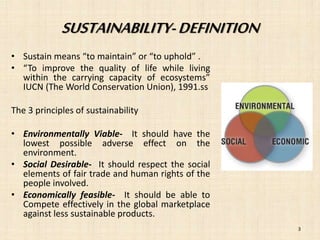
SUSTAINABILITY- DEFINITION 
• Sustain means “to maintain” or “to uphold” . 
• “To improve the quality of life while living 
within the carrying capacity of ecosystems” 
IUCN (The World Conservation Union), 1991.ss 
The 3 principles of sustainability 
• Environmentally Viable- It should have the 
lowest possible adverse effect on the 
environment. 
• Social Desirable- It should respect the social 
elements of fair trade and human rights of the 
people involved. 
• Economically feasible- It should be able to 
Compete effectively in the global marketplace 
against less sustainable products. 
3
NEED OF SUSTAINABILITY IN APPAREL 
INDUSTRY 
• Consumption of natural resources has increased 
dramatically in the last 40 years 
• Issues like that of global warming, natural resource 
depletion, toxic waste disposal, and increasing air, water 
and soil pollution are of global importance. 
• At every stage of textile production, vast amounts of 
energy, clean water and chemicals are used to process the 
textiles and apparel. 
• Thus apparel industry also needs to eliminate 
environmental hazards, improve process efficiency. 
4
A sustainable approach covers the following points: 
• Minimum use of resources (water and energy 
consumption during preparation, colouration and 
finishing). 
• Minimum chemical consumption. 
• Minimum pollution load. 
• Toxic chemicals eliminated from supply chain. 
• Harmful chemical residues eliminated from final 
textile. 
5
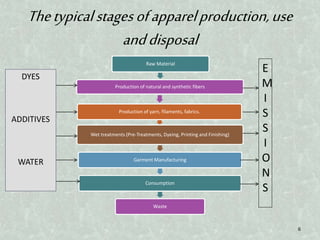
The typical stages of apparel production, use 
and disposal 
Raw Material 
Production of natural and synthetic fibers 
Production of yarn, filaments, fabrics. 
Wet treatments (Pre-Treatments, Dyeing, Printing and Finishing) 
Garment Manufacturing 
Consumption 
Waste 
DYES 
ADDITIVES 
WATER 
E 
M 
I 
S 
S 
I 
O 
N 
S 
6
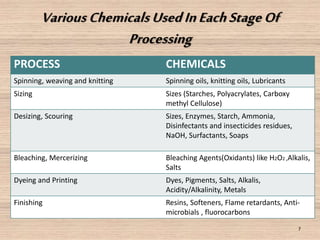
Various Chemicals Used In Each Stage Of 
Processing 
PROCESS CHEMICALS 
Spinning, weaving and knitting Spinning oils, knitting oils, Lubricants 
Sizing Sizes (Starches, Polyacrylates, Carboxy 
methyl Cellulose) 
Desizing, Scouring Sizes, Enzymes, Starch, Ammonia, 
Disinfectants and insecticides residues, 
NaOH, Surfactants, Soaps 
Bleaching, Mercerizing Bleaching Agents(Oxidants) like H2O2 ,Alkalis, 
Salts 
Dyeing and Printing Dyes, Pigments, Salts, Alkalis, 
Acidity/Alkalinity, Metals 
Finishing Resins, Softeners, Flame retardants, Anti-microbials 
, fluorocarbons 
7
ACHEIVING SUSTAINABILITY IN APPAREL 
INDUSTRY 
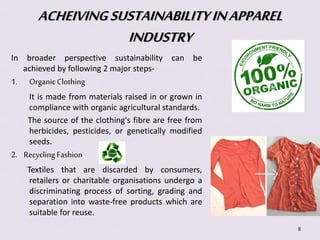
In broader perspective sustainability can be 
achieved by following 2 major steps- 
1. Organic Clothing 
It is made from materials raised in or grown in 
compliance with organic agricultural standards. 
The source of the clothing's fibre are free from 
herbicides, pesticides, or genetically modified 
seeds. 
2. Recycling Fashion 
Textiles that are discarded by consumers, 
retailers or charitable organisations undergo a 
discriminating process of sorting, grading and 
separation into waste-free products which are 
suitable for reuse. 
8
BENEFITS OF ORGANIC CLOTHING 
• No chemical pesticides are used. 
• Organic cotton farming produces far less CO2 
emissions. 
• Organic cotton farming uses up to 60% less water than 
conventional farming methods. 
• Pesticide or herbicide residues are not entered 
accidentally into the environment. 
• Humans and animals are not exposed to chemical 
pesticides or herbicides. 
• When the fabric is discarded, pesticides and herbicides 
are not returned to the earth in landfill, or enter 
into recycling process. 
9
STEPS TO BE TAKEN FOR SUSTAINABLE 
TEXTILE PROCESSING 
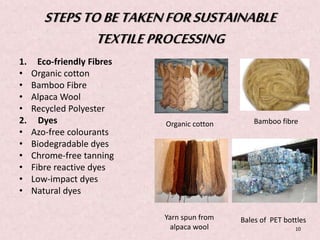
1. Eco-friendly Fibres 
• Organic cotton 
• Bamboo Fibre 
• Alpaca Wool 
• Recycled Polyester 
2. Dyes 
• Azo-free colourants 
• Biodegradable dyes 
• Chrome-free tanning 
• Fibre reactive dyes 
• Low-impact dyes 
• Natural dyes 
Organic cotton 
Yarn spun from 
alpaca wool 
Bamboo fibre 
Bales of PET bottles 
10
ALTERNATE WET PROCESSING METHODS 
• Chlorine-free bleaching 
• Cold or low temperature dye processes 
• Dye bath reuse 
• Eco bleach 
• Ink-jet printing 
• Vegetable tanning 
• Waste water recycling 
11
EXAMPLES OF SUSTAINABILITY IN APPAREL 
INDUSTRY 
Levi’s 
• Levi's is a brand of denim jeans, under privately held American 
clothing company Levi Strauss & Co. 
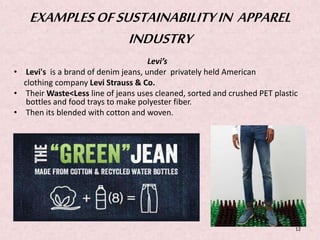
• TheirWaste<Less line of jeans uses cleaned, sorted and crushed PET plastic 
bottles and food trays to make polyester fiber. 
• Then its blended with cotton and woven. 
12
WATER<LESS™JEANS THAT SAVES WATER 
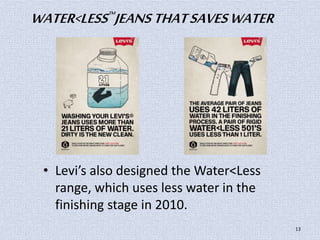
• Levi’s also designed the Water<Less 
range, which uses less water in the 
finishing stage in 2010. 
13
Nike, Inc. 
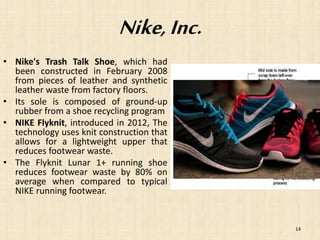
• Nike's Trash Talk Shoe, which had 
been constructed in February 2008 
from pieces of leather and synthetic 
leather waste from factory floors. 
• Its sole is composed of ground-up 
rubber from a shoe recycling program 
• NIKE Flyknit, introduced in 2012, The 
technology uses knit construction that 
allows for a lightweight upper that 
reduces footwear waste. 
• The Flyknit Lunar 1+ running shoe 
reduces footwear waste by 80% on 
average when compared to typical 
NIKE running footwear. 
14
CONCLUSION 
The measurement and control of these inputs and 
outputs can lead to 
• Improved resource productivity. 
• Improved co-efficiency. 
• Improved cost efficiency. 
• Improved customer satisfaction. 
• Improved brand reputation. 
• Improved environmental conditions. 
• Better health conditions of the wearers and the 
workers. 
15
Thank You 
16

Sustainabilty in Textile Processing

  • 1.
    SUSTAINABLE PROCESSING INTHE APPAREL INDUSTRY BF Tech (Sem 3) 1
  • 2.
    CONTENTS • Sustainability- definition • Need of sustainability in apparel production • The stages of apparel production • Various chemicals used in the industry • Achieving sustainability in apparel industry • Benefits of organic clothing • Steps to be taken for sustainable textile processing • Alternate processing methods • Examples in apparel industry Page number 3 4-5 2 6 7 8 9 10 11 12-15
  • 3.
    SUSTAINABILITY- DEFINITION •Sustain means “to maintain” or “to uphold” . • “To improve the quality of life while living within the carrying capacity of ecosystems” IUCN (The World Conservation Union), 1991.ss The 3 principles of sustainability • Environmentally Viable- It should have the lowest possible adverse effect on the environment. • Social Desirable- It should respect the social elements of fair trade and human rights of the people involved. • Economically feasible- It should be able to Compete effectively in the global marketplace against less sustainable products. 3
  • 4.
    NEED OF SUSTAINABILITYIN APPAREL INDUSTRY • Consumption of natural resources has increased dramatically in the last 40 years • Issues like that of global warming, natural resource depletion, toxic waste disposal, and increasing air, water and soil pollution are of global importance. • At every stage of textile production, vast amounts of energy, clean water and chemicals are used to process the textiles and apparel. • Thus apparel industry also needs to eliminate environmental hazards, improve process efficiency. 4
  • 5.
    A sustainable approachcovers the following points: • Minimum use of resources (water and energy consumption during preparation, colouration and finishing). • Minimum chemical consumption. • Minimum pollution load. • Toxic chemicals eliminated from supply chain. • Harmful chemical residues eliminated from final textile. 5
  • 6.
    The typical stagesof apparel production, use and disposal Raw Material Production of natural and synthetic fibers Production of yarn, filaments, fabrics. Wet treatments (Pre-Treatments, Dyeing, Printing and Finishing) Garment Manufacturing Consumption Waste DYES ADDITIVES WATER E M I S S I O N S 6
  • 7.
    Various Chemicals UsedIn Each Stage Of Processing PROCESS CHEMICALS Spinning, weaving and knitting Spinning oils, knitting oils, Lubricants Sizing Sizes (Starches, Polyacrylates, Carboxy methyl Cellulose) Desizing, Scouring Sizes, Enzymes, Starch, Ammonia, Disinfectants and insecticides residues, NaOH, Surfactants, Soaps Bleaching, Mercerizing Bleaching Agents(Oxidants) like H2O2 ,Alkalis, Salts Dyeing and Printing Dyes, Pigments, Salts, Alkalis, Acidity/Alkalinity, Metals Finishing Resins, Softeners, Flame retardants, Anti-microbials , fluorocarbons 7
  • 8.
    ACHEIVING SUSTAINABILITY INAPPAREL INDUSTRY In broader perspective sustainability can be achieved by following 2 major steps- 1. Organic Clothing It is made from materials raised in or grown in compliance with organic agricultural standards. The source of the clothing's fibre are free from herbicides, pesticides, or genetically modified seeds. 2. Recycling Fashion Textiles that are discarded by consumers, retailers or charitable organisations undergo a discriminating process of sorting, grading and separation into waste-free products which are suitable for reuse. 8
  • 9.
    BENEFITS OF ORGANICCLOTHING • No chemical pesticides are used. • Organic cotton farming produces far less CO2 emissions. • Organic cotton farming uses up to 60% less water than conventional farming methods. • Pesticide or herbicide residues are not entered accidentally into the environment. • Humans and animals are not exposed to chemical pesticides or herbicides. • When the fabric is discarded, pesticides and herbicides are not returned to the earth in landfill, or enter into recycling process. 9
  • 10.
    STEPS TO BETAKEN FOR SUSTAINABLE TEXTILE PROCESSING 1. Eco-friendly Fibres • Organic cotton • Bamboo Fibre • Alpaca Wool • Recycled Polyester 2. Dyes • Azo-free colourants • Biodegradable dyes • Chrome-free tanning • Fibre reactive dyes • Low-impact dyes • Natural dyes Organic cotton Yarn spun from alpaca wool Bamboo fibre Bales of PET bottles 10
  • 11.
    ALTERNATE WET PROCESSINGMETHODS • Chlorine-free bleaching • Cold or low temperature dye processes • Dye bath reuse • Eco bleach • Ink-jet printing • Vegetable tanning • Waste water recycling 11
  • 12.
    EXAMPLES OF SUSTAINABILITYIN APPAREL INDUSTRY Levi’s • Levi's is a brand of denim jeans, under privately held American clothing company Levi Strauss & Co. • TheirWaste<Less line of jeans uses cleaned, sorted and crushed PET plastic bottles and food trays to make polyester fiber. • Then its blended with cotton and woven. 12
  • 13.
    WATER<LESS™JEANS THAT SAVESWATER • Levi’s also designed the Water<Less range, which uses less water in the finishing stage in 2010. 13
  • 14.
    Nike, Inc. •Nike's Trash Talk Shoe, which had been constructed in February 2008 from pieces of leather and synthetic leather waste from factory floors. • Its sole is composed of ground-up rubber from a shoe recycling program • NIKE Flyknit, introduced in 2012, The technology uses knit construction that allows for a lightweight upper that reduces footwear waste. • The Flyknit Lunar 1+ running shoe reduces footwear waste by 80% on average when compared to typical NIKE running footwear. 14
  • 15.
    CONCLUSION The measurementand control of these inputs and outputs can lead to • Improved resource productivity. • Improved co-efficiency. • Improved cost efficiency. • Improved customer satisfaction. • Improved brand reputation. • Improved environmental conditions. • Better health conditions of the wearers and the workers. 15
  • 16.