
• "A pattern of shared basic assumptions that the group
  learned as it solved its problems that has worked well
  enough to be considered valid and is passed on to new
  members as the correct way to perceive, think, and feel
  in relation to those problems.“ Edgar Schein

• “The specific collection of values and norms that are
  shared by people and groups in an organization and
  that control the way they interact with each other and
  with stakeholders outside the organization.“ Hill and
  Jones
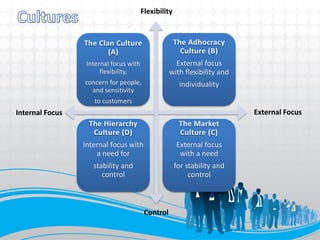
Flexibility


                 The Clan Culture                     The Adhocracy
                        (A)                             Culture (B)
                  Internal focus with                External focus
                       flexibility,                with flexibility and
                 concern for people,                   individuality
                   and sensitivity
                    to customers
Internal Focus                                                            External Focus
                  The Hierarchy                        The Market
                   Culture (D)                         Culture (C)
                 Internal focus with                  External focus
                     a need for                        with a need
                    stability and                     for stability and
                       control                             control


                                         Control
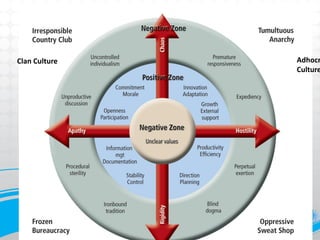
Clan Culture   Adhocr
               Culture
• A changing world requires a response of
  innovation

• Increasing Momentum toward learning for
  leadership
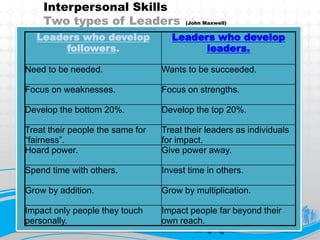
Interpersonal Skills
    Two types of Leaders                (John Maxwell)


  Leaders who develop               Leaders who develop
       followers.                         leaders.

Need to be needed.                Wants to be succeeded.

Focus on weaknesses.              Focus on strengths.

Develop the bottom 20%.           Develop the top 20%.

Treat their people the same for   Treat their leaders as individuals
“fairness”.                       for impact.
Hoard power.                      Give power away.

Spend time with others.           Invest time in others.

Grow by addition.                 Grow by multiplication.

Impact only people they touch     Impact people far beyond their
personally.                       own reach.
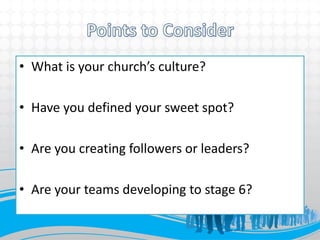
• What is your church’s culture?

• Have you defined your sweet spot?

• Are you creating followers or leaders?

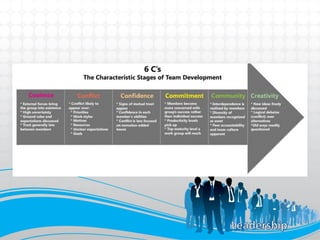
• Are your teams developing to stage 6?
• www.slideshare.net/louiskotze

• http://www.ocai-online.com/

• Tuckman’s Stages of Team Development

• Competing Values Framework for
  organizational culture

Team leadership

  • 2.
    • "A patternof shared basic assumptions that the group learned as it solved its problems that has worked well enough to be considered valid and is passed on to new members as the correct way to perceive, think, and feel in relation to those problems.“ Edgar Schein • “The specific collection of values and norms that are shared by people and groups in an organization and that control the way they interact with each other and with stakeholders outside the organization.“ Hill and Jones
  • 3.
    Flexibility The Clan Culture The Adhocracy (A) Culture (B) Internal focus with External focus flexibility, with flexibility and concern for people, individuality and sensitivity to customers Internal Focus External Focus The Hierarchy The Market Culture (D) Culture (C) Internal focus with External focus a need for with a need stability and for stability and control control Control
  • 4.
    Clan Culture Adhocr Culture
  • 5.
    • A changingworld requires a response of innovation • Increasing Momentum toward learning for leadership
  • 6.
    Interpersonal Skills Two types of Leaders (John Maxwell) Leaders who develop Leaders who develop followers. leaders. Need to be needed. Wants to be succeeded. Focus on weaknesses. Focus on strengths. Develop the bottom 20%. Develop the top 20%. Treat their people the same for Treat their leaders as individuals “fairness”. for impact. Hoard power. Give power away. Spend time with others. Invest time in others. Grow by addition. Grow by multiplication. Impact only people they touch Impact people far beyond their personally. own reach.
  • 8.
    • What isyour church’s culture? • Have you defined your sweet spot? • Are you creating followers or leaders? • Are your teams developing to stage 6?
  • 9.
    • www.slideshare.net/louiskotze • http://www.ocai-online.com/ •Tuckman’s Stages of Team Development • Competing Values Framework for organizational culture