Organisatonal Culture In
        MNC’s
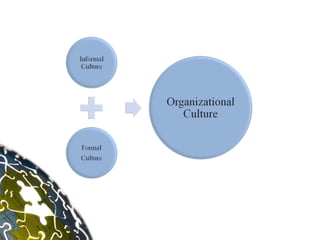
Organisational Culture
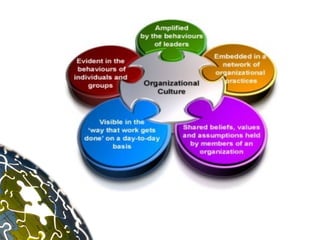
Organizational Culture describes the psychology, attitude,
experiences, beliefs and values of an organization. i.e. it depicts
the below attribute -


            Employees and customers should be
           treated


                      Rules that dictate the do’s and don’ts of
                     employee behavior
???
???


 ????
 ????
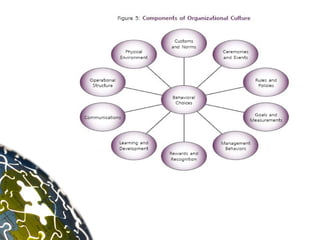
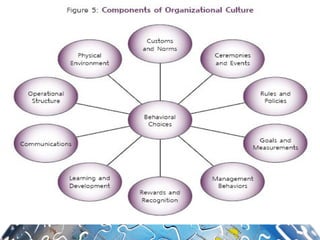
G. Johnson[6] described a cultural web, identifying
a number of elements that can be used to describe
or influence Organizational Culture:
The Paradigm: What the organization is about; what it does; its
mission; its values.
Control Systems: The processes in place to monitor what is going on.
Role cultures would have vast rulebooks. There would be more reliance
on individualism in a power culture.
Organizational Structures: Reporting lines, hierarchies, and the way
that work flows through the business.
Power Structures: Who makes the decisions, how widely spread is
power, and on what is power based?
Symbols: These include organizational logos and designs, but also
extend to symbols of power such as parking spaces and executive
washrooms.
Rituals and Routines: Management meetings, board reports and so
on may become more habitual than necessary.
Stories and Myths: build up about people and events, and convey a
message about what is valued within the organization.
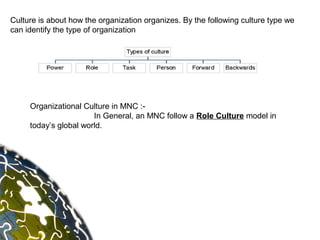
Culture is about how the organization organizes. By the following culture type we
can identify the type of organization


     Organizational Culture in MNC :-
                       In General, an MNC follow a Role Culture model in
     today’s global world.
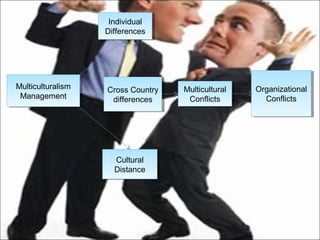
Individual
                     Individual
                   Differences
                   Differences


Multiculturalism
Multiculturalism   Cross Country   Multicultural
                                   Multicultural   Organizational
                                                   Organizational
                   Cross Country
 Management
 Management         differences     Conflicts
                                    Conflicts        Conflicts
                                                      Conflicts
                     differences


                     Cultural
                      Cultural
                     Distance
                     Distance
Individual
                     Individual
                   Differences
                   Differences


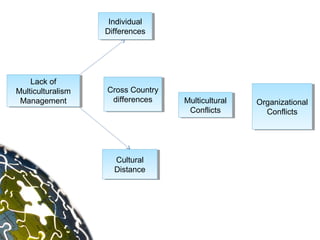
    Lack of
     Lack of
Multiculturalism
Multiculturalism   Cross Country
                   Cross Country
 Management
 Management         differences
                     differences   Multicultural
                                   Multicultural   Organizational
                                                   Organizational
                                    Conflicts
                                    Conflicts        Conflicts
                                                      Conflicts


                     Cultural
                      Cultural
                     Distance
                     Distance
Process Flow

Design         Plan        Build         Test       Evaluate


• Bullet 1   • Bullet 1   • Bullet 1   • Bullet 1   • Bullet 1
• Bullet 2   • Bullet 2   • Bullet 2   • Bullet 2   • Bullet 2
• Bullet 3   • Bullet 3   • Bullet 3   • Bullet 3   • Bullet 3
W AT IS IM ACT OF
  H       P
 ORGANISAT IONAL
CUL URE W H T E
   T     IT IN H
     MNC..???
POSITIVE IMPACTS OF
ORGANISATIONAL CULTURE :
              Instructions interpreted in
             a common way.

             High Loyalty.

              High Motivation, and
             productivity.
              Management control is
             increased.
NEGATIVE IMPACTS OF
ORGANISATIONAL CULTURE :
           Conflicts between local and
           imported culture.
           Business;not a homogenous
           culture.
            Weak relationship between
           strong corporate culture and
           business performance.
            Business;rarely simple, clear
           and unambiguous.
WHAT CAN BE DONE TO AVOID
         THE NEGATIVES??
            Business needs to play down
            the disadvantages and play up
            the advantages
            The ‘way we do things
            around here’, sets up
            constraints.
            Business needs to work
            around the constraints or
            remove them.

Organizational culture at MNC in India

  • 1.
  • 2.
  • 3.
    Organizational Culture describesthe psychology, attitude, experiences, beliefs and values of an organization. i.e. it depicts the below attribute -  Employees and customers should be treated  Rules that dictate the do’s and don’ts of employee behavior
  • 6.
  • 7.
    G. Johnson[6] describeda cultural web, identifying a number of elements that can be used to describe or influence Organizational Culture: The Paradigm: What the organization is about; what it does; its mission; its values. Control Systems: The processes in place to monitor what is going on. Role cultures would have vast rulebooks. There would be more reliance on individualism in a power culture. Organizational Structures: Reporting lines, hierarchies, and the way that work flows through the business. Power Structures: Who makes the decisions, how widely spread is power, and on what is power based? Symbols: These include organizational logos and designs, but also extend to symbols of power such as parking spaces and executive washrooms. Rituals and Routines: Management meetings, board reports and so on may become more habitual than necessary. Stories and Myths: build up about people and events, and convey a message about what is valued within the organization.
  • 8.
    Culture is abouthow the organization organizes. By the following culture type we can identify the type of organization Organizational Culture in MNC :- In General, an MNC follow a Role Culture model in today’s global world.
  • 9.
    Individual Individual Differences Differences Multiculturalism Multiculturalism Cross Country Multicultural Multicultural Organizational Organizational Cross Country Management Management differences Conflicts Conflicts Conflicts Conflicts differences Cultural Cultural Distance Distance
  • 10.
    Individual Individual Differences Differences Lack of Lack of Multiculturalism Multiculturalism Cross Country Cross Country Management Management differences differences Multicultural Multicultural Organizational Organizational Conflicts Conflicts Conflicts Conflicts Cultural Cultural Distance Distance
  • 12.
    Process Flow Design Plan Build Test Evaluate • Bullet 1 • Bullet 1 • Bullet 1 • Bullet 1 • Bullet 1 • Bullet 2 • Bullet 2 • Bullet 2 • Bullet 2 • Bullet 2 • Bullet 3 • Bullet 3 • Bullet 3 • Bullet 3 • Bullet 3
  • 13.
    W AT ISIM ACT OF H P ORGANISAT IONAL CUL URE W H T E T IT IN H MNC..???
  • 14.
    POSITIVE IMPACTS OF ORGANISATIONALCULTURE : Instructions interpreted in a common way. High Loyalty. High Motivation, and productivity. Management control is increased.
  • 16.
    NEGATIVE IMPACTS OF ORGANISATIONALCULTURE : Conflicts between local and imported culture. Business;not a homogenous culture. Weak relationship between strong corporate culture and business performance. Business;rarely simple, clear and unambiguous.
  • 17.
    WHAT CAN BEDONE TO AVOID THE NEGATIVES?? Business needs to play down the disadvantages and play up the advantages The ‘way we do things around here’, sets up constraints. Business needs to work around the constraints or remove them.