D9 Teaching the Classics in the Inclusive ClassroomKatherine S. McKnight, Ph.D.Katie McKnight, Ph.D.Katie@KatherineMcKnight.comwww.KatherineMcKnight.comTwitter: @LiteracyWorldFacebook: Katie McKnight Literacy
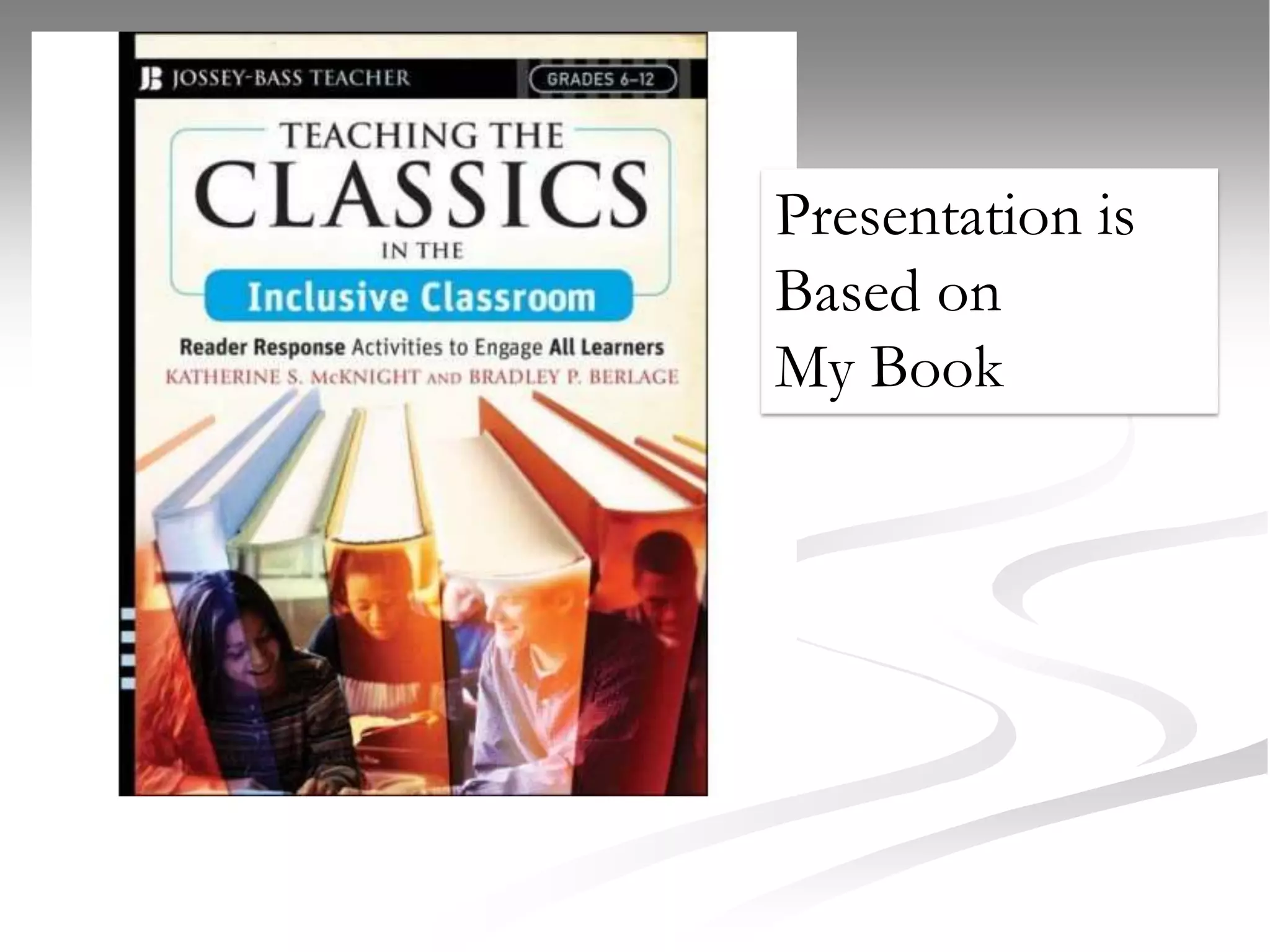
Presentation is Based on My Book
Why Should We Teach the Classics?History of Teaching the ClassicsPromoting Student Engagement and Self-EfficacyHow do we teach the classics in an inclusive classroom?
Teaching Literature as a Three-Way InteractionTeachers must draw from all of their sources of knowledge if they are to develop activities to draw students into the text.Discussion dynamics are shaped by the social and cultural context of schooling.There are multiple cultural interpretations due to these dynamics and three-way interaction.
Teacher AssumptionsSome Literature is More Important than Other LiteratureCanon WarsInclusion of Multicultural LiteratureRecognition of Young Adult LiteratureWhat literature should be taught in schools?
Some Interpretations are Better than OthersSearching for Meaning in LiteratureTeachers’ knowledge of text, biographical information and historical content contributes to student understanding.Teacher contributes to the students’ initial reading.
Teachers Should Lead Students to Better Interpretations of LiteratureTeachers should lead students when an interpretation is unsatisfying or improper.  What’s the best interpretation?Often contributes significantly to students’ ability to analyze and interpret text.
New Assumptions About Texts and ReadingNew Criticism“close reading”“all meaning resides in the text”Reader ResponseTransaction with text
Interpreting TextResearch in literary study indicates that meanings are not found by readers in text, but are made readers in interaction with texts.Interpretations are shaped.
We need to ask ourselves these questions:Do we value all children equally?Is anyone more or less valuable?What do we mean by inclusion?Are there some children for whom inclusion is inappropriate?
Hints for Struggling ReadersProvide readers who struggle to decode with opportunities to hear the text read aloud (tape assist)Give readers for whom word recognition is a problem supplemental materials that include visual clues to word meaning (or use manipulatives in math)Allot additional time for readers who struggle to complete assignmentsEncourage struggling readers to use the internet because often the symbols and icons that are quite bothersome to good readers provide a means for struggling readers to construct meaning
Teaching the Classics to ALL StudentsPre-Reading ActivitiesWhy are pre-reading activities important?Visual Activities (Poster Project, Visual Arts Gallery)Using the arts for pre-reading activities
Teaching the Classics to ALL StudentsDuring-Reading ActivitiesMaking text kinestheticCreating Graphing NovelsReader’s TheaterCharacter BookmarksFound Poetry
Teaching the Classics to ALL StudentsAfter-Reading ActivitiesCharacter ActivitiesPlot ActivitiesThematic ActivitiesAnalysis Activities
Writing ActivitiesJournal WritingReader Response LogsCreative Writing IdeasCharacter DiariesLiterature Letters
Vocabulary ActivitiesEnglish Vocabulary OriginsWord SortsWords in Action
Reaching and Teaching ALL of our StudentsCurriculum DifferentiationMultiple IntelligencesA Variety of Reading and Literary ExperiencesEclectic Teaching
Connector: Your job is to find connections between the book you are reading and the outside world. Discussion Director: Your job is to write a list of questions that your group might want to discuss about this part of the book. Literary Luminary: Your job is to choose a paragraph or sentences from the book to discuss with your group.Illustrator: Your job is to draw some kind of a picture related to what you read in your section.Vocabulary Enricher: Your job is to look for a few important words in your reading. If you find words that are puzzling or unfamiliar
If you liked this session, consider booking a full day of training in one of the following areas:Visit us at the SDE Professional Development booth to learn more!

Teaching the Classics in the Inclusive Classroom.mcknight

  • 1.
    D9 Teaching theClassics in the Inclusive ClassroomKatherine S. McKnight, Ph.D.Katie McKnight, Ph.D.Katie@KatherineMcKnight.comwww.KatherineMcKnight.comTwitter: @LiteracyWorldFacebook: Katie McKnight Literacy
  • 2.
  • 3.
    Why Should WeTeach the Classics?History of Teaching the ClassicsPromoting Student Engagement and Self-EfficacyHow do we teach the classics in an inclusive classroom?
  • 4.
    Teaching Literature asa Three-Way InteractionTeachers must draw from all of their sources of knowledge if they are to develop activities to draw students into the text.Discussion dynamics are shaped by the social and cultural context of schooling.There are multiple cultural interpretations due to these dynamics and three-way interaction.
  • 5.
    Teacher AssumptionsSome Literatureis More Important than Other LiteratureCanon WarsInclusion of Multicultural LiteratureRecognition of Young Adult LiteratureWhat literature should be taught in schools?
  • 6.
    Some Interpretations areBetter than OthersSearching for Meaning in LiteratureTeachers’ knowledge of text, biographical information and historical content contributes to student understanding.Teacher contributes to the students’ initial reading.
  • 7.
    Teachers Should LeadStudents to Better Interpretations of LiteratureTeachers should lead students when an interpretation is unsatisfying or improper. What’s the best interpretation?Often contributes significantly to students’ ability to analyze and interpret text.
  • 8.
    New Assumptions AboutTexts and ReadingNew Criticism“close reading”“all meaning resides in the text”Reader ResponseTransaction with text
  • 9.
    Interpreting TextResearch inliterary study indicates that meanings are not found by readers in text, but are made readers in interaction with texts.Interpretations are shaped.
  • 10.
    We need toask ourselves these questions:Do we value all children equally?Is anyone more or less valuable?What do we mean by inclusion?Are there some children for whom inclusion is inappropriate?
  • 11.
    Hints for StrugglingReadersProvide readers who struggle to decode with opportunities to hear the text read aloud (tape assist)Give readers for whom word recognition is a problem supplemental materials that include visual clues to word meaning (or use manipulatives in math)Allot additional time for readers who struggle to complete assignmentsEncourage struggling readers to use the internet because often the symbols and icons that are quite bothersome to good readers provide a means for struggling readers to construct meaning
  • 12.
    Teaching the Classicsto ALL StudentsPre-Reading ActivitiesWhy are pre-reading activities important?Visual Activities (Poster Project, Visual Arts Gallery)Using the arts for pre-reading activities
  • 13.
    Teaching the Classicsto ALL StudentsDuring-Reading ActivitiesMaking text kinestheticCreating Graphing NovelsReader’s TheaterCharacter BookmarksFound Poetry
  • 14.
    Teaching the Classicsto ALL StudentsAfter-Reading ActivitiesCharacter ActivitiesPlot ActivitiesThematic ActivitiesAnalysis Activities
  • 15.
    Writing ActivitiesJournal WritingReaderResponse LogsCreative Writing IdeasCharacter DiariesLiterature Letters
  • 16.
    Vocabulary ActivitiesEnglish VocabularyOriginsWord SortsWords in Action
  • 17.
    Reaching and TeachingALL of our StudentsCurriculum DifferentiationMultiple IntelligencesA Variety of Reading and Literary ExperiencesEclectic Teaching
  • 18.
    Connector: Your jobis to find connections between the book you are reading and the outside world. Discussion Director: Your job is to write a list of questions that your group might want to discuss about this part of the book. Literary Luminary: Your job is to choose a paragraph or sentences from the book to discuss with your group.Illustrator: Your job is to draw some kind of a picture related to what you read in your section.Vocabulary Enricher: Your job is to look for a few important words in your reading. If you find words that are puzzling or unfamiliar
  • 19.
    If you likedthis session, consider booking a full day of training in one of the following areas:Visit us at the SDE Professional Development booth to learn more!