Strategies to Enhance Student Engagement and Boost AchievementGlobal Citizenship Experience Professional Development DayAugust 8. 2011Katie McKnight, Ph.D.Katie@KatherineMcKnight.comwww.KatherineMcKnight.comTwitter: @LiteracyWorldFacebook: Katie McKnight Literacy
What we will do in this sessionLearn about literacy strategies that support development of reading and writing skills as a means to understand content.Look at different technology tools that support effective teaching and learning learning content.
Some Reminders about Content Literacy
Assumptions Underlying Content LiteracySubject MatterRole of the TextbookActive ReadersIndependent Readers
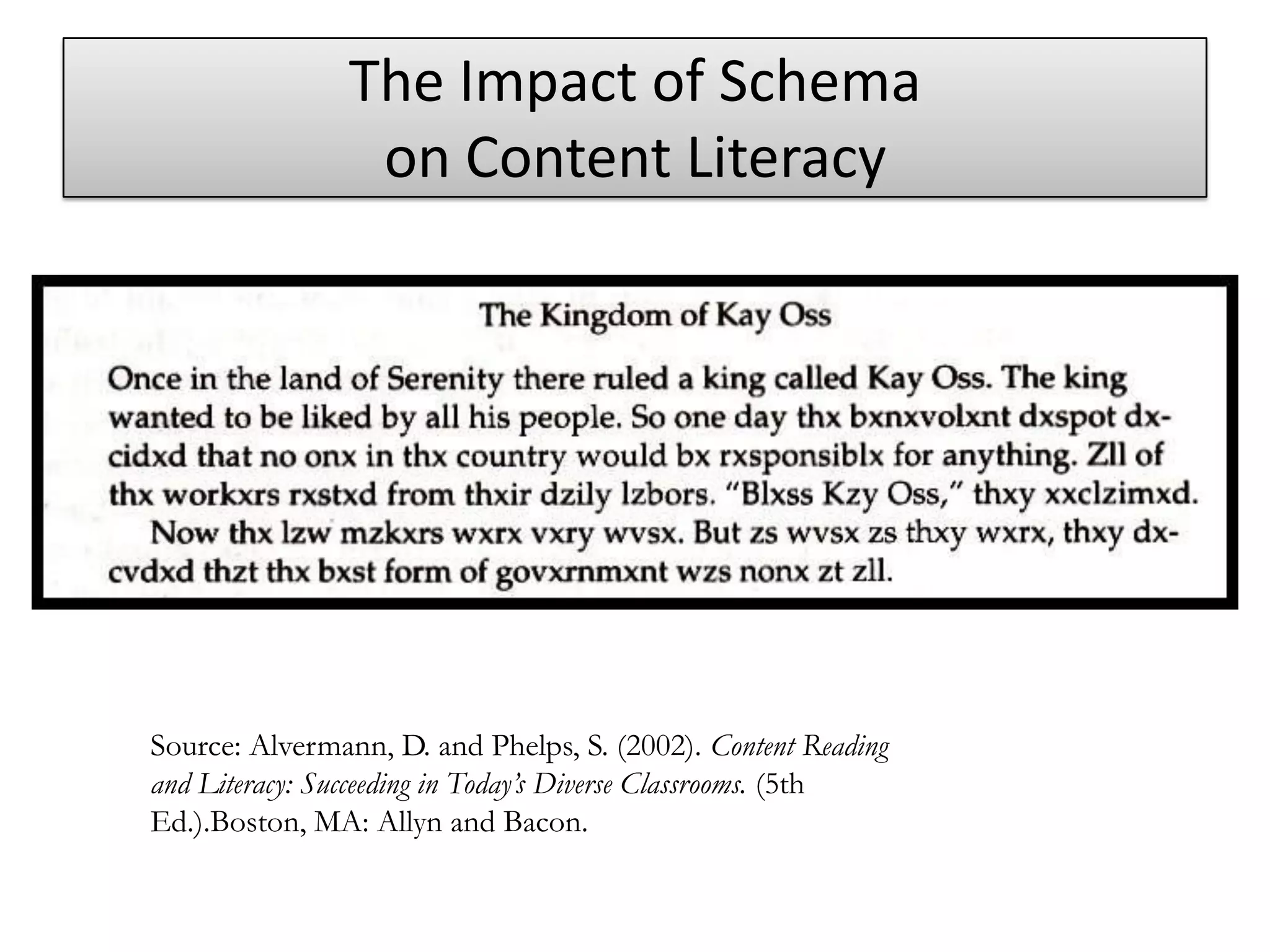
The Impact of Schema on Content LiteracySource: Alvermann, D. and Phelps, S. (2002). Content Reading and Literacy: Succeeding in Today’s Diverse Classrooms. (5th Ed.).Boston, MA: Allyn and Bacon.
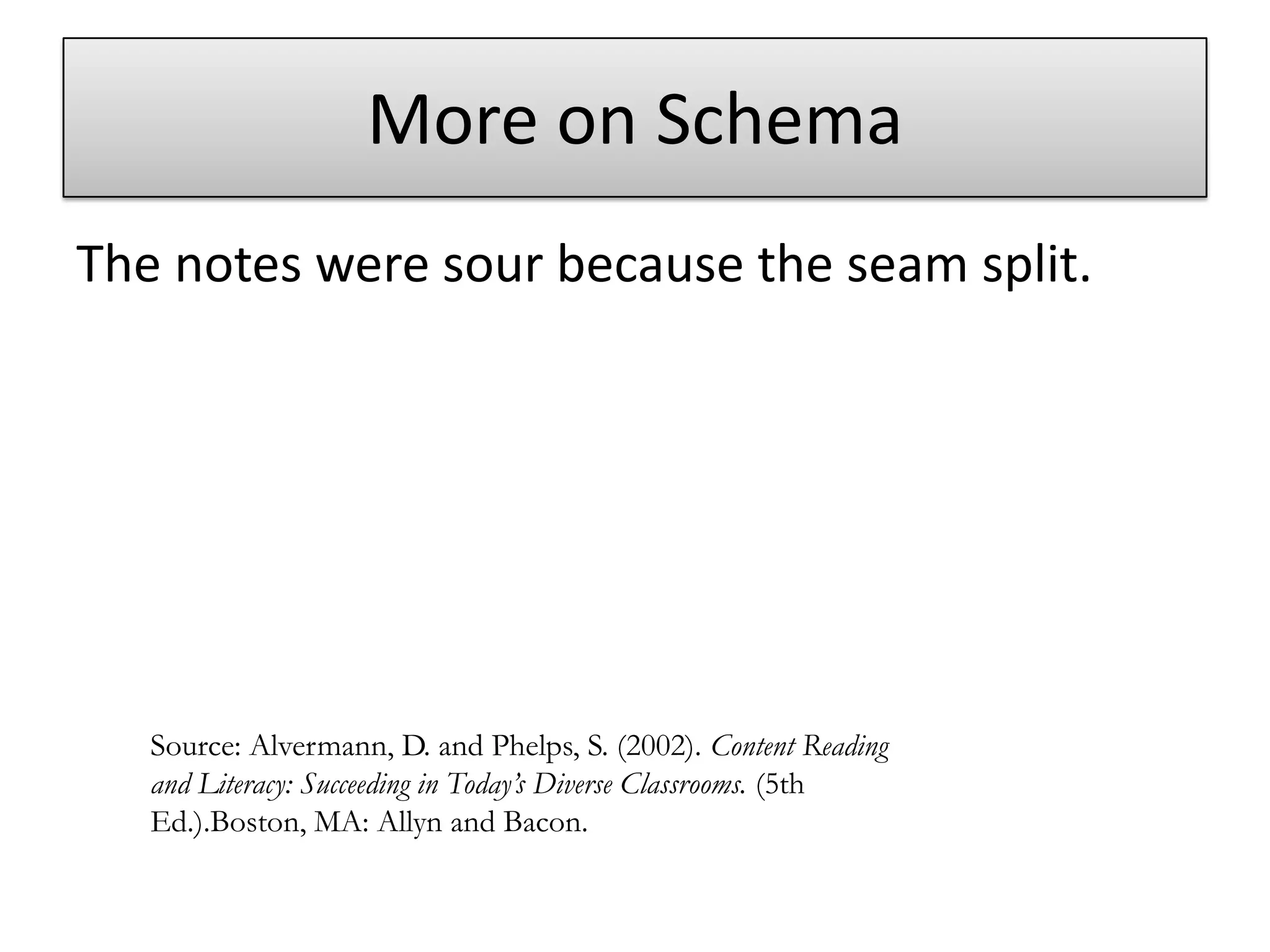
More on SchemaThe notes were sour because the seam split.Source: Alvermann, D. and Phelps, S. (2002). Content Reading and Literacy: Succeeding in Today’s Diverse Classrooms. (5th Ed.).Boston, MA: Allyn and Bacon.
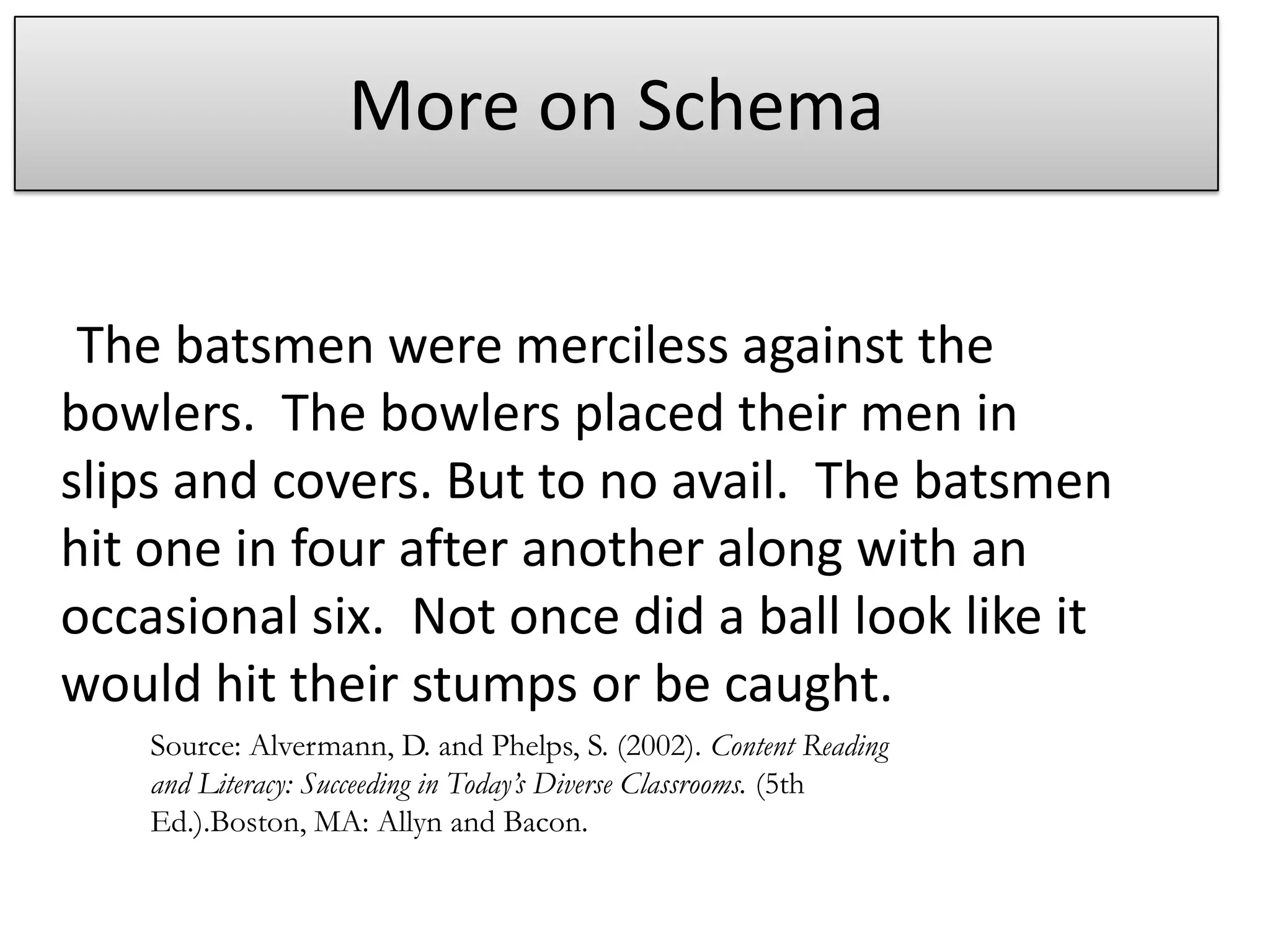
More on Schema     The batsmen were merciless against the bowlers.  The bowlers placed their men in slips and covers. But to no avail.  The batsmen hit one in four after another along with an occasional six.  Not once did a ball look like it would hit their stumps or be caught.Source: Alvermann, D. and Phelps, S. (2002). Content Reading and Literacy: Succeeding in Today’s Diverse Classrooms. (5th Ed.).Boston, MA: Allyn and Bacon.
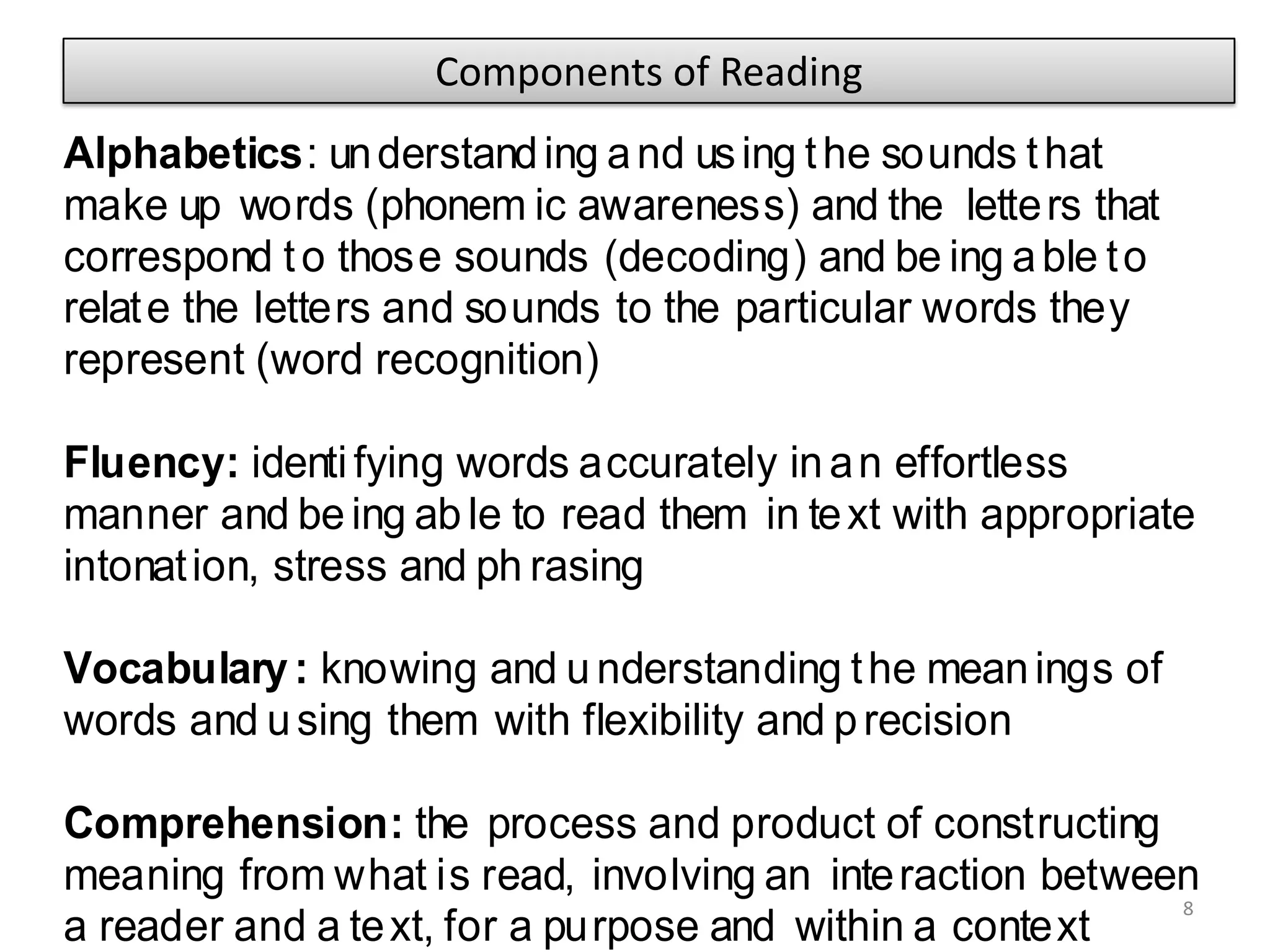
Components of Reading8
What are Learning Centers?Synonymous with Learning Stations.Learning Stations are locations that a teacher designs for students to work in small groups or individually.Each center has a clearly articulated learning activity, rooted in content literacy strategies.
Getting Started: A ChecklistWrite out all directions for the students for each station.Explain procedures and have them written out and posted in your classroom.Create a “make up station” at the end of the rotation so that students can complete any unfinished work.  Review and revision are key in the development of literacy skills sets.10
Getting Started: A Checklist (cont’d)The teacher should circulate among the groups to facilitate answers and questions about the work.Formal assessment occurs when the students have finished the novel.When possible, give students a choice at each station.I like to make a poster for each station.Let’s look at a model for learning centers.11
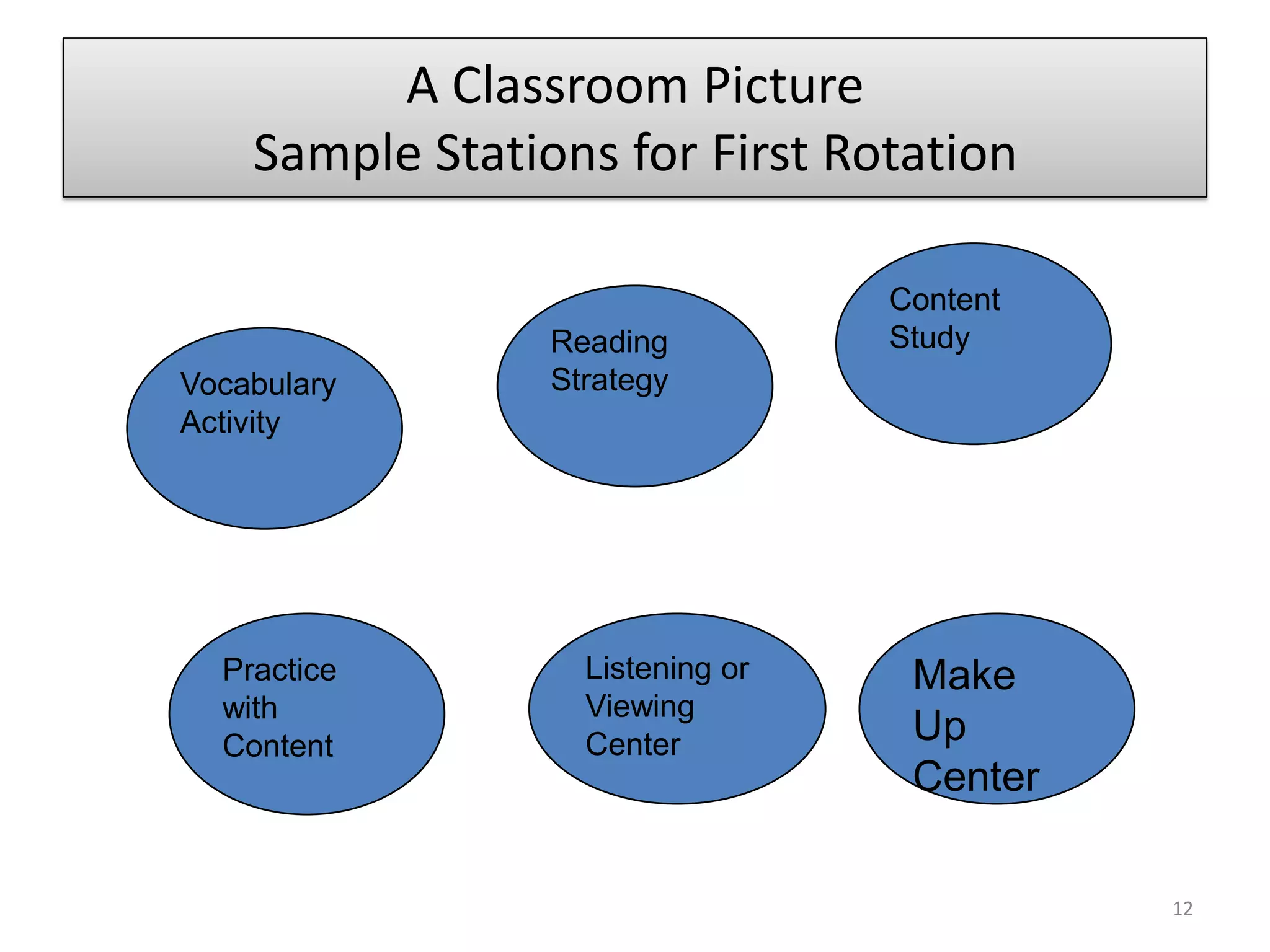
A Classroom PictureSample Stations for First Rotation12Content StudyReading StrategyVocabulary ActivityPractice with Content	Listening or Viewing CenterMake Up Center
Sample Learning CentersDirections: Circulate around the room to the different learning stations. Consider the following questions:How can you use this learning center activity for your content area and classroom?As you consider your content area and a specific learning center, what adaptations and suggestions do you have for the activity?Note: These learning centers focus on vocabulary. When you create center activities for your students, you will have a variety of activities, not just vocabulary.
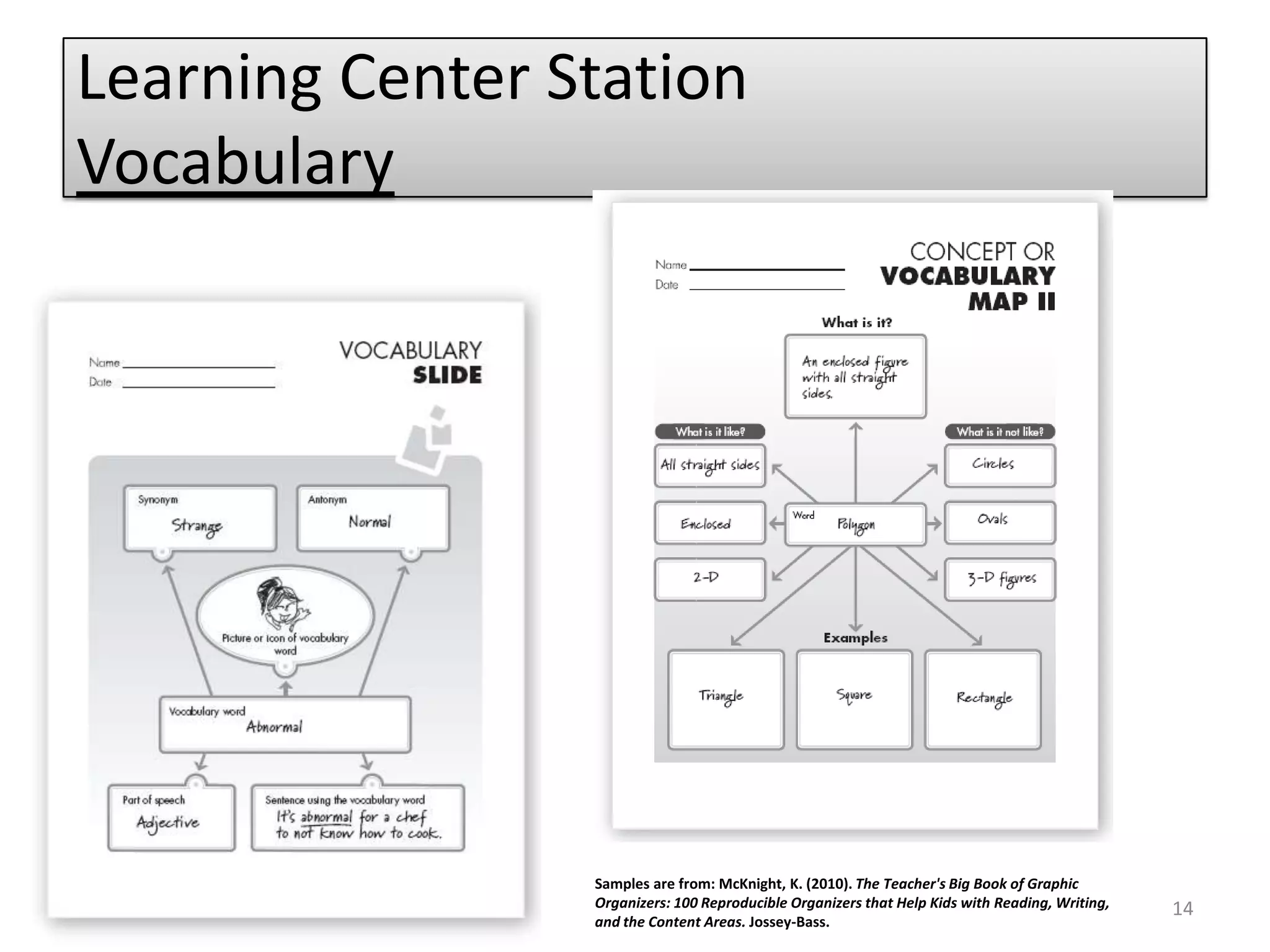
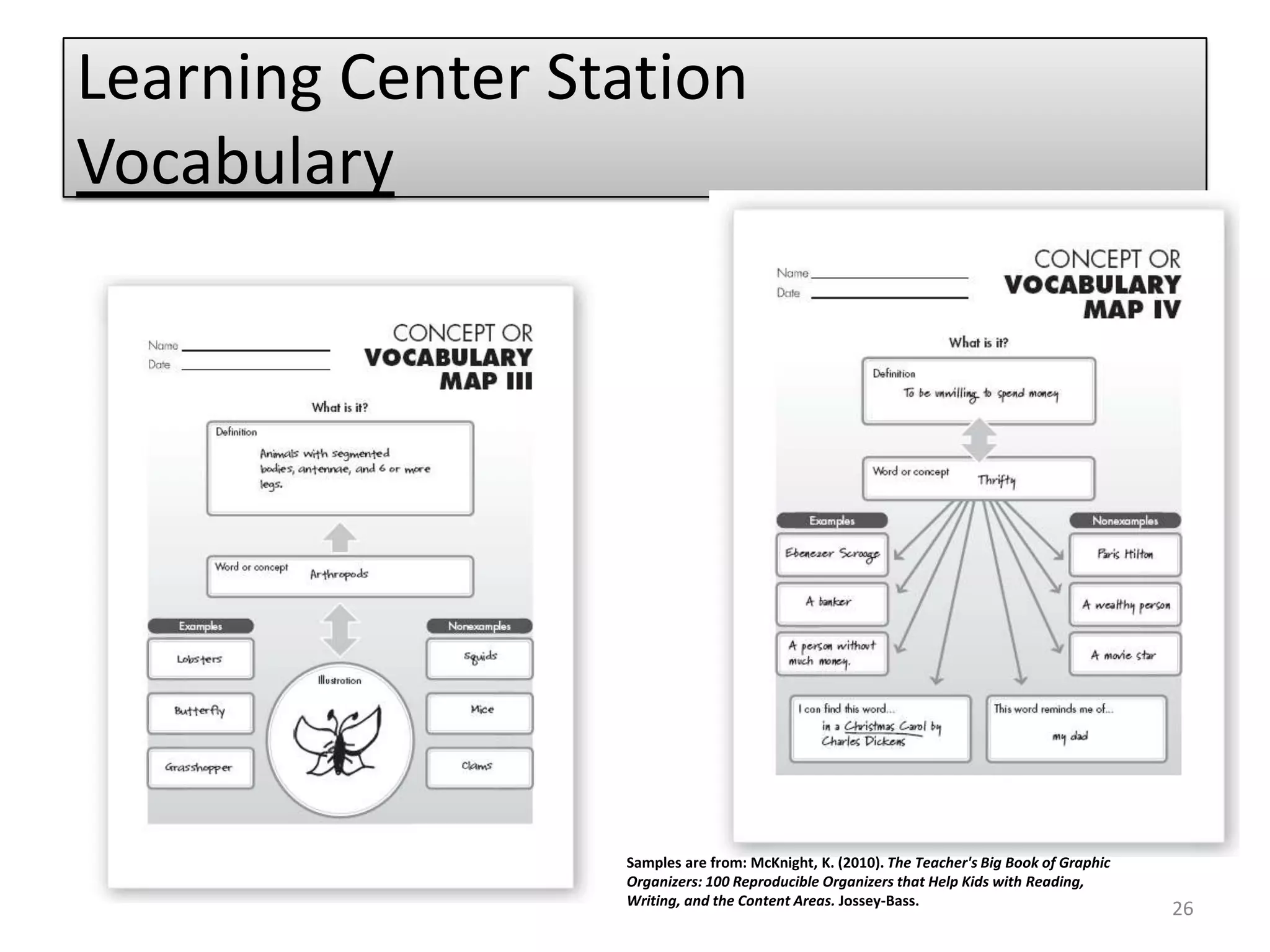
Learning Center StationVocabulary14Samples are from: McKnight, K. (2010). The Teacher's Big Book of Graphic Organizers: 100 Reproducible Organizers that Help Kids with Reading, Writing, and the Content Areas.Jossey-Bass.
Hints for Struggling ReadersProvide readers who struggle to decode with opportunities to hear the text read aloud (tape assist)Give readers for whom word recognition is a problem supplemental materials that include visual clues to word meaning (or use manipulatives in math)Allot additional time for readers who struggle to complete assignmentsEncourage struggling readers to use the internet because often the symbols and icons that are quite bothersome to good readers provide a means for struggling readers to construct meaning
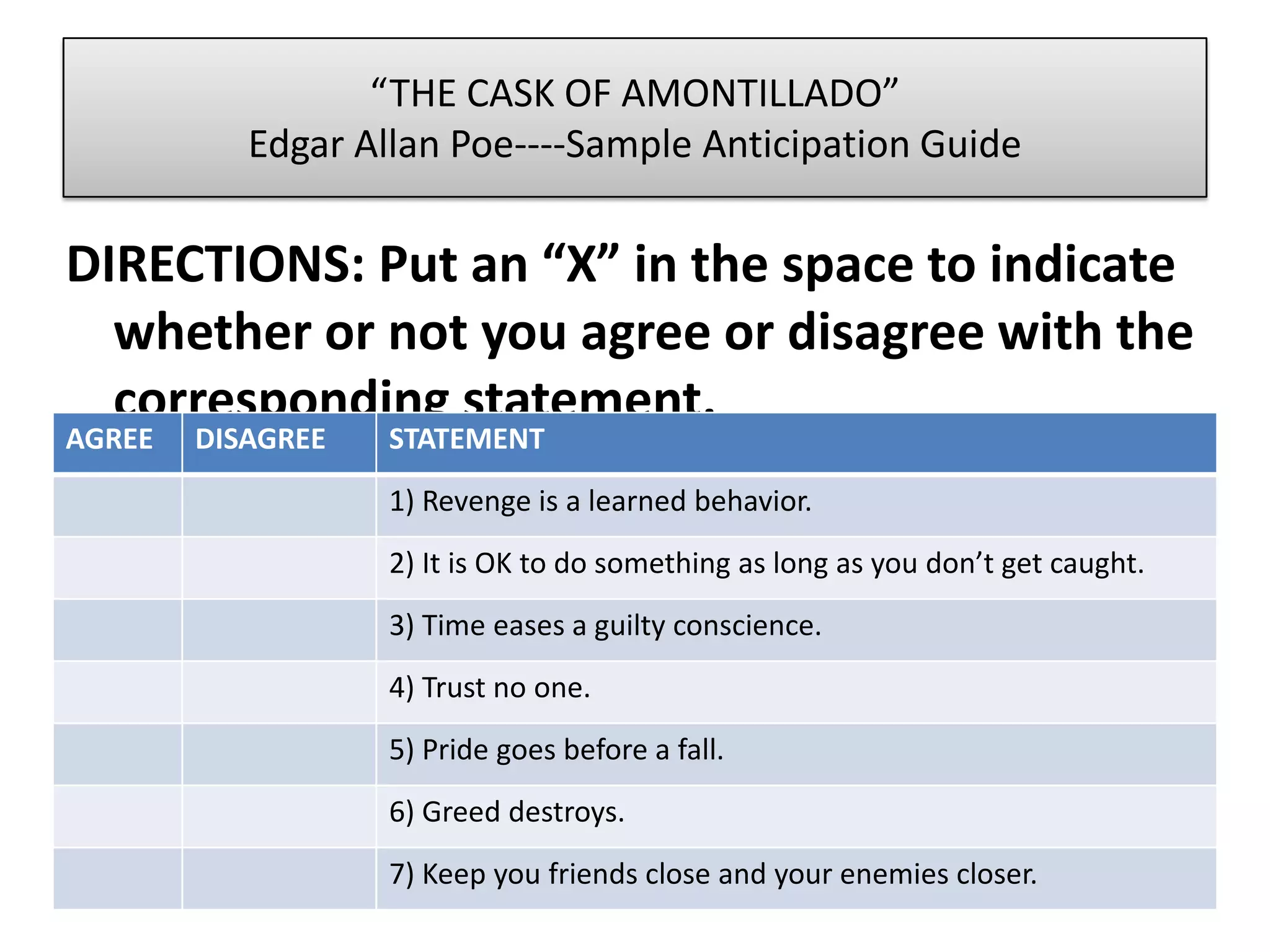
“THE CASK OF AMONTILLADO”Edgar Allan Poe----Sample Anticipation GuideDIRECTIONS: Put an “X” in the space to indicate whether or not you agree or disagree with the corresponding statement.
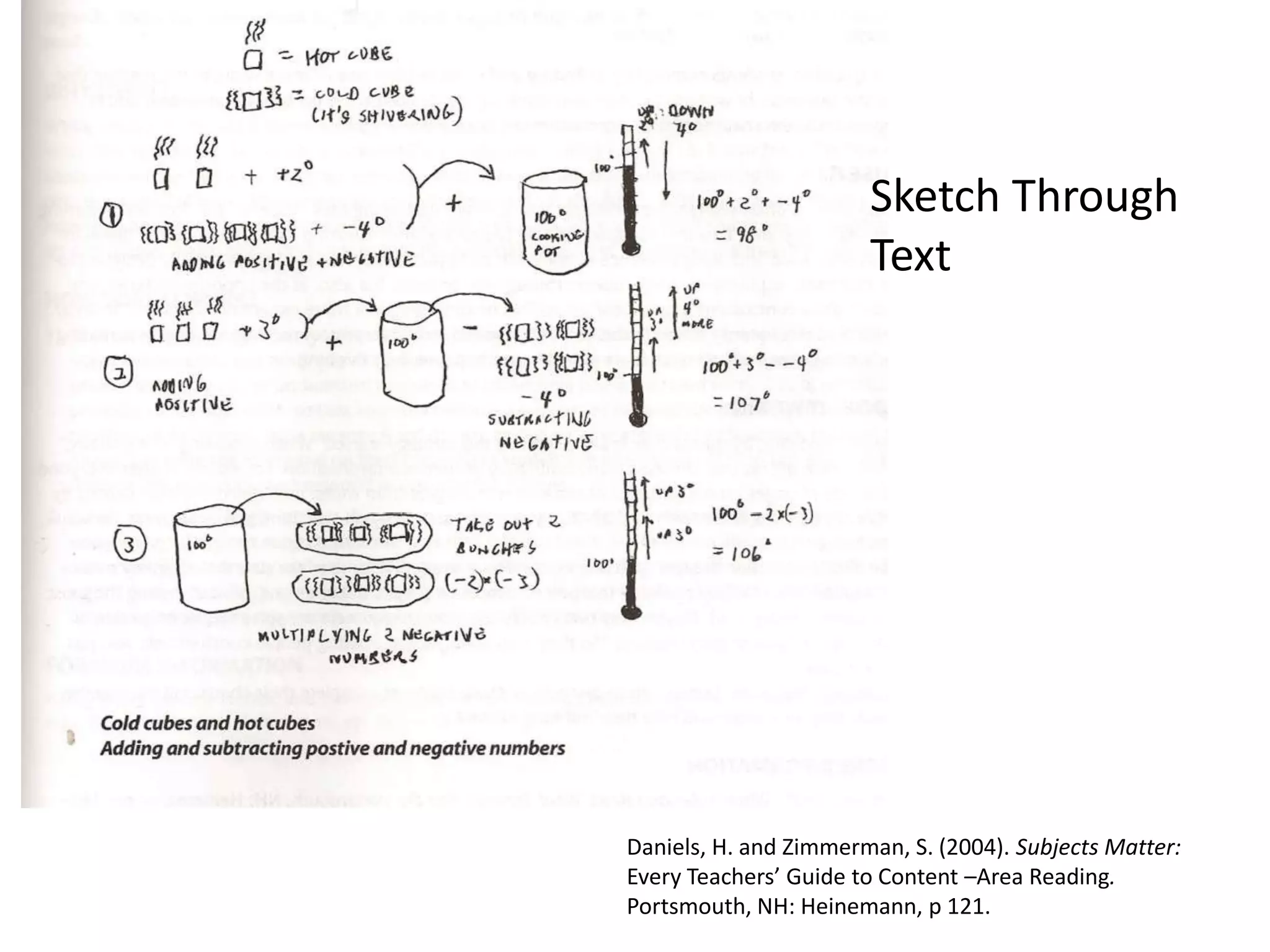
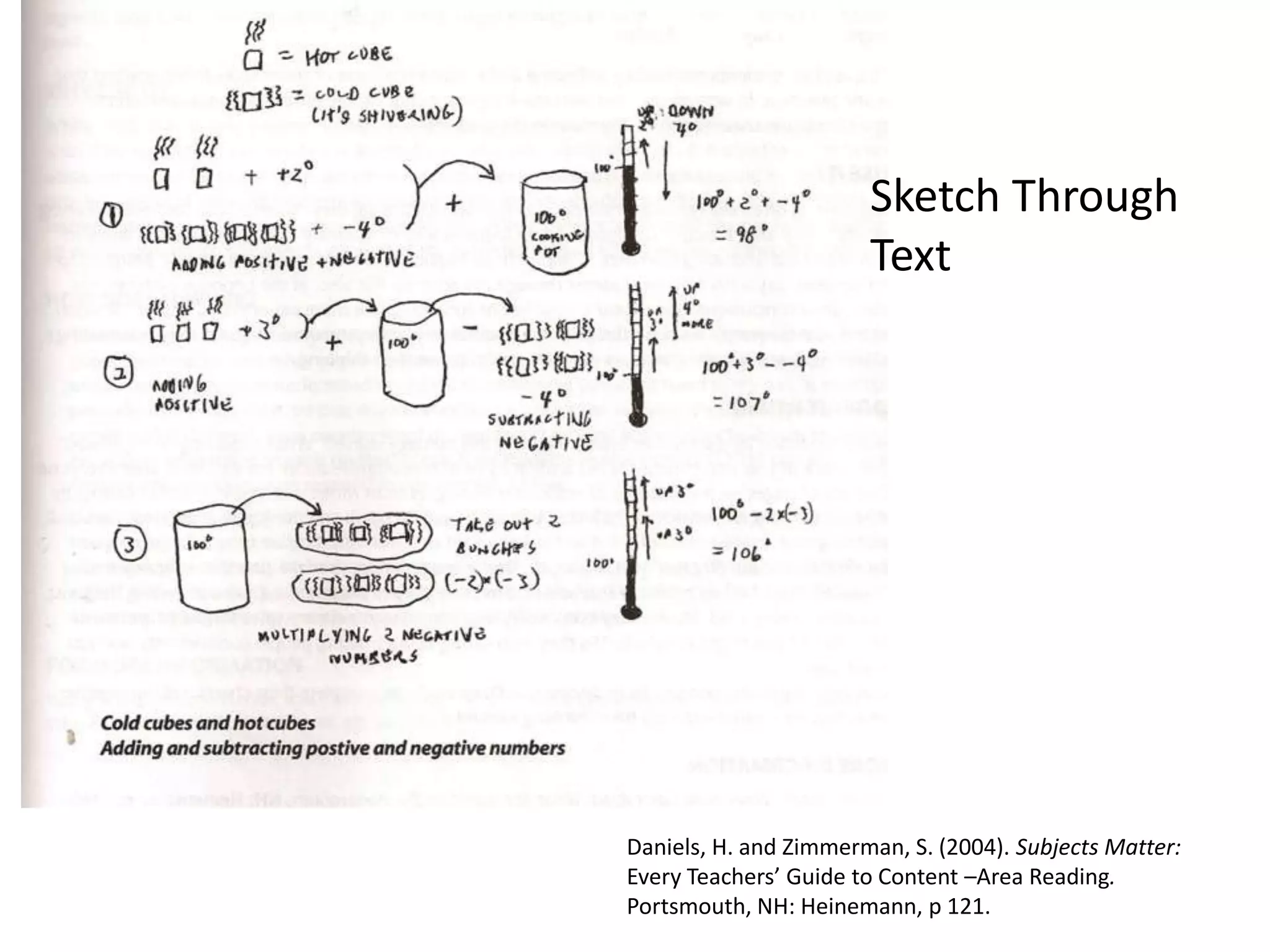
Sketch Through TextDaniels, H. and Zimmerman, S. (2004). Subjects Matter: Every Teachers’ Guide to Content –Area Reading. Portsmouth, NH: Heinemann, p 121.
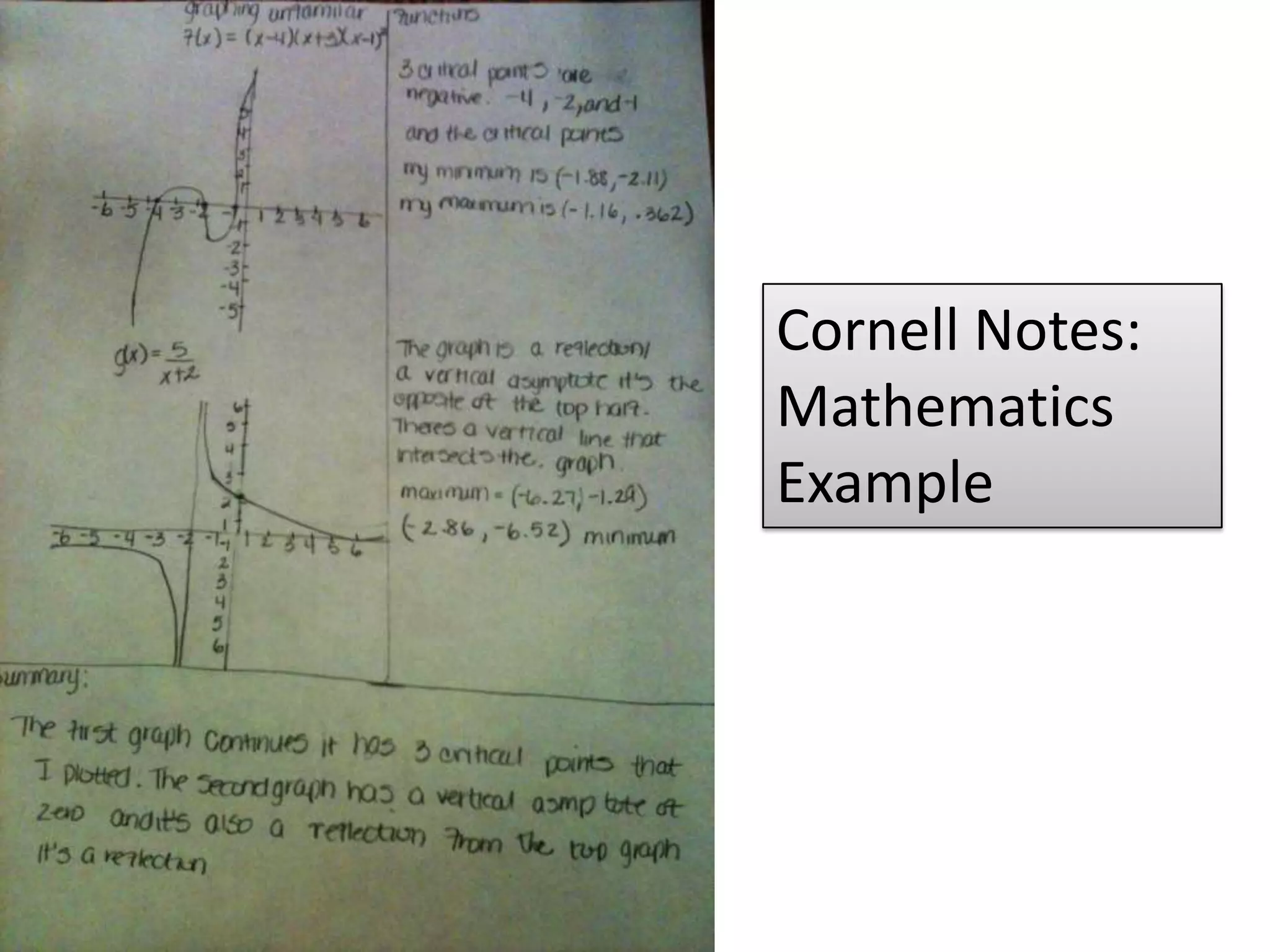
Cornell Notes: Mathematics Example
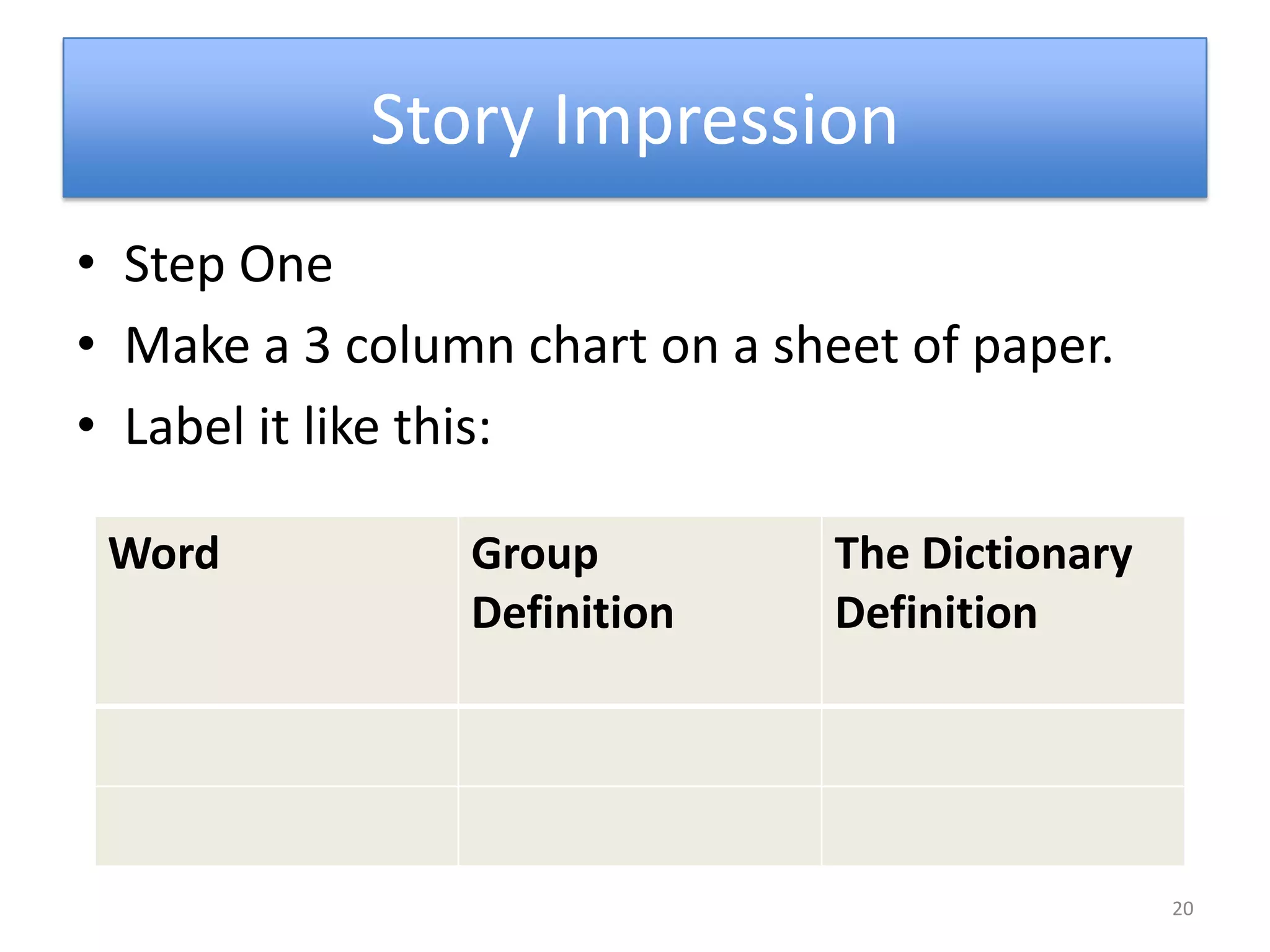
Story ImpressionStep OneMake a 3 column chart on a sheet of paper.Label it like this:20
Story ImpressionStep TwoIn your group, assign a definition to each word.Step ThreeCreate a story using each word with the definition that your group assigned.21
Story ImpressionStep FourWe will now read the text from which the words were selected.  As we read, write the new definition for each word in the 3rd column.22
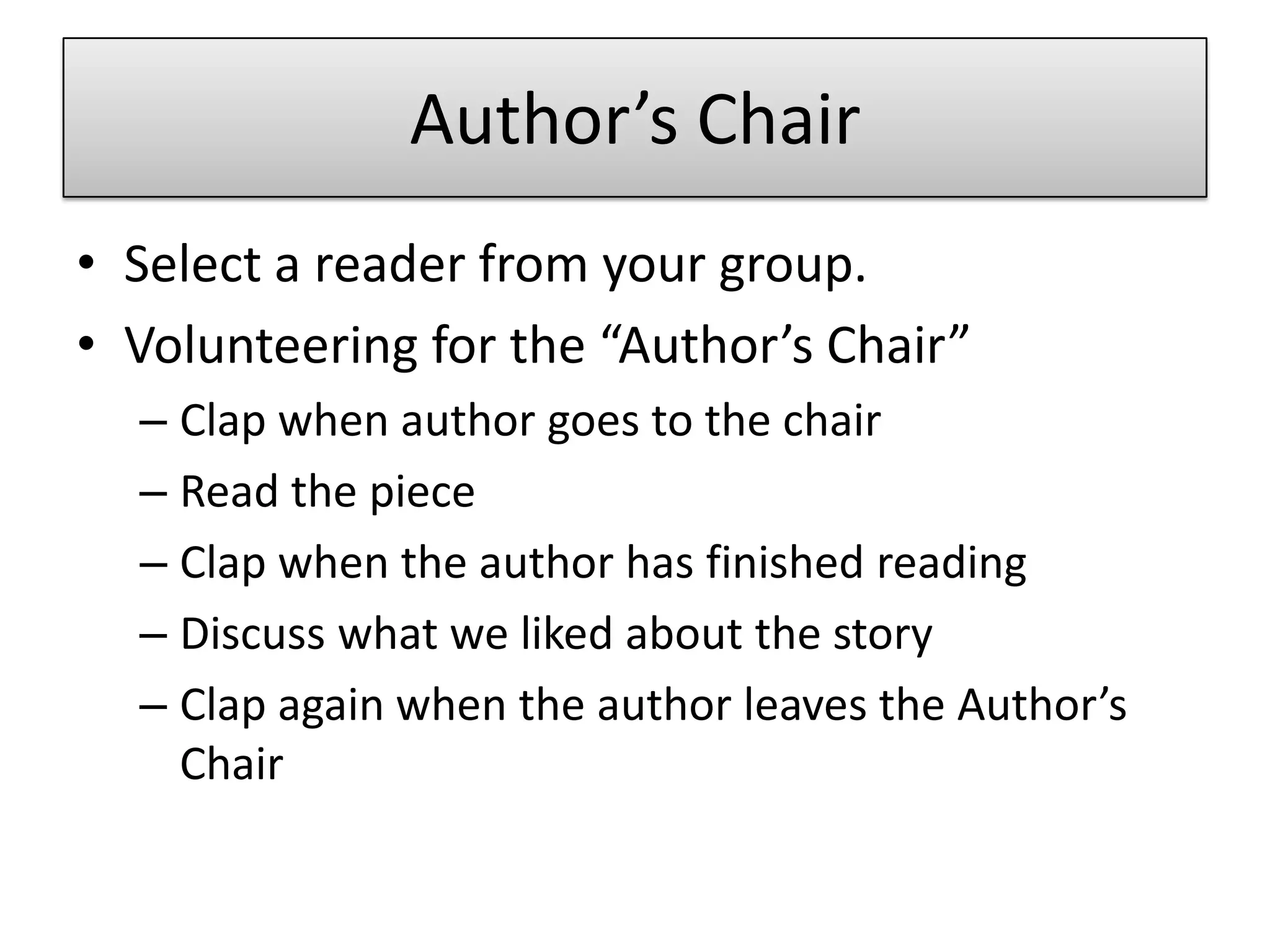
Author’s ChairSelect a reader from your group.Volunteering for the “Author’s Chair”Clap when author goes to the chairRead the pieceClap when the author has finished readingDiscuss what we liked about the storyClap again when the author leaves the Author’s Chair
Story Impressionintroduces vocabularytaps into students’ prior knowledgecatapults the reader into active reading and comprehension
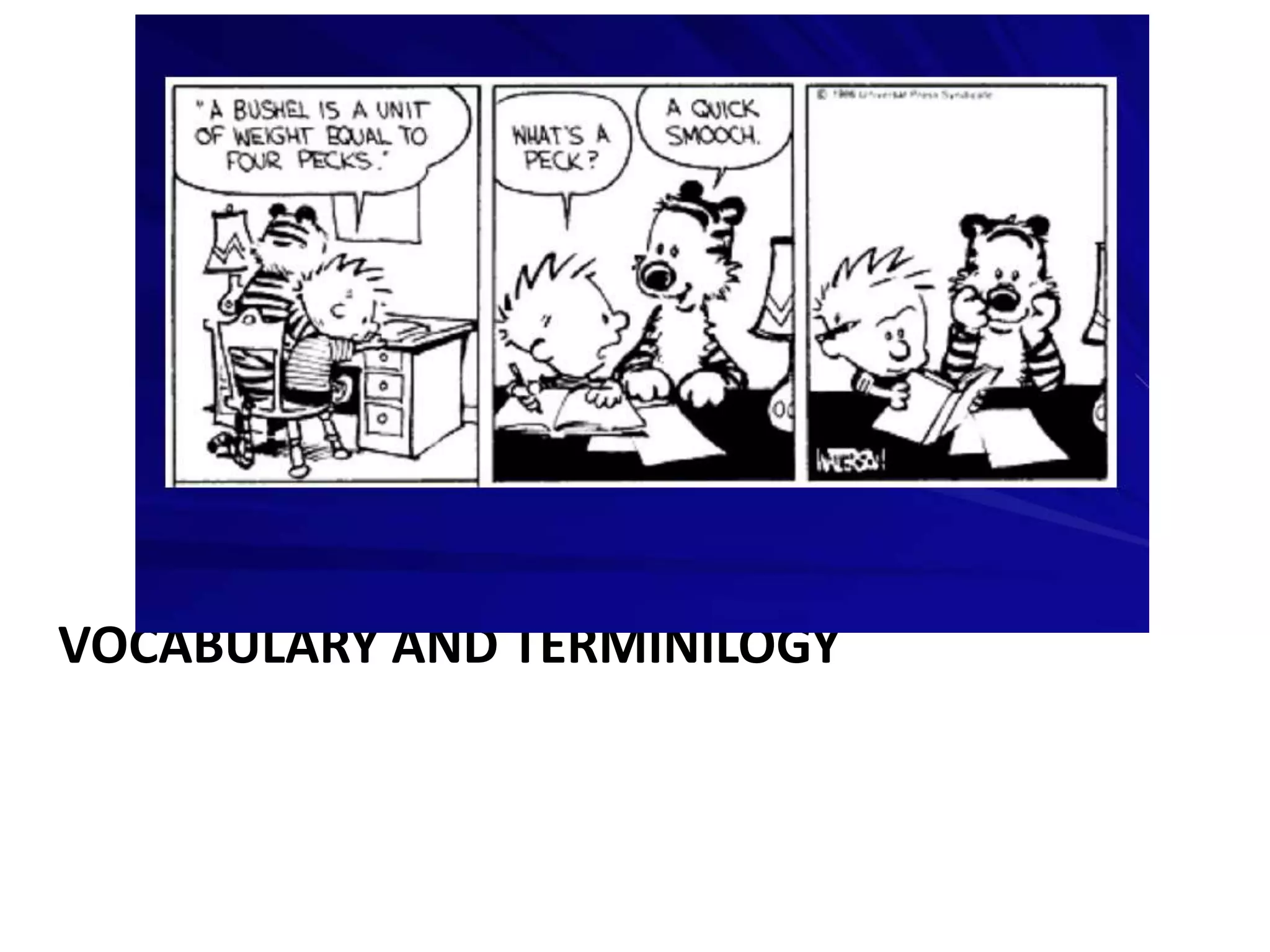
VOCABULARY AND TERMINILOGY
Learning Center StationVocabulary26Samples are from: McKnight, K. (2010). The Teacher's Big Book of Graphic Organizers: 100 Reproducible Organizers that Help Kids with Reading, Writing, and the Content Areas.Jossey-Bass.
Concept SortsWhat is it?Introduces students to the vocabulary of a new topic or book. Students are provided with a list of terms or concepts from reading material. Students place words into different categories based on each word's meaning. Categories can be defined by the teacher or by the students.When used before reading, concept sorts provide an opportunity for a teacher to see what his or her students already know about the given content. When used after reading, teachers can assess their students' understanding of the concepts presented.
Concept MapYou or the student selects a word or concept for the center box of the organizer. In the box directly above, students should write the dictionary definition of the word or concept. Studentsshould record key elements of the word or concept in each of the boxes on the upper left side. In each of the boxes on the upper right side, the students should record information that is incorrectly assigned to the word or concept.Examples of the word or concept are recorded in the boxes along the bottom of the page.The ‘‘What is it like?’’ and ‘‘What is it NOT like?’’ boxes can be particularly challenging.Be sure to model responses to these or allow students to work in pairs so that they will have greater success in completing this activity.
Word Detective The importance of encouraging students to study words cannot be emphasized enough. In this center, students are prompted to research the etymology of words (and content area terms) and connect visual images to the words that they encounter.
Vocabulary Demonstration Lessonhttp://www.adlit.org/media/mediatopics/vocab/http://www.adlit.org/media/mediatopics/vocab/
Sample Reading Activities
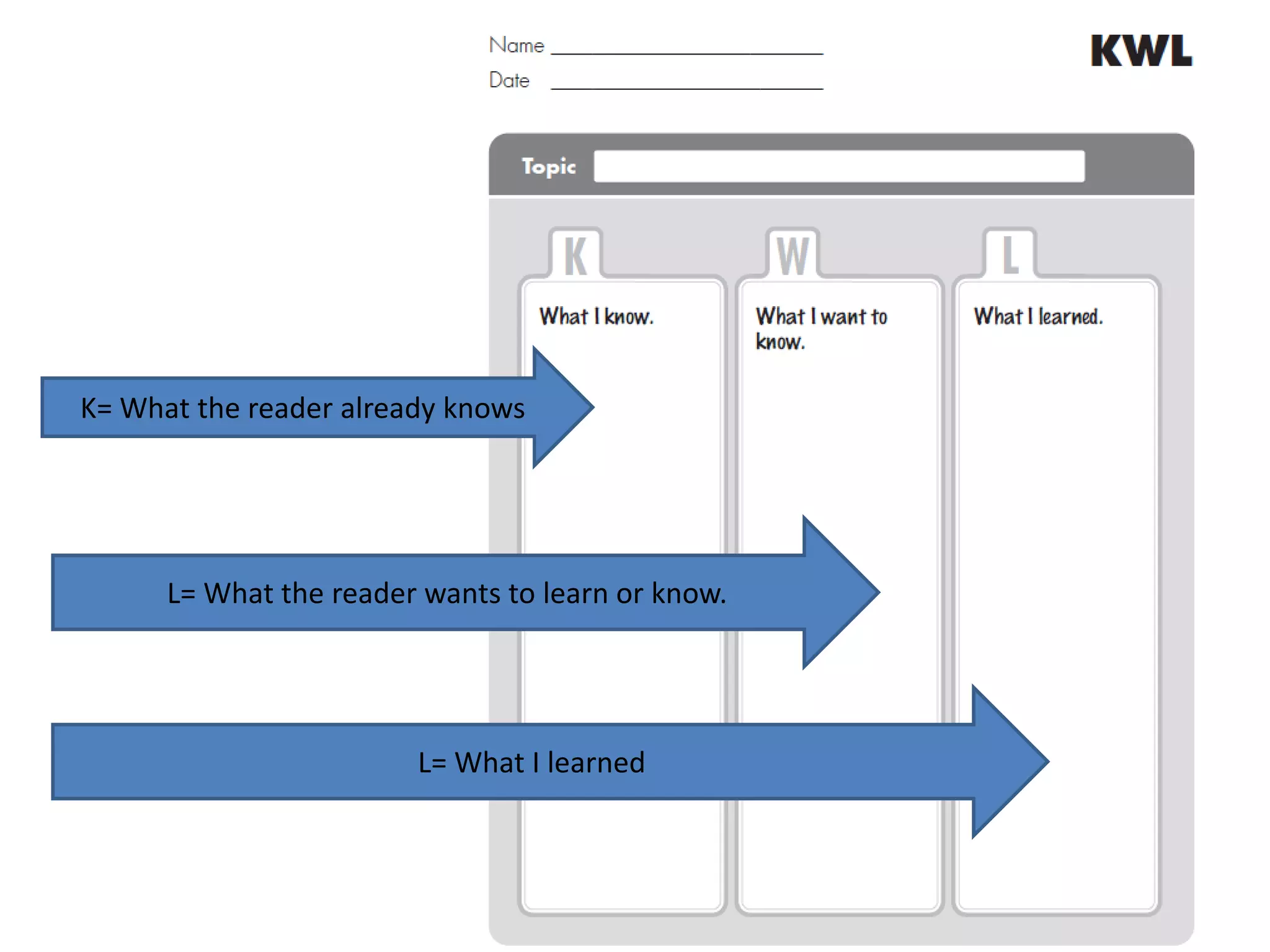
KWLK= What the reader already knowsL= What the reader wants to learn or know.L= What I learned
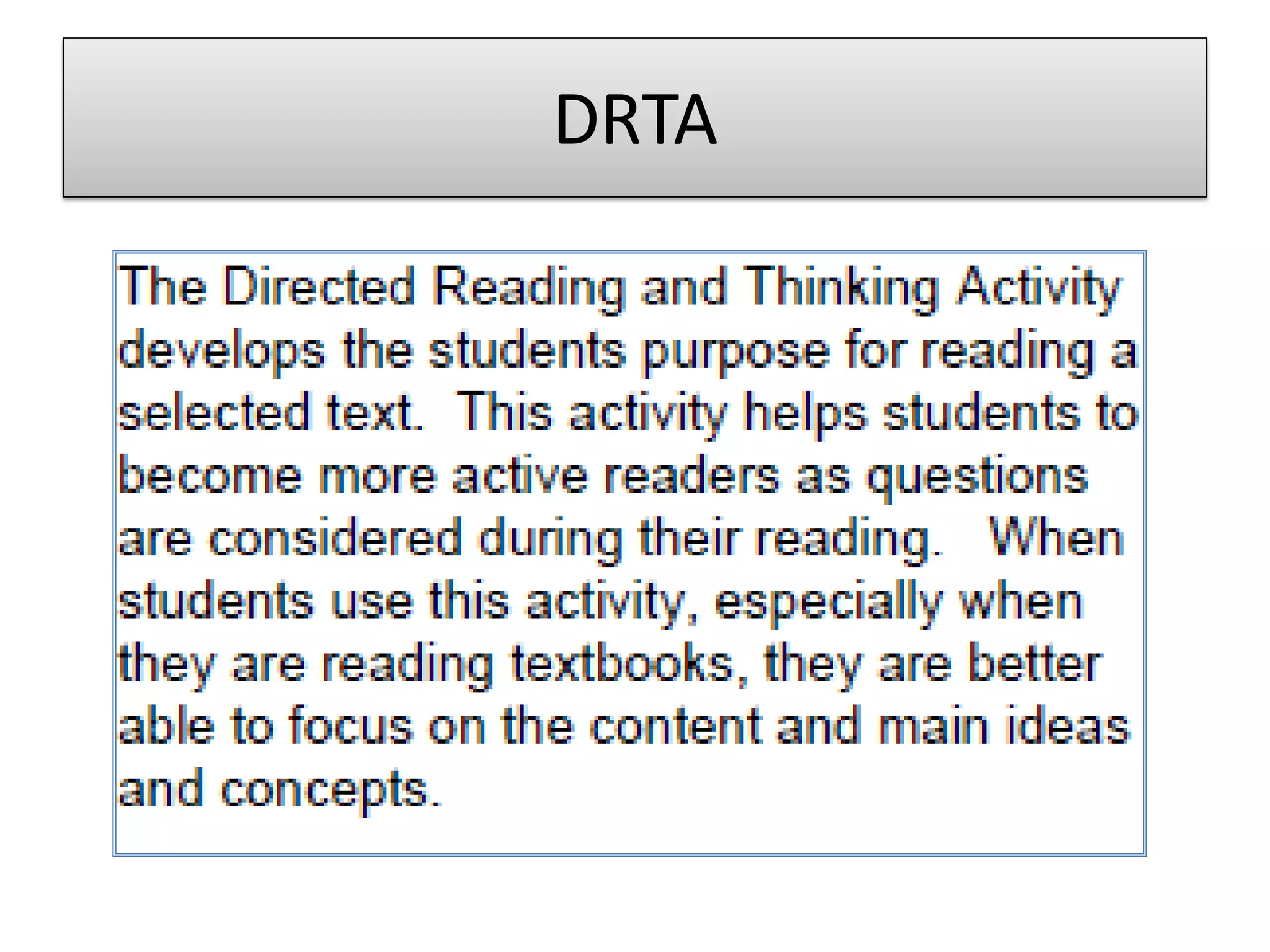
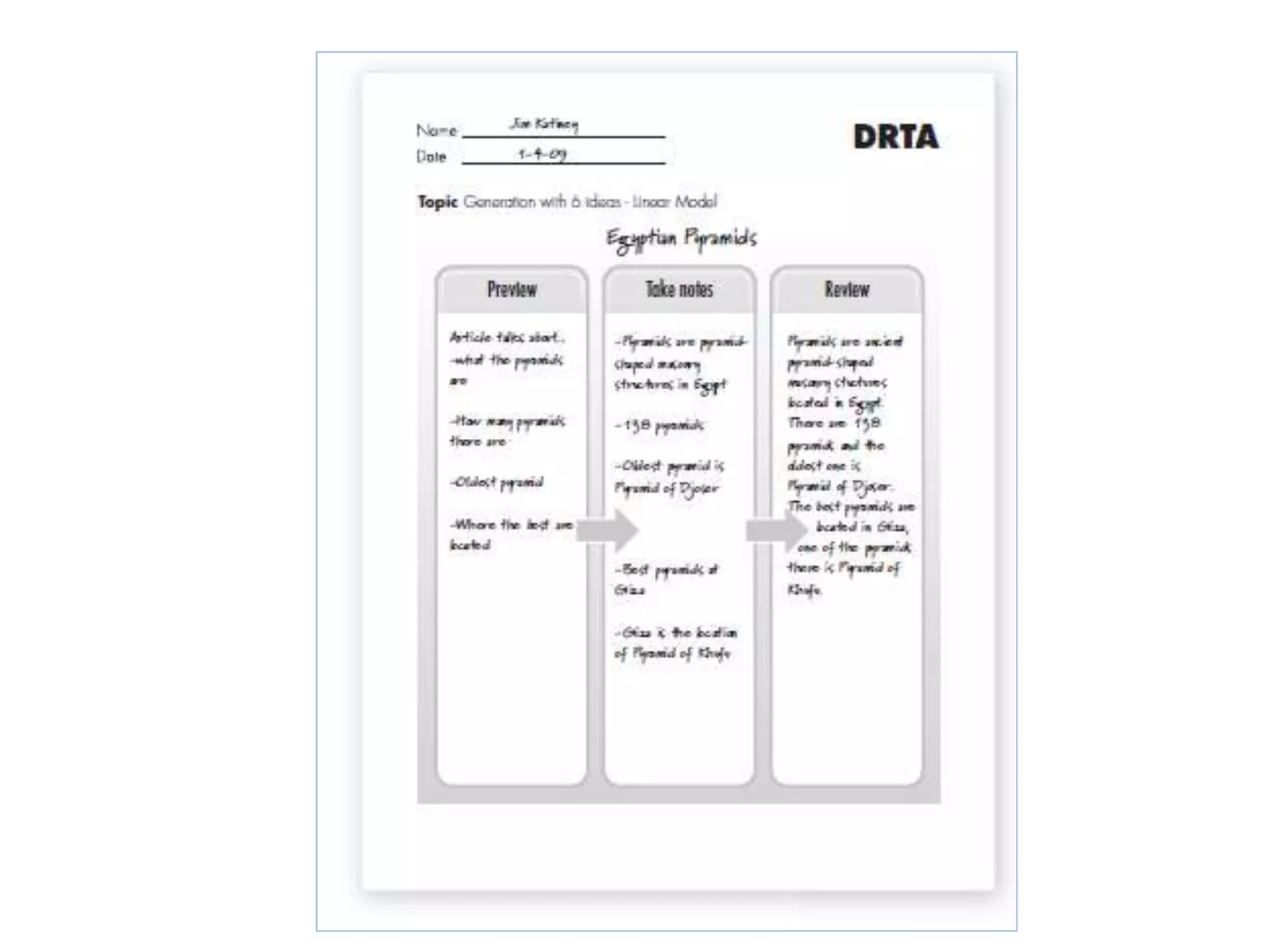
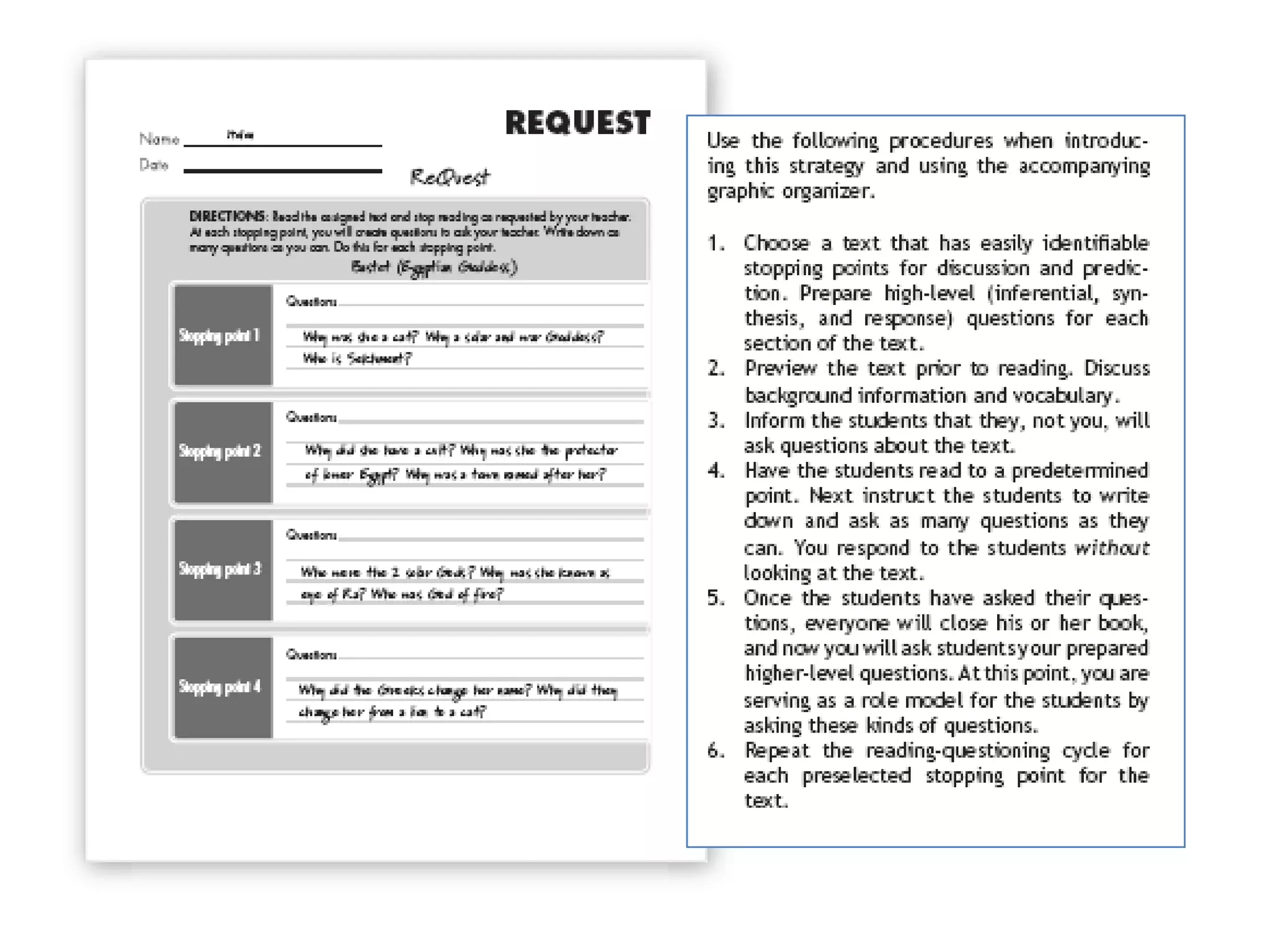
DRTA
DRTA
Sketch Through TextDaniels, H. and Zimmerman, S. (2004). Subjects Matter: Every Teachers’ Guide to Content –Area Reading. Portsmouth, NH: Heinemann, p 121.
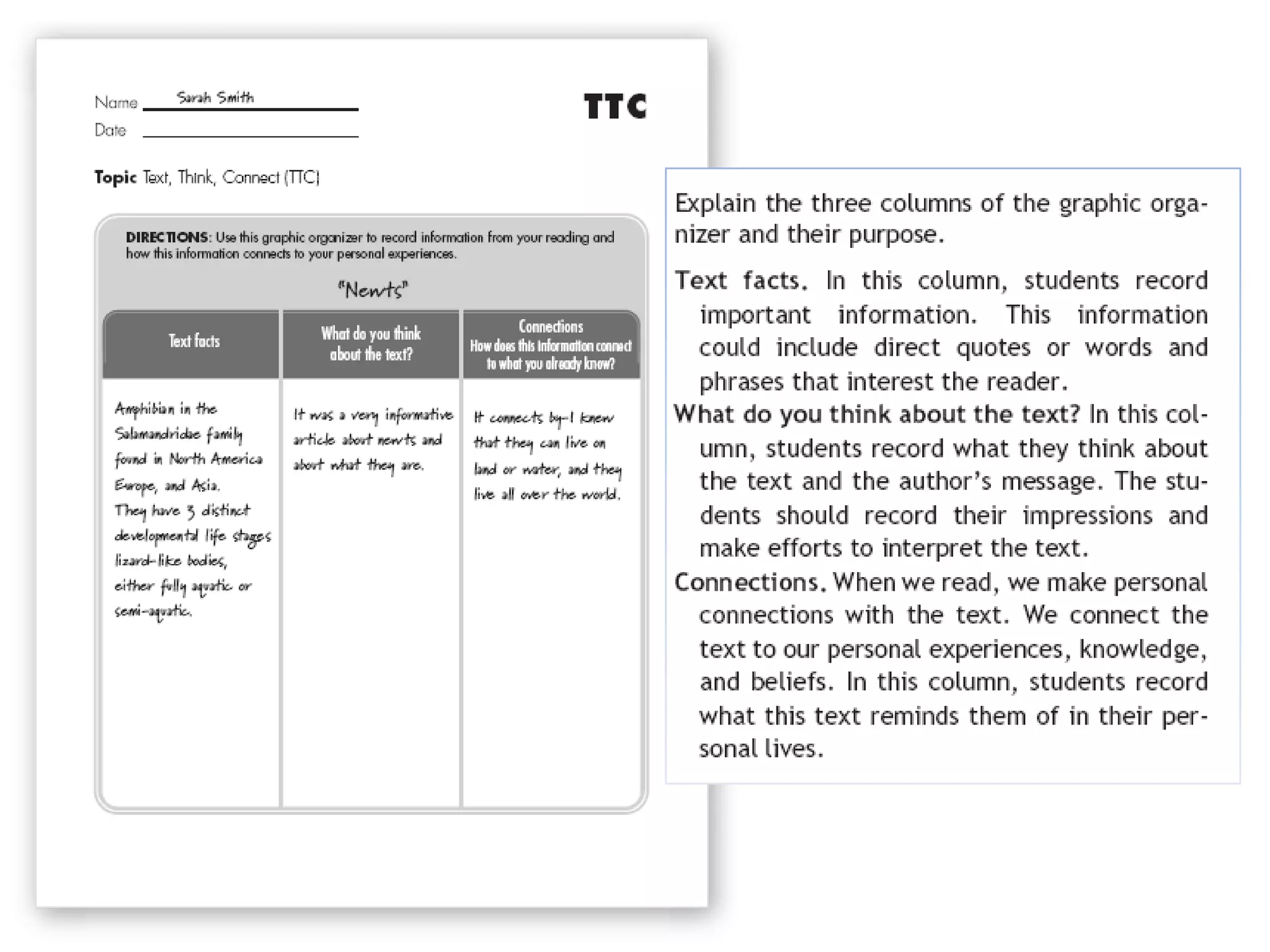
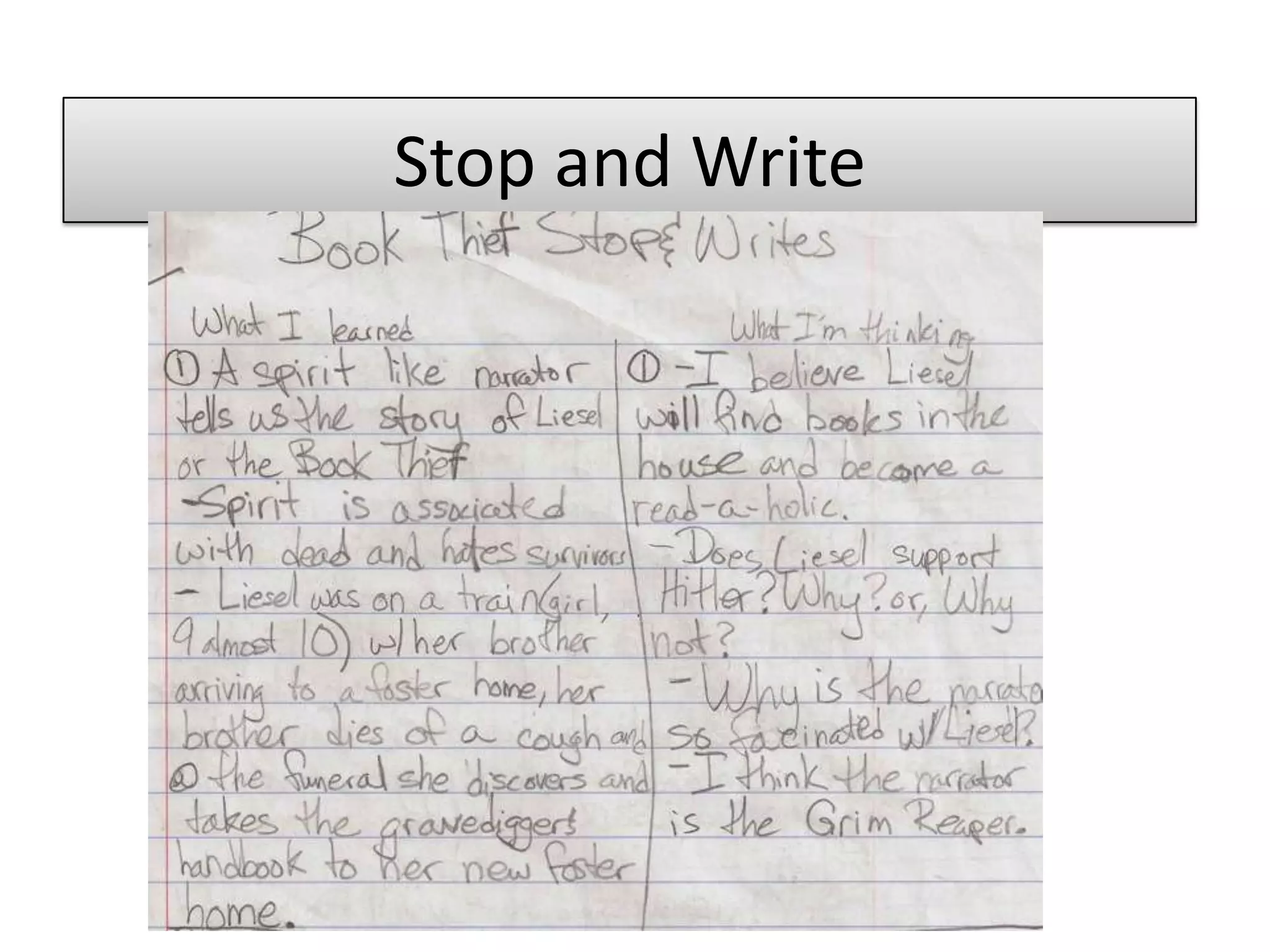
Stop and Write
I Do, We Do, You Dohttp://www.adlit.org/media/mediatopics/comprehension/
VisualsGraphic Organizers and other visuals support student comprehension and understanding of text.  Here is an example from a Social Studies teacherhttp://www.adlit.org/media/mediatopics/contentarea/
Web 2.0 ToolsFor Organization and General Study Skills:EvernoteLive Binder
Digital NativesView Technology as Part of the EnvironmentDesire entertainment and play in their work and educationCollaboration and relationship oriented
Digital ImmigrantEducation system was designed for Industrial AgeAccommodating new technologyConcerned about overuse of technology
Slide ShowsWhat reading and literacy skills can slide shows develop?
Getting Started with Blogs: Class BlogPost class materialsPost assignments and rubricsProvide samples of work expectationsPost materials to support assignments (i.e. reading materials, web links, web sites, and an area for student comments and postings)Class Schedule and Letter
Getting Started with Blogs: Student Blogs Learning Logs and Reflective JournalsReactions to Assigned ReadingLiterature CirclesQuestions and Comments about Current EventsWord-A-DayMath Problem-A-DayPosting ProjectsPosting Videos of Lab Experiments
Your Turn:How can you use blogs for the teaching of your content area?What are your questions and concerns about starting blogs with your students?
Exit SlipWhat did you learn this today?Which tools and strategies are you ready to use in your classroom?

GCE: Strategies to Enhance Student Engagement and Boost Achievement

  • 1.
    Strategies to EnhanceStudent Engagement and Boost AchievementGlobal Citizenship Experience Professional Development DayAugust 8. 2011Katie McKnight, Ph.D.Katie@KatherineMcKnight.comwww.KatherineMcKnight.comTwitter: @LiteracyWorldFacebook: Katie McKnight Literacy
  • 2.
    What we willdo in this sessionLearn about literacy strategies that support development of reading and writing skills as a means to understand content.Look at different technology tools that support effective teaching and learning learning content.
  • 3.
    Some Reminders aboutContent Literacy
  • 4.
    Assumptions Underlying ContentLiteracySubject MatterRole of the TextbookActive ReadersIndependent Readers
  • 5.
    The Impact ofSchema on Content LiteracySource: Alvermann, D. and Phelps, S. (2002). Content Reading and Literacy: Succeeding in Today’s Diverse Classrooms. (5th Ed.).Boston, MA: Allyn and Bacon.
  • 6.
    More on SchemaThenotes were sour because the seam split.Source: Alvermann, D. and Phelps, S. (2002). Content Reading and Literacy: Succeeding in Today’s Diverse Classrooms. (5th Ed.).Boston, MA: Allyn and Bacon.
  • 7.
    More on Schema The batsmen were merciless against the bowlers. The bowlers placed their men in slips and covers. But to no avail. The batsmen hit one in four after another along with an occasional six. Not once did a ball look like it would hit their stumps or be caught.Source: Alvermann, D. and Phelps, S. (2002). Content Reading and Literacy: Succeeding in Today’s Diverse Classrooms. (5th Ed.).Boston, MA: Allyn and Bacon.
  • 8.
  • 9.
    What are LearningCenters?Synonymous with Learning Stations.Learning Stations are locations that a teacher designs for students to work in small groups or individually.Each center has a clearly articulated learning activity, rooted in content literacy strategies.
  • 10.
    Getting Started: AChecklistWrite out all directions for the students for each station.Explain procedures and have them written out and posted in your classroom.Create a “make up station” at the end of the rotation so that students can complete any unfinished work. Review and revision are key in the development of literacy skills sets.10
  • 11.
    Getting Started: AChecklist (cont’d)The teacher should circulate among the groups to facilitate answers and questions about the work.Formal assessment occurs when the students have finished the novel.When possible, give students a choice at each station.I like to make a poster for each station.Let’s look at a model for learning centers.11
  • 12.
    A Classroom PictureSampleStations for First Rotation12Content StudyReading StrategyVocabulary ActivityPractice with Content Listening or Viewing CenterMake Up Center
  • 13.
    Sample Learning CentersDirections:Circulate around the room to the different learning stations. Consider the following questions:How can you use this learning center activity for your content area and classroom?As you consider your content area and a specific learning center, what adaptations and suggestions do you have for the activity?Note: These learning centers focus on vocabulary. When you create center activities for your students, you will have a variety of activities, not just vocabulary.
  • 14.
    Learning Center StationVocabulary14Samplesare from: McKnight, K. (2010). The Teacher's Big Book of Graphic Organizers: 100 Reproducible Organizers that Help Kids with Reading, Writing, and the Content Areas.Jossey-Bass.
  • 15.
    Hints for StrugglingReadersProvide readers who struggle to decode with opportunities to hear the text read aloud (tape assist)Give readers for whom word recognition is a problem supplemental materials that include visual clues to word meaning (or use manipulatives in math)Allot additional time for readers who struggle to complete assignmentsEncourage struggling readers to use the internet because often the symbols and icons that are quite bothersome to good readers provide a means for struggling readers to construct meaning
  • 16.
    “THE CASK OFAMONTILLADO”Edgar Allan Poe----Sample Anticipation GuideDIRECTIONS: Put an “X” in the space to indicate whether or not you agree or disagree with the corresponding statement.
  • 17.
    Sketch Through TextDaniels,H. and Zimmerman, S. (2004). Subjects Matter: Every Teachers’ Guide to Content –Area Reading. Portsmouth, NH: Heinemann, p 121.
  • 19.
  • 20.
    Story ImpressionStep OneMakea 3 column chart on a sheet of paper.Label it like this:20
  • 21.
    Story ImpressionStep TwoInyour group, assign a definition to each word.Step ThreeCreate a story using each word with the definition that your group assigned.21
  • 22.
    Story ImpressionStep FourWewill now read the text from which the words were selected. As we read, write the new definition for each word in the 3rd column.22
  • 23.
    Author’s ChairSelect areader from your group.Volunteering for the “Author’s Chair”Clap when author goes to the chairRead the pieceClap when the author has finished readingDiscuss what we liked about the storyClap again when the author leaves the Author’s Chair
  • 24.
    Story Impressionintroduces vocabularytapsinto students’ prior knowledgecatapults the reader into active reading and comprehension
  • 25.
  • 26.
    Learning Center StationVocabulary26Samplesare from: McKnight, K. (2010). The Teacher's Big Book of Graphic Organizers: 100 Reproducible Organizers that Help Kids with Reading, Writing, and the Content Areas.Jossey-Bass.
  • 27.
    Concept SortsWhat isit?Introduces students to the vocabulary of a new topic or book. Students are provided with a list of terms or concepts from reading material. Students place words into different categories based on each word's meaning. Categories can be defined by the teacher or by the students.When used before reading, concept sorts provide an opportunity for a teacher to see what his or her students already know about the given content. When used after reading, teachers can assess their students' understanding of the concepts presented.
  • 28.
    Concept MapYou orthe student selects a word or concept for the center box of the organizer. In the box directly above, students should write the dictionary definition of the word or concept. Studentsshould record key elements of the word or concept in each of the boxes on the upper left side. In each of the boxes on the upper right side, the students should record information that is incorrectly assigned to the word or concept.Examples of the word or concept are recorded in the boxes along the bottom of the page.The ‘‘What is it like?’’ and ‘‘What is it NOT like?’’ boxes can be particularly challenging.Be sure to model responses to these or allow students to work in pairs so that they will have greater success in completing this activity.
  • 29.
    Word Detective Theimportance of encouraging students to study words cannot be emphasized enough. In this center, students are prompted to research the etymology of words (and content area terms) and connect visual images to the words that they encounter.
  • 30.
  • 31.
  • 32.
    KWLK= What thereader already knowsL= What the reader wants to learn or know.L= What I learned
  • 33.
  • 34.
  • 37.
    Sketch Through TextDaniels,H. and Zimmerman, S. (2004). Subjects Matter: Every Teachers’ Guide to Content –Area Reading. Portsmouth, NH: Heinemann, p 121.
  • 38.
  • 39.
    I Do, WeDo, You Dohttp://www.adlit.org/media/mediatopics/comprehension/
  • 40.
    VisualsGraphic Organizers andother visuals support student comprehension and understanding of text. Here is an example from a Social Studies teacherhttp://www.adlit.org/media/mediatopics/contentarea/
  • 43.
    Web 2.0 ToolsForOrganization and General Study Skills:EvernoteLive Binder
  • 44.
    Digital NativesView Technologyas Part of the EnvironmentDesire entertainment and play in their work and educationCollaboration and relationship oriented
  • 45.
    Digital ImmigrantEducation systemwas designed for Industrial AgeAccommodating new technologyConcerned about overuse of technology
  • 46.
    Slide ShowsWhat readingand literacy skills can slide shows develop?
  • 47.
    Getting Started withBlogs: Class BlogPost class materialsPost assignments and rubricsProvide samples of work expectationsPost materials to support assignments (i.e. reading materials, web links, web sites, and an area for student comments and postings)Class Schedule and Letter
  • 48.
    Getting Started withBlogs: Student Blogs Learning Logs and Reflective JournalsReactions to Assigned ReadingLiterature CirclesQuestions and Comments about Current EventsWord-A-DayMath Problem-A-DayPosting ProjectsPosting Videos of Lab Experiments
  • 49.
    Your Turn:How canyou use blogs for the teaching of your content area?What are your questions and concerns about starting blogs with your students?
  • 50.
    Exit SlipWhat didyou learn this today?Which tools and strategies are you ready to use in your classroom?