Teaching
Citizenship
Education
Naureen Faisal
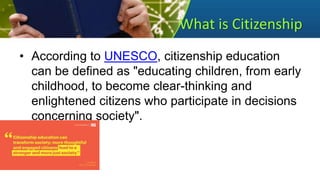
What is Citizenship
• According to UNESCO, citizenship education
can be defined as "educating children, from early
childhood, to become clear-thinking and
enlightened citizens who participate in decisions
concerning society".
Why citizenship Education
• Encompasses participation in classrooms,
neighborhoods, groups and organizations.
• Learn to contribute to public processes and
discussions of real issues.
• Learn civic practices such as voting, volunteering,
jury service, and joining with others to improve
society.
• Enables students not only to study how others
participate, but also to practice participating and
taking informed action themselves.
• Empowers students to be well-informed, active
citizens and gives the opportunity to change the
world around us.
Effective Strategies
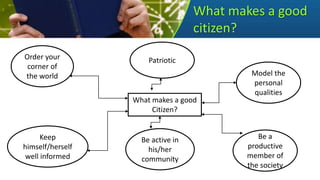
 What makes a good citizen?
 Problem and Possible Solutions
 Getting Involved: Volunteers at schools
 Local Government Services and ‘joining in’
 Voting and Elections
 Community Services Projects
What makes a good
citizen?
What makes a good
Citizen?
Order your
corner of
the world
Patriotic
Be active in
his/her
community
Keep
himself/herself
well informed
Model the
personal
qualities
Be a
productive
member of
the society
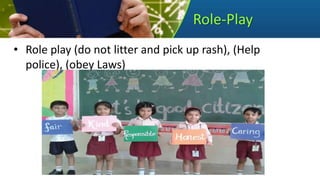
Role-Play
• Role play (do not litter and pick up rash), (Help
police), (obey Laws)
Discussion
• Your classmate at front table does not have green crayon. He asked
everyone in the class but no one share it with him. You offered your crayon
to him but he did not return it. Next day, you really need green crayon
because your are colouring a tree. What should you do?
• While at lunch, you notice that a student at another table throws his trash
on the ground. There is a trash can(dustbin) at the end of the table. What
should you do? Should you tell the student to put his trash in the trash can
or pick up the trash for them and not say anything?
• You want to get a bag of chips to eat with your lunch. When you get to the
front of the line, you realize that you do not have enough money.The child
behind you tells you to just take it because the cafeteria worker is not
looking. What should you do?
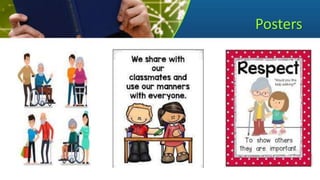
Posters
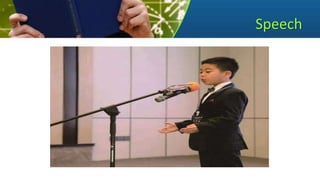
Speech
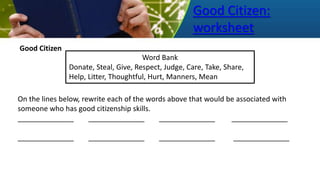
Good Citizen:
worksheet
Word Bank
Donate, Steal, Give, Respect, Judge, Care, Take, Share,
Help, Litter, Thoughtful, Hurt, Manners, Mean
Good Citizen
On the lines below, rewrite each of the words above that would be associated with
someone who has good citizenship skills.
______________ ______________ ______________ ______________
______________ ______________ ______________ ______________
Problems and
Possible Solution
Images of Problems
Read local newspaper and find problems and fill problems-
solutions chart
Visit near place to find problem and solve it. Take photograph
before and after
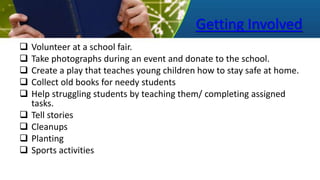
Getting Involved
 Volunteer at a school fair.
 Take photographs during an event and donate to the school.
 Create a play that teaches young children how to stay safe at home.
 Collect old books for needy students
 Help struggling students by teaching them/ completing assigned
tasks.
 Tell stories
 Cleanups
 Planting
 Sports activities
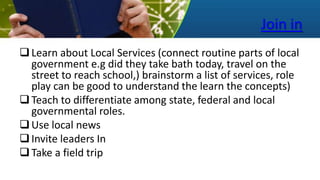
Join in
Learn about Local Services (connect routine parts of local
government e.g did they take bath today, travel on the
street to reach school,) brainstorm a list of services, role
play can be good to understand the learn the concepts)
Teach to differentiate among state, federal and local
governmental roles.
Use local news
Invite leaders In
Take a field trip
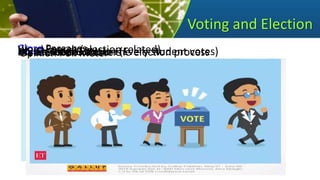
Voting and Election
Opinion Poll Meter
Word Search (election related)
Cloze Passages
Watch Videos about the election process
Make Election Posters
Hold a Mock Election (Every student votes)
My Election Book
Cloze Passage
Read the paragraph. Then answer the questions.
Choosing Leaders
• People have been voting for their leaders since at least 500 BC.
Some of the earliest voters were ancient Greek citizens. They voted
by dropping clay balls into pots for the ____________ of their
choice.
• Centuries later, Roman citizens voted with beans. Early settlers in
North America used corn kernels. In the 1800s, people marked their
choices on paper ballots. By 1892, voters were using machines with
levers, and in the 1960s punch card became common. Today,
electronic voting is becoming widespread.
Cloze Passage
Exercise
1.The best word for the blank in this paragraph is
a. Candidates b. elections c. stew d. authentic
2. The title best summarizes this paragraph is
a. dropping clay ball b. voting over time c. why people vote d. using beans
and corn
3. In this paragraph, the word ‘ballot’ must mean
a. songs sung by wondering people b. printed pages for registering votes
d. a kind of dance on toe shoes d. pens used by people voting
4. From this passage you can conclude that
a. voter will return to using machines with lever b. how people vote will continue to
change c. paper ballots are the most popular way to vote d. ways of voting will not
improve
Community Service
Projects
Collect food, clothes, toys
Recycling Program
Community Garden
Cleanup
Community Newsletter
Plant Trees
Participate in a local charity walk.
Paint a mural or beautify a public space.
Teaching citizenship education

Teaching citizenship education

  • 1.
  • 2.
    What is Citizenship •According to UNESCO, citizenship education can be defined as "educating children, from early childhood, to become clear-thinking and enlightened citizens who participate in decisions concerning society".
  • 3.
    Why citizenship Education •Encompasses participation in classrooms, neighborhoods, groups and organizations. • Learn to contribute to public processes and discussions of real issues. • Learn civic practices such as voting, volunteering, jury service, and joining with others to improve society. • Enables students not only to study how others participate, but also to practice participating and taking informed action themselves. • Empowers students to be well-informed, active citizens and gives the opportunity to change the world around us.
  • 4.
    Effective Strategies  Whatmakes a good citizen?  Problem and Possible Solutions  Getting Involved: Volunteers at schools  Local Government Services and ‘joining in’  Voting and Elections  Community Services Projects
  • 5.
    What makes agood citizen? What makes a good Citizen? Order your corner of the world Patriotic Be active in his/her community Keep himself/herself well informed Model the personal qualities Be a productive member of the society
  • 6.
    Role-Play • Role play(do not litter and pick up rash), (Help police), (obey Laws)
  • 7.
    Discussion • Your classmateat front table does not have green crayon. He asked everyone in the class but no one share it with him. You offered your crayon to him but he did not return it. Next day, you really need green crayon because your are colouring a tree. What should you do? • While at lunch, you notice that a student at another table throws his trash on the ground. There is a trash can(dustbin) at the end of the table. What should you do? Should you tell the student to put his trash in the trash can or pick up the trash for them and not say anything? • You want to get a bag of chips to eat with your lunch. When you get to the front of the line, you realize that you do not have enough money.The child behind you tells you to just take it because the cafeteria worker is not looking. What should you do?
  • 8.
  • 9.
  • 10.
    Good Citizen: worksheet Word Bank Donate,Steal, Give, Respect, Judge, Care, Take, Share, Help, Litter, Thoughtful, Hurt, Manners, Mean Good Citizen On the lines below, rewrite each of the words above that would be associated with someone who has good citizenship skills. ______________ ______________ ______________ ______________ ______________ ______________ ______________ ______________
  • 11.
    Problems and Possible Solution Imagesof Problems Read local newspaper and find problems and fill problems- solutions chart Visit near place to find problem and solve it. Take photograph before and after
  • 12.
    Getting Involved  Volunteerat a school fair.  Take photographs during an event and donate to the school.  Create a play that teaches young children how to stay safe at home.  Collect old books for needy students  Help struggling students by teaching them/ completing assigned tasks.  Tell stories  Cleanups  Planting  Sports activities
  • 13.
    Join in Learn aboutLocal Services (connect routine parts of local government e.g did they take bath today, travel on the street to reach school,) brainstorm a list of services, role play can be good to understand the learn the concepts) Teach to differentiate among state, federal and local governmental roles. Use local news Invite leaders In Take a field trip
  • 14.
    Voting and Election OpinionPoll Meter Word Search (election related) Cloze Passages Watch Videos about the election process Make Election Posters Hold a Mock Election (Every student votes) My Election Book
  • 15.
    Cloze Passage Read theparagraph. Then answer the questions. Choosing Leaders • People have been voting for their leaders since at least 500 BC. Some of the earliest voters were ancient Greek citizens. They voted by dropping clay balls into pots for the ____________ of their choice. • Centuries later, Roman citizens voted with beans. Early settlers in North America used corn kernels. In the 1800s, people marked their choices on paper ballots. By 1892, voters were using machines with levers, and in the 1960s punch card became common. Today, electronic voting is becoming widespread.
  • 16.
    Cloze Passage Exercise 1.The bestword for the blank in this paragraph is a. Candidates b. elections c. stew d. authentic 2. The title best summarizes this paragraph is a. dropping clay ball b. voting over time c. why people vote d. using beans and corn 3. In this paragraph, the word ‘ballot’ must mean a. songs sung by wondering people b. printed pages for registering votes d. a kind of dance on toe shoes d. pens used by people voting 4. From this passage you can conclude that a. voter will return to using machines with lever b. how people vote will continue to change c. paper ballots are the most popular way to vote d. ways of voting will not improve
  • 17.
    Community Service Projects Collect food,clothes, toys Recycling Program Community Garden Cleanup Community Newsletter Plant Trees Participate in a local charity walk. Paint a mural or beautify a public space.