By: Christal Satchell
The goal of this training is to enable students
   to make their own decisions and to take
  responsibility for their own lives and their
communities as a citizen of the United States.
   What is Citizenship?
    Citizenship is about how we live together in our
    communities and how we ‘get on’ locally,
    nationally and globally.
   Why teach Citizenship?
    Democracies need active, informed and
    responsible citizens; citizens who are willing and
    able to take responsibility for themselves and
    their communities and contribute to the political
    process.
   The values of
    democracy, justice,
    equality and inclusion
    have been long fought
    ,but are easily neglected
    and abused.
   The best way to
    guarantee a brighter
    future for all is to create
    a society in which we all
    understand our rights
    and responsibilities.
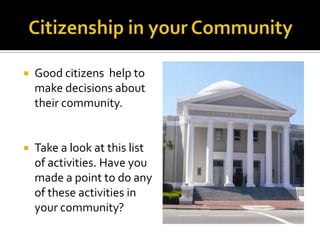
   Good citizens help to
    make decisions about
    their community.


   Take a look at this list
    of activities. Have you
    made a point to do any
    of these activities in
    your community?
   Attend a city or town council or school board
    meeting, or a municipal, county, or state court
    session.
   Choose a charitable organization outside of
    AmeriCorps that interests you and brings people
    in your community together to work for the
    good of your community
   Find out where the chief government buildings
    in your community are located. (City Hall,
    County courthouse, fire station, police station,
    hospitals, etc.)
   What does democracy mean?

   What is a nation-state?

   What is the role of the citizen in a
    democracy?
   The United States has had
    the same type of government
    for more than 200 years. It’s
    called a “representative
    democracy.” Among the
    nations of the world, it is
    unusual for a system of
    government to last so long.
    Most governments are based
    on a written set of
    principles, sometimes called
    a “constitution” or a
    “charter.” When citizens
    directly participate by
    voting, the government is
    called a “democracy
   A nation-state refers to
      a single or multiple
      nationalities joined
     together in a formal
        political union.
    In a democracy, every             Everyone has the right to
    citizen has certain basic           associate with other
    rights that the state cannot        people, and to form and join
    take away from them. These          organizations of their own
    rights are internationally          choice, including trade
    recognized and guaranteed.          unions.
                                        Everyone has the right to
    Everyone has the right to          assemble and to protest
    have their own beliefs,             government
    including their religious           actions. However, citizens
    beliefs, and to say and write       have an obligation to exercise
    what they think.                    these rights peacefully, with
                                        respect for the law and for
                                        the rights of others.
   Throughout history, rulers and dictators have
    taken away people's rights. In many parts of the
    world today people can't worship as they please,
    talk freely, gather with groups of friends, or
    travel. If you feel that everyone is always telling
    you what to do and that you have no rights,
    you're wrong! You are protected by laws such
    such as the Bill of Rights. You also have their own
    rights, which were developed by the United
    Nations. It's important to know your rights and
    to stand up for yourself.
Civic education

Civic education

  • 1.
  • 2.
    The goal ofthis training is to enable students to make their own decisions and to take responsibility for their own lives and their communities as a citizen of the United States.
  • 3.
    What is Citizenship? Citizenship is about how we live together in our communities and how we ‘get on’ locally, nationally and globally.  Why teach Citizenship? Democracies need active, informed and responsible citizens; citizens who are willing and able to take responsibility for themselves and their communities and contribute to the political process.
  • 4.
    The values of democracy, justice, equality and inclusion have been long fought ,but are easily neglected and abused.  The best way to guarantee a brighter future for all is to create a society in which we all understand our rights and responsibilities.
  • 5.
    Good citizens help to make decisions about their community.  Take a look at this list of activities. Have you made a point to do any of these activities in your community?
  • 6.
    Attend a city or town council or school board meeting, or a municipal, county, or state court session.  Choose a charitable organization outside of AmeriCorps that interests you and brings people in your community together to work for the good of your community  Find out where the chief government buildings in your community are located. (City Hall, County courthouse, fire station, police station, hospitals, etc.)
  • 7.
    What does democracy mean?  What is a nation-state?  What is the role of the citizen in a democracy?
  • 8.
    The United States has had the same type of government for more than 200 years. It’s called a “representative democracy.” Among the nations of the world, it is unusual for a system of government to last so long. Most governments are based on a written set of principles, sometimes called a “constitution” or a “charter.” When citizens directly participate by voting, the government is called a “democracy
  • 9.
    A nation-state refers to a single or multiple nationalities joined together in a formal political union.
  • 10.
    In a democracy, every  Everyone has the right to citizen has certain basic associate with other rights that the state cannot people, and to form and join take away from them. These organizations of their own rights are internationally choice, including trade recognized and guaranteed. unions.  Everyone has the right to  Everyone has the right to assemble and to protest have their own beliefs, government including their religious actions. However, citizens beliefs, and to say and write have an obligation to exercise what they think. these rights peacefully, with respect for the law and for the rights of others.
  • 11.
    Throughout history, rulers and dictators have taken away people's rights. In many parts of the world today people can't worship as they please, talk freely, gather with groups of friends, or travel. If you feel that everyone is always telling you what to do and that you have no rights, you're wrong! You are protected by laws such such as the Bill of Rights. You also have their own rights, which were developed by the United Nations. It's important to know your rights and to stand up for yourself.